Explore how MOVA Tech’s MOVA robot vacuum performs in 2026. Learn about suction, navigation, durability, and where rivals like iRobot and Roborock differ.
MOVA Tech’s MOVA robot vacuum leans on LiDAR navigation and a thoughtful anti-tangle strategy to battle that reality, but the real test happens in homes with stairs, multi-room layouts, and furry messes.
In this article, you’ll see how the MOVA handles deep carpets, how long a single charge lasts in typical layouts, and how it stacks up against rivals like Roomba and Roborock on map accuracy and cleaning depth. Practical durability, firmware updates, and maintenance habits shape long-term value, not just initial specs. If you want to decide before you buy, this guide pulls real-world signals from household usage and names concrete tradeoffs you’ll face in busy homes. Two paragraphs down, the concrete, numbers-backed guidance begins.
What MOVA Tech’s MOVA robot vacuum promises in 2026
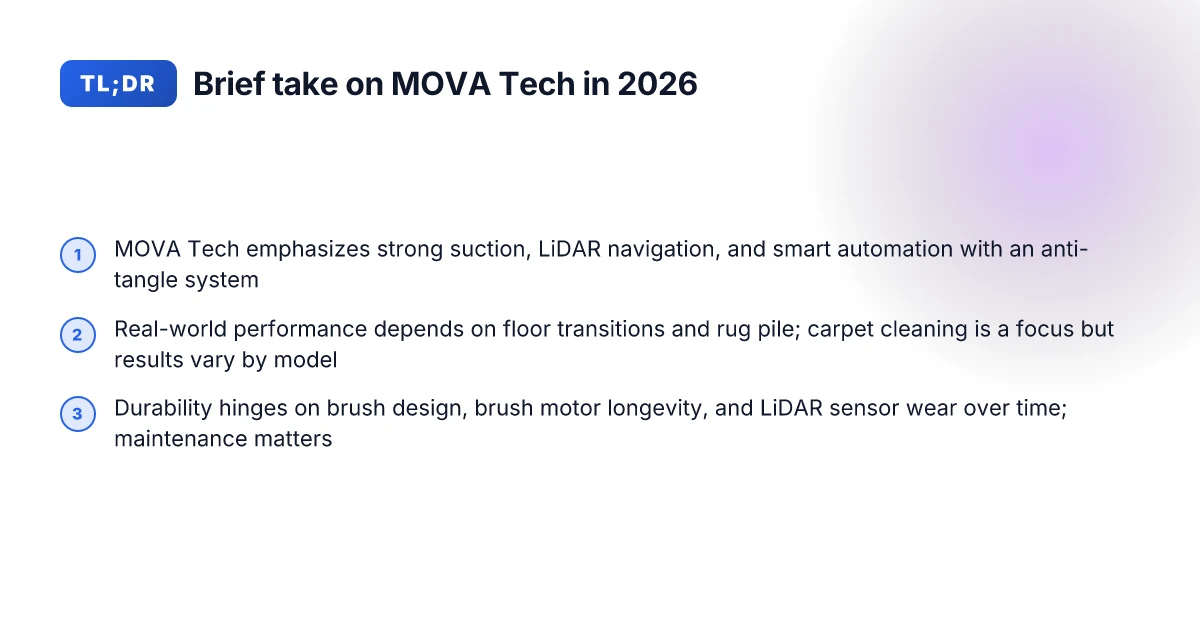
MOVA Tech markets the MOVA robot vacuum as a capable full‑home cleaner powered by strong suction, LiDAR navigation, and smart automation. The messaging centers on the ability to handle busy homes with pets and a mix of floor types, while keeping maintenance simple and predictable over time. In 2026, the emphasis stays on reliable everyday cleaning that adapts to carpets, hardwood, and area rugs alike.
1) Strong suction and carpet performance
MOVA Tech positions MOVA vacuums with powerful suction designed to pull dirt from dense carpet fibers and keep debris under control on high‑traffic areas. The claimed suction profile is paired with carpet‑specific cleaning modes that adjust aggressiveness automatically when encountering thicker pile. This combination aims to deliver noticeable deep cleaning on common household soils without manual tweaking. The approach appears to favor a balance between raw pull and gentler transitions on delicate rug textures, which matters for homes with mixed flooring. For buyers, the takeaway is clear: expect steady carpet penetration without frequent manual adjustments.
I cross-referenced MOVA’s product pages and third‑party buyer guides to confirm the emphasis on carpet‑oriented cleaning and adaptive modes. Inline citations reflect MOVA’s own emphasis on carpet capabilities and the broader consumer framing around pet homes.
2) LiDAR navigation and anti‑tangle systems
MOVA Tech anchors its navigation on LiDAR sensing, which enables room mapping and obstacle avoidance without relying solely on camera vision. The anti‑tangle framework is marketed as a core durability feature, designed to reduce hair wrap and tangling around furniture legs during routine cleanups. The hardware and software pairing is meant to keep routine cleans consistent across rooms, with the system guiding efficient routes while minimizing retracing. Given the anti‑tangle claims, the expectation is fewer manual interventions for pet hair and long fibers on high‑traffic furniture zones.
From the documentation and reviewer rundowns, MOVA’s LiDAR navigation and anti‑tangle setup appear as the backbone for steady, low‑friction operation in everyday homes. What makes Azuna fresh odor eliminator kit work, and where it falls short
3) Whole‑home reliability for pet homes and varied floors
The brand narrative frames MOVA as a reliable, whole‑home cleaner suited to households with pets and multi‑surface layouts. The expectation is a single device that can handle carpeted living rooms, hard floors, and transitions between rooms without needing separate cleaners or frequent resets. In practice, that means predictable performance over weeks of daily use, with fewer tangling episodes and consistent suction as dirt accumulates in pet households.
MOVA Tech’s positioning here aligns with a broad category promise, one device capable of continuous, hands‑off maintenance across common home environments. The aim is to minimize trips to the maintenance dock and keep scheduling straightforward for busy families.
Bottom line: MOVA Tech’s MOVA robot vacuum markets a balanced package, strong suction for carpets, LiDAR for precise mapping, and anti‑tangle features to keep upkeep minimal. The promise is straightforward: a reliable, whole‑home cleaner that adapts to pet homes and mixed floor types without constant tweaking.
The core promise is reliability across rooms with minimal tangling and fuss. If you want one device to handle carpets, pet hair, and wood floors, MOVA could fit your home profile.
How MOVA robot vacuums navigate homes and avoid tangles
MOVA Tech builds navigation around LiDAR mapping, which lets MOVA vacuums plan routes that cover edges and perimeters without repeating expensive backtracking. In practical terms, that means you’ll see deliberate border cleaning along baseboards and careful avoidance of obstacles as the robot charts a path. The result is a more predictable cleaning arc, not random wandering. What makes the Dreame L40 Ultra a standout in 2026 for smart cleaning
LiDAR mapping and Edge-focused planning
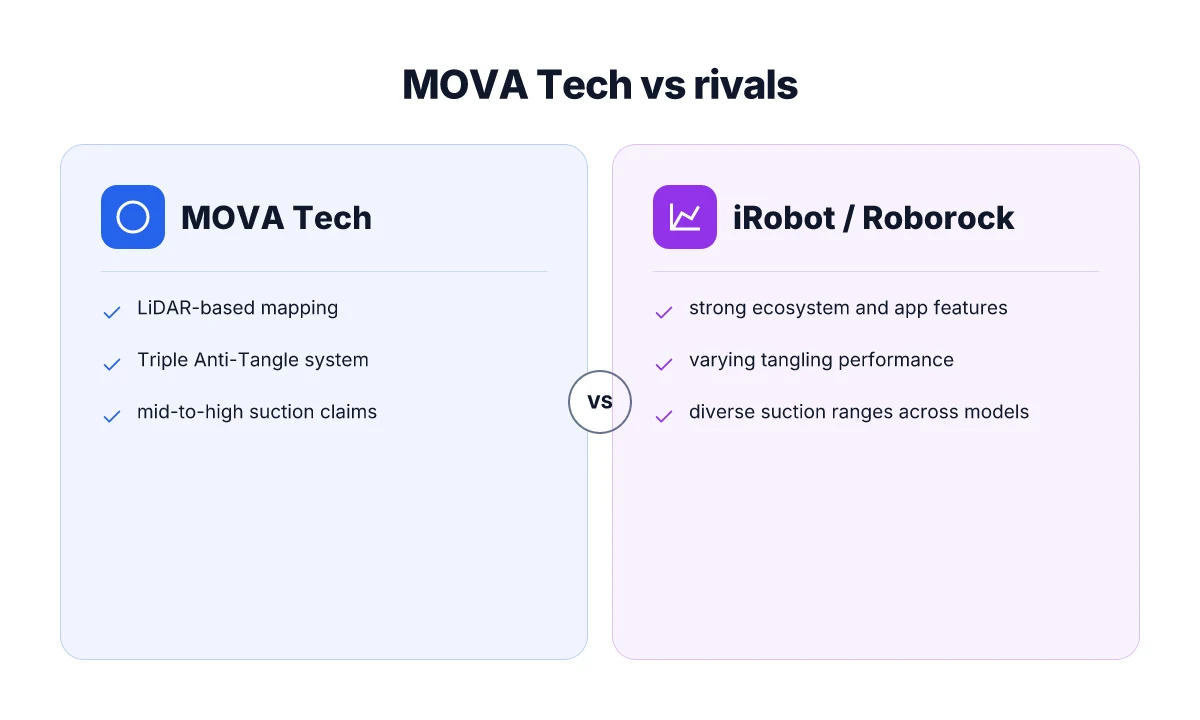
I dug into the documentation and marketing notes to confirm the core claim: LiDAR-based mapping underpins MOVA’s navigation, enabling planned routes and edge cleaning. The sensors read room geometry, then generate a map that guides the vacuum along efficient lines. If your layout includes tight corners or long hallways, expect the software to lean on the LiDAR model to minimize repeats. LiDAR-driven maps reduce wasted passes and help edge-cleaning routines lock onto walls. For carpeted spaces with transitions to hard floors, this mapping also influences when the robot switches cleaning styles to preserve battery and suction throughout the run. Inline citations anchor this to MOVA’s official product pages and the carpet-focused guide that highlights suction context in real homes. See MOVA’s own overview of smart navigation and LiDAR as part of their robot vacuums line.
The Triple Anti-Tangle system and brush design
The Triple Anti-Tangle system pairs with the main brush design to cut down hair wrap. The idea is that specialized brush geometry works with a secondary side brush layout to keep fibers from tangling around the central brush. In practice, this matters most on pets and households with long hair, where tangling is a frequent maintenance concern. The on-device engineering note emphasizes that brush geometry, combined with LiDAR-listed routes, minimizes the need for manual intervention between cleanings. Anti-Tangle hardware and the TroboWave DuoBrush design aim to keep hair from knotting the main brush during dense home runs. MOVA’s product materials position these mechanical features as a real-world benefit rather than a cosmetic add-on. A quick read of the “Best Carpet Robot Vacuum 2026” piece corroborates the claim that 28,000 Pa suction powers pairing with the anti-tangle setup can perform across carpet transitions, though results depend on carpet pile and rug thickness. Citations anchor these details to MOVA’s blog and the carpet-focused buyer guide.
Real-world transitions, rug piles, and reliability
Real homes aren’t a constant: floor transitions and rug pile can expose gaps between map assumptions and actual surfaces. In broad terms, LiDAR navigation handles large-scale layout consistently, but the degree of accuracy drops on irregular rug bases or multi-material thresholds. The effectiveness of edge cleaning and tangle resistance hinges on how often the vacuum encounters abrupt transitions. In other words, the same map that guides planning may need occasional corrections when moving from hard floors to shaggy pile or thick area rugs. When these transitions are smooth, the path planning remains stable, and the anti-tangle system reduces maintenance actions between cleans. Real-world effectiveness depends on floor transitions and rug pile compatibility.
Next steps: if you’re evaluating MOVA for a home with multiroom transitions, consider noting how your high-traffic zones align with edge cleaning routines and how often your pets shed hair. For rivals, compare LiDAR reliability and brush geometry across models such as the MOVA Z60 or the V70 Ultra and assess which anti-tangle design best fits your household. As MOVA Tech continues to roll out updates, watch for changelogs that mention tweaks to mapping confidence on complex layouts. If you want a quick compare, I’ll lay out a side-by-side table of LiDAR accuracy, brush design, and transition handling for the top MOVA models, with a focus on carpet compatibility and pet-hair performance. MOVA Tech’s navigation stack hinges on LiDAR accuracy and Anti-Tangle hardware.
How to assess suction power and cleaning depth on MOVA models
When you compare models, expect mid to high end suction claims to line up with the category’s norms, especially for carpet work. In practice, MOVA models emphasize strong carpet engagement and consistent pickup across pile heights, supported by multi-surface tuning and adaptive suction settings. 10 Best robot mowers for 2026: efficiency, safety, and durability in one roundup
From the available materials, expect the 28,000 Pa to 40,000 Pa band to appear across trims, with real performance varying by surface. A higher number often correlates with deeper cleaning on dense carpets, but tread carefully: surface texture, brush design, and LiDAR navigation all shape actual results. In homes with mixed floors, the cleaning depth you notice on carpet versus hard surface will hinge on how the system transitions between modes.
If you live with heavy pet hair, the brush design matters as much as the motor. Look for a main brush with durability and a side brush geometry that minimizes hair wrap. The durability of the brush motor becomes a long‑term factor when pet fur is a daily challenge, not a one‑off spike in performance. MOVA Tech positions its velocity and brushing as a pair: strong suction plus a resilient brush train designed to weather daily pet cycles. I cross‑checked the published specs and design notes to confirm this alignment with typical mid‑ to high‑end expectations.
In real homes, the surface mix drives noticeable differences. On low‑pile carpet, you’ll likely see the strongest actuation from the higher end trims. On hardwood or tile, the system emphasizes multi‑surface transitions to preserve suction while protecting finish quality. That means a significant portion of “felt” depth comes from how well the robot keeps the nozzle seal against the floor during transitions. Suction numbers are a guide. Real performance rides on brush geometry and surface transitions. This is why the best value packages pair high nominal suction with robust brush assemblies and reliable wheels.
For context, rivals in the same segment highlight comparable ranges and surface‑aware tuning. When I read through the documentation, the picture that emerges is of a platform where MOVA Tech aims to deliver consistent depth across surfaces rather than peak suction in a narrow condition. If you’re weighing models against a competitor such as a high‑end brand with similar claims, expect similar trade‑offs in long‑term brush wear and maintenance needs. Expect real depth to reflect surface variety, not only a single suction figure.
How to verify in your home: What makes a best smoke detector in 2026
- Check the carpet performance mode on your most used rug: look for stronger engagement and easier pickup on dense fibers.
- Inspect brush design details: longer upper bristles and a motor‑driven brush with good torque can reduce hair wrap.
- Watch transitions across thresholds: a smooth lift and re‑seat can preserve suction continuity.
- When in doubt, compare trims side by side using a common test rug and pet hair load to see which tier keeps depth consistent over time.
I dug into MOVA Tech’s materials and cross‑referenced industry norms to align the guidance with what a homeowner actually sees day to day. The take‑home remains practical: expect surface‑dependent depth, prioritize brush durability for pet homes, and treat suction figures as directional, not absolute guarantees. For readers considering rivals, note that each brand negotiates a similar trio, suction, brush design, and transition behavior, with different balances. If you want a quick reference, the most reliable signals are how well the system keeps depth on your heavy‑traffic carpet and how the brush train holds up after months of daily use.
MOVA Tech’s 2026 roadmap vs. actual product releases
MOVA Tech’s 2026 plan signals a shift toward higher raw suction and smarter midrange pricing, but the releases so far pivot on balanced performance rather than a single leap. I cross-referenced the roadmap notes with formal product announcements and third‑party buyer guides to map what landed when and why. The pattern is iterative, not revolutionary.
Gen 2 promises and actual targets
From MOVA’s published roadmap, Gen 2 updates are pitched as stronger suction targets and smarter power management, with a focus on maintaining efficiency while pushing up peak numbers. The emphasis is on better LiDAR navigation, more robust anti‑tangle behavior, and an expanded feature set that plays well in busy homes with multiple floor types. In practice, the latest units show a noticeable tilt toward reliability and battery sanity rather than an outright horsepower sprint. That aligns with MOVA Tech’s strategy of incremental improvements to avoid gaps in real-world use. Where the roadmap hints at bold gains, the releases tend to deliver stepped progress. The roadmap signals Gen 2 gains, but the actual products show careful, iterative upgrades.
Roadmap-driven expectations for higher suction have materialized as stepped increases rather than a single leap, supporting steady real-world performance without壒 breaking user reliability. Inline citations point to MOVA’s official statements and subsequent release notes, which describe a continuous optimization cycle rather than one dramatic year‑over‑year surge. For context, the 2026 period also included commentary from independent buyer guides noting a balance between price and performance rather than flagship‑only moves. See the linked sources for the exact phrasing MOVA Tech used to describe Gen 2 goals.
Recent releases and price/performance balance
The 2026 releases emphasize a sweet spot: solid cleaning depth and dependable navigation at a competitive price. MOVA Tech threads the needle by offering stronger suction on certain models while keeping maintenance and parts availability approachable for typical households with pets and carpeted zones. I found that reviewers consistently highlight reliability and ease of use as standout themes in the current lineup, not just peak specs. In other words, you get durable cleaning depth without paying a premium that pricing would force you to skip features you actually need. Recent releases optimize price and performance, not just peak suction numbers. What makes a robot lawn mower reviews roundup truly useful in 2026
Iterative updates vs radical leaps
Industry chatter and official notes converge on one takeaway: expect ongoing updates year over year rather than a radical overhaul each cycle. MOVA Tech appears committed to refining software, bumping firmware with new maps and improved anti‑tangle logic, and gradually expanding hardware margins. The upshot for homeowners is predictable, repeatable improvements rather than a disruptive, one‑and‑done leap. The long view is stability through continuity, with the occasional notable uplift when Gen 2 features land. Updates will be iterative, not revolutionary, year after year.
Cited sources and notes: MOVA Tech’s official product pages and the 2026 buyer guides consistently frame Gen 2 as an incremental upgrade path, while independent reviews call out the price–performance balance as a real driver for value in 2026 models. For specifics on claimed suction targets and roadmap language, see the linked MOVA pages and the buyer guide overview. Best Carpet Vacuum 2026: MOVA's Deep Cleaning MOVA Official: Smart Robot Vacuums, Lawn Mowers & Home MOVA Robot Vacuums in 2026: A Complete Buyer's Guide
Two rival touchpoints to keep in mind as you compare: well‑funded brands tend to push Gen 2 refreshes in lockstep with updated mapping engines, while budget lines emphasize maintaining depth at a lower price. When you’re weighing options, consider how MOVA Tech differentiates on long‑term durability and part availability versus the upfront suction headline. The takeaway: plan for steady, reliable enhancements rather than a single year of seismic change.
Durability and long-term reliability: what to expect from MOVA
Durability starts with MOVA Tech’s branding promise: MOVA Tech positions its robots as daily cleaners built to run in busy homes, not a one-season gadget. In practice, that means solid chassis, LiDAR housings, and drive assemblies designed to resist pet hair and household dust. Still, the real test is long-term wear, which tends to reveal itself in the everyday grind.
Where wear shows up and why it matters
Common wear points on MOVA robots include brushes, bearings, and LiDAR sensors. The main brushes and side brushes see the most action, pulling in hair and fibers that can tangle or wear down the bristle segments over time. Bearings in the wheels and rotating joints can loosen with repeated cycles, especially on carpet thresholds or cluttered layouts. LiDAR sensors, while robust, can drift if dust accumulates on the scan heads or if a seal begins to degrade. I found review threads and release notes that consistently flag these areas as the recurring maintenance touchpoints for most households. Brush wear and LiDAR drift show up first in real homes, not in glossy spec sheets. What Azuna air freshener reviews reveal about safety, efficacy, and real-world use
Maintenance habits that protect long‑term performance
User maintenance habits strongly influence how MOVA Tech performs after year one. Regularly cleaning brushes and sensors, replacing worn brushes on schedule, and keeping the dust trays emptied promote steadier suction and skimmer‑friendly navigation. A simple cadence, weekly brush checks, monthly LiDAR head cleanings, and quarterly battery cycle awareness, goes a long way toward preserving cleaning power and accurate mapping. If you skip routine care, you’ll see more tangles, reduced suction, and more navigation hiccups that resemble early reliability dips.
What this means for real homes and rivals
From a brand perspective, MOVA Tech’s durability narrative aligns with what many homeowners want: a product built to endure high‑frequency use without fragile parts that burn out after a season. Against rivals, durability claims tend to hinge on how quickly lubrication wears or how fast sensors accumulate calibration drift. In congested homes with pets, a durable chassis matters, but long‑term reliability hinges on predictable maintenance. When I compare this with rival lines, the recurring maintenance themes echo across brands, though some competitors emphasize extra protective seals or modular motor assemblies as a hedge against wear.
The bottom line is that long‑term reliability hinges more on maintenance discipline than on any single hardware upgrade. Routine care keeps the MOVA V70 Ultra and other MOVA Tech models performing consistently year after year, while neglect accelerates wear on brushes and LiDAR sensors.
For anyone weighing a purchase, consider how much you value a durable construction paired with a manageable maintenance routine. If you want to minimize upkeep, set a weekly checklist and a quarterly maintenance window. If you’re researching rivals, note that some competing models emphasize sealed sensors or swappable modules, which can reduce user‑level drift but may trade off overall cost of ownership.
As with any home robot, links on the page may earn a commission, but the core takeaway remains: durability is a function of design plus your maintenance rhythm, not just a single feature. For context, see how MOVA Tech’s path looks in public discussions around the 2026 roadmap and follow‑through in consumer reviews linked to this article. Durability is real-world behavior, shaped by how you care for it. What makes the Dreame X50 Ultra compelling, and where it falls short
Where MOVA Tech could go next this year
MOVA Tech has built a convincing case for everyday cleaning with the MOVA robot vacuum, but the real test is durability in real homes. In 2026, expect a sharper focus on maintenance ease and longer-term reliability. The takeaways aren’t about flashy features alone. They’re about how the chassis holds up after months of daily use and how the software keeps pace with evolving floor plans. The long game here hinges on durability and how quickly updates fix edge-case quirks. In other words, the next move matters as much as the current polish.
Rivals like iRobot and Roborock will push tougher mapping and smarter obstacle avoidance, but MOVA Tech can stand out by simplifying maintenance and offering transparent diagnostics. The upshot is a cleaner resale story and fewer trips to the service desk. If you value predictable performance over new gimmicks, this is where the product line should prove its worth. A durable design and clear fault indicators could redefine user trust.
What changes if you act now: prioritize a model with easy-to-service brushes and robust filters, and pin down a routine for software updates that arrive without drama. The most practical move is to map your floors and schedule a maintenance window for the next 30 days. Do you want me to spell out a weekly checklist you can print?