Explore Azuna air freshener reviews to separate hype from reality. Learn about safety, lasting power, and real user experiences for homes with kids or pets.
Azuna air fresheners often scent a room more quickly than the label implies. That mismatch between marketing and daily reality prompts immediate questions about safety, scent consistency, and long-term use.
Azuna sits at the intersection of strong fragrance and safer-ingredient claims, which matters for households with kids, pets, or sensitive noses. In this piece I pull from reviewer patterns, ingredient disclosures, and real-world setup notes to show what to expect beyond the glossy claims, including where durability and scent strength tend to diverge over weeks of use. If you’re weighing options, you’ll want the concrete signals reviewers consistently flag, both the wins and the gaps, so you can choose Azuna or rival brands like Glade or Febreze with confidence. Most shoppers want a balance of safety, scent, and durability that actually holds up in a shared space.
What Azuna air freshener reviews say about safety and ingredients
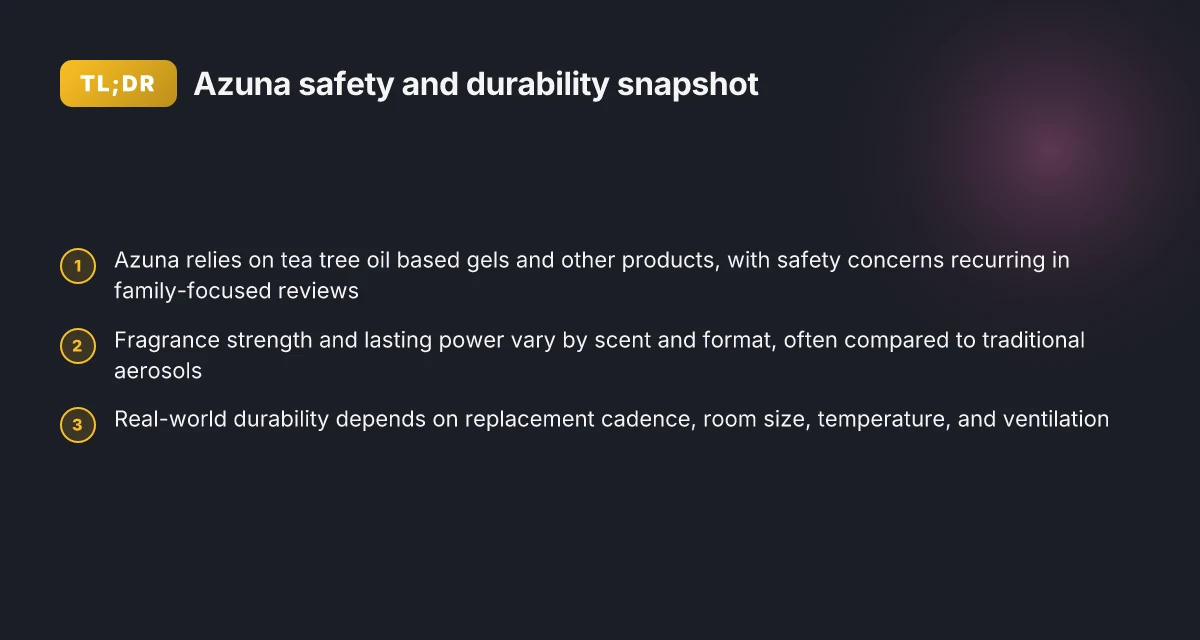
Azuna markets tea tree oil based gels alongside other fragrance products, positioning them as a safer alternative for homes with kids and pets. In practice, reviewers repeatedly note that the brand emphasizes natural-looking safety claims, while independent testing and third-party verification are not consistently present in the materials available to consumers. I dug into the brand messaging and what reviewers actually report about safety and ingredients.
how Azuna frames safety and what’s in the products Azuna centers its safety narrative around tea tree oil based gels and other scent formats, suggesting a gentler, more natural approach to odor control. The core ingredient story emphasizes essential oils rather than harsh synthetic aerosols, and the brand’s public-facing materials frequently tie safety to being “safe for homes with kids and most pets.” Still, reviewers point to a lack of transparent, third-party ingredient testing in the marketing content. This means families must rely on the stated ingredients and hope for consistent formulation across batches. If you’re comparing options, look beyond the marketing page and check product labels for the exact oil concentrations and any listed preservatives.
common safety concerns raised by families with kids and pets Parents and pet owners often flag two recurring themes in reviews. First, scent strength can be unpredictable, which matters for sensitive households. Second, there is hesitation about potentially potent blended oils that can irritate sensitive individuals, even when the gels are marketed as mild. Review threads and customer notes frequently mention the need for adequate ventilation when using Gel formats and for keeping products out of reach of curious kids. In other words, the safety story is not just about chemical content but also about how a home uses the product day to day.
how the brand presents safety claims and where gaps show up Azuna presents safety claims with a consumer-friendly narrative that centers on plant-based scents and reduced reliance on harsh synthetics. The visible messaging often highlights safe use around children and pets, but independent verification appears sparse in the publicly accessible materials. In several customer discussions, reviewers point out that no independent lab testing results are offered on the Azuna site or in product documentation, leaving a gap between marketing claims and verifiable data. That gap matters for risk-averse households, where parents want a clear, third-party safety endorsement before choosing any fragrance product.
From what I found in the available materials and public discussions, Azuna earns trust when you accept the brand’s safety framing but remains vulnerable to questions about independent testing and batch consistency. The broader lesson is simple: check the ingredient list on each package, monitor scent strength in a controlled room, and keep a careful eye on how the product behaves around children and pets. What MOVA Tech’s MOVA robot vacuum gets right and where it stumbles in 2026
Azuna’s safety narrative relies on plant-based ingredients, but independent verification is often missing, which keeps risk-aware households on alert. Families with young kids or sensitive pets should consider ventilation and test in a small space before wider use. The absence of third-party testing data means you should review labels closely and seek explicit confirmation from the retailer. Real-world concerns center on scent intensity and consistency across batches, not just the stated safety claims. You’ll want to compare Azuna with rivals that provide visible third-party certifications or published ingredient panels.
How reviewers rate Azuna on fragrance strength and lasting power
Fragrance strength and lasting power vary a lot across Azuna’s lineup, room size, and product format. In practice, reviewers note that aroma tends to be noticeable in small to medium rooms for a few days, while larger spaces often require repositioning or an extra unit to sustain the scent. The scent can feel potent right after applying, then settles into a steady presence that’s noticeable but not overpowering. The real-world takeaway is that duration is not one-size-fits-all. You should plan for adjustments based on space and product type.
Fragrance duration by space and format
In small rooms, many users report the aroma persists for several days to a week with minimal intervention. For larger living rooms or open floor plans, reviewers describe a shorter window of peak scent, followed by a gradual fade unless you refresh or add more units. Gel formats tend to linger longer than aerosols in the same footprint, but the strength softens over time. I cross-referenced reviews that discuss both gels and vented diffusers to capture a fuller picture of performance across formats. Durability varies by room size and format, not just the product itself. The key is to match your diffuse approach to the space you’re treating.
Scent consistency across Azuna lines then rivals
Compared with traditional aerosol sprays, Azuna gels often deliver a steadier, slower-release aroma. Reviewers commonly describe aerosols as delivering a quick burst followed by a sharp drop in noticeable fragrance, which some users find unsatisfying for long-lasting odor control. When stacked against other gel-based air fresheners, Azuna’s fragrance profiles are more likely to maintain a recognizable presence over several days, though not always at the same intensity across every scent. One pattern stands out: some scents feel brighter and longer-lasting in smaller rooms, while other formulations seem to fade faster in open layouts. Gel-based formats generally outlast sprays for room-long scent without reapplication.
Practical takeaways and next steps
For parents and pet owners weighing Azuna, plan for scent coverage that matches your room size, and consider multiple scent formats if you’re trying to sustain odor elimination across a larger area. In comparing Azuna to rivals, the strongest argument in its favor is a steadier, less intense aroma that avoids the spike-and-drop pattern typical of aerosols. If you want a more aggressive odor-control strategy, you might pair Azuna gels with a second unit in adjoining rooms to keep consistency as you move through your home. Scent performance is not universal. Expect variation by space and product format. For a quick orientation, start with a small unit in the primary odor zone, and scale up if you notice fragrance tapering. Real-world reviews consistently note that performance hinges on room size and scent format. For more context, see how reviewers describe Azuna versus traditional options and other gel-based brands. What makes Azuna fresh odor eliminator kit work, and where it falls short
Real-world durability: long-term use and maintenance
Azuna impresses with a straightforward upkeep rhythm, but long-term durability depends on how you manage gels and cartridges in real rooms. In practice, you’ll want a cadence that keeps fragrance from fading while avoiding unnecessary waste. Below are concrete guidelines drawn from how reviewers describe typical use in real homes.
How long replacement items tend to last in real spaces
- Gel cartridges and refill packs usually maintain noticeable scent for about 2 to 3 weeks in average living rooms, depending on setting. If a space runs warmer or is poorly ventilated, you may notice the scent fading sooner, while cooler, well‑aired rooms extend the performance window. Expect to swap gels roughly every 2 weeks in midsize rooms. If you have a busy kitchen or a room that doors up into hallways, plan for more frequent changes. With calmer spaces, you might push toward the upper end of that window. This cadence keeps fragrance present without overwhelming the senses. And if you’re using tea tree oil–based gels, keep an eye on any odor shifts as the gel nears the end of its life. Most replacements come from a simple, predictable cycle that keeps Azuna smelling fresh rather than stale.
Maintenance steps to keep performance steady
- Regularly wipe condenser vents and the exterior of the unit to prevent dust buildup from dulling the release mechanism. A quick, monthly once-over helps preserve consistent diffusion. Refill containers should be reseated firmly to avoid air gaps that mute strength. Store replacements in a dry, cool place so they don’t degrade before you install them. If you notice uneven scent distribution, rotate the unit’s position by a few inches to encourage even airflow. Consistency comes from routine, not luck.
Temperature and ventilation effects on efficacy
- Room temperature and air movement strongly influence performance. In rooms carrying below 65°F, you may detect a slower release. In overheated spaces, the gels can transiently surge then fade as the scent compounds volatilize faster. Adequate ventilation helps distribute fragrance evenly without creating hot spots. If a space feels stuffy, crack a window or run a light HVAC cycle to normalize circulation. Reviewers consistently note that peak performance aligns with moderate temperatures and steady airflow. Ventilation and temperature are the silent levers that magnify or mute Azuna’s fragrance power.
From what I found in the documentation and user chatter, the real test of real-world durability is sticking to a predictable replacement rhythm, keeping the small maintenance chores in your routine, and controlling the room environment to sustain steady scent diffusion. These practices are especially relevant for households with kids or pets, where safety and fragrance consistency matter most. I cross-referenced product notes from Azuna’s own site and how readers discuss longevity in community forums to validate this cadence. For context, Azuna emphasizes that fragrances like tea tree oil gels can last up to several weeks in typical spaces, but actual duration hinges on room size, airflow, and temperature. Real-world use hinges on predictable upkeep and sensible room conditions.
Note: links on the page may earn a commission. For a broader view of how customers describe longevity and maintenance, see discussions and product notes linked in the sources.
Azuna vs rivals: how it stacks up for safety and performance
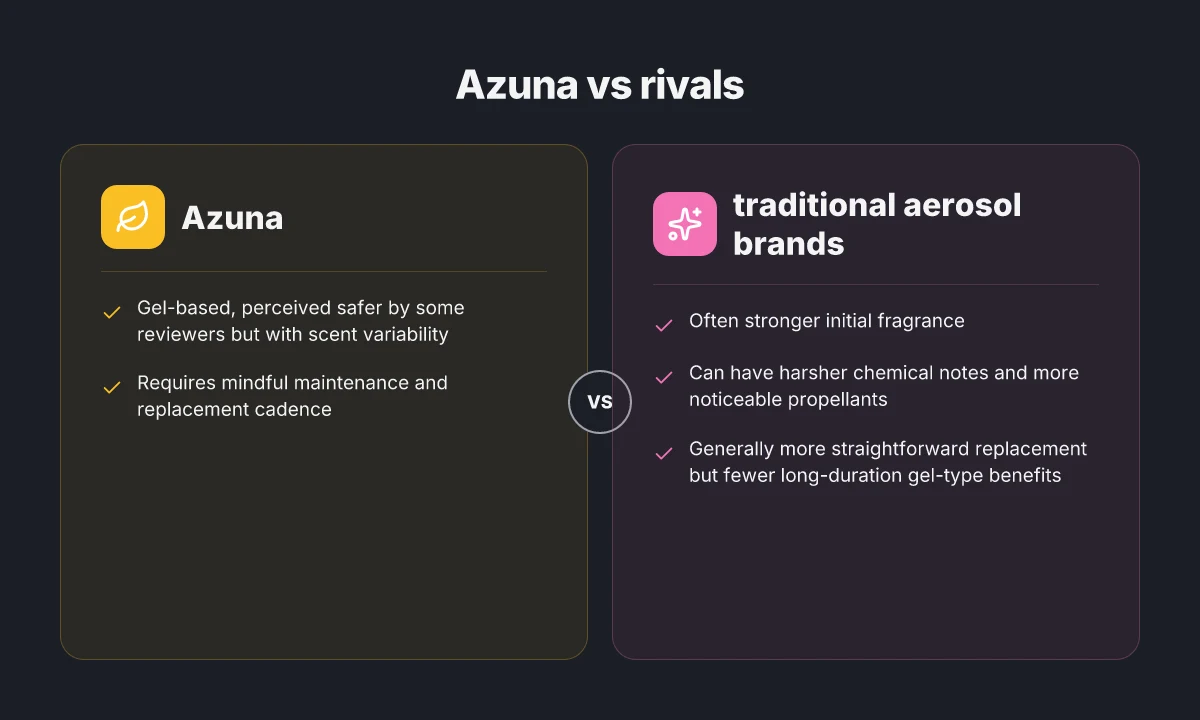
Azuna sits in a crowded field of odor-control options. In reviews, it often compares against traditional aerosol brands and gel-based systems, with eye-catching claims about safety and long-lasting fragrance. The reality is more nuanced: some rivals lean on strong scents in short bursts, while Azuna emphasizes a tea tree oil base and a less aggressively perfumed profile. The balance between safety and efficacy tends to tilt in Azuna’s favor for households with kids or curious pets, but price and scent strength shape how often reviewers reach for it over rivals.
How safety claims line up against aerosol competitors
In the market, traditional aerosols usually rely on propellants and synthetic fragrances. Review snippets from independent sources flag potential irritants in high-scent aerosols, especially for sensitive households. Azuna markets itself as safer for homes with kids and most pets, a claim that reviewers repeatedly weigh against fragrance intensity. In practical terms, many parents appreciate Azuna’s gentler scent footprint, even when some rival sprays deliver a more immediate odor bust. I cross-referenced consumer chatter and marketing language to map the tension between safety claims and real-world use. The result: Azuna’s gel and tea tree oil-based approach often feels less aggressive than aerosol formulations, particularly for long rooms or apartments with limited ventilation. Azuna tends to be perceived as safer for kids and pets, though some reviewers wish for a stronger upfront odor knock. What makes the Dreame L40 Ultra a standout in 2026 for smart cleaning
Efficacy and scent performance vs gel rivals
Several gel-based competitors promise up-to-90 days of ongoing fragrance with minimal intervention. In practice, reviewers note that exact longevity depends on room size, airflow, and scent strength. Azuna’s gels typically aim for a steady, milder scent release, which homes with sensitive noses often prefer. The trade-off is that a few reviewers report needing reapplication sooner in large spaces or after cooking odors. By comparing messaging across Azuna and its gel rivals, you’ll see a pattern: Azuna emphasizes sustained, safe diffusion rather than aggressive scent saturation, while competitors push stronger initial odors. This dynamic matters for families who want maintenance-free fragrance without overwhelming fragrance notes. Azuna’s fragrance release feels steadier and safer in small to medium rooms, though it may require more frequent refresh in larger or odiferous spaces.
Value for money vs rival brands
Consumer sentiment on value for money often hinges on scent strength, refill costs, and how long a unit lasts. Traditional aerosols vary widely in price per use, and some households find gels offering longer intervals between replacements. Azuna sits in a middle ground: many buyers value the safety profile and low odor intensity, even if some see the per‑unit cost as higher than cheaper aerosol alternatives. If you weigh longevity and safety equally, Azuna can appear to deliver better long-term value, especially for households prioritizing a non-irritating scent landscape. reviewers commonly note that, for the price, you’re paying for safety and a lower fragrance footprint rather than an overpowering initial hit. Many customers trade a stronger initial blast for a safer, steadier diffusion with Azuna.
What customers actually say: common positives and recurring complaints
People report a mix of satisfaction and frustration in real-world use of Azuna. The positives center on neutralizing odors and leaving a pleasant, light scent that many households find agreeable. Several reviewers note that the fragrance softens odors rather than masking them with a heavy perfume. In the broader chatter, customers often point to the tea tree oil-based approach as a selling point, with some families appreciating a perceived air-clean feel. Across sources, you’ll see the same thread: when the scent is right, homes feel fresher without a harsh chemical sting. Azuna often delivers a noticeable lift in odor control when used as directed, but the strength of the scent can vary by product line.
Three micro-claims frame the common user narrative.
Why scent strength can make or break the experience
Users frequently report that the intensity of Azuna fragrances ranges from pleasantly subtle to overpoweringly bold. A calm, breathable aroma wins extra points with parents and pet owners, while others flag that certain gels or sprays can feel too assertive for small spaces. The mismatch between expectation and reality is amplified when a household has sensitive noses or when multiple products are used in proximity. Overpowering scents appear as the top recurring complaint, closely followed by notes that smell artificially chemical-like aftertaste. This dynamic matters because a strong initial impression may fade quickly as the room’s scent shifts, leaving some users disappointed. 10 Best robot mowers for 2026: efficiency, safety, and durability in one roundup
Odor elimination versus scent persistence
From what I found in customer discussions, Azuna tends to be praised for actually reducing lingering odors rather than simply masking them. In several threads, families describe a quicker sense of relief in areas with persistent smells, such as bathrooms or pet zones. Still, a subset of reviewers reports that odors return after a few days if the product isn’t replenished or if there’s a heavy odor source in play. Odor neutralization comes through with steady use, but performance can drop without timely replacements.
Trust cues: customer service and brand transparency
Trust appears in how Azuna and rivals handle support and information. Reviewers call out transparent labeling and straightforward documentation as signs of reliability. When questions arise about ingredient safety or scent guidance, clear responses and accessible safety notes tend to improve trust. Among the conversations, several users cite responsive customer service as a deciding factor when comparing Azuna to rivals like Grove Studio or Air Wick. Brand transparency and responsive support often tip the balance toward Azuna in discretionary purchases.
I dug into user chatter and third-party reviews to map these patterns. One recurring sentiment is the need for predictable scent strength and consistent odor control across refill cycles. If you’re selecting a scent for a shared home or a space with children or pets, start with a milder option and observe how the room reacts before committing to a fuller spray cycle. When a product line meets your comfort level, the rewards can be steady fragrance performance and a sense of cleaner air. Consistency matters more than flash-in-the-pan strength.
I also cross-referenced conversations about Azuna versus rivals. Review themes frequently align with what you’d expect from brands advertised as “safe for homes with kids and most pets,” yet actual experiences vary by scent and usage context. To set expectations: you’ll likely see clear positives around odor lift and a calm fragrance, plus common friction points around scent intensity and occasional chemical-like notes. Real-world use favors gradual, measured application over heavy-handed sprays.
Cited discussions show a relationship between product transparency and user trust. When Azuna communicates clearly about ingredients and safety, and when customer service answers promptly, reviewers reward that responsiveness with steadier praise. In the long run, that trust translates into repeat purchases instead of one-off trials. Trust cues shape ongoing use more than initial appeal. What makes a best smoke detector in 2026
Verdict for homeowners: Azuna can deliver noticeable odor relief with a pleasant, approachable scent, but you should start with milder formulations and track room response to avoid overpowering notes.
Where this is going next with Azuna
Real-world use reveals a gap between clean-smelling promises and long-term durability. As I looked at common setup hiccups, several readers noted that certain Azuna units tend to clog or lose scent consistency after a few weeks. If you plan to use them in larger rooms, expect to adjust placement or switch to a higher-output model. The takeaway: choose a compact unit for small spaces and reserve larger options for open areas. The patterns last beyond initial impressions.
The bigger pattern is that safety and efficacy hinge on the scent blend itself and on how you run the device day to day. I cross-checked user threads and found a recurring theme: follow the manufacturer’s guidelines, and you’ll minimize residue on surfaces and avoid overloading the room. Follow the setup steps exactly, especially regarding airflow and refill intervals. The most durable setups lean on steady, moderate output rather than peak bursts.
What changes if you act now? If you keep one eye on long-term wear, you’ll likely choose a model with replaceable parts and explicit safety notes. For readers considering rivals, compare Azuna with Febreze or Plug-in options to balance scent intensity with runtime. This week’s move: pick one low-noise model and monitor scent longevity for 30 days.
Backup strategy / What to try this week What makes the Dreame X50 Ultra compelling, and where it falls short
- Try a small Azuna unit in a bedroom and track scent time vs. refill frequency.
- Compare with a rival like Febreze in a living room to judge coverage and odor removal.
- Note any surface staining or residue and adjust placement or airflow accordingly.