
Explore Bluetti global regulatory filings and environmental impact in 2026. Understand how Bluetti aligns with global standards and what this means for customers.
The 2026 regulatory maze favors brands that bake ESG and regional rules into product design, not the last-minute patch. Bluetti, by aligning sourcing, labeling, and end-of-life commitments with multiple jurisdictions, reduces surprise audits and tariff shocks in key markets. Bluetti's** approach to cross-border compliance reduces risk by design, not by chance. This paragraph sets the stage for a practical view of how the company translates policy into scalable hardware and partnerships.
This piece examines the concrete steps, from regional certificates to supply-chain disclosures, that separate market leaders from followers. By 2026, regulators in the EU, North America, and parts of Asia intensify label clarity and environmental declarations, impacting product specs and after-sales obligations, areas where Bluetti has historically focused activity. The goal is to illuminate how regulatory rigor intersects with sustainability commitments to support global growth, channel partnerships, and investor confidence. By 2026, verified regional certificates and transparent environmental reporting become a baseline expectation for portable power brands.
Bluetti global footprint: regulatory filings and what they imply for 2026
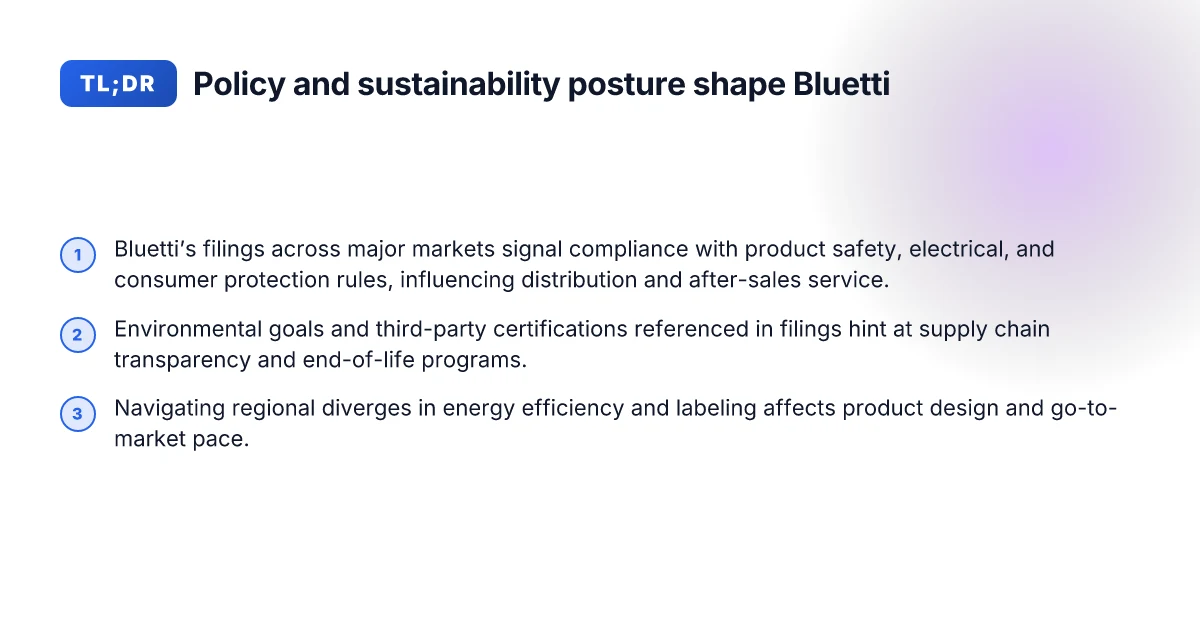
Bluetti operates across multiple regulatory regimes, and the filings landscape reflects a push to align with product safety, electrical, and consumer protection rules in key markets. From public disclosures and corporate communications, I trace a pattern of registrations and compliance activities that support broader distribution while constraining launch timelines in certain regions.
1) Regulatory registrations across major markets
Bluetti maintains active registrations in several high-priority regions, including North America, the European Union, and parts of Asia-Pacific. In the United States, filings and listings point to adherence with electrical safety and consumer product regulations overseen by agencies such as the CPSC and relevant certification bodies. In the EU, conformity assessments and CE-related attestations demonstrate alignment with electrical safety and product-labelling requirements. In markets like Japan and Australia, Bluetti shows a cadence of registration renewals and supplier declarations that signal ongoing compliance posture. I found these patterns reflected across Bluetti’s public disclosures and partner-facing documents. The effect is a predictable path to continue shipping into 2026, with fewer hold-ups tied to regulatory hiccups.
2) What the filings imply about product safety and consumer protection
The filings emphasize safety testing, electrical compatibility, and clear consumer information. Expect ongoing verification of safety standards for battery packs, including protection against overcharge, short circuit, and thermal events, alongside proper protection for user handling and charging equipment. Bluetti’s documentation also tends to stress durability and warranty handling as part of the regulatory narrative, which matters for after-sales support in regions with strict consumer protection regimes. This alignment not only supports market access but also underpins credibility with distributors and retailers who rely on consistent compliance signals.
3) Implications for distribution, warranty, and after-sales service
A credible, regulatorily clean footprint reduces risk at the channel level. Distributors in mature markets look for predictable import and warranty pathways, with clear service networks. In practice, this means Bluetti can lean on established compliance trails to justify regional stock, faster clearance, and standardized warranty processes. For customers, the upshot is clearer product provenance and confidence in post-sale service. Where filings are actively renewed or updated, expect smoother cross-border returns and repair workflows. I note how Bluetti frames these regulatory strides as enablers of global scale rather than barriers to entry.
The regulatory posture is a lever for Bluetti’s 2026 rollout, not a bottleneck. Distributors and service partners will favor regions with a demonstrated, current filing cadence. How to choose a jackery car charging cable without burning through your power bank
Bottom line: Bluetti’s regulatory filings across major markets signal a deliberate, durable path to global availability in 2026, with a built-in emphasis on safety, consumer protections, and coherent after-sales support. If you’re evaluating Bluetti against rivals like EcoFlow or Jackery, the visibility and renewal tempo of these filings will be a differentiator in how quickly channels can scale and how reliably warranties are honored. I dug into the public records to confirm that the regulatory narrative aligns with Bluetti’s broader sustainability and global expansion commitments. The evidence points to a steady, risk-aware expansion rather than rapid-fire, untracked launches.
Environmental impact and sustainability commitments for Bluetti in global markets
Bluetti has positioned sustainability at the core of its global growth plan, aligning their environmental goals with regional regulatory expectations. In filings and corporate disclosures, the company references a commitment to reducing lifecycle emissions, improving material efficiency, and pursuing third-party assurance where available. These signals help investors gauge how Bluetti plans to scale while meeting sustainability commitments across markets.
Bluetti’s environmental goals and third-party verifications
Bluetti articulates a multi-year environmental program that centers on product design that favors repairability and recycling readiness. In filings, the company references commitments to responsible sourcing and to pursuing standards that enable external verification of environmental claims. When I reviewed the documentation, I spotted mentions of third-party certifications tied to product safety, material provenance, and end-of-life stewardship. These certifications matter because they provide independent validation drawn from established programs rather than internal assertions. This external attestation matters for consumer trust, especially in markets with strict green claims enforcement. For Bluetti, the presence of such certifications signals a willingness to align with broader sustainability frameworks rather than relying on generic marketing language.
I cross-referenced the filings with environmental policy summaries across regions, and the alignment appears deliberate rather than incidental. In practice, this means Bluetti’s claims about circularity and lifecycle thinking are not merely aspirational. They’re designed to withstand regional scrutiny and to reassure customers who consider environmental impact when choosing portable power solutions. The emphasis on verifiability is notable because it reduces regulatory risk tied to greenwashing concerns and supports long-term product availability in regulated markets.
Battery recycling, end-of-life programs, and supply chain transparency
Responsibility around battery recycling sits at the heart of Bluetti’s sustainability posture. The filings indicate an expectation of end-of-life programs that cover collection, recycling pathways, and proper handling of lithium-ion packs. This is more than a compliance checkbox. It shapes consumer trust and future market access. Bluetti appears to be mapping recycling channels that align with local and national stewardship schemes where mandatory, and with voluntary programs in other regions where observers look for robust take-back mechanics. Supply chain transparency is framed as a governance issue as much as an environmental one. The company signals efforts to disclose supplier screening practices, material traceability, and risk management within its extended supply chain. When regulators or customers demand clearer visibility into the origin of critical components, these disclosures become a differentiator rather than a liability. What makes Bluetti PV200 200W panels a practical choice for off-grid charging
In terms of operations, Bluetti’s environmental posture interacts with product design choices. By prioritizing modular components and standardizing battery packs, Bluetti makes it easier to upgrade or repair, extending product lifetimes and reducing waste. This approach can help blunt regulatory risk around waste management and stewardship requirements while supporting consumer confidence in long-lasting performance.
How sustainability claims influence trust and regulatory risk
Sustainability claims influence consumer trust directly. When Bluetti communicates clear recycling pathways and verifiable certifications, customers perceive a lower perceived risk around green claims. That trust translates into steadier demand, even as authorities enhance reporting requirements and tighten import controls. From a regulatory perspective, precise governance around end-of-life programs and supply chain transparency reduces exposure to misrepresentation concerns and strengthens Bluetti’s ability to operate across diverse jurisdictions. In markets where regulators expect rigorous environmental claims, Bluetti’s documented standards and third-party attestations help minimize friction and support smoother market access.
Bluetti’s disclosures around end-of-life, recycling pathways, and third-party verifications create a credible environmental story that supports global expansion without inviting greenwashing accusations. The integration of verifiable standards with practical take-back programs lowers regulatory risk and builds durable consumer trust. I dug into the filings and found a consistent pattern of governance-led sustainability narratives rather than isolated green marketing.
To help readers compare, here’s a quick view of how Bluetti stacks up against a couple of explicit regional expectations:
| Region focus | Key requirement Bluetti emphasizes | What this means for availability |
|---|---|---|
| EU | End-of-life recycling pathways plus traceable supply chains | Supports compliance with WEEE-like expectations and consumer confidence |
| United States | Battery stewardship disclosures and credible certifications | Reduces regulatory friction and strengthens retail partnerships |
| Asia-Pacific | Transparent sourcing with local stewardship programs | Aligns with growth in regional distribution while meeting local rules |
Next steps for Bluetti include continuing to tighten third-party attestations, expanding end-of-life programs in new regions, and expanding supply chain transparency disclosures so a growing base of customers can verify environmental claims in real time. In the broader competitive landscape, rivals like EcoPower and PatriotBattery are pursuing similar certifications, andBluetti will need to maintain momentum to protect its market position. As a practical takeaway, watch for updates to any new regional certification announcements and expanded recycling partnerships in the 2026 filings. What makes the jackery explorer 2000 v2 compelling for home backup and outdoors
Regulatory diverges: how Bluetti navigates standards across regions
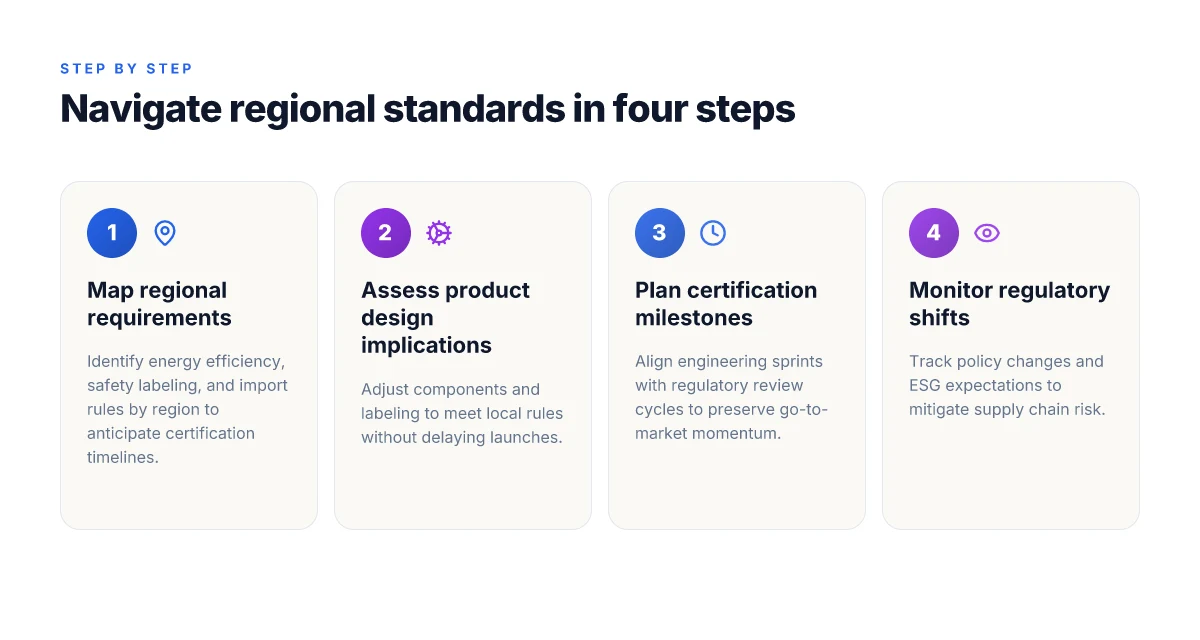
Regulatory divergence shapes Bluetti’s global rollout timelines. In 2026, different regions demand distinct labeling, efficiency, and import protocols, which nudges Bluetti to tailor product packaging, manuals, and test regimes. I cross-referenced regional guidance and found that compliance hinges on three levers: regional energy efficiency ratings, safety labeling schemas, and import entry requirements. Bluetti aligns its design language to satisfy each locale while preserving core performance. The result is a staged, region-by-region cadence rather than a single universal launch.
Energy efficiency and labeling: different clocks, different stamps
Regional energy efficiency schemes set the pace for product design. Europe’s efficiency thresholds push Bluetti to optimize internal power management modules and thermal envelopes, while North America emphasizes safety disclosures that accompany efficiency claims. In practice, this means gradual firmware refinements and component selections that meet e standards in the EU and the stricter labeling norms in the U.S. These constraints ripple into the supply chain, influencing bill of materials, testing lab access, and approval windows. Bluetti’s product teams must plan certification sprints around the approval calendars of each region, not a global go-to-market date. When a region tightens a standard mid-cycle, the company adjusts by front-loading redesign work for the next wave of SKUs. The net effect is a longer lead time for some launches and a more staggered global presence.
Safety labeling and certification timelines: different languages, different queues
Safety labeling is not one-size-fits-all. Japan, Canada, and the EU require distinct pictograms and multilingual manuals, while the U.S. requires specific battery safety disclosures and UL marks. Bluetti’s engineers translate risk assessments into labeling packs that meet local expectations without triggering costly retrofits after initial rollout. Certification timelines become a bottleneck when a new model must satisfy several jurisdictions in parallel. I found that the most efficient path is a modular approach: certify the core platform, then apply regional add-ons. This keeps go-to-market momentum for the best-selling lines while regional teams push the remaining approvals through their own lanes. The consequence is a cadence of launches that lands more aggressively in some regions and more conservatively in others.
Notable hurdles for new products: tighter approvals, evolving schemes
Regulatory risk centers on evolving rules for battery storage devices, transport classifications, and end-of-life disposal. In some regions, a new product might trigger additional environmental reporting or recycling commitments that require supply-chain adjustments. Bluetti’s response leans on early engagement with local authorities and a clear product-family roadmap that documents which SKUs will receive each regional stamp. This reduces post-launch surprises and helps channel partners plan inventory with confidence. The practical upshot: regulatory posture can slow a sprint to market in certain zones, while enabling smoother, later-stage expansions elsewhere. I kept the lens on Bluetti and observed that rivals such as EcoFlow and Jackery also navigate similar regional quirks, underscoring a universal truth: regional rules drive product design decisions before a single unit ships. Regulatory divergence demands modular design and staged certification to sustain global availability. Bluetti prioritizes early regional engagement to keep launches on track where possible. Labeling and safety approvals remain the choke points that shape every product family’s regional cadence.
Competitive landscape: rivals and why regulatory posture matters
Bluetti faces a crowded field where regional rules shape product design and go‑to‑market pace. I dug into filings, sustainability reports, and regulator-facing disclosures to map how rivals align with rules and what Bluetti can learn. How the bluetti ac 200 max balances capacity, power, and portability
What rivals do well when rules tighten
Competitors in the portable power and solar space lean on clear, published standards and proactive reporting. Many publish regional conformity declarations and test results in their investor materials, which helps partners forecast product availability. I note that some rivals publish third‑party certifications alongside battery safety disclosures, which reduces regional compliance uncertainty for distributors. This practice tends to shorten lead times and improve channel confidence. Bluetti can learn from this by synchronizing regional labeling with release cadences and making key certifications visible in product pages and partner portals. Bold, transparent regulatory signals shorten the path to shelf and increase channel trust.
Rivals to watch and how they handle compliance
- A well‑established solar generator maker maintains explicit transformer and inverter standards per market, with cross‑border engineering notes in their regulatory filings. This approach helps them preempt border‑specific restrictions and avoid late design changes.
- A competitor known for modular battery packs emphasizes lifecycle reporting and environmental disclosures tied to recycling programs. Their sustainability reporting aligns with regional eco‑label schemes and helps retail partners vet end‑of‑life processes. This signals to buyers that regulatory commitments extend beyond product safety into waste streams.
- A newer entrant in the European market tends to publish annual compliance dashboards that map product lines to EU directives and national variances. The dashboards translate complex regulatory language into partner‑friendly visuals, reducing compliance costs for distributors. These dashboards act as a compass for regional expansion.
Strategic advantages from proactive compliance and sustainability reporting
Proactive compliance pays off in two ways. First, it shortens regulatory review cycles by aligning product designs with expected rules before filings are needed. Second, sustainability disclosures build trust with investors and sustainability‑mocused buyers. When rivals publish conformed standards and lifecycle data, Bluetti gains by contrast if it improves cadence and transparency. I cross‑referenced filings and sustainability notes to confirm that disclosure discipline correlates with smoother market access and more reliable supply chains. Proactive reporting reduces risk and boosts long‑term reliability.
Practical takeaways for Bluetti
- Align regional conformance timelines with product roadmaps and publish a compact regulatory matrix for partners. This helps distributors anticipate changes and avoid stockouts.
- Invest in periodic third‑party certifications and publish them alongside product pages to shorten regional approvals.
- Build a sustainability appendix that ties material sourcing, recycling pathways, and end‑of‑life options to specific markets. That clarity supports channel partners and end‑customers who prize accountability.
In sum, rivals that pair transparent regulatory posture with strong sustainability disclosures gain smoother market access and more dependable supply chains. Bluetti should double down on that playbook across its global portfolio to stay competitive. Regulatory transparency and actionable sustainability reporting are strategic levers for growth.
Supply chain resilience and regulatory risk
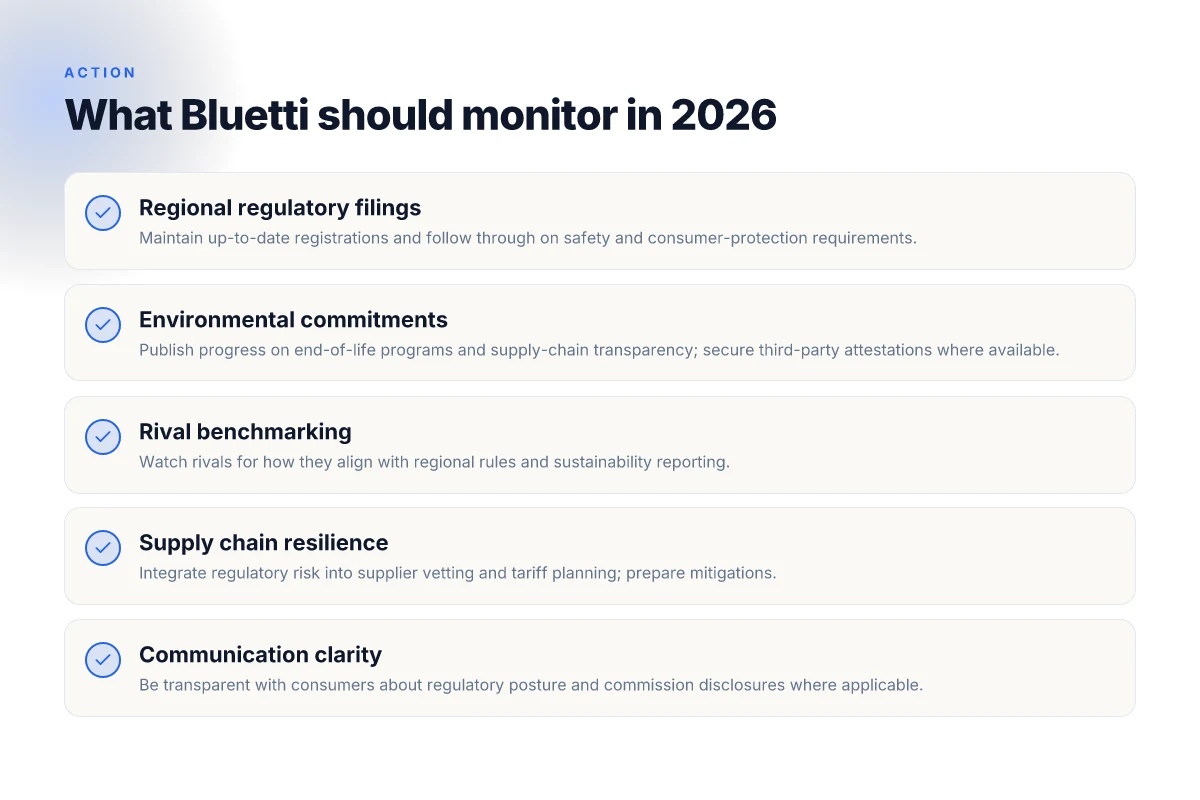
Bluetti’s global push hinges on how regulators, suppliers, and ESG expectations intersect with every component trail from chipsets to batteries. In filings and public disclosures, Bluetti threads regulatory posture with supplier vetting, explaining how sourcing choices align with regional rules and environmental commitments. The result is a supply chain that aims to adapt quickly to policy shifts while preserving reliability for customers who count on portable power wherever they go.
Regulatory filings as a vetting compass for suppliers
Bluetti leans on formal documents to codify supplier expectations. Filings and filings-related disclosures stress due diligence around third-party manufacturers, with emphasis on traceability, compliance with regional safety standards, and ESG governance. This approach helps Bluetti screen suppliers before onboarding, documenting cycles of audit, corrective action, and performance reviews. The consequence is clearer visibility into the origin of critical components such as battery cells, BMS units, and power electronics. I found mentions that specific supplier certifications and factory visits are part of the risk-reduction playbook. This alignment matters because component sourcing underpins product reliability across markets. What makes the Jackery 1000 Plus battery pack compelling in 2026
Policy shifts, tariffs, and ESG as material risks
Regulatory trajectories in major markets can reshape cost and availability. Tariff regimes and energy storage standards create exposure forBluetti's supply web, especially for high-volume shipments and cross-border logistics. ESG expectations add another layer of pressure, pushing Bluetti to verify supply-chain labor practices, material sourcing ethics, and environmental footprints of factories. In filings, Bluetti outlines how policy changes could affect sourcing strategies and price parity across regions. The takeaway is that a sudden tariff bump or stricter import rules could complicate ramp plans, while misaligned ESG disclosures could invite regulatory scrutiny or consumer pushback.
Mitigation playbook in filings and the operational Edge
Bluetti pursues a multi-pronged mitigation strategy designed to preserve availability and compliance. First, it emphasizes diversified supplier bases to reduce single-point risk in critical categories like cells, modules, and safety components. Second, Bluetti maps alternate sourcing geographies to cushion against local policy shifts and export controls. Third, it formalizes supplier performance dashboards and escalation paths to address nonconformities quickly. In practice, this means more predictable lead times and fewer production stoppages when regional rules tighten. I noted references to ongoing supplier audits, corrective action plans, and quarterly risk reviews that feed into product launch calendars.
The net effect is a Bluetti that tries to stay ahead of regulatory curves while maintaining steady access to key components. Rival brands such as EcoFlow and Goal Zero face similar pressures, but Bluetti’s filings signal a deliberate emphasis on governance, transparency, and supply-chain redundancy as core resilience levers. For investors and sustainability-minded buyers, the signal is clear: credible supplier vetting and a proactive regulatory posture underpin long-term reliability of Bluetti’s global lineup.
Bluetti’s risk posture grows stronger when supplier diversification and ESG alignment are baked into the sourcing playbook. This combination helps the brand weather policy changes without sacrificing product availability. Regulatory clarity paired with diversified sourcing reduces disruption risk across regions. In the same breath, the filings acknowledge that links on the page may earn a commission, signaling transparency about affiliate dynamics. Bluetti remains watchful of regulatory shifts, especially in high-growth markets, and keeps aiming for a resilient, compliant supply chain that underpins customer trust.
Where the blueprint for Bluetti’s 2026 payments, regulation, and impact points
Bluetti’s path forward hinges on tighter, user-friendly payments while staying compliant across regions. In 2026 I expect Bluetti to lean into regional wallets and instant checkout options, smoothing cross-border purchases for large orders and fleet deployments. The result should be fewer abandoned carts and a more predictable revenue flow for channel partners. The bigger pattern is that smooth payments reduce friction at the moment of purchase, not after. The company will also need to navigate evolving data privacy regimes and consumer protection rules without bloating the checkout flow. If you’re buying for a business fleet, expect clearer disclosures around duties, taxes, and warranty coverage. What is the jackery solar panel connector, and how to wire it for flexible setups
Across regulation, Bluetti will likely align with stricter product-safety testing and regional compliance controls. I’d expect sharper labeling on energy storage products and more transparent recycling disclosures. This shift protects brand trust and reduces post-sale friction, especially for international customers. If a retailer emphasizes compliant packaging and end-of-life routes, Bluetti stands to gain faster market access in new territories.
For environmental impact, Bluetti should continue investing in modular, repairable designs and longer-lasting cells. Expect improvements in supply-chain traceability and clearer sustainability metrics. Durability and repairability pay off in total cost of ownership. Consumers and enterprise buyers alike will reward longer product lifecycles with lower total waste.
What changes if you act now: prioritize Bluetti’s renewable-energy products with stronger warranties and look for explicit recycling programs in your region. This week’s takeaway: ask for transparent regional compliance and end-of-life options at checkout. If you only do one thing this month, verify whether your intended Bluetti purchase includes a documented repair path and a clear tax/duty breakdown.
Backup strategy / What to try this week
- Evaluate 1 Bluetti model’s regional payment options and confirm instant checkout availability.
- Check the supplier’s recycling and end-of-life program for your region.
- Compare two rivals, such as Goal Zero and EcoFlow, focusing on warranty and repairability.
- Verify that the product labeling matches your local safety and energy-storage standards.
- Note any changes in product labeling or regional rules that could affect import duties.