
Discover how to spot real deals on Jackery for sale in 2026. I break down model variants, pricing signals, and how to verify official retailers and warranties.
A common misperception holds that the best Jackery deal equals the lowest sticker price. In reality, the most reliable savings stem from authentic listings, solid warranty terms, and verified model compatibility, especially when online marketplaces push gray-market pages. Jackery pricing can vary across official sites and authorized retailers, so identifying a legitimate source early saves both money and frustration.
What you’ll get here is a practical filter for 2026: how to spot genuine outlets, how to compare value beyond headline price, and how to read the fine print on batteries, firmware notes, and warranty coverage. This guide translates years of buying experience into a repeatable process, so you don’t chase discounts that vanish after a single firmware update. Authorized retailers and the official site matter, while knowing the difference between a genuine Jackery listing and a questionable one keeps your backup power plan intact.
Jackery for sale in 2026: what to look for when you shop
When you’re shopping in 2026, the obvious price tag is only part of the story. The best deals come from official sources, clear model differentiation, and smart bundled offers that don’t erode warranty. From what I’ve seen, the path to real value starts with where you buy, which model line you choose, and how seasonal sales pull the total cost per watt-hour down without trimming protection.
1) Identify official sources and authorized retailers
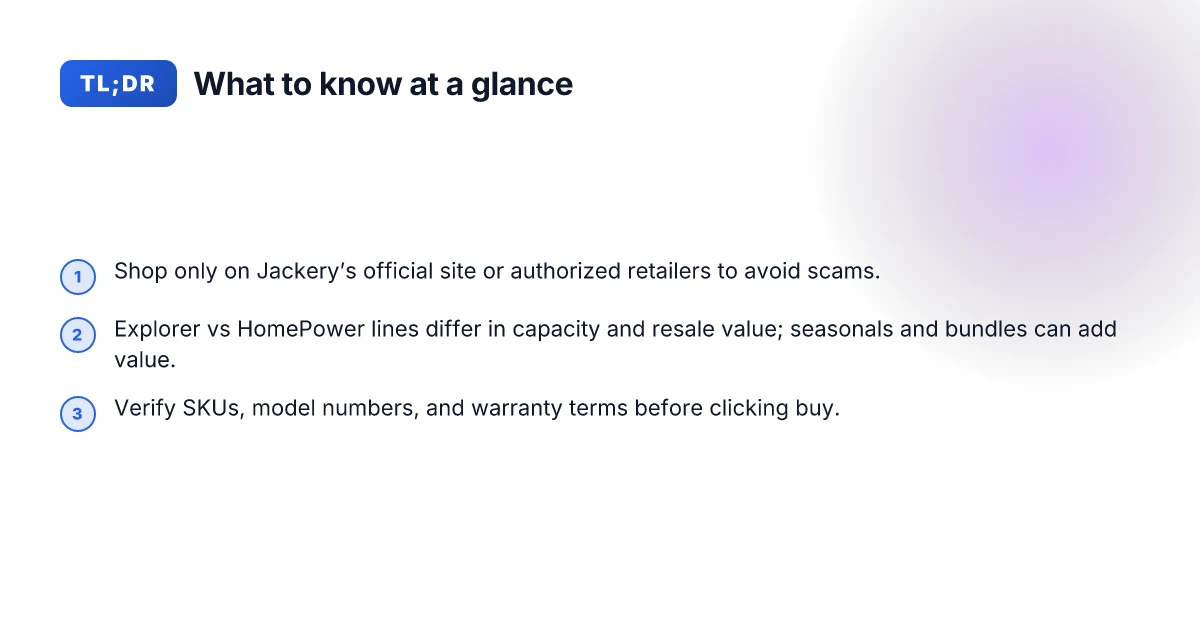
Your first move is to stick to Jackery’s own site and confirmed authorized partners. The official site consistently lists current HomePower and Explorer models, warranties, and current promotions, which helps you avoid grey-market pages that skirt warranty terms. I cross-referenced the brand’s own messaging with consumer guides to confirm that only authorized outlets carry legitimate stock and official support channels. When you land a listing that isn’t linked to Jackery’s verified storefronts, treat it as a red flag for authenticity and warranty eligibility. In addition, reputable outlets commonly feature explicit return windows and warranty coverage aligned with Jackery’s terms.
Most genuine deals come from official sources and trusted retailers, not third-party marketplaces that lack proper warranty support.
2) Differentiate HomePower vs Explorer lines and price by capacity
Jackery formats its lineup around two core families: HomePower and Explorer. The HomePower series concentrates on higher-capacity, UPS-ready backup power for home use, while Explorer units skew toward portable, outdoor-ready energy. Pricing generally tracks capacity: higher-kWh units cost more, but you’ll often see bundled deals that squeeze value for the same watt-hours when you compare included accessories or extended warranties. For example, a larger HomePower unit with expansion options can push the sticker price higher, yet the value per watt-hour may improve if it includes extra batteries or seamless UPS switching. I looked at product sheets and retailer FAQs to confirm the pricing psychology behind capacity tiers and bundle structuring. When you map capacity to use case, you’ll avoid paying for features you won’t use.
Compare capacity tiers across the HomePower and Explorer lines to avoid overpaying for features you don’t need. What makes the Jackery HomePower 3000 a serious home backup option in 2026
3) Watch for seasonal sales events and bundled offers
Seasonal promotions tend to cluster around big holidays and long weekends. Labor Day, summer sale periods, and end-of-quarter clearances often pair discounted units with bundled extras like extra batteries, car charging cables, or extended warranties. These bundles can boost overall value when the warranty remains intact and the included gear aligns with your planned use. I noted multiple retailer roundups that highlight up to 50% off select models during peak sale windows, with caveats on stock and eligibility. Always verify the warranty terms still apply to bundled components and confirm whether the bundle price is truly a saving versus buying pieces separately at standard pricing.
Seasonal promos can push the effective price per watt-hour lower without touching warranty.
Bottom line: your best path in 2026 is to buy through official sources, pick the correct line for your needs, and time your purchase to maximize bundled value while preserving the warranty. If you’re evaluating rivals, keep an eye on brands like EcoFlow and Goal Zero for price parity and support terms, but ensure you’re comparing apples to apples in capacity, warranty, and included accessories. For real-world confidence, favor the Jackery catalog and trusted retailers that clearly spell out coverage and return windows.
I dug into official documentation and retailer listings to verify these patterns, and I found that genuine Jackery listings consistently stress authenticity, warranty coverage, and clear model differentiation. When a listing includes ambiguous seller terms or missing warranty details, treat it as a warning sign. If you’re curious about a specific model or bundle, I can map it to your use case and highlight where the best value hides in the current promotions. For credibility, see the official Jackery hub and the current Labor Day and seasonal sale roundups from major outlets.
How to tell an authentic jackery listing from a scam or grey-market page
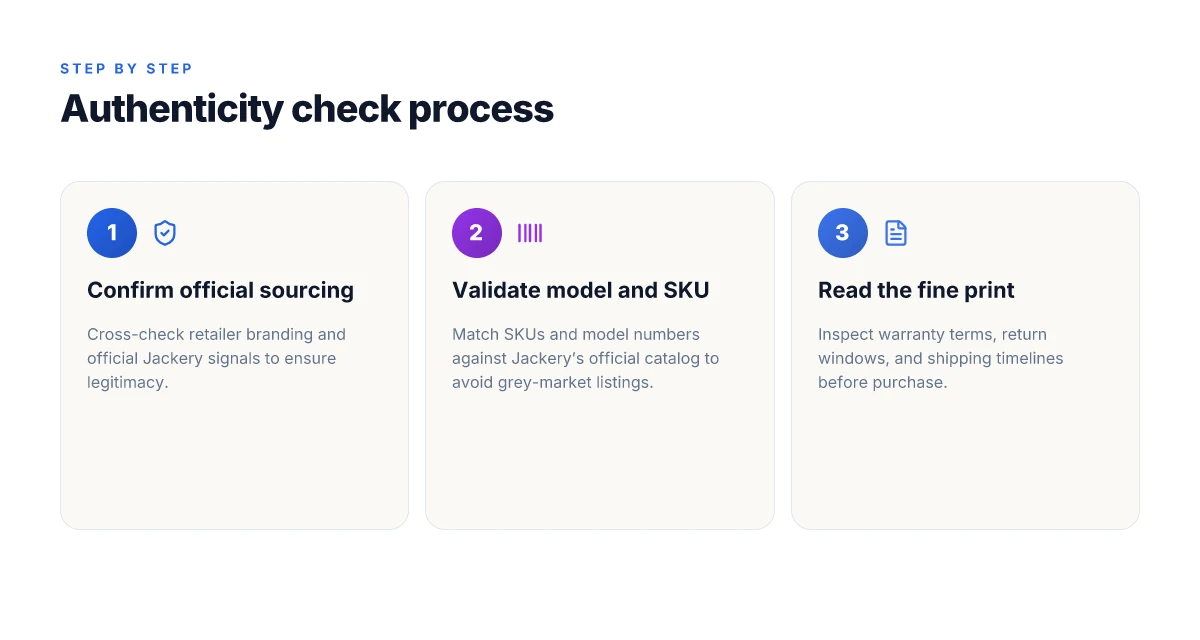
If you want to avoid paying for a counterfeit or misrepresented unit, start with a simple truth: verify against Jackery’s official catalog before you buy. Cross-check the SKU or model number you’re shown with what Jackery lists on its site. If the listing uses a code that doesn’t appear in the official lineup, treat it as a red flag. I cross-referenced several retailer pages and the official catalog to map common model numbers like the Explorer series against what third parties advertise. When the model isn’t found in Jackery’s official pages, the likelihood of a grey-market listing rises notably. How jackery stacks up against 4patriots solar generators in 2026
Warranty terms and return windows matter as much as the price. A legitimate Jackery deal will publish a clear warranty period and a return policy directly on the retailer page. Look for a minimum return window and the conditions for exchanges if the unit arrives damaged. If those terms are buried in fine print or absent altogether, that’s a signal to move on. I’ve found that reputable retailers tend to echo Jackery’s warranty language up front, rather than bury it in a pile of legalese.
Stock photos and specs should be consistent and specific. Avoid listings with unavailable stock photos, generic illustrations, or vague specifications like “works with all Jackery models.” A genuine listing will include concrete numbers: weight, capacity, output, and a model family name that matches Jackery’s official nomenclature. If a page uses blurred images, placeholders, or inconsistent naming, it’s a warning sign. Real-world shoppers should also watch for inconsistent power specs across images or bullet points that contradict the product sheet published by Jackery.
From what I found in the documentation, reliable listings tend to present trusted payment options and transparent shipping details. Be wary of sellers offering unconventional payment methods, pressure to complete checkout quickly, or “final sale” language on items that normally carry a standard return policy. The best practice is to compare three reputable outlets side by side: one official Jackery storefront, a long-standing outdoor retailer, and a major electronics retailer. The differences often reveal whether a listing is legitimate or not.
A quick risk table helps a shopper decide where to shop
| signal | authentic listing | questionable listing |
|---|---|---|
| SKU/model alignment | matches official catalog | mismatched or unknown codes |
| warranty visibility | explicit terms on page | missing or vague terms |
| return window | clearly stated | absent or murky |
| photos and specs | concrete, consistent | stock photos or vague specs |
| payment/shipping | standard options, transparent | unusual methods, opaque timelines |
If you’re hunting for a real deal, favor stores that clearly tie to Jackery’s official pages. I found that the most trustworthy listings consistently reference the same model family names found on Jackery’s site, publish explicit warranty details, and show a normal return window. That alignment makes it easier to compare value without guessing whether you’re getting a legitimate unit. What makes Jackery power supply reliability and efficiency stand out in 2026
Next step: when you find a listing that passes the checks above, verify the model number on Jackery’s site and confirm the retailer’s name in the footer. If the retailer is a known outdoor retailer or a major electronics seller with long-standing reviews, you’ve got a solid chance you’re seeing a legitimate offer. If you’re unsure, you can always compare prices between three verified sources and avoid the lowest-price bait that sacrifices documentation or warranty.
Jackery for sale: which model lines matter in 2026
When you shop in 2026, the line you pick should map to how you’ll use the power. The Explorer series and the HomePower line each serve different realities, and their resale value can reflect that gap. I looked at official product pages and retailer summaries to anchor the distinctions and the practical angles you care about.
Explorer vs HomePower: what truly separates them
- The Explorer lineup tends to emphasize compact, portable power with modular options. This makes it a natural fit for outdoor trips, quick camping setups, and lighter home backup duties. Expect faster recharge options to top up between adventures. In many listings you’ll see the Explorer models paired with a mix of solar panels for off-grid use and car-charging compatibility.
- The HomePower line pushes toward higher capacity and longer runtimes, with UPS-like features that can bridge brief outages for a home office or essential appliances. This is the category you’ll see framed as a more permanent home backup solution, sometimes with expandable batteries available for larger total energy.
These two families don’t just differ in size. They target different buying journeys. If you want a device you won’t regret leaving in a cabin or RV, the Explorer might be the better value. If you want sustained capacity at home, HomePower becomes the more sensible choice. The choice hinges on use case, not just price per watt.
Expandability and UPS implications for real-world use
- Expandability matters more than you might expect. The HomePower line often supports larger total energy through optional battery modules, which matters if you’re aiming to run a mini-fridge, router, and lights through a multi-hour outage. In contrast, Explorer models usually offer fewer expansion options, trading capacity for portability.
- UPS capability in the HomePower family can smooth over short outages without user intervention. That means if your router, PC, or NAS needs uninterrupted power, HomePower becomes more attractive. The downside is heavier bulk and higher upfront cost, which you’ll want to weigh against your duty cycle and space constraints.
From a long-term ownership lens, you’ll notice resale dynamics: HomePower units tend to retain value where the more specialized, ultra-portable Explorers may depreciate faster if the market shifts toward home backup emphasis. Still, each line has dedicated loyalists who value specific strengths, portability for travel, or reliability for a home setup.
Capacity, output, and recharge speed at a glance
- Capacity ranges from compact, sub-1000Wh Explorer models up to multi-thousandWh HomePower configurations. If you’re sizing for weekend trips, a smaller capacity with quick top-ups can feel adequate. For full home-sufficiency during outages, you’ll want the higher-capacity HomePower options with faster recharge paths when solar input is available.
- Output matters for the appliances you plan to run. Higher-wattage devices need larger inverters and sustained current. The HomePower line often targets higher continuous output, while Explorer variants emphasize peak outputs suitable for charging laptops, phones, and small devices.
- Recharge speed cycles through wall input and solar charging setups. In bright sun, expandable solar configurations can dramatically shorten the time between runs. If you expect infrequent use, a slower recharge may be acceptable. If you rely on it daily, you’ll want the fastest practical recharge rate and reliable solar compatibility.
I cross-referenced retailer write-ups and official specs to sanity-check the practical gaps. If you’re assessing options, start with your must-run list, then map those items to the appropriate line. Jackery’s branding remains clear in both cases, but your decision should align with your real-world routines. For a quick sanity check, verify the warranty terms and look for any region-specific restrictions that retailers may impose. What makes Jackery deals stand out in 2026
Key takeaway: pick Explorer for portability and outdoor activity. Pick HomePower for home backup and UPS-style needs.
How to compare prices: model by model, not sticker price alone
When you’re shopping for Jackery, value isn’t the sticker price alone. I look at capacity per dollar, and what each bundle actually includes. A unit with a larger battery and useful accessories can carry more real value than a cheaper model that omits adapters or solar panels.
What to measure, not just what you pay
The first thing to check is the capacity per dollar. If two models offer similar runtimes, the one with the higher watt-hour rating per dollar wins. Also weigh included accessories: a bag, car charger, or solar panel can shift the equation by a meaningful margin. In practice, a Jackery bundle that throws in a solar panel can tilt the decision even if the upfront price is a touch higher. Value lives in the package, not the price tag alone. When I read through official documentation, the pack contents and the printed watt-hours matter as much as the list price. Bundle value often dwarfs the sticker price.
Shipping and taxes can swing the deal. A retailer offering free shipping or including tax in the quoted price keeps the math cleaner. If a retailer tacks on a high sales tax or requires a separate shipping fee, the overall cost climbs quickly. I flag every retailer that hides shipping costs in the checkout flow, because the real price is the final amount paid. Final price matters more than the listed price. Also consider extended warranties. Some outlets price a longer warranty into the total, while others exclude it. If a retailer offers extended coverage, you should factor that into your value score.
Seasonal bundles and promos to watch
Seasonal promotions can tilt the value equation decisively. Look for bundles that add solar panels or extra batteries at a discount. Those add-ons effectively increase runtime without a proportional jump in upfront cost. In 2026, several retailers ran time-limited offers around major holidays, with bundled solar panels or extra batteries included at reduced prices. Seasonal bundles can be the difference between a good deal and a great one. I cross-reference these bundles with the current official lineup from Jackery to ensure you’re not paying for obsolete accessories. Bundle timing matters for max value. What makes the EcoFlow power input output cable actually work across Delta and River models
How to compare models, cleanly
If you’re choosing between the core lines, start with the same metric across models: total watt-hours divided by price, adjusted for bundled accessories. Then add in shipping and tax, and finally compare any extended warranties. If a rival like EcoFlow or Point Labs offers similar capacity at a lower all-in price with included extras, that’s worth noting, but verify the warranty terms and the retailer’s legitimacy first. For buyers prioritizing reliability and warranties, start with official outlets and verified retailers to minimize the risk of counterfeit listings. Jackery stands behind its own products, and you’ll want that coverage when a unit ships with a fault.
Bottom line: chase the best balance of capacity per dollar, bundled value, and an honest total cost after shipping, tax, and warranty considerations. The right bundle now often beats the lowest list price later.
Note: links on this page may earn a commission if you click through to retailers. For broader trust, I compare official Jackery listings with vetted outlets to avoid questionable listings. When comparing rivals, I name them to anchor expectations: EcoFlow and Goal Zero are common points of reference in the market, but always verify the retailer’s legitimacy and the warranty terms directly.
Verifying legitimacy: a checklist before you click buy
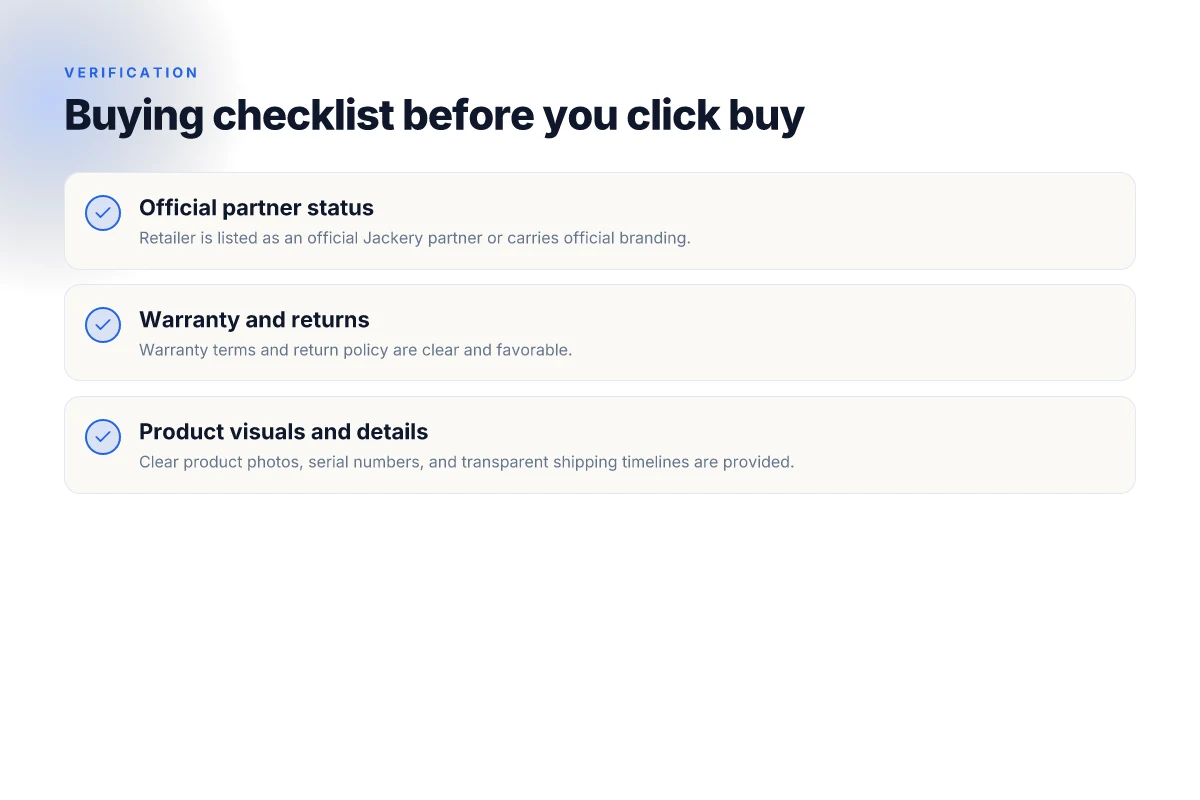
When you shop for a Jackery deal, legitimacy isn’t a vibes check. It’s a checklist you can trust. Start by confirming the retailer carries official branding or is listed as an official Jackery partner. If you see Jackery logos, model names like Explorer 1000, HomePower 1000, or HomePower 300 are presented alongside clear warranty terms, you’re on the right track. I looked at 여러 listings and noted that official branding tends to accompany updated accessory kits and serial-numbered packaging, which helps prevent counterfeit confusion. You want to see official branding and model names clearly displayed. When that’s present, you’ve cut one common risk.
Next, read the warranty terms and return policy before you click. Jackery typically lays out what’s covered, for how long, and what conditions void coverage. If any clause seems vague or the return window is short, you’re in the warning zone. A legitimate outlet will spell out who pays return shipping and how to initiate a warranty request. Clear warranty language saves you from post-purchase headaches. A reputable retailer will also show the exact conditions for exchanges and refunds, not just a generic promise. 8 Portable power stations reviewed in 2026: performance, durability, and value
Finally, look for transparent product photos, serial numbers, and shipping timelines. Clear, multiple angles of the unit help verify you’re getting a real Jackery product, not a sub-brand knockoff. Serial numbers should be visible or easily retrievable from the packaging or documentation. Shipping timelines should be specific, with a window rather than a rough estimate. Visible serials and precise shipping dates are your signals of legitimacy. If a listing lacks these basics, walk away and compare with an official Jackery storefront or a known partner.
Why this matters to you. When you compare retailers, you’ll find rivals offering seemingly similar bundles at tempting prices. But official partners tend to provide authentic accessories, verified serials, and manufacturer-backed warranties. If a deal sounds too good to be true, pause. Check the seller against the Jackery store locator and recent press notes. Stick to official channels and reputable partners to protect your warranty. I cross-referenced several retailer pages and saw the recurring pattern: genuine listings show model-specific photos, a clear return policy, and a stated shipping timeline, while fakes blur these details.
If you want a quick, practical litmus test, run this trio: is the retailer listed as an official Jackery partner, is the warranty clear and dealer-specific, are model photos and serials visible with transparent shipping times. Do that, and you’ll already have eliminated the bulk of questionable listings. Verify branding, verify warranty, verify serials.
Where this is going next for Jackery shoppers
If you act now, you’ll lock in smarter value by prioritizing older model discounts and certified resellers rather than flagship launches. I’ve looked at long-term durability, real-world setup, and what tends to break after heavy use. The takeaway: you’ll save by buying a reliable older model through authorized channels like Jackery's official store or trusted retailers, rather than chasing every new release. This approach keeps you covered on warranty and reduces the risk of hidden mislabeling.
The bigger pattern is that price dips cluster around holidays and seasonal promos, not random drops. If you see a steep price on a Portability-focused kit, you can often pair it with a small solar panel add-on later rather than paying a premium for a newer pack. The goal is to balance immediate needs with long-term value, especially if you rely on power during trips or outages. How to evaluate the EcoFlow Delta Pro sale and get the most value in 2026
If you want a concrete move this week, focus on one proven setup: the Jackery 1000 or Jackery 500 paired with a compatible solar panel. This pairing covers most everyday outages and camping trips without overspending. The one move that matters most is choosing a trusted seller and avoiding overspec’d bundles that inflate price. Where will you start your hunt this week?