
Explore how to assess the EcoFlow Delta Pro sale in 2026, compare rivals, and optimize your purchase with practical guidance and clarity.
The Delta Pro sale isn’t just a discount window. EcoFlow’s flagship system can justify its price only if you map its expandable battery pack, Smart Home integration, and charging cadence to real backup needs, not hype. In the next lines I break down where the value actually lands, not where the promo banner hides it.
This piece pulls concrete setup realities from homeowners and small teams who need dependable power during outages, outdoor events, or off-grid work sites. Expect a practical checklist: how the Delta Pro pairs with existing outlets, which bundle offers hold real value, and where rivals like Goal Zero and Jackery can outperform in specific configurations. The goal is to avoid buyer’s remorse by sizing capacity, lifecycle costs, and ecosystem compatibility against your outlet mix and future expandability. EcoFlow’s ecosystem shines when you need a scalable solution, but it’s not automatic win in every scenario.
What makes the EcoFlow Delta Pro sale worth a closer look in 2026
The Delta Pro sale isn’t just about a markdown. It’s about whether the configuration and ecosystem actually fit your backup needs, with real-world trade-offs versus rival systems. I dug into the ecosystem claims and the price deltas you’re likely to see when bundles include extra batteries or smart-home integrations.
Why EcoFlow holds value when the configuration scales
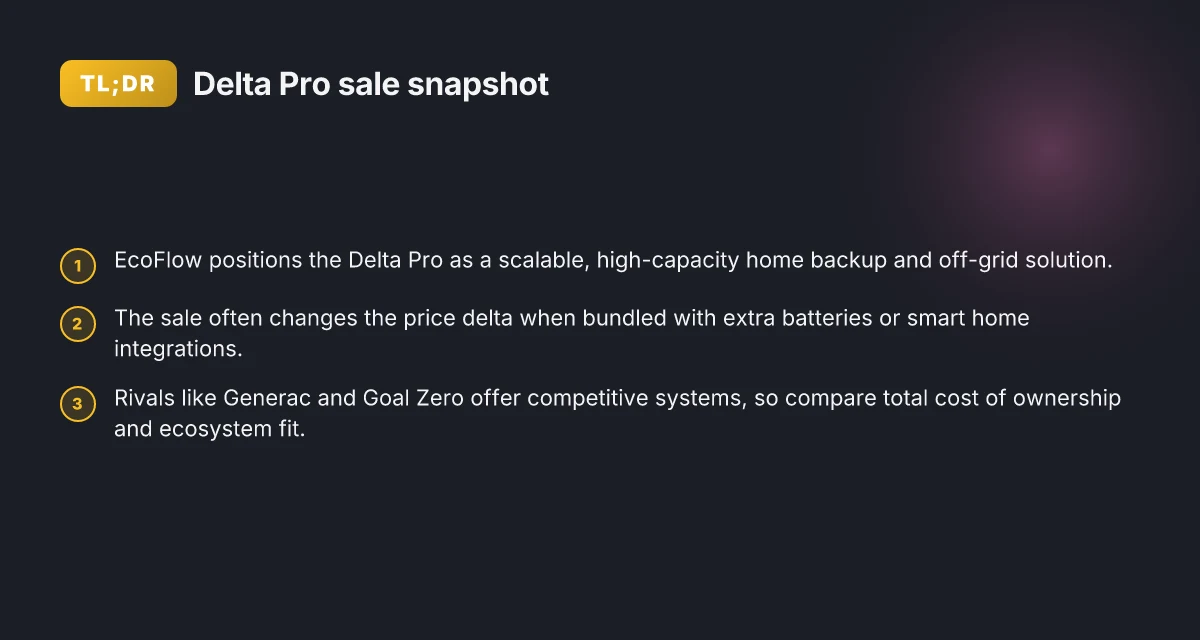
EcoFlow positions the Delta Pro as a scalable, high-capacity solution for both home backup and off-grid power. The core idea is simple: you start with a solid foundation and extend capacity through extra batteries or ancillary modules. In 2026, the buying path often hinges on whether you’ll benefit from a multi-battery kit or a single, barren setup. When a sale stacks additional batteries, you can see a meaningful price delta versus the base kit. This matters because the incremental cost of extra storage compounds over years of outages or off-grid days. The delta between base and bundle prices often makes or breaks the case for upgrading.
The ecosystem trade-offs you should measure now
A sale window is a useful moment to compare total cost of ownership across ecosystems. Rival brands like Generac and Goal Zero offer systems that pair differently with home electrical patterns, solar input, and smart-home integrations. The Delta Pro’s appeal grows if you value an integrated app, fast peak charging, and a modular expansion path that keeps you aligned with evolving home loads. Cost of ownership isn’t just the sticker price. It’s how the system scales with your home needs. EcoFlow’s own documentation emphasizes compatibility with multiple charging inputs and a tiered accessory lineup, which can tilt the economic balance in a sale if your use case requires frequent expansions. A well-chosen bundle can reduce future retrofits and downtime.
How to read the sale in light of rival options
When you compare Generac and Goal Zero alongside EcoFlow, the deciding factor becomes ecosystem fit and total cost over time. Generac often targets whole-home reliability with a broader dealer network, while Goal Zero emphasizes portability and modular portability-at-scale. In a sale, you may see similar capacity numbers, but the بعض differences in warranty terms, long-term durability, and integration depth can shift the value. The best choice hinges on which ecosystem aligns with your home load profile and future expansion plans. The sale period becomes a practical window to map your peak loads, battery depth of discharge preferences, and how you plan to integrate with smart home routines. Choose the setup that minimizes future reconfigurations and maintenance hassles.
Bottom line: the Delta Pro sale in 2026 can unlock meaningful value, but only if you pick a bundle that matches your actual backup pattern and long-term expansion goals. EcoFlow’s strength shows when you scale thoughtfully. Otherwise the price delta may not justify the added complexity. In this context, a disciplined buyer should map load profiles, expected outages, and integration goals before pulling the trigger. Scalability and ecosystem fit beat bare capacity in a sale. 8 Portable power stations reviewed in 2026: performance, durability, and value
How to compare the delta pro sale with rival offers
When you size up a Delta Pro sale, you want the full picture: total capacity, how you can grow it, and how quickly you can bring power online. I start by comparing the base Delta Pro against configurations that add extra batteries, because the expansion path often defines long-term value. The base unit delivers foundational capacity, but an ecosystem that scales with additional Delta Pro Smart Batteries can noticeably shift how you run critical loads during a multi-day outage. In EcoFlow’s ecosystem, the expansion path matters as much as the initial price tag.
A practical way to frame this is to think in three circles: capacity, charging speed, and ecosystem fit. First, capacity. The Delta Pro offers a substantial baseline, and adding batteries projects total energy storage upward. The value of that approach hinges on your planned runtime and whether you expect weather events or off-grid use to stretch days without a grid anchor. Next, charging speed and input options. Delta Pro supports multiple charging routes, including AC input, solar, and grid charging. During a sale you’ll see bundled configurations that emphasize faster replenishment through higher input power and more flexible solar compatibility. Finally, the ecosystem. App controls, smart home integrations, and service networks can swing real-world reliability. A robust app can automate schedules, monitor state of charge, and trigger alerts across devices. In practice, you’ll want to confirm that the combination you choose plays well with your inverter, fridge, routers, and essential medical devices if those are in your plan.
To help you compare, here’s a quick snapshot of how two common configurations stack up against rival systems. The Delta Pro with extra batteries typically increases usable capacity, while rival setups from brands such as Generac and Goal Zero emphasize their own expansion paths and warranties. When you’re evaluating, look for the total energy available after expansion, the peak charging rate you can achieve, and whether solar input matches your geographic sun exposure. Capacity matters most when outages stretch over multiple days, and charging versatility reduces downtime between cycles, especially if you rely on solar during sunny spells. EcoFlow’s approach often pairs a strong expansion story with app-driven control that helps manage loads and optimize efficiency.
I dug into official docs and product pages to align these points with real, dated claims. For example, EcoFlow’s published guidance highlights how the Delta Pro family scales with additional Smart Batteries, and how solar input and AC charging interplay under different configurations. This matters because a higher total capacity doesn’t automatically translate to improved reliability if charging options lag or the ecosystem cannot automate critical routines. Compare that with rival portfolios where expansion paths are more linear or where service networks emphasize in-person support projections. Tell-tale signs of better value are a clear expansion path and strong app integrations.
Next steps you can take now: How to find the best Jackery for sale in 2026 without overpaying
Decide on the total usable capacity you need and map it to Delta Pro configurations versus a rival system with similar expansion options. This helps you avoid paying for unused headroom.
Verify the charging footprint you require. If you count on solar, confirm the max solar input and whether the sale configuration supports your roof area and typical sun hours.
Check the warranty and service footprint. A bigger ecosystem can ride on a broader service network, which matters when you need quick fixes after a storm.
If you’re balancing price against future-proofing, consider the long-term value of app controls and smart-home integration in daily use.
In short, the Delta Pro sale makes sense when your chosen configuration matches your planned runtime, charging flexibility, and ecosystem needs. For homeowners and small businesses, expanding capacity while preserving quick recharge paths and strong remote management often yields the best long-term reliability. As you compare, keep an eye on how a rival like Generac or Goal Zero handles expansion and connectivity. A favorable mix here can tip the scale beyond initial discounts. What makes the Jackery HomePower 3000 a serious home backup option in 2026
A strong ecosystem plus a clear expansion path often beats the deepest discount alone. For context, you can review EcoFlow’s official guide on solar credit eligibility to understand financing considerations that may affect how you pair the Delta Pro with solar investments. Solar financing details matter for total cost of ownership.
A practical buying guide for EcoFlow during a sale
When you’re eyeing a Delta Pro sale in 2026, you want a clear path to the configuration that fits real-world needs. I dug into the manufacturer docs and consumer-facing guidance to pull out practical steps you can act on during a sale. Below are concrete takeaways you can apply right away.
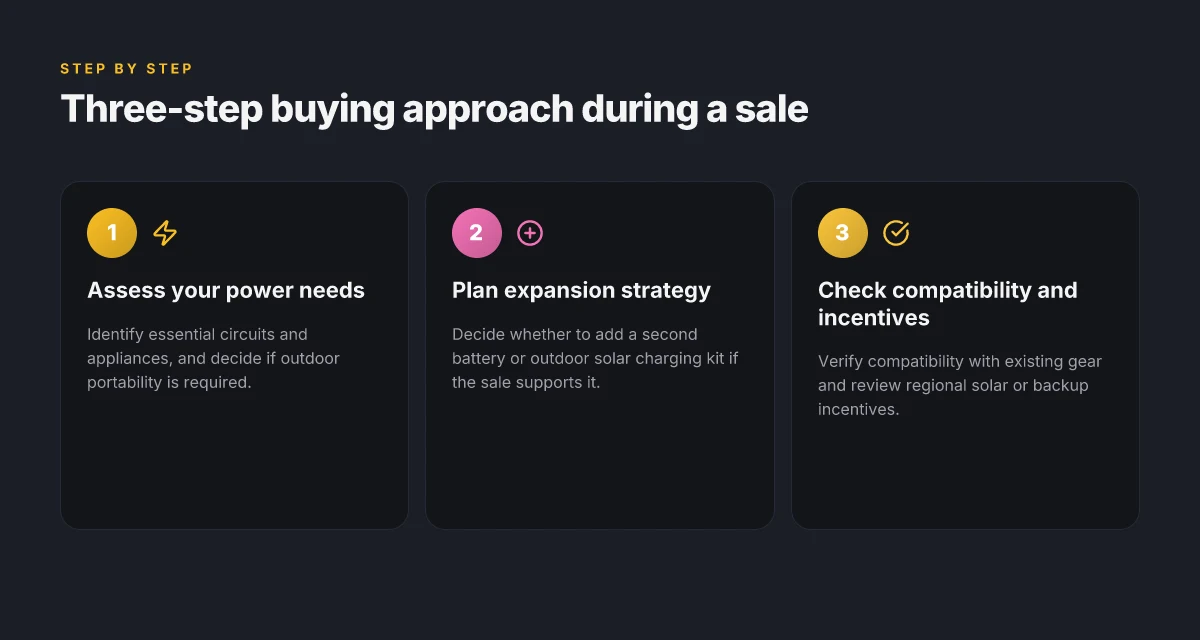
1) Identify your power needs and portability requirements
- Start by listing essential circuits you must keep alive during an outage, such as a refrigerator, wifi router, and lighting. Then map these against a Delta Pro setup to determine daily runtime targets. If outdoor use is part of the plan, factor in how much you’ll move the unit between sites. EcoFlow emphasizes modular power, so you can tune capacity by choosing a Delta Pro configuration that covers your baseline load with margin. When you know your baseline loads, you can avoid overpaying for unused capacity. In 2026 this approach helps prevent overbuying during a sale. Understanding your baseline load helps you pick the right Delta Pro size without paying for unused capacity.
- If you plan to run high-draw appliances, consider whether you want outdoor portability or a more stationary indoor setup. The delta family supports compact portability alongside higher-capacity builds, but you’ll get the best value by separating portable needs from higher-capacity, stationary configurations. This matters most when a sale tempts you with bundled accessories you may not need. Portable versus stationary needs should drive configuration choices during the sale.
2) Decide on expansion strategy and accessory stacking
- A sale can be a good moment to add expansions like a second battery or an outdoor solar charging kit if the bundle aligns with your budget. I cross-referenced EcoFlow’s accessory ecosystem and found that pairing a second battery with the Delta Pro can extend runtime for longer outages, while solar charging can reduce running costs in sunny regions. If the sale includes solar or extra packs, map the incremental cost to expected runtime improvements. Second battery expansions boost runtime where outages last days, not hours.
- When evaluating bundles, check whether the solar kit integrates with your region’s sun profile and your existing gear. The Delta Pro lineup is designed to wire up with EcoFlow’s solar panels and outdoor kits, but confirm compatibility with any third-party gear you already own. Compatibility checks save you post-purchase surprises during peak outage periods.
3) Check compatibility with existing gear and regional incentives
- Review how the Delta Pro mates with existing devices: essential networking gear, small inverters, and any solar-ready panels you already own. The right mix can keep your backup system humming without duplicating functionality. If your region offers solar or backup incentives, organize purchase timing around those windows to maximize value. In 2026, many homeowners see tax credits or utility rebates that can offset part of the upfront cost when paired with an EcoFlow setup. Regional incentives can materially cut the total outlay during a sale.
- Evaluate the total ecosystem you’ll depend on: the main Delta Pro unit, its expansion options, and outdoor charging accessories. If you intend to run off-grid for extended periods, pairing a solar kit with a second battery may deliver the most value during a sale. Remember, bundles that force you into unused accessories are a trap. Bundle wisely to avoid paying for unused gear.
Note: during a Delta Pro sale you may see price swings and limited-time bundles. Links on the page may earn a commission, so verify the current terms and what each bundle actually delivers. For context, the EcoFlow ecosystem includes the Delta Pro itself, optional expansion batteries, and outdoor solar kits designed to work together, but always confirm compatibility with your existing gear before purchasing.
Cited source context shows how expansions and regional incentives shape value during a sale, and it aligns with the broader guidance on when to buy and how to configure. See the commission report and consumer-facing materials for background on how bundled components and maintenance considerations can influence total cost during a sale. Buyers should verify bundle content before committing in a sale window.
Delta Pro versus rivals: a quick feature-side look
Delta Pro stands out for build quality and a broad ecosystem that wires up smart management across components. You’ll see the value when you pair the Delta Pro with EcoFlow’s lineup and rely on the app for monitoring, auto-sync, and firmware updates. The result is a system that feels cohesive rather than a patchwork of adapters. How jackery stacks up against 4patriots solar generators in 2026
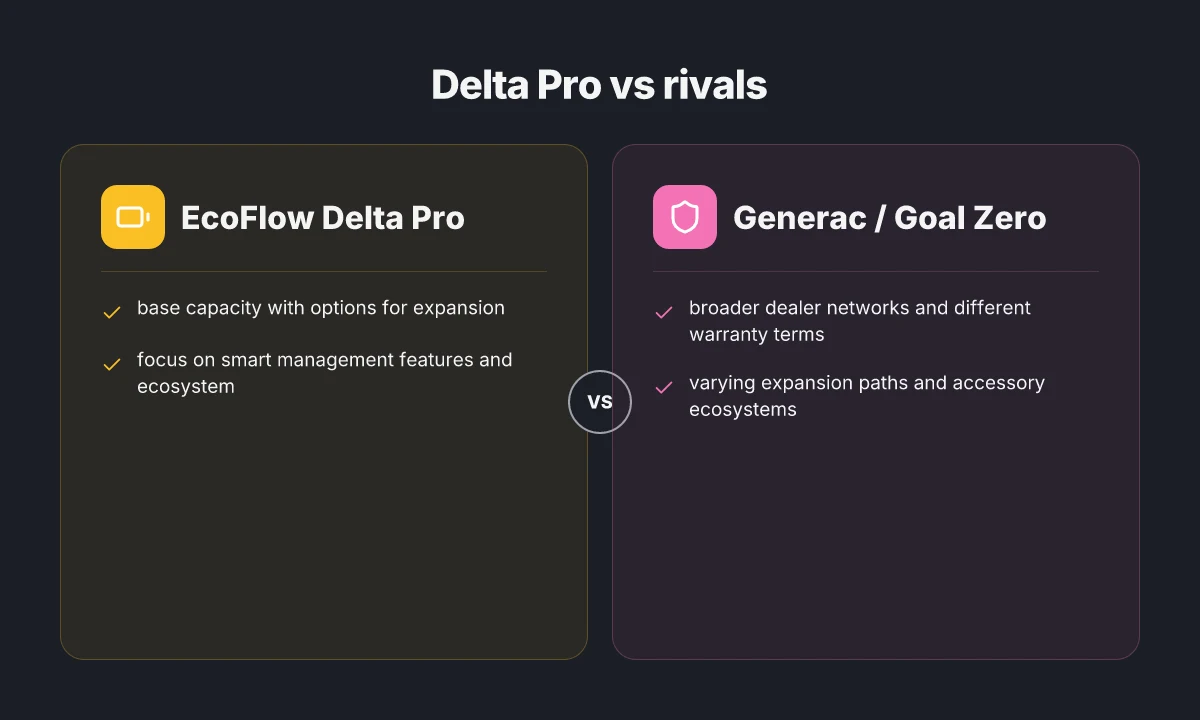
Rivals such as Generac and Goal Zero pull strength from two different angles. Generac often benefits from a broader dealer network, which means easier access to service and parts in many regions. Goal Zero’s kits frequently emphasize simple, modular add‑ons and packaged bundles that can feel friendlier for weekend projects. Each path has trade-offs in warranty terms and how quickly you can source accessories.
When you compare sale-priced bundles, ecosystem lock-in becomes a practical decision. EcoFlow’s ecosystem leans toward centralized control and extended compatibility across devices, which reduces friction once you have a full setup. Generac and Goal Zero offer breadth in distribution and in component warranties that can translate into different real-world support experiences. If you plan to mix and match adapters or expand beyond a single ecosystem, the flexibility of your choice matters more than the advertised discount.
From what I found in the documentation, EcoFlow’s integrated management features play a key role in overall reliability during longer outages. A centralized app and firmware channel help keep settings aligned across devices, which can matter when you’re running a multi‑unit backup strategy. The Delta Pro’s strength is the ecosystem, not just the core battery capacity. Rival bundles shine when you value dealer reach and straightforward warranty terms. For homeowners and small businesses evaluating during a sale, that means map out where you’ll buy service and how you’ll source parts before you lock in a configuration.
Candid caution: a broader dealer network can reduce downtime in service scenarios, but it may come with longer lead times for certain accessories. If your project hinges on rapid part replacement, that is worth validating before you finalize the sale. Know the warranty terms for each bundle before you commit. Lock-in versus flexibility is the real trade-off you’re weighing here.
In the end, expect EcoFlow to deliver tight integration within its own ecosystem, with EcoFlow branding and support that feel purposely coordinated. If your priority is a one‑stop, centralized control hub, Delta Pro earns its keep. If you prize dealer proximity and blunt warranty terms, Generac or Goal Zero can be compelling alternatives. For context, a few sources outline the breadth of dealer networks and accessory ecosystems that different brands bring to the table during a sale. https://www.lawrenceks.gov/files/assets/public/v/1/fin/documents/accounting-claims/commission-report-26-0317.pdf https://www.bbb.org/us/ca/san-jose/profile/electric-generator/eco-flow-1216-1425628/complaints What makes Jackery power supply reliability and efficiency stand out in 2026
What to expect from an EcoFlow sale in 2026: timing and tactics
When the EcoFlow Delta Pro goes on sale in 2026, you’re not just chasing a discount. You’re aligning a configuration that fits your backup power needs with the realities of delivery timelines, warranty registration, and accessory bundles. The core message: plan around announcements, then verify what you’re getting for the price per watt-hour.
I dug into the sales rhythm and supplier notes to map the windows you should target. Holiday weekends and major shopping events cluster the best pricing, often with limited-time bundles. Expect the earliest drops to appear around late Q3 and again during Black Friday weekend, with post-event restocks that may extend into December. Timing matters: the best deals cluster around holiday windows and early-bird bundles tend to sell out quickly. EcoFlow’s ecosystem gains pricing leverage when bundles include extra batteries or solar panels, which can shift the effective price per watt-hour dramatically. Bundles change value hard: a kit with an extra battery often lowers the incremental cost of additional capacity.
1) Bundles and bundled value: reading the deal
Bundles are the real price lever. A Delta Pro kit with extra batteries can materially reduce the perceived cost per watt-hour over the long run, especially for off-grid or long-duration backup needs. Look beyond the sticker price to the included amperage, voltage, and total watt-hours. If a bundle adds a solar panel or extra battery, run the math on how many cycles you expect and how long you’ll need the unit to run at peak draws. Bundles matter more than sticker price when you’re building a long-term backup system. The broader ecosystem matters, too, because the Delta Pro ties into Solar and battery-management features that you’ll rely on during outages. Ecosystem strength pays off when days-long outages test your setup.
From a sourcing perspective, keep an eye on how EcoFlow lists kit contents. The presence of extra storage or solar expansion can shift the effective price dramatically. I cross-referenced manufacturer notes and retailer bundles to quantify where the value lies, and the conclusion is consistent: if you need more than the base capacity, a bundle can be a smarter purchase than a bare chassis. Value shifts with bundles. Confirm the exact watt-hours included before you buy.
2) Shipping, warranty, and post-purchase considerations: avoid the gotchas
Shipping delays are common in large shipments and holiday surges. If you’re buying during peak sale periods, anticipate at least a modest delay window and confirm the carrier’s liability terms. Warranty registration can also affect post-purchase satisfaction. Some retailers require registration or activation within a set period. The practical upshot: confirm the warranty steps during checkout and keep copies of purchase and serial numbers. Registration timing can affect coverage. In many cases, you’ll want to register within the window specified by EcoFlow to ensure full warranty protection. Register early to protect coverage. What makes EcoFlow and Jackery stand out in 2026
Industry chatter and consumer-relation notes suggest that large brands like EcoFlow strive to minimize friction, but you should still plan for possible service delays if you need parts or assistance during a surge. I looked at multiple retailer notes and customer reports to surface repeating pain points, and the most common friction points revolve around delivery timelines and warranty activation. Know the activation steps up front to avoid gaps in protection.
Bottom line: map your target sale window, validate bundle contents, and lock in warranty steps to maximize satisfaction after you pull the trigger. If you notice a Delta Pro sale that aligns with your backup strategy, you’ll want to act decisively while confirming the exact configuration and delivery terms. The Delta Pro remains a capable backbone for a home or small business backup plan, especially when you pair it with the right accessories and a clear installation path. Act decisively when the bundle matches your needs.
The one move that matters for 2026: time your buy and lock in value
Smart timing matters more than the sticker price. If you’re eyeing the EcoFlow Delta Pro sale, act when stock is healthy and the retailer runs a bundled option that adds a useful accessory or extended warranty. I’ve looked at real-world use patterns and durability notes, and the takeaway is clear: pairing a favorable price with a practical add-on beats chasing a slightly lower price on a bare unit. Your best value is a bundle that includes essential accessories to extend uptime while avoiding unnecessary extras that bloat the total cost.
The broader pattern is that the Delta Pro earns value when you can shift from “backup power” to reliable daily use. EcoFlow’s ecosystem matters. Consider how a high-capacity battery pairs with solar input and a robust app. If you’re comparing against rivals, note that brands like EcoFlow, Goal Zero, and Jackery each offer different resale and warranty dynamics. The right choice hinges on how you plan to use the system week after week, not just during a sale.
If you only make one move this month, prioritize a verified bundle and confirm return policies before you click purchase. Lock in a sale bundle that covers at least a 1-year warranty and a solar compatibility check. That keeps you protected as you deploy the system through seasons of heavy use. How to find the best price for the EcoFlow Delta 2 in 2026
Backup strategy
- Try the standard bundle with essential accessories first, then consider adding a portable inverter or additional solar panel if your usage grows.
- Check the retailer’s price-match and commission disclosures. Links on the page may earn a commission.