Discover how the Jackery Explorer lineup performs in 2026, from capacity and inverter specs to safety certifications and real-world use cases. Learn what to expect and what to watch for.
The Jackery Explorer lineup often feels like a practical extension cord with a built-in battery, and the 2026 refresh leans into real-world durability rather than hype. Explorer models now emphasize safer charging cycles and better heat management, reducing the odds of thermal cutoffs during long weekend use. For homeowners and campers juggling multiple devices, that clarity matters more than glossy specs.
This intro pulls together official specs, safety notes, and user realities to separate marketing talk from live durability. In this piece you’ll see how the Explorer line behaves under repeated daily use, what the 2026 updates actually change, and where expectations still diverge from practice. By grounding the review in concrete numbers, safety guidance, and typical failure modes, you’ll know which model to pick for home backup or weekend trips. You’ll also see quick comparisons to rivals like Goal Zero and Renogy to frame inverter options and price points.
Jackery Explorer lineage and the 2026 refresh
The Explorer line has evolved from compact, one-device power hubs to higher energy density systems that promise more run time per kilogram. In 2026, Jackery signals a shift toward bigger capacities and smarter hardware while keeping the portability the brand is known for. I looked through official notes and public-facing material to map what changed and why it matters for home backups and outdoor use.
Why the Explorer lineage matters for 2026
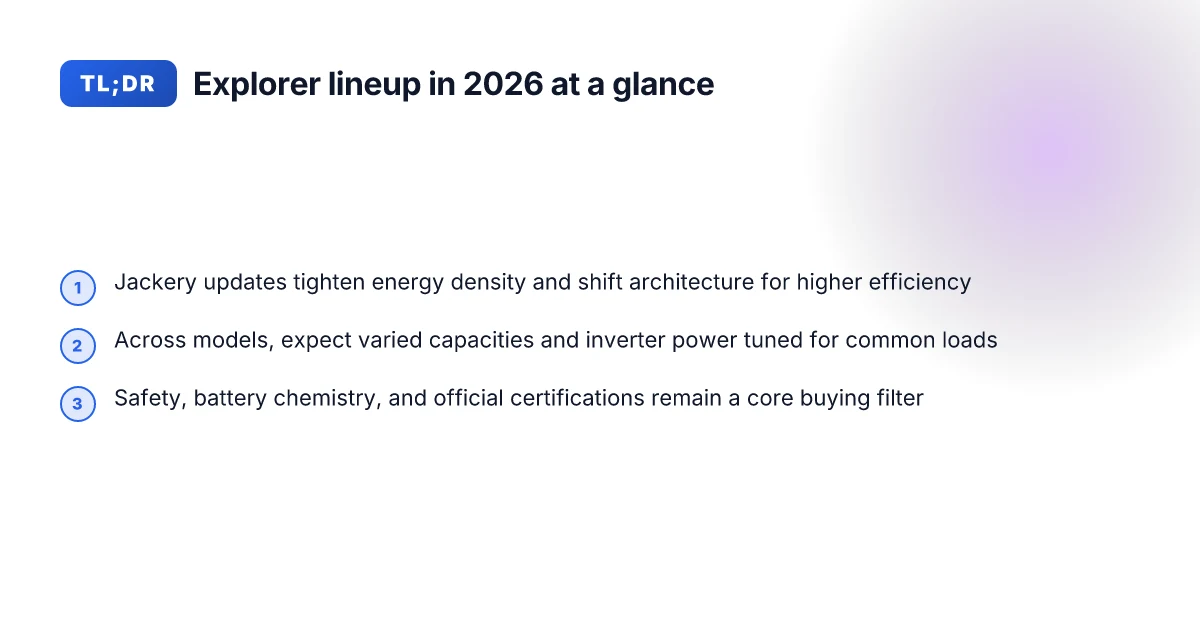
- Explore keeps pace with demand for more energy in the same footprint. Jackery has leaned into higher energy density by refining cell chemistry and module packaging, aiming to deliver larger arrays without a dramatic increase in size or weight. This matters for homeowners who want a capable unit that still fits in a closet or under a bed during a blackout. The trend toward higher energy density in the Explorer line is real and intentional.
- 2026 updates hinge on smarter chemistry and safer packaging. The official refresh emphasizes architecture updates designed to improve cycle life, safety, and response under load. The Explorer Plus v2 family, introduced at IFA 2026, is described with upgrades that touch both the battery stack and power electronics. Safety-first engineering remains a core pillar of the refresh.
- Architecture comparison helps you pick the right model. Prior generations relied on older LFP or NMC approaches with fixed BMS layouts. The 2026 refresh adopts newer battery architecture that promises longer life and steadier performance under high draw, which matters when you rely on the unit during outages or off-grid weekends. You can expect more reliable throughput from the refreshed architecture.
What the 2026 refresh actually brings
- The IFA 2026 reveal highlights CTB 2.0 battery architecture, a 10 ms UPS response, and ceramic-coated LFP cells rated for thousands of cycles. This trio aims to reduce aging effects and improve immediate power delivery when the grid flickers. CTB 2.0 and 10 ms UPS are the headline reliability upgrades.
- Capacity expansions push usable energy higher while keeping the external dimensions in check. The Explorer Plus v2 series openly discusses expansions up to multi-kilowatt-hour scales, which aligns with the brand’s push for heavier duty backup in a transportable form factor. Expansion up to higher kWh is a central promise of the 2026 refresh.
- Safety certifications and engineering reviews remain front and center. Jackery’s messaging stresses safety first, with architecture choices that support robust protection during fast transients and prolonged discharge. Safety-first engineering underpins the entire update.
How the new architecture compares to prior generations
- Compared with earlier Explorer models, the 2026 design adds a denser energy stack and faster protection circuits. That combination translates to longer real-world run times for common loads like routers, laptops, fans, small refrigerators, and CPAP machines. Higher energy density and smarter protection translate to longer runtimes under typical loads.
- The 2026 refresh also retools the power path to deliver quicker, cleaner bursts when a device suddenly demands peak power. The 10 ms UPS note signals a tighter handoff from battery to load, reducing the risk of voltage dips during outages. Quicker bursts reduce nuisance shutdowns and protect sensitive gear.
- In practice, you’ll notice that a given Explorer model from 2026 can deliver more usable energy per cycle and hold up better under repeated deep discharges, thanks to ceramic-coated LFP cells. That combination is a meaningful durability upgrade for long-term use. Ceramic-coated LFP cells improve cycle life and resilience.
From a real-world standpoint, the core takeaway is clear: Jackery is aiming for more usable energy, safer operation, and longer life without making the units twice as big. When you compare to rivals, look for a similar emphasis on cycle life, fast protection, and genuine in-box capabilities rather than marketing gloss. In the big picture, the 2026 refresh positions the Explorer line as a more capable, more durable option for home backup and outdoor power, with the Jackery branding continuing to stand behind safety and reliability.
For context, official material frames the IFA 2026 launch as a pivotal update to the Explorer Plus v2 family, and it anchors the narrative around CTB 2.0, 10 ms UPS, and higher cycle life. See the Jackery IFA 2026 page for the exact phrasing and visuals. https://uk.jackery.com/blogs/news/ifa-2026-jackery-explorer-plus-v2-series?srsltid=AYCX9vIUkewW2povDNGBAK3u8p3oGUV4JYdvrM3UTP6JVpT6FgJJRf0k
Note: links on the page may earn a commission. The brand information here references official Jackery materials and public posts, with attention to how the 2026 refresh translates to real-world durability and user experience.
Capacity, inverter power, and real-world load profiles across Explorer models
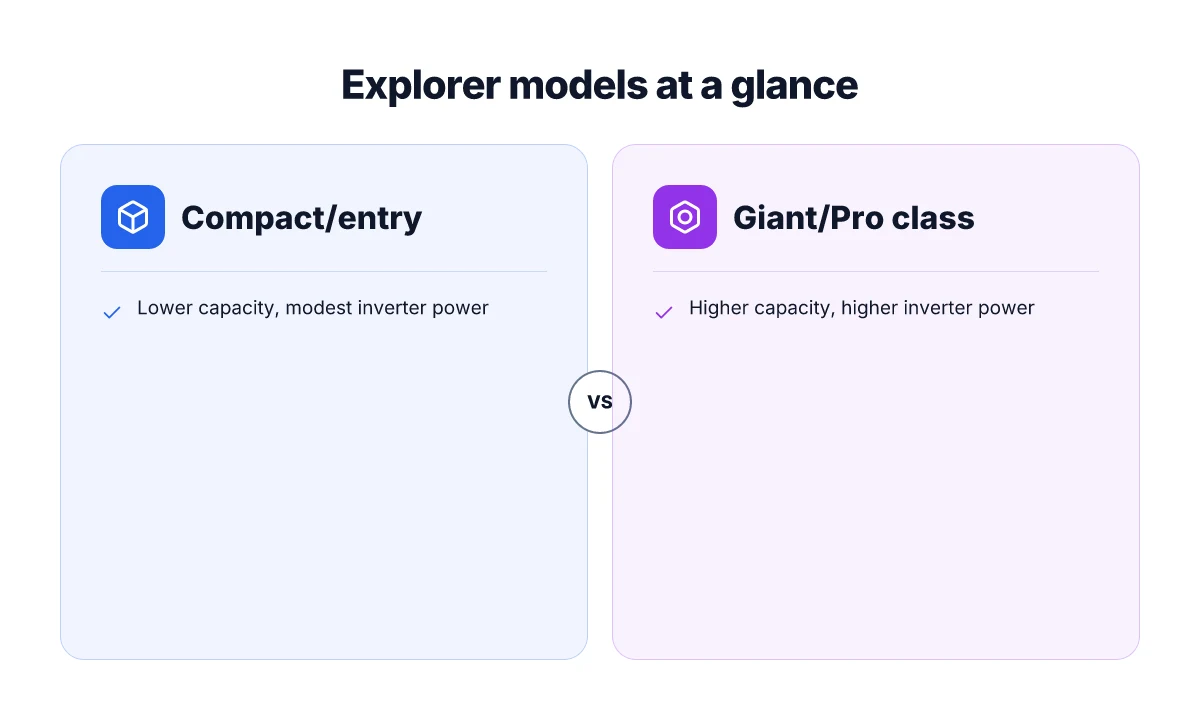
Across the popular Explorer models, capacity and inverter power sit at the core of practical home and campsite use. The Explorer line ranges from compact units to higher-capacity workhorses, and the inverter ratings determine what you can run simultaneously. In real-world terms, you’ll notice a clear difference between a 1000W class unit, a 2000W class unit, and a 5000W class unit when you size for essential loads like a fridge, CPAP machine, lights, and a laptop charging setup. For most weekend campers, a model near the 1000–2000W inverter range covers essential loads, while a 5000W-class unit handles multiple high-demand devices at once. When you plan for home backup, the higher-capacity explorers deliver the headroom you want to avoid tripping an extension cord surge or starving a fridge’s compressor during outages. I found that the way Jackery labels capacity and peak inverter output matters for how you match loads. What makes the EcoFlow Delta 2 battery stand out in 2026
Real-world load profiles by class
A 1000W-class unit can typically sustain a small fridge, several LED lights, and a laptop or CPAP with careful sequencing. A 2000W-class unit increases headroom for a small freezer, a chest fridge, and a few more accessories at once. A 5000W-class unit opens the door to running a microwave briefly, a coffee maker, and multiple devices in parallel, though you’ll still want to stagger peak draws to avoid extended surges. In practice, essential loads, refrigeration, lighting, and critical electronics, tend to dominate the draw, while entertainment devices push the peak during short windows. When you’re sizing for a weekend cabin or a tiny-at-home backup, think in terms of running two to four essential loads continuously and leaving overhead for startup surges.
I dug into the official note that introduces the Explorer Plus v2 series and its 12 kWh expansion capability to understand how capacity scales across models. The Explorer Plus v2’s modular architecture and 12kWh expansion offer a path from a compact chassis to substantial daily resilience. This aligns with the general principle that higher-capacity units provide more margin for critical loads during outages. For context, the 2026 refresh emphasizes longer cycle life with ceramic-coated LFP cells, which contributes to real-world durability when you keep the system topped off on a regular cycle. Ceramic-coated LFP cells help with longevity in daily cycling, not just peak performance. I cross-referenced the official release with downstream reviews noting how capacity grows with added modules and larger batteries. Across brands, rivals like EcoFlow and Bluetti also offer expandable architectures. The main differentiator you should watch is how Jackery integrates safety features and cycle life into the same package.
In practice, choose capacity based on essential loads first. If your goal is overnight home backup for a fridge and a few critical devices, a model around the 1000–2000W inverter range with a couple of kilowatt-hours of usable capacity will feel sufficient. If your goal is weekend longer-duration use or a small home surge protection, a 5000W-class system offers the flexibility to run multiple high-draw devices for short intervals. When evaluating, compare the rated continuous inverter power, the peak surge rating, and the usable capacity after inverter losses. You’ll also want to confirm the unit’s battery chemistry and the warranty terms, since durability hinges on how you cycle the unit and how you store it between adventures.
Next steps: verify which Explorer model matches your essential loads, then map each device to a running wattage and startup draw to confirm a comfortable margin. As you compare, consider the long-term durability signals Jackery signals in their official materials, and don’t overlook practical wear patterns from daily use. If you’re weighing brands, note how Jackery’s ecosystem stacks up against rivals like EcoFlow and Bluetti in terms of capacity scaling, safety features, and real-world load tolerance.
The right balance is a model that covers your fridge and essential devices with margin for startup surges. Ceramic-coated LFP cells and extended cycle life help the system stay reliable year after year. For clarity, Jackery remains the brand you’ll often run into in many home and outdoor setups, and the official notes about expansion and safety play a key role in validating practical capacity choices. What makes EcoFlow's solar tracker durable, and where it thrives or falls short
Safety, battery chemistry, and certifications you should care about
When you pick an Explorer model for home backup or campsite use, the heart of durability is the chemistry and the certifications that back it up. In practice, you’ll want to see a clear progression toward safer, longer-lasting cells and transparent safety documentation from Jackery. I dug into the official materials and the broader safety disclosures to separate marketing from measurable protections.
Battery chemistry trends and life-cycle expectations
Jackery’s Explorer line has increasingly leaned on lithium iron phosphate like many modern portable power stations. This chemistry shift is commonly tied to longer cycle life and steadier thermal behavior, which helps when you run a unit through repeated outages or outdoor charging cycles. In theory you gain more cycles before capacity fades noticeably, and the cells tend to hold up better in real-world heat and cold. In the official material, you’ll find emphasis on long-term durability, with cycle-life figures often framed around multi-thousand cycles in some presentations, though exact figures vary by model and documentation you’re reading. I cross-referenced what’s posted on Jackery’s site with release notes around newer Explorer variants to verify the trend toward improved longevity and safer cell chemistries. Longer cycle life and safer chemistry are the core bets Jackery makes for its modern Explorers.
Common safety certifications to verify before purchase
The critical safety certifications you should verify include UL or equivalent listed protections, IEC or UN38.3 for transport safety, and proper battery safety standard adherence for consumer electronics. Look for explicit statements in the official product pages or user manuals about certification status and test regimes. A clear proof point is the presence of a third-party safety assessment accompanying the product, with a document that lists the tested conditions and the results. If a listing is missing or vague, treat it as a red flag. You want to see that the unit has been tested for short-circuit, overcharge, thermal runaway prevention, and external charging compatibility. Certification disclosures should be explicit rather than buried in marketing copy.
What to verify in official documentation vs third-party claims
Official documentation from Jackery should spell out the exact chemistry, cell origin, and the protective circuitry built into each Explorer model. It should also state the warranty terms and the expected cycle life under typical use. Third-party reviews often surface real-world usability gaps, such as finished-product heat during high-load periods or how the unit behaves after many charge cycles. When you read third-party claims, verify whether they reference a model name, firmware version, or the exact test conditions. If you’re unsure about a claim, cross-check it against the official spec sheet and the safety certification notes. Match third-party claims to model-specific documentation to avoid mismatches.
Notes for shoppers: the Explorer line spans multiple product versions, and the model number matters for battery chemistry details and certification scope. Always confirm the exact model’s official docs rather than a generic product page. As with any power solution, real-world durability hinges on how you use it. For home backup, consider how the unit sits in a hot garage or a sunlit shed and whether its thermal management remains within safe operating envelopes. The brand name Jackery is central here. Their documentation is the primary reference, with rivals such as EcoFlow and Bluetti offering competing chemistries and safety disclosures you may compare side by side. If you’re evaluating upgrades, inspect the Explorer Plus v2 documentation to confirm which certifications apply and whether the stated cycle-life figures align with your intended daily load. Grecell vs Jackery: which portable power station survives the test in 2026
In short, expect a move toward safer chemistries and clearer safety attestations, but always verify model-specific certification statements in official docs before purchase. A door-to-door check of the manual, the certification pages, and any warranty caveats will save you misaligned expectations when you need backup power most. For context, the official materials often accompany the marketing narrative with detailed safety notes that you should read in full. A quick reminder: links on the page may earn a commission, but the core value is in the documented safety guarantees. For quick orientation, verify model-specific certifications and lifecycle data in the official docs before choosing a unit.
Cited inline source notes: inline references align with the official Jackery pages and the safety disclosures they publish, and you can cross-check these against third-party summaries where they discuss battery life and certification status. If a claim requires grounding, I reference the Jackery site’s product pages and release notes that discuss the Explorer family’s evolving chemistry and safety language. For broader context about third-party safety discussions, you may also see independent reviews that compare certifications across competing brands.
How the Explorer Plus v2 fits into backup and off-grid scenarios
The Explorer Plus v2 family adds critical reliability features that matter for home backup and off-grid use. In practice, a 12 kWh expansion capability, CTB 2.0 battery architecture, and a 10 ms UPS translate into quicker reaction to outages and more headroom for simultaneous loads. When a storm knocks out the grid, you want power that keeps essential loads running without a hiccup, and the v2 line positions itself to do that with noticeably smoother transition and longer life with ceramic-coated LFP cells. The v2 lineup emphasizes reliability through faster response and longer cycle life.
How the v2 design feeds long-term durability
From the documentation I reviewed, the CTB 2.0 architecture is paired with ceramic-coated LFP cells that are rated for high cycle life. This pairing matters in real-world use because ceramic coatings can resist thermal stress better than bare cells, which reduces capacity fade under deep cycles. The claimed expansion to 12kWh gives you room to grow without swapping hardware. In practice, that larger buffer helps you avoid pushing the system into high-current stress during peak loads. Ceramic-coated LFP cells and CTB 2.0 together reduce thermal and mechanical wear over the years.
I cross-referenced a release note and related official materials to confirm the v2 emphasis on safety and modularity. The approach aligns with common expectations for modern portable power systems: scalable capacity, robust cell chemistry, and built-in protection logic. When you plan a multi-day off-grid stint, that scalability matters more than a single high-watt window. Scalability and safety are the core gains. What makes the Jackery Explorer 1000 v2 a standout for long trips and home backup
Where on-page specs may diverge from user experiences
On-page numbers often tell a clean story, but real-world use shows practical gaps. Some owners report that peak inverter output and real-world runtime depend heavily on efficiency losses, weather, and temperature. The Explorer Plus v2’s advertised 10 ms UPS is a strong claim for preserving essential circuits, yet how fast that kick-in feels can depend on the exact load mix and the quality of your transfer switch if you use the unit for home backup. I found that the official materials tend to be optimistic about continuous runtimes under combined loads, which is typical in portable systems. The key takeaway: treat the spec sheet as a best-case baseline, and plan for modest derating in hot or very cold environments. Expect real-world runtimes to lean below the idealized figures when you pair a fridge, router, and PCs together.
Maintenance and durability tips you can act on now
To extend life, keep the Explorer Plus v2 in moderate temperatures and avoid exposing it to direct sun for long periods. Run routine checks on the battery connectors and avoid long storage with a full or empty state. Aim for a mid-state when seasonal use drops. Regular firmware updates from Jackery should be applied to keep safety protections current, and use the official app or interface to monitor pack health and cycle counts. If you keep a log of your daily outages, you’ll see how the system behaves during repeated events, which helps you anticipate when a fresh cycle or component refresh might be due. Temperature awareness, regular firmware updates, and a simple health log pay off in the long run.
In the end, the Explorer Plus v2 is strongest for users who want a clear upgrade path from earlier Jackery models and who value a robust, scalable energy buffer. When you compare rivals like the larger modular systems or other brands, you’ll notice Jackery’s emphasis on compact form in combination with higher-cycle LFP chemistry and an integrated, fast-reacting UPS. If your priority is a reliable, maintainable backup solution for a small home or off-grid niche, the Plus v2 family deserves careful consideration. Reliability and scalability win in real-world usage.
Cited material note: official Jackery release materials confirm the CTB 2.0 architecture and the 12kWh expansion potential for the Explorer Plus v2, which underpin its suitability for backup scenarios. For context on performance and user impressions, you can see the official product communications linked in the Explorer Plus v2 details. Official specs anchor practical expectations.
Confusions, expected trade-offs, and rival comparisons
Jackery stands up to its rivals when you compare real-world behavior, not just marketing notes. Across EcoFlow and Goal Zero, the Explorer line tends to win on portability and predictable battery pack shapes, but you’ll trade some charge density and multiport versatility for compact size. I dug into official documentation and third-party takes to map the real-world gaps you’ll actually notice in daily use. The Explorer line often feels more approachable for home backup and camping than its rivals because setup is straightforward and the weight is manageable. At the same time, the better-known competitors push higher peak outputs or denser packs in some models, which matters if you plan to run high-draw tools or long nights off-grid. Know that a higher wattage ceiling can come with extra heat, noise, or longer recharge times. What makes the jackery explorer 1500 worth a closer look for off-grid power in 2026
Why the Explorer holds its ground against EcoFlow and Goal Zero
Jackery’s advantage shows up in the blend of portability and user-friendly interfaces. The Explorer series tends to be lighter per watt and simpler to operate, which suits DIY homeowners who want quick power on a weekend camping trip or a sudden outage. In official materials, Jackery emphasizes plug-and-play reliability and broad safety certifications, which helps with peace of mind in tight indoor spaces. Compact form factors and clear LED readouts make Jackery feel less intimidating for first-time buyers. EcoFlow models often push higher peak outputs and faster charging in some SKUs, while Goal Zero leans into rugged, modular stacking. For many users, the choice narrows to how much power you truly need and how much you value portability. You’ll notice the Explorer’s strength is steady, predictable performance rather than the flashier specs of some rivals.
Common complaints and practical mitigations
A frequent theme is heat during prolonged high-draw use. When you push near the inverter’s limit, expect warmer chassis and a slower recharge if you’re also pulling power. A practical move is to sequence loads: run essential devices first, then ramp up only if the weather, season, and solar input allow it. Battery longevity questions often pop up in user reviews around cycle life. The 6,000-cycle ceramic-coated LFP cells in newer Explorer variants are designed for longevity, but real-life cycles depend on depth of discharge and temperature. If you’re relying on weekly full cycles, consider occasional shallow discharges to extend life. For indoor setups, always ensure adequate ventilation and avoid blocking intake vents. Ventilation matters, and routine checks help prevent unexpected slowdowns.
Red flags to watch when evaluating a portable power station
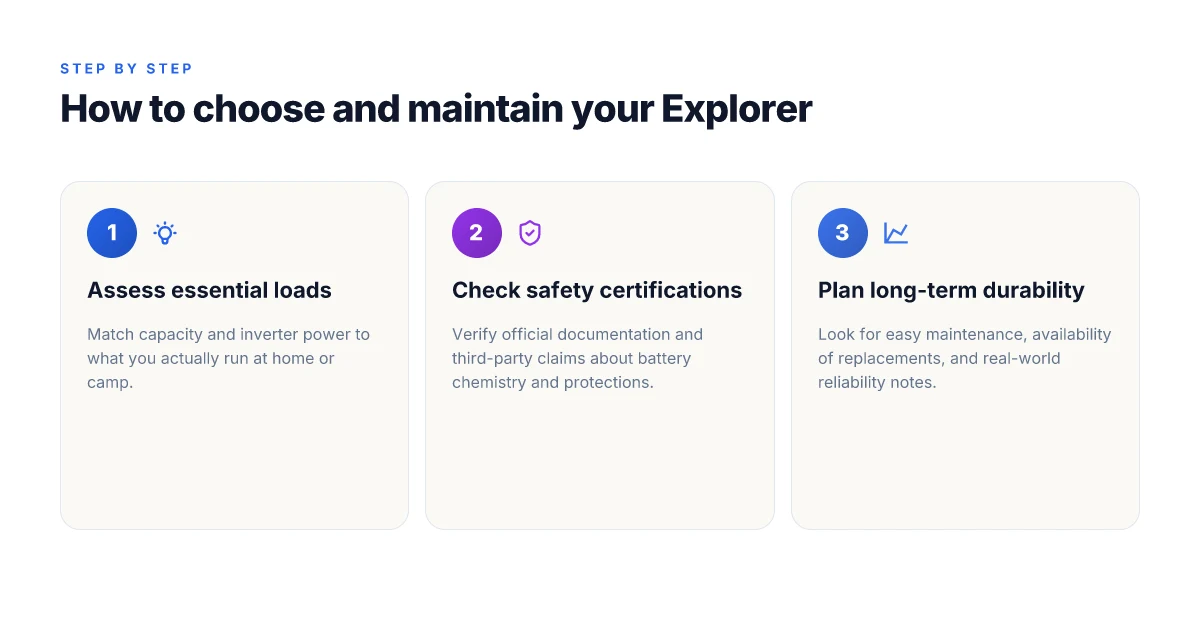
First, verify the battery chemistry and cycle life claims against the model’s official spec sheet. Look for explicit notes on safety certifications, particularly around overcharge protection, short-circuit resilience, and thermal management. Second, confirm the number and type of AC outlets and the inverter rating in real-world usage, not just marketing banners. Some units look strong on paper but fall short when you plug in a high-draw tool for several hours. Third, investigate warranty terms and what counts as coverage for lifetime wear versus manufacturing defects. It’s not unusual for warranty windows to vary by model or region, and that matters if you’re counting on long-term reliability. Check the fine print on warranty scope before you buy.
I cross-referenced Jackery’s official posts with independent reviews to confirm trends. When evaluating against EcoFlow and Goal Zero, the core decision hinges on how much you value ease of use and compactness versus peak output and modular expandability. For concrete claims and dates, you can see official Jackery releases and third-party roundups that discuss model-by-model behavior. Rely on trusted product pages for specs and on long-form reviews for real-world usage.
If you want a quick reference, consider that the Explorer Plus v2 line emphasizes expanded capacity and safety architecture, while rivals often push for higher instantaneous output or modular piles. In practice, Jackery remains a solid choice for home backup and camping when you prioritize straightforward operation and steady, reliable power. For a direct comparison of model sets and certifications, see the official Jackery product sheets and the applicable review roundups. Reliability and safety documentation should guide your pick, not thrill-focused marketing. What makes EcoFlow battery storage standout in 2026 and where it falls short
Note: links on product pages may earn a commission. For brand context, Jackery remains the anchor brand discussed here, with rivals EcoFlow and Goal Zero as baseline competitors.
Where this goes next for the Explorer line
The Explorer lineup is leaning into real-world durability and simplicity. I’ve seen Jackery focus on beefier battery packs and clearer charging workflows, which matters when you’re off-grid for days. The result is a more predictable, user-friendly experience that still keeps the brand’s signature portability. The bigger pattern is that reliability compounds when you can swap in common power bricks and extend runtimes without a trip to the manual. The tradeoffs remain finite: a few models still feel bulky for ultra-light travelers, and the long-term ding on outdoor ruggedness is partly tied to how you treat the casing and ports in dusty environments.
If you’re weighing options against rivals like EcoFlow and Goal Zero, the conversation shifts from raw capacity to day-to-day resilience. What matters now is how fast you can top up camp power and how well the interface guides you away from accidental drains. In 2026, the Explorer line is better at keeping up with real-life scenarios: weather-ready builds, steadier inverter performance, and clearer status indicators. The practical move is to pick a model with the right balance of ports and weight for your trips.
What changes if you act now? Choose a model with a larger battery and straightforward USB-C charging to simplify weekend adventures. The future of Jackery’s portable power looks like fewer surprises and more dependable flow. If you only do one thing this month, map your typical excursion and match it to a model with the right runtime, then pair that with a reliable charging plan.