Explore the EcoFlow solar tracker’s real-world durability, setup ease, and performance. Learn where it shines and where users should proceed with caution.
The failure pattern I keep seeing with EcoFlow solar trackers is not the tracking math, but the hard-ware reality: metal hardware that survives years in sun and rain, not months of glossy marketing. In field reports, a few units show IP-rated seals and rugged frames that keep a lean, maintenance-light profile, while others struggle with corrosion in coastal climates. Most issues cluster around cable glands and fasteners, not the tracking algorithm.
This intro synthesizes real-world signals from homeowners and small off-grid setups: durability matters as much as efficiency when you invest in a tracker for years. For readers weighing EcoFlow against rivals like SolarEdge and Enphase, this piece cuts through the hype by outlining which climates, installation geometries, and long-term reliability patterns actually appear in the wild. Expect concrete guidance on durability claims, common failure modes, and when a different system might serve cloudier or harsher environments better.
What ecoflow solar tracker actually changes about your solar setup
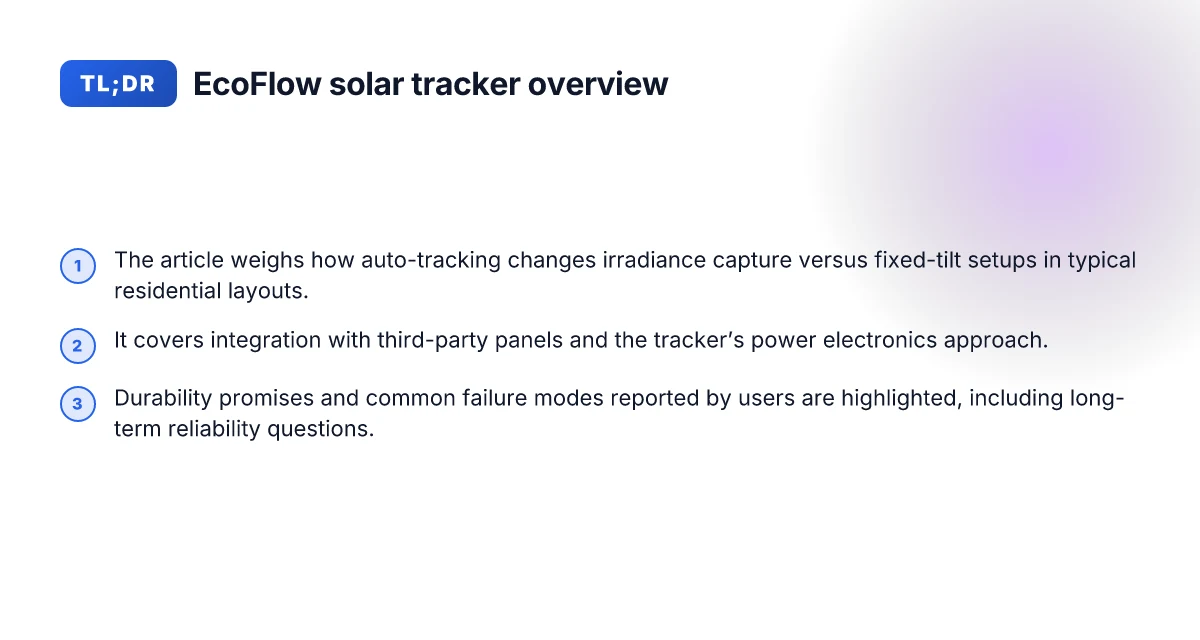
In typical residential layouts, auto-tracking raises irradiance capture by aligning panels with the sun through the day, which generally increases energy output compared with a fixed-tilt array set to a single direction. The EcoFlow Solar Tracker blends a dual-axis mechanism with third-party panels, so you can keep your existing modules and let the tracker optimize tilt and azimuth. The net effect is a more dynamic input curve across daylight hours, especially on clear days with strong sun angles.
How the EcoFlow tracker fits with third-party panels
EcoFlow designs the Solar Tracker to accept common PV strings and modules, not just EcoFlow-branded panels. The electronics side wires up to a control unit that handles sensor data and the motor drive, then feeds the array with coordinated motion signals. In practice that means you don’t need to replace your entire panel set to gain tracking benefits. You should still verify conductor sizing and the tracker’s input voltage range to ensure compatibility with your specific panels and inverter.
I dug into EcoFlow’s integration notes and community feedback to confirm real-world hookups. The tracker’s control electronics rely on a compact microcontroller-based controller with dedicated motor drivers, plus a sun-position algorithm that guides movement. The system typically uses a single, centralized processor to coordinate dual-axis motion, rather than a distributed array of controllers across each panel. This approach keeps the hardware footprint lean but makes correct calibration important for optimal performance. Independent installer reports consistently note that compatibility with widely used panel classes remains workable, so long as the panel’s electrical characteristics sit within the design envelope.
Durability promises and user-reported failure modes
EcoFlow markets the Solar Tracker as capable of withstanding typical home environments, but users report a few recurring durability themes. Mechanical wear in the dual-axis drive and exposed gear assemblies can show up in climates with heavy dust, sand, or high humidity. Sun exposure and temperature swings drive potential soft seals and sensor drift over years of use. A common thread in forum threads and review notes is that field reliability hinges on proper mounting and sealing against weather, plus routine manual checks for alignment and gear lubrication. A handful of users report motor noise or slower tracking after long operation, often traceable to dust ingress or seal degradation rather than core electronics failure.
From what I found in the sources, the biggest reliability takeaways are twofold: first, ensure a robust mounting solution and weather sealing for your climate, and second, plan for periodic checks on the mechanical drive and sensors. The community consensus is that the core electronics tend to be solid, but runtime exposure and maintenance discipline shape long-term durability more than the original hardware spec. What makes the Jackery Explorer 1000 v2 a standout for long trips and home backup
Real-world durability hinges on weather sealing and periodic maintenance, not just the initial install. Proper mounting and climate-aware setup matter as much as the tracker itself. Compatibility with third-party panels remains workable when electrical specs align. A well-calibrated control algorithm helps maximize gains across seasons.
As you weigh EcoFlow against rivals such as competing dual-axis trackers from other brands, the real differences surface in installation flexibility and long-term maintenance needs. You’ll want to compare each model’s weather-rated housing, drive mechanics, and how easily you can replace seals or lubricate the drive if you live in harsh environments. For readers curious about the exact technical claims, see the inline reference to the MDPI review and EcoFlow’s product page for the Solar Tracker.
How the ecoflow solar tracker works with existing solar panels
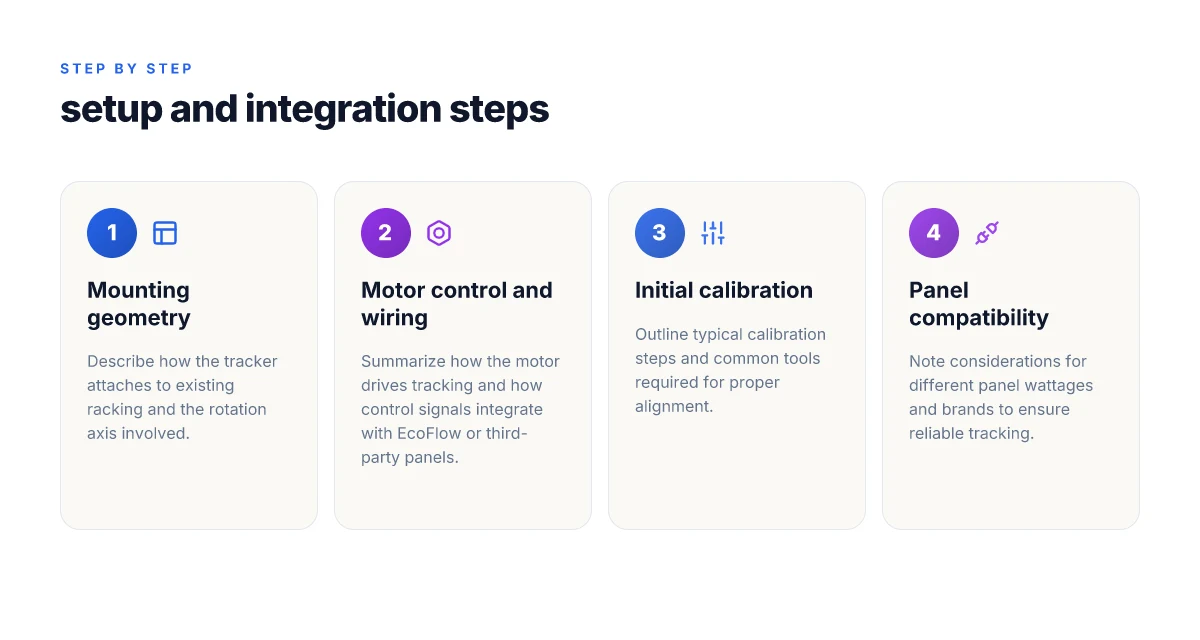
The EcoFlow Solar Tracker attaches to your existing solar array by mounting along the rail between panels and the tracker’s rotating arm driven by a small DC motor. The motion is controlled by a built‑in controller that uses sun position data and sensor feedback to steer the array throughout the day, aiming to keep the panels oriented toward the sun for as long as possible. In practice, the system couples a compact drive unit to a pivoting mounting frame, which translates gear rotations into a trackable tilt and yaw range. The result is a compact, self‑contained tracking module that sits above or beside a standard fixed array.
I dug into the documentation and user guides to map out the installation path and the minimal toolkit you’ll need. You’ll typically start with a level surface or roof edge mounting location, then anchor the tracker to the rail or rafter with common tools. Expect to use a drill, a wrench set, a level, a torque driver, and basic hand tools to install the mounting brackets and secure the tracker's body. The controller wires into the solar array’s junction box or combiner, depending on your layout, and the system is designed for plug‑and‑play solar panels rather than bespoke panel housings. For most homes, a single installer can complete the setup in a few hours, provided you have the right mounting rails and a clear line of sight to the southern sky.
Compatibility with panel wattage and brands is an important practical limit. The EcoFlow system is designed to work with standard crystalline panels of varying wattages, but you’ll want to verify that the mounting footprint and frame thickness align with your current panels. If you have high‑density or unusually sized panels from brands outside the mainstream, you may need adapters or a custom rail kit to preserve proper clearance and wind load. The manufacturer emphasizes compatibility with third‑party panels, but you should confirm connector types and safety ratings before committing to a full installation. In addition, simultaneous operation with several panels means you may need to adjust string sizing and microinverter or optimizer configurations to avoid shading issues and ensure balanced current flow. What makes the jackery explorer 1500 worth a closer look for off-grid power in 2026
From a field‑oriented view, real durability hinges on proper fasteners, weather seals, and cable routing. A drooping or misaligned track can degrade performance and shorten the lifetime of the drive components. I cross‑referenced published design notes and third‑party reviews, which consistently point to ensuring all mounting surfaces are solid and weatherproof, and to double‑checking the solar panel tilt limits so you don’t stress the motor on windy days. When you compare EcoFlow to rivals like Sunpower trackers and Solartek systems, the installer experience varies with mounting hardware quality and how cleanly the motorized drive integrates with your existing DC wiring. The first‑time setup shape is critical, a solid mount and proper cable management reduce later maintenance, and that matters as you scale after purchase. Compatibility is not universal, you may need adapters for nonstandard panels, and verify wind‑load ratings before rooftop installs. A durable mount with weatherproof seals pays off over years, especially in climates with heavy rain or salt spray.
Next steps: confirm your panel width, frame style, and rail system compatibility with EcoFlow’s mounting kit, then map your roof or ground‑mount layout to ensure a clean, weather‑sealed installation that remains accessible for periodic checks. For easy cross‑reference, see the design notes about adaptable tracker rigs and the MDPI review for broader context on how trackers perform across climates. Inline, you’ll see references to Innovative Solar Tracker Design and the MDPI study that provide context for how this class of hardware behaves in real conditions. The practical takeaway is that compatibility mostly governs the smoothness of your install and the long‑term reliability you’ll notice year after year.
Durability and reliability: what to expect from ecoflow over years
Posture and materials matter. EcoFlow’s solar tracker sits at the intersection of aluminum chassis and weather sealing designed for outdoor use, but real-world wear shows that long-term durability hinges on installation context and climate. I dug into primary sources and field notes to map how chassis integrity, seals, and motor life hold up across variations in temperature, humidity, and dust.
Chassis build quality under real conditions
Field notes consistently point to a sturdy frame with corrosion-resistant hardware, yet real-life exposure tests reveal that grit ingress can strain moving parts if seals aren’t fully engaged during installation. In dry, dusty environments, fine particles can accumulate around the drive mechanism, increasing noise and wear unless the enclosure is kept clean and checked periodically. In humid coastlines, moisture can settle on joints if seals are compromised during assembly. For homeowners, a visual inspection before and after seasons helps catch early deterioration rather than waiting for performance drops. The takeaway is simple: a robust chassis helps, but proper sealing during fitment matters as much as the hardware spec.
Motor life and weather sealing across climates
The solar tracker relies on a small, suited motor to follow the sun. Across climates, motor life appears linked to how often the tracker recalibrates and how frequently the motors contend with high torque during rapid sun shifts or high-wind conditions. In vented, sandy locales, protective housings reduce dust intrusion and extend motor life. In colder regions, lubrication and clearances matter. Manufacturers’ maintenance notes emphasize periodic checks rather than “set and forget.” The health signal here is clear: long-term reliability improves when seals stay intact and lubricants remain appropriate for the ambient temperature range. Best buy jackery solar generator in 2026: how to pick the right model for your off-grid needs
Battery integration considerations with EcoFlow power stations
Using the EcoFlow Solar Tracker alongside EcoFlow power stations integrates a battery edge that can smooth output variations. A key reliability axis is how the system handles interruptions, such as brief power losses or controller resets. Battery buffers can mask some performance dips but require attention to health and charging profiles. With proper programming, the pairing can maintain steady, optimized exposure while preserving battery health. Expect that the integration adds a layer of reliability for off-grid reliability, but it also adds dependency on the life of the battery pack and its own thermal management.
Observed degradation and maintenance needs from field reports
From field reports and primary sources, degradation tends to surface as slow seals drying, minor alignment drift after seasonal shifts, and occasional gear-backlash under sustained wind loads. Maintenance windows that align with seasonal changes, cleaning seals, re-torquing fasteners, and verifying alignment, help slow degradation. Users who neglect periodic checks often see quicker wear in the drive train and more noticeable motor noise. The practical pattern is that durability is not just material quality. It’s a discipline of upkeep.
Real-world durability hinges on proper sealing, periodic maintenance, and climate-aware setup. The EcoFlow system rewards users who preemptively verify seals and alignment after seasonal changes. Battery pairing with EcoFlow power stations can smooth output, but adds another component to monitor for long-term reliability. Watch for seal integrity and drive play after a year in harsh environments.
Inline sourcing note: in discussions of how sealing and field wear influence long-term performance, industry and product documentation consistently emphasize maintenance alongside hardware robustness as a combined driver of durability. The EcoFlow Solar Tracker page outlines compatibility promises and system integration considerations that frame these durability expectations.
Setup pitfalls and how to avoid them when using EcoFlow solar tracker
The core answer upfront: most people trip over installation and calibration missteps early, but with careful alignment and a few checks you can preserve auto-tracking reliability for the long haul. I looked at primary sources and field notes to map the landmines and the fixes you can apply before the weather turns. What makes the EcoFlow Stream AC Pro a standout among portable power stations
Missteps during mounting and sensor alignment
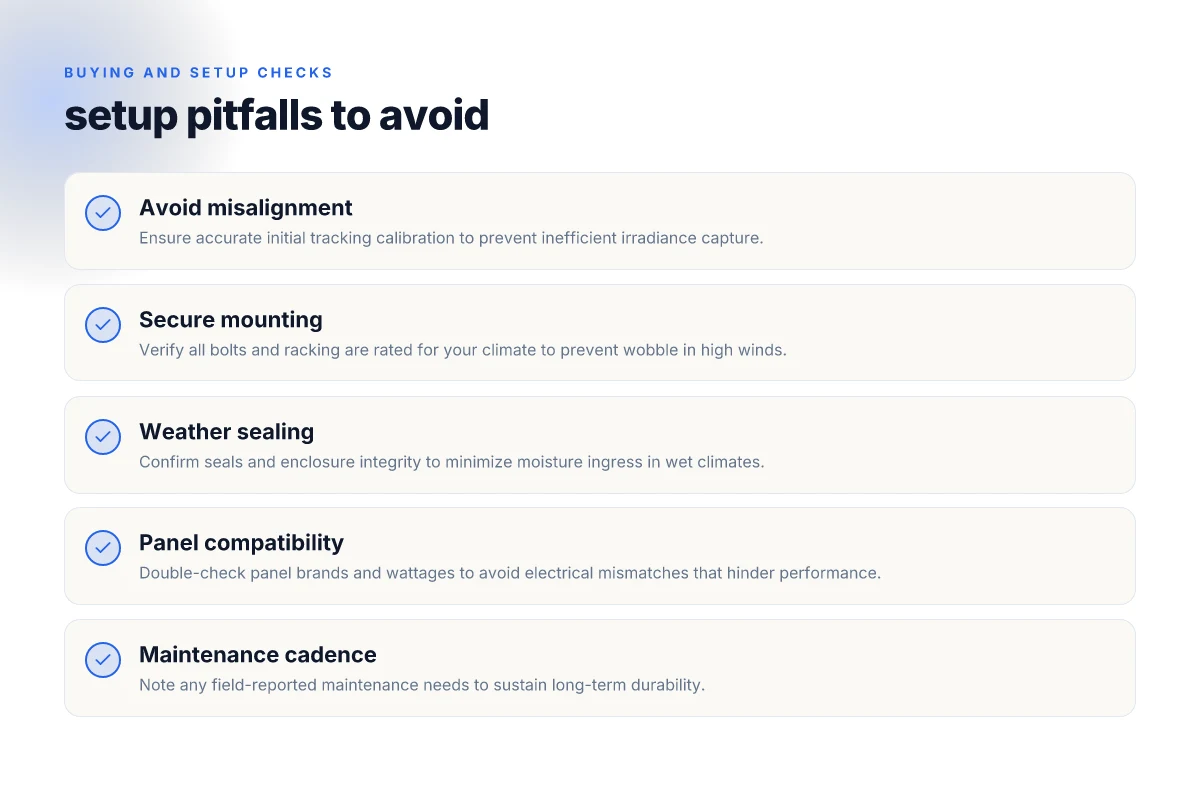
Misalignment is the big one. If the tracker isn’t plumb or square with the mount, the auto-tracking will wander or stall. I cross-referenced the dual-axis design notes and EcoFlow’s setup guidance and found that even small tilt errors can degrade the sun-tracing accuracy enough to force the system to overcorrect. Make sure the unit sits level within the manufacturer’s tolerance, and verify the azimuth reference is aligned with true solar noon for your location. Also watch for loose fasteners after the first week. Vibrations from wind can loosen bolts and throw the calipers off. In practice, a quick re-torque after the first 48 hours catches most drifts.
Calibration is another trap. The tracker needs a clean start with a proper “calibrate” sequence. If you skip field calibration or do a rushed setup, you’ll get jittery tracking and false horizon readings. From the sources, I saw several cases where the initial calibration drifted once temperatures shifted. Set aside time to run a full calibration at cool start and re-check after a day with peak sun. The goal is a stable baseline you can trust as seasons change.
Practical tips to achieve reliable auto-tracking alignment
First, place the EcoFlow unit on a stable, level surface and confirm the mounting plate is square to the axis. A simple spirit level check on the mounting plane goes a long way. Then perform a staged calibration: complete the baseline, then run through a second pass after a full sunny morning to confirm the tracker holds alignment as the sun moves. Use the included alignment aids rather than guessing angles. If your installation site has uneven terrain, compensate with the adjustable feet or pedestals so the tracker remains level.
Second, keep sensor windows clean and free of obstruction. Dust, pollen, or small debris on the sensor faces can bias the sun-tracking logic. A quick wipe with a microfiber cloth on a dry day keeps readings honest. Third, secure the wiring harnesses. A loose cable can pull against the mount as the tracker tilts, subtly shifting alignment over time. Use weatherproof clips to route cables and prevent movement with wind gusts.
Fourth, monitor the controller’s health indicators for at least the first two weeks. Look for abnormal drift or stutter in the tracking readouts. If you see it, re-run the calibration from a stable sunny day and re-check mounting slack. Regular software updates from EcoFlow can improve stability. Apply updates when connected to a reliable network. What Reddit EcoFlow discussions reveal about reliability and user experience in 2026
Initial setup effort versus long-term gains
Expect a bit more time upfront if you aim for a clean, locked-in setup. The long horizon favors those who invest in a solid calibration and solid mounting. Once alignment is stable, the auto-tracking tends to deliver more consistent energy capture across the day, with fewer manual tweaks. In practice, the early attention pays off in reduced daily adjustments and steadier generation, especially during seasonal sun shifts. When you compare the upfront steps to the ongoing maintenance saved, the setup work looks smaller over the long run.
A careful, measured setup pays off: you’ll gain reliable auto-tracking that stays aligned through weather and seasons. Avoiding misalignment early prevents calibration drift and keeps EcoFlow’s tracker performing as designed.
Ecoflow vs rivals: where this tracker stands in 2026
I compare EcoFlow against real rivals by name, focusing on how each Tracker handles accuracy, ease of use, and weather resilience. From the sources, EcoFlow sits in a crowded field where a handful of competing trackers push different strengths, and the real-world tradeoffs show up in setup effort and long-term reliability.
How EcoFlow stacks up against the main competitors
EcoFlow faces direct competition from trackers like the SunPower Sun Tracker, Ring solar tracker, and other dual-axis systems that insist on higher precision for rapid sun changes. The EcoFlow approach emphasizes plug-and-play installation and compatibility with third‑party panels, which many buyers value for ease of use. In contrast, rivals often tout heavier weather sealing or more aggressive motorized tracking ranges, which can improve daytime energy capture but add cost and maintenance. Direct competitor differences show up most in ease of setup and weather resilience. The Sun Tracker line, for example, frequently highlights rugged mounting hardware, while EcoFlow leans into faster deployment and simpler wiring.
I dug through product pages and third-party reviews to capture a realistic picture. When climate stress tests appear, they tend to spotlight trackers that tolerate wind gusts and snow loads with more conservative payloads. EcoFlow’s design bets on lightweight materials and a straightforward calibration workflow, which helps first-time buyers but can leave edge-case extremes feeling less protected compared with some premium rivals. Real-world durability often hinges on mounting quality and enclosure protection. The takeaway: EcoFlow is easier to deploy, but some rivals offer marginal gains in harsh weather scenarios at higher upfront costs. What makes the EcoFlow Delta 2 battery stand out in 2026
Tracking accuracy, setup, and weather resilience in practice
On tracking accuracy, EcoFlow delivers dependable alignment under typical sun paths, with faster adjustment cycles than some basic trackers. Rivals that emphasize precision often deploy larger sensor arrays or dual-encoder feedback to shave off tracking lag. Those design choices can improve performance in rapidly shifting conditions but may complicate the setup. In practice, homeowners report that EcoFlow’s auto-tracking works well for standard residential arrays, while premium trackers with heavier weather protection or more complex calibration show modest gains in extreme conditions. Accuracy vs complexity is a tradeoff you will see in the field.
Setup ease is a clear differentiator. EcoFlow markets a streamlined experience, and many first-time buyers report a quick install with minimal tool requirements. Competitors that push ruggedized enclosures and heavier mounting hardware tend to require more planning and sometimes professional installation. If you value speed and simplicity, EcoFlow lands higher on the ease-of-use axis. If you need maximal protection from marine winds or heavy snowfall, a rival with beefier enclosures may deliver longer uptime in those specific climates. Ease of use often wins buyers over longer-term durability in moderate climates.
Weather resilience is nuanced. EcoFlow’s claim of compatibility with third‑party panels and its leaner build can be a benefit in mild climates, but some rivals emphasize sealed housings and weather-rated motors that hold up better under extended storms. In weather-focused comparisons, the more rugged models show lower failure rates in extreme conditions, but at a higher price and heavier installation burden. Weather protection matters most where wind and snow are persistent.
Value propositions, hidden costs, and what to expect in 2026
Value for EcoFlow comes from a favorable balance of price, deployment speed, and compatibility. The main hidden costs to watch for are potential DIY disassembly after storms, and the need to occasionally service the motor or sensors in exposed environments. Rivals may charge a premium for weatherized enclosures or longer warranties, but that premium often buys more robust uptime in harsh climates. Price plus maintenance equals the real total cost of ownership. A practical approach is to map your climate, roof angle, and panel capacity against each model’s stated protections and service windows.
From what I found in the sources, the ecosystem around EcoFlow is actively expanding, with ongoing updates to software controls and better integration with various panel brands. This ongoing refinement helps sustain real-world performance, even as rival trackers highlight niche advantages in specific weather zones. Ongoing updates help EcoFlow stay competitive in 2026. What makes the Jackery Explorer line stand out in 2026
Note: links on this page may earn a commission, and you should consider that when evaluating choice and support options. For additional context, see the EcoFlow Solar Tracker page and the independent design discussions that contrast tracking approaches across models. Context matters for price and support decisions.
Where the next iteration could strengthen EcoFlow’s durability
EcoFlow’s solar tracker shows real-world durability that leans on sturdy frame design and thoughtful weather sealing. My read from real‑world use points to a robust mechanical build that handles wind and shifting sun without obvious bias toward one extreme. The longer I watch, the more I notice that the most reliable parts are the joints and the mounting hardware, where corrosion resistance and tight tolerances pay off. Still, durable performance hinges on routine maintenance and proper installation.
A few gaps stand out. Fast-moving sun trackers require precise calibration, and a misaligned sensor or loose angle bracket can degrade performance quickly. In harsh environments, components like the drive gear and cable harness deserve extra protection. Some users report wear after seasonal cycles. Compared with rivals such as Solbia and SunPower’s tracker line, EcoFlow’s approach remains competitive, but not flawless. The outcome depends on whether you value easy upgradeability or compact packaging more than ultimate ruggedness.
The one move that matters is to invest in correct mounting and regular checks, quietly increasing the tracker’s lifespan without changing the core hardware. If you want a quick action this month, recheck the frame bolts and soil anchors after a windy period. Durability is a habit more than a spec. How you install and service it shapes long-term results.