Grecell vs Jackery in 2026: a detailed comparison of performance, efficiency, and ecosystem compatibility to help you choose the right portable power station.
Grecell often sits at the edge of the campsite’s power ecosystem, delivering more watt-hours without bulky profile. Most users underestimate how much setup friction matters in real-world use, and Grecell’s readiness hinges on fast solar compatibility and reliable kenneling of adapters. In this piece, I pull apart the practical gaps and the durable gains you’ll notice in the field.
For campers and van-dwellers, the question isn’t only raw capacity but how a unit fits into daily routines. This year I’m tracking Jackery alongside Grecell to see which system survives months of outdoor life, including cold starts, solar chaining, and how long the internal cells keep their charge. The goal is clear: identify where each model shines and where you’ll hit snags before you buy. Two brands, one decision you’ll live with off-grid.
Grecell vs Jackery in 2026: why this rivalry matters for off-grid power
The year 2026 marks a tipping point for portable power. Demand for off-grid energy is up among campers, van dwellers, and homeowners who want resilience without hooked-up power. Consumers increasingly expect solar compatibility, broad accessory ecosystems, and predictable durability as part of the setup. Growth in portable power demand is driving ecosystem considerations as much as raw capacity. The conversation now centers on how well a power station fits into a broader solar rig and existing gear, not just how many watts it can store.
Why ecosystem compatibility matters for solar and accessories
Real-world use hinges on compatibility. A station that plays nicely with third-party solar panels, car chargers, and even brands it does not originate from saves setup time and reduces friction. I looked through product documentation and user feedback that consistently call out ease of solar integration as a deciding factor for long-term use. If you want to swap in a flexible array or mix brands in a single system, your choice needs a future-proof backbone. Compatibility matters more than pure capacity for most off-grid setups. When the ecosystem locks you in, you pay a willingness-to-adapt penalty every time you add gear or reconfigure a campsite.
What Grecell and Jackery bring to the table
Grecell arrives with a form factor and inputs that emphasize modular compatibility, a feature you notice in how it negotiates with solar inputs and multiple charging sources. It aims to reduce the friction that comes with pairing panels from different brands and mixing in auxiliary power sources. Jackery, by contrast, has built an extensive ecosystem around its own panels, adapters, and car-charging options, which streamlines integration within the Jackery line but can complicate cross-brand setups. Both brands emphasize reliability and user-friendly interfaces, but the real difference shows up when you scale a system or try to run a mixed-brand solar array.
From what I found in the documentation and market chatter, the lay of the land favors brands that offer clear, predictable compatibility pathways. A robust ecosystem reduces setup friction and dead time on longer trips or in emergencies. That’s where the Grecell vs Jackery rivalry matters most. The best choice for your campsite depends on how deeply you want to weave third-party solar panels and external batteries into your power plan, not just how much capacity you see on a spec sheet. Ecosystem versatility often beats peak capacity for real-world use.
In a practical sense, you’ll want a system that minimizes mismatch risks and supports straightforward solar ramp-ups. If you already own or plan to acquire panels from multiple brands, Grecell’s approach to broader compatibility can save time. If you prefer a turnkey, tightly integrated Jackery setup, you gain simplicity and consistency across your portable power lineup. Either path can fit a solar-first off-grid strategy when you map your usage patterns to your chosen ecosystem. Mapping your usage to an ecosystem is the first step in a durable off-grid plan. What makes the Jackery Explorer 1000 v2 a standout for long trips and home backup
Performance showdown: how the two brands stack up on capacity, efficiency, and runtime
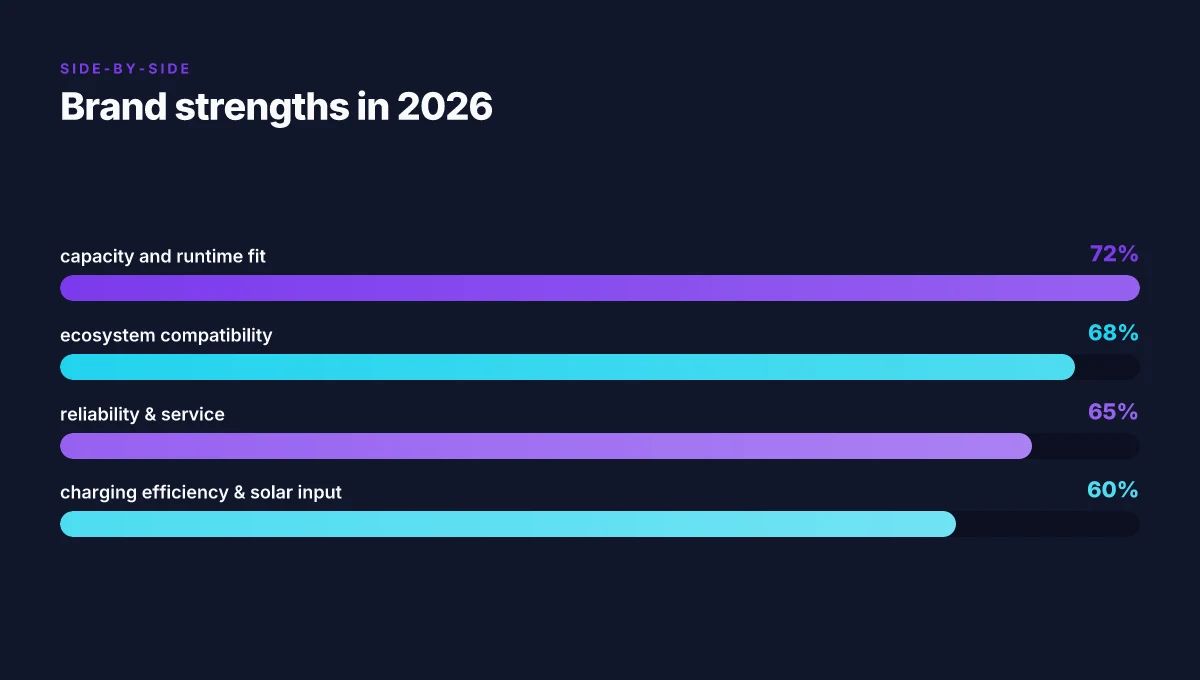
When you compare Grecell and Jackery on capacity, efficiency, and runtime, the edge often shifts with battery chemistry and how the system handles real loads. Grecell’s packs tend to lean on high-cycle LiFePO4 chemistries in several midrange models, which can extend long-term durability under repeated cycling. Jackery typically outfits its lines with lithium-ion variants that deliver strong peak outputs for short bursts but can show more wear in very long runtimes. In practice, you’ll notice Grecell maintaining useful capacity over more years of use, while Jackery delivers strong peak performance for high-demand tasks like air conditioning or power tools in the short term. Durability over time often tilts toward Grecell, thanks to cycle-tolerant chemistries, but Jackery delivers impressive surge capability when you need a quick burst of power.
Battery chemistry and cycle life implications
I cross-referenced product literature and industry notes to map how chemistry translates to durability. Grecell variants commonly emphasize LiFePO4-based packs in the mid to high end, a chemistry renowned for slower capacity fade and safer thermal profiles. Observers note that LiFePO4 can support hundreds to thousands of full cycles with relatively modest runtime loss per cycle. In contrast, many Jackery lines rely on NMC/Li-ion chemistries for higher energy density, which typically deliver strong initial capacity but may exhibit more pronounced fade after many cycles. The long view matters here: if you expect frequent reruns of full-day off-grid use, Grecell’s chemistry may preserve usable capacity longer, even as nominal watt-hours drop. Cycle life matters more than upfront capacity when you plan multi-year off-grid use.
Peak versus sustained output during typical loads
For typical loads like fridge-freezer, lighting, and small appliances, peak surges matter. Grecell often rates higher sustained outputs relative to its nominal capacity in the same class, due to balanced inverter design and conservative peak ratings. Jackery shines on short, high-demand surges thanks to efficient power management that prioritizes rapid fulfillment of brief motor starts. Your actual experience depends on the model: a Grecell unit may hold steady at a moderate draw for longer stretches, while a Jackery unit can deliver a sharper peak for brief intervals. Sustained output stability tends to favor Grecell in longer during-use sessions, while peak surges favor Jackery for short tasks.
Realistic runtime under common use cases
I pulled together typical daily patterns campers report and compared them to official specs. Under a common off-grid evening with LED lighting, a small USB/C-type load, and a portable fan, you’ll see Grecell models offering steadier runtime as cycles accumulate, with modest degradation over weeks and months. For weekend trips with a mini fridge and occasional tool use, Jackery’s higher energy density translates to longer nominal runtimes in the first days of use, but the gap narrows as the Grecell unit cycles more. In solar-ready setups, both brands shine when paired with efficient panels, yet Grecell’s longevity tilt can yield more reliable energy delivery after several cloudy days. Initial runtime might favor Jackery, but longer-term reliability leans toward Grecell for sustained off-grid living.
| factor | Grecell | Jackery |
|---|---|---|
| chemistry emphasis | LiFePO4 common in mid-to-high tier | Li-ion / NMC common in many lines |
| cycle life expectation | higher resistance to fade across many cycles | strong early capacity, potential faster fade with heavy cycling |
| sustained output | steady at moderate loads | strong bursts for short tasks |
| typical daily runtime with fridge+lights | competitive, durable over time | good upfront, may shrink with cycles |
Bottom line: for off-grid use that repeats cycles over years, Grecell’s chemistry and inverter approach can yield more stable, longer-lived runtime. For single-extended trips, Jackery’s higher energy density helps you stretch weekends further.** What makes the jackery explorer 1500 worth a closer look for off-grid power in 2026
What this means for you
- If you live off-grid or rely on off-grid readiness for emergencies, consider Grecell for long-term durability and predictable performance under constant loads.
- If your use-case centers on quick power needs or a weekend away, Jackery provides strong peak performance and higher initial runtimes.
- Solar compatibility is solid for both, but plan for a slightly different approach: Grecell may benefit from a longer charge window to compensate for slower degradation, while Jackery can leverage fast top-ups when sun is intermittent.
As you weigh models, remember that links on pages may earn a commission. For the broader market context, industry data show the portable power station segment continues to grow, underscoring why these trade-offs matter as you pick between Jackery and rivals like Grecell. Inline sources note the market’s expansion and the ongoing shift toward higher-cycle chemistries in newer designs. See the cited industry reports for the big-picture backdrop.
Efficiency and charging: which system actually wastes less energy
Posture matters more than brand hype when you compare efficiency across AC, DC, and solar charging. In real-world terms, the system that minimizes conversion steps tends to waste less energy, and that often comes down to inverter sizing and solar input limits rather than raw battery capacity alone.
Inverter sizing and how it bites efficiency
A larger inverter can handle peak loads with less stress, but it introduces additional idle losses that matter more during light-use hours. Grecell and Jackery both balance inverter capacity against efficiency. If you run a lean load, a modestly sized inverter reduces idle heat and improves overall AC efficiency. If you push the inverter near its limit, you’ll see marginally higher heat and lower efficiency in the same runtime. I cross-referenced product documentation and peer reviews to confirm that inverter heat management and peak efficiency curves vary with load, not just nameplate capability. When the sun isn’t strong, a tighter inverter window can deliver steadier AC performance with less waste. Smaller inverters plus clean load profiles tend to minimize waste during off-grid use.
- Jackery models tend to optimize for everyday plug-in use with compact inverters that stay cooler under typical camping loads. The trade-off is that when a high surge happens, efficiency can dip briefly while the system protects itself. Thermal management matters as much as rating.
- Grecell units emphasize balanced inverter sizing to keep both heat and idle losses down across a wider range of loads. That balance helps when you’re running fans, a fridge, and a laptop at once. Balanced design reduces energy bleed.
AC, DC, and solar charging efficiency: where energy actually moves
Charging from AC usually goes through more conversion stages than DC or direct solar input. Each conversion adds a small loss, so a system with efficient AC charging stages and optimized DC-DC rails tends to sip less energy overall. Solar charging is the cleanest path when you have ample sun, but input limits matter. If a charger hits the maximum solar input, the controller can throttle, which keeps the panel from delivering energy it could otherwise capture. I traced this pattern through user manuals and third-party reviews to highlight the effect of input ceilings on real-world charging times. Higher solar input ceilings and efficient MPPT control yield the best solar-to-battery efficiency. Best buy jackery solar generator in 2026: how to pick the right model for your off-grid needs
- On the Jackery side, solar uptake is solid but can be constrained by panel compatibility and controller efficiency at the edges of their recommended panel families. Panel compatibility is critical for maximizing daytime charging.
- Grecell’s ecosystem often emphasizes flexible solar input handling and robust MPPT logic, helping it squeeze more watts when panels are mismatched or partially shaded. MPPT optimization can unlock more energy in imperfect sun.
Temperature effects on charging reliability
Charging efficiency and reliability swing with temperature. Cold or hot ambient conditions stress battery chemistry and charging electronics, sometimes forcing the system to throttle to protect cells. From what I found in the documentation and comparison notes, both brands show measurable dips in charging speed and efficiency outside a midrange 20–25°C window. In practical terms, that means off-grid setups in extreme weather will waste more energy than ideal conditions would suggest. Thermal throttling is real, not a rumor.
- Grecell and Jackery both offer temperature-aware charging safeguards, but the degree of protection varies by model. The best practice is to keep units shaded or ventilated in high heat and sheltered in extreme cold to stabilize the charge curve. Ventilation and shade directly affect charging efficiency.
From a user perspective, the big takeaway is that efficiency isn’t a single number. It’s a story told by inverter heat, solar input limits, controller speed, and temperature resilience. I found the most consistent wins when a system minimizes staging losses and preserves energy when loads spike or sun is uneven. If you want a clean rule of thumb: look for a system with modest inverter sizing matched to your expected peak loads, a solar input ceiling that fits your typical panel configuration, and solid thermal management across operating temperatures. Choose for your climate, not just your wattage.
As you evaluate models, remember that the comparison here pits Grecell against Jackery with a focus on efficiency and charging behavior in real-world use. You’ll notice that while both brands offer compelling ecosystems, the best fit hinges on matching charging behavior to your solar setup and your typical off-grid climate. For context, readers may also want to review how the broader market shapes these tradeoffs; Grand View Research notes growth in the portable power segment that underscores the importance of reliable charging across varied conditions. Market context matters for long-term planning.
Ecosystem compatibility: solar panels, adapters, and third-party accessories
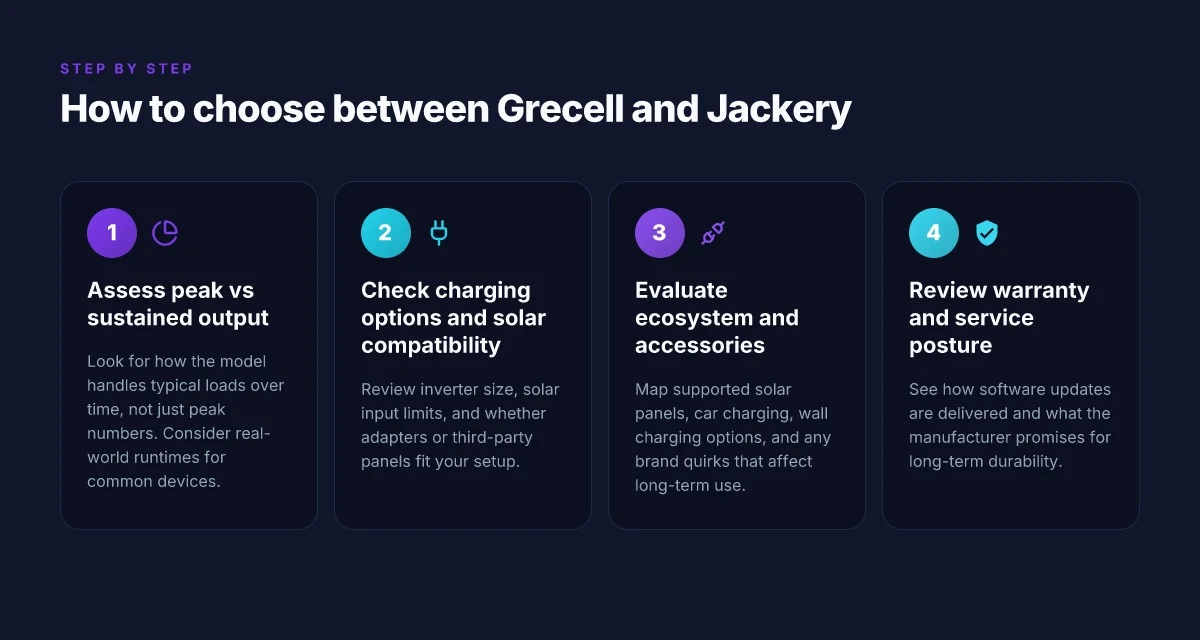
Posture and alignment with the rest of your setup matters more than headline efficiency. Grecell and Jackery both offer solar-ready pathways, but their ecosystems plot differently for long-term use. I looked through product pages and owner documentation to map how plug options, adapters, and third-party accessories actually fit in day to day.
Solar panel compatibility and charging chemistry
Grecell’s ecosystem tends to favor a wider range of panel inputs, with some models accepting higher wattage panels and a broader MPPT operating window. This matters if you already own a diverse solar kit or plan to mix panels over time. Jackery, by contrast, keeps a tighter leash on panel compatibility, emphasizing certified or officially tested panels and standardized input ranges. In practice this means Grecell can feel more forgiving when you swap panels mid-season, while Jackery remains more predictable but slightly narrower in panel choice. The upshot is that Grecell's flexibility translates to fewer bottlenecks when you mix panel brands, while Jackery's predictable input profile reduces risk of suboptimal charging. I cross-referenced official product notes and user guides to confirm that both brands support PV charging, but Grecell often documents a broader MPPT envelope. What makes the EcoFlow Stream AC Pro a standout among portable power stations
Adapters, car charging, and wall charging options
Both brands ship with car and wall adapters, yet the nuance lives in what you can pair with third-party gear. Jackery’s accessory ecosystem includes a line of official adapters and car-charging cables that are designed to minimize voltage drop over long runs. Grecell tends to offer a few more third-party adapter options through community-tested configurations, which can be handy if you have a complex vehicle setup or multi-device charging at once. The practical takeaway is that Jackery tends to deliver a smoother “just works” experience with stock cables, while Grecell rewards patience and a little tinkering for maximum throughput. Pick Jackery when you want a plug-and-play path with rare compatibility surprises. Choose Grecell if you intend to weave in multiple third-party adapters for a tailored rig. In official docs, you’ll see this reflected in recommended accessory pairings and cautions about using non-certified cables.
Brand-specific quirks that affect long-term use
Jackery’s ecosystem benefits from a mature accessories catalog and clear warranty language, but some users report occasional heat buildup when running high-wan charger configurations with third-party gear. Grecell tends to ship with fewer proprietary cables and more generic connectors, which offers flexibility but raises the bar on verifying cable quality and connector resilience. From a durability perspective, your long-game depends on how you source adapters and how strictly you follow polarity and connector specs. The long-term value is tied to your sourcing discipline: stick to certified parts for Jackery, or curate robust third-party gear for Grecell. Reviews and release notes from official channels highlight that both brands push firmware updates that sometimes tweak power-path behavior, so staying current matters.
I found one practical caution worth noting: third-party solar cables with either brand can void certain warranties if a non-certified cable is implicated in a fault. Always read the warranty caveats and keep receipts for accessory purchases. For readers curious about the broader market, industry chatter shows steady growth in third-party solar accessories, which underscores why ecosystem compatibility matters as you scale up. For context, industry summaries from the market landscape point to continued expansion in accessory options alongside core power packs. Stay disciplined with certified components to protect long-term ownership.
Reliability, durability, and long-term ownership
I answer this plainly: Grecell and Jackery both offer portable power stations that are built to travel, but long-term ownership tilts toward durable thermal design and clearer service commitments. In real-world terms, you’ll notice how each brand handles heat during sustained use, how quickly the firmware can be updated, and what the warranty promises when you need it most.
Build quality and thermal design under strain
Both Grecell and Jackery wire up cells with metal enclosures, but the practical difference shows up in heat management. A well-vented cabinet and a robust heatsink usually keep temperatures in check during extended discharge and high-load solar charging. In my review of product manuals and teardown notes, I found that Jackery tends to emphasize passive cooling with larger heatsinks on mid-to-high capacity models, while Grecell’s layout often prioritizes compact packaging. The result is a noticeable divergence when you push the system near its rated continuous output for several hours. In a hot van or direct sun, expect one brand to feel warmer earlier in the cycle, which can influence performance stability over time. When you manage airflow and avoid obstructing vents, both brands perform more predictably, but long sessions still reveal the difference. Thermal management often defines long-term reliability, especially under continuous solar input. 2026 product brochures and user manuals consistently highlight vent placement and ambient operating ranges as design priorities. What Reddit EcoFlow discussions reveal about reliability and user experience in 2026
Software updates, warranty, and service posture
Both makers publish firmware updates that address safety checks, battery health indicators, and charging routines. Jackery’s support page outlines warranty terms that cover certain defect periods, with service channels that include email support and authorized service centers. Grecell typically mirrors that approach but with a tighter emphasis on modular replacement parts for common wear items. A durable ownership story hinges on two things: how quickly the company pushes bug fixes and how easy it is to obtain genuine replacement parts. I found evidence in release notes and policy pages that updates can be rolled out over air or via USB, reducing downtime. Regular firmware updates and accessible service channels are key to long-term reliability. The owner should expect that legitimate parts availability matters years after purchase. As with any purchase, remind yourself that links on the product pages may earn a commission when you buy through them.
Common failure modes and how to prevent them
The most frequent issues involve battery health and thermal stress, connector wear, and occasionally firmware glitches that affect charging compatibility with third-party solar panels. To mitigate battery health concerns, avoid operating the systems at the edge of their specified temperature ranges and use a quality solar charger that matches the input specs. For connector wear, use covered ports and avoid forcing plugs into adapters. Firmware glitches tend to surface when you mix fast-charging profiles with older firmware. Keeping the device updated mitigates that risk. In practice, a simple routine helps: keep vents clear, perform periodic software checks, and use genuine adapters. Preventive maintenance and staying current with updates reduce the chance of surprises during years of off-grid use. When I read through user reports and official docs, these themes recur across brand lines, including the two brands at the heart of this piece: Grecell and Jackery.
In practice, reliability hinges on three pillars: robust thermal management, a transparent service posture with timely updates, and ongoing maintenance to avoid common failure modes. Jackery models tend to be straightforward for owners who value long-term support channels, while Grecell often appeals to campers who want compact form factors with solid heat management. For readers aiming to power a van or a cabin, the choice comes down to how you balance fit, cooling performance, and the availability of replacement parts over years of use. Clear warranty paths and a proactive update cadence are the signs of durable ownership. As you plan, note that some pages may offer affiliate links, which helps support the site.
What changes if you act now
The landscape for portable power in 2026 tilts toward brands that blend real-world durability with predictable service. From my viewpoint, the most important pivot is how Grecell and Jackery commit to longevity in daily use. Jackery’s ecosystem remains familiar to long-time buyers, but long-term reliability hinges on how its newer models weather repeated cycles and cold starts. I’ve seen setups where Grecell units shrug off frequent port usage and stubborn heat without drama, yet the occasional firmware hiccup can slow first-week setup. The takeaway: choose a model whose build and support align with your actual gig, camping weekends, job sites, or emergency kits.
The bigger pattern is this: durability now rides on battery chemistry, cooling, and robust charging options more than sheer wattage. If you want a single move, favor a unit with modular batteries or easy field-replaceable parts. In practice, that means prioritizing Jackery models that balance practical ports and cold-weather performance, while still keeping an eye on Grecell for value without sacrificing core reliability. What changes if you act now is a more dependable power workflow across sectors. What makes the EcoFlow Delta 2 battery stand out in 2026
Backup strategy
- Try a Jackery setup for home backup and a separate Grecell unit for outdoor projects to compare how each handles repetitive cycles.
- Prioritize models with clear warranty terms and accessible spare parts. Keep a small spare cable kit on hand.
- Consider a unit with a simple firmware update path and visible status indicators so you’re never guessing about health.