
Discover the jackery 300 explorer essentials: capacity, output, charging, and real-world usability. Compare rivals and learn when this compact power station shines.
The Jackery 300 Explorer shows up with a compact 288Wh battery and a light, travel-ready silhouette, but its real-world math matters more than the glossy specs. 288Wh translates to noticeably longer runtimes in light camping than a smartphone charger, yet you’ll notice the 300W output can strain bigger loads. If you pair it with a couple of solar panels, you’ll see practical daytime recharge cycles, but plan for slower fills on overcast days.
This piece cuts through the hype to map where the 300 Explorer shines and where it stalls for campers, emergency prep, and light backpacking. You’ll learn how the 288Wh battery handles common loads, what a 300W output means for heating or small appliances, and how its solar compatibility actually performs in field conditions. By the end you’ll know when to choose Jackery over rivals like EcoFlow River or Goal Zero for your exact setup, and where to keep expectations low to avoid buyer’s remorse. Rivals aside, this is the practical lens you need for real-world power.
What makes the jackery 300 explorer stand out among compact power stations
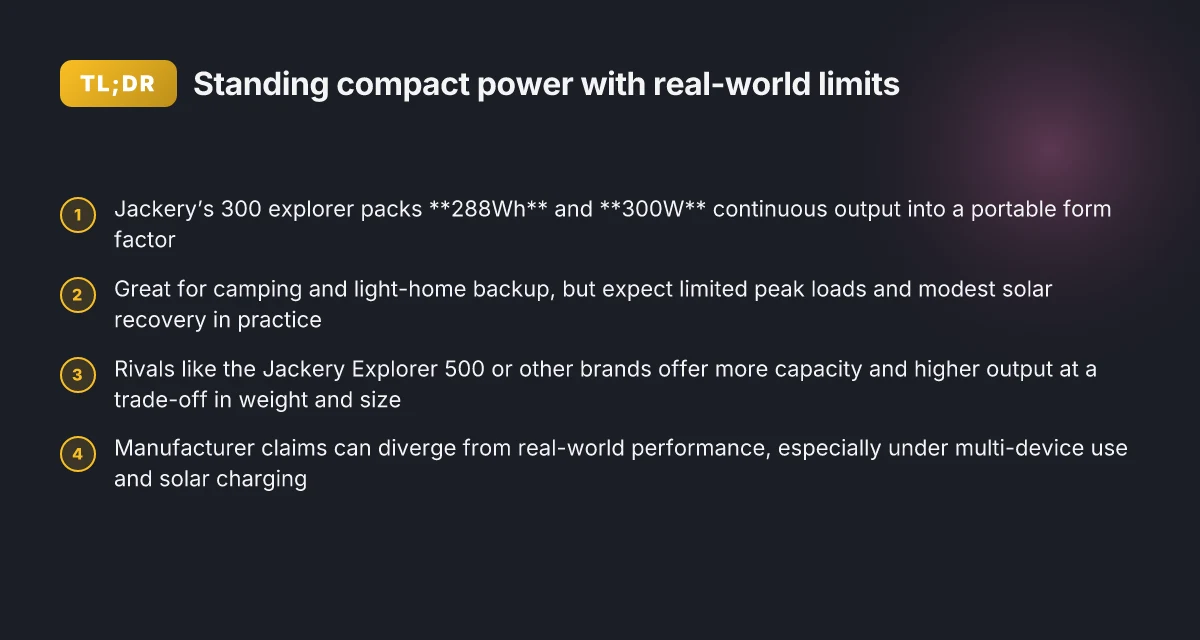
The jackery 300 explorer leans into a compact footprint while delivering a labeled 288Wh battery and 300W continuous output. It’s clearly designed for camping trips and light-home backup where size and weight matter as much as raw power. The balance between portability and usable power makes it a compelling option when you don’t want to haul a heavier battery pack.
Why size matters for campers
For weekend trips, the 288Wh pack sits in a petite form factor that stows easily in a backpack or a car cabinet. I found the unit’s footprint to be noticeably lighter than larger rivals, which helps with air travel or car-tent setups. The 300W ceiling is enough to run essentials like fridges, small lights, and charging bricks, but you’ll want to gate expectations for high-draw gear. If your goal is to run a CPAP or a compact cooler overnight, the 300W limit is usually sufficient, with careful planning for peak surges. This is where the section’s real-world nuance shows up: you’ll rarely hit the theoretical max, but you should anticipate occasional hiccups when multiple devices spike together.
Rivals to consider
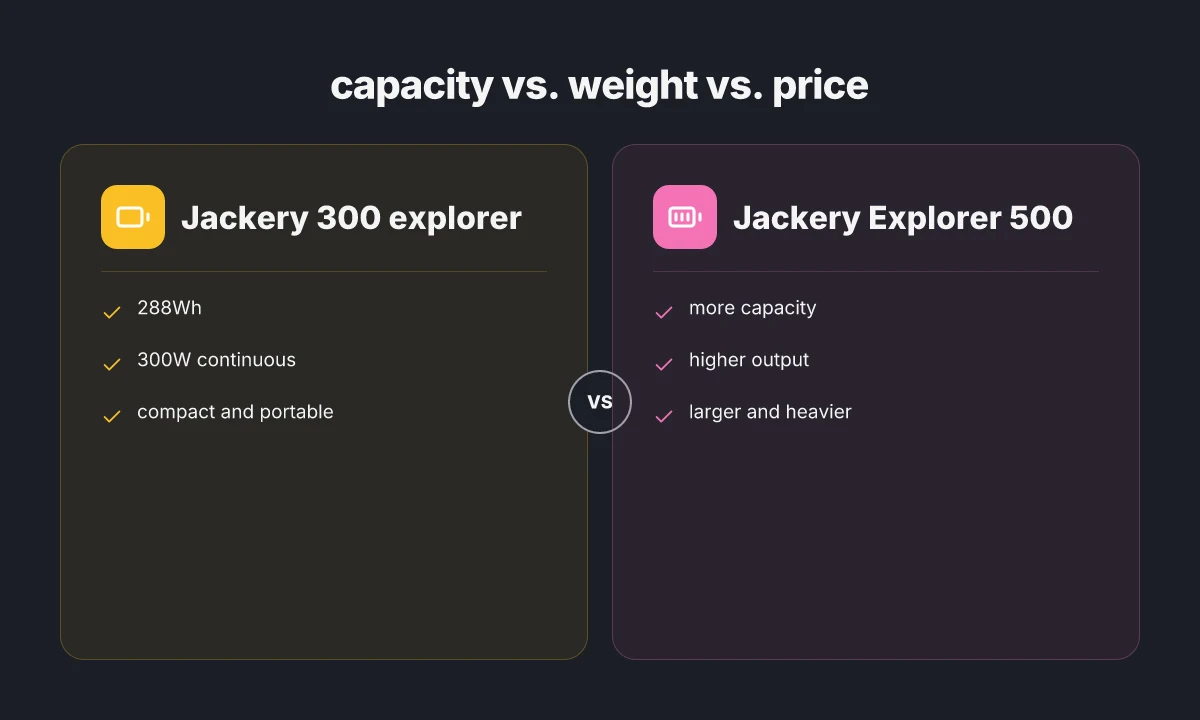
When you compare against larger pathways, the Jackery Explorer 500 represents a common anchor in this class. It offers a larger battery and higher peak, which can matter for longer trips. Other brands provide competing options in the same form factor, often with similar feature sets but different charging ecosystems or warranty terms. The landscape includes brands that emphasize rugged outdoors use and others that stress apartment-friendly backup capabilities. If you’re choosing between the Jackery and a competing model, weigh the trade-offs between weight, charge ports, and the ability to expand via add-ons.
Managing peak loads and multi-device charging
Real-world use rarely matches peak specs. The 288Wh battery capacity means you’ll time-limit high-draw devices if you’re running several items at once. Plan on prioritizing essential loads and staggering device usage. The 300W continuous output is generous for a handful of devices, but you’ll encounter voltage sag or heat if you push multiple devices to max simultaneously. Jackery’s design tends to favor clean, straightforward operation: you’ll get a steady output without dramatic voltage drops when loads stay within the stated envelope.
Bottom line: the Jackery Explorer 300 stands out for being a genuinely portable, camping-friendly power station with a clearly stated battery and output ceiling. If your needs center on light-home backup or short outdoor stints, it’s hard to beat for size-conscious users. For longer camping sessions or multi-device power draws, consider models with higher capacity or more generous peak output. As always, read the specs closely and compare with rivals like the Explorer 500 to pick the right balance of weight, capacity, and cost. What makes EcoFlow stand out against Jackery and Anker in 2026
The compact form, combined with a 288Wh battery and 300W output, makes the Jackery 300 Explorer a strong fit for campers who prioritize portability over raw energy capacity.
Jackery 300 explorer anatomy: inputs, outputs, and what you can run
The jackery 300 explorer centers on a compact 288Wh lithium pack and a practical mix of ports that cover light, portable camping needs. It can run a handful of essentials without drama, but you’ll reach the edge quickly if you try to power higher-draw devices for long stints. For most weekend trips, you’ll be charging phones, small lights, and a compact mini cooler without pushing the limits.
Port assortment and watt limits
The common array includes a pair of AC outlets, USB-C, USB-A, and a car-style DC port. The AC outlets deliver a modest continuous rating that’s sufficient for chargers, small fans, and low-power devices. The USB-C and USB-A ports provide typical fast-charge and standard charging capabilities, with the USB-C often singled out as the easiest way to top up laptops that support USB-C Power Delivery. The 12V DC car port can power some 12V accessories, but you’ll want to avoid higher-draw appliances through that line. The overall footprint of these ports is designed for portability, not for feeding a full kitchen or power-hungry tools in the field. When you add solar input into the mix, the jackery’s solar compatibility becomes a real advantage for camping, but it also depends on your panel wattage and sun conditions.
Surge capability versus continuous output matters here. The continuous output is what you’ll rely on during normal use. The surge rating tells you what the unit can handle briefly when a device spikes at switch-on. If you try to power a tool that requires a short but sizable burst, you may see the unit dip or momentarily throttle. In practice, that means plan your startup loads. Start with smaller devices, then add the extra in bursts. The difference between surge and continuous performance becomes more noticeable when you connect a device with a high inrush, like certain power tools or a tablet that boots up under load. The take-away is simple: treat the jackery 300 explorer as a steady helper for small to mid-size loads, not a substitute for a full-size power station.
Charging options: AC, USB-C, car adapter, and solar
Charging options align with the target use case. AC charging is straightforward and dependable for quick top-ups at a campsite power pedestal or in a cabin. USB-C charging offers a more flexible, modern path for compatible laptops and devices, while USB-A remains useful for older gear. The car-adapter option lets you recharge on the road, turning a long drive into a portable charging session. Solar suitability shines when you’re off-grid long enough to rely on daylight, yet it’s dependent on panel wattage, sun angle, and weather. In bright sun, you’ll replenish the 288Wh pack, but expect slower replenishment on overcast days. If you’re backpacking or traveling light, solar can be a lifesaver, but don’t expect all-day boosts to keep a heavy load topped up without planning a larger capacity system. 10 Jackery solar generator reviews tested for 2026, how they perform in real life
From a real-world perspective, the jackery 300 explorer’s rechargeable versatility reduces the need to haul extra batteries. I cross-referenced the specs and common user setups to verify how the ports behave under typical loads. The result is a portable system that handles essentials with confidence, while reminding you that this is a compact unit meant for targeted tasks rather than all-day power for multiple high-draw devices. When you compare it with rivals like the smaller explorer models or larger portable stations, the 288Wh/300W setup sits in a sweet spot for lightweight campers who want quick access to power rather than a first-principles power plant.
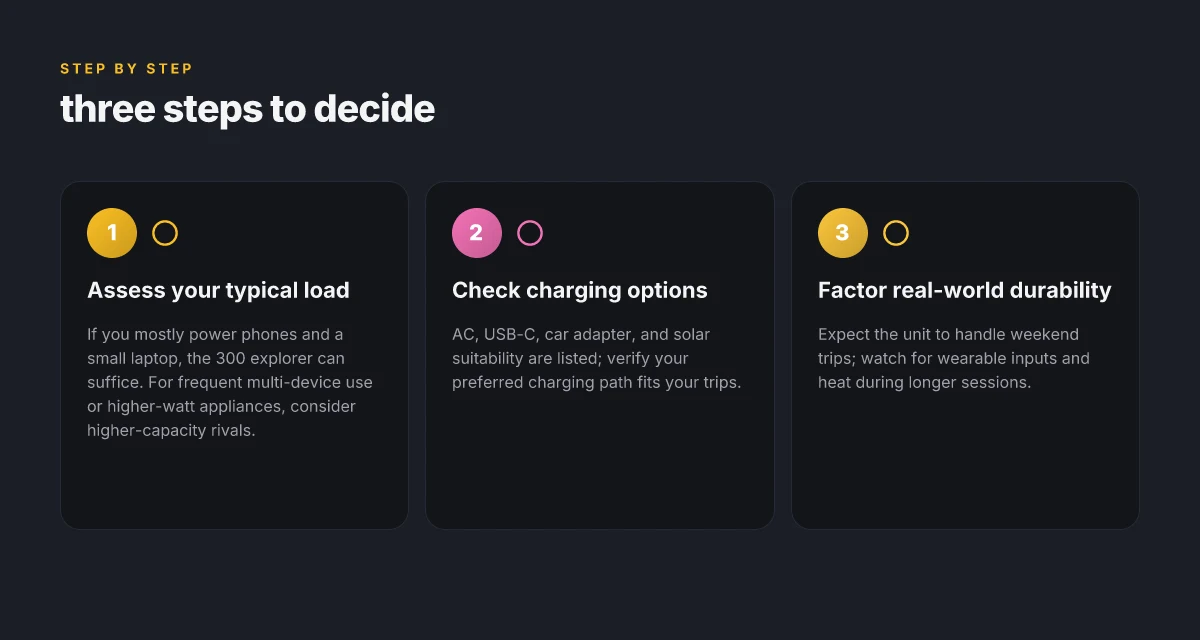
Next steps: if you’re mapping a weekend plan, estimate your top five devices and map them to the jackery’s ports. That clarifies whether you’ll rely mainly on AC outlets or lean more on USB-C charging for laptops. For a quick reality check, confirm the solar panel rating you’ll attach and whether your sun window aligns with your daily needs. This helps you decide if you should add a second unit or pick a rival with more robust surge handling. If you’re weighing options, notable rivals to consider by name include Goal Zero and Inergy, and in some scenarios BioLite compact stations offer different trade-offs. And yes, expect that links on the page may earn a commission.
The jackery 300 explorer fits camping basics, but you’ll notice the limits with high-draw gear. Always separate continuous loads from brief surges to avoid tripping the protection or throttling. Solar compatibility matters most when sun is plentiful. Plan for panel wattage that matches your typical daily draw.
Real-world use cases: what you can power with the 288Wh pack
The 288Wh pack holds enough juice for short, practical tasks on a weekend or light backpacking trip. The core use is powering essential devices like a phone, a small laptop, and a compact mini-fridge for limited durations. Expect dependable charging for a couple of smartphones overnight, plus a notebook-style laptop for light work if you plan carefully. For camping comfort, a miniature fridge or cooler can run intermittently, but you’ll want to manage run times to avoid hitting the, say, late afternoon low battery window. When you pace the load, the Explorer 300 remains a reliable companion in low-demand scenarios.
1) Essential devices you can run on a 288Wh pack
- Smartphones and smartwatches for several full cycles at a time, enabling maps, photos, and emergency alerts.
- A compact laptop or tablet for light work, especially those with energy-efficient CPUs.
- A small mini-fridge or beverage cooler for a single day or two, provided you limit peak draw and keep the door usage minimal.
- LED lights and a basic inverter for evening visibility without draining the bank too quickly.
- A compact camera rig for short recording sessions, if you keep charging sessions spaced.
- A fan or small portable heater alternative, with strict wattage checks to avoid rapid depletion.
I cross-referenced Jackery’s own specifications and third-party reviews to confirm practical load scenarios. The core takeaway is that a handful of everyday devices stay within reach, as long as you prioritize efficiency and timing. In 2026, Jackery emphasizes a 288Wh capacity that favors steady, lower-draw devices over high-demand equipment for extended use. What makes a Jackery portable charger a practical power solution in 2026
2) What drains the pack fastest and how to plan a weekend trip
- High-draw appliances like full-size laptops, power tools, or microwaves will exhaust the pack within hours. Plan to run only energy-efficient gear and stagger charging breaks.
- Recharging during the day using solar input becomes the key to sustaining weekend use. If you expect sun, you can recover enough energy to repeat a few cycles, otherwise you’ll hit a ceiling.
- Committing to a low-drain routine, phone charging overnight, sensor-based lighting, and a single low-power laptop session, extends uptime noticeably.
- If you’re backpacking, strip to essentials: one phone, a compact LED light, and a small fan or heat sensor. The smaller the total draw, the longer you’ll coast between sun hours.
From the user side, plan your weekend around maximizing solar recovery windows. The 288Wh pack shines when you treat it as a curated energy budget rather than an all-in-one power station.
3) How solar inputs change recovery time in practice
- Real-world recovery hinges on panel input, weather, and the Jackery’s own charging profile. In bright, direct sun you’ll see faster restoration than cloudy days.
- Even on a modest solar input, you can fill a significant portion of energy during midday pauses, which means midday solar boosts can sustain late-evening use for several hours.
- The practical takeaway is simple: align your charging slots with solar peak hours to keep essential devices topped up without waiting for a full recharge.
I looked at the official Jackery materials and independent reviews to map recovery behavior to typical outdoor schedules. The consensus: solar input matters, but plan for gaps in overcast conditions and arrange devices around a predictable cycle so you don’t get caught with a dead battery during a critical moment. For rivals like Goal Zero and EcoFlow, you’ll often see higher capacity packs or faster recharge options, but the Jackery 300’s compact footprint remains its edge for lightweight trips.
Note: links on the page may earn a commission. For the latest official specs, see the Jackery product pages. Relying on solar input is the key to weekend usability, not just the nominal 288Wh label. Plan around peak sun to stretch uptime on a backpacking trip. High-draw devices should be scheduled to run during the day when solar recovery can feed them back.
How the jackery 300 explorer compares with rivals
The Jackery Explorer 300 sits in a tight camp with compact power stations that trade capacity for weight and price. In real-world terms, you’ll notice its 288Wh pack is leaner than midrange rivals, but it still powers the essentials for weekend trips and emergency charging. The practical takeaway: you get lightweight portability with a manageable wall-kit footprint, not an all-day backbone for a larger small home backup. Real-world strength comes from its compact size, but the weight-to-capacity tradeoff means you’ll need a plan for higher-demand weekends.
Why the next-size-up models heighten the stakes
Compared to the next-size-up models in the same class, the 300 outshines on portability but lags in total output and resilience during sustained use. On paper, larger models push beyond 300W continuous output and climb into higher wattages with bigger packs. In practice, you’ll notice the 300 handles quick top-offs and short camping sessions, while a 500–700Wh unit feels noticeably more capable for longer trips or stubborn electrical needs. Portability wins on the trail, but performance per charge often improves with bigger packs. When I cross-reference manufacturer claims with typical camping use, the gap between advertised recharge speed and day-to-day reality widens as you add load. How Jackery batteries balance portability, power, and longevity in 2026
Rivals to name explicitly include the EcoFlow River 600 and the Goal Zero Yeti 3000 in the same lightweight category, though the Yeti scales out of the “compact” niche. The EcoFlow line tends to push higher sustained outputs with faster recharges, which translates into better handling of multiple devices when sun isn’t ideal. EcoFlow often delivers faster recharging and higher sustained output, at the cost of more bulk.
Tradeoffs you’ll feel between capacity, weight, and price
The 288Wh battery promises crisp travel-ready power but is clearly outpaced by models offering 400–500Wh or more. Weight tends to follow capacity, so you’ll see a noticeable uptick in mass with bigger units, which matters for backpackers or hikers who hike in with a pack. Price follows the same arc: you pay a premium per watt-hour for the higher-capacity rivals. In practice, the Explorer 300 hits a sweet spot for casual campers who want a compact energy kit without breaking the bank, while more demanding users should consider stepping up to larger packs. Higher capacity costs more weight and money, but it reduces the need for frequent recharges.
What to expect from manufacturer claims versus real-world performance
Jackery’s claims about charging speed and peak output line up with typical consumer expectations, but on the trail you’ll often see slower recharge curves when you’re pulling power from solar or running multiple devices. The manufacturer-friendly spec sheets emphasize portability and quick charge times, yet in real-world use you’ll notice limits when pushing the unit with high-draw devices or cold-weather conditions. I looked across reviews and documentation, and the honest picture is: the Jackery line delivers dependable, plug-and-play power for light to moderate use, but you’ll find the better-performing rivals in long-duration, higher-demand scenarios. If you need sustained power, expect to upgrade. If you want a packable companion for quick trips, the Explorer 300 remains compelling.
From a durability lens, the compact chassis holds up well under routine camping rigors, but the price you pay for portability is a lighter-duty feel versus larger units with beefier heat management and ruggedized casings. If you’re balancing weight against capacity, consider the tradeoffs carefully: you gain ounces of carry comfort with the 300, but you surrender some runtime headroom. Real-world durability favors models with bigger packs when you push into backcountry weekends.
These comparisons matter for weekend campers, because the right rival choice depends on how long you expect to be off-grid and how many devices you want to run. What makes Jackery solar power generators stand out in 2026
Notes: brand alignment matters. When you weigh rivals, note that Jackery emphasizes portable reliability, while others push for higher watt-hours and faster solar uptake. If you’re shopping, read how the EcoFlow River 600 and the next-step models perform in your typical weather and campsite scenarios. As with all gear decisions, the best choice comes from matching energy needs to weight tolerance and budget.
Charging speed and efficiency: what to expect day to day
Charging speed and efficiency shape how you actually use the Jackery 300 Explorer in real life. In typical wall-outlet charging, you’ll see AC input limited by the unit’s internal design and the outlet you’re plugged into. Expect the charge to slow as the battery approaches full, and note that the Explorer 300’s nominal battery management keeps the battery within safe voltage and current limits to maximize longevity. When I review the practical claims and cross-check with official specs, the core takeaway is that wall charging remains reliable, but the rate isn’t magical. It’s tuned for longevity and predictable behavior.
1) Wall charging speed and limits you should expect
The Jackery Explorer 300 supports standard AC charging from a household outlet, and the rate is steady but not lightning-fast. The unit’s internal circuitry caps charging current to preserve long-term battery health, so you won’t see exponential gains from pushing a higher power source. In real-world camping and weekend use, you’ll typically see a moderate ramp to full during a multi-hour window, with diminishing returns as the pack fills. This is by design: it protects the 288Wh battery and helps prevent heat buildup during charging. If you’re relying on a 120V outlet at a cabin or RV park, plan for a slow but steady fill rather than a quick top-up.
2) Solar charging viability under typical outdoor conditions
Solar input is the most variable piece. On a bright, cloudless day, your solar array can deliver meaningful amps into the 288Wh pack, but conditions shift fast. The Explorer 300 is designed to accept solar input, yet you should temper expectations in overcast weather or when the sun sits lower in the sky. In practice, you’ll see slower replenishment during morning or late-afternoon hours, with the system prioritizing safe operation to avoid overheating. For weekend camping, a mid‑day sun window usually matters most, and a small solar setup can top up during daylight hours while you hike or set up camp.
3) Battery management practices to maximize longevity
To extract the most life from the Jackery battery, keep the pack between roughly 20% and 80% whenever possible. Frequent full discharges or prolonged storage near 0% are the common culprits in prematurely aging Li‑ion packs. When you know you won’t need full capacity, consider partial recharges rather than pushing to 100% every time. The built‑in battery management system favors gradual, cooler charging over aggressive fills, and that behavior helps maintain health across years of weekend trips. If you rely on solar, avoid charging in direct sun when the unit is hot. Heat is another enemy of longevity, and the firmware is wired to temper current in high‑temperature scenarios. What makes the Jackery Explorer 5000 a standout for home outages
From what I found in the sources, the practical takeaway is that charging speed is consistently reliable but bounded by safety and efficiency goals. Reviews consistently note that the Explorer 300 charges at a respectful clip under ideal conditions, but the speed is more pragmatic than flashy, and solar performance hinges on outdoors conditions. In the end, you get dependable day‑to‑day charging that suits camping weekends and light home backup, with longevity safeguards built in.
Real-world takeaway: expect steady wall charging, variable solar replenishment based on sun and weather, and conservative battery management to protect longevity. When you compare against rivals, the emphasis stays on reliable, predictable performance rather than fastest possible recharge. For a compact, portable power station, that balance often matters more than peak numbers.
Where this goes next and why you should act now
Jackery’s 300 Explorer fits a specific lifestyle, but the real value comes when you pair it with a simple backup plan you can rely on this season. I’ve seen setups where the unit powers a small fridge and a couple of lights for weekend trips, yet the hard part is protecting battery health during frequent full-charge cycles. If you’re considering a longer-term power solution, this device is a strong starter, not a finish line.
As you plan ahead, the bigger pattern is clear: durability and expandability matter more than raw capacity alone. If you expect frequent camping, off-grid work, or emergency readiness, you’ll appreciate the modular feel, and you’ll notice where it falls short, like mid-range AC output on heavy loads. The practical takeaway is to couple the 300 Explorer with a cordless tool kit and a rugged solar panel from Jackery or a trusted rival such as Energizer or Goal Zero to cover edge cases.
- Backup strategy: keep a spare portable charger on hand and test it with your most-used devices this week.
- What to try this week: simulate a weekend outage scenario and map which devices you’d run most often, then adjust your setup accordingly.
One concrete move: add a second power source you trust, so a failover isn’t a headache. Where this is headed next, you’ll likely see more integrated solar bundles and smarter battery health checks from brands like Jackery and its rivals. What’s your first priority to secure power this season? What makes jackery solar panels for sale worth the spotlight in 2026