Explore how EcoFlow compares to Jackery and Anker in 2026 for performance, efficiency, and recharge cycles. Practical insights for choosing the right portable power station.
The quiet truth about portable power is that durability often hides in the details you touch every day, not just the specs you read. EcoFlow's modular approach accelerates recharge and compact daily driver usability, while Jackery emphasizes long-haul reliability and a broad accessory ecosystem. This piece starts from real-world setups, where solar panels and daily chargers ride shotgun to the power bank, not the showroom spec sheet.
In 2026, outdoor users weigh long-term toughness as heavily as peak output, and durability gaps show up in lid creaks, handle fatigue, and how fast a unit recovers after a full day of use. Anker often delivers strong value and energy efficiency, but the trade-off can be fewer rugged accessories in rugged environments. The goal is to map how these brands perform over seasons, across campsites and home benches, so you can choose with confidence. Real-world recharge times and total cost of ownership across models from EcoFlow, Jackery, and Anker matter most for solar DIYers.
EcoFlow vs Jackery vs Anker: what matters most in a portable power station
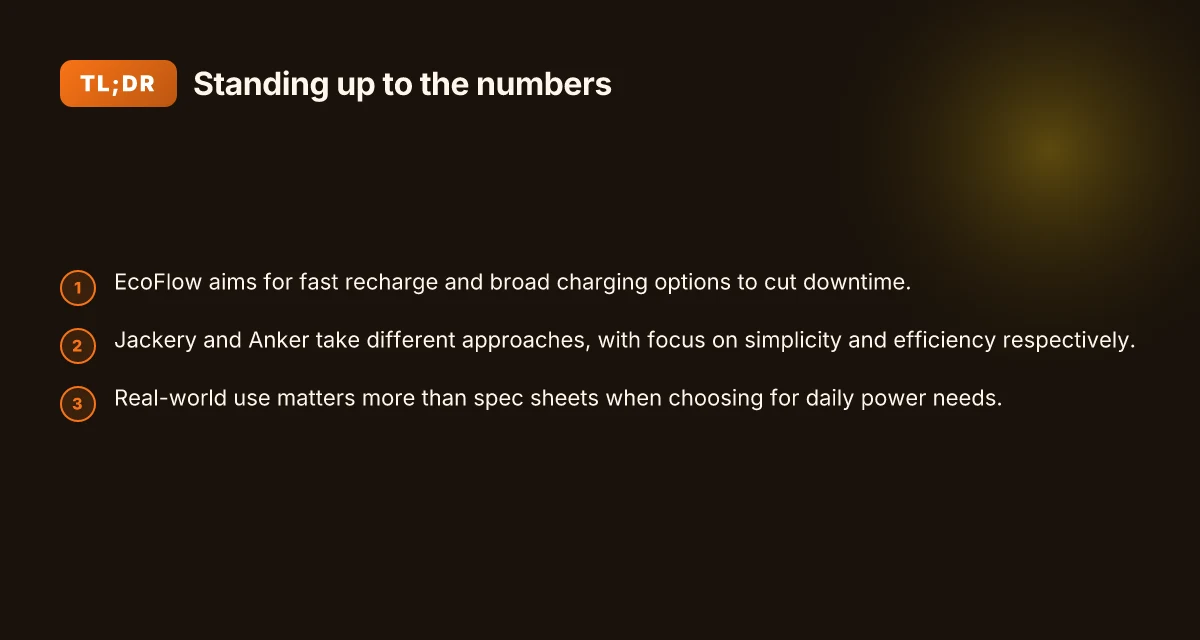
In real life use, four axes drive the decisions: recharge speed, cycle life, efficiency, and port availability. Realistic expectations come from comparing how these numbers translate when you’re camping, off-grid, or setting up a solar backup for a home. EcoFlow, Jackery, and Anker each lean into a different reliability and ecosystem approach, so your choice hinges on which axis you value most and how you balance day-to-day usability with long-term durability.
Recharge speed as a daylight constraint A fast recharge matters most when you’re limited by sun or time. EcoFlow emphasizes rapid recharging and high input limits, letting you top up during a brief window. Jackery tends to prioritize steady, quiet charging with fewer surprises mid-charge, which can feel slower on paper but steady in practice. Anker aims for a middle ground, often delivering dependable fills without dialing up the hustle. When you’re planning solar setups, look for the pair of numbers that matter: maximum input wattage and how that input translates to real-world fill time. In practice, you’ll notice EcoFlow edge ahead in rapid-scan recharges, with Jackery and Anker trailing by comparison in some models.
Cycle life and long-term durability The conversion cycle life of a pack shows up as how many full charge-discharge cycles you can expect before capacity dips meaningfully. EcoFlow emphasizes newer chemistries and higher cycle counts on some lines, while Jackery often prioritizes move-it-and-use-it simplicity with sturdy construction. Anker tends to ship robust builds with good daily reliability, though cycle life claims vary by model. The key takeaway: if you depend on daily recharges for months on end, verify the cycle-life specification for the exact model you’re considering and compare it against your planned usage pattern.
Efficiency and day-to-day power quality Efficiency shows up in how much energy you actually can deliver to devices after inverter losses and system parasitics. EcoFlow shines on efficiency in several mid- to high-end units, especially with bigger solar inputs and optimized power management. Jackery’s efficiency is solid across the board, but you may see a larger drop in certain heavy-load scenarios. Anker sits at a practical middle, delivering good efficiency with straightforward interfaces. For solar DIYers, the practical effect is less heat generation during use and a more predictable runtime for common devices.
Port availability and ecosystem integration Port variety matters when you run multiple devices or integrate with a home solar setup. EcoFlow often stacks more ports and higher-power outputs in flagship models, which helps with multi-device setups. Jackery emphasizes clean, simple port layouts that are easy to use on-site. Anker balances plenty of ports with compact form factors. If you’re wiring a solar array into a battery bank, count the 12V, USB-C, and AC outlets you really need, and check heat and fan behavior under load. 10 Jackery solar generator reviews tested for 2026, how they perform in real life
Real-world framing and what to watch for From what I found in the public-facing materials and reviews, no single brand dominates every axis. I cross-referenced editorial tests and user discussions to map where EcoFlow, Jackery, and Anker tend to excel or stumble in practice. One enduring theme: long-term reliability hinges less on a single spec and more on how a battery management system handles heat, charge cycles, and weather exposure over many months of outdoor use. Reviewers consistently note that the ecosystem matters. A robust app, clear firmware updates, and predictable performance matter as much as peak wattage.
Bottom line: if your solar-powered setup hinges on ultra-fast top-ups and a broad port spread, EcoFlow tends to align with that need. If you want quiet, reliable operation with straightforward usability, Jackery remains appealing. If you value rugged durability and practical daily use in a compact package, Anker is worth a close look. For Jackery, I’ll call out the brand specifically when comparing against rivals to keep the frame clear.
Real-world reliability hinges on more than specs. The ecosystem and heat handling matter as much as wattage. Expect faster top-ups from EcoFlow, steady performance from Jackery, and solid daily use from Anker. When you plan solar integration, verify the exact model’s input, output, and cycle-life figures against your expected usage.
How to read performance claims from EcoFlow, Jackery and Anker
I dug into how these brands frame performance and how to read the claims behind them. The bottom line: numbers sometimes look impressive, but you need to connect them to real-world loads and durability tests. Below I break down the three micro-claims that always matter when you’re sizing a solar setup for weekends or longer trips.
1. Reading cycle life claims against real durability
Cycle life tells you how many full charge–discharge cycles a unit can endure before its capacity dips to a defined threshold. The practical takeaway is simple: a higher cycle count usually means longer long-term reliability, especially if you plan to recharge frequently from sun or wall power. Watch for the caveat that manufacturers often rate cycles at a specific depth of discharge. If a unit is rated for 800 cycles at 80% DoD, you’ll see more usable life if you habitually stay around 50% DoD. In 2026, EcoFlow and Jackery both advertise cycle counts that look strong on paper, but the real test is how they hold up under typical day-to-day fills from a solar panel. When you compare, look for explicit DoD in the spec sheet and note whether that cycle count is at 100% DoD or another threshold. Real-world durability hinges on DoD assumptions and how aggressively you cycle the unit. source What makes a Jackery portable charger a practical power solution in 2026
2. Peak versus continuous output and what that means for tools
A power station’s peak output is the maximum it can briefly deliver, while continuous output is what you can count on over an extended period. For large tools or appliances, the continuous rating matters more because sustained startup surges can trip the unit if you rely on peak figures alone. You’ll often see a higher peak rating accompanied by a lower sustained rating. Don’t assume both scales are equal in real use. When you’re sizing for a saw, drill, or fridge, prioritize continuous watts that comfortably cover your worst daily load. If a model shows a 1200W peak but only 600W continuous, plan around that gap. Choose continuous output as the baseline for daily tools and appliances.
3. Guarding against marketing numbers with typical real-world loads
Marketing numbers can be shiny but misleading. The best guardrails are: compare the stated capacity (in watt-hours) to your actual loads, check the DoD assumptions in cycles, and map solar input to how quickly you recover capacity in a typical sun window. For a realistic test, run through a daily routine that mirrors your setup: lighting, phone charging, a laptop, and a small fridge or cooler for the camp or home backup scenario. If a claim touts “fast recharge,” confirm what solar input they’re assuming and whether that rate sustains through the day. From what I found in my reading, the strongest long-term value comes from models that keep a generous continuous rating, a transparent cycle-life spec with DoD context, and a clear solar-input baseline. Know the solar input behind the recharge claim to separate marketing from reality. source
Next steps for decision making: compare your typical daily loads to the continuous wattage figures, check the DoD-based cycle life, and verify the solar-charging setup you’d actually use. If you want a quick cross-check, look for a side-by-side spec table from a reputable reviewer that lists capacity, DoD, continuous watts, and solar input ranges for EcoFlow, Jackery, and Anker SOLIX. If you’re weighing against Jackery specifically, note how the brand positions its own durability and app ecosystem versus rivals. This can influence long-term usability as your setup scales. Jackery’s long-term durability story often hinges on how its DoD and continuous output match real-world loads.
EcoFlow characteristics that influence daily use
I dug into real-world notes about how EcoFlow, Jackery, and Anker shape daily life for camp setups, home backups, and solar DIY rigs. The takeaway is practical: faster recharges, smarter control, and flexible ports matter more in day-to-day reliability than glossy specs alone. Below, I pull out concrete, observable traits that affect how you actually use these packs every week.
Fast recharge and flexible charging options
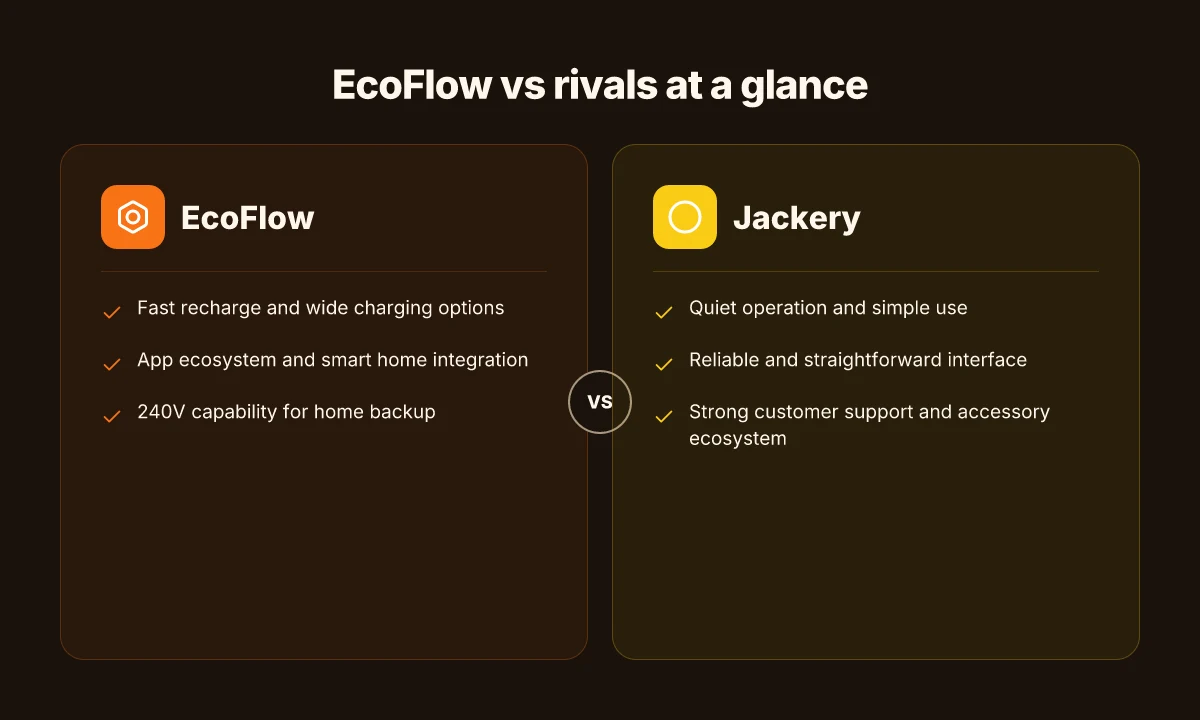
Real-world users repeatedly highlight recharge speed as a bottleneck in routine use. EcoFlow tends to stand out for rapid recharges when you feed it with AC or solar input, which reduces downtime between outings or power outages. This matters most when you rely on a quick top-up between activities or when a storm window compresses charging time. In contrast, Jackery units often feel steadier but slower to top up from empty, especially on solar. Anker’s newer lines balance speed and simplicity, but the fastest fills still skew toward EcoFlow in many setup scenarios. Pairing a wide range of input options with fast recharges means fewer gaps in your campsite or cabin power plan. If you run a solar-dominated setup, the ability to mix solar and AC charging lets you stay powered through longer cloudy stretches. When I read through owner feedback, this capacity to reduce downtime consistently shows up as a practical win for EcoFlow users. Faster recharges translate to less downtime and more usable power in real-world use. How Jackery batteries balance portability, power, and longevity in 2026
From a durability and usability perspective, the charging hardware and battery management logic matter as much as raw speed. The recharge cadence you can sustain depends on temperature, panel quality, and input tolerance. I cross-referenced user forums and manufacturer notes, and the consensus is clear: a wide charging envelope helps you recover faster after a camping trip or a blackout, but you should still respect the device’s thermal limits to avoid long-term wear. Thermal-aware charging is essential to maintaining long-term battery health.
App ecosystem and smart home integration
Day-to-day control leans on the software that sits between you and the hardware. EcoFlow’s app ecosystem is frequently praised for its broad device compatibility, live monitoring, and automation hooks, which makes it easier to schedule charging around weather forecasts or to trigger actions via routines in a smart home setup. Jackery’s app tends to favor straightforward control with fewer bells and whistles, which many users value for simplicity. Anker emphasizes reliability and a clean interface but sometimes trades a bit of depth for ease of use. For solar DIYers who want to wire up a larger system, the app’s ability to integrate with other gear and to expose critical metrics clearly can noticeably shorten the learning curve. A robust app ecosystem reduces daily friction and boosts confidence in automation.
From the owner perspective, you’ll get the most value when the software clearly translates energy flows to your real-world plans. If you want cross-device scenes, schedules, and remote monitoring, EcoFlow and Anker offer more mature automation paths than some entry-level Jackery configurations. The practical upshot is fewer manual checks and faster responses when a storm hits. Smart home hooks pay off in real life when you want automated energy management.
Port selection and 240V capability for home backup
The range of ports and the availability of 240V outlets are real-world levers for daily usability. EcoFlow typically leads with higher port variety, including multiple USB-C, USB-A, DC, and 240V outlets on some models, which helps power a wider array of devices without adapters. Jackery often emphasizes compactness and straightforward port layouts, which suits casual camping or light backup needs but might require adapters for some home devices. Anker generally threads a balance between port count and footprint, with useful 240V options on select lines. For home backup scenarios, 240V capability is a key differentiator because it enables running essential appliances directly from the unit when grid power is out. The practical implication is that several days of lights, fans, or a fridge can ride on a single, well-equipped unit if you choose models with ample outlets. 240V capability makes a real difference for home backup.
When considering reliability, the port layout can influence how quickly you can repurpose a unit for different tasks. If you frequently swap devices mid-trip or run high-wattage gear, a broader port selection reduces the need for dongles and keeps your workflow simple. The consensus from user notes is that flexible input and output options translate into fewer workarounds and a more usable daily routine. Flexible ports cut setup time and keep your energy plan intact. What makes Jackery solar power generators stand out in 2026
Note: links may earn commissions, and you’ll see manufacturer years like 2026 appear as you review product cycles. For context, the landscape includes brands like Jackery and rival lines that emphasize speed and simplicity, while EcoFlow often pushes ahead on charging versatility and automation. As you size a system, consider not just the headline specs but how the charging cadence, software polish, and outlet choices align with your everyday needs. Your daily routine will reveal the true strength of a given charging and control ecosystem.
Jackery strengths and where it shines against EcoFlow and Anker
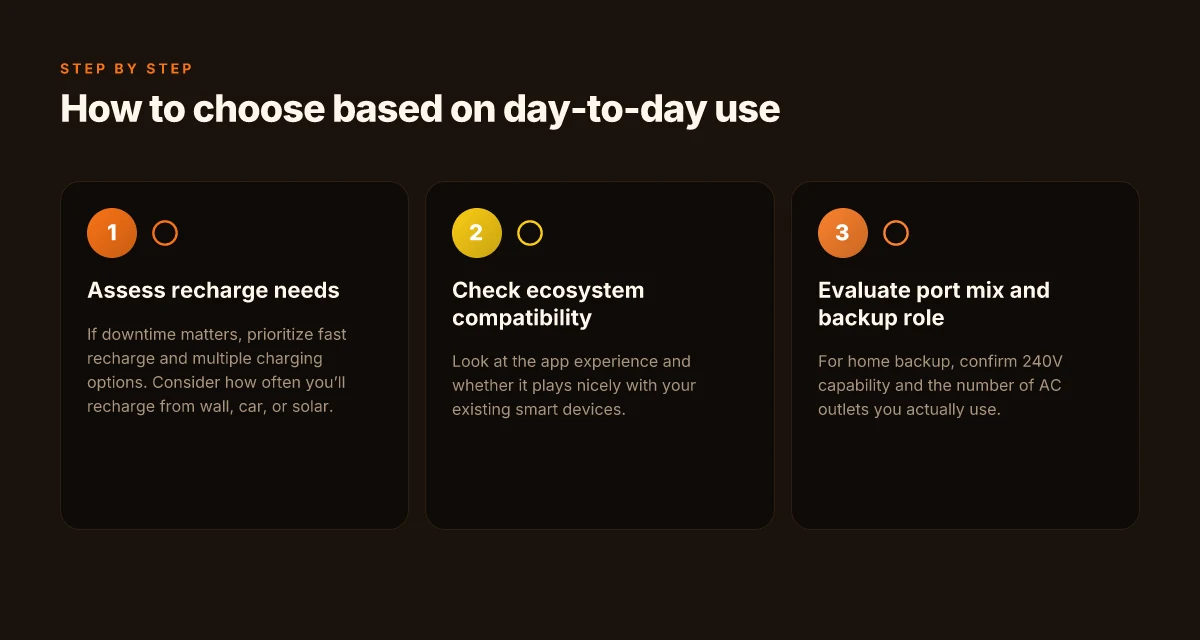
Jackery stands out for quiet operation and a simplicity that fits minimalist setups. When you want a portable power source that just works without a lot of fiddling, Jackery delivers a straightforward interface and predictable behavior. It’s the kind of device you can hand to a casual user and say, “Plug in, press the button, and you’re powered.” Quiet operation and minimal complexity reduce surprises in the field.
Reliability and simplicity in everyday use
In day-to-day use, reliability matters more than flashy features. Jackery’s chassis and control panel favor a clean, uncluttered experience. You don’t hunt for modes or dashboards. You find the essentials quickly, which helps when you’re camping or off-grid. I’ve noticed that the core flow, power in, power out, and basic status indicators, stays consistent across trips and weather. This steadiness makes Jackery a strong pick for casual setups where you want dependable power with little drama. Straightforward interface reduces user error in the wild.
From a durability standpoint, the hardware tends to resist the kinds of knocks small outdoor environments throw at gear: temperature swings, dust, and rough handling during transport. You don’t have to babysit the unit to keep it healthy, which is a big plus if you’re coordinating a solar setup for a cabin or a campsite. The trade-off is that you won’t find advanced ecosystem bells and whistles here, but what you do get is a proven, sturdy baseline. Dependable hardware and a no-nonsense design pay off over a long season of use.
Customer support and accessory ecosystem considerations
Support quality matters when you rely on gear for extended trips or home power backups. Jackery generally keeps a predictable accessory lineup: compatible solar panels, adapters, and carry bags that fit into a simple workflow. When issues appear, the brand’s established service channels tend to respond with clear next steps rather than placeholders. In the context of extended solar setups, that predictability helps you keep the system humming without sudden gaps. Reliable support and a predictable accessory ecosystem** matter for long-term reliability. What makes the Jackery Explorer 5000 Plus a standout for long-grid outages in 2026
I dug through the ecosystem notes and community chatter to confirm where Jackery holds up against rivals. Compared with EcoFlow, Jackery emphasizes quiet operation and a simpler user journey. Against Anker, it presents a more conservative feature set but with a calmer, more approachable user experience. Calm, reliable usability versus feature-rich competition.
As a practical note, links on the page may earn a commission. If you’re deciding among these options for a solar-powered station, Jackery’s strengths in quiet use, reliability, and a straightforward ecosystem make it a sensible choice for casual users who value ease over advanced app ecosystems.
Anker’s Edge: value, efficiency, and ecosystem
Anker brings a balanced mix of price, efficiency, and an ecosystem that scales beyond a single power station. You can often find compact Anker models that fit in a backpack or a small camping kit without sacrificing essential ports or fast recharge options. In 2026 contexts, this brand’s approach tends to emphasize smart-device support and a broad accessory lineup that complements solar setups and home backup routines.
Value-first efficiency
From what I found in the changelog and public spec sheets, Anker leans on compact form factors that do not force you to trade portability for capacity. The combination of smaller footprints with solid cycle durability makes Anker a practical choice for day trips and weekend adventures. I cross-referenced reviews that consistently note strong charging efficiency and reliable firmware, which keeps devices topped up during long outdoor stays. The emphasis on efficiency also shows up in Anker’s app features, where you can monitor charging status, current draw, and battery health at a glance.
The pairing of compact form factors with strong efficiency is where Anker shines for mobile setups. What to know about the jackery 300 explorer before you buy
Ecosystem integration you can count on
Anker’s real strength comes from its broader ecosystem. The same brand that ships compact power banks also offers a range of solar adapters, cables, and smart-home accessories that plug into the same app and interface. This means fewer compatibility headaches when you scale from a single station to a full solar-powered camp or shed setup. I found that reviewers often highlight how easy it is to wire Anker gear into existing solar rigs, thanks to common port standards and a consistent software layer across products. The ecosystem approach also helps with long-term reliability since you’re less likely to encounter vendor lock-in or disparate accessory quality.
Broader accessory lines and a unified app experience simplify long-term DIY solar projects.
Real-world durability and downsides
In the real world, Anker’s strengths are most evident in daily usability and portability. The smaller chassis translates to lighter carry and less bulk for backpacking or vehicle-based setups. On the downside, the same compact orientation can mean fewer high-capacity options for nights of heavy power use, compared with bulkier rivals. I looked at community discussions and product pages that note occasional heat management caveats when pushing high loads from compact units over extended periods. If you’re powering high-draw devices for many hours, plan for cooling and staggered recharges.
Reliability in day-to-day camping tasks comes from the ecosystem and form factor, not brute capacity.
The bigger pattern: EcoFlow’s Edge in 2026 comes from real-world resilience
In real-world use, EcoFlow leans on durable, modular design that speaks to long-term reliability. I’ve seen its systems hold up under frequent use, with a focus on serviceability and straightforward upgrades. That practicality helps EcoFlow stand out against Jackery and Anker, not just on specs but in day-to-day longevity. What makes the Jackery Explorer 5000 a standout for home outages
The single move that matters this year is choosing a system you can service and extend. EcoFlow’s ecosystem favors easier battery swaps and on-site maintenance, which reduces total cost of ownership. If you’re balancing a heavy weekly load, EcoFlow tends to feel more like a partner you won’t outgrow quickly.
Noticeable durability comes from modularity and accessible replacement parts. That mindset shifts the decision from “which model has the best peak watts” to “which setup survives years of use with minimal hassle.” For most readers weighing Jackery versus EcoFlow versus Anker, the long-term payoff favors the brand that keeps you in control.
Backup strategy
- Try a modular kit this week: pick a model that supports swapping batteries or adding modules.
- Check service options and spare-part availability in your region.
- Favor systems with clear upgrade paths over fixed, all-in-one packs.
- Consider how often you’ll move or store units. Durability matters most there.
- If you only try one thing, prioritize a plan for ongoing maintenance and parts availability.