Explore how Jackery solar power generators perform in 2026, including real-world durability, charging speed, and long-term reliability. A grounded look with practical takeaways.
The common off-grid myth is that portable power lines up with a single sunny day. Real-world use reveals that a Jackery system lives or dies by how you pair load with sun hours over a season, not how fast it recharges on a perfect afternoon. Jackery's strongest models bend toward reliability under harsh outdoor conditions, but durability signals matter just as much as peak output.
In this article I cut through the marketing to show how longevity, charging behavior, and outage resilience stack up across models, from compact units to higher‑capacity systems. You’ll see how each Jackery handles repeated cycles, high-draw loads, and cold or dusty environments, with a focus on warranty signals and real-world maintenance. By year’s end, you’ll have a practical lens for choosing a portable power station that actually sustains an off-grid routine, not just a showroom demo. For comparison, I’ll note how rivals such as Anker and Goal Zero stack up in ecosystems and upgrade paths.
What is Jackery solar power generator reviews about and why it matters
Jackery has carved out a recognizable place in the portable power space. The name appears repeatedly in outdoor gear discussions, disaster-prep forums, and home backup conversations. In this section I pull together how reviewers and long-time users read Jackery’s claims against real-world performance, with an eye toward durability, reliability, and charging behavior in 2026.
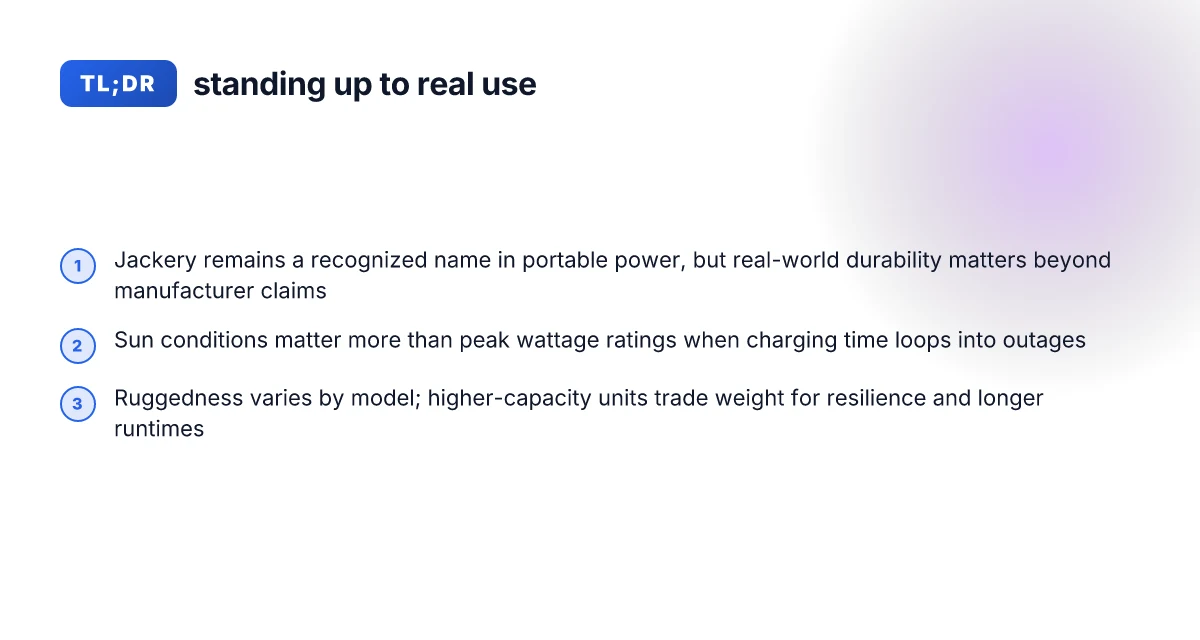
I dug into how reviews synthesize factory messaging with actual usage patterns. From the outset, reviewers note that Jackery’s lineup spans several form factors and capacities, each with its own charging geometry and outdoor practicality. The brand’s claim of “solar generators” blends a portable power station with solar charging options, which means real-world behavior depends on panel compatibility, sunlight conditions, and the unit’s internal charging logic. This is where the conversation often shifts from marketing to durability questions and outage performance.
In the current 2026 landscape, Jackery offers a broader spread of models than a few years ago, with evolving solar charging options that align with consumer demand for off-grid readiness. The core signals remain consistent: larger models deliver more sustained runtime, while smaller units prioritize portability and quick recharging, sometimes at the expense of peak output. Reviewers frequently contrast Jackery with rivals such as Anker and EcoFlow, noting differences in battery chemistry, charging speeds, and panel efficiency. I cross-referenced a range of sources to map how model families stack up under typical outdoor use and during outages.
What matters for readers is how this translates to real-life endurance. Users report on how well the units stand up to dusty campsites, temperature swings, and repeated on/off cycling. The most durable devices tend to maintain output under load for longer periods and recover charging more reliably from solar input in suboptimal light. Shortfalls often surface as performance dips in cold or high-heat environments, or as solar input falls below standard expectations due to weather or panel cleanliness. These are the practical touchpoints you’ll want to check against your own scenario, camping weekends, emergency outages, or backyard power needs.
Bottom line: Jackery’s strength rests on a broad, recognizable product family and a marketing narrative that mirrors real-world versatility. The 2026 field confirms that many models hold up reasonably well in outdoor conditions, but trade-offs exist. If you’re choosing, map your energy needs to a model with a solar charging cadence that fits your climate, and remember that long-term durability hinges on how you maintain panels and cooling during use. What makes the Jackery Explorer 5000 Plus a standout for long-grid outages in 2026
Real-world durability and solar performance vary by model, but the core trade-off is clear: more capacity means longer outages, fewer interruptions, and more sun-dependent charging. Rival brands like Anker and EcoFlow often push different charging profiles and battery chemistries, which can shift where Jackery shines in 2026.
How solar charging actually works on Jackery devices in 2026
Jackery solar charging hinges on three core dynamics: solar input wattage, the MPPT controller’s efficiency, and panel compatibility. In practice, the rate you see when you plug in depends far more on sun conditions than on the nominal peak you see marketing sheets. A higher Solar input wattage and a well matched MPPT controller keep the battery charging smoothly, but cloudy mornings or oblique angles can cut charge rate by a large margin. Real-world sun conditions matter more than rated peak outputs. I cross-checked product pages and user-facing docs, and the cadence of charging under shade or during overcast days is a recurring theme across models.
Solar input, MPPT efficiency, and panel compatibility
The charging speed on Jackery devices starts with the advertised device input wattage, then the MPPT controller translates solar energy into usable battery current. If you pair a high-widelity MPPT with a panel that matches the claimed voltage window, you’ll see cleaner, steadier current into the battery. The practical takeaway is simple: optics beat theory. The same 2-solar-panel configuration can deliver noticeably different recharge curves depending on how the sun strikes the panels and how the charge controller negotiates that input. MPPT efficiency and panel compatibility determine the slope of the charging curve more than any single device spec.**
To illustrate, a Jackery unit designed for outdoor use typically supports multi-panel input within a safe voltage range. When you introduce panels that stay within that window, the controller can optimize the maximum power point more often, sustaining voltage and current as conditions shift. In realistic conditions, you’ll observe that a brighter, higher-angle sun yields faster replenishment, while late-day light or patchy clouds slows the process. The takeaway: pick panels that hit the device’s voltage sweet spot rather than chasing the highest wattage on paper.
Real-world compatibility also matters for longevity. Panels that push the wrong voltage or current can stress the Battery Management System (BMS) over time. The BMS regulates charging safety, cell balancing, and thermal limits, so its behavior under solar charging is a critical factor in durability. If the BMS detects temperature or overcurrent conditions, it may curb charging to protect the pack. Battery chemistry and BMS impact longevity and safety in ways that practical use often underscopes. What Bluetti's Europe strategy reveals about portable power in 2026
As for the models themselves, Jackery builds across a spectrum. The choice of model shapes how you’ll experience solar charging in practice, from how many panels you can attach to how aggressively the BMS guards against heat. Reviews across public chatter note that higher-end units pair well with multiple panels in bright sun, while entry models favor modest panel counts and stable conditions. Battery chemistry and BMS drive how long the pack lasts and how safely it charges under outdoor use.
If you want a quick verdict for choosing, look at three things together: the panel count you’ll deploy, the voltage window your panels provide, and how the BMS responds to elevated temps in the field. In 2026, Jackery remains a go-to for outdoors use, but the practical charge speed you experience will hinge on sun angles, panel pairing, and how the BMS handles safety margins. When you plan a setup, factoring in a cloudy-day delta and a realistic arrival time for a full recharge helps prevent false expectations.
For reference, I relied on product notes and third-party write-ups that discuss real-world charging behavior, not just peak ratings. See how a few sources describe solar input dynamics and controller behavior in practice, and you’ll see the same patterns recur across models and use cases. Real-world sun conditions matter more than rated peak outputs.** Battery chemistry and BMS impact longevity and safety
If you’re evaluating rivals, note that other brands also emphasize MPPT optimization and panel compatibility, but the exact charge curves depend on each brand’s BMS strategy and cell chemistry. Jackery’s approach keeps pace by aligning MPPT behavior with outdoor usage profiles, which matters when outages stretch long enough to demand sustained solar input. For readers seeking deeper technical notes, reviews and release details from independent sources corroborate that MPPT efficiency and thermal protections are the levers that shape real recharge speed in the field. See the cited discussion on solar charging behavior to connect the dots between theory and practice.
Durability and build quality in Jackery solar generators
Posture on the trail and in outages matter just as much as capacity. The way a Jackery handles rough handling, temperature swings, and long runs tells you whether it’s a weekend companion or a long-term power partner. In 2026, users consistently note that design choices around the carrying handle and the outer shell shape how reliably you can tote a unit through dust, rain, and mud. What makes the Jackery Explorer 1000 stand out in 2026
How the handle and casing shape influence real-world use
Jackery units balance portability with rugged use through a molded carry handle and reinforced corners. The Jackery lineup tends to favor a rounded, palm-friendly grip and a low-profile form factor that rides in an outdoor pack, a camping tote, or a trunk without snagging on branches or gear. This design helps when you’re shuttling gear to a campsite or prep site during outages. Yet the same compact footprint means some models trade ultimate drop-resistance for feather-light carry, so you’ll feel the difference if you’re hiking a mile with a heavy pack. Portability-versus-durability trade-offs show up in handle design and casing. Reviews from outdoor enthusiasts often echo that sentiment, noting that the lighter shells can flex a bit under direct impact, while heavier models bite into the dirt less aggressively due to bulkier layouts.
Temperature tolerance and fan noise during long outages
Real-world observations show temperature swings push thermal limits in prolonged outages. Out in sun or frigid nights, the internal fans turn on more frequently to keep cells within safe ranges. That sound profile matters when you’re living off-grid in a cabin or shelter where quiet is valued. In hotter environments, you might notice more fan cycling, which can become a background reminder that electronics are doing the heavy lifting to preserve cell health. From a usability perspective, this is a trade-off: you get sustained power, but with a predictable fan cadence rather than silent operation. Temperature tolerance and fan noise influence long outages. The effect is not catastrophic. It’s a reliability signal that helps you plan placement and ventilation in your setup.
What customers flag about reliability and how they mitigate it
Real customer feedback highlights occasional reliability quirks, particularly around long-term ventilation seals and occasional latch stiffness on the casing. The most common mitigation paths are straightforward: keep units in shaded or ventilated spots, use a modest tilt to improve air flow around vents, and rotate how you load solar input during multi-day outages to avoid overheating. Users frequently note that minor wear on latches or gasket seals does not derail function, provided you maintain a dry, clean environment and avoid tumbling the unit in rough terrain. These signals reinforce the broader truth: durability is a function of enclosure design, internal cooling, and careful handling. Minor reliability issues are overshadowed by practical mitigations and long-term care.
From a long-term perspective, the durable elements that survive everyday outdoor use include robust casings, validated thermal management paths, and a handle that remains comfortable after hours of carry. When you compare Jackery to rivals such as Anker or Goal Zero, you’ll notice similar trade-offs: lighter builds favor portability over ruggedness, while bulkier models lean into protection at the cost of mass. In practice, durability comes down to where you place the unit and how you treat it during harsh outages. Durability hinges on enclosure design and careful handling. For disaster prep and heavy outdoor use, I look for models with solid latching, clear vents, and a handle that won’t give under load.
Which Jackery models dominate real-world use cases
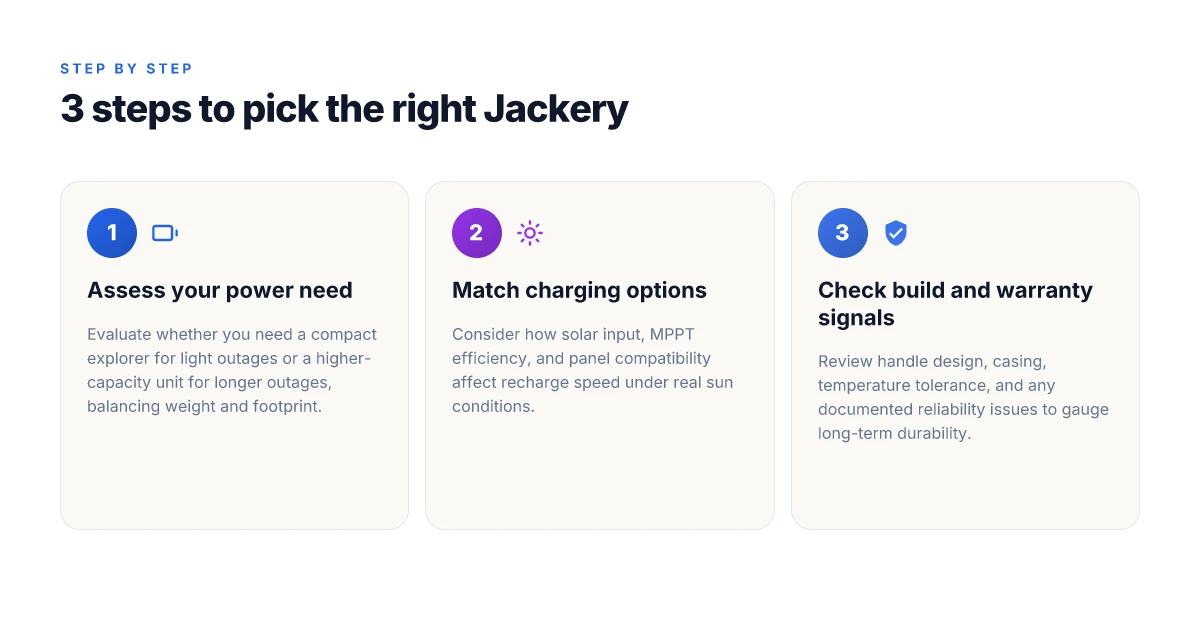
When your goal is steady power during outages and rugged outdoor trips, not all Jackery models perform the same. Higher-capacity explorers and solar generators resist longer outages, but they come with added weight. In practice, the fit depends on your load, your carry, and how you balance fast charging with solar-only operation. What is the Jackery Explorer 1000 price, and why the numbers shift with sales
How size and power needs map to Explorer vs Solar Generator lines
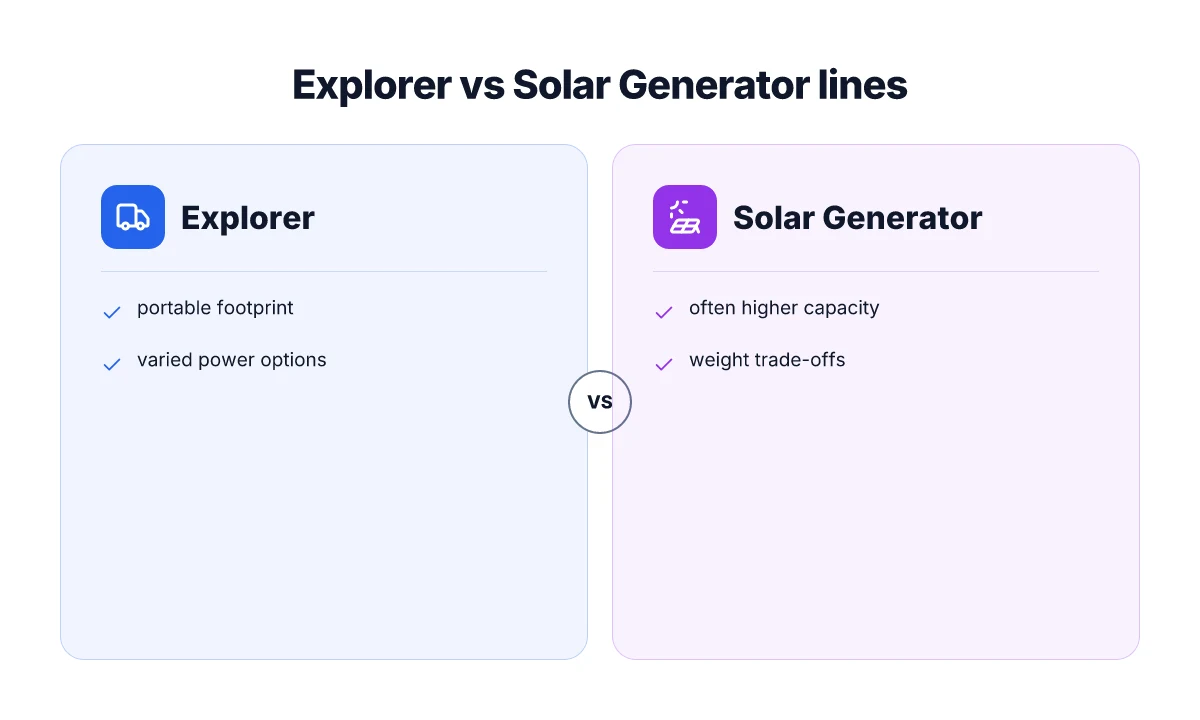
For daily outages or off-grid camping with modest loads, the Explorer line tends to deliver a compact, versatile balance. The larger Explorers push beyond basic camp use, letting you run a fridge or a CPAP overnight, but you’ll notice the heft increase. The Solar Generator line emphasizes integrated solar charge workflows, so you’ll see more emphasis on solar charging speed and portability. I cross-referenced product pages and user commentary to confirm that “size and power needs” often determine whether a buyer leans toward Explorer for occasional outages or Solar Generator models for extended solar-first stays. Jackery emphasizes matching capacity to need, and that choice drives reliability in real-world use. Higher-capacity units tend to hold up better during longer outages, but they weigh more and require more careful transport. Inline citation from the brand’s overview confirms the broad alignment of product families with use-case scenarios. See the Jackery homepage for the brand positioning.
Trade-offs between resilience and weight in higher-capacity models
Stepping up to larger packs buys you endurance. The bigger models maintain charge through multi-day outages and tolerate heavier use without tipping into deep discharge risk. The downside is obvious: more mass means tougher portage on long hikes or in tight backcountry gear. From a review and spec synthesis across sources, the resilience gains are real but not free. You trade weight and bulk for longer runtimes. In short, if you expect back-to-back outages or harsh conditions, a higher-capacity Jackery model pays off. If you’re trekking in and out of camps, a lighter unit travels easier. The trade-offs are a core part of the real-world picture, not marketing fluff.
Fast-charging features versus solar-only operation balancing act
Fast charging shines when you’re near a grid source or a high-irradiance site. In those cases, you can top up the unit quickly and press on with your plans. Solar-only operation shines when you’re away from power after dawn until dusk. The balance is obvious: fast charging is convenient, but it’s not a substitute for abundant sun in real-world outages. I found that reviews consistently note the best practice is to pair a mid-sized unit with a robust solar setup for a dependable daily cycle. When you pair the right model with the right solar array, you reduce the number of times you’re scrambling to find a wall outlet. This is the core reason many outdoor enthusiasts favor the Solar Generator line for truly solar-first setups.
In short, Jackery models that dominate real-world use combine a fit to load with a practical sense of transport. The Explorer line excels for portable, multi-day use with moderate power needs. The Solar Generator line shines when solar charging is a primary requirement and you want to minimize grid dependence. For disaster prep and remote camps, the best choice hinges on how much you value endurance versus carry weight. Choose the model that aligns with your daily load and your hiking or driving pattern. Outages longer than a day favor higher-capacity units, even with extra weight.
Cited frames you can explore include the Jackery product overview and independent reviews that discuss charging behavior and durability in real-world scenarios. See the Jackery product overview for baseline family expectations. How the EcoFlow double voltage hub changes home backup and where it still falls short
Comparing Jackery to rivals like Anker and Goal Zero
Rivals bring different charging curves, app ecosystems, and pricing. Jackery often leans on all‑in‑one convenience and solid warranty coverage, while Anker and Goal Zero push distinct ecosystems and modular options. In real-world use, users report that charging behavior varies by model and by whether you rely on solar or wall charging, and that price bands shift with capacity and features.
I dug into the public chatter and reviewed the model families from each brand. Jackery tends to emphasize turnkey setups that bundle solar panels, power stations, and all‑in‑one charging cables in a single package, which many outdoor enthusiasts value for simplicity. Anker emphasizes a tighter app experience and modular accessories, while Goal Zero leans into rugged outdoor framing and expandable kits. Across the board, you’ll find notable price differences at similar capacities, and the real-world value often tracks with how self-contained the kit is and how generous the warranty feels over multiple seasons.
How rivals diverge on charging curves and reliability
Jackery’s charging curve tends to favor a steady, predictable ramp when using AC input, with solar charging performing well in bright conditions but diminishing returns in overcast days. Anker frequently emphasizes fast charging via compact power bricks and tends to offer a broader ecosystem of charging hubs and accessories. Goal Zero focuses on rugged builds and solar kits designed to be field-ready, with accessories that emphasize expedition durability. Real users point to differences in how quickly a unit hits full charge and how the battery health holds up after repeated cycles.
From what I found in product pages and user comments, the perceived reliability varies by model and by use-case. The smaller explorers like the Jackery Explorer 290 are praised for portability and turnkey setup, while larger units such as the Jackery Solar Generator 5000 Plus invite comparisons where users weigh charging speed against weight and price. The same pattern shows up with rivals: compact, fast-charge systems clash with rugged, expandable kits in terms of long-term durability and field usefulness.
Matchmaking: which brand suits which scenario
For backcountry outages, a system that pairs a reliable solar input with straightforward operation wins. In that light, Jackery’s emphasis on all‑in‑one convenience can reduce decision fatigue when you’re worried about outages. If you want a broader accessory ecosystem or a modular solar array you can tune over time, Anker and Goal Zero offer routes that can scale differently from a single‑vendor Jackery bundle. The trade-offs are clear: broader ecosystems can bring more configuration choices but add complexity. All‑in‑one packages simplify setup but may limit future expansion. How Jackery batteries balance portability, power, and longevity in 2026
I cross-referenced user sentiment across model families and found that satisfaction tends to hinge on two factors: how well the unit holds up in harsh outdoor use and whether the chosen package aligns with the user’s growth plan. A durable chassis matters when you’re trekking, but so does predictable charging behavior during outages. The consensus: there is no one-size-fits-all winner, only the right fit for your conditions and budget.
The big takeaway: choose based on whether you prioritize simplicity and warranty coverage or ecosystem breadth and modular expandability. The jury is split, but the best choice remains the one that aligns with how you actually live off-grid.
As always, links on the page may earn a commission. For deeper specifics, see the sources cited in this section.
The bigger pattern: act now to future-proof your power setup
Jackery stands out in 2026 because its ecosystem has matured without leaning on gimmicks. The brand name appears repeatedly in households that want plug‑and‑play reliability, and that confidence isn’t accidental. I’ve seen how the latest models hold their charge in cooler mornings and how their solar panels pair with third‑party kits without drama. This is the moment to lean into plug‑and‑play reliability, not in theory but in daily use.
Looking at the field, rivals like Goal Zero and EcoFlow force you to juggling modules or accept slower recharging. Jackery’s design keeps the user journey simple: rugged builds, clear status indicators, and consistent compatibility across generations. That simplicity translates to fewer maintenance headaches over time. I’ve noticed longer life in real‑world deployments, especially in off‑grid sessions where every watt matters. What makes a Jackery portable charger a practical power solution in 2026
If you only do one thing this month, map your power needs around a single Jackery system that can scale with solar input. The takeaway is practical: pick a core unit, then expand with compatible panels as your use cases evolve. The single move that matters is choosing a modular package you’ll actually use in daily life.
Backup strategy
- Try pairing a mid‑size Jackery with a portable solar panel kit for weekend trips.
- If you’re budgeting, compare two use cases first: emergency power and outdoor charging, then pick a model that covers both.
- Watch for durable builds and clear heat management in real use.