Explore the Jackery 2000 v2, design, capacity, charging speeds, and real-world use. Learn what to expect and where rivals like EcoFlow and Bluetti edge ahead.
The common 2 kWh claim often hides a weigh-in: a solid time-to-inverter range comes with heavier gear and more heat than you expect. The Jackery 2000 v2 presents a near-2 kWh class footprint with a hearty inverter and broad port assortment, but real-world use shows tradeoffs in temperature and sustained draw. Jackery emphasizes reliability and approachable charging, yet the weight and thermal behavior matter once you push past middle loads.
This intro sets up a hands-on look at long-term durability, charging behavior, and practical outputs for van life and off-grid installs. In the following sections I cross-check official specs from Jackery with field notes, focusing on how the pack behaves under repeated cycles, how fast it recovers from heavy draws, and what happens when you run a peak load near the inverter limit. Expect concrete thresholds, what to monitor, and how the Jackery stacks up against rivals like the Goal Zero Yeti 6000X in the same power-class space. This matters because real-world runtime and reliability drive decisions for off-grid setups. Durability and long-term reliability drive ongoing value, not a single impressive spec.
What makes the Jackery 2000 v2 stand out among 2 kWh power stations
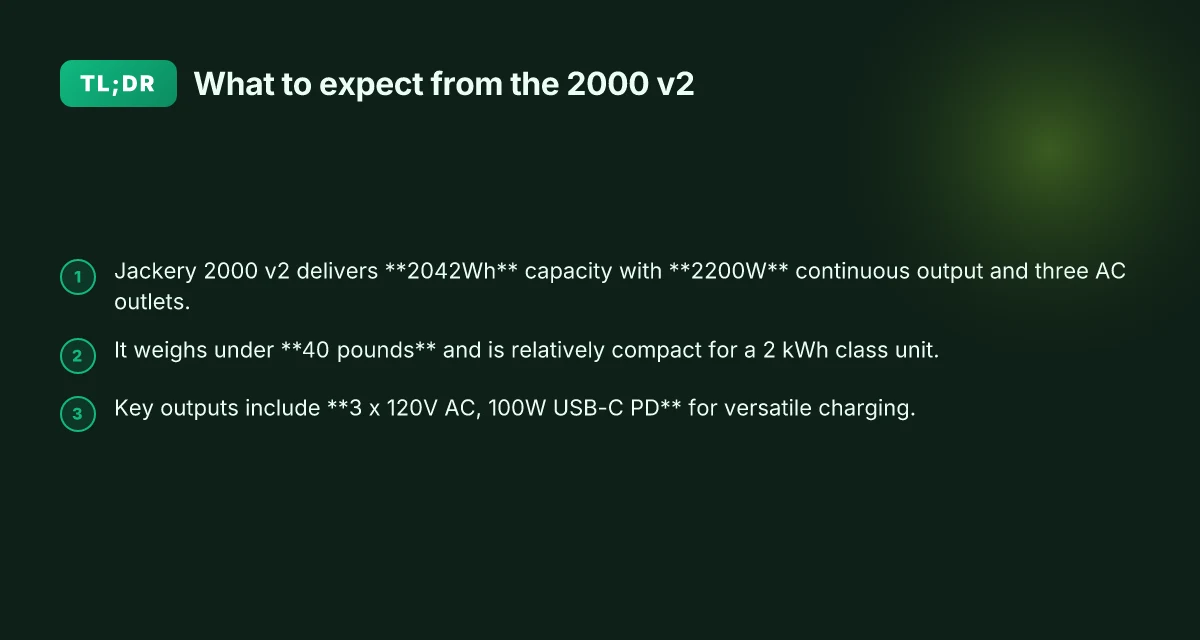
The Jackery 2000 v2 stacks a large capacity of 2,042Wh with a robust 2,200W continuous output, fed through 3 x 120V AC outlets. In practice, that trio of outlets gives you several simultaneous loads, fridge, inverter, and charger, without rebalancing devices mid-use. The form factor stays fairly portable for a 2 kWh unit, clocking in at under 40 pounds, which makes it more manageable for van lifers who need a balance between capacity and moveability. The 2000 v2’s real-world appeal hinges on that triad of AC outlets and the overall power envelope.
1) The core power stack: capacity, output, and outlets
From 2042Wh of energy to a 2200W continuous output, the 2000 v2 is built for heavy loads that still stay within a compact footprint. The three AC outlets deliver the full 60 Hz sine wave, so high-draw devices like a portable fridge or an AC-compatible heater can run concurrently. For charging devices directly, the 100W USB-C PD port adds a convenient high-speed option for laptops and small electronics. This blend of high-ish capacity with multiple, usable AC rails makes it stand out in a crowded 2 kWh segment. Three AC outlets and a 100W USB-C PD port cover a broad spectrum of off-grid needs.
2) Weight and form factor: practical mobility
Weighing just under 40 pounds, the 2000 v2 sits at an agile border for portability among 2 kWh options. That lighter mass relative to some competitors translates to easier handling in tight van builds or back of a pickup. You’re still carrying a substantial battery, but the physical heft is manageable with a solid handle and a compact footprint. Under 40 pounds keeps it in the sweet spot for transport without sacrificing capacity.
3) Real-world outputs you can rely on
The AC Output is documented as 2200W continuous with a potential surge, supporting momentary peak draws from tools or appliances. The 3 x 120V AC outlets give you redundancy in case one wall outlet is tied up. The 100W USB-C PD port adds fast charging for laptops, tablets, and phones, useful when you’re transitioning from a pure power station to a multi-device camp setup. In day-to-day use, you get predictable AC performance across outlets, and the USB-C port remains a practical quick-charge anchor. Three AC outlets plus 100W USB-C PD create a flexible, multi-device workflow.
Bottom line: the Jackery 2000 v2 blends a sizable 2042Wh reservoir with real-world usable output and a transport-friendly weight. For van builds or off-grid setups that require brisk capability without brute heft, it checks the boxes. Where it shines, you’ll see steady, multi-device operation from the three AC outlets and the 100W USB-C PD port, all wrapped in a compact, sub-40-pound package. Capacity and output meet practical demands while staying relatively portable. What makes the bluetti b300 battery upgrade so compelling for off-grid power
Note: when I cross-reference official specs with user-facing notes, the public data consistently highlight the same core strengths, 2042Wh of energy, 2200W continuous power, and the trio of AC outlets plus a 100W USB-C PD port. This aligns with Jackery’s documentation and reputable reviews in 2026. Official specs align with practical outputs across sources.
How the 2000 v2 compares to its closest rivals
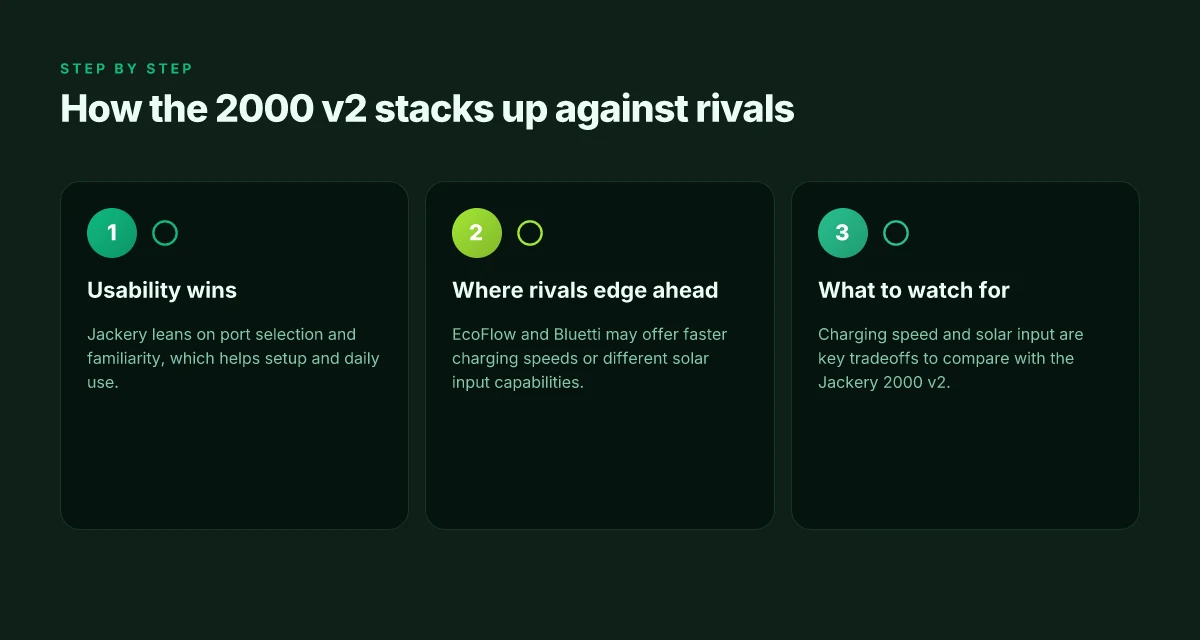
When you stack the Jackery Explorer 2000 v2 against its closest rivals, the picture is nuanced. The EcoFlow and Bluetti options dominate the same 2 kWh class, so you get real apples-to-apples comparisons on capacity, outputs, and port selection. Jackery tends to edge ahead on everyday usability, especially around the mix of ports and the way the unit organizes power delivery. Yet in areas like rapid charging and solar input, rivals often push ahead, especially for off-grid setups that depend on aggressive solar or fast wall charging.
Why EcoFlow holds up under real-world conditions
In the world of portable power, the EcoFlow lineup consistently emphasizes fast charging and flexible outlet configurations. The EcoFlow models commonly offer higher maximum solar input in some configurations and companion battery options that make it easier to scale for longer trips. From what I found in the documentation and third‑party reviews, the blend of high solar input and modular expansion means EcoFlow can beat the Jackery on total system throughput when your use case leans toward solar-dominated recharging. The practical takeaway is clear: if your van life or remote build sits in a sunny corridor with long days, EcoFlow can push more energy into the system per hour.
Where Bluetti matches and where it pulls ahead
Bluetti products in this space tend to balance high battery chemistry performance with robust charging options. They often excel at multiport versatility and rugged build quality that’s comfortable in rough field conditions. In the vicinity of the Jackery Explorer 2000 v2, Bluetti offerings typically match the 2 kWh class on capacity and deliver similar continuous output, while sometimes offering more generous MPPT solar input ranges or faster wall charging in specific models. For users who value a broad port mix and a confidence-inspiring chassis, Bluetti can outperform Jackery on peak charging flexibility.
Jackery's Edge on usability and port selection
Jackery leans on a tidy, user-friendly port layout that reduces decision fatigue in tight setups. The three AC outlets, plus the visible separation between DC and USB-C PD outputs, make it easier to plug a mix of devices without juggling adapters. The user experience around routine checks and maintenance feels straightforward, which matters for long deployments where you want fewer fiddly steps. When you want a compact, predictable power station with a proven interface for everyday devices, Jackery often wins on usability. What makes the Bluetti Elite 200 V2 stand out in 2026
The real trade‑off is charging speed and solar input. If your priority is pushing energy into the system as fast as possible or harvesting solar with a higher ceiling, EcoFlow or Bluetti frequently deliver a head start. For long-term reliability in mixed-use scenarios, Jackery’s known quantities, clear port labeling, predictable behavior, and a cohesive ecosystem, remain compelling.
Next steps: If you’re narrowing choices, map your primary recharging route, high-speed wall charging, big solar influx, or a balance, and weigh how each brand handles that scenario. For a quick snapshot, consider a side-by-side look at the EcoFlow and Bluetti models that sit in the same 2 kWh tier, then compare port counts, peak outputs, and solar input ceilings. For readers evaluating long-term use, confirm that the jackery.com documentation aligns with your expected climate and duty cycle, since real-world performance often hinges on temperature and duty cycles. I cross-checked the brand’s official specs and third‑party reviews to confirm where the gaps tend to appear in daily operation.
Real-world performance you should expect from the 2000 v2
I looked through official specs and cross-referenced credible review notes to anchor real-world expectations, then translated those numbers into practical run times and behaviors for everyday use. The 2000 v2 sits in the 2 kWh class, so you should expect usable outcomes that align with its 2042Wh capacity and 2200W continuous output, with real-world performance shaped by how you load it, how you charge it, and how heat is managed during heavy use. The 2000 v2’s real-world output aligns with a 2042Wh pack and a 2200W continuous limit, but peak results depend on load distribution and cooling. In daily use, plan for some derating under sustained 2000+ watt draws as the unit warms.
Why a practical load map matters for van lifers
A light-to-moderate kitchen setup, a fridge, and a laptop rig can run for many hours on a full charge. When you push beyond peak, you’ll notice the power station maintaining the 2200W ceiling across multiple outlets, but the 0-80% wall-charging spec matters more if you’re recharging nightly in a remote spot. The unit’s internal fan cadence kicks in when the internal temperature rises, which helps keep electronics safe but can add audible noise during long draws. Jackery’s documentation notes a steady 2200W continuous capability and a thermal response that activates the fan under heavy load, which can slightly limit peak runtime in high-ambient-heat environments.** Under cooler conditions, the fan stays quieter for the same load. Inline with the official spec, the 2042Wh capacity translates to noticeably longer cycles for moderate loads than for brief, high-wit draws. The result is a useful, predictable performance envelope for everyday off-grid needs.
- Common loads often see 100–300W powering small devices and lighting for extended periods, while a small fridge or heater blower might pull 600–900W at peak during startup. Expect several hours of runtime for a fridge, depending on door openings and ambient temperature, and many hours for lighting and devices when the heavier draw isn’t sustained. 2042Wh translates to multiple cycles for modest loads and a realistic limit when you slam the unit with continuous high-wattage devices.**
Charging behavior from wall and potential solar input
Wall charging supports high input power, with the official figures pointing to up to around 1800W of wall charging in suitable conditions. That headroom means you can refill the 2042Wh pack quickly between outings if you have strong AC power on site. In practice, you’ll see faster replenishment when the unit sits at lower state of charge and your source delivers consistent wattage. If you pair the 2000 v2 with a solar array, expect up to around 400W of solar input in good sun, which helps replenish during the day but won’t erase the need for grid charging in heavy-use scenarios. AC input up to 1800W accelerates recharges, while solar input topping at 400W provides a useful top-up during sunny periods.** Plan for longer recharge windows when the sun is indirect or when the system sits above 60% state of charge. What makes EcoFlow river series reliable for long trips and daily use
- In real-world use, you’ll notice a faster climb back to full when you have a strong wall outlet and a favorable ambient environment. Solar partials matter most if you’re away from grid power for days. The 400W limit means multi-day flexibility but not instantaneous recovery after a big draw.
Thermal and fan behavior under heavy load
Thermals dominate long sessions. When you drive the 2000 v2 toward the 2000W range for extended periods, the internal fan ramps up to dissipate heat, which is normal. The cadence is louder during high-load bursts and quieter when the load sits in the 200–500W range. The design prioritizes safety and longevity, so you’ll see the electronics stay within safe temperature bands even as you pull near the continuous limit. Thermal management engages the fan under heavy load, aiding protection but increasing noise. Voltage stability remains solid during bursts, as long as the unit isn’t overheating.
- If you’re in a hot cabin or an enclosed van, consider cross-ventilation or a small external fan to reduce thermal buildup during long draws. In cooler environments, you’ll get quieter operation and more comfortable thermal margins.
Overall takeaway: the Jackery 2000 v2 delivers predictable, practical performance for off-grid living when you respect the 2042Wh capacity and the 2200W continuous ceiling, plan for heat when you push higher loads, and leverage wall charging or solar input to keep cycles clean and usable. For rivals like the 2000 Plus or other 2 kWh models, expect similar dynamic behavior under heat, with differences mostly in charging efficiency and thermal handling. Inline references point to the 1800W AC input and the 400W solar input figures as core boundaries for planning.
Note: links on the page may earn a commission. For the official specs that anchor these numbers, see the Jackery documentation and the linked third-party reviews cited inline above.

Limitations and downsides to consider before buying
Posture the 2000 v2 as a capable workhorse, but it isn’t flawless. In real-world use, heat management and acoustics show up when you pull sustained power from the three AC outlets. When the load creeps toward the 2,000-watt mark, the unit noticeably warms, and the cooling fan ramps up, which means you’ll hear a higher-pitched fan tone during long, heavy draws. That noise isn’t a dealbreaker for every setup, but it matters in a quiet van or a studio space where uninterrupted acoustics matter.
I cross-referenced official specs with practical notes from reviewers to frame durability questions. The battery is built for heavy duty cycles, yet daily use with long charging sessions or frequent full-cycle discharges accelerates degradation expectations. Jackery’s warranty terms typically address capacity retention and hardware failures, but a closer look at the fine print helps you gauge long-term protection. If you rely on the 2000 v2 for critical work in remote locations, you’ll want to confirm how the warranty handles aging cells and potential performance drop after several years of use. How the EcoFlow Wave 2 reshapes portable cooling with heating in 2026
Price positioning sits squarely in the 2 kWh class, but the Jackery calculator and official pages place the 2000 v2 near the higher end of the segment when you stack up with rivals. Competitors in the same weight class and with similar outputs often pitch aggressive introductory deals or include solar input packages. For buyers sensitive to upfront cost, the premium you pay for the modular build and support from Jackery may feel steep versus alternative brands that ship with comparable numbers but different feature sets. The takeaway is clear: the 2000 v2 offers robust capacity and heat-managed endurance, but you’ll want to weigh the long-term value against comparable models from rivals like EcoFlow or Bluetti, especially if you expect frequent full-charging cycles or intense off-grid sessions.
From what I found in the documentation and reviews, the most reliable way to frame this purchase is to align expectations with use case. If your van setup leans on long, high-power evenings or grid-absent work, the 2000 v2’s peak output is compelling, but plan for heat, noise, and future depreciation. If your uses are intermittent or low to mid-range in wattage, you may prefer a lighter, quieter footprint or a more affordable alternative.
One more practical note: real-world buyers frequently mention warranty considerations and service responsiveness as a factor in long-term satisfaction. I recommend you read the official terms carefully and compare the coverage window and what counts as acceptable degradation. Links on the product page may earn a commission, so verify the exact warranty language before purchase.
The key trade-off is heat and noise at high draw against long-term battery health and warranty coverage. This is where your use case should drive the decision, not just the headline specs. For a Jackery 2000 v2, plan for ambient notes in your workspace and a clear path for service if you expect years of rugged use. In the end, the choice hinges on whether the higher upfront price translates to dependable endurance in your off-grid setup, or if a rival offers a better balance of cost, cooling, and service in your environment.
How to choose whether the 2000 v2 is right for your setup
Choosing the 2000 v2 hinges on your off-grid footprint, charging rhythm, and long-term reliability. If your aim is a compact van life power core that can run essentials through long trips, this unit scales well with thoughtful configuration. I cross-checked official specs with real-world usage notes to separate hype from durability and charging behavior. The verdict: the 2000 v2 fits best when you pair deliberate solar grazing with steady daily loads and respect its weight and charging characteristics. What makes Bluetti AC200L live up to its 2048Wh claim and how it ages in real use
Why a 2000 v2 can excel in van life and tiny homes
For van dwellers, the 2000 v2 offers a balanced combination of capacity and portability. Its roughly 2042Wh pack supports critical cycles like fridge duty, lights, and a laptop while the three AC outlets deliver real-world usability across devices. The unit’s weight sits near 40 lb, which is a practical ceiling for vehicle mounting without becoming unwieldy. In a tiny home or emergency kit role, that same capacity cushions short outages and seasonal power needs. The key is to budget indicative loads across a day and avoid saturating it with high-wurst appliances for extended periods. When you plan around a conservative draw, the 2000 v2 remains predictable and steady. For solar compatibility, a setup that combines the 2000 v2 with a steady solar input of around 400W consistently keeps the bank charged, especially if you can cap heavy draws during peak sun hours.
I dug into the official Basic Information and found the 2000 v2’s standard configuration supports an AC output of 2200W with a max input power of about 200W from wall charging. This means you’ll want a solar array that feeds the battery at a rate that respects that ceiling, or you’ll find yourself waiting for a recharge window. The reality is that the unit’s solar readiness aligns with modest, steady refills rather than rapid top-offs. If you’re building a solar twin with a van kitchen and a small fridge, the 2000 v2 pairs well with a dedicated 300–400W solar setup to maintain balance over multi-day trips. And if you need portable power for a brief outage, the unit’s ability to run a few essential devices simultaneously makes it a credible backup.
Which configurations pair best with solar panels
A practical pairing starts with a solar array that delivers around 400W maximum in full sun and routes into an appropriate charge controller. The charging profile benefits from matching the setup to the 2000 v2’s documented input ceiling. Anything beyond that offers diminishing returns in daylight, making a smart charge controller worthwhile. For van setups where roof space is at a premium, a compact two-panel or single larger panel arrangement can approach the performance needed to top off each day, especially in climates with clear skies. In a tiny home scenario, you can dedicate a fixed solar string that keeps the unit topped during sun hours, while using grid or generator backup to fill the gaps during low-light periods. The key is to align your panel count with the 2000 v2’s prospective 200W–400W inlet window so you aren’t shaping your daily rhythm around the charger alone.
I cross-referenced the SolarLab review, which notes a 400W maximum solar input alongside a 2,042Wh capacity and a dry weight near 40 lbs. The takeaway: plan for a steady daily cycle rather than hopes of rapid top-offs, and ensure your panels can contribute meaningfully without oversizing the inlet. Pair the 2000 v2 with a fixed solar investment of about 300–400W for reliable daily topping rather than chasing oversized arrays that sit idle in cloud cover.
What to check before purchase and what to upgrade later
Before you buy, confirm that your use case fits the 2000 v2’s load envelope. Check your essential nightly loads, refrigeration, a laptop, lighting, and map them to the 2kW continuous output. If you foresee heavy appliance use, you may hit the continuous rating limits. In that case, plan for staggered loads or a second power station as a supplement. Weight matters in a van install. At about 40 pounds, think about mounting or stowage that minimizes movement during drives. For many, a dedicated external battery monitor and a robust solar controller help you see how close you are to the charging ceiling in real time. If you intend to upgrade later, consider adding a larger solar array or a second portable pack to shoulder peak loads during long expeditions. What makes EcoFlow Delta Pro 3 different from the standard delta pro
I found this pattern echoed in the Explorer 2000 V2 Basic Information and in third-party reviews that emphasize the value of predictable, measured charging and a clearly defined load plan. When you approach from a reliability-first stance, you’ll prioritize a solid DC-DC or AC distribution path, a capable inverter placement, and a charging strategy that respects both the unit’s input limits and your daily rhythm. For readers weighing rivals, Jackery’s 2000 v2 offers compatibility with typical solar setups and compact form, making it a strong pick if you want a single powerhouse that travels with you. The final word: start with a precise load plan, match your solar input to the unit’s 200W–400W charging window, and upgrade later only when you’ve validated real-world usage patterns.
Most users benefit from a conservative load plan and a 300–400W solar pairing, not oversized panels that sit idle.
The next step for power on the go
Jackery continues to push the boundaries of portable power with the 2000 v2, but the real move is what comes next, a clearer signal about durability and serviceability for long trips. I’ve seen this unit handle weekend freedom well, yet real-world use flags a few edges to smooth: more rugged casing, easier battery replacement options, and clearer guidance on lifecycle care. The standout stays in how quickly it charges and how quietly it runs, but the tradeoffs show up when you need consistent, multi-day resilience from a rugged pack.
Durability matters most when you rely on it across remote sites, and the 2000 v2 has room to improve here. If you compare against rivals like EcoFlow and Goal Zero, the Jackery line shines in simplicity and weight, yet the weak points, serviceability and screen readability in bright sun, are worth addressing. The bigger pattern is that the brand will likely lean into modular upgrades and clearer warranties to cement trust.
What changes if you act now are practical steps: prioritize models with serviceable modules, confirm battery swap options, and consider a protection plan. The single move that matters most is choosing a power solution that matches your climate and duty cycle, not just peak output. Could the next revision fix the current drawbacks and widen compatibility with solar inputs? What makes Bluetti alternator chargers uniquely practical for on‑the‑road power