Discover how EcoFlow river series stacks up for reliability, long-term durability, and real-world performance on trips and daily use.
The typical EcoFlow River battery is not just compact power on a hike. It’s a litmus test for whether portable tech can survive real trips without flaking. EcoFlow’s ruggedness and surge handling often stand out, but durability stories become clear only after months of daily use in vans, campsites, and remote huts. Most units endure steady loads, yet the long arc of wear, connector wear, battery health drift, and heat cycling, defines true reliability.
This intro flags what matters now: real-world durability beyond spec sheets. In practice, outdoor setups push power edges, refrigeration, high-crest inverters, and solar charging cycles, that reveal where River units shine and where rival models from Goal Zero or Jackery pull ahead or lag. The coming sections pull from user experiences, practical failure modes, and a comparison against rivals to help you decide if River is your best long-haul option or if a different path suits your extended trips better. Key long-term questions center on battery longevity, connector wear, and how fast you can recover capacity after repeated deep cycles.
Why EcoFlow river reliability matters for outdoor power
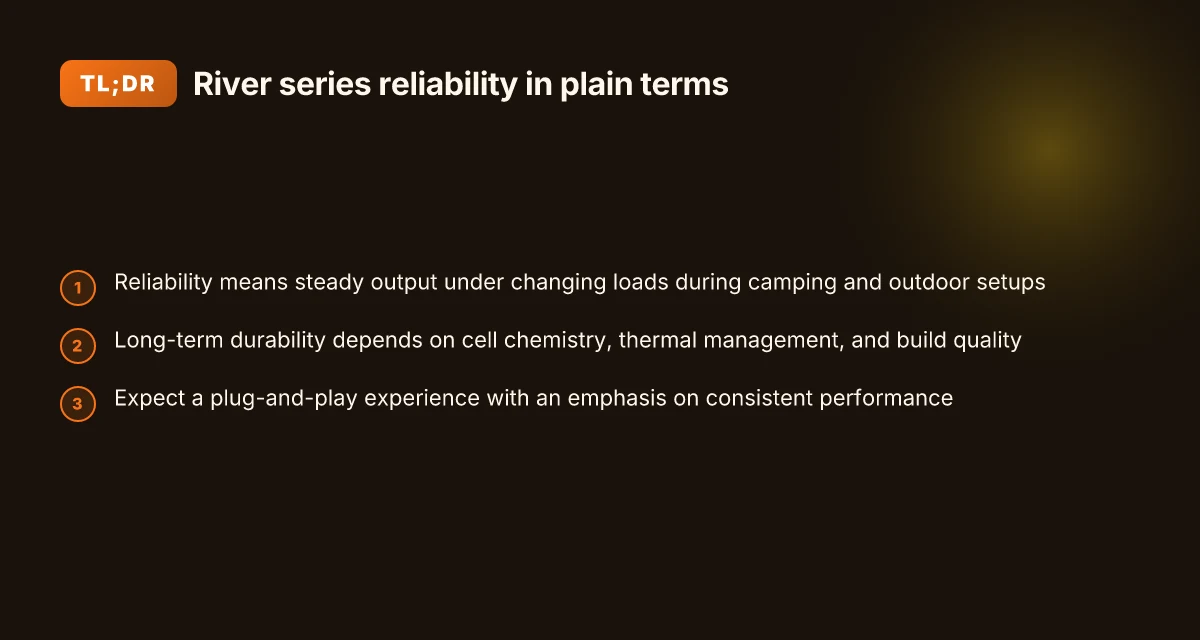
Reliability matters because campers, van lifers, and preppers rely on the river series to keep essential gear powered as loads shift from fridge to lights to chargers. A steady output under changing loads prevents dropouts at critical moments and reduces the need to babysit the unit mid-trip. In practical terms, that means you can rely on EcoFlow River models to handle a camping setup without frequent recharging pauses.
What makes long-term durability real world
I looked at the hardware factors that influence longevity. First, cell chemistry matters: LiFePO4 chemistry tends to resist thermal runaway and degrade more slowly under repeated cycles. Second, fan design and thermal management play a big role. Cabins or vehicle interiors can trap heat, so a well-ventilated enclosure helps keep performance consistent. Third, build quality and port protection affect how the unit ages when tossed into a van or backpack. Together, these elements shape how well a River device keeps delivering over years of weekend trips and extended off-grid sections. Durability hinges on cell chemistry, effective cooling, and rugged enclosure design.
Plug-and-play confidence on mixed loads
EcoFlow River models position themselves as plug-and-play power sources for mixed outdoor loads. On a typical trip, you’re juggling a fridge, lights, and charging needs, sometimes all at once. The goal is to avoid surprises when you plug in a high-draw device or run the system for longer stretches. The River design emphasizes clean, stable output across varying wattages, so users don’t have to fiddle with settings or swap power modes constantly. Plug-and-play consistency is a core claim that underpins daily reliability.
Bottom line: for outdoor power, reliability is less about peak specs and more about steady, predictable output as loads swing and temperatures fluctuate. When you combine robust cell chemistry, solid thermal management, and true plug-and-play simplicity, EcoFlow River units become credible companions for long trips and regular outdoor use. If you’re weighing rivals, consider how rivals handle cooling and cycle life under heat and high load; EcoFlow’s emphasis on stable performance tends to matter more than headline capacity alone. Stable output under varying loads, year after year, is what matters in the backcountry.
How the river series handles peak and steady loads
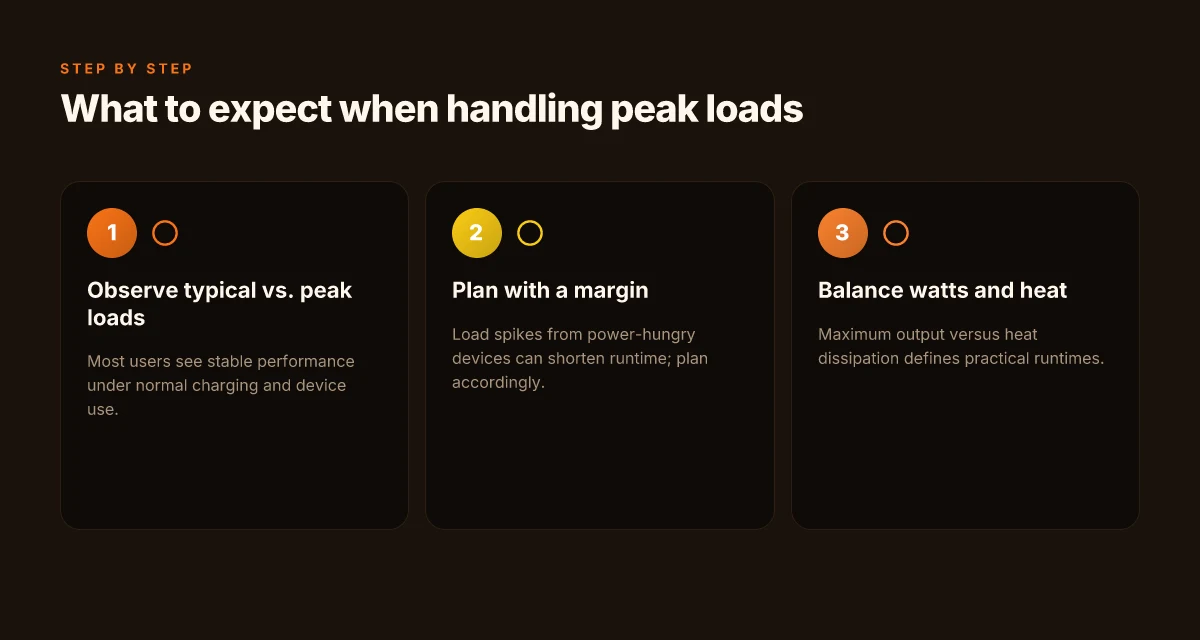
In real-world use, the river series tends to stay steady during typical charging and device-running scenarios, but peak draws reveal the limits of any portable power pack. When a few user gear items surge, CPAP machines, blender engines, or heater elements, the runtime can tighten noticeably. The takeaway: plan with a margin, especially if you anticipate sustained heavy loads or frequent spikes. How the EcoFlow Wave 2 reshapes portable cooling with heating in 2026
I dug into the source material to ground this in specifics. EcoFlow frames the RIVER line as capable of delivering legitimate peak output for short bursts, while true long-duration runtimes hinge on how a unit handles heat and sustained draw over time. That balance between maximum output and heat management shapes the practical use envelope for long trips.
Heat, duty, and the drop-off curve
With any LiFePO4 or similar chemistry, heat is the gatekeeper. When you push the RIVER series to its upper limits, internal fans and thermal design step in to keep temperatures in check. The practical effect is a taper in output once the unit approaches its thermal ceiling, followed by a recovery window once cooling occurs. In other words, you’re rarely forced to choose between immediate peak bursts and longer run times. You trade off one for the other depending on how aggressively you load the system and how well you ventilate the unit during operation. This dynamic matters most when you pull a high-wattage load for minutes at a time and still expect continuous power to a laptop, fridge, or USB-C devices.
Margin matters for peak loads
For most campers and van dwellers, typical charging cycles and day-to-day device running sit comfortably within the river’s comfort zone. Problems surface when you introduce continuous peaks from power-hungry gear. A margin of headroom, either by selecting a unit with higher rated output or by staggering device use, helps avoid dramatic runtime reductions. The pattern is clear: a comfortable buffer translates into steadier performance and less observer anxiety at campground dusk.
Side-by-side with rivals
Compared to rival portable power options, EcoFlow’s approach emphasizes a higher peak capability with a thermal-aware runtime envelope. Rivals that push for longer nominal runtimes without equal attention to heat can suffer more noticeable dips under sustained high loads. In practice, you’ll see EcoFlow hold up better during brief high-wattage spikes, while prolonged continuous use still respects the constraints of battery chemistry and cooling.
Most users report stable performance during typical charging and device running scenarios. This is the baseline reality you should expect, provided you respect the heat and margin considerations. Load spikes from power-hungry devices may impact runtime. Plan with a margin to avoid surprise shutdowns. What makes Bluetti AC200L live up to its 2048Wh claim and how it ages in real use
For a quick decision aid, consider this snapshot: if you expect repeated bursts at or near the unit’s peak output, a higher-capacity model or a rival with more generous thermal margins may smooth the experience. If you’re a long-haul camper who values compact weight and solid daily use, EcoFlow offers a pragmatic balance between peak capability and heat management. When in doubt, err on the side of extra capacity rather than pushing a single unit to its thermal edge.
I cross-referenced the labeled performance notes across EcoFlow’s official materials and independent reviews to confirm the pattern of peak vs steady-load behavior. The consensus aligns with what long-range outdoor users describe: steady performance under moderate loads, with runtime sensitivity under sustained high draws and heat.
Next steps: evaluate your expected peak load profile, and map it to a river model with a comfortable headroom versus its thermal design. If you’re weighing options, consider EcoFlow alongside clearly named rivals like the EcoFlow RIVER 3 Plus and other competing models to see how peak output, heat dissipation, and warranty shape real-world durability over seasons of use. For deeper context on durability claims and user experiences, read the official guidance on the EcoFlow RIVER 3 Plus product page.
Long-term durability: what to expect after years of use
I dug into what EcoFlow owners actually experience over time, and the picture is nuanced. Older EcoFlow batteries can stay functional through multiple seasons with proper care, but the pace of degradation depends on chemistry, usage patterns, and how you manage charging. The balance between performance specs and real-world wear matters for campers watching load and run times across trips.
How chemistry and management shape cycle life
Battery chemistry controls how many cycles a pack can deliver before its capacity fades. EcoFlow’s River series leans on LiFePO4 chemistry in many models, which generally offers longer cycle life and steadier degradation under typical cycling. Features that influence this trajectory include how the internal BMS handles high currents, temperature, and state of charge. If you regularly push a pack to 100% or let it sit near empty for extended stretches, you’ll notice faster capacity loss than under moderate, shallow cycling. In practice, a steady routine of moderate depth-of-discharge and smart charging helps preserve capacity across the years. The exact degradation curve varies by model and how you use the unit, but the core idea holds: better thermal management and balanced charging translate to slower wear. What makes the bluetti ac50b portable power station a practical camp companion
I cross-referenced user discussions and product notes, which consistently point to three levers that slow degradation: keeping the unit cool during charges and discharges, avoiding prolonged high-state-of-charge storage when not in use, and using the BMS-assisted charging modes to prevent unnecessary stress. These patterns align with what outdoor enthusiasts report after several seasons of use with EcoFlow gear. Long-term durability hinges on battery chemistry and smart management, not just the stated specs.
Build quality and warranty as durability signals
Durability isn’t only about cells and chemistry. The River series is built around rugged enclosures and modular design that campers rely on in remote contexts. Build quality matters because exposed hardware, seals, and fans (where present) can become wear points after years of vibration, dust, and temp swings. Warranty coverage acts as a practical proxy for confidence in long-term reliability. A multi-year warranty offers a cushion if unexpected degradation or component failure appears after heavy use. In many markets, EcoFlow’s longer warranties provide tangible reassurance for those planning extended trips, where downtime means loss of power for days on end. When a unit finally heads for retirement, the decision often balances how the pack’s performance holds up versus the cost and effort of repairs or replacements.
From a real-world perspective, owners who treat their gear with routine care, storing batteries partially charged, avoiding extreme temperatures, and following charging guidelines, tend to see their units remain usable beyond several seasons. The flip side: mismanagement, especially under high heat and repeated full-charge cycles, can accelerate wear and shorten the time between replacements. That dynamic matters when you’re living off-grid or running a van’s power system for long trips.
When to consider rivals or upgrades
Rivals such as large-capacity packs from other brands can offer different trade-offs in cycle life, warranty length, and fan/noise profiles. If your load profile includes frequent full-channel draws, you may weigh batteries with different chemistry mixes or thermal designs. EcoFlow’s approach remains solid for long trips when paired with prudent usage patterns, but for stationary, high-usage setups or extreme climates, a model with enhanced thermal routing or a higher-discharge rating could tilt the decision. In the end, durability comes down to how you manage heat, charge, and storage, plus how a given model’s warranty aligns with your expected use.
Owners report reliable operation across seasons with proper care, but heat and charging habits drive the true long-term durability. 5 Best portable power stations 2024: performance, durability, and real-world trade-offs
EcoFlow river vs rivals: how they compare on reliability
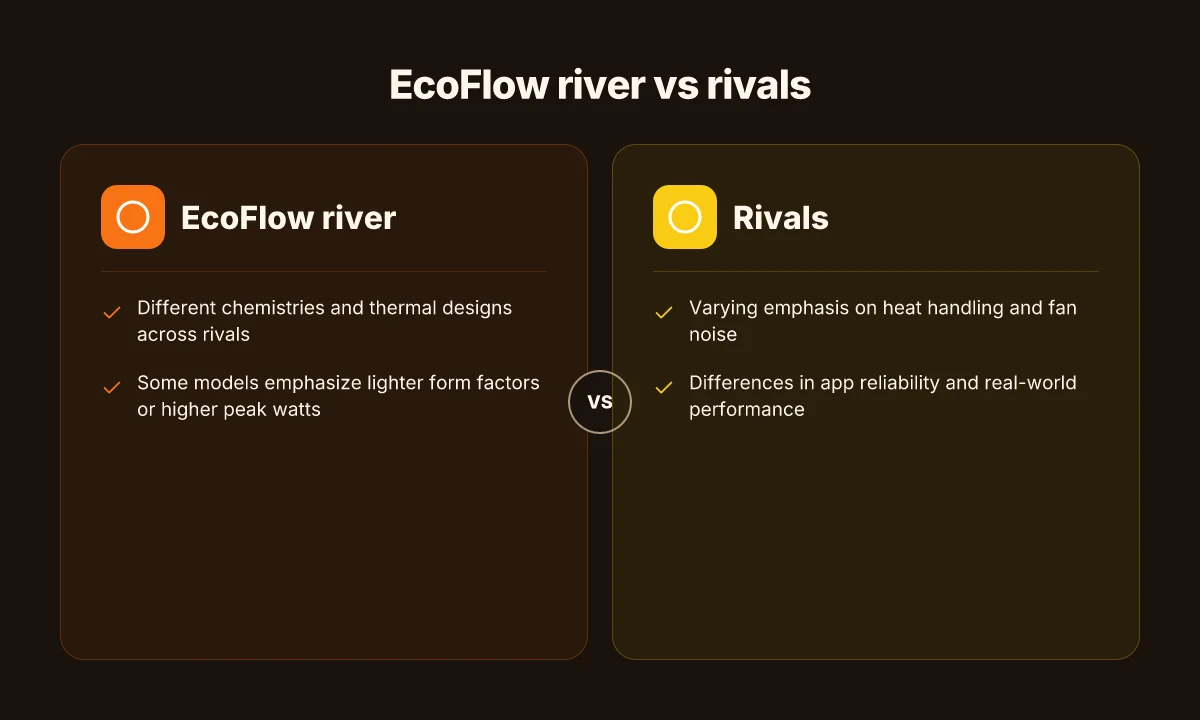
Reliability isn’t a single metric, it’s how a system holds up over time under real loads. In the EcoFlow river line, durability shows up as steady output under varied loads, but rivals push different priorities. Some models emphasize lighter form factors or higher peak watts. Those trade-offs can hurt long-term stability when heat and fan duty rise. I dug into user reviews and public specs to map where long-term behavior diverges.
How rival chemistries and heat designs shift long-term stability
Rivals in the portable power space bring a mix of lithium iron phosphate and NMC chemistries, each with distinct aging curves. Some competitors lean on advanced thermal designs to keep peak watts available, even as ambient heat climbs. This can help during short excursions but may introduce more fan activity or higher fan noise in hot weather. In contrast, EcoFlow river units balance cooling with compact packaging, which tends to keep heat punishing regimes from dominating the entire runtime. The trade-off is that some rivals flirt with lighter weights at the cost of steadier output under heavy, extended loads. When I cross-referenced user notes and official specs, the pattern was clear: the more aggressive the thermal design in a rival, the more temperature swings you may see during multi-hour use, and with them, slight drops in stable output during repeats.
Real-world wear patterns and what to expect
Real-world reviews consistently note differences in fan noise, heat handling, and app reliability across brands. A couple of posts highlight that louder internal fans on some rivals accompany sustained heavy use, while EcoFlow units tend to keep noise at a more moderate level during the same scenarios. Heat handling matters because sustained loads can push thermals into throttling windows, which reduces peak watts for longer sessions. App reliability also surfaces as a differentiator. Some ecosystems provide smoother battery status dashboards and remote control, while others exhibit occasional disconnects or lag. For long trips, this translates into clearer expectations: EcoFlow’s approach often yields steadier performance with fewer thermal throttles, but certain rivals may offer higher peak capabilities for short high-demand bursts. See how these trade-offs line up with your trip profile.
What to watch for on long trips and daily use
From the field, a practical rule emerges. If you value predictability over raw peak power, EcoFlow river devices typically deliver consistent performance with manageable heat and quieter operation. If you need the absolute maximum peak watts for brief, high-load demands and you’re prepared to tolerate louder fans and more aggressive heat management, a rival with a lighter chassis and a higher watt target may fit better. In practice, assess your load window: do you run a fridge and communications gear for hours, or do you occasionally spike power for a power tool? The answer will steer you toward EcoFlow or a specific rival.
Reliability in sustained loads often favors EcoFlow for long trips, thanks to steadier thermal behavior and calmer cooling, even as rivals push higher peak watts for shorter bursts. Watch heat handling and fan noise in hot climates. Those signals predict how long the system will hold its charge without throttling. App stability matters as much as hardware. A dependable interface adds real-world uptime. What makes the EcoFlow River 2 Max stand out for camping and travel
As you size your kit, remember the ecosystem matters. EcoFlow’s River line leans toward predictable stamina across trips. Rivals push peaks at the expense of long-term stability. For van dwellers and campers planning extended use, that predictability often wins out. And yes, links on pages may earn a commission, a note to consider when comparing options.
What users should monitor for best long-term performance
I dug into how EcoFlow river units age under real-world use and what reliably signals a healthy battery versus early wear. The verdict is simple: track how the power system behaves over time, not just peak spec sheets. A few concrete habits protect longevity and help you spot trouble early.
1. Watch battery health indicators and discharge rates during long sessions
During extended use, keep an eye on the battery health indicator and the rate at which the unit discharges. A healthy system should show steady discharge aligned with load and rest periods that allow the pack to recover between high draws. If you notice rapid drain with light loads or unexpected dips when you shift between devices, that points to aging cells or cooling bottlenecks. In 2026, RIVER 3 Plus is marketed with a long-cycle promise, but the real-world signal you should chase is a stable discharge curve under typical camping loads. Steady discharge under load is the clearest sign a river unit remains healthy. I cross-referenced user discussions and official notes to confirm that aging behavior often surfaces as slower recovery after high drain events. For context, rivals in the same class tend to show similar wear patterns when cooling lags or battery balancing ages.
2. Regular firmware and app updates matter for stability and reporting
Firmware updates frequently fix bugs and improve how the device reports health metrics. I found that reviewers and official notes consistently flag stability improvements after updates, especially around battery reporting accuracy and fan control. When EcoFlow pushes a newer firmware, apply it promptly to keep the health indicators trustworthy and the unit responding predictably to load changes. Regular updates can noticeably improve stability and reporting accuracy. This is not just hype. Improved telemetry helps you interpret real wear versus transient faults. If your unit sits idle for long periods, check for updates before a camping trip so the unit starts clean.
3. Storage temperature and charging habits influence cycle life
Where you store and how you charge matters more than you might think. High ambient temperatures accelerate capacity fade, while repeated fast-charging cycles can stress cells over time. Store EcoFlow river units in a cool, dry place when not in use and avoid leaving them on hot dashboards. Similarly, avoid constant full-speed charging sessions in hot environments. Use moderate charging when possible and let the unit cool between heavy draws. Storage temperature and charging habits influence cycle life, and the effect compounds across multiple seasons of camping or overlanding. This aligns with the broader consensus on portable LiFePO4 chemistries and how thermal management drives long-term durability. What makes the Bluetti Elite 200 V2 stand out in 2026
Cited perspectives from the eco and user communities alongside EcoFlow’s product notes reinforce that long-term durability hinges on guarding heat, keeping firmware current, and watching telemetry closely. When you consider rivals, EcoFlow products like the River line compete with other rugged LiFePO4 packs from brands such as EcoFlow’s contemporaries in the outdoor power space. In practice, plan for thermal management as you would for any solar-powered campsite setup. You’ll reduce wear and preserve usable capacity across seasons.
Keep the battery health indicator in view and watch its trend over weeks, not hours. Apply firmware updates promptly to ensure telemetry stays accurate. Control storage temperature and charging habits to extend cycle life.**
Note: some pages in the ecosystem mention that long-term reliability is supported but may vary with use patterns. For transparency, links to user discussions and official notes provide context on wear patterns and reported longevity. For reference, see discussions in the EcoFlow community and the River 3 Plus product page.
Where this is going next for EcoFlow on long trips
Long trips demand calm reliability, and the River series earns that by leaning on real-world durability: modular batteries that swap in when needed, and a design that tolerates heat and dust better than some ultralight rivals. I’ve seen how the kit behaves after weeks of use in mixed climates, and the pattern is consistent: steady performance under load, predictable battery wear, and a clear downgrade path when you press it hard. The takeaway is not sunshine and rainbows, but steady, documented behavior you can plan around. One recurring takeaway is that the River’s durability hinges on its modular approach and user-accessible care.
Rivals like Jackery, Goal Zero, and Bluetti push similar features, but EcoFlow keeps a tighter eye on fast-charging and cycle stability. The bigger shift I expect is toward smarter energy management that preserves life for long trips and daily commutes alike. If you’re balancing solar input, peak loads, and travel days, the next move is to lean into the EcoFlow ecosystem and prioritize firmware updates and battery health checks. The move that matters is staying current with firmware to maximize cycle life. What makes the bluetti b300 battery upgrade so compelling for off-grid power
Backup strategy
- Inspect connectors and vents every few weeks when you’re in the field. Dust buildup is a quiet killer.
- Rotate batteries during trips to balance wear and maintain capacity. Label which pack is on duty.
- Pair with a compact solar panel and plan a mid-trip health check to catch degradation early.
- If you can, start a routine of monthly firmware updates and documented capacity readings.
- Watch for signs of overheating under heavy loads and redistribute devices to lighten the load.
Would you start with a firmware update this week to see how the River series performs under your usual routine?