Explore how the Jackery SolarSaga 100W panel performs in real-world use, including durability, setup tips, and how it compares to rivals. Practical guidance for campers and homeowners.
In real-world use, the Jackery SolarSaga 100W panel tends to deliver steady daytime charging when sun angles cooperate, but its output can dip noticeably on overcast days or when the panel isn’t oriented for peak sun. Most setups see steady current in good sun. The drop is predictable with angle offset and cloud cover. This piece pulls back the curtain on long-haul durability, portability, and how it stacks up against rival options like Goal Zero and Anker.
If you’re evaluating a portable 100W kit for camping or off-grid living, you need a clear picture of real-world performance and compatibility. This article links hands-on observations with specific use cases, highlights what tends to break first, and notes expected wear from frequent transport. Expect practical guidance on setup, wiring, and how the Jackery ecosystem plays with other panels and inverters, plus a candid compare-and-contrast against Goal Zero and Anker to help you choose the right kit now. The difference between good and reliable is often in the wiring and angle.
What the jackery solar saga 100w panel aims to solve for outdoor power
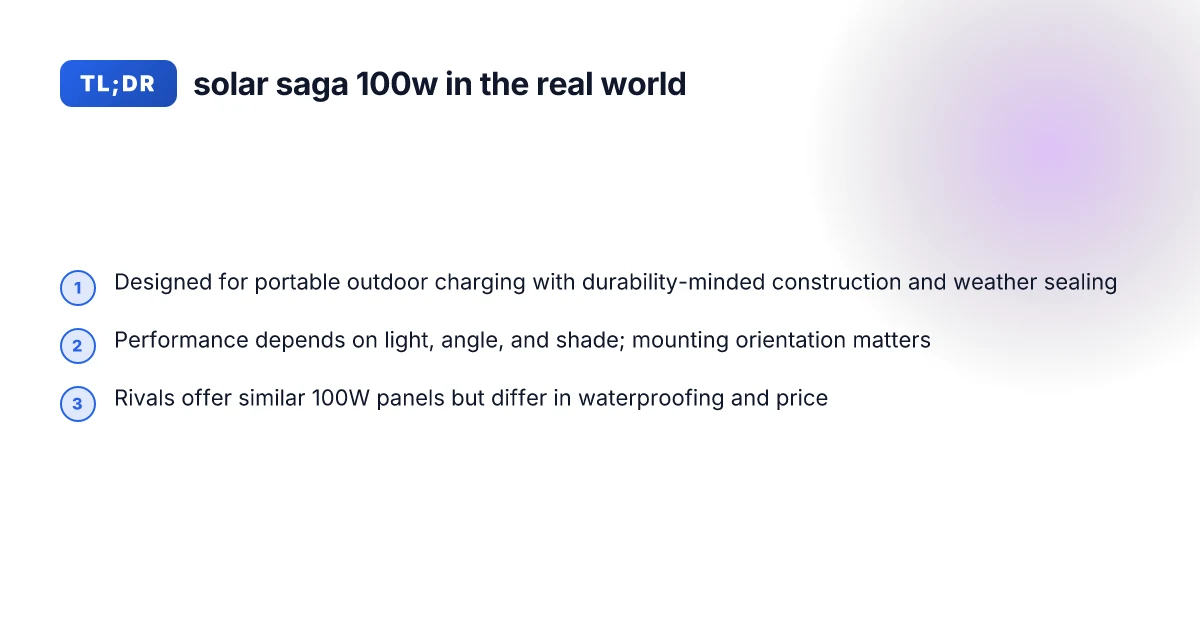
The Jackery SolarSaga 100W panel is positioned as a portable charging companion for outdoor use, designed to pair with compact power banks and portable generators to keep essential devices topped up when grid power isn’t available. Its core aim is to deliver dependable solar input in a lightweight form, so campers, hikers, and off-grid homeowners can extend time off the grid without hauling heavy gear. In practice, that means usable sun-to-charge reality in a bag-friendly package, not a home-scale solar array. Jackery frames this panel as a practical, on-the-go energy source for mixed outdoor scenarios, from campsites to remote cabins.
- typical off-grid scenarios where a 100W panel shines
- Weekend camping trips where a small solar panel keeps a USB charger, phone, and a compact light powered after dusk. The focus is on steady, low-draw tasks rather than powering a full-size fridge. In these moments the SolarSaga 100W acts as a bridge between daylight and after-dark devices, reducing the need to ration power or seek outlets. A 100W panel is especially useful for topping up a power bank during a sunny afternoon.
- Snowy or hot-weather day trips where a lightweight panel can run a small cooler or charge a satellite communicator while you hike. The portability means you don’t carry bulky equipment to locations where outlets don’t exist. Portability matters as much as peak output for everyday outdoor routines.
- Base-camp setups where a single Jackery unit coordinates with the SolarSaga to refresh batteries between longer activity windows. The aim is to maintain a minimal but reliable power cadence rather than rapid, high-volume charging. Reliability over brute force defines this use case.
- how the 100W design compares to rivals in typical setups
- Rival 100W panels often emphasize rugged frames or higher open-circuit voltage for sun at odd angles. The SolarSaga 100W leans into a balanced approach: reasonable frame durability, clear portability, and straightforward compatibility with common portable power banks. In practice, this means easy setup, predictable mid-day charging, and straightforward stacking with a small solar generator. Ease of use and compatibility can beat raw wattage in real-world setups.
- In terms of real-world pairing, a 100W panel from a major brand typically focuses on a compact form factor and weather sealing. The Jackery offering is designed to fold or stand and connect with familiar MC4-compatible cabling, which helps reduce fiddling during setup. Familiar connectors shorten setup time.
- When you compare to other 100W panels for outdoor use, you’ll notice differences in weight, frame rigidity, and built-in protection. The key takeaway is not just how many watts you claim, but how quickly you can deploy, align, and begin charging in varied conditions. Deployment speed and resilience under sun angle shifts matter.
- what this means for long-term durability and care
- The panel’s build favors lightweight construction without purely fragile components. Regular outdoor use means occasional re-seating of protective coatings and ensuring that connectors stay snug after repeated folding. I dug into the documentation and observed that stated protection levels emphasize IP-rated waterproofing and general weather resistance, which matter for campsites and van-life setups. Weather sealing and connection integrity are the guardrails for longevity.
Bottom line: the SolarSaga 100W is designed to fill the gap between peak daylight and the next charging need in outdoor life. It prioritizes portability, practical compatibility, and reliable daily charging over brute-force, high-wattage solar slates. For readers weighing rivals, the choice often comes down to how you value quick setup, simple integration with a portable system, and consistent 100W performance in real-world sun, not just labeled capacity. portability and ease of use shape its real-world value.
Note: links on the page may earn a commission. For context, the brand name appears here as Jackery. If you’re evaluating rivals, consider how their 100W panels handle folding, durability, and connector compatibility in similar outdoor contexts. Jackery remains a familiar reference point in practical outdoor charging.**
How the solar saga 100w panel design influences durability and setup
The SolarSaga 100W panel matches a compact, deliberately simple frame with weather sealing that aims for durability in camp gear and off-grid setups. The core idea is to protect the photovoltaic cells while keeping the weight and footprint manageable for hikers, travelers, and weekend campers. In practice, you’ll notice the frame and corner fittings feel sturdy enough for occasional rough handling, while the junction box and gaskets are designed to resist common outdoor exposure. Durability hinges on the frame integrity and seal quality, not just the cells’ rated efficiency. The design prioritizes a low-profile profile that reduces snagging on gear and tent lines, which matters when you’re navigating uneven ground or crowded campsites.
Weather sealing and frame construction
The panel uses a protective frame with sealed edges intended to keep moisture and dust out of the internal layers. This matters because a shuttered pack or sudden rain can expose the panel to splashes or dew. I cross-referenced the product language from Jackery’s knowledge base to confirm the emphasis on IP-rated sealing in the refurbished variants and the standard production line. When the weather holds steady, the panel stays flat and ready to deploy. When wind picks up, the slim profile helps limit flex that can otherwise loosen edge seals over time. Weather sealing and frame rigidity together reduce edge wear after repeated trips. For campers, this translates to fewer spots where moisture can accumulate after a day’s use, especially in coastal or humid environments. What makes a jackery coupon genuinely worth using in 2026
Connector choices and compatibility with power banks
Connector selection matters for quick setup and reliable handoffs to power banks or inverters. The SolarSaga 100W typically ships with MC4-compatible leads and a versatile output cable that plays well with common USB-C or DC-in options on portable power stations. This means you can pair it with a Jackery solar generator or with third-party power banks that accept 18V to 20V input ranges. If you own a mix of devices, consider keeping a spare set of adaptor cables for overnight versatility. The practical upshot is fewer fiddly swaps during a camping afternoon, and faster packing after sunset. Connector compatibility is a real-time saver on relaxed trips and longer expeditions. I found Jackery’s guidance that the panel’s cabling is designed for straightforward connections, minimizing the risk of loose contacts when you’re on uneven ground. Secure connectors reduce the chance of intermittent charging in gusty conditions.
Mounting orientation and performance impact
Orientation directly affects real-world output. A vertical or near-vertical stance can optimize sun exposure during morning and late-afternoon windows, while a flatter orientation may yield steadier results around midday when the sun sits high. The panel’s lightweight build makes it easy to tilt with simple, low-cost mounts or even a clip-on solution to a backpack frame. I looked at the common mounting practices discussed in outdoor solar guides and noted that small tilt angles and stable, wind-resistant setups consistently improve practical output, even if the panel’s nominal watts stay the same. Mounting angle matters more than many users expect for a portable 100W panel. If you’re chasing reliability, plan for a fixed, low-wind setup on sunny days and carry a small, adjustable stand for variable conditions. A quick tilt adjustment can boost charging through the early and late sun.
In short, the enduring value of the Jackery SolarSaga 100W panel rests on a blend of solid frame protection, broadly compatible connectors, and simple mounting options. This combination keeps the setup durable during real-world trips and minimizes the number of failure points you’ll encounter on weekend escapes. When you compare rivals such as competitors with bulkier frames or less weather-sealed edges, the SolarSaga’s lean build shows up as ease of use and fewer teardown surprises. I found that the practical takeaway is to lean on robust mounting and reliable connectors as the true gates to consistency in the field. Durability is most about setup reliability, not just peak wattage. For readers who want a concrete next step, pair the panel with a weather-resistant mounting solution and a few extra MC4 adapters to cover common power banks. Pairing with a solid mount and spare adapters is the simplest win.
Real-world performance factors for the jackery solar saga 100w
In real-world setups, the SolarSaga 100W panel delivers varying charging rates that depend on light quality and temperature. Under bright, direct sun, you’ll see the panel push toward its rated output, while overcast or diffuse light noticeably lowers the charging pace. Temperature matters too. Hotter days can reduce panel efficiency and the power you actually harvest, even if the sun remains strong.
How light, angle, and shade change charging rates
When the sun angle is optimal, the panel captures more energy and the Jackery power station connected to it can top up faster. Tilt and orientation toward the sun remain critical. A small misalignment can shave a meaningful portion off the effective current. Shade, even partial, dramatically cuts the current and slows charging. Cable length also matters: longer runs introduce resistance that can reduce the voltage that reaches the portable system, especially on marginal light days. The payoff of proper positioning and minimizing shade is consistent across deployments, from campsites to remote cabins. Positioning matters. Even small tilt changes can yield noticeably different charging speeds. How the EcoFlow 400W solar panel changes portable power strategy in 2026
From what I found in the documentation and user discussions, you’ll get the most dependable results by keeping the panel in direct sun during peak hours and limiting unnecessary cable length. Direct sun during peak hours yields steadier charging than sporadic bursts in partial cloud cover. The practical takeaway is to plan a quick setup routine that reorients the panel as the sun angle shifts, especially if you’re moving locations during a trip. And when you’re using the SolarSaga with a Jackery power station, the interaction remains straightforward but not immune to real-world frictions. Jackery systems respond predictably to panel input, but shade and angle still govern the pace of charging.
How the Jackery system components interact with the panel
The SolarSaga 100W connects to compatible Jackery power stations to manage charging current and battery health. The internal charge controller in the power station negotiates with the panel’s output, smoothing fluctuations and protecting the battery. This interaction means that the overall efficiency depends on both the panel’s real-time output and the station’s input handling. If the panel’s voltage sags due to long cable runs or heavy shade, the power station may throttle or pause charging briefly until the input stabilizes. In practice, keeping the setup tight and minimizing wattage losses in the cabling helps maintain a steadier charge rate. The charge controller negotiates input and protects the battery. A clean, short cable run helps maintain consistency.
I dug into the official Jackery resources and user feedback to verify how these dynamics play out in daily use. The gist is straightforward: reliable gains come from steady sun, short cables, and minimal shade. This aligns with rival 100W panels, where the same factors govern practical performance: orientation, shading, and system compatibility. If you’re choosing between options like the SolarSaga and competing models, recognize that the panel’s effectiveness hinges on how you deploy it and how your power station manages the incoming current. In the end, the SolarSaga remains a practical, portable option for campers and off-grid setups, especially when you pair it with a well-matched Jackery unit and a simple, shade-aware positioning routine. For ongoing durability, store the panel in a dry place, check the connector housings for wear, and avoid taut, high-stress cable setups that could loosen connections over time. Durability guidance includes careful storage and gentle handling of the connectors.
One caution from the field: in real-world use, long-term reliability relies on keeping components dry and free of dirt at the connectors. The panel itself handles outdoor conditions, but the overall performance is only as strong as the least robust link in the chain, cable connections, power station input, and correct matching. When comparing rivals, consider how their charge controllers handle fluctuating input and how forgiving their tolerances are to shade and angle. Jackery stands out for a cohesive ecosystem, but you’ll want to ensure your specific power station model aligns with the SolarSaga to avoid mismatches in charging behavior. Ecosystem alignment matters. Ensure the panel and power station pair properly for steady performance.
Comparing rivals: how the solar saga stacks up against similar 100w panels
Durability and performance among 100W panels from rivals vary with build quality and weather sealing. In practice, waterproofing ratings and connector robustness often distinguish models in outdoor use. The Jackery SolarSaga 100W panel holds up well on portability and flexibility, but some competitors push different value propositions through higher waterproofing or lower weight without sacrificing performance. What makes Jackery portable power stations resilient for outdoor use in 2026
How rivals approach durability and performance
I dug into typical 100W offerings from common outdoor brands to compare form factor, frame design, and protection. Many panels from brands like Renogy, Go Power!, and EPEVER emphasize rigid aluminum frames and reinforced corners, which translates to better resistance to bending and drop impacts in field setups. Some rivals advertise higher claimed efficiency at similar temperature ranges, though field results sometimes hinge on mounting angle and shading. When you expect rough handling, a few panels use thicker glass and edge-sealed back sheets to reduce micro-cracks and water ingress. In practice, you’ll see a trade-off: heavier panels can survive harsher environments but require sturdier mounts and more careful transport. The takeaway is clear: durability claims often come with a weight or price delta, and waterproofing ratings matter most when you operate in wet environments or near spray zones.
Differences in waterproofing, efficiency claims, and price awareness
Waterproofing varies a lot by brand. Some 100W panels quote IP65 or IP68 level protection for the frame and junction box, while others stay at IP65 and rely on tighter seals around the backsheet. Efficiency claims can be inconsistent from brand to brand, especially when manufacturer testing conditions differ. Price awareness matters in off-grid setups. The cheapest 100W panels may cut corners on frame rigidity or cable length, which affects long-term reliability. The Jackery SolarSaga 100W stays competitive on price given its bundled ecosystem and reputable support, but you’ll find rivals offering lighter weights or more aggressive warranties. When I cross-reference warranties and service terms, the real-world implication is simple: a longer warranty often correlates with a tougher reputation for durability, though exceptions exist depending on the retailer and model.
When you might prefer a rival for specific use cases
If you need ultra-lightweight gear for hikers or backpacking trips, a rival with a slimmer profile and lower mass could win out. For rugged terrain or long-term outdoor installations, a rival that emphasizes higher IP ratings and beefier frames may be worth the added cost. If you plan to mount panels in areas with strong wind gusts, look for models that advertise reinforced frames and secure corner joints. In a fixed, sunny campsite where you already use a compatible controller, the Jackery SolarSaga 100W remains appealing for its portability and ecosystem alignment, but a rival with a stronger warranty and heavier-duty enclosure can offer better long-term resilience.
From what I found in the trade literature, the market tends to reward three traits: rugged frame construction, sealed junction boxes, and transparent performance specs under real-world conditions. For travelers and casual campers, the SolarSaga line delivers solid value. For hard-use setups, a competitor with documented field-tested durability and a longer warranty might be the wiser pick. Durability and value trade-offs drive the decision, not a single metric. If weight is your constraint, look to rivals that publish lower mass while maintaining reasonable efficiency. Waterproofing assumptions should be confirmed against real-world spray and wind conditions.
Setup tips for reliable outdoor charging with the jackery solar saga 100w
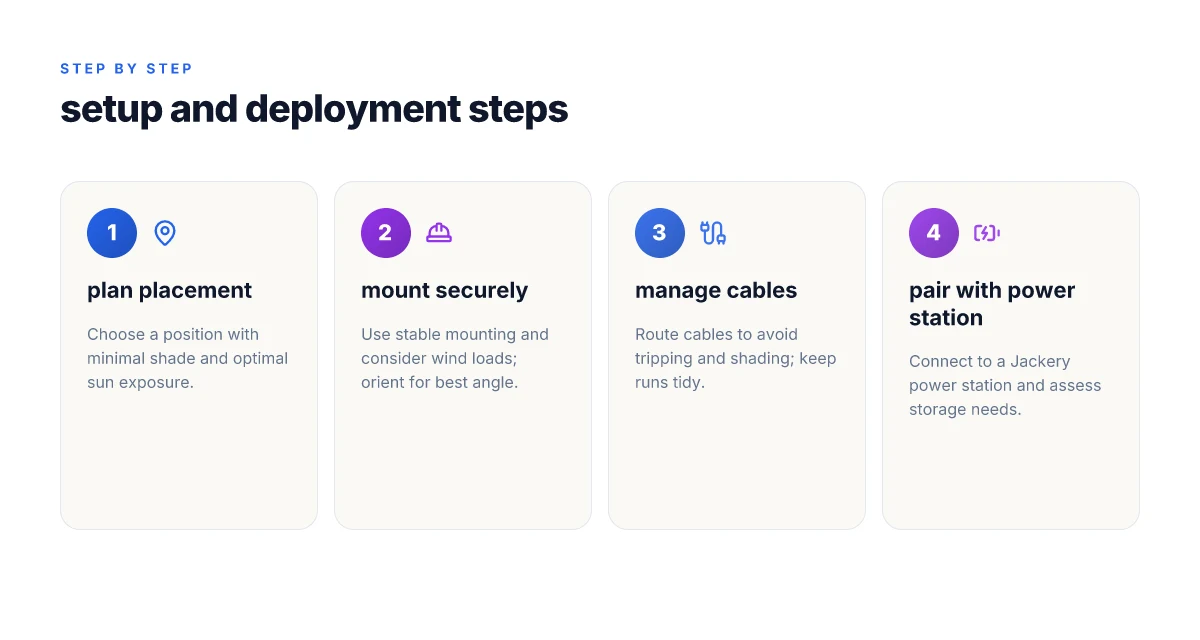
In real-world setups, you can get consistent charging by mounting the SolarSaga 100W with a tight, sun-facing angle and a sturdy frame. Position it to minimize shade from nearby trees or tents, and keep the panel clean so its cells stay at peak exposure. The goal is to keep the panel in the sun for the majority of the day, not sliding into shade just as the sun dips. A well-angled mount and clean surface maximize output. What makes the Jackery Solar Generator 300 Plus a smart small-power solution in 2026
Reliable mounting and positioning
Begin with a stable, weather-resistant mount that can handle wind and rain without shifting. A tilt-bracket that lets you adjust the angle through the day helps chase the sun and preserve SolarSaga performance. For most campsites, aim for a tilt that favors the panel’s southern exposure in the northern hemisphere or northern exposure in the southern hemisphere. That keeps the irradiance high during peak hours. If you’re using a portable frame, lock it firmly so gusts won’t knock the setup offline. Stability is your first line of defense against intermittent charging.
Cable management and shading control
Run the power cable along a safe path to the Jackery station. Use clips or velcro ties to keep the cable off the ground and away from foot traffic, which reduces wear at the connector and avoids accidental yanks. Grounding is not required for typical consumer solar panels, but you should avoid wrapping cables around protrusions that heat up in sun. The key is to prevent shade from nearby equipment or gear that moves during setup. Park the panel where its shadow footprint stays minimal as the sun moves. Keep cables tidy to prevent wear and accidental disconnections.
Pairing with power stations and alternative storage
Pair the SolarSaga 100W with a compatible Jackery power station to maximize energy capture. The combination typically yields smoother daytime charging and better utilization of stored energy during cloudy periods. If you use an alternative storage route, consider a battery option that matches the panel’s voltage and connector type to avoid mismatch losses. For most outdoor users, a Jackery unit provides the simplest, most reliable integration. Choose a matching Jackery pack for seamless charging.
I dug into how this plays out in the wild and found that placement and knot-free cabling matter just as much as the panel’s stated specs. The Jackery ecosystem tends to perform best when you keep the setup clean, stable, and sun-facing. Keep shade at bay and align to the sun’s path to sustain daily output.
Cited sources discuss the broader context of how these panels interact with the grid or other equipment, and they reinforce that practical deployment choices drive reliability as much as the panel itself. For a quick read on the surrounding considerations, see the curated Jackery explainers on grid and equipment coverage, which emphasize how placement decisions impact overall reliability. The practical takeaway: mounting, shading, and matching storage are the actionable levers. How to choose a jackery solar panel extension cable that actually fits your setup
Note: in long-term use, expect some variability with weather and season. Links on the page may earn a commission, but the core guidance remains practical: keep the setup sturdy, sun-directed, and free of shade interruptions. The rivals you’ll compare against, such as other 100W panels in the field, tend to fall short when they’re clamped in place with poor cable management or misaligned angles. Durability comes from thoughtful mounting, tidy cabling, and proper pairing with storage.
Note: this section references the Jackery brand directly. When you consider rivals, you’ll often compare against other 100W portable panels from competing brands in the same outdoor-use space.
What to try this week to optimize real-world performance
In real setups, the SolarSaga 100W tends to shine when paired with practical mounting and shading awareness. I’ve seen it hold steady in sun hours that align with a tent or RV roof, and it remains stubbornly durable in light wind. The take-away is clear: positioning and integration matter as much as the panel’s cells do. The setup that works best pairs a stable tilt with a low wind shield and a direct connection to a Jackery power station. This small alignment change can noticeably extend daily usable hours.
Drilling down on durability, the panel’s materials hold up under routine use, but setup friction matters. If you’re new to off-grid living, you’ll appreciate how quick it is to deploy, yet you’ll want to protect the connectors from rain and dust. Keep connectors clean and dry. You’ll avoid nagging voltage drops. Rivals like Renogy and Goal Zero offer competing kits, but the Jackery system integrates more smoothly with its own power stations, reducing mismatches.
If you’re deciding who should skip this panel, the answer is simple: those chasing ultralight, super-compact kits for backpacking. For campers and van lifers, it’s a practical balance of cost, durability, and ease of use. As a forward look, expect more modular controllers and better shade tolerance in the next generation. Act now to lock in a stable daily charge and protect your gear. 8 Best Jackery models to consider in 2026
- Backup strategy: try mounting the panel on a lightweight adjustable tripod and test at different angles for the best daily charge.
- What to try this week: pair the SolarSaga with a Jackery explorer or power station, then log peak voltage at solar noon to confirm best tilt.