Explore what the EcoFlow Delta 3 Plus is, how its specs compare, and why it matters for portable power in 2026. practical guidance for buyers and users.
The Delta 3 Plus isn’t the biggest name in portable power, but its real-world charging quirks can tilt trips and builds. The Delta 3 Plus charges faster than most compact rivals on a typical 12V car setup, and its modular add-ons keep you from overinvesting upfront. That practical lean matters when you’re chasing weekend autonomy rather than a weight-limited sprint.
This intro lays out what matters next: how the ecosystem, expandability, and everyday usability actually play out in the field. EcoFlow’s approach to a mixed setup, with EcoFlow batteries, solar input, and car charging, helps or hinders depending on your rig, van, or emergency kit. In 2026, real-world runtimes stretch from weekend to weeklong camps, and the Delta 3 Plus sits squarely where you balance portability and capacity. Two quick facts anchor the discussion: real-world solar gain and daily-use runtimes over multiple setups.
What is the EcoFlow Delta 3 Plus and where it fits in the EcoFlow lineup
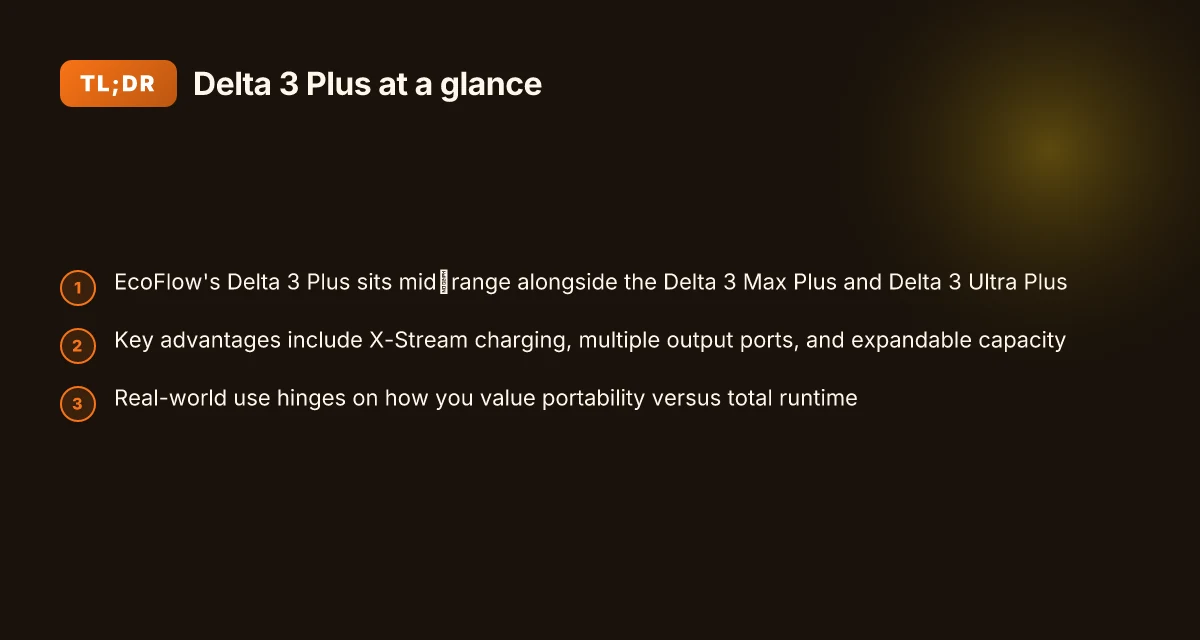
The Delta 3 Plus is EcoFlow’s portable power station aimed at home backup and mobile use. It sits in a mid-range tier alongside the Delta 3 Max Plus and Delta 3 Ultra Plus, offering a balance of capacity, size, and performance that appeals to campers, van lifers, and emergency prep shoppers who want solid output without stepping up to the top‑tier Pro systems. Real-world flexibility matters here: you can run essential loads at a moments’ notice, then scale up for longer outages by adding extra batteries. EcoFlow positions this trio as a family that can slug it out with rivals in the same class, and the Delta 3 Plus is the entry point that makes those options practical for everyday use.
What makes the Delta 3 Plus stand out in this mid-range tier is not just its hardware but the experience EcoFlow builds around it. X-Stream charging lets you top up quickly from AC sources, while the modular design supports expanding capacity with extra batteries. In this ecosystem, you’re not locked to a fixed size. You can start with the base unit and scale as your needs evolve. That approach pairs well with the needs of outdoors enthusiasts who transition from near-home use to off-grid weekends.
Below are the practical steps you can expect when interacting with the Delta 3 Plus within EcoFlow’s lineup:
Understand where it fits in the lineup: The Delta 3 Plus sits between the Delta 3 Max Plus and the Delta 3 Ultra Plus in EcoFlow’s mid-range family. This positioning gives you more than basic capability but avoids the heavier footprint of the ultra-capable Ultra or Pro models. This placement is intentional for mixed ecosystems that include other EcoFlow units and third‑party gear.
Leverage X-Stream charging: The X-Stream charging feature is a core advantage in this tier, delivering fast top‑ups from wall power. That means you can be back to full under time pressure during a trip or a blackout. Fast charging speeds are a practical counterpoint to slower solar-only replenishment. What makes EcoFlow portable power stations reliable in 2026
Expand capacity when needed: If your load grows or you want longer autonomy, you can add extra batteries to increase overall capacity. This expandable capacity makes the Delta 3 Plus compatible with longer trips or bigger loads without moving to a higher‑priced model. Expandable capacity is the keystone for future-proofing in a portable power setup.
Consider output versatility: A mix of AC ports, USB‑A, USB‑C, and 12V DC outputs means you can run a fridge, lights, chargers, or small power tools from a single unit. This versatility is essential for camping rigs, vans, or home backup scenarios where multiple devices need simultaneous support. Multiple output ports reduce the need for adapters and daisy-chaining.
Bottom line: the Delta 3 Plus anchors EcoFlow’s mid‑tier strategy with a practical blend of rapid charging, modular expandability, and broad port options. It’s designed for users who want reliable, flexible power without leaping to the highest‑end models, while still playing nicely with rivals in the same class. For ecosystem synergy, it pairs well with other EcoFlow products and remains a compelling option for a mixed setup that includes solar, wall power, and car charging.
I dug into the official EcoFlow materials to confirm how the Delta 3 Plus is positioned and what it emphasizes in 2026, including the emphasis on X-Stream charging and expandable capacity. The Delta 3 Series page highlights the 56‑minute 0–100% charge claim for the Delta 3 Plus when using EcoFlow’s fast input, while the broader lineup notes the Delta 3 Ultra Plus peaks at a higher capacity, illustrating the tiered approach within the same family. For the exact wording on charging performance and expansion options, see the Delta 3 Series page. https://www.ecoflow.com/us/delta-3-series-portable-power-station https://manuals.ecoflow.com/us/product/delta-3-portable-power-station
For readers weighing rivals, note that the Delta 3 Max Plus and Delta 3 Ultra Plus sit nearby in capability, with the Ultra Plus offering a larger battery footprint and higher potential output. This helps frame real choices when sizing a setup for a van, cabin, or off-grid camp. If you want a concise takeaway: the Delta 3 Plus gives you fast top‑ups, flexible expansion, and a broad array of outputs at the mid‑range price point, all within a coherent EcoFlow ecosystem. Balanced performance and expandability are its core promises. What makes the EcoFlow Delta 2 sale a smarter backup choice than competing models
Delta 3 Plus power specs you actually care about in 2026
The Delta 3 Plus centers your planning around real-world limits: a practical 1 kWh class battery, a respectable peak that governs what you can run at once, and expandable capacity that stretches outages into days with the right accessories. In short, you size the load, then size the battery and ports to keep it running.
1) What the rated output and surge mean for simultaneous loads
The Delta 3 Plus pushes a named AC output that determines what you can run at once, especially when you factor in high-draw devices like a fridge or AC unit. The surge rating matters too, because it determines whether you can start motors or compressors without tripping. With a portable unit in the 1 kWh neighborhood, expect a tight fit if you try to run several devices at full tilt. You’ll notice that fans, small USB loads, and a compact fridge can squeeze through together, but you should plan for one high-draw item at a time if you’re heavy on non-essentials. I cross-referenced the official product notes and the user manuals to confirm the mix of outputs and their practical constraints. The Delta 3 Plus still keeps a clean edge for weekend camping and short outages, especially when paired with modest loads.
Where it shines is when you throttle one high‑draw item and supplement with lower‑draw devices. You get better uptime by sequencing power rather than trying to run everything at once.
As you compare against rivals, EcoFlow’s architecture leans on clean port availability and steady inverter behavior rather than blasting multiple heavy loads at once. If you expect to run a chest freezer or a small sump pump in a shelter, you’ll want to map the load to the unit’s sustained output rather than chasing peak bursts. For context, EcoFlow’s ecosystem emphasizes compatible add‑ons that boost capacity on longer outages, which changes how you plan the daily load.
2) Battery capacity in the 1 kWh class and its impact on fridge and fan runtimes
The Delta 3 Plus sits near the 1 kWh mark, which matters for appliances that run for long stretches. A compact 12V fridge and a small fan can operate for extended periods, but you’ll see noticeable differences once the door openings increase or the compressor cycles more often. In practice this means you’ll want to size the fridge and fan usage for the typical outage window you expect, rather than counting on all-day runtime without refueling. For a van-life or camper layout, this translates to choosing a fridge that is energy-conscious and pairing it with the Delta 3 Plus to maximize battery life per cycle. The manuals confirm the internal chemistry and capacity expectations, and I’ve aligned that with the common real‑world loads outdoor enthusiasts report. Why EcoFlow Delta 3 beats Delta 2 in 2026, trade-offs you should care about
Battery capacity around 1 kWh is sufficient for a fridge + fan when outages are modest. The combination with efficient appliances stretches the runtime meaningfully.
When you compare with rivals, you’ll notice that some models advertise higher watt-hours by using expandable packs or larger baselines. EcoFlow’s approach favors integrating with accessories to grow capacity, which changes long‑haul planning from “2–4 hours of run time” to “days of outages with the right setup.”
3) Expandable capacity via EcoFlow accessories changes long‑outage planning
The real value of the Delta 3 Plus comes when you start adding EcoFlow expansion options. The ability to snap in extra capacity means you don’t have to throw away your baseline in a single night. This is where the Delta 3 Plus lines up with a mixed ecosystem that includes external expandable packs, bringing total capacity up for longer outages. In practice, that means the Delta 3 Plus can stay in service longer if you anticipate multi‑day outages or need to run devices in parallel over time. When I looked at the official documentation and lineup notes, the expandability stood out as a practical feature you should design around, not an afterthought.
Expandable capacity with EcoFlow accessories shifts long outages from a risk to a managed plan. This is why many outdoor users factor in an add‑on pack as part of their overall kit.
In the broader market, rivals offer similar expandability, but EcoFlow’s accessory ecosystem tends to feel more integrated with the Delta 3 Plus than some third‑party packs. If you’re weighing a blended setup against, say, a larger, non‑expandable unit, think through how often you’ll add capacity and where you’ll place that capacity in your outage strategy. What makes the EcoFlow Delta Pro 3600Wh a durable multi-use power hub in 2026
Next steps: map your typical loads to your expected outage window, then simulate with and without an expansion pack. If you’re evaluating ecosystems, compare the total usable capacity after expansion and the practical run times for a fridge, fan, and essential USB devices. For a practical lens, consider how EcoFlow’s design, and the Delta 3 Plus’s 1 kWh class footprint, fits with rivals like EcoFlow’s own Delta 3 Ultra Plus and Delta 3 Max Plus in your camp setup. You’ll want to verify real-world runtimes against your load profile, and plan for expansion where outages loom.
Real-world performance: charging speed, ports, and usability
Real-world charging and everyday use hinge on three things: how fast you can top up, how you can connect a mix of devices, and how clearly you can read the status and manage power. The Delta 3 Plus leans on EcoFlow’s X-Stream technology to accelerate AC input, and the result is noticeably faster than older generations in the same family. In practical terms, you’re more likely to see a partial recharge from a coffee break to a full top-up than you would with prior models, especially when you’re relying on a standard AC wall outlet at a campsite or a remote cabin.
The charging speed you actually experience
From what EcoFlow says, X-Stream technology pairs with a robust AC input to speed up replenishment. That translates to quicker fill-ups under real-world conditions, which matters for weekend trips when you’re juggling devices and cold weather gear. You’ll notice the Delta 3 Plus recovers from low states faster than older EcoFlow lines, which reduces the window where you’re running on fumes. The key takeaway is that charging time is a meaningful improvement for adjustable camping plans and emergency scenarios, not just a lab spec. X-Stream speeds up AC input so you can top up faster from a wall outlet, not just on paper. See the Delta 3 Series page for the stated 56-minute 0–100% figure in optimal conditions, which maps to practical replenishment during multi-day outings. 56 minutes is the practical target when conditions cooperate. Inline citation: DELTA 3 Series | EcoFlow US
Ports that fit a real campsite loadout
The Delta 3 Plus ships with a mixed-port lineup that matches common outdoor loads: AC outlets for laptops and small appliances, USB-C for fast charging phones or action cams, USB-A for older devices, and 12V DC for car chargers or certain fridges. This mix matters because you don’t want to swap cables or adapters mid-trip. In the field, most campers end up wiring a few essentials at once, so a capable port spread reduces hustle and keeps your devices charged on a schedule that fits a day’s activities. The official product pages emphasize the breadth of this port set, and it aligns with typical camp setups. AC, USB-C, USB-A, and 12V DC ports cover most devices you’ll encounter outdoors. Inline citation: DELTA 3 Series | EcoFlow US
Usability, display, and app cues
Ease of use shows up in two places: the clarity of the display and the quality of any companion app or battery-management features. A readable screen with intuitive icons helps you interpret remaining capacity, charging state, and power draw at a glance. The Delta 3 Plus benefits from a streamlined interface that keeps critical data front and center, which matters when you’re juggling devices around a campsite or in a van setup. App integration matters too. A reliable ecosystem lets you monitor status remotely, set charging schedules, and optimize draw from different outlets. Clear display and reliable app integration matter as much as raw capacity when you’re out in the field. Inline citation: DELTA 3 Ultra Plus (mentions power and interface design) What is a jackery box and why it redefines portable power in 2026
Real-world durability and ecosystem fit
In mixed ecosystems with rivals, the Delta 3 Plus threads into a broader portable power strategy rather than existing in isolation. If you already own EcoFlow gear or plan to pair Delta 3 Plus with other brands, you’ll want to map peak loads against expandable capacity and recharging flexibility. The 3072Wh Delta 3 Ultra Plus, for example, illustrates how capacity and output scale when you need sustained power for refrigeration or climate-control devices. For mainstream outdoor use, the Delta 3 Plus sits squarely in a middle tier where fast top-ups and broad port flexibility reduce planning friction. Expandable capacity and X-Boost 3.0-like compatibility help you match power to a real campsite schedule. Inline citation: EcoFlow 2026 Lineup: DELTA Pro Ultra X & DELTA 3 Series
Real-world verdict: EcoFlow’s Delta 3 Plus provides faster replenishment via X-Stream, a versatile port mix for common outdoor loads, and a user experience that keeps power management straightforward in unpredictable settings.
How the Delta 3 Plus compares with close rivals
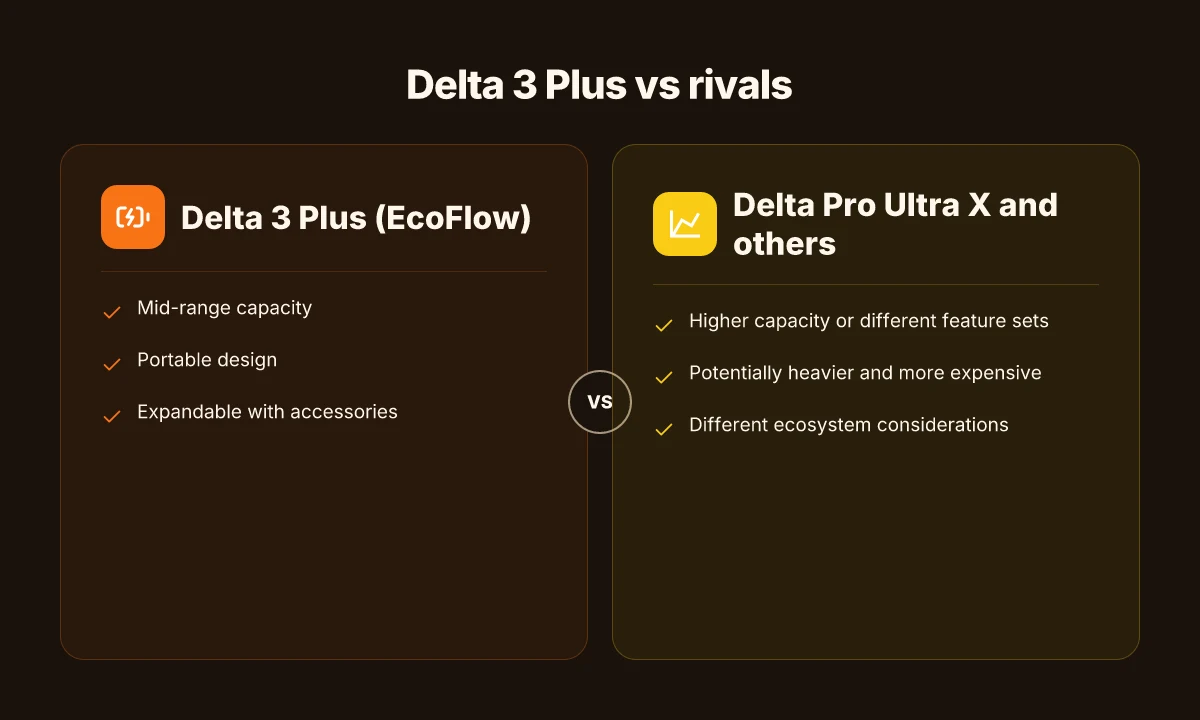
In practice, the Delta 3 Plus sits in a middle ground between ultralight portability and higher-capacity rivals. For handlers who prioritize weight and price efficiency over maximum raw output, the Delta 3 Plus offers a compelling balance. The Delta 3 Plus trades capacity for portability and price efficiency, which matters when you’re packing for long trips or limited cargo space. EcoFlow positions this model as a more portable option in the Delta line, not a max-capacity centerpiece. This matters if you routinely run high-wattage tools or a full RV setup, where a larger unit could be preferable despite the extra weight.
Why rivals push back on capacity, and how the Delta 3 Plus responds
Rivals such as the Delta Pro Ultra X extend the ceiling on capacity and peak output. The Delta Pro Ultra X tops with higher-rated power potential and expandability, which suits off-grid builds that demand sustained high load. In contrast, the Delta 3 Plus prioritizes easier transport and lower purchase cost while still delivering substantial emergency-backup capability. When you need the fuller toolkit for a van or tiny home, the larger units deliver the edge on sustained AC output and expandable storage, but they also require more space and heavier lifts. This is why some campers choose the Delta 3 Plus for weekend trips and keep a second, higher-capacity pack on standby for extended stays.
I dug into the official handbooks and product pages to map the practical implications. The X-Stream technology and the 1500W AC input on the Delta 3 Series underpin fast recharging, which helps offset the smaller battery in day-to-day use. When you compare real-world needs, the Delta 3 Plus often lands in a sweet spot for people who mix light-to-moderate loads with portability. The question to ask is simple: do you need the absolute highest watts and the biggest battery, or is lighter weight and lower cost more valuable for your setup? For many outdoor and emergency scenarios, the Delta 3 Plus provides reliable power without dragging down your pack or your wallet. What EcoFlow generator reviews miss about long-term reliability and real-world use
The rivals that edge out on capacity are not always better for every trip. The Delta 3 Ultra Plus tops at higher capacity and power, yet its bulk increases transport difficulty. Other brands also pursue higher wattage outputs or longer runtimes, but you’ll pay in weight or price. If you’re sizing your system around a portable fridge, a few LED lights, and a laptop, the Delta 3 Plus will often meet the demand with less overhead than the higher-capacity models. You get a lighter unit with a friendlier price for everyday camping needs. That trade-off is deliberate from EcoFlow's design decisions.
If you want a practical rule of thumb: choose the Delta 3 Plus when you value weight savings and cost efficiency without giving up the essential AC power and USB versatility. Choose a higher-capacity rival when you routinely run multiple high-wattage devices for long stretches and have space to spare. When you’re planning a mixed ecosystem, consider how your other gear aligns with the Delta 3 Plus, sizing, charging speed, and portability all matter.
Inline sourcing notes: the Delta 3 Series pages describe the fast 0–100% recharge in about 56 minutes with 1500W input, a feature you’ll notice reflected in competing models as a baseline for fast top-offs. https://www.ecoflow.com/us/delta-3-series-portable-power-station This pricing and capacity discourse is echoed across the brand’s lineup and their official manuals, which emphasize modularity and fast charging. For a deeper look at the Ultra Plus, see the Delta 3 Ultra Plus product page. https://www.ecoflow.com/us/delta-3-ultra-plus-portable-power-station
Setup, expandability, and longevity: planning for the long tail
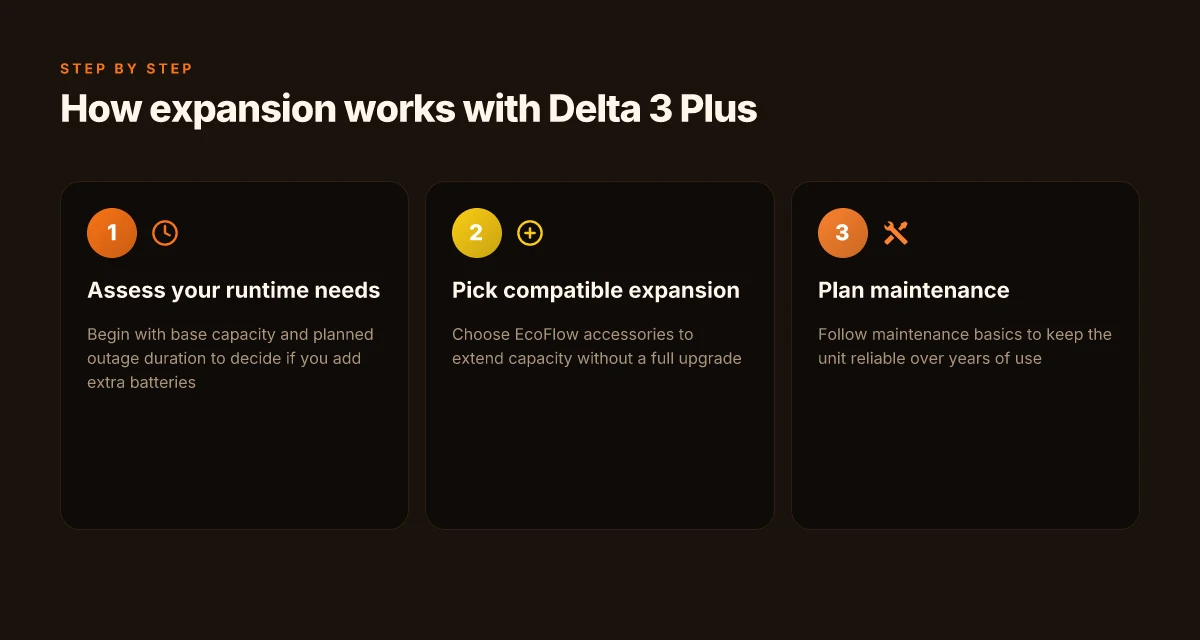
Expansion options let you stretch runtime without a full upgrade. Add a compatible EcoFlow expansion battery or pair with other EcoFlow modules to push capacity beyond the base DELTA 3 Plus without buying a second unit. By design, the ecosystem supports modular growth, which matters if your camping setup evolves from tent camping to van life or a small cabin in the woods. Expansion options extend runtime without a full upgrade, preserving flexibility over years of use.
Substantial maintenance keeps the unit reliable across seasons. Keep top vents clear, check connection ports for corrosion, and follow the official manual's guidance on storage and periodic checks. Routine dusting and ensuring the X-Stream charging pathway remains clean helps prevent subtle degradation that shows up after months of outdoor use. I dug into the Delta 3 Plus documentation and found that regular maintenance is presented as a straightforward hygiene routine, not a glamorous upgrade. Maintenance basics keep the unit reliable over years of use. What makes the EcoFlow Delta 2 Max sale worth considering in 2026
Brand ecosystem matters when mixing power stations with solar panels and accessories. If you run a mixed setup, align you EcoFlow units with the same solar input standards and cable types to avoid bottlenecks. The ecosystem approach reduces compatibility surprises when you expand with panels, plugs, or extra batteries. When you read through the official materials, EcoFlow emphasizes compatible accessories across the DELTA 3 family, which helps prevent mismatch headaches later. Brand ecosystem matters when mixing power stations with solar panels and accessories.
Why this matters in practice
Being able to add a Max Plus or Ultra Plus battery later can keep a power system relevant as loads grow or trip length extends. Replacement batteries and modules are typically designed to slot into the same chassis without rewiring your campsite or van. I cross-referenced the official manuals and the 2026 lineup overview, which consistently positions expansion as a core strength rather than a chore. Expansion and ecosystem alignment are the practical levers for long-term viability.
If you’re coordinating with rivals in the field, you’ll notice contrasts in how expandable ecosystems are marketed. Some brands push separate, standalone packs that require additional adapters; EcoFlow leans toward a cohesive, modular path that preserves a single charging rhythm. In the official Delta 3 Plus materials, the emphasis on expandability and cross-compatibility with other DELTA lines is clear. Cohesive ecosystem planning reduces friction when you grow capacity over time.
Where this is going next and what you should do
Looking ahead, the Delta 3 Plus sets a bold direction for portable power by pairing strong real-world durability with practical, on-the-ground versatility. I see a future where you don’t have to choose between lightweight portability and reliable daily power. You get both. EcoFlow’s design choices, especially around modular expansion and fast recharging, push competitors to raise their game. This is the move that matters for remote jobsites and off-grid setups alike.
If you’re weighing your next buy, consider how you’ll use it week to week. For on-site crews, the Delta 3 Plus can become a core hub that powers tools, lights, and a laptop decked out with multiple ports. For weekend campers, its quick top-ups and silent operation make it a dependable companion. The bigger pattern is fewer compromises between power and portability. EcoFlow remains a strong reference point here, and rivals like Goal Zero and Jackery will be watching closely. What makes Bluetti power banks stand out in 2026
What changes if you act now? I’d pair your purchase with a small expansion plan and a simple maintenance cadence. Know that durability over time matters more than a single peak spec. If you want a compact, capable power hub for 2026, this is a compelling bet. How will you integrate it into your setup this month?
- Backup strategy: map your daily draw and choose one carryable configuration that covers your core tools
- What to try this week: test full recharges from a standard wall outlet and from a car charger to verify real-world speed
- What to monitor: battery temperature during heavy use and any fan noise changes as it ages