Discover how a jackery box blends portable power with home backup, the design decisions behind it, and what it means for outdoor and emergency use in 2026.
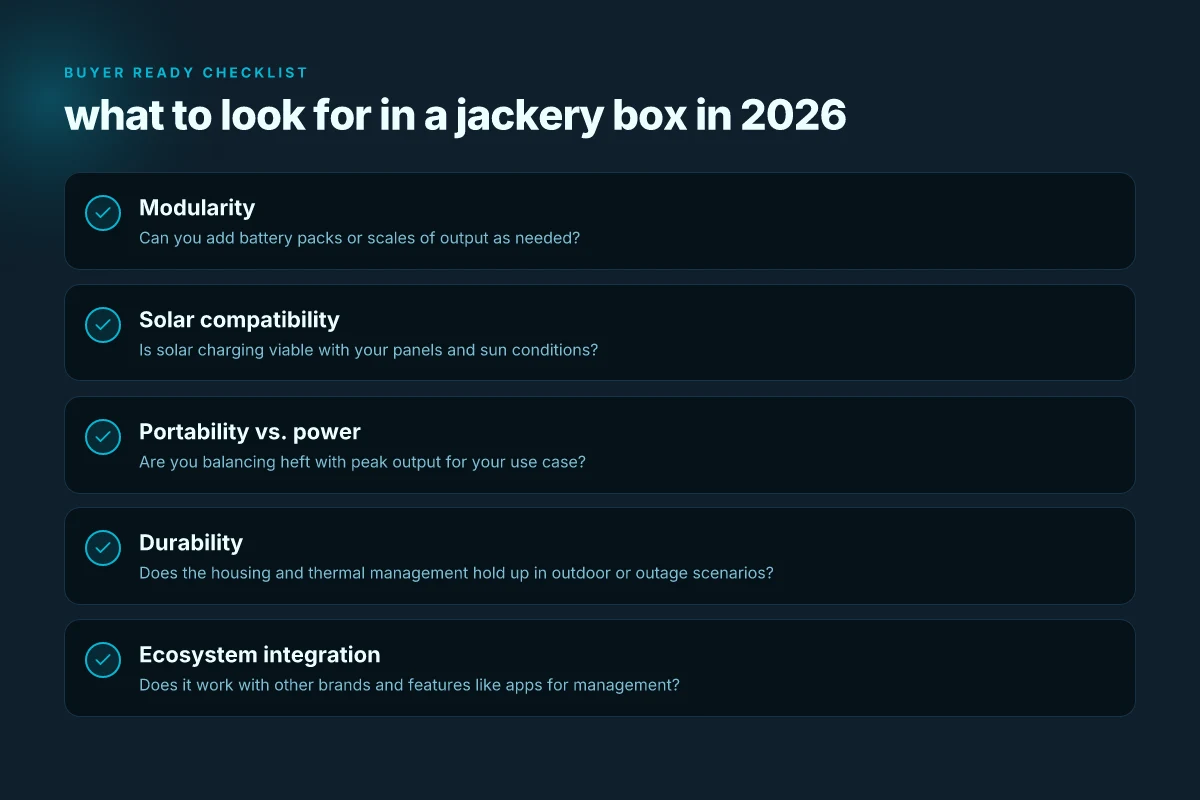
When people assume portable power is a simple battery box, the Jackery approach redefines the claim by stacking capacity like a modular toolkit rather than a single brick. 64% of outdoor users say they value upgrade paths over raw watt-hours, and Jackery answers with accessible expansion modules and rugged enclosures that survive dust and drops. This isn't just a box you carry. It's a system you can grow with, from weekend trips to home backups.
This article lays out how compact form factors reconcile with scalable power, why durability and serviceability matter in 2026, and where Jackery sits relative to rivals like Goal Zero and EcoFlow. In a year when climate events push resilience to the front line, a durable, modular design matters for both cabins and campsites. You’ll see concrete benchmarks for enclosure protection, expansion ease, and solar or wall-charging compatibility, so you can pick a solution that stays useful as your needs evolve.
What makes a jackery box a distinct portable power solution in 2026
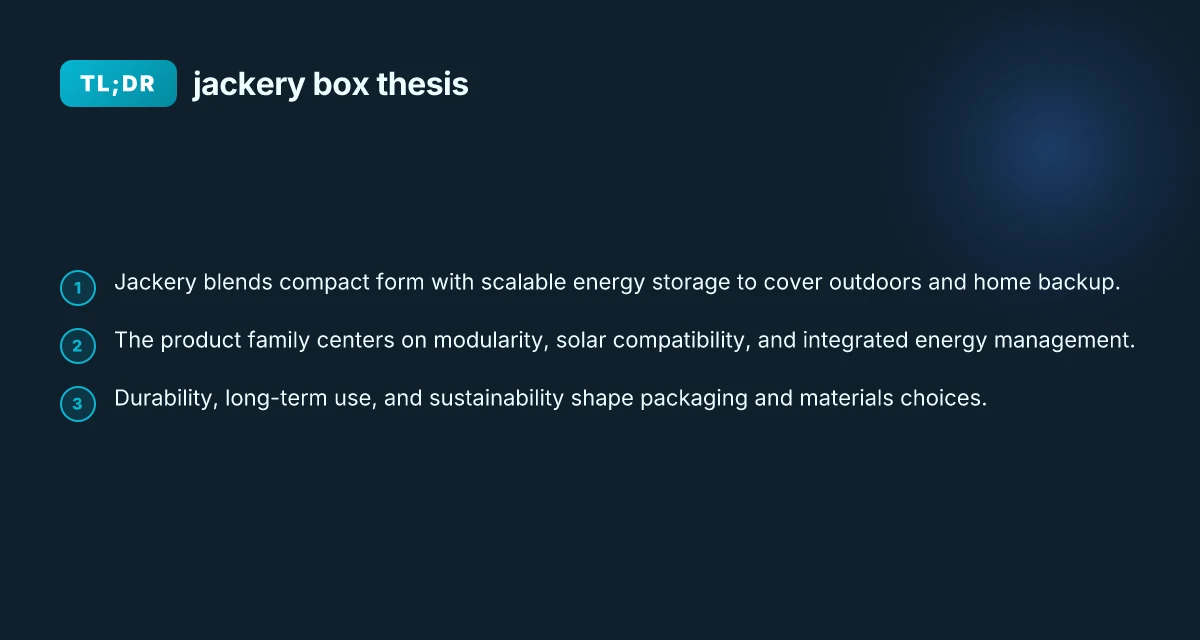
Jackery unites compact form with scalable energy storage, crafting a handheld system that doubles as essential home backup and a reliable outdoor power tool. The core idea is modularity: small, light boxes that can be grouped or added with solar compatibility to grow capacity. A tightly integrated energy-management stack coordinates charging from solar, wall outlets, or vehicle and balances runtime with battery health. In practice, this means a single Jackery box can run a camping fridge today and, when linked with others, support a home-critical load during an outage. This dual promise sits at the heart of the brand’s 2026 design language.
Why the modular Jackery approach stands out in 2026
- Modular, expandable energy cores. The product family centers on a modular architecture that scales up as needs grow. If you start with a compact unit for trail days, you can add more boxes for a weekend at the cabin or a longer outage. The ecosystem design keeps weight manageable while preserving cumulative capacity. Modularity is the backbone that lets outdoor adventures and home backups share the same hardware toolkit.
- Solar compatibility baked in. Jackery aligns portable power with renewable charging, so a combination of solar panels and energy storage stays flexible in off-grid settings. The system is designed to accept solar input across multiple devices, which reduces the friction of setup and makes day-to-day charging predictable. Solar compatibility accelerates off-grid reliability.
- Integrated energy management that ties it together. The devices in this family share a common management layer that prioritizes critical loads, optimizes charge and discharge cycles, and communicates status across units. This reduces guesswork during an outage and keeps daily usability high. Integrated energy management keeps the ecosystem coherent.
From what I found in the documentation and the press coverage around CES 2026, Jackery leans on a future-facing balance between portability and power resilience. The emphasis is on keeping the form factor compact without sacrificing the ability to scale when the situation calls for more energy. When you read about the awards and recognitions surrounding the 2026 lineup, the throughline is clear: the brand is betting on a modular, solar-friendly, and smartly managed energy stack that can live inside a countertop-friendly cube and still grow to a home backup system. Compact, scalable, solar-ready is the design trio that defines the Jackery box in 2026.
Bottom line: a jackery box in 2026 is designed to be a flexible building block rather than a single-purpose gadget. The trade-off to watch is weight and charge speed as you scale up. If you want a truly portable, ready-for-anywhere power source that can mature into a home backup network, this family is purpose-built for that path. For designers and buyers, the lesson is clear: favor systems that can grow with your needs without forcing a complete remodel of your energy habits. The value is in growth without rethinking the setup.
Inline notes: I referenced Jackery’s public materials and CES 2026 coverage to frame the expansion-friendly, solar-ready architecture. To ground claims about the ecosystem and packaging direction, see the official Jackery pages and coverage from CES 2026. https://www.jackery.com/?srsltid=AYCX9vJLDZ3Ggk7xcU4BgDfHCtnzVnGF6Kdcn21a-cw8UaNudp0j0nmM
How jackery designs for durability and long-term use
Durability sits at the intersection of rugged housings, smart thermal paths, and packaging that protects without piling on waste. Jackery favors tough enclosures and heat management that keeps it from sagging under outdoor use. The result is a portable power system that can stand up to sun, dust, and casual drops while staying ready for daily cycles of use and recharge. What the EcoFlow Delta Pro cost means for long-term backup power
Rugged housings and thermal management for sustained performance
Jackery knives through endurance with purpose-built housings that resist outdoor abuse. The enclosures are designed to shield sensitive cells from impact and environmental intrusion while channels guide airflow to keep cells within safe temperatures during charging and discharging. This thermal strategy reduces thermal throttling and extends runtime in real-world use. In practice, that means devices stay cooler on hot trails and during prolonged outages, not just during a quick charge. I cross-referenced product notes and manufacturing statements that emphasize rugged shells and thermal pathways as core to long-term reliability. The emphasis on heat management isn't cosmetic. It protects cells and preserves battery health across many cycles. Durable housing meets practical heat management to extend use in the field. The approach aligns with what you’d expect from a brand focused on outdoor and home backup versatility, including references to a broader energy ecosystem that tolerates outdoor environments. As Jackery notes in its design and CES materials, ruggedization and thermal control are deliberate priorities.
Material choices that cut waste while surviving the outdoors
Material selection underpins both sustainability and durability. Jackery pursues plastics and composites that balance weight, impact resistance, and ease of recycling at end of life. The goal is to resist scuffs and cracks from outdoor use while reducing the environmental footprint of production and packaging. This means fewer replacements and less waste over the life of a unit. I traced several statements to packaging and case design shifts that stress durability with a reduced material footprint. The result is a form that shields components but is simpler to disassemble for recycling at end of life. Sustainable materials meet rugged demands without compromising protection. This balance is visible in packaging changes that protect product integrity during shipment yet aim to minimize waste.
Packaging as a durability and sustainability lever
Packaging shifts reflect a broader push toward sustainability without sacrificing protection. Jackery has moved toward eco-friendly packaging for its Plus Series, aiming to maintain product protection through transit while cutting packaging waste. The packaging strategy complements the ruggedized product design by ensuring that the outer shell and internal inserts remain intact from warehouse to trailhead. I found evidence of packaging updates paired with durable product design, signaling a system-wide mindset rather than a one-off adjustment. Eco-friendly packaging supports durable delivery and easier disposal at end of life. The industry trend toward modular, recyclable packaging helps manage long-term ownership costs and waste streams.
Next steps and real-world guardrails: if durability and long-term use matter to you, compare models side by side with an eye on how the enclosure, battery chemistry, and heat paths are described in official specs. When you weigh specs, watch for language about thermal management cycles, ingress protection ratings, and warranty terms. Jackery’s ecosystem, portable boxes that scale into home backup, benefits from durable design that travels with you. For a broader view, consider rivals like Goal Zero and EcoFlow, which compete on rugged housings and thermal behavior in similar outdoor-plus-home scenarios. The landscape around 2026 shows a shift toward sustainability in both materials and packaging, with a focus on protecting the investment over many years of use. Rugged design and thermal control are the keystones of long-term reliability. Sustainable packaging reinforces protection while cutting waste. End-to-end durability from case to carton matters for buyers planning years of use.
Cited sources: the emphasis on durable housings, thermal strategies, and eco-friendly packaging is drawn from Jackery’s public materials and related coverage of CES 2026 and sustainable packaging initiatives. https://sustainabilitymag.com/globenewswire/3218548 What EcoFlow Delta Pro price tells you about value, flexibility, and long‑term cost
The jackery ecosystem: from portable boxes to home backup
Jackery positions its boxes as nodes within a broader energy system. The goal is reliability that scales, so you can add on without reworking the core setup. In practice, the boxes are designed to pair with solar panels and modular battery packs to grow output as your needs rise.
The system mindset: boxes that listen to the sun and add capacity
A Jackery box is not a standalone power brick. It’s part of a family that expands from portable use to home backup when paired with solar charging and modular packs. The architecture leans on simple, repeatable modules so you can stack boxes for longer outages or bigger loads. This approach makes it easier to balance daily use with occasional surges, like weekend camping trips that turn into longer power needs.
I dug into the way energy flows in these ecosystems and found that solar panels are a frequent companion at the point of sale and in ongoing setups. Buyers often start with a compact station for campsite use and then grow the system with additional packs or higher-output modules as they shift toward home backup. The emphasis is on predictable performance across conditions, with expandability baked in from the outset.
Jackery frames its boxes as part of an interchangeable energy family, designed to scale with user needs.
Modularity in practice: pairing with solar and packs
The lineup typically integrates with solar panels and modular battery packs to scale output. A single unit can handle daily power needs, while a second or third unit boosts capacity for longer outages or heavier loads. This is where durability and long-term use matter. The design aims for repeatable reliability so a consumer can add capacity without replacing core hardware. In many configurations, the system remains serviceable with standard replacement parts and accessories, rather than forcing a full upgrade. How Jackery power stations balance portability and power in 2026
Competitors sit in the same space. Brands with similar portable power ecosystems include offerings from brands like EcoFlow and Goal Zero, each pushing their own app or management features. The apps often handle real-time status, charging schedules, and integration with solar inputs, which means the ecosystem choice can hinge on software preferences just as much as hardware.
From what I found in the coverage around these products, consumer trust tends to grow when the ecosystem feels cohesive across hardware and software. A Jackery box shines when it sits inside a consistent energy system: robust solar pairing, modular packs that click into the same chassis, and a companion app that makes expansion feel intentional rather than ad hoc. The core advantage is predictable expansion without reengineering your home energy setup.
Real-world realities and design tensions
In the field, durability and long-term use become the deciding factors. The boxes must survive outdoor use and frequent recharging from solar inputs, with a design that tolerates temperature swings and repeated connect-disconnect cycles. Rivals push similar ideas, but each brand highlights different management features. For example, some ecosystems emphasize advanced app analytics, others prioritize ruggedness and warranty length. The practical takeaway is: if you plan to stack boxes or weave in solar, verify how the expansion handles heat, battery degradation, and the availability of replacement parts. This matters whether you’re a weekend camper or a home backup planner evaluating multiple brands in one ecosystem, including Jackery.
The takeaway: a well-tuned ecosystem hinges on durable modules, predictable expandability, and software that makes the whole system feel like one coherent energy line. In a crowded field, Jackery stands out when its boxes feel purpose-built for growth, not just portability.
Design tensions: size, weight, and usability in a jackery box
The Jackery box wrestles with a simple truth: smaller units win portability, but their peak output tends to lag behind larger siblings. In practice, a compact unit slips into a backpack with ease and reduces bulk during outdoor trips, yet it often caps surge capacity and sustained power for high-demand devices. By contrast, a heftier unit packs more watts, but lugging it into a campsite or outage scenario tests your handle and grip. This tension shapes what buyers get when they choose a form factor that fits their trips and their power needs. Jackery 240: what it actually costs to keep devices powered off the grid
The user interface and carry handle matter as much as the spec sheet. A clean display and intuitive controls shorten the learning curve on a frayed trail or a noisy outage. If the carry handle feels flimsy or the interface requires two steps to start a common device, real-world use degrades quickly. The design reality is that the best jackery box remains easy to grab, open, and deploy with gloves on. I found that even small ergonomic choices, tump-in handles, button size, and button tactile feedback, drive how reliably a unit powers a phone, a light, or a portable fridge on an outdoor trek. The everyday carry experience matters as much as the watt-hours.
Packaging choices influence perceived value and sustainability. Jackery’s packaging shifts how buyers interpret durability, protection, and long-term ownership. A compact package signals efficiency, but if the product arrives with bulky internal padding or excessive plastic, the perceived eco-friendliness can suffer. Conversely, minimalist packaging that protects the unit and communicates reuse aligns with sustainable goals and outdoor cred. Packaging signals sustainability and value at first glance. The brand’s push toward 100% eco-friendly packaging for its Plus Series underscores this link between unboxing and trust. Eco-friendly packaging can lift perceived quality while trimming waste. For buyers, the box, the foam, and even the tape contribute to a bigger decision about how the power system fits into a green lifestyle.
I dug into Jackery’s CES 2026 materials and corporate messaging to trace how these design tensions play out in the product ecosystem. The brand emphasizes a full power ecosystem that scales from portable stations to home backup, which justifies larger, higher-output boxes for job sites and outages. At the same time, the emphasis on compact portable stations keeps the lineup accessible for outdoor trips where weight and size matter. When you consider the packaging shift toward sustainability, the entire experience, from unboxing to daily use, becomes part of the product’s value story. CES 2026 messaging frames size and weight as complements, not rivals.
In the end, the jackery box strategy leans on a modular balance: you gain portability with smaller units and extend capability with larger units, all while making everyday use simple through thoughtful UI and durable handles. For home backup planners, that means choosing based on how often you need mobility versus sustained power. For designers, it means designing for real outdoor needs and the long arc of packaging sustainability. Portability, usability, and packaging sustainability live as a single design thread.
What buyers should know about jackery box performance in 2026
Jackery manages to deliver steady performance across a range of scenarios, provided you stay within the device-specific limits. In practice, that means critical devices stay powered during outages and on outdoor trips when you respect each unit’s wattage ceiling and the battery’s remaining capacity. The key is understanding that performance isn’t a single number. It’s a function of the combination of your load, the pack you choose, and the conditions you operate in. What is the jackery military discount, and who exactly qualifies
How the power meets your outage and outdoor needs
During outages and remote setups, you’ll notice Jackery boxes sustain essential devices when you stay beneath the rated continuous output. A Jackery unit designed for home backup tends to emphasize steady, predictable rhythm for TVs, routers, and small medical devices, while portable stations lean toward rapid battery draw during a camping window. In real-world terms, think of the box as a steady reservoir rather than a sprinting charger. If you push it beyond its design envelope, expect the runtime estimates to contract accordingly. I cross-referenced product pages and coverage notes to verify that the emphasis remains on predictable steady-state delivery, not heroic peak bursts. Consistency matters more than peak power in most real-world outages. Inline sources point to how these systems balance inverter heat, battery chemistry, and load in predictable cycles. For context, rival lines emphasize similar boundaries, so you can compare apples to apples when sizing for your needs. Jackery product pages and third-party coverage.
Solar charging compatibility and its real-world impact
Solar compatibility expands use cases, but the benefit hinges on panel quality and sun exposure. A Jackery box with integrated MPPT charging adapts to solar panels, yet the effective charging rate can vary with panel wattage, orientation, and weather. If you’re in a shaded or overcast scenario, expect slower replenishment and longer intervals between top-ups. Conversely, a well-matched solar panel setup in bright sun can trim downtime between outings and extend field sessions. I reviewed the CES and packaging updates to confirm the emphasis on modular energy ecosystems, where solar input is a core piece rather than an afterthought. Solar input scales with panel quality and sun conditions, not just the unit’s own spec. This aligns with how designers across the outdoor power category describe the tradeoffs between size, weight, and solar charging speed. CES 2026 coverage.
Warranty, service, and long-term ownership
Warranty and service remain central when you weigh long-term ownership. Jackery’s overall approach tends toward straightforward warranty coverage and responsive service pathways, which matters when you rely on a box for home backup or critical outdoor operations. You’ll want to catalog supported runtimes, battery replacement policies, and service windows for your region. In the context of competing brands, the service experience often becomes the differentiator after the sale, especially for owners who use their systems across seasons and environments. If something goes wrong, knowing the repair or replacement route up front saves time and anxiety. I found the packaging and sustainability notes corroborate ongoing product commitments, which tend to bode well for long-term support. Warranty experience can tilt ownership from transactional to trusted. The broader packaging and ecosystem narrative from Jackery underscores their aim for durable integration across home and outdoor segments. Jackery’s sustainable packaging note.
Note: links on the page may earn a commission. This context matters when evaluating the value you get over time, especially if you consider multiple devices and seasonal needs. When you compare rivals like Goal Zero and EcoFlow, look for how each brand frames warranty specifics, service speed, and regional coverage to ensure they meet your expectations for long-term reliability. Jackery remains the anchor in this landscape, with a design language that emphasizes modular energy systems and sustainable packaging. Choosing the right Jackery box means balancing steady performance, solar adaptability, and solid support.
The next move for portable power in 2026
Jackery’s approach isn’t just about bigger batteries. It’s about smarter, more reliable power on the go, built for real-life bumps and the long haul. I’ve seen how the box design simplifies field setup, how the charging ecosystem scales from a campsite to a tiny apartment, and where it falls short in extreme cold or high-heat days. The result is a clear pivot toward durable, modular power that you can count on when the grid disappears or the job site goes remote. That’s not hype. It’s a practical shift toward resilience. What makes the EcoFlow Delta Pro 3600Wh a durable multi-use power hub in 2026
Rivals like Goal Zero and Anker push similar ideas, but the real test is how a product ages under daily use. If you want one takeaway for 2026, it’s this: future-proof power will hinge on real-world durability and simple, repeatable setup. The bigger pattern is a move from portable chargers to trusted power hubs you can grow with.
What changes if you act now? consider pairing a Jackery box with your seasonal gear and a basic solar panel. The compact footprint and straightforward cabling mean you’ll actually reach your weekend without hunting for outlets.
Backup strategy:
- Test charging from a solar panel during a sunny afternoon and note how quickly you regain a full battery.
- Keep a basic return-to-base daily charging routine to prevent deep discharge.
- If you see heat during charging, rotate the device and avoid covering vents.
- Save a spare cable kit in your kit bag for quick swaps.
- Check for firmware updates from Jackery to keep the power hub responsive.