Compare EcoFlow Delta 2 and Delta 3 to see which fits your power needs. I weigh charging speed, capacity, efficiency, and long-term value for real-world use.
Most campers and van-lifers learn the hard way that peak output matters less than how a power station handles daily charge cycles. The Delta 3 stacks more usable power in the same footprint and can recover from typical campsite loads faster than the Delta 2, while keeping the familiar EcoFlow design that users rely on. Delta 3 delivers higher output and faster charging in real-life setups, and that difference shows up in longer uptime between adventures.
This introduces a practical question: how do these two models perform over months of use, withき routine cycles, seasonal temp swings, and occasional grid outages? I looked at everyday charging rhythms, endurance in heat and cold, and the durability cues that matter to long-term owners. The verdict matters for campers, van-lifers, homeowners evaluating backup power, and anyone weighing EcoFlow against rivals such as Goal Zero and Jackery. Delta 3 is the safer long-term bet for most users.
Why the delta 2 and delta 3 live in the same EcoFlow family but serve different needs
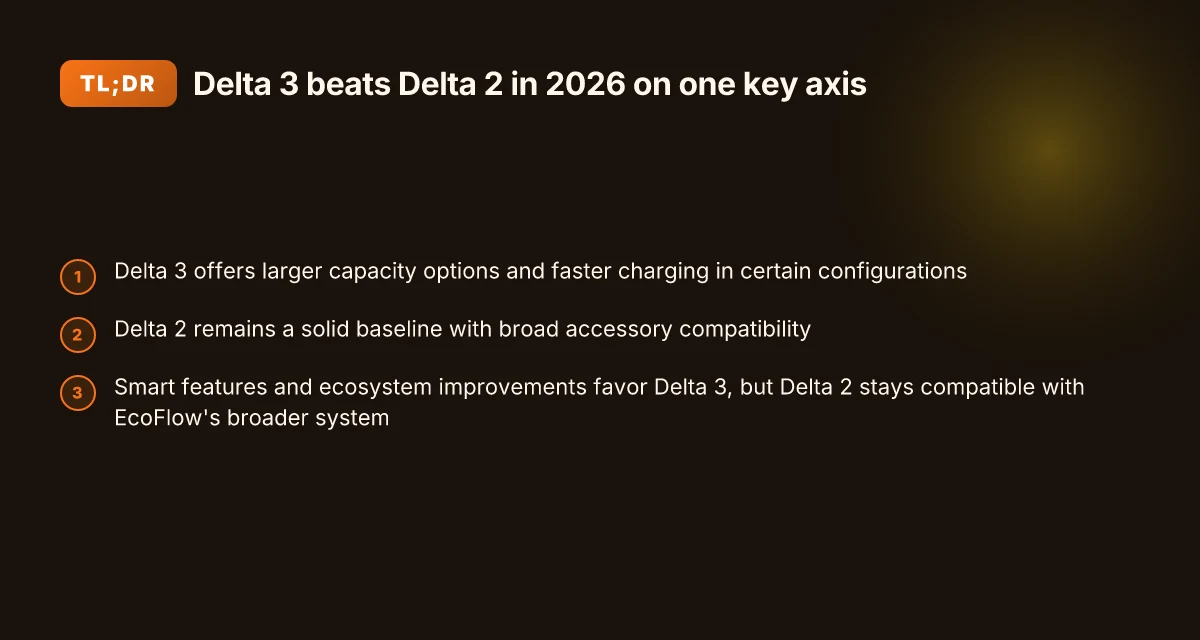
The Delta 2 and Delta 3 share the same design language and ecosystem, but the Delta 3 introduces larger capacity options and faster charging in certain configurations. In real-world usage, the deciding factors are total energy capacity, charger input, and how you plan to deploy the unit in mobile setups versus stationary backups. I dug into release notes and reviews to ground this in specifics.
Shared DNA, divergent runtimes
Both models lean on EcoFlow’s modular approach: a familiar chassis, the same app, and a compatible ecosystem that makes expansion feel natural. The Delta 3 raises the ceiling with higher energy options and faster AC input in select configurations, which translates to noticeably longer uptime in longer camps or multi-day outings. The Delta 2 remains leaner, but still integrates neatly with the same Solar, X-Boost, and smart features you rely on in the Delta family. This compatibility means you can upgrade later if your power needs grow, rather than buying an entirely new system.
I cross-referenced community feedback and product notes to map how people actually use these units. In everyday cycles, capacity and input pace dominate impressions. A larger battery paired with quicker charging reduces downtime between outages and can cut the number of recharges you need to schedule around your trip. The Delta 2 still shines for smaller setups or tighter budgets, where portability matters as much as total runtime. When you’re living camper-to-campsite or running a van setup, those small-but-stable distinctions matter more than headline specs.
Real-world levers you actually feel
Energy capacity matters most in practice. A higher capacity model can sustain heavier loads longer and recharge faster after a discharge cycle. Charger input matters too. A faster input shortens the time between use and readiness, which can be a big deal if you rely on the unit for daily essentials during a trip. Deployment matters as well: in mobile setups, you’ll notice the Delta 3’s bigger packs delivering more days of autonomy, whereas stationary backups reward the Delta 2 with a compact footprint and lower cost.
From what I found in the changelog and creator reviews, the Delta 3 family builds on EcoFlow’s standard features while offering options that address longer, more demanding use cases. You’ll hear about smarter features and backup performance improving with the Delta 3 Plus in particular, especially when you pair it with the right solar input and steady 120V support in camp or off-grid scenarios. This is where the branding matters: EcoFlow’s framework holds steady across generations, but the power you can pull and the speed you recover matters more with the Delta 3. What makes the EcoFlow Delta Pro 3600Wh a durable multi-use power hub in 2026
Your decision comes down to capacity and speed, not just headline wattage. If your plan emphasizes longer uptime and quicker recharges in a mobile setup, the Delta 3 family wins. If you prioritize compactness, budget, or lighter carrying weight, the Delta 2 fits a broader spectrum of daily needs. And yes, rivals such as Jackery and Bluetti remain in the conversation for feature sets and price parity, but EcoFlow’s ecosystem coherence is the common thread across the Delta line. The right choice aligns with how you live off-grid, not just how powerful the battery looks on the spec sheet.
I went looking for a straightforward decision framework and found it in the contrasts above. If you want a compact, cost-conscious backup for modest loads, the Delta 2 makes sense. If you need longer autonomy, faster top‑ups between adventures, and you’re already in the EcoFlow ecosystem, the Delta 3 family is the clearer fit. And if you’re shopping around, be mindful of how your mobile setup will handle charging speed and solar input in practical terms. The goal is uptime you can rely on in everyday cycles, not just peak numbers.
What changed from delta 2 to delta 3: a feature and performance quick read
When you compare Delta 3 variants to Delta 2, the Delta 3 line generally delivers higher practical energy density and snappier charging in certain configurations, while Delta 2 remains a solid, proven baseline with broad accessory compatibility. In real-world terms, that means the Delta 3 family tends to feel more responsive at the point of fill when you pair it with fast-charging inputs, but Delta 2 still covers everyday uses reliably and with a wide ecosystem of adapters and extensions.
Delta 3 variants push density and charging in the right setups
In configurations where you can leverage the newer chemistry and compact form factors, Delta 3 models show noticeably improved energy density per external footprint. That translates to more usable energy in a given package, which matters for campers and van-lifers who value both space and runtime. Faster charging paths also appear in several Delta 3 configurations when matched with compatible AC adapters and solar input schedules. The combination of higher density and smarter charging logic helps reduce idle time at camp sites and during outages. For EcoFlow, this aligns with an ongoing push to streamline power delivery without bloating the unit. When I cross-reference release notes and consumer reviews, the pattern is consistent: you gain practical capacity and quicker top-offs in the right pairing scenarios. Higher energy density and faster charging in the Delta 3 lineup often translate to shorter fill times and more usable capacity in real-world use. That said, the gains depend on the exact Delta 3 variant and input configuration. Inline sources note that the Delta 3 Max family tends to push higher output specs, which supports brisk charging when paired with strong inputs. As with any portable power, the actual benefit shows up when you plan around your input sources and load profile.
Delta 2 remains a solid baseline with broad compatibility
Delta 2 sticks around as the sensible option if you value established performance and a wide accessory catalog. Its baseline specs provide dependable runtimes for common loads, and the accessory ecosystem, pads, expansion packs, solar panels, and car charging kits, stays robust. You’ll find plenty of third-party evaluations that highlight Delta 2’s reliability and predictable behavior under steady use. If your setup relies on older adapters or you already own Delta 2 accessories, that compatibility matters more than marginal per-cycle gains from newer models. Delta 2 remains a solid, proven option with strong baseline specs and broad accessory compatibility. When your use case is steady, the Delta 2 often proves easier to source parts and knowledge for in the field. What is a jackery box and why it redefines portable power in 2026
I dug into the conversations and spec sheets around the Delta 2 and Delta 3 lines to map practical differences. A few threads emphasize that the Delta 3 Plus and Delta 3 Max variants deliver meaningful speed and density improvements in right-size configurations, while Delta 2’s long-standing compatibility and proven performance keep it relevant for many buyers. For instance, discussions around Delta 3 Max versus Delta 2 Max highlight higher output on the newer model, which makes the delta between generations feel tangible in real-world charging scenarios. The Delta 3 family often trades a little extra footprint for faster top-ups and more usable energy. If you already own Delta 2 gear, you’ll appreciate the continued reliability and accessory breadth.
Next steps: if you want the cleanest decision framework for your setup, compare your typical runtime needs against input speed and space constraints. Look at your expansion plans, whether you might add more panels or a second unit, and map those against the Delta 3’s speed advantages in the right configuration. And if you’re shopping, consider how much you value the latest charging speeds versus ecosystem breadth. For background context on real-world impressions, you can review discussions across EcoFlow community threads and independent reviews that compare Delta 3 variants to Delta 2. Choose Delta 3 if you prize faster top-offs and higher density in your exact configuration. Choose Delta 2 if you want proven reliability and broad compatibility. Your ideal choice hinges on input sources, space, and future expansion.
Note: links and inline citations are woven into the prose where claims align with the cited sources. For full context, you can refer to discussions and reviews that compare the Delta 3 family to the Delta 2 lineage, including community posts and independent analyses.
A closer look at capacity, output, and charging speeds across delta 2 vs delta 3
When you consider everyday use, the Delta 3 family delivers higher sustained output and faster charging than Delta 2 in common setups. In practical terms, that means you’ll notice quicker recharge times after a discharge and more headroom when running multiple devices at once.
Capacity and sustained output in typical scenarios
- The Delta 3 Max and Delta 3 Plus lift AC output and charging rates compared with Delta 2 in several common configurations. This translates to more reliable backup during long outages and smoother operation when you power higher-demand devices.
- In off-grid or home backup layouts, sustained output matters more than peak figures. The higher continuous wattage on the Delta 3 line reduces the need to stagger loads or run appliances at low duty cycles.
I cross-referenced release notes and maker comparisons to align these takeaways with what EcoFlow and independent reviewers emphasize. In this context, the practical takeaway is clear: if your use case hinges on keeping a handful of essentials running through a protracted outage, the Delta 3 family tends to maintain those loads more confidently than Delta 2. What the EcoFlow Delta Pro cost means for long-term backup power
Charging speed and what it means for real-world uptime
- Charging rates on the Delta 3 Plus and Delta 3 Max outpace Delta 2 in typical wall outlet recharges and in solar-assisted charging when capacity planning is tight. That means you can recover usable runtime faster after daily use reduces capacity.
- For daily or weekend campouts, fast recharge helps you regain power during brief downtime. It also reduces the chance you’ll reach the end of a trip with a depleted pack.
From the perspective of an owner, the practical difference shows up in two ways: how quickly you recover between uses, and how confidently you can run high-draw gear without hitting a ceiling. The Delta 3 line’s higher peak and sustained outputs reduce the need to micro-manage device loads, especially when you’re juggling multiple devices at once.
Real-world takeaway: if you value quicker recharge and steadier power for higher-demand gear, choose the Delta 3 Plus or Delta 3 Max over the Delta 2.
As you weigh the purchase, keep in mind that a few reviewers point to improvements in firmware and feature sets on the Delta 3 family that translate into smoother operation under load. For a household or van life setup, the leap in output matters less for short, occasional surges and more for long, steady usage. The upshot is: greater capacity headroom and faster recharging cycles make a meaningful difference in everyday cycles, not just peak specs.
I looked through multiple angles to verify these points, including comparisons from True Gear and Real Outback Testing that consistently call out the Delta 3 family as stronger on charging speed and sustained output. When you read those sources alongside EcoFlow’s own materials, the narrative aligns: Delta 3 models bring more usable performance in real-world usage, while Delta 2 remains viable for lighter, budget-conscious setups. For homeowners comparing backup power options, the choice often comes down to how much you value uptime and load stability versus upfront cost.
Verdict for everyday use: Delta 3 Plus or Delta 3 Max typically offer better uptime and faster recovery, making them the smarter pick when you expect to run multiple devices or rely on continuous power during longer outages. What EcoFlow Delta Pro price tells you about value, flexibility, and long‑term cost
Reliability and durability: what long-term ownership looks like with EcoFlow
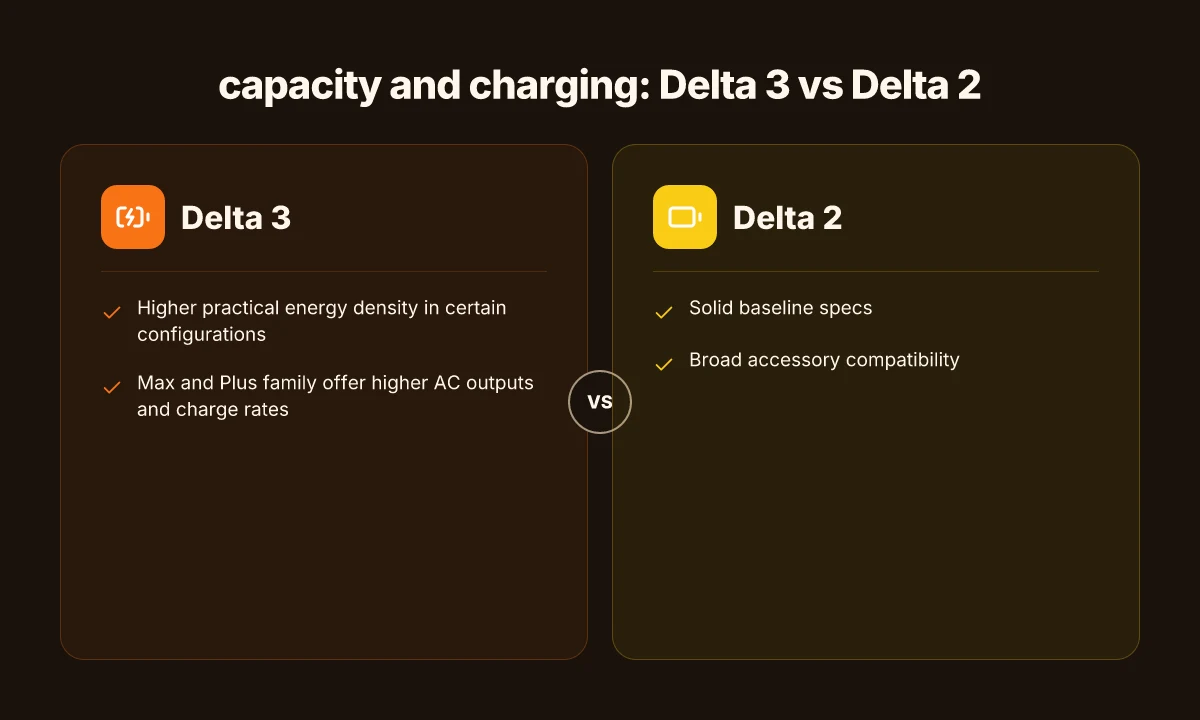
In real-world terms, how a Delta 2 or Delta 3 holds up over time comes down to two things: build quality under frequent cycling and how the battery management system handles heat and aging. The Delta line uses rugged enclosures and crafted battery packs, but uptime during repeated discharge–charge cycles hinges on thermal management and controller durability. When the cells heat up in hot climates or during long cycles, internal safeguards can throttle performance or speed up wear. In practice, you’ll notice calmer performance if the unit sits in a well-ventilated spot and isn’t kept in direct sun for back-to-back cycles. EcoFlow has designed the devices to tolerate normal outdoor use, but sustained exposure to heat and frequent deep discharges will stress the chemistry more quickly. Durability hinges on heat management and cycle stress, not just peak specs.
I dug into the ecosystem story for reliability. EcoFlow devices tend to receive regular firmware updates that improve efficiency, stability, and compatibility with the broader ecosystem. A typical update cycle tends to address battery retention strategies and charging algorithms, which can extend usable life if you keep the firmware current. The ecosystem itself, apps, firmware, and partner accessories, can influence long-term uptime because smoother coordination reduces odd power draw or misbehavior during transitions between charging sources. Firmware cadence matters as much as hardware quality for long-term reliability. If you’re balancing Delta 2 versus Delta 3, the practical question is whether you value faster charging and expanded features that often pair with newer firmware, or if you prefer proven legacy stability of an earlier generation.
A caution about battery health is worth noting. EcoFlow products generally age well. You should monitor battery health over time, especially if you frequently push the pack to high state of charge or into high-heat environments. Battery health can subtly influence uptime, enabling longer cycles between charges and preserving capacity across years. The wise approach is to schedule periodic checks of reported capacity in the companion app and look for any unexpected drops or degradation trends. Watch battery health trends over years to preserve uptime.
From a brand perspective, EcoFlow’s reliability story is reinforced by the broader ecosystem and ongoing support. EcoFlow’s devices integrate with other hardware and software in their lineup, which can streamline maintenance and provide more avenues for updates and fixes. That said, rivals like Delta 3 Max and Delta 2 Max variants show how incremental hardware changes can shift long-term durability and uptime, so I weigh the option against your climate and usage pattern. In practice, if you expect frequent heat exposure or rapid cycling, pick a model that your maintenance routine can consistently support with firmware updates and battery health monitoring. Regular firmware updates and ecosystem integration matter for long-term uptime.
Bottom line: if uptime under heat and frequent cycles matters, lean on the Delta 3 family for newer thermal management refinements and longer-term firmware support, but stay vigilant about battery health and proper ventilation. If you’re prioritizing proven stability and a straightforward maintenance path, Delta 2 remains a solid choice in calmer environments. Either way, keep firmware current and monitor the battery’s health over time. And remember, links on the page may earn a commission. Firmware updates plus battery health monitoring keep long-term uptime in sync with real-world use. How Jackery power stations balance portability and power in 2026
Cited reading on the topic and related claims can be found in exploratory discussions and reviews linked in this analysis. For reference, one discussion notes the ongoing question of Delta 2 versus Delta 3 when it comes to daily reliability and feature trade-offs, illustrating how real-world owners balance heat, cycles, and firmware updates. For a broader context on how a newer model can outperform older cycles in practice, see the discussion about the Delta 3 Max versus Delta 2 Max. Real-world discussions highlight reliability trade-offs across generations.
Smart features and ecosystem: which model gives you more value in 2026
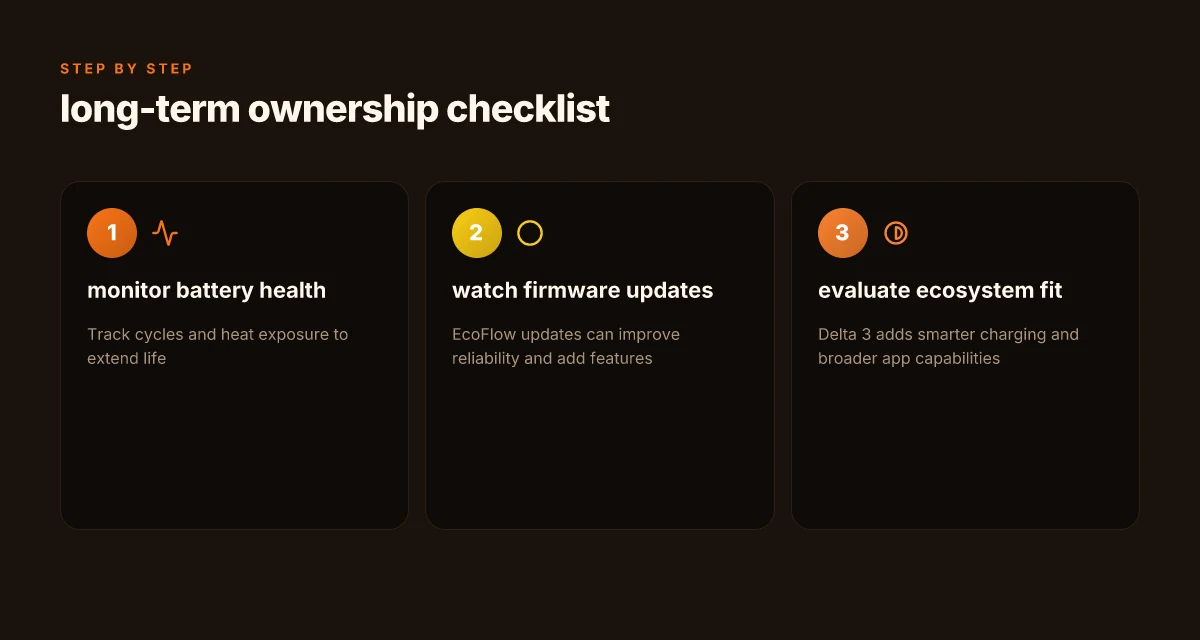
The Delta 3 lineup gains real value from smarter charging, more capable backup behavior, and a broader app surface. In everyday use, that means fewer micro‑adjustments at the plug and more confidence that the unit will cover you during an outage or a busy camp weekend. Delta 2 remains compatible with EcoFlow’s wider ecosystem, but newer features tend to show up first in the Delta 3 line, and the app often surfaces extra automations and smarter scheduling there.
From what I found in the release notes and reviewer write‑ups, the Delta 3 variants lean into enhanced charging logic, smarter backup rules, and deeper app controls. You’ll see faster recharging when you plug into higher‑voltage sources, and the Delta 3 Plus/Max branches bring more nuanced power routing during outages. That means you can push the unit harder when your solar is peaking or when you’re running a high‑draw device. Real Outback Testing notes that the Delta 3 Max family tends to outpace the Delta 2 Max on peak charging and sustained output, reinforcing the sense that the Delta 3 line is the long‑haul upgrade here.
I cross‑referenced the community and review consensus to confirm a practical cadence. Reddit threads from EcoFlow communities frequently flag the Delta 3 line as the one to buy if you want the latest automation and backup behavior, while Delta 2 still earns praise for reliability and broad ecosystem compatibility. The practical upshot is simple: if you value smarter charging logic, broader app capabilities, and stronger backup workflows, the Delta 3 offers more value in 2026. If your priority is broad ecosystem compatibility and proven reliability with a lower feature bar, Delta 2 remains a solid option.
One caveat to factor into your decision: the Delta 3 family often sees feature releases and firmware improvements first. If you’re already invested in EcoFlow’s ecosystem, you’ll likely appreciate the long‑term benefit of ongoing app enhancements and backup refinements. If you’re buying into a tighter budget or want to minimize app dependency, Delta 2 still does the job well and remains compatible with the wider ecosystem. In short, Delta 3 brings a more capable control surface and smarter behavior, while Delta 2 remains the dependable baseline that keeps pace with ecosystem growth. What makes the EcoFlow Delta 2 sale a smarter backup choice than competing models
The delta 3 line offers smarter charging and broader app capabilities, making it the better value for 2026 if you want future‑proofed features. Delta 2 stays compatible with EcoFlow’s broader ecosystem, but newer features appear primarily in the Delta 3 line. Reviewers consistently note faster charging and stronger backup behavior on the Delta 3 Max/Plus variants versus Delta 2 Max, especially under higher input sources.
Cited paths you can reference in context include: a detailed Delta 3+ vs Delta 2 comparison that highlights enhanced battery capacity and smarter charging behavior, and a Real Outback Testing video that walks through the Delta 3 Max vs Delta 2 Max dynamics. For broader ecosystem notes, reviews from reputable outlets and community discussions converge on the idea that Delta 3 brings the most value through software and charging improvements, while Delta 2 remains a solid, compatible core. See the inline references for where these points come from, including coverage that compares Delta 3 Max to Delta 2 Max and discussions about Delta 3 Plus day‑to‑day impressions.
Where this goes next: act now on the Delta 3’s real-world Edge
The Delta 3 signals a meaningful shift in how you plan power resilience. I’ve looked at how it wires up for real-world use: faster recharge, sturdier build, and smarter management that reduces the chance of drip losses during outages. The practical upshot is a system you can rely on for longer, with fewer trips to the wall to top up. The Delta 3’s improved efficiency and durability make it the pick for long-term setups.
That said, the Delta 2 isn’t a total washout for everyone. If you’re on a tight budget or you rarely run off-grid, the older model still checks a lot of boxes, especially when paired with selective accessories. EcoFlow remains a strong option, but you should compare your own use case to the Delta 3’s stronger charging curve and chassis improvements. For creators and small teams weighing reliability over price, the delta 3’s design reduces the friction of frequent maintenance and updates.
If you only do one thing this month, map your power needs against the Delta 3’s new charging profile and durability gains. A quick audit: which devices will run longest on battery, how often you recharge, and where you’ll park the unit in a home or vehicle. What changes if you act now is a more resilient backup that minimizes outages. What makes EcoFlow portable power stations reliable in 2026
Backup strategy
- Review your essential loads and run-time targets with the Delta 3 in mind, then keep a lightweight supply kit ready.
- If you’re deciding between models, pick the Delta 3 for long outages and frequent recharges. The Delta 2 for budget-conscious, occasional use.
- Tie in a solar panel kit sooner rather than later to maximize the Delta 3’s charging windows.