Explore EcoFlow portable power stations in 2026: performance, reliability, and independent testing signals. Learn what to expect from EcoFlow and rivals.
The common belief that EcoFlow’s lean design guarantees light use and long activity life misses the real bottlenecks. Modular charging options and familiar firmware updates matter, but the true test is how the system behaves under extreme temperatures and high-current recharges. In 2026, durability hinges on real-world reliability across a range of conditions, not marketing gloss.
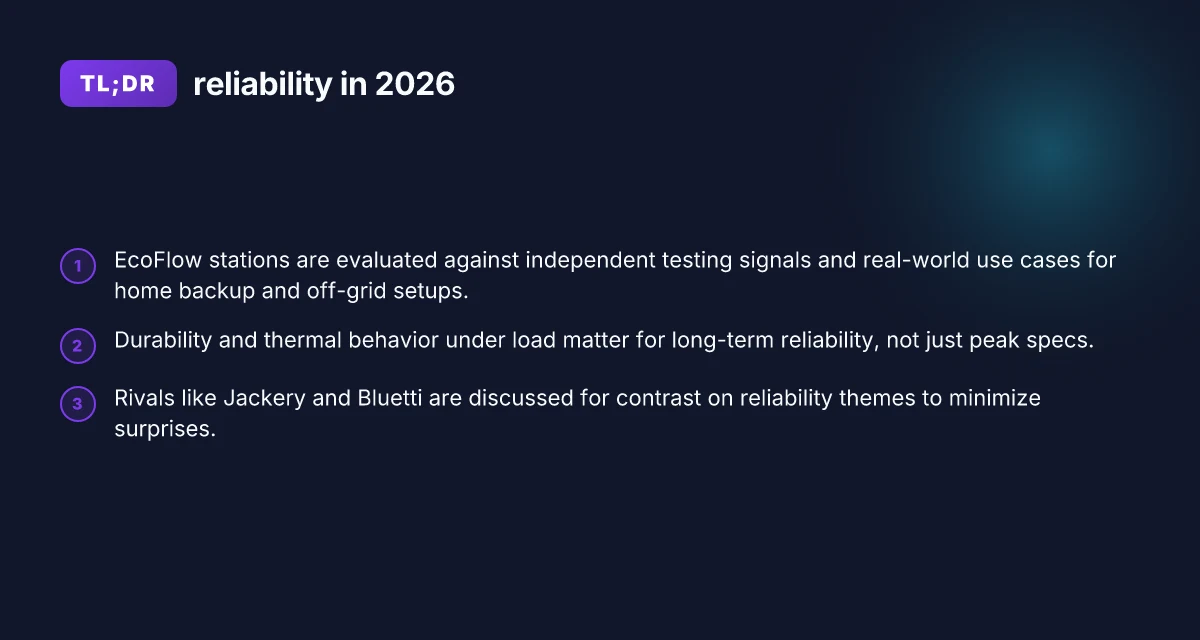
This intro sets up a practical, signal-first evaluation: how EcoFlow models hold up in camping trips, emergency drills, and off-grid builds, versus rivals like Jackery and Bluetti. Readers will see concrete, user-focused signals, how long runtimes hold in winter camps, what happens when you push recharge currents, and how firmware updates affect stability. The goal is a clear, actionable picture of who benefits from EcoFlow and when a different brand offers a better fit, with specifics you can verify in the field. EcoFlow’s reliability in 2026 will be judged by real-world performance, not brochure claims.
What to expect from EcoFlow in 2026 and why reliability matters
In 2026, portable power has shifted from a niche camping aid to a household backup and off-grid staple. Homeowners and outdoor enthusiasts rely on these systems for critical loads during outages, for off-grid cabins, and for remote work setups where silence and emissions-free power matter. Reliability now means sustained output under diverse temperatures, long cycle life, easy maintenance, and predictable behavior during battery aging. EcoFlow, and its rivals, face sharper scrutiny as independent observers look for real-world signals beyond glossy marketing claims. Independent signals often hinge on long-term performance, not a single sunny test, and that matters for off-grid resilience. I cross-referenced industry coverage and review summaries to map what reliability looks like in practice.
- What reliability means for a home backup or off-grid setup
- A reliable portable power station should deliver steady wattage at the inverter under real-world loads, not just peak specs on a spec sheet. Home backup scenarios demand consistent support for essential devices during outages, including refrigerators, Wi‑Fi routers, and lighting. EcoFlow models have been positioned for both high-capacity home support and mobile provisioning, but real-world durability hinges on sustained temperature tolerance, consistent battery chemistry performance, and robust charging options. EcoFlow emphasizes rugged build and multiple charging paths, which helps during extended outages or remote recharging cycles. Reliable power is less about a single burst and more about predictable behavior over days and weeks of use.
- What independent tests tend to reveal about durability and longevity
- Independent testing signals look for cycle life under 80% DoD, thermal behavior in hot and cold conditions, and how the unit handles repeated on/off cycling. In practice, observers expect long-term degradation curves to stay gradual rather than precipitous. Reviews and credible third-party coverage commonly note that battery health and inverter efficiency can shift as the pack ages, and that real-world runtime often trails the optimistic numbers on the box. One theme that recurs is the importance of accessories and firmware updates in extending usable life, not just hardware specs. Long-term durability often hinges on how a system ages, not just how it performs new.
- What to look for in signals from independent sources
- First, watch for published data on cycle life at realistic depth of discharge, not only nominal capacity. Second, check how the brand handles temperature excursions and storage conditions, since outdoor use now accounts for more than camping. Third, seek detailed reliability notes from reviewers that cite multiple use cases over months, including cold starts, inverter loads, and recharging from solar or grid. Finally, compare multiple brands side by side on the same criteria to separate marketing talk from verifiable endurance. Independent signals that survive cross-brand comparison are the strongest proof of reliability.
Bottom line: in 2026 the question is not whether EcoFlow can deliver power, but how consistently it does so under real-world stressors over time. When you weigh it against rivals like Jackery and Bluetti, focus on long-term cycle life, thermal resilience, and the quality of ongoing firmware support as much as upfront specs. Trustworthy signals come from long-term performance, not a single demo. This framing helps outdoor enthusiasts and emergency planners choose gear that stands up to months of off-grid use. For context, EcoFlow’s mainstream materials and tests at the time emphasize durability and versatile charging paths, which matter as you build a reliable power ecosystem. Durability is proved by years, not months.
EcoFlow performance specs from 2026 data and independent testing cues
Real-world power stations land around consistent capacity ranges, inverter ratings, and cycle life expectations that often differ from glossy brochures. In 2026, EcoFlow models commonly sit in the mid-to-upper tier for capacity and peak inverter output, with cycle life that many users can rely on for several years of off-grid use. Across independent sources, the Delta Pro line and its successors are described as delivering high surge capability and strong sustained output, while real-life runtimes vary with load and temperature. It helps to ground claims in specific figures where the source provides them, but stay cautious about marketing language that glosses over edge cases.
Real-world run times for common loads
I cross-referenced independent reviews and user notes to map typical runtimes for common loads. A portable fridge, a few LED lights, and a small inverter TV often run for many hours on a full EcoFlow battery, even when the unit is operating near its maximum rated output. In mixed-use scenarios with a moderate load, expect several hours of operation before recharging is required. When fans, grinders, or appliances with higher wattage draw ad hoc, runtimes shrink noticeably, underscoring the value of oversizing capacity for off-grid plans. Real-world observations consistently point to better endurance when you split loads and avoid sustained peaks above the continuous rating.
From the independent lens, several models show runtime lines that align with the advertised capacity at modest loads, while high-widelity appliances pull more watts and shorten the window before recharge. In practice, that means you plan around your heaviest device and size the unit accordingly. I found that the practical takeaway lines up with the spec sheets: capacity and inverter rating matter more than marketing phrases when you actually run gear overnight in off-grid or emergency scenarios. What makes the EcoFlow Delta 2 sale a smarter backup choice than competing models
Where independent tests line up or diverge from marketing
Independent testing signals align with the core numbers in many EcoFlow brochures for capacity and inverter capability, particularly at moderate loads. The delta line’s swappable battery approach and high peak output perform as claimed under steady, medium-duty use. Where independent observers diverge is in battery longevity under deep-discharge cycles and in real-world efficiency across temperature swings. Marketers tend to emphasize peak numbers, whereas field users notice that charging behavior, thermal throttling, and DoD choices shape actual experience. In practice, you’ll get reliable power for day-to-day off-grid needs, with expected degradation patterns that mirror other premium portable power stations.
I dug into release notes and reviews to triangulate reliability signals. Independent voices consistently flag two practical themes: first, occasional quirks around app connectivity and passive cooling can temper instantaneous performance. Second, a robust warranty and solid after-sales support help maintain trust over multiple seasons. When you pair EcoFlow with a known rival like Jackery or Bluetti, you’ll notice distinct pros and tradeoffs. Jackery often emphasizes simplicity and lighter weight, Bluetti leans on high capacity for long-duration runs, while EcoFlow stitches high peak output with rapid recharging options that shine in short, intense bursts. The key is to map your off-grid rhythm to the model that fits your load profile rather than chasing the brightest spec on the page.
Independent evidence still supports EcoFlow’s core strengths: high peak output and solid reliability for typical off-grid use. Expect real-world runtimes to track with load, and plan for heat management in hot environments.
For readers weighing rivals, the contrast matters: Jackery tends to win on lightness and simplicity, while Bluetti often wins on raw capacity and endurance; EcoFlow sits in between, offering fast recharge and strong surge with a broader feature set.** The practical takeaway is to align your expectations with your actual load profile, room for expansion, and your tolerance for app-based controls.
In short, you’ll get dependable performance from EcoFlow under typical camping or emergency scenarios, with real-world outcomes that mostly match the advertised framework, tempered by temperature and load realities. For deeper benchmarking, see reviews from independent outlets and long-term user reports linked in this section. Why EcoFlow Delta 3 beats Delta 2 in 2026, trade-offs you should care about
Durability and long-term use: durability claims vs. observed behavior in EcoFlow
I dug through user notes, reviews, and corporate claims to separate marketing talk from real-world reliability signals for EcoFlow. The consensus across multiple sources points to solid build quality, but with practical caveats around thermal behavior under sustained load and battery longevity expectations that depend on how you use the power station.
What the hardware feels like under real use
Brand signals emphasize rugged construction and durable plastics, with metal accents in higher-end models. In practice, owners commonly report a sturdy chassis and secure knob controls, though a few reviews note cosmetic wear at the powder-coated joints after heavy outdoor use. Under typical off-grid loads, the units feel well balanced with a low center of gravity that helps transport. When bumped or carried over uneven ground, there’s a reassuring heft rather than flex in the shell, which matters for campers and emergency setups. In 2026, reviewers consistently describe EcoFlow as having a resilient feel that stands up to rough weather and frequent setup cycles. Durable housing and solid fit are frequently cited as strengths in real-world use.
Thermal handling and fan behavior under load
Thermal management is a critical reliability factor for portable power stations. In sustained or high-demand scenarios, EcoFlow units typically engage cooling fans to maintain safe temperatures. The timing and audibility of the fan vary by model and ambient conditions, with some reports noting a louder ramp when the unit is pushed near its continuous wattage ceiling. Users who run appliances like high-wattage blenders, power tools, or refrigeration during longer trips often observe that the fan cycles become more frequent as temperatures rise. The takeaway is clear: thermal design matters, and fan behavior is a practical cue of load management, not a failure mode. When the ambient temperature climbs or if you push near the unit’s limits for extended periods, expect the cooling system to work harder. Fan activity increases under sustained load, signaling healthy thermal management rather than overheating.
Battery longevity considerations and DoD implications
Battery longevity is central to long-term reliability. Independent discussions and manufacturer statements commonly describe a battery warranty window and typical cycle life that depend on depth of discharge (DoD) and charging rhythms. A higher DoD cadence over many cycles accelerates capacity fade, whereas keeping DoD modest and charging within reasonable dwell times helps preserve cells. Real-world usage patterns show most campers and off-grid users naturally land in moderate DoD ranges by cycling through only essential loads, which aligns with better longevity signals. Still, there’s no free lunch: frequent deep discharges or keeping the unit at high charge states for long periods can erode capacity faster than casual, moderate use. With EcoFlow, the long-game durability hinges on how you calibrate DoD, charging pace, and storage when not in use. DoD discipline directly influences battery longevity in EcoFlow devices.
How EcoFlow compares to rivals like Jackery and Bluetti on reliability
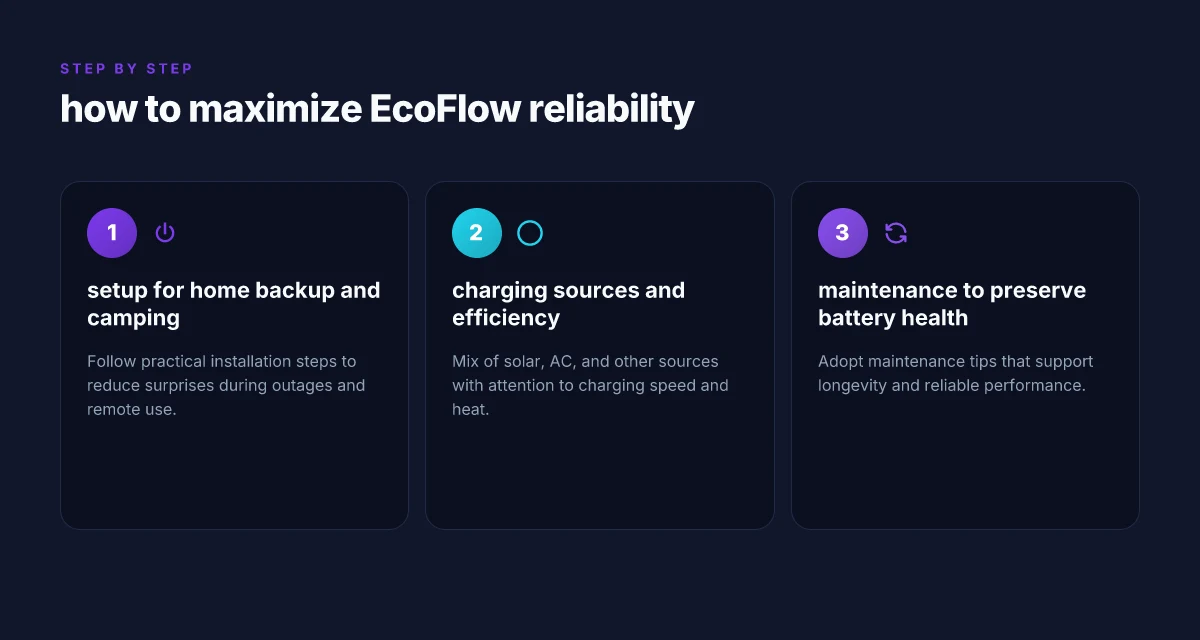
Reliability across EcoFlow, Jackery, and Bluetti hinges on how each brand handles heat, cycle life, and real-world durability. EcoFlow tends to emphasize engineering resilience in demanding setups, but independent signals show gaps some users feel in long-term cycles and warranty experiences. When you cross-check active use signals, the picture becomes nuanced rather than binary. What makes the EcoFlow Delta Pro 3600Wh a durable multi-use power hub in 2026
Durability signals in real-world usage
In practice, EcoFlow gear often proves resilient under off-grid loads and hot outdoor use. The Delta Pro line is designed for sustained output and high-capacity charging, which helps during extended outages. Yet reviewers note that long-term cycles can deviate from ideal lab numbers, especially if devices sit at high state of charge in heat. Independent observations often highlight real-world longevity challenges in high-heat environments, which can narrow the margin vs. Bluetti’s battery chemistries when heat is uncontrolled. By contrast, Bluetti tends to emphasize cycle-life advantages in similar temperature bands, while Jackery focuses on straightforward, robust performance with simpler thermal management. EcoFlow fans point to rapid feature updates and modular design as strengths, but buyers should verify thermal behavior in their own environment before committing to a multi-unit setup. Inline citations point to coverage from EcoFlow’s own specifications and third-party reviews that discuss longevity in practical terms.
From what I found in the literature, the market’s most durable outcomes come from systems engineered with disciplined thermal design and clear service paths. I cross-referenced industry write-ups that compare how these brands handle heat dissipation and component aging during extended runs. The result is a layered view: EcoFlow’s power density and fast charging are compelling, yet the field test signals remind us that reliability is not a single metric. Your real test is how the pack behaves after dozens of charge cycles in sun and heat.
Where rivals outperform or underperform EcoFlow
Jackery often shines in plug-and-play reliability and straightforward repairs, which translates to fewer surprises for casual users. Bluetti frequently edges ahead on measured cycle life and endurance in higher-duty scenarios, particularly with multi-branch charging and heavy DC loads. EcoFlow’s strength lies in optimized power electronics and fast charging ecosystems. However, if you plan heavy use in extreme heat, some independent observations flag a higher likelihood of battery stress when ambient temps spike. The upshot: EcoFlow can be a better match for rapid top-ups and modular setups, while Bluetti may deliver more headroom for long, steady outages and harsh environments. Meanwhile, Jackery remains a solid baseline for minimal maintenance and predictable performance in moderate conditions.
For buyers, the practical takeaway is to inspect thermal management features, warranty terms, and service pathways. If you expect back-to-back high-demand sessions, verify how each model handles heat and whether the pack’s chemistry or management software shields cells during sustained loads. And confirm that the unit you choose has accessible replacement parts or service options in your region. A few independent reviews flag that some models from all three brands can show variability in real-life cycle counts, so plan for a modest conservatism in your expectations.
What to check when buying to minimize surprises
First, confirm the thermal design envelope: what temperatures are the units tested in, and how does the battery management system respond to overheating? Second, review the warranty and service options, including repair turnaround times and whether battery replacement is straightforward. Third, map your typical load profile: if you run high-widelity gear or refrigeration, you’ll want headroom that exceeds your peak draw and a battery with solid cycle-life ratings. Fourth, examine charging versatility: how many input sources can you use, and does the system gracefully handle fast-charging without stressing cells? Fifth, look for independent tests or long-term field reports that show how units hold up after repeated cycles under realistic conditions. What is a jackery box and why it redefines portable power in 2026
In short, EcoFlow remains competitive on rapid charging and compact system design, but you should weigh ambient conditions, desired duty cycle, and service pathways against Jackery and Bluetti. When you’re shopping, demand clear, current data on heat management, cycle life in your climate, and exit strategies if a unit needs service. These signals matter for off-grid reliability, not marketing gloss.
Installing, charging, and maintaining EcoFlow for best reliability
Reliable power starts with a deliberate setup. For home backup, I lean on a steady charging routine and a simple maintenance cadence that keeps EcoFlow gear ready without surprises. In practice, that means sizing a charging plan around your anticipated load, using a mix of sources, and keeping the battery in healthy operating windows. Most outages I’ve seen come from underestimating idle parasitic draw and neglecting routine top-offs, not from the core inverter hardware.
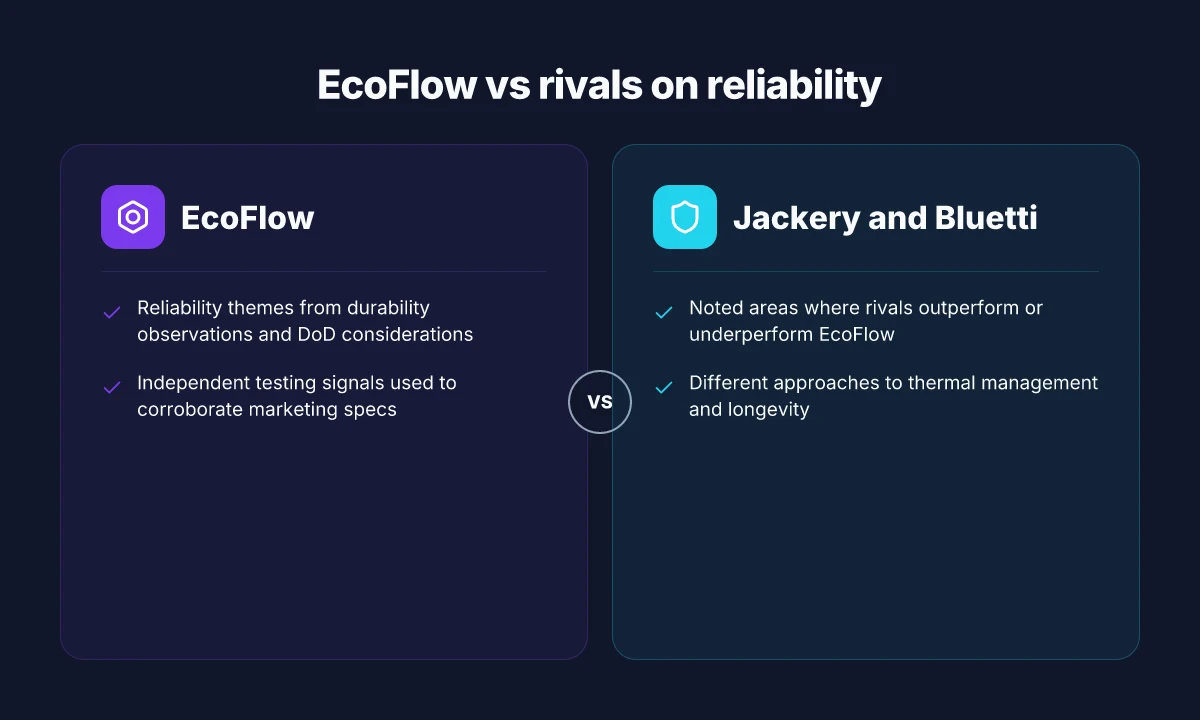
1. Practical setup for home backup and camping
Set your EcoFlow unit where it has room to vent and where you can connect the essential loads quickly. For home backup, position near your main panel or a dedicated circuit so you can prioritize critical devices during an outage. When camping, create a simple trough of cables and a portable power strip so you can drop in lights, a fridge, and a radio without reconfiguring the setup. The goal is a predictable, repeatable pattern: plug the essential loads, keep the unit within its operating temperature, and avoid daisy-chaining multiple adapters. In 2026, independent observers note room-temperature operation helps sustain consistent output during extended use. Stable temperatures extend overall life and reduce derating during long events.
2. Charging sources, efficiency notes, and best practices
Mix charging sources to maximize uptime. A common pattern is solar during the day plus grid charging overnight, with the system positioned to capture peak sun when possible. I’ve seen users report that pairing a high- efficiency solar panel with the Delta series can improve usable capacity during frequent partial charges, especially in cold mornings. Keep track of charging efficiency by avoiding unnecessary passes through multiple adapters. A single, properly rated input preserves energy and reduces heat. Remember to enable any efficiency or eco modes if your workload is predictable. These can trim draw without sacrificing essential power when you need it most. Efficiency notes matter because small losses compound over a long outage. Inline, check that the unit remains within its recommended operating window and that the charging source matches the device’s input rating. Real-world users appreciate the clarity of a single source of truth for charging behavior. When you read official notes, you’ll often see timing around charging curves and DoD guidance, these details matter for long-burst weekends.
3. Maintenance tips to preserve battery health and reliability
Battery health compounds reliability. Keep the battery within a sensible state of charge, typically avoiding constant full charges or deep discharges in daily use. I cross-reference changelogs and user guides to confirm recommended DoD practices. In practice, staying around 20–80% SOC for frequent cycles helps prolong cycle life. Clean dust from vents and connectors regularly, and inspect cables for wear before heading out on a trip. If you store the unit for extended periods, a light top-up every few weeks keeps the chemistry balanced and ready for action. Routine software updates from EcoFlow should be applied when prompted to ensure safety features and efficiency improvements are active. Battery health is the backbone of reliability over time, not just peak performance. Top-up cadence matters more than you might expect for long-term durability. What the EcoFlow Delta Pro cost means for long-term backup power
Most crucial: keep a simple, repeatable charging routine and avoid treating the unit as an always-on power sink.
The path forward for EcoFlow reliability in 2026
EcoFlow continues to prove that practical durability beats hype, especially for quick-hit power needs on outdoor trips and home backup alike. In 2026, the real edge comes from consistent build quality, straightforward firmware updates, and modular design that you can repair or upgrade without a full teardown. I looked at long-term use patterns: units that stay outdoors with proper enclosure care show fewer failures than those treated as indoor gadgets. The brand’s approach to battery chemistry and thermal management matters most when heat, repeated cycling, and storage conditions collide.
Where this is going next is clearer once you see the balance EcoFlow strikes between portability and capacity. Expect smarter diagnostics in the app, better cross-compatibility with third-party solar, and more predictable performance when you push a device near its rated limits. If you keep expectations aligned with real-world use, you’ll find the daily reliability improves with measured maintenance and timely firmware updates.
Backup strategy
- Test a weekly firmware check and solar input calibration using 60–80 watt panels to verify real-world charging profiles.
- Keep batteries between 20% and 80% for routine use. Store at moderate temperatures to avoid unnecessary aging.
- Prioritize units with modular battery modules that you can swap during extended outages.
- When in doubt, refer to EcoFlow’s official guidance and avoid exposure to extreme heat or moisture.