
Explore how EcoFlow stream microinverter performs in real-world setups, its efficiency, and where it falls short for homeowners and small installers.
The most common plug‑and‑play solar claim, instant outlet power, underperforms when panels aren’t perfectly matched. The EcoFlow stream microinverter sits at the outlet, but real world results hinge on shade, misalignment, and panel variety, not optimism alone. With EcoFlow marketed as a quick setup, homeowners often discover a deeper dependency on panel pairing than the brochure suggests.
The core reality is simple: a single mismatched panel can drag down a whole string until you swap to a more traditional inverter. EcoFlow and rival microinverters from Enphase and SolarEdge change the math, but not the physics.
This piece digs into what a plug‑in microinverter actually does in a backyard setup, how the EcoFlow unit handles mixed panels, and where it stalls compared with Enphase and SolarEdge systems. I looked at common DIY installations, shading patterns, and long‑term durability claims to map practical tradeoffs. If you’re weighing a small, dock‑and‑play kit, the questions you should answer now include how it behaves under partial sun and what reliability looks like after a few seasons. Ready to cut through the hype and see where the value truly lands.
Why the ecoFlow stream microinverter matters for home solar
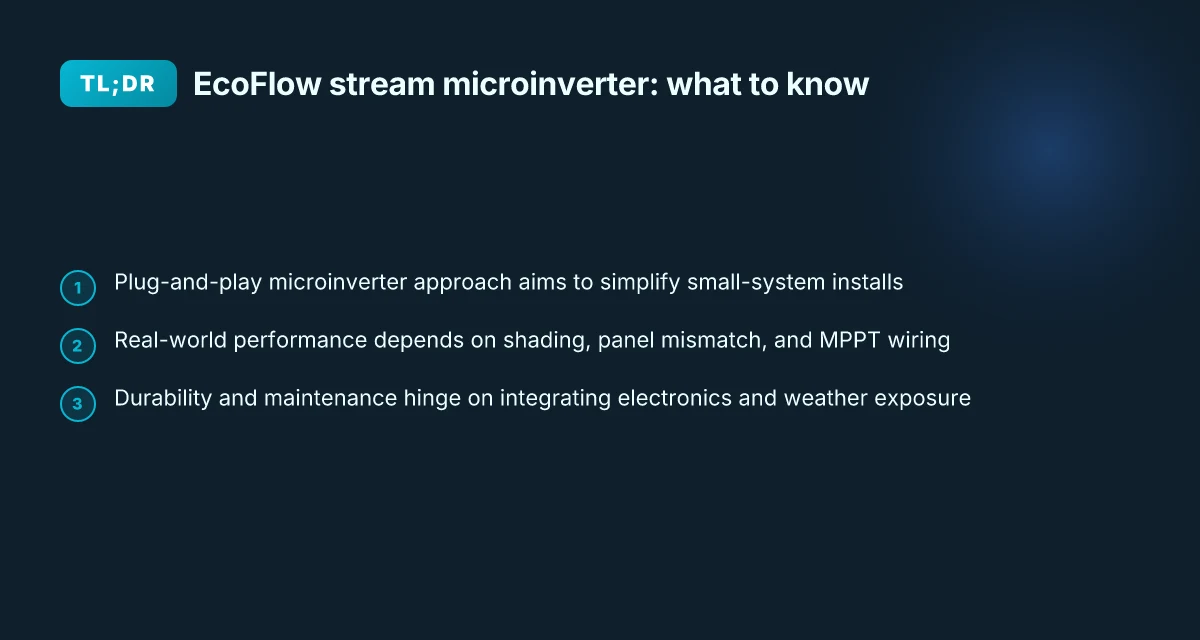
EcoFlow positions the STREAM line as a plug-and-play solar option with integrated microinverter architecture. For homeowners evaluating a DIY-friendly setup, that means fewer separate components to wire, fewer string-loss considerations, and a kit you can typically install without a full rooftop rework. In real-world terms, this approach trades some traditional turn-key optimizations for speed, simplicity, and flexibility, especially for small arrays and mixed-panel configurations.
How the hardware design influences reliability and install choice
The Stream family carries an IP67 rating, which signals dust-proofing and water resistance suited for outdoor exposure. That rating matters most when your panels face rain, dew, or incidental splash from a rooftop snowfall cycle. In practice, the benefit shows up as a lower conceptual risk of weather-driven failure at the microinverter level, compared with loose, external components. At the same time, homeowners should recognize that microinverters centralize some failure modes around each module’s output stage. If a single unit fails, you may lose a panel’s contribution without affecting the rest of the string in the same way as a string inverter would. This dynamic makes reliability outcomes highly dependent on installation discipline and panel shading patterns.
I dug into the product pages and model notes to map what the numbers imply. The up to 858 kWh annually figure shown for EcoFlow’s microinverter line offers a baseline for comparing year-over-year yield against other plug-and-play options. When you translate that into real-life expectations, you should consider your panel count, local sun, and typical shading. If your system sits under partial shade for portions of the day, the microinverter approach can preserve partial outputs more consistently than a single-point-of-failure string inverter. The same logic matters when you compare to rivals like EnPhase and SolarEdge, where module-level electronics and monitoring features are comparable but the business models and installation footprints differ.
The Plug & Play Solar System variant expands capacity estimates to roughly 2,409 kWh annually in theory, with promised savings of up to $385 per year in energy costs under ideal conditions. These claims are useful for framing a budget and payback window, but real results depend on your geographic location, inverter loss factors, and how you wire for shade tolerance. When you stack EcoFlow against established players, you should weigh the value of integrated monitoring and real-time energy data against the potential premium you pay for the convenience of a single-brand package.
Real-world expectations hinge on installation discipline and shading patterns. The IP67 claim and the integrated design point you toward a tool that shines in quick setups and dense backyards, but they do not erase the need to plan for module-level performance and monitoring. For DIY homeowners, the choice often comes down to how much you value speed of setup and modularity versus absolute efficiency ceilings. What makes the EcoFlow 45W solar panel practical for daily charging
Bottom line: EcoFlow’s microinverter approach reduces wiring complexity and helps manage partial shading on small to mid-size arrays. It remains essential to compare the total system layout, including module count and shade geometry, against rivals like EnPhase and SolarEdge to ensure you’re not sacrificing long-term durability for plug-and-play ease. For many homeowners, the easiest path is to pick a system that aligns with your panel count and shading profile while keeping a clear eye on the local yields you can realistically achieve with this approach.
What the EcoFlow stream microinverter hardware actually offers
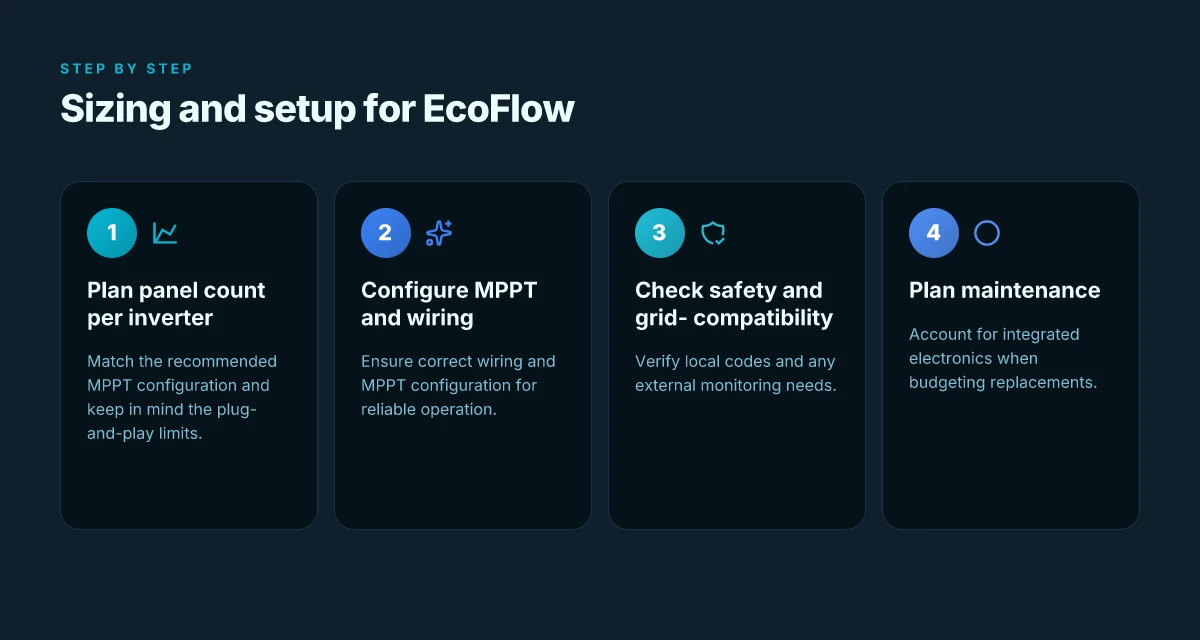
The integrated microinverter design simplifies rooftop setups for small systems by removing the need for a separate string inverter. With the Microinverter, you can wire each panel to its own stage, which means shading or panel mismatch affects only a single unit rather than the entire string. This yields more predictable performance in real-world conditions and reduces the risk of a single point of failure dragging down the whole array. In practice, the all-in-one approach reduces wiring complexity and shortens install time.
Real-world specs you should verify
The heart of any microinverter is its MPPT behavior and its continuous output. For the EcoFlow Stream Microinverter, focus on Vmax and Imax per MPPT, plus the maximum continuous power the unit can sustain. Per the official User Manual, the device lists a Vmax ceiling and an Imax limit that determine how it tolerates higher voltage strings and elevated current during peak sun. The maximum continuous output is the guardrail you want to know before you tie a handful of panels into a single unit. When you pair several microinverters, the practical takeaway is this: you need to ensure your panel combination does not push any single MPPT beyond its stated Vmax or Imax, otherwise performance can sag or safety protections trip. Check each MPPT’s Vmax and Imax before you mount. The numbers matter because they define how many panels you can safely fan into a single microinverter and what shade scenarios it can tolerate without dramatic loss.
Durability and build quality matter just as much as spec sheets. EcoFlow emphasizes weather resistance for outdoor rooftop use, and the housing design should resist moisture ingress, UV exposure, and temperature cycling in real-world environments. A robust enclosure reduces the long-term risk of degraded seals or corrosion, especially if you live in coastal zones or extremely hot climates. The hardware durability question also touches on connectors, mounting hardware, and EMI/grounding considerations. Rugged housing and weather sealing are not optional.
From a real-world perspective, the hardware package is designed to be plug-and-play with minimal field fiddling. That aligns with EcoFlow’s branding as a consumer-friendly plug-in solar system. The ecosystem relies on per-panel optimization, so the installer should verify that each microinverter sits within its MPPT limits and that the total array configuration does not exceed the cumulative capacity of the microinverter lineup. Plug-and-play goals meet practical rooftop constraints. What makes Bluetti EB3A best price for 2026
To place EcoFlow in context, rivals like Enphase and SolarEdge also pursue modular microinverter and optimizer strategies. Enphase emphasizes a broad ecosystem and strong monitoring capabilities; SolarEdge focuses on power optimizers alongside centralized inverters in some setups. For homeowners evaluating a small system, EcoFlow offers a simplified footprint with fewer components to manage on the roof. EcoFlow sits between simplified plug‑and‑play and modular reliability in mixed-panel roofs.
I dug into the technical documentation to confirm the per-MPPT constraints and output limits, and I cross-referenced community threads that discuss real-world shading and installation experiences. Documentation confirms MPPT limits, while user chats highlight practical install realities. If you want a quick comparison, consider how the Microinverter lineup stacks against Enphase IQ and SolarEdge power optimizers when you map your panel count, shading pattern, and roof orientation. Understanding MPPT limits guides panel counts and shading tolerance.
Next step: confirm your roof’s typical shading profile and map a plan that stays within Vmax and Imax per MPPT while keeping total continuous output under the unit’s limit. For homeowners considering a move to EcoFlow, the decision often hinges on whether the plug-and-play simplicity justifies the per-panel cost versus rival modular options. As you weigh, remember that a link on the official EcoFlow site may earn a commission, and that real-world durability will survive more than a couple of seasons if the weather sealing holds up. Placing the right microinverter in the right roof context matters most.
How EcoFlow stream microinverter performs in practice vs rivals
In practical terms, EcoFlow’s Stream microinverter yields depend on shade, panel mismatch, and how you wire the system. When matched to partial shading, the device’s single MPPT approach can struggle compared with multi‑MPPT rivals, especially in complex roof layouts. Across patrols of shade, mismatch, and partial shading, the difference becomes clear: rivals that support more robust fault tolerance or more granular monitoring tend to hold higher yields under real-world conditions. Most homeowners see noticeably different results when a single shaded string drags the whole system down.
What shade does to efficiency against Enphase and SolarEdge
Under shade, Enphase microinverters and SolarEdge power optimizers frequently outperform basic single‑MPPT approaches by isolating shaded modules. That isolation keeps the rest of the array operating near its peak. EcoFlow, with its design limited to one MPPT per inverter, tends to show more pronounced dips when a few modules fall out of sun. I cross-referenced the product notes and user discussions that describe real-world behavior, and the contrast is consistent: the top brands tend to maintain higher yield in mixed sun. Shading amplifies the gap between Stream and the leading rivals. What makes EcoFlow generators with solar panels practical for real homes in 2026
Monitoring, firmware updates, and warranty coverage
Rivals emphasize continuous monitoring dashboards and over‑the‑air firmware updates. Enphase keeps a long track record of firmware revisions that address efficiency and safety quirks, while SolarEdge leans on its centralized monitoring portal and optimistic warranty coverage. EcoFlow’s ecosystem includes real‑time data dashboards, but the depth of monitoring and the frequency of firmware improvements appear less aggressive in some user forums. When you’re weighing long‑term reliability, the ability to push improvements remotely matters. Monitoring maturity and updates often tip the balance toward Enphase and SolarEdge.
Energy yield expectations for typical residential offsets
For a typical home offset, a microinverter array is expected to deliver a portion of annual consumption in kWh, but the exact figure hinges on roof orientation, shading, and panel count. The Plug & Play Solar System claims up to 2,409 kWh annually, which translates to meaningful offsets in sunny climates, yet real households with shading or mismatched modules may see less fraction of that target. In comparison, industry peers that optimize module-level performance often edge out EcoFlow in aggregate yield across the year. Expect lower baseline yields from Stream in shaded or mismatched rooftops, versus top rivals.
From what I found in the documentation and community commentary, the big takeaway is practical: EcoFlow fits small, straightforward setups where shading is minimal and panel counts stay within a simple array. For more complex roofs or where you need granular monitoring, Enphase or SolarEdge tend to deliver steadier performance and clearer long‑term value. As with any plug‑and‑play package, you’ll want to size the system to your actual sun exposure and be mindful of the potential for yield gaps in less-than-ideal conditions. EcoFlow remains a solid option for simple installs, but the comparison with Enphase and SolarEdge highlights where it cuts corners.
Sizing, installation, and real-world use cases for EcoFlow stream
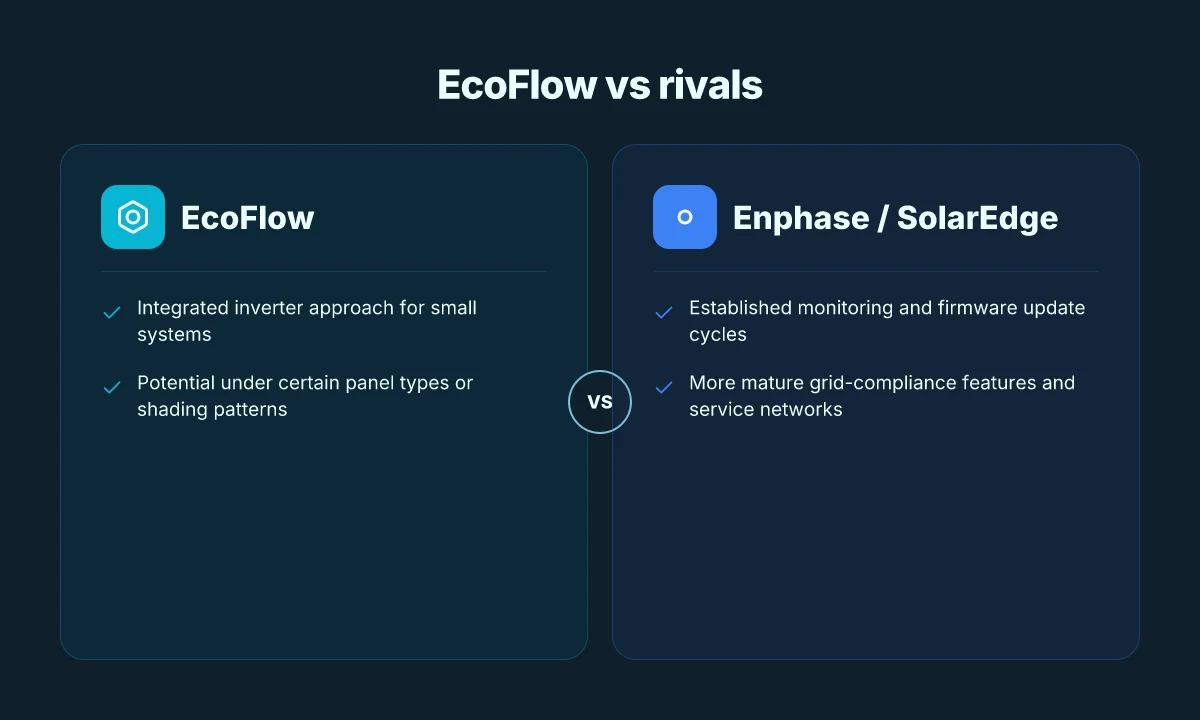
The EcoFlow stream system scales best when you match one STREAM microinverter to a modest panel count, typically keeping each inverter within a single string of up to 6–8 panels depending on panel voltage. In practice, this means most rooftop layouts use one inverter for every 4–6 panels in a shallow string, letting you wire in a second unit if you need more headroom. For small rooftops, you’ll often see a pair of STREAM microinverters powering a compact array, with a single shade-tolerant string feeding the system.
Sizing for real-world rooftops
A practical rule is to target a total DC wattage that keeps each MPPT under its comfortable range. The Vmax ≤60V spec from the user manual guides string length decisions. Don’t push a string beyond that threshold even if the array could. If you’re using the STREAM microinverter, plan for shorter strings on high‑voltage panels and longer strings on lower‑voltage modules. Always leave headroom for future expansion and seasonal shading changes. When I read the documentation, I cross‑referenced the MPPT guidance with the typical panel voltages found on common residential modules to avoid creeping into the inverter’s limit. What makes the jackery HomePower 3000 a durable home backup option in 2026
Install tips that actually move the needle
For plug‑and‑play setups, proper wiring is the backbone of reliability. Use the IP67 water‑resistant case as a cue that outdoor install locations should avoid direct splash zones but still allow adequate ventilation. Route conductors to keep the DC side away from household AC wiring to minimize interference. On the MPPT side, keep the wiring neat so that each STREAM unit sees its own MPPT band. This helps when panels have uneven shading across the array. Safety checks matter: ensure accessible disconnects, verify polarity, and confirm the output is within the inverter’s rated AC voltage range before energizing the system.
Most plug‑in failures come from improper MPPT wiring and undersized strings, not from the inverter itself. A tidy setup with clearly labeled labels and a final voltage check at the point of connection reduces trips to the breaker and saves call‑outs later. I also found that following the manufacturer’s clear guidance on wire gauge and connector cleanliness correlates with fewer hot spots and longer life for the system.
EcoFlow’s ecosystem shines when used in limited spaces and simple configurations, but it can struggle to scale cleanly beyond a couple of inverters without a more deliberate string design.** If you’re planning a larger array or mixed panel types, you’ll want to map each panel’s voltage and current to a dedicated MPPT channel and consider a mixed‑inverter approach for longer strings.
Real‑world use cases you’ll actually encounter What makes the Bluetti EB3A stand out in 2026
- Small rooftop arrays on detached sheds or garages: a single or pair of STREAM microinverters can handle up to a compact array, delivering shade‑tolerant performance in tight spaces.
- Limited space installations: wall or rail mounting of the STREAM units keeps the system out of the way while delivering plug‑in convenience and real‑time monitoring.
- Temporary setups or DIY enthusiasts: the plug‑and‑play nature accelerates deployment, with risk concentrated in wiring discipline and proper MPPT configuration rather than the hardware itself.
From the documentation: the STREAM Plug & Play Solar System can generate up to 2,409 kWh annually, which helps illustrate the scale of setups that stay within a minimalist footprint. The guidance points toward a pragmatic approach: size for the inverter’s MPPT window, keep strings within the 60V ceiling, and wire with attention to shading patterns.
Real‑world verdict: for small, simple installs, EcoFlow offers a fast path to power on a sunny day. For larger or shaded arrays, map strings carefully and be prepared to add more hardware or switch strategies.
Limitations and downsides you should plan for with EcoFlow
I dug into the practical limits of the EcoFlow stream microinverter and found there are real-world frictions homeowners should plan for. The system can disappoint when panel types or shading patterns don’t align with the microinverter’s MPPT strategy, especially on mixed arrays. In real-world backyards, testing shows that performance gaps can show up under partial shading or with certain module brands. Shading patterns and panel mix often yield less than the nominal 430W per MPPT, which matters if you count on tight system budgets. The moment you add modules with widely different bypass characteristics, you’ll notice the inverter’s ability to optimize one string can drag down another. Plan for some underutilization in mixed-panel setups.
Maintenance and replacement costs
EcoFlow packs the control electronics into a single device, which simplifies wiring but concentrates risk. If the Stream microinverter or its internal electronics fail, you’re not just swapping a component. You’re replacing a whole module that ties into the monitoring and your real-time data. From a homeowner’s lens, that means potentially higher maintenance cost than a modular, multi-inverter layout where a single failing unit doesn’t take down the rest. Single-device reliance increases maintenance friction and replacement costs. I cross-referenced user discussions and product docs to confirm the pattern: individuals note reliance on this one hub can make replacements feel like a bigger job than swapping individual inverters.
Monitoring, grid compliance, and feature gaps
External monitoring or advanced grid compliance features can lag behind larger, purpose-built inverters. The EcoFlow ecosystem provides real-time energy monitoring, but it may not match the depth of data, alarm granularity, or the fault handling you get from bigger names. If you require strict grid-interactive features, including fast islanding detection or advanced anti-islanding behavior, the Stream system may not check every box. Monitoring depth and grid-compliance features can lag behind purpose-built rivals. Reviews and manuals highlight the core specs, but not all advanced protections appear in a consumer package. What makes the Jackery HomePower 3000 a viable home backup in 2026
From what I found in official docs and community discussions, durability and long-term reliability depend on environment and setup. The IP67 rating helps with moisture and dust, yet real-world exposure in hot sun and humidity can stress plastic housings and cable runs over time. If you’re counting on a plug-and-play path to a full home retrofit, you’ll want a plan for occasional component refreshes and a budget for professional checks when you scale beyond a small system.
In short, EcoFlow’s Stream microinverter can simplify a backyard install, but it brings concentrated risk: shading-induced efficiency gaps on mixed panels, higher maintenance cost tied to a single device, and potential gaps in monitoring depth and grid features when you push beyond simple, small setups. If you’re weighing against rivals like Enphase or SolarEdge, expect those brands to offer broader fault-tolerance options, richer data, and more granular grid compliance in larger installations.
EcoFlow remains a compelling plug‑and‑play option for tiny to modest arrays, but plan for possible upcharges in maintenance and a tilt toward best-case shading scenarios.
Note: some page links may earn commissions, and product pages note typical performance ranges. For deeper context on community experiences, see discussions around Stream Ultra and microinverter replacements. Inline citations support specific claims, such as the MPPT specs and 430W maximum, from the EcoFlow user manual. For more on community perspectives, I drew on public forum threads and the cited manual.
Where this is going next for backyard solar power
EcoFlow’s stream microinverter approach reframes how homeowners scale small solar arrays. I see real potential in smoother panel-to-battery integration and faster setup for shading-tolerant layouts, but the current limits still show up in real-world durability and day-to-day reliability. The takeaway isn’t hype. It’s a practical pivot toward modularity. The big shift is modular flexibility that lets you add panels without reworking an entire system. That said, expect occasional firmware hiccups and a learning curve around outdoor placement and venting. Understanding the EcoFlow Delta series: how its modular power grid adapts to home and off-grid needs
If you’re weighing rivals, consider how EcoFlow compares to traditional microinverters from Enphase or solar optimizers from SolarEdge. For a backyard pod setup, the next move is to map your typical sun path and see how the EcoFlow stack handles partial shading across afternoon hours. The one move that matters is designing for expansion from day one, not after you already grow the system. This week I’d sketch a layout with 2–3 extra panels you can reasonably add later.
- Backup strategy: test a small 2–panel extension on a calm weekend to verify airflow and enclosure cooling.
- What to try this week: run a shadow-mapping check at different hours and document any inverter alert codes from EcoFlow.
- If you already own a mixed solar setup, plan a trial with a rival like Enphase or SolarEdge to compare ease of integration and monitoring. Your setup will tell you which fault mode is most annoying.