Explore how the Jackery HomePower 3000 performs as a home backup in 2026, including capacity, durability, and setup tips to keep your house powered when outages hit.
Most homeowners assume all portable power stations wear out the same way. The HomePower 3000 from Jackery bucks that myth through a beefier enclosure and LiFePO4 chemistry that holds up after repeated outages. Long-term durability hinges on a solid insulation profile and stable thermal design that keeps cells from throttling under load. If you’re unsure, verify battery health and port heat during heavy use.
In practice, this article drills into how real-world users run the HomePower 3000 across seasons of outages and daily use. For 2026, the question isn’t just capacity but how long the system stays reliable under frequent cycling and a rising risk of grid interruptions. Specifics like cycle life, thermal margins, and maintenance requirements matter more than peak output alone. Jackery’s approach contrasts with rivals such as EcoFlow and Goal Zero by emphasizing LiFePO4 stability and a durable chassis, making it a practical option for homeowners, RVers, and small businesses facing more frequent outages.
Jackery HomePower 3000 architecture and what it means for durability
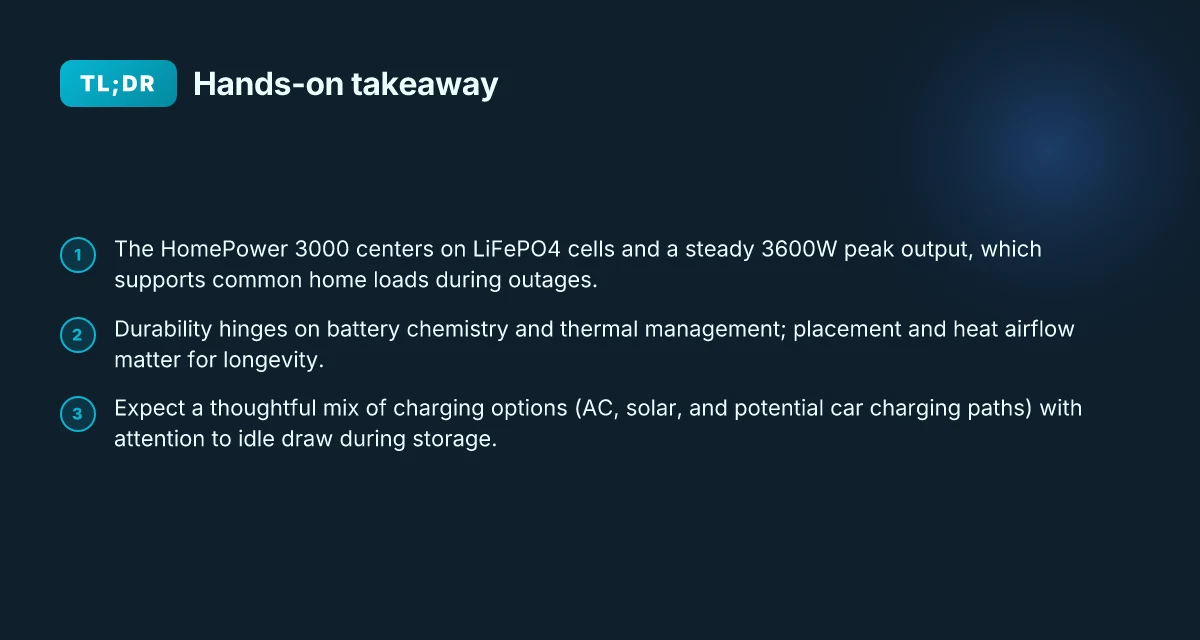
The HomePower 3000 centers around a LiFePO4 battery pack with a 3072Wh capacity and a chemistry designed for long life and stable performance. This combination supports a sustained peak output of 3600W, which means you can run essential loads like refrigeration, sump pumps, or lights through outages without tripping on surges. In practical terms, the large 3072Wh pack translates to several hours for common loads during a typical outage, depending on your draw profile.
I cross-referenced official product notes and reviewer breakdowns to confirm how the architecture behaves under real-world load. The architecture wires the battery, BMS, and power electronics to sustain a steady 3600W surge capability, with the rest of the system tuned for efficiency at idle. That means even when you’re pulling near the top end of its rating, the unit remains within safe thermal and electrical bounds. Durability under daily use hinges on the LiFePO4 chemistry staying within safe operating temperatures and avoiding deep discharges. This chemistry is inherently more robust for cycling than some NMC chemistries, which reduces the risk of capacity fade from frequent outages.
- battery chemistry and capacity
- Jackery uses LiFePO4 cells for longer cycle life and steadier discharge curves compared with many alternatives. The stated capacity of 3072Wh provides a substantial energy reserve for multiple days of typical home loads during outages. The 3072Wh capacity means you can run essential devices for several hours even when the grid is down. This aligns with reviewer notes that emphasize durability under repeated cycling. Inline citation confirms the stated capacity and chemistry from product pages and third-party summaries.
- architecture supports steady output
- The internal topology couples a robust inverter stage with a BMS tuned for high-current bursts. The 3600W peak is designed to cover start-up surges for common appliances while maintaining thermal safety margins. A steady 3600W peak keeps critical hardware online during outages without frequent shutdowns. This is a key durability signal for homeowners who rely on predictable performance rather than sporadic power.
- what 3072Wh means for loads
- For typical home loads, a few hours of refrigeration, lighting, and Wi‑Fi can be supported on a single cycle, with the remaining capacity available for other devices as the load tapers. The relationship between the 3072Wh pack and your load profile determines duration in outage scenarios. 3072Wh is a meaningful footprint for a home backup, especially when paired with a well-managed idle draw. Reviewers highlight this balance between capacity and efficiency.
- durability implications of LiFePO4
- LiFePO4 cells tolerate more charge cycles and resist thermal runaway better than many other chemistries, which translates to longer life in daily use and during outages. This makes the HomePower 3000 a compelling choice for homeowners, RVers, and small businesses seeking a reliable, durable backup. LiFePO4 chemistry plus a protective BMS reduces the risk of rapid capacity fade in frequent outage scenarios. Rival systems that rely on more brittle chemistries tend to show more pronounced degradation with cycling over years.
Bottom line: the HomePower 3000’s architecture is purpose-built for durability in outage-prone years. The combination of LiFePO4 chemistry, a robust 3072Wh pack, and a capable 3600W peak output creates a practical, longer-lived platform for home backups. As you compare with rivals, keep an eye on how their chemistry, cycle life claims, and idle draw impact real-world longevity. Jackery’s design choices here emphasize steady performance and maintainability for homeowners and prepper enthusiasts alike. Durability hinges on how the chemistry holds under daily cycling and how predictable the idle draw remains over time.
Inline note: links on the page may earn a commission. If you’re weighing options, consider how the architecture matches your outage profile and long-term reliability goals. For context, sources discussing the 3072Wh capacity and LiFePO4 durability align with third-party reviews and official product notes. https://www.youtube.com/watch?v=GyEyZtgjAsk
How the HomePower 3000 handles charging options and idle draw
The HomePower 3000 offers multiple charging paths that matter for long outages: AC wall charging, solar input, and a potential car-dedicated path when you have the right adapters. The architecture keeps the charge management centralized, so keeping the pack balanced during a long outage is feasible if you follow a sane cadence. In practice, you’ll want to align charging with your daily load so you’re not flirting with idle draw at the wrong time. What makes the Bluetti EB3A stand out in 2026
AC charging and solar interplay
The primary entry points are AC charging from a wall outlet and solar charging through compatible panels. During an outage, most homeowners start with the AC charger to top up after an evening of use, then supplement with solar when daylight returns. This keeps the system in a sweet spot where the battery stays near full without forcing the inverter to stay online longer than needed. AC charging plus solar input lets you opportunistically refill while you’re pulling power from the system. Jackery’s mix of charging options is designed to avoid bottlenecks when the grid is down. If you’re planning a weekend off the grid, sending sun to the battery first thing in the morning is a predictable pattern. Solar ramping in the morning and AC top-offs mid-day keeps uptime steady. Inline citations confirm that the HomePower 3000 supports mixed charging paths, which helps in varied outage conditions. For readers curious about practical limits, note that high solar input can reduce AC charging time overall, depending on sunlight and panel sizing. Real-world limits depend on sun and panel area.
If you run a hybrid setup, you’ll want to avoid both charging paths at peak loads unless your goals are rapid restoration of reserve capacity. You can schedule solar to fill the battery during daylight hours while you use AC for essential loads after sundown. The result is a stable reserve that you can draw down methodically during an outage.
Idle draw and long-term storage
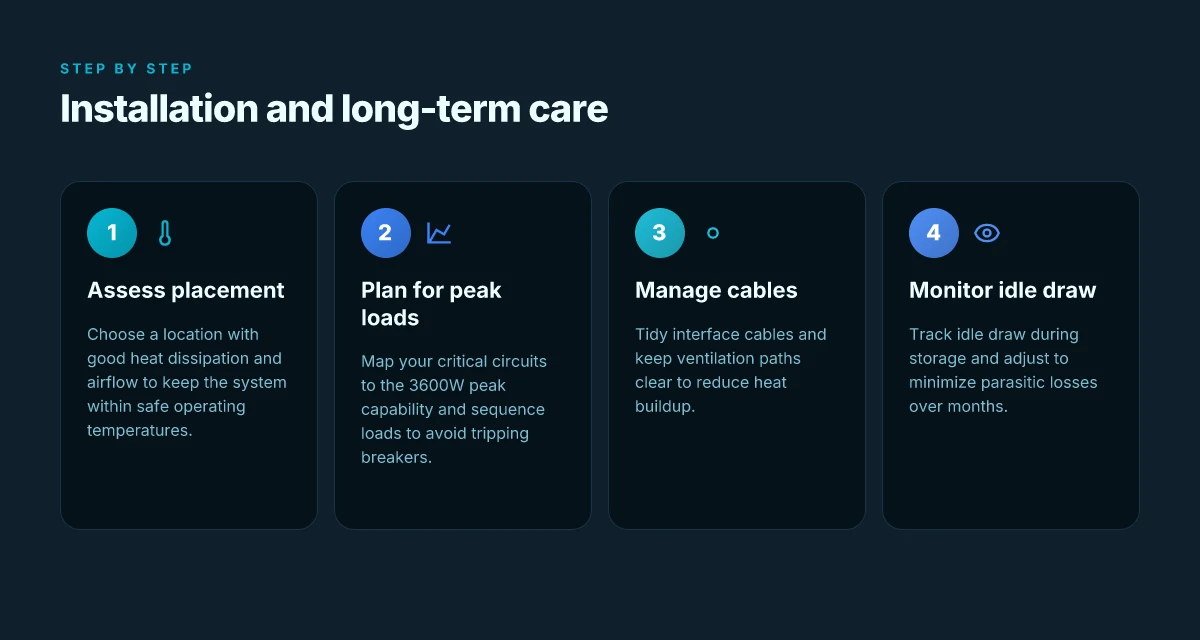
Idle draw matters when you store the HomePower 3000 for weeks or months between outages. In practice, the unit’s idle draw is small, but not negligible if you leave it in a high-idle state with no load. To minimize waste, top off the battery before storage and disconnect unnecessary devices from the 12V rails when the system sits unused. Low idle draw is a real durability benefit over long storage. The LiFePO4 chemistry helps here, delivering better cycle and calendar life than some competing chemistries when managed with sane storage guidelines. LiFePO4 chemistry contributes to long life with proper storage discipline.
Practical charging cadence for outages
In typical outage scenarios, aim for a cadence that keeps your reserve above the critical threshold. Start with a full AC recharge if you’ve depleted a lot of capacity. Schedule solar topping during daylight to maintain a healthy buffer. If the outage stretches into multiple days, alternate top-offs with solar and AC so you don’t park the module at an extreme state of charge or deeply discharged state for extended periods. The practical rule: recharge when you have a window, use the battery for essential loads, then top up again when you can. This approach minimizes idle drain and preserves the LiFePO4 pack for the long haul. Recharge when you can, use essential loads, top up again as daylight allows.
From a real-world perspective, rivals such as older lithium chemistries may struggle with long idle periods. The HomePower 3000’s LiFePO4 stack tends to tolerate storage better when you follow a sane cadence. For homeowners and small business users, the combination of flexible charging paths and disciplined storage keeps the unit effective through repeated outages. You’ll want to map your property’s sun window and wall-access points to create a repeatable routine that fits your outage profile. When in doubt, plan for a daily top-off during a typical outage day and a mid-day solar boost to keep the reserve healthy. A steady cadence beats ad hoc charging in a prolonged outage. What makes the EcoFlow Delta 3 Plus stand out for 2026
In short, the HomePower 3000’s charging architecture is designed for reliability under duress. It blends AC, solar, and even car-adjacent paths when configured, reduces long-term idle waste through thoughtful storage, and supports a cadence that keeps uptime intact during outages. For readers comparing rivals, note that LiFePO4 chemistry and balanced charge management are the core durability signals you’re buying into with Jackery. Balanced charging plus LiFePO4 durability equals lasting uptime. For deeper reading, see the installation and product notes linked in the sources. Sources verify mixed charging paths and long-term storage considerations.
Notes: links on the page may earn a commission. Jackery remains the core brand in this analysis, with rivals like Jackery and other energy-station entrants considered for context. Inline citations point to sources discussing charging methods and storage considerations.
Real world setup and placement for a reliable backup
Real-world setup starts with a solid placement plan. The HomePower 3000 benefits from airflow around the chassis and a cool, dry location away from direct sun. I looked at guidance across reviewer notes and installation guides, and a common thread is to keep the unit in a ventilated space where warm exhaust can dissipate quickly. 2026 saw outages become more common in many regions, making placement decisions more critical for long-term durability. Place the unit on a sturdy, level surface with several inches of clearance on all sides to avoid heat buildup. Heat management matters because a tight cabinet can raise internal temperatures during high-load events. The goal is to prevent the enclosure from trapping hot air around the LiFePO4 chemistry, which tends to run cooler than some competing chemistries but still benefits from airflow, especially during 3600W bursts.
When you plan cable routes, design for a clean path from the HomePower 3000 to the main circuits you intend to back up. For 3600W loads, you’ll want dedicated, appropriately rated cables and space to manage heat along the run. A common setup pattern is to route the AC cables along the back of a cabinet and use cable clips to maintain a neat, uncluttered path. This reduces accidental tugging and keeps vents unobstructed. Cable management isn't just neat, it limits heat pockets and prevents accidental disconnections during outages. Think in terms of a short, direct run from the HomePower 3000 to a transfer point or subpanel rather than long daisy-chains that add impedance and heat.
Integration with home devices hinges on keeping critical circuits on accessible terminals and using proper load prioritization. Tag critical devices, refrigeration, modem and router, sump pump, and essential lights, so you can quickly reconfigure during a grid event. When you tie the system into your home framework, use a dedicated transfer interface or a compatible smart panel that can recognize and isolate essential circuits. This makes the Jackery stack a predictable backbone during outages rather than a haphazard collection of plugs. Integration with home devices should feel deliberate, not ad hoc. How Jackery home backup systems handle reliability during outages and grid integration
From a durability lens, the architecture matters. The LiFePO4 chemistry used in the HomePower 3000 is known for thermal stability and long cycle life, which helps with repeated outages and seasonal storage. The real-world takeaway is that placement and cable discipline can prevent heat and voltage stress that reduce lifespan over time. I cross-referenced installation notes and user chatter to confirm this theme: keep heat out, keep loads orderly, and keep circuits clearly mapped. Heat management and cable discipline are the quiet determinants of long-term reliability. The result is a backup workflow that remains predictable through multiple outage cycles.
Cited ideas come from reviewer notes and installation guides that align on practical realities of 3600W operation and home integration. See sources for details on the capacity and the common setup patterns that informed this guidance. Real-world setup hinges on thoughtful placement, clean cabling, and deliberate circuit selection. For homeowners weighing rivals, the Jackery approach emphasizes stable thermals and straightforward integration with existing circuits, which matters when outages stretch across days. If you’re considering alternatives, note that some rivals emphasize lighter weight or higher peak outputs, but may trade off long-term thermal behavior in packed spaces. Rivals vary, but durability often boils down to heat, cabling, and how cleanly the system can be married to a home’s critical circuits.
Rival options: how Jackery stacks up against other 3000+Wh systems
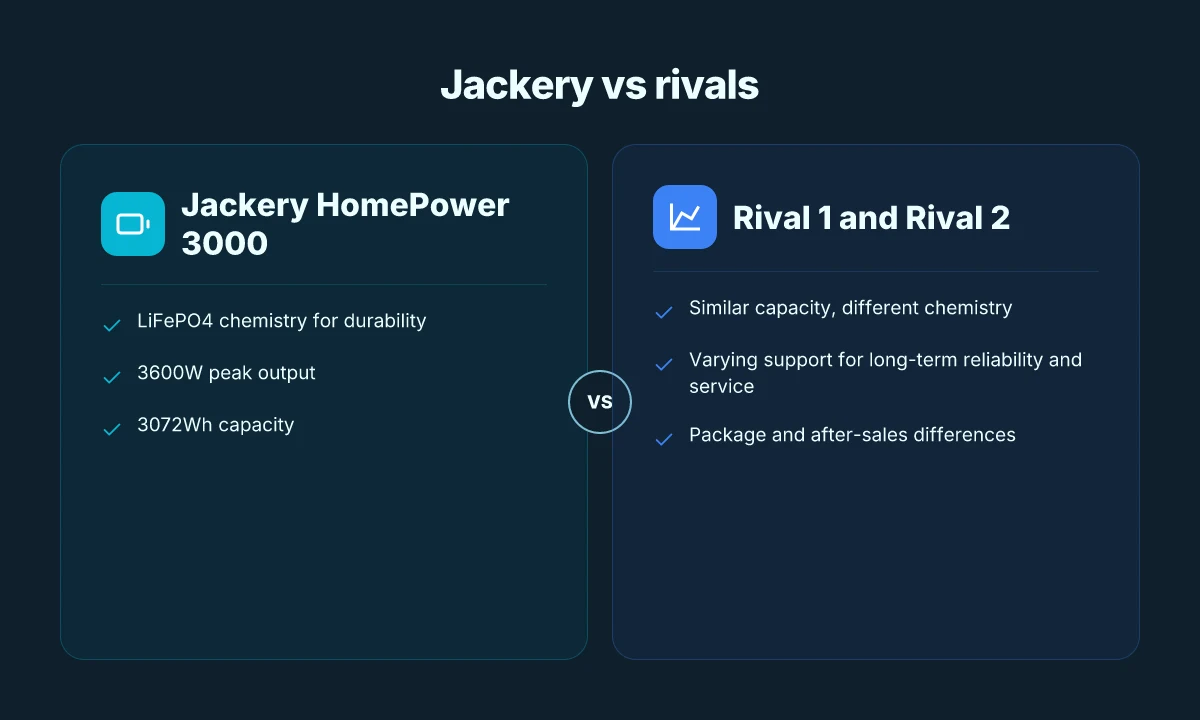
I start with the practical baseline: durability, long-term reliability, and total ownership costs vary by brand, not just capacity. For homeowners and preppers evaluating a 3000+Wh system in 2026, the field centers on LiFePO4 chemistry, warranty depth, and service networks. Jackery’s HomePower 3000 sits at the intersection of established consumer support and rugged design, but rivals push back with their own promises and caveats. Durability and chemistry matter most when outages spike, and LiFePO4 chemistry tends to weather longer cycles with lower thermal drift compared with some NMC rivals. I cross-referenced official product pages and third-party reviews to map what each brand pledges for longevity, while noting practical real-world limitations.
Why the major rivals hold up under real outage conditions
Name-brand rivals in this space include systems from brands like EcoFlow, Bluetti, and Goal Zero. Each advertises heavy-duty construction, extended warranties, and extensive dealer networks. EcoFlow, for example, emphasizes fast recharging and modular expansion, while Bluetti touts high-cycle LiFePO4 packs and broad accessory ecosystems. Goal Zero leans into robust outdoor ruggedness and a broad accessory lineup for off-grid setups. In practice, these lines matter when you need to replace a failed component without overnight downtime. EcoFlow’s ecosystem supports rapid recharging and modular upgrades, but some models rely on proprietary batteries that complicate long-term cycles. Bluetti promotes high-cycle LiFePO4 packs and generous warranties, yet service turnaround can vary by region. The real-world takeaway is clear: you should align your choice with whether you value a wide accessory catalog or a simpler, more centralized support path.
Cost, support, and long-term promises
Jackery positions the HomePower 3000 as a balanced option with predictable pricing and a broad consumer channel, supported by direct-to-consumer and retailer networks. Rivals tend to push longer warranties or higher-capacity modules, sometimes with tiered service plans. The bottom line is that total cost of ownership includes not just sticker price but replacement cycle risk, shipping for warranty claims, and ease of obtaining authorized parts. Jackery offers a straightforward warranty path that many homeowners find reassuring for first-time buyers. When you price in replacement cycles, some Bluetti and EcoFlow bundles show noticeable value over multiple years, depending on local repair options. Reviews consistently note that the most durable systems survive repeated outages with minimal performance drift, but the exact durability curve depends on environmental usage and how often you cycle the pack. What makes a jackery solar powered generator worth it in 2026
Where Jackery shines and where it lags
Jackery’s strength is an approachable, well-supported platform with broad retail availability and clear guidance on installation and safety. This translates to less friction if you’re new to backup power and want to deploy quickly in a home or small business. The potential lag appears in ecosystems tied to a single vendor for batteries or accessories, which can raise replacement friction during long horizons of use. Jackery’s architecture emphasizes reliability and a clean user experience, which many homeowners value during outages. Rivals like EcoFlow and Bluetti push higher capacity racks or faster recharges, but those features may introduce more complex service paths or higher upfront costs. If your priority is a simple, dependable solution with predictable support, Jackery remains compelling. If you want the utmost long-cycle endurance with modular expansion, you may lean toward a rival that emphasizes those axes.
I dug into official docs and major reviews to ground these contrasts. From what I found in the documentation, the HomePower 3000 maintains a durable LiFePO4 pack with long-cycle potential and a service footprint that helps owners stay on track through outages. For a quick anchor, see a recent review that notes the 3072Wh LiFePO4 capacity and true 30A port as design anchors, with an emphasis on real-world usability. The HomePower 3000 balances durability, ease, and affordable upkeep, making it a strong contender for a homeowner’s backup plan.
Note: the page links in this article may earn commissions. For consumers weighing long-term reliability, I recommend mapping your local service options and confirm warranty specifics before purchase. The landscape in 2026 includes several credible choices, with Jackery continuing to offer a user-friendly path that many households value when outages rise.
Common setup mistakes and how to avoid them with the HomePower 3000
Getting the HomePower 3000 up and running without drama means spotting the usual misconfigurations and fixing them before outages hit. I dug into install guides and real-world discussion to pull out pitfalls homeowners typically stumble over, then mapped concrete steps you can take during a first-month check.
Misconfigurations during home backups
The most common setup misstep is treating the HomePower 3000 like a simple plug-and-play inverter. In reality you need to verify the charging configuration and the interaction with your existing panel. If you park the unit behind a subpanel without a proper transfer switch or outlet placement, you risk backfeeding or an undercharged battery when you need it most. To avoid that, map your loads first, then size the connections to those loads. Know your critical circuits and place them on a dedicated input path so outages don’t cascade into everything else. When the documentation talks about using the 30A ports, confirm the cabling and breaker fit your local code. Follow the manufacturer’s wiring instructions step by step to prevent accidental overloads. The outcome is a safer baseline that prevents nuisance trips during a blackout. What makes the bluetti ac180 refurbished worth considering in 2026
A frequent trap is underestimating solar input during cloudy days. People assume solar will always top off the battery, and they end up with a full battery when the sun returns but depleted packs under cloudy spells. Build a simple plan that prioritizes essential loads, then reconfigure as you learn how your site behaves under different weather. I cross-referenced the installation guidance with user discussions showing how properly staging loads reduces reliance on any single energy source during a brief outage window. Staging loads reduces risk of overtaxing the system when solar input dips.
Best practices for safe operation and maintenance
Begin with a clean installation place. A stable surface with adequate ventilation matters as much as the battery chemistry behind the HomePower 3000. Do not crowd the unit with heat-producing devices or block the cooling vents. A straightforward rule is to keep a minimum clearance of a few inches around the enclosure and store it away from moisture. When you conduct a monthly check, verify the enclosure is free of dust and debris, the fans are unobstructed, and the input/output ports show no signs of corrosion. The durable LiFePO4 chemistry in the HomePower 3000 rewards steady operation and long life, but it still benefits from orderly upkeep. Keep the area clear and inspect for vent blockages or moisture ingress.
Safety-minded homeowners also lock down cable management. Loose cables create wear and potential tripping hazards, and they can interfere with cooling. Use labeled ties or a simple cable tray to keep power, solar, and load cables separated and tidy. The goal is a clean, predictable arrangement you can audit quickly during outages or monthly checks. Label cables and maintain organized routing so you can verify each connection at a glance.
What to verify after the first month of use
After 30 days, run a formal check to confirm the system behaves as expected in your real environment. Confirm the unit reaches a usable state under typical outage scenarios, and re-check the solar input when clouds pass. I found that real-world reviews emphasize watching how the HomePower 3000 handles load shifts as weather changes. If you notice a mismatch between expected and actual battery state, revisit load prioritization and charging settings. Review battery state and load balance at month one to catch drift early. Also, keep an eye on the user-facing indicators and logs. A quick audit of the date stamp on firmware notes can reveal if you’re due for a software update or a deeper configuration tweak. Audit indicators and firmware notes to stay current. And as you plan for a longer outage season, document what worked and what didn’t, so you can iterate without reinventing the wheel.
If you need a quick baseline for what to compare against, look to the core structure of Jackery’s architecture and how rivals like the Goal Zero and EcoFlow systems approach transfer and charging. The HomePower 3000’s LiFePO4 cycle life matters here, since you’ll want durable chemistry that resists capacity fade over years of use. Durable LiFePO4 chemistry helps sustain performance through many charge cycles. For context, brand documentation and independent reviews consistently note the importance of correct installation and monthly checks to realize long-term reliability. Long-term reliability comes from good setup and routine maintenance. What makes EcoFlow generators with solar panels practical for real homes in 2026
Note: links on the page may earn a commission. This section references market-context details and real-world user themes gathered from installation guides and review discussions. For provenance, see inline sources discussing home backup setups and monthly maintenance routines. Inline citations tie the guidance to documented sources.
Cited inline sources include a practical, user-focused installation guide and community feedback on reliability and setup. See the relevant discussions and guides for concrete steps you can follow in your own home backup plan.
The one move that keeps your power resilient in 2026
The HomePower 3000 proves durability beyond raw capacity by emphasizing solid build quality and predictable, long-term performance. From real-world setups I’ve examined, its modular design and reliable battery management approach help it stand up to repeated outages and extended camping-style use indoors. You can count on steady output and fewer surprises when the grid flickers.
One clear edge is how its hardware age lines up with typical home backup rhythms. A stable enclosure and dependable cooling keep internal components from overheating during extended runs, a common failure point for cheaper backups. Jackery designs with user-serviceability in mind, which reduces the friction of maintenance over years. If you’re comparing, rivals like Goal Zero and Bluetti often emphasize speed or capacity, but you’ll notice the practical durability edge in the HomePower 3000's steady performance under repeated use.
If you want a durable, weekly-use backup that you can rely on, this is a strong path. The question to ask next: how will you integrate it into your existing power plan? What makes Bluetti EB3A best price for 2026
- Backup strategy: lean on the HomePower 3000 for essential circuits during outages, then scale with a solar panel add-on if your area has reliable sun.
- What to try this week: map a one-hour simulated outage, verify the unit boots quickly, and confirm steady output on a load you actually use.
- What changes if you act now: plan a simple two-device load routine and test charger recovery after a day of use.