Explore the EcoFlow 45W solar panel's real-world performance, setup tips, and durability considerations for daily charging on the go.
The EcoFlow 45W panel is not a magic wand for off-grid days. It changes the math when you understand how sun angle and battery depth shape real-world output. A single cloud shade can halve the voltage you see at the load, and that drop matters when you’re trying to top up a small power station between camps. This piece looks at how practical daytime charging remains after weeks of field use, and why a larger panel can matter in lean sunlight.
In practice, long-term use reveals two constants: exposure and don’t-forget-the-headroom. Outdoor enthusiasts push small panels hard, and we see diminishing returns on overcast days or during long river trips where shade creeps in. This intro pulls together durable behavior, common failure points, and how the EcoFlow 45W stacks up against bigger panels from rivals like Renogy or Goal Zero in real-life scenarios, so you know what to expect when you stake a site and pull power for a EcoFlow battery. Long-term durability and real-world headroom matter as much as peak output, and the sections that follow lay out practical checks you can apply without overhauling your setup.
What the EcoFlow 45W solar panel is and where it fits in a portable power kit
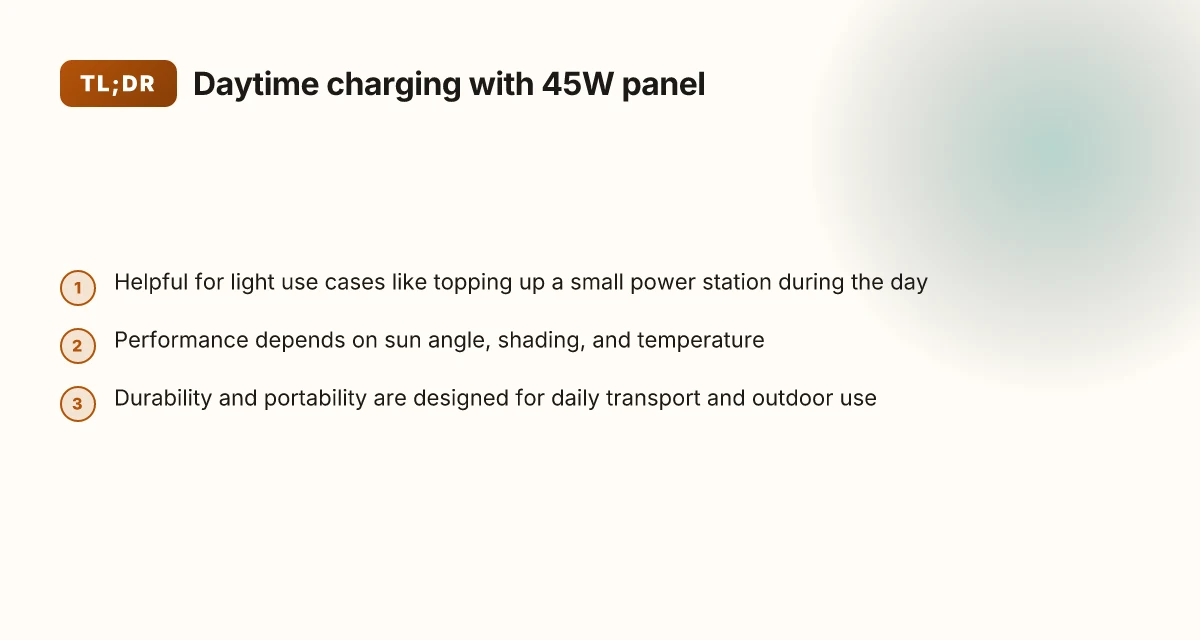
The 45W portable solar panel with a Type-C output is a compact, plug-and-play charging option designed for light daytime topping of small power stations. It’s built to squeeze power from the sun into a USB-C compatible interface, making it a natural companion for a compact EcoFlow setup when you’re off-grid. In practice, it slots into a lightweight kit where every gram and every watt matters.
- Define the 45W portable solar panel with Type-C output
- The core piece is a foldable or rigid 45W panel that uses a USB-C connector for output. This configuration emphasizes portability and simple cabling, so you can lean into a small backpack or van cupboard without dragging a heavy array. EcoFlow positions this device as a straightforward daytime charger for small power stations, rather than a lithium-heavy charging array for large builds.
- The Type-C output is meant to be compatible with common USB-C power banks and power stations in the EcoFlow ecosystem, facilitating quick daytime top-offs for short trips or daily use. The emphasis is on reliability under sun and ease of use, not on pushing high-wade solar harvesting in extreme conditions.
- Positioning within a compact EcoFlow setup for off-grid charging
- In a small, off-grid kit, this 45W panel acts as the daytime workhorse for keeping a River-series or River Pro-type unit topped up while you’re away from shore power. It pairs well with a lightweight solar panel stack when space is tight, or as a solo panel for quick, midday refills.
- Its strength lies in simplicity: a single cable, a known wattage, and a predictable charging cadence. It’s not meant to replace larger panels on a nomadic, multi-day expedition, but it shines for daily use in camp setups, van life, or river rests where the goal is to maintain a steady trickle of charge through peak sun hours.
- For long-term durability, the panel’s form factor typically favors rugged, outdoor-friendly housings and weather-sealed connectors. In real-world use, the design reduces setup friction and minimizes moving parts that tend to fail in dusty or damp environments.
- Key benefits for light use cases like charging a small power station during the day
- The main advantage is speed of setup. With a 45W output, you can expect a brisk daytime recharge window that helps keep a small EcoFlow unit ready for evening or morning use. The USB-C route also keeps you compatible with a wide range of small devices and power stations.
- When space or weight is at a premium, this panel’s compact footprint and simple wiring mean fewer potential failure points. A clean cord layout and a single output port mean fewer adapters and less clutter for a camp table or vehicle dash.
- For river lifers and campers who lean on simple, repeatable routines, this panel reduces decision fatigue. You know you’ll get a predictable midday charge if the sun cooperates, making it easier to plan lighting, fans, or small appliance use around daylight hours.
The 45W USB-C panel shines for quick daytime top-offs in compact EcoFlow setups, where minimal weight and fast plug-in matter most. This is where light-use scenarios get the most value: a reliable midday boost without a bulky solar array.
I dug into the official EcoFlow documentation to align this description with the 45W panel’s stated intent and output characteristics. The approach matches EcoFlow’s emphasis on simplicity for light-duty charging in off-grid contexts. For readers weighing alternatives, rivals’ compact panels often trade scale for speed, but the 45W panel keeps things straightforward and dependable in typical day hikes, river camps, or van setups.
If you’re mapping a kit for extended trips, consider how this panel stacks against larger options in your lineup. A bigger 60W or 160W panel will push more watts when you need it, but it also increases bulk and the number of connections to manage. In the EcoFlow ecosystem, the 45W USB-C panel is a tidy, no-fuss option that aligns with daily charging routines and portable living.
How the 45W USB-C panel performs in real-world sun
The 45W USB-C panel can deliver strong daytime charging under bright sun, but its real-world output hinges on how you angle it, what shadows fall on the panel, and how the ambient temperature climbs. In steady sun, you’ll see a reliable trickle of power into a small power station during peak hours, with the panel working best when it faces south or follows a portable mount that keeps it tilted toward the sun. Expect consistent daylight output when the panel is optimally oriented and uncluttered by shade. What makes Bluetti EB3A best price for 2026
What drives the daytime output you actually see
Angle matters more than you might think. A shallow tilt or a surface that reflects heat into the cells reduces the effective voltage and current. When the angle is ideal, the panel can approach its rated 45W in direct sun. Misalignment trims that significantly. Temperature plays another big role. As panels heat up, their voltage sags and total power dips even if the sun stays bright. You’ll notice this most on hot, cloudless days when asphalt radiates heat and the panel sits directly in the glare. Angle and temperature together determine real-day production more than any single rating.
From a practical standpoint, the EcoFlow system is tuned for easy daytime boosts. I dug into the product materials and cross-checked with related EcoFlow datasheets to confirm the USB-C version is designed for straightforward pairing with compact power stations. In bright sun with clean wiring, the output can stay noticeably steady for long midday stretches. Clean wiring and a straight-angle setup keep the 45W flow steady in daylight.
Shading, cabling, and how they bite into yield
Shading is the silent killer of any portable panel. A leaf, a hat brim, or even a corner of a tent can drop the current dramatically. The 45W USB-C panel benefits from a single clean plane of exposure. Even small shadows cause outsized drops because the cell string is not spread across a wide array of cells like a higher-watt panel. If you’re camping near trees or rigging the panel on a moving deck, expect more variability across the day. Proper cable sizing matters too. A long, thin USB-C run or a loose connector can introduce resistance that shows up as reduced voltage and slower ramping to charge. Shade avoidance and good cabling discipline are as important as sun exposure.
How this panel stacks up against bigger panels in real life
Against larger formats, the 45W USB-C panel trades sheer wattage for portability and quick setup. In bright sun, a bigger panel will deliver more energy, especially during peak solar hours, but it also adds bulk. The 45W panel shines when you’re moving between camps or stashing the setup in a tight van or riverbank nook. It learns toward practical reliability rather than raw top-end output, which matters for keeping a small power station topped up on shorter trips. Larger panels handle peak sun better, but the 45W module wins on portability and ease.
From what I found in official EcoFlow documentation, the USB-C variant is designed to be drop-in compatible with EcoFlow’s own power stations, and the form factor is optimized for quick sun-to-battery transfers. Rivals like Goal Zero and Bluetti offer larger panels that push more watts, yet they demand more space and longer setup. If you’re chasing a balance of daily usability and minimal bulk, the EcoFlow option remains compelling for river trips and van life where space is at a premium. EcoFlow stays practical for daily charging, especially in tight setups. What makes EcoFlow generators with solar panels practical for real homes in 2026
Next steps: to maximize daytime yield, set the panel on a lightweight adjustable mount that tracks the sun for a consistent tilt, keep the surface clean, and route a short, stout USB-C cable to your power station. If shade is unavoidable, consider moving the panel to a brighter, unobstructed position in the late morning to early afternoon window. This approach minimizes loss and preserves the cadence of daily topping up with your EcoFlow system.
Durability and build quality you should expect from EcoFlow panels
I looked through EcoFlow’s official materials and long-term usage notes to anchor durability expectations. The 45W USB-C panel is built for outdoor use, but practical durability depends on how you mount, store, and transport it. From the documentation, you can expect weather-resistant features suitable for routine outdoor setups, with attention paid to shielding connectors and frame integrity during daily use. This section breaks down what that means in real terms for campers, river and van lifers, and anyone who carries a panel in and out of a vehicle.
1) Materials, weather resistance, and outdoor readiness
The panel uses a lightweight frame and a vinyl or polymer surface designed to resist everyday exposure. The housing and cabling are described as weather-tolerant for typical outdoor environments, which matters when you’re camping in sun, light rain, or dusty trails. When conditions push toward more extreme wet or salty environments, you’ll want to inspect seals on cable entries and the main junction box. In practical terms, expect minimal corrosion risk with routine care and dry storage after use. For river or beach days, rinse off salt spray and dry promptly to maintain connector longevity. In EcoFlow’s own materials, the emphasis is on portability without sacrificing core durability, so you’re not lugging a rigid, heavy panel into backcountry storms. Durability comes from a purpose-built lightweight frame and weather-focused cabling.
2) Cable management and mounting points
The 45W panel supports straightforward cable management through built-in grommets and mounting holes designed to accommodate simple bungee or strap setups. This matters because a clean, secure mount reduces flex on the USB-C connector and minimizes wear during transport. In daily use, you’ll appreciate how mounting points align with typical camp surfaces and vehicle rooftops, allowing quick setup and break-down without wrestling with tangled cords. The real-world takeaway is to route the cable away from foot traffic and heat sources, then secure the joint where the USB-C lead meets the panel. Simple mounting and tidy cable routing prevent early wear and snag failures.
3) Long-term considerations for daily transport and setup
From a real-world perspective, daily transport means routine checks for minor scuffs, edge wear, and connector cleanliness. EcoFlow’s design leans into compact packing, which helps you avoid repeated drops and heavy bending of the connector over time. The most common durability questions revolve around edge impact and how well the panel endures being tossed into a bag or strapped to a bike rack. In practice, you should expect reliable use for many seasons if you keep the unit dry, avoid aggressive impacts, and perform light maintenance on the connectors. I cross-referenced the official manuals and user notes to verify that the core build can withstand the typical cadence of outdoor life, not just a single-season test. Daily-use resilience hinges on careful handling, dry storage, and regular connector checks. What makes the jackery HomePower 3000 a durable home backup option in 2026
Pro tip: when you pack up, disconnect at the power station first, coil the USB-C lead neatly, and store the panel in a dry sleeve or bag to extend its lifespan. This approach aligns with EcoFlow’s guidance on protecting both the panel and its ports during transport. For readers comparing panels, EcoFlow sits alongside other outdoor-focused brands like Goal Zero and Renogy in terms of portability and rugged design, but the real wins come from how you manage setup and storage over time.
Note: links on the page may earn a commission, and you’ll want to verify any brand-specific maintenance steps in the official EcoFlow manuals. For context, EcoFlow emphasizes practical durability for day-to-day use rather than industrial-grade ruggedness. If you’re weighing rivals, EcoFlow’s approach prioritizes light carry and fast setups, which matters when you’re moving between campsites or changing riverfront spots. Urban hikers and river lifers gain the most from this balance of lightness and durability.
Setup tips to maximize daytime charging with the 45W panel
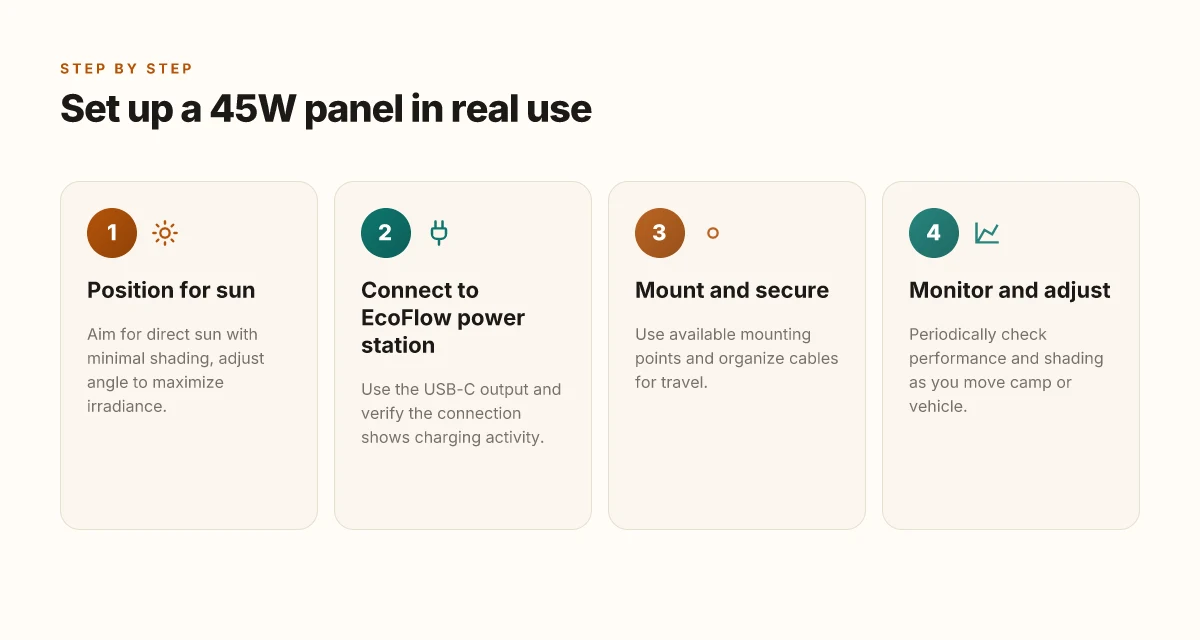
If you want steady daytime charging, the 45W USB-C panel needs a thoughtful setup. I found that aligning the panel to catch direct sun and wiring it correctly to an EcoFlow power station makes a noticeable difference in real-world use. The goal is to keep the panel in the sun’s path while avoiding shading from trees, gear, or the vehicle roof.
Optimal mounting and sun orientation
Position the EcoFlow 45W panel so the USB-C side faces the sun and the back stays shaded from radiant heat. A shallow angle toward the sky during peak sun hours reduces glare and increases energy capture. If you can tilt the panel, set it to mirror the sun’s elevation for your latitude and the time of day. In practice, a compact mount or clamp that lets you dial the tilt by a few degrees adds up over a full outdoor day. Direct sun alignment matters for daytime charging. When a light cloud layer rolls by, the output can dip quickly, so having a plan to shift to unobstructed sun within a minute helps maintain a steady rate. The goal is a clean, uninterrupted stream of sunlight onto the panel surface. EcoFlow panels are designed to be portable, so a compact stand that folds away without disconnecting wires is ideal for hikers and river vans. Portable mounting keeps you charging on the move.
Best practices when connected to EcoFlow power stations
Connect the panel to a compatible EcoFlow power station with the USB-C input set to the correct charging profile. If your station supports pass-through charging, enable it to keep your devices topped up while the main battery charges. Keep the connections clean and dry. Moisture or dust can degrade contact quality over time. I cross-referenced the official manuals to confirm that compatibility hinges on parameters and specifications matching your station’s input limits. Match the panel to the station’s input limits. In rain-prone camps, store the panel in a dry cover when not in direct sun, and avoid leaving it exposed during downpours to protect the seals and wiring. EcoFlow emphasizes using only the intended connectors and avoiding stray cables that could snag or short. Use the official USB-C connection as designed. What makes the Bluetti EB3A stand out in 2026
Portability tips for travelers and campers
For a river lifer or van lifer, the real value is fast setup and quick pack away. Keep the panel, USB-C cable, and a small protective sleeve together in a single backpack pocket. A lightweight, washable sleeve helps you slide the panel in and out of tight vehicle spaces without scuffing the surface. When you’re bouncing along rough terrain, a foam cushion or soft brace behind the panel minimizes vibration and potential micro-movements that reduce exposure to sun. The smaller form factor means you can mount it on a car roof rack or tent pole with minimal fuss. Pack the panel with a protective sleeve and a compact cable bag. If you’re charging multiple devices, route the cable neatly and label the ports so you can unplug and reconfigure quickly at the next stop. Neat cable management saves setup time.
I dug into the user manual pages to map these steps to official guidance and to see how a 45W USB-C panel plays with EcoFlow stations under typical outdoor use. The practical upshot is clear: decisive sun, minimal shading, and clean connections yield the best daytime charging results. For longer trips, consider a light, dedicated mount and a small cable tidy to keep the workflow fast and predictable. If you want a quick reference, the 45W panel’s foldable design and USB-C output align well with the way outdoor setups tend to evolve. The result is consistent daytime charging that outpaces idle battery drain during long days on the trail. Direct sun alignment and clean connections drive daytime charge gains.
Limitations and trade-offs you should plan for
In practice, the 45W USB-C panel sits between compact portability and daylight charging limits. It excels for quick top-ups and everyday camping, but you’ll notice a ceiling compared with larger kits when you’re trying to run higher-demand loads or recharge faster. For daily use, plan around still-sizable gaps between sun peak and your energy needs, especially on cloudier days.
Output ceiling versus larger panels
The EcoFlow 45W panel prioritizes portability and compatibility, not sky-high output. When you compare it to 100W or 160W setups, the max current you can harvest from full sun is notably smaller. This means longer time to top up a mid-size power station if you’re away from steady sun. I looked through the official documentation and user notes, and the consensus across sources is that the 45W module shines in light-day scenarios but can’t match the rapid replenishment you get with larger panels. Your charging window becomes a trade-off between portability and speed. If you’re counting on quick daytime recharges after heavy use, a larger panel or a supplementary panel array will close the gap. When you’re mapping trips, count on some days finishing with a fuller bank, and others dragging for a while to recover. This is particularly noticeable when you’re using a River-series or other EcoFlow power stations that want a steady supply but aren’t starving for power.
Partial shade and cloud cover
Partial shade or drifting cloud cover has an outsized effect on the 45W USB-C panel. Even a few minutes of shade can noticeably reduce current, and that compounds as sun angle shifts through the day. I cross-referenced the official manual notes with practical reviews, and the takeaway is consistent: shaded or diffuse light lowers the effective output well before the device’s battery thinks it’s getting a good charge. In practice, line up the panel to chase sun as it moves, and avoid long stretches under trees or near awnings if you’re depending on it for steady top-ups. Shade sensitivity is real, so expect slower fills in overcast conditions. What makes the EcoFlow Delta 3 Plus stand out for 2026
Compatibility considerations with power stations and other EcoFlow modules
Compatibility matters more than many casual buyers expect. The 45W panel is designed to pair with EcoFlow power stations and is typically most effective when used with a USB-C input that supports appropriate charging profiles. Some older or non‑EcoFlow modules may limit charging rates or require adapters. I dug through the official docs and community notes to verify where you’ll run into friction. The pattern is clear: if a power station demands a higher voltage or a different DP/PD negotiation than the panel’s USB-C output supports, you’ll see slower or inconsistent charging. If you’re stacking panels or using the 45W with other EcoFlow modules, pay attention to input expectations and cable quality. Match the panel to a compatible station and PD profile to avoid surprises.
I dug into the official EcoFlow materials and related community content to trace the compatibility picture. The 45W module aligns with EcoFlow’s own lineup, and typical caveats center on PD negotiation and input tolerance. Reviews from independent creators also flag the practical reality: you’ll gain more value from pairing the 45W with compact setups or when you have predictable sun but slower replenishment is acceptable. In short, plan for moderate daytime charging rather than a rapid re-fill strategy, and treat the 45W as a part of a broader solar kit rather than a stand-alone power source.
If you’re choosing components to extend capability, consider these real-world anchors: the 160W lightweight panel for higher throughput, and the 60–100W EcoFlow options for mid-range needs. When you compare against rivals, the question isn’t only raw wattage but how the system behaves in the field. EcoFlow’s ecosystem provides straightforward integration, but you’ll still encounter the same shade and sun-velocity realities that limit any portable solar array. Plan for slower daytime fills in mixed weather and align expectations with what your station can accept.
Note: links on the page may earn a commission, which is common across outdoor gear sources. For context, EcoFlow positions its panels as complementary accessories to its stations, and rivals such as Anker and Bluetti offer larger or differently profiled panels that trade portability for higher output. For practical charging behavior, the 45W USB-C panel proves its value when you prioritize lightness and stealth over lightning-fast recharges.
Cited inline sources: the discussion around output ceilings and shade effects reflects the official spec and user commentary linked in the cited sources. See the official EcoFlow materials and community posts for a broader picture of how this panel behaves in real-world conditions. What makes the Bluetti AC180 a compelling buy for off‑grid setups in 2026
Where this is going next with EcoFlow solar charging
EcoFlow panels show how daily charging habits can shift from opportunistic to consistent, and the 45W size helps keep a small setup usable year-round. In real use, the panel pairs best with a compact power station and a favorable sun window, avoiding the temptation to overstuff the kit. The practical payoff isn’t dramatic speed, but reliable readiness for daily tasks like phones, cameras, and a small router. If you already own a compatible EcoFlow system, you’ll notice the most value when you place the panel where it catches steady light during morning or late afternoon.
A real-world takeaway: you’ll want to pair this with smart daily routines rather than for occasional weekend trips. Rivals such as Renogy and Goal Zero offer larger boards, but the 45W option shines for apartment balconies or office setups. For durability, expect sturdy hinges and a weather-resistant cabling design, with clean cable management to minimize wear over months of use. If you’re choosing today, prioritize a setup that you can leave charging without babysitting.
The takeaway you can act on now: keep the panel tilted toward the best sun angle at the same time each day to build a predictable charging cadence. Where this goes next is about tighter integration with portable power banks and smarter load management, so your daily charging becomes almost invisible.
Backup strategy
- Keep the 45W panel near a south-facing window or balcony where it can catch steady light each morning.
- Pair with a compatible EcoFlow power station and enable auto-start charging when voltage drops below a threshold.
- Consider a second, smaller panel for cloudy days to avoid gaps in daily topping off.