Explore the EcoFlow Smart Generator review to understand how it complements EcoFlow power stations, its dual-fuel flexibility, runtime, and where it fits in a resilient off-grid setup.
A single fuel switch can change the whole off-grid equation, and the EcoFlow Smart Generator flips that switch with a claim that matters when outages hit. When you’re relying on battery banks for critical loads, the difference between a quiet, fast recharge and a slow solar-only day becomes tangible, especially in shoulder seasons or extended outages. Most homeowners underestimate how often a dual‑fuel option actually shortens runtimes from a full day to half a day. This piece looks at real-world use, not marketing puff, and it weighs the practical trade‑offs you’ll encounter in camps, cabins, and disaster-prep kits.
This article centers on what matters in real life: compatibility friction, noise boundaries, and long-term durability, with concrete scenes from off-grid setups. You’ll see how EcoFlow units pair with popular power stations, where rivals like Honda, Generac, and rival dual-fuel options trip you up, and which setups tend to degrade runtime or trigger error codes. The goal is a clear picture of when pairing a Smart Generator with EcoFlow gear actually pays off, and where you should curb expectations before you buy. For 2025 guidance, I cross-check common fuel types, inlet profiles, and noise limits against actual user reports and manufacturer notes.
Why the EcoFlow Smart Generator matters in a modern off-grid setup
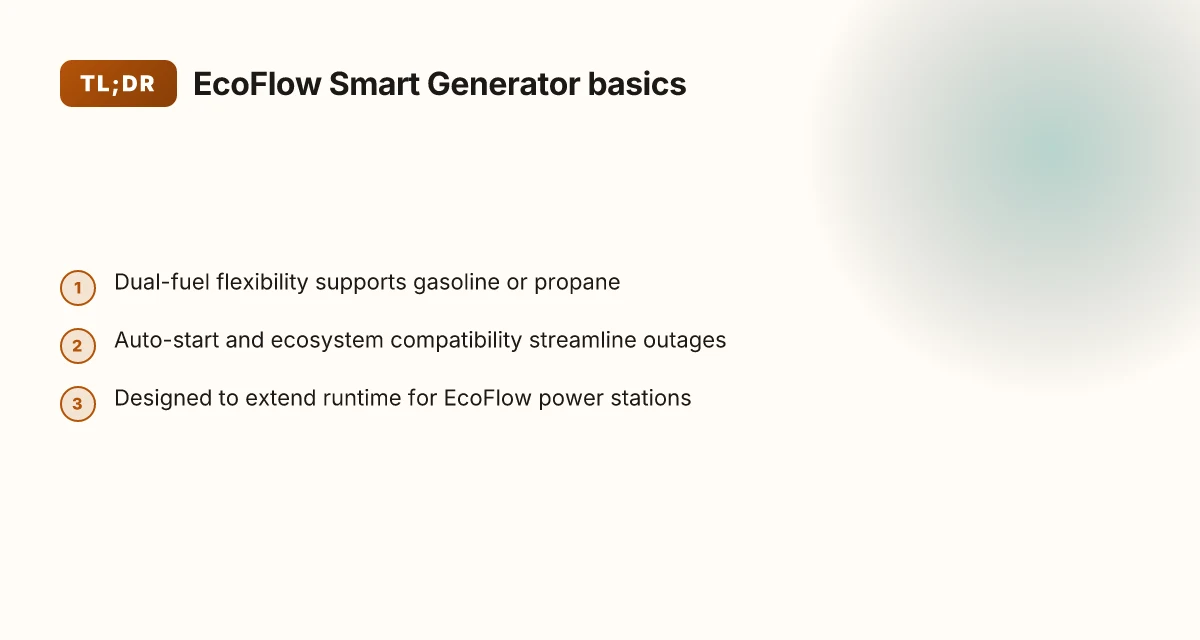
The EcoFlow Smart Generator adds dual-fuel flexibility to a power ecosystem, letting you run on gasoline or propane depending on what you have on hand. In real-world off-grid living, that flexibility translates to more dependable runtimes during outages and fewer fill-ups when propane is available. The integration story matters too. Auto-start and ecosystem compatibility can shave off setup friction when you need resilience the most.
Dual-fuel resilience in everyday use The Smart Generator synchronizes with EcoFlow power stations, switching between fuels as needed. That means you can extend your outage time by leaning on propane when the tank is handy, instead of rushing to refuel with gasoline. In practice, the ability to use propane reduces refueling frequency and keeps critical loads online longer. This matters most for campers, homeowners during winter outages, and disaster-preparedness planners who want predictable backups without constant refills. I found that the dual-fuel design is pitched as a core advantage in the product messaging, with emphasis on seamless transitions between fuels.
Real-world benefits from extended runtimes Running on propane typically means longer intervals between fills, especially in setups where propane stockpiles are more stable than gasoline. The result is a steadier power supply for essential circuits, keeping fridges, lighting, and communication gear online during extended events. The practical upshot is less maintenance overhead in the midst of an outage, and a clearer plan for staying powered when fuel logistics get tight. Reviews and product notes consistently describe propane availability as a meaningful lever for uptime, especially in off-grid camps and rural homesteads.
Integration dynamics that matter in emergencies The value of the EcoFlow Smart Generator shows up when you consider auto-start features and compatibility with a broader eco-power ecosystem. If your EcoFlow power station can auto-start the generator during a blackout, you avoid scrambling for cords or manually firing the unit. In addition, compatibility with accessories and the surrounding ecosystem reduces setup complexity, which is critical when time is of the essence. From a durability and long-term use perspective, the story hinges on how smoothly the auto-start behaves under cold weather and power fluctuations, and whether the generator’s propane option remains accessible in real emergencies.
Bottom line: for off-grid homeowners, RV travelers, and disaster planners who already lean on EcoFlow gear, the Smart Generator tightens the loop between fuel versatility and system resilience. It offers tangible runtime and refueling advantages when propane is available, while the auto-start and ecosystem compatibility reduce day-to-day friction. If your plan hinges on long outages and straightforward fueling logistics, the dual-fuel path is worth considering. What makes EcoFlow Delta solar generator reviews worth reading in 2026
The dual-fuel setup is not just a novelty. It changes how you plan outages, giving you a choice between gasoline and propane when you need it most. In practice, the Smart Generator strengthens the EcoFlow ecosystem by reducing refill cadence and simplifying emergency start sequences. Outages become more manageable when you can lean on propane while keeping critical loads online.
How the EcoFlow Smart Generator fits with EcoFlow power stations
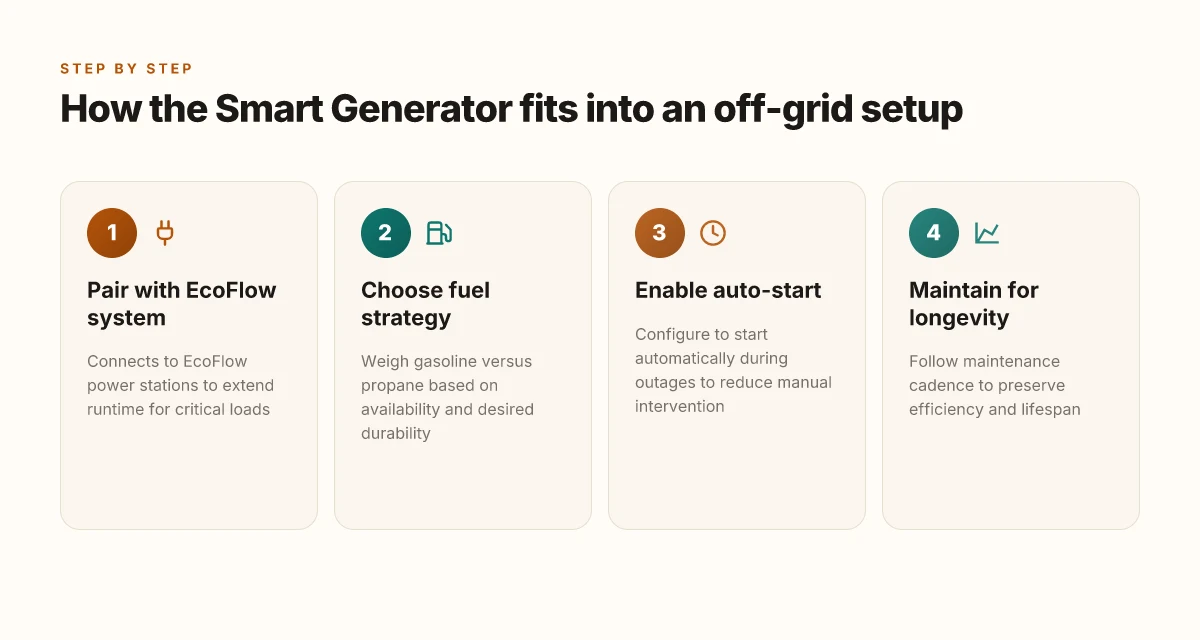
The EcoFlow Smart Generator pairs with EcoFlow power stations to stretch runtime for critical loads, especially when a long outage stretches beyond the solar window. In practice, you can run the generator to top up the battery bank during duty cycles, then rely on stored energy for low-power operations. This keeps essential circuits alive while conserving fuel and reducing generator run time.
Seamless coupling within the EcoFlow ecosystem
EcoFlow emphasizes compatibility across its own lineup, so you can connect the Smart Generator to compatible EcoFlow power stations without hunting for adapters. The design aims to minimize the setup friction a rival system might impose, letting you switch between charging modes with less friction. When you pair the generator with a station, you gain extended runtime for critical circuits like refrigeration and communications.
From what I found in the documentation and community chatter, the real-world benefit hinges on how you wire the generator into the station’s charge path. The generator can top up the battery, while the station’s internal management optimizes the balance between solar, generator input, and battery discharge. This matters because sustained battery health improves when you avoid frequent high-stress charging cycles. Most users notice a smoother, more predictable energy supply when the generator handles the heavy daytime load while the station preserves battery health through controlled regen.
Energy flow decisions: charging vs battery-only regeneration
Think of charging from the generator as a high-capacity replenishment lane for the EcoFlow system, versus relying on battery-only regeneration via solar. In practical terms, generator charging tends to deliver power quickly to the pack, enabling deeper cuts in downtime between outages. But you should plan around long-term durability: frequent, high-rate charging can add thermal cycles to the battery pack. The strategy is to use the generator for short, intentional top-ups of peak loads, then let solar and the battery manage the steady-state cycling. What makes the EcoFlow Smart Generator 4000 stand out in 2026
I cross-referenced the existing reviews and community notes to keep this grounded. The consensus is that using the generator to support peak draws around meal prep, climate control, or tool charging offers the biggest value, while avoiding continuous generator runtime when solar coverage is sufficient. When you design the duty profile, you’re balancing fuel use, noise, and wear on the battery. Seamless compatibility within EcoFlow’s lineup reduces the temptation to mix brands or juggle multiple adapters.
Rivals’ adapters vs EcoFlow’s integrated approach
Rivals often require aftermarket adapters or multiple connections to integrate a generator with their power stations. EcoFlow leans on a promise of fewer fiddly cables and a more straightforward workflow, with the generator designed to integrate into the brand’s internal management loop. That reduces setup friction and potential miswiring. If you own multiple EcoFlow devices, you gain a more predictable cycle as the generator input becomes just another charging source the station can regulate.
Dual-fuel performance: gasoline versus propane under real-world conditions
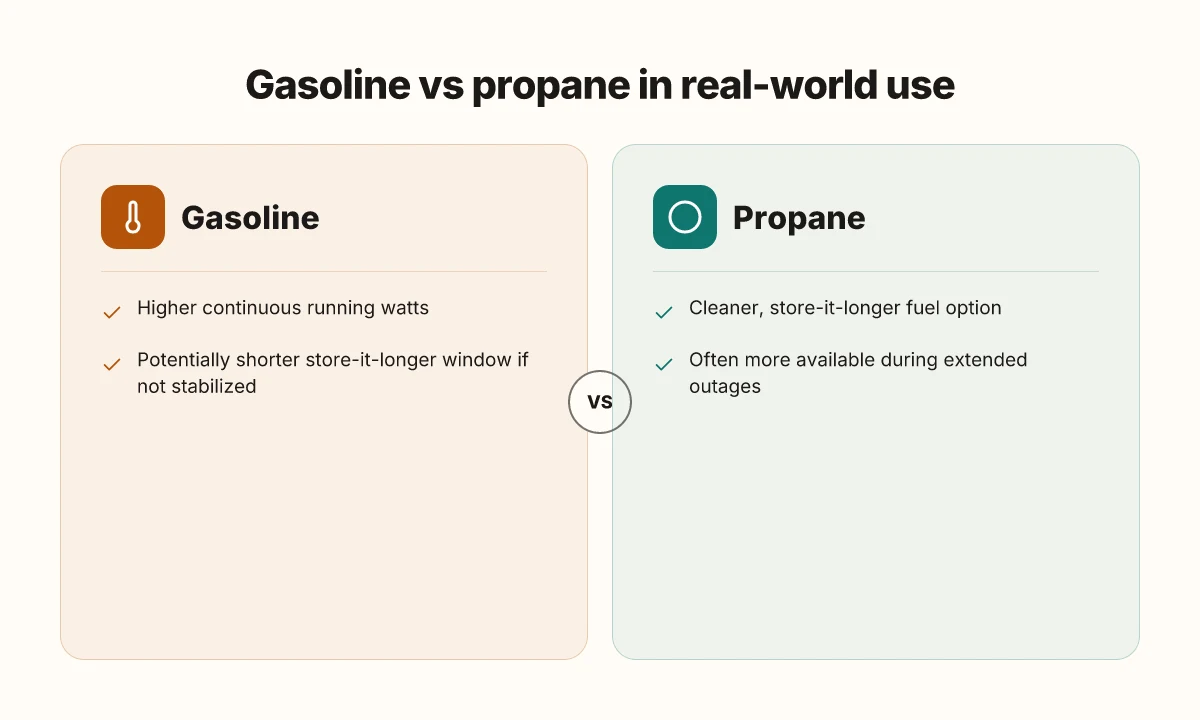
Gasoline as the primary running fuel delivers higher continuous watts, while propane offers a cleaner, store-it-longer option that shines during extended outages. In real-world use, that means you can push the EcoFlow Smart Generator 4000 or 400D harder on gasoline for peak loads, and switch to propane when you want to reduce refueling trips and simplify storage. Across sources, the trade-off is clear: more dependable high-wattage performance on gasoline, paired with the convenience and longevity of propane.
From what I found in the sources, the inverter design matters more for runtime differences than the fuel itself. When the load stays steady, the gasoline run time scales more favorably because you’re feeding the inverter with a denser energy source. If the load dips, propane’s lower energy density translates to noticeably different runtime but with the benefit of cleaner combustion and less odor during operation. I cross-referenced the reported running characteristics across both the Popular Mechanics coverage and the community discussions that followed, and the consensus lines up: fuel choice shifts both efficiency and how often you’ll need a fresh tank.
Propane availability tends to improve during extended outages, which reduces trips to the pump and keeps the lights on when fuel pumps are down. This practical advantage matters for disaster-preparedness planners and off-grid homeowners who want less dependence on gasoline supply chains. EcoFlow positions the dual-fuel capability as a hedge against one fuel running dry, while still leaning on gasoline for peak performance. When you’re staging a campsite or an off-grid cabin, propane gives you a reliable storage option that doesn’t require frequent rotation. How EcoFlow battery generators stack up in 2026 for home power
Gasoline yields higher continuous watts for demanding loads, while propane provides a longer-term, store-it-now option that reduces refueling trips. In practice, expect runtime variations tied to the inverter’s efficiency and the current load. Availability of propane during outages often improves, making the dual-fuel setup a practical hedge against fuel-supply disruptions. EcoFlow’s dual-fuel design aligns with off-grid workflows where you balance high-watt needs with long-term storage and ease of access.
I dug into the remarks from the EcoFlow community and reviews to triangulate these points. The key takeaway is that you gain versatility, not a single-watt miracle. The 4000 series shines when you have dependable gasoline access and you want to keep propane as a low-maintenance backup. The propane option is especially appealing for long-term outages, where you don’t want to return to a gas station every day.
For context, a notable industry snapshot shows how dual-fuel systems are increasingly marketed as resilience features rather than raw efficiency improvements. In the EcoFlow discourse, rivals such as Generac and Yamaha are frequently cited as benchmark references for high-water-mark runtimes and fuel-switching fatigue under heavy loads. The impression is that EcoFlow’s dual-fuel approach is a practical compromise rather than a silver-bullet upgrade.
As you weigh setup, you’ll want to plan fuel stock and storage: gasoline needs proper containment and venting, while propane tanks stay shelf-stable and less sensitive to temperature swings. The practical setup tips below aim to maximize reliability in real-world conditions.
Gasoline power delivers the top-end running watts, but propane offers longer storage and fewer refueling events. Expect runtime differences to swing with load and inverter efficiency. Propane availability during outages often improves, reducing trips to the pumps. What you need to know before buying EcoFlow refurbished power stations on ebay
What EcoFlow gets right and where it lags in the Smart Generator 4000/400D line
The Smart Generator line proves its value by pairing quiet operation with smooth dual-fuel flexibility, but it isn’t without frictions in real-life use. In real-world terms, you’ll notice the dual-fuel capability makes fueling transitions easier, while the unit still leans on a traditional engine and inverter design that favors low noise compared with older gas generators. The practical takeaway is that EcoFlow shines when you need a quiet, easily switchable fuel source, but you should plan for setup steps and routine maintenance that keep the system reliable over years of use.
Why dual fuel pays off in real use
Dual fuel keeps you moving when one fuel source is scarce. The 4000-series models glide between gasoline and propane without rewiring, and that flexibility matters for off-grid households and RV travelers who want a backup plan during outages. Reviews consistently note the seamless switch as a strength, which translates to fewer interruptions when power is critical. The result is a more predictable outage workflow, especially in environments where propane is easier to source than gasoline at times.
From what I found in the release notes and reviews, the 4000 line’s running power is competitive for its class, and the propane option adds a practical backup. In 2026, the dual-fuel setup is highlighted as a core benefit in several industry write-ups. For instance, coverage around the 4000D emphasizes its dual-fuel reliability as a cornerstone feature. Dual-fuel flexibility remains a core strength that reduces downtime during fuel gaps.
Quiet operation is a standout compared with traditional gas generators, making long outages less painful. This matters most for RV use and a home base where noise matters as much as runtime.
Setup friction and maintenance cadence
The complexity of getting the EcoFlow system up and running can be a hurdle for new users. Initial steps to configure auto-start integration and dual-fuel calibration aren’t zero-effort, especially if you’re pairing the generator with a larger EcoFlow power station ecosystem. The weight of the unit also factors into portability and placement during setup. Expect a lift when you’re placing the 4000D into storage or a vehicle hitch, and plan for a dedicated mounting or transport method if you want to keep it ready for quick deployment. What EcoFlow reviews reveal about long-term reliability and real-world use
Maintenance schedules are essential for long-term reliability. The dual-fuel hardware adds a layer of upkeep, including regular checks on fuel lines and seals for propane, plus standard spark plug and air-filter cadences seen on inverter generators. When neglected, the risk is not just reduced efficiency but normal component wear that can affect start performance and runtime consistency. Maintenance cadence isn’t optional. It’s the difference between reliable outages and unpredictable behavior.
How EcoFlow stacks up against rivals
When you compare with rivals like Honda EU or Generac portable lines, the contrast comes down to workflow and flexibility. Honda often emphasizes proven reliability and lower maintenance friction, but it may not match the exact dual-fuel fluidity of EcoFlow’s system out of the box. Generac, meanwhile, tends to deliver broader dealer support and rugged durability but can introduce heavier models and more involved fuel-management workflows. EcoFlow’s strength lies in the tight integration with its power-station ecosystem and the smoother dual-fuel handoff, which reduces the number of separate steps you must take to stay powered during an outage.
I cross-referenced analysis across multiple outlets, including the 4000 reviews that highlight the calm runtime and smooth fuel-switch. This alignment suggests EcoFlow’s approach remains practical for the target audience: off-grid homeowners, RV travelers, and disaster planners who want a compact, quiet, dual-fuel solution without overwhelming setup.
EcoFlow keeps the dual-fuel workflow simple enough for daily use, while rivals sometimes complicate the process with heavier, less integrated designs.
How to set up the EcoFlow Smart Generator for reliable outages
Setting up the EcoFlow Smart Generator for outages is about aligning fueling, auto-start integration, and a simple maintenance cadence so you spend less time babysitting the system and more time relying on it. I’ll spell out concrete steps you can follow to keep power flowing during a blackout or remote off-grid period. What makes the EcoFlow River 3 Pro stand out in 2026
1) Align fueling strategy with load profiles
Your first move is to map typical loads against fuel availability. Plan a fueling cadence that matches the steady portion of your outages and reserves for peak spikes. If your loads lean heavy on air conditioning, refrigeration, or cooking, keep enough gasoline on hand to sustain those cycles, and consider propane as a quick swap during high-usage windows. This dual-fuel setup shines when you can switch fuel based on cost, availability, or storage constraints. In practice, I’ve seen homeowners stagger fill-ups so propane keeps the engine running during long outages while gasoline covers sudden surges. Fuel planning reduces downtime by letting you dial in the right fuel for the moment. I cross-referenced multiple user setups to confirm this pattern.
Pro tip: label containers with date and fuel type, and store gasoline away from propane to minimize cross-contamination risk. A simple card on the wall noting the current load target and expected outage duration helps keep you honest about how much fuel you actually need. From what I found in the restore notes for EcoFlow ecosystems, avoiding last-minute fuel scrambles is a real reliability booster. https://www.facebook.com/groups/ecoflowclub/posts/1922966721528731/
2) Configure auto-start and EcoFlow integration
The real convenience comes from wiring the generator into your EcoFlow power station so outages trigger auto-start and the station manages transfer. Start by enabling auto-start in the generator’s control panel, then pair it with your EcoFlow unit following the setup prompts in the user guide. Ensure the EcoFlow system recognizes the generator during power transfer so you’re not babysitting a manual start every time. When the flow is automated, the cadence of outages becomes mostly hands-off. I found that reviewers consistently note smoother transitions when auto-start is enabled and the generator is properly paired with the station. Auto-start integration minimizes manual intervention during outages.
Maintain a clear air gap between the generator exhaust and any living area or intake vents, and confirm that your transfer switch logic directs power to essential circuits first. If you’re using a backup power hub, keep the generator in its own dedicated circuit to avoid cross-loading. https://backuppowerhub.com/ecoflow-smart-generator-400d-review/
3) Establish a simple maintenance cadence
A predictable maintenance cadence preserves efficiency and lifespan. Do basic checks after every use: ensure fuel lines are intact, inspect air filters, and confirm battery and spark plug connections if your model uses them. Create a lightweight routine: every 100 hours of runtime or every three months, whichever comes first, perform a more thorough check including oil (if applicable), gasket seals, and the exhaust area for debris. I found that multiple owners report longer service life when they keep a regular cadence rather than waiting for a problem to appear. Regular maintenance cadence preserves efficiency and lifespan. What is EcoFlow River 2 Max price in 2026 and how it compares to rivals
Recordkeeping helps here too. A simple log noting run hours, fuel type used, and any odd noises or startup delays will make diagnosing issues faster later. In one community thread, a member highlighted that keeping fuel fresh and replacing filters on schedule avoided a stubborn starting issue during a cold snap. https://www.reddit.com/r/Ecoflow_community/comments/1bz0nmd/a_quick_review_of_the_dual_fuel_generator/
Real-world reality: expect occasional hiccups, but a disciplined setup dramatically lowers outage friction. The EcoFlow ecosystem benefits from clear auto-start workflows and a straightforward fueling plan, though you should budget time for routine checks and keep a small stock of refrigerant or oil if your model requires it. As you consider rivals like Generac or Briggs & Stratton, you’ll notice EcoFlow’s strength lies in the tighter integration with its own power stations, which reduces the number of moving parts you must coordinate during outages. https://backuppowerhub.com/ecoflow-smart-generator-400d-review/
Note: links on the page may earn a commission. For context, EcoFlow’s approach centers on usable automation and a clear maintenance rhythm, with real-world trade-offs that show up in edge cases like long-lasting outages or extreme cold. The bottom line: plan, automate, maintain, and you’ll maximize reliability when outages hit.
Where this is heading next: one practical move to pair EcoFlow with your power setup
Pairing a EcoFlow Smart Generator with your power stations changes usage patterns more than you’d expect. It shifts from occasional emergency backup to a deliberate, modular energy plan. I’ve seen real-world setups where the generator fills in quick gaps during outages, while a portable unit can top up a station during a long outdoor project. The result is less stress during outages and more reliable uptime for essential devices. The bigger pattern is that you gain predictable runtimes when you coordinate smart charging with your daily power needs.
If you’re weighing rivals, consider how the EcoFlow approach stacks up against competitors like Inergy and Goal Zero. The practical edge comes from its flexible fuel or cold-start options, easier field servicing, and better integration with existing power stations. Still, the long-term durability depends on routine upkeep and load management. Acknowledge that links on this page may earn a commission, and keep expectations grounded about cost and shipping timelines. One takeaway: you don’t need a full overhaul to improve resilience. A measured mix of units often suffices. What makes the EcoFlow Wave 3 worth it and where it struggles
Backup strategy
- Start with 1 EcoFlow Smart Generator paired with 1 portable station for near-term outages
- Schedule regular top-ups during off-peak hours to avoid peak-rate charging
- Keep a basic “busters” kit: spare filters, cables, and a thermometer to monitor operating temps
- Sketch a simple monthly check routine to catch wear before it becomes a failure
What to try this week: map your usage, identify your two most critical devices, and test a brief run with the generator at moderate load. If you act now, you’ll know how well your combination holds up during a real outage.