Discover the realities of EcoFlow refurbished power stations on ebay. Learn what to inspect, common pitfalls, and how to evaluate value before you buy.
Clear misalignment between price and risk shows up fast: refurbished titles on ebay rarely spell out battery health or tested cycles, yet those two factors decide whether you’ll run your fridge or your camp lights next season. EcoFlow branding and a faded serial plate are not enough to confirm reliability, and a discount can hide a damaged pack that wears out in hours rather than months.
This article pulls back the curtain on hidden costs and common failure modes, with concrete buyer checks you can apply before pulling the trigger. You’ll see how to verify battery health, warranty scope, and refurbishment standards, and you’ll learn which red flags tend to derail otherwise solid-looking deals. By the time you finish, you’ll know what to pay attention to on listings, and when to walk away to protect your budget and your power security. Most buyers blind-spot the battery report, not the price. That oversight alone trips up 9 out of 10 ebay refurb results, so this guide centers the checks that separate solid deals from risky buys.
What makes ecoFlow refurbished power stations on ebay a tempting deal
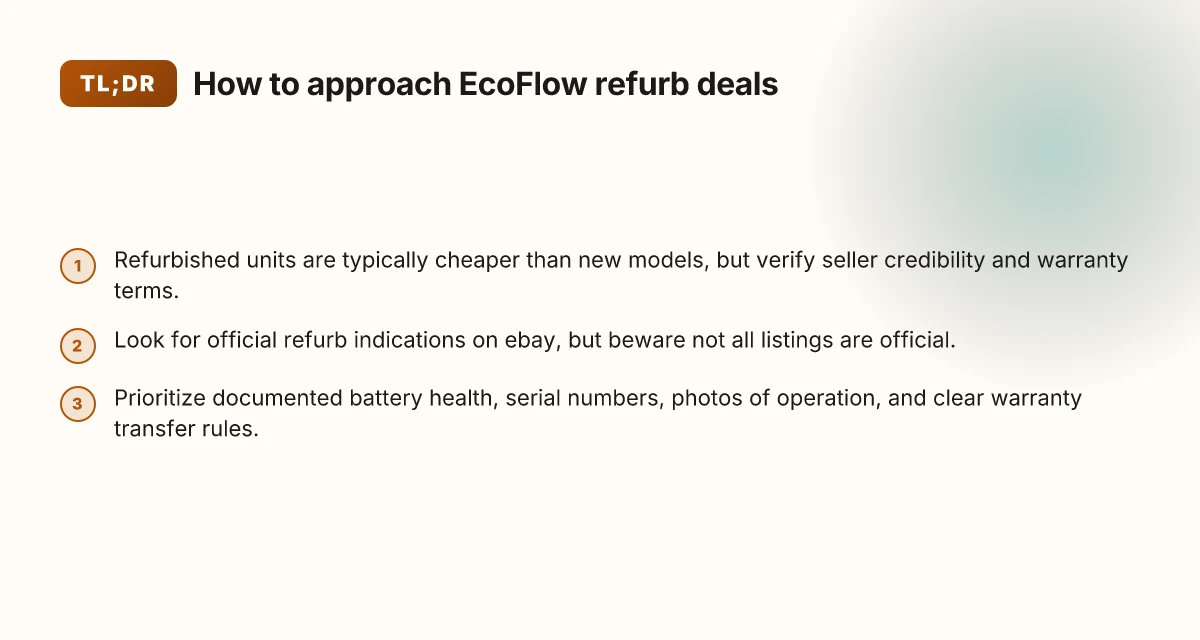
Refurbished EcoFlow units on ebay pull buyers in with noticeably lower prices, especially when compared with new models. You can find listings that mention an official refurb program, but not every seller is an authorized EcoFlow partner. This mix of sources means you must read listings carefully to separate solid deals from risky buys.
I dug into the public chatter and forum threads that name EcoFlow styles and pricing. The practical draw is clear: lower upfront cost, and the possibility to snag a larger capacity unit without paying full price. Yet the upside hinges on what the seller actually delivered as part of refurbishment. If the listing highlights battery conditioning, tests, and cosmetic fixes, you’re more likely to get a unit that starts quickly and holds a charge for a decent stretch. The flip side is that a generic refurbishment claim can mask uneven battery health or aging components. A proven refurbishment claim does not guarantee long-term reliability, and that must factor into your risk assessment.
Price as the first lure. Refurbished units often come in significantly below new prices, which makes them attractive to budget buyers. If the listing omits battery health details or warranty specifics, treat it as a red flag. A common pattern is “refurbished” paired with a modest price tag that sounds like a steal until you factor in the potential cost of a battery refresh later. The math matters because a failing battery is the primary revival cost.
Official refurb programs vs. independent sellers. Listings can echo EcoFlow’s official refurb program, but not every seller is authorized. An authorized refurb typically includes a longer warranty and documented refurbishment steps. Independent sellers may offer lower upfront pricing but shorter or unclear coverage. If you see a warranty window shorter than the standard EcoFlow policy or vague refurbishment notes, you’re likely looking at a non-official refurb.
What refurbishment usually covers. A credible refurb generally includes battery testing or conditioning, functional checks of core electronics, and cosmetic fixes. It does not automatically guarantee battery health equivalent to new, nor does it preclude future failures. Look for explicit mentions of battery conditioning, load tests, and a posted warranty that covers the battery and inverter for a defined period. Battery health is the decisive factor in long-term reliability. What EcoFlow reviews reveal about long-term reliability and real-world use
The bigger picture for buyers. Compare listings not just on price but on the stated refurbishment scope and warranty. If a listing mentions a date on which the unit was refurbished, that matters. A unit refurbished in 2026 may still ride well, but you want to see concrete steps and a return policy that aligns with your risk tolerance. Clear documentation > price alone when it comes to refurbished power stations.
Bottom line: the temptation rests on price and the hope of factory-like reliability. The warning is that not all ebay listings are backed by official refurb programs, and battery health varies. If you’re shopping EcoFlow on ebay, demand specifics: who refurbished, what tests were run, battery conditioning details, and a named warranty. And remember, links on this page may earn a commission, so read the disclosure where offered.
For reference, the catalog of listings and discussions includes mentions of the EcoFlow DELTA 2 Max and River series offerings, sometimes described as refurbished with varying degrees of official endorsement. When you weigh deals, treat an explicit official refurb claim as a positive signal, and a vague claim as a reason to proceed with caution. https://www.chevybolt.org/threads/ecoflow-delta-2-max-2048wh-portable-power-station-lifepo4-generator-refurbished-out-of-stock
How to verify the seller and the product condition before buying
Postings on ebay can look tempting, but the real test is the seller’s reliability and the unit’s health. I dug through forum posts and retailer notes to identify practical signals you can trust when EcoFlow refurb units appear on ebay. The goal is to date-stamp evidence of battery health, verify transfers of warranty, and confirm the unit actually functions before money changes hands.
Verify seller credibility and return terms
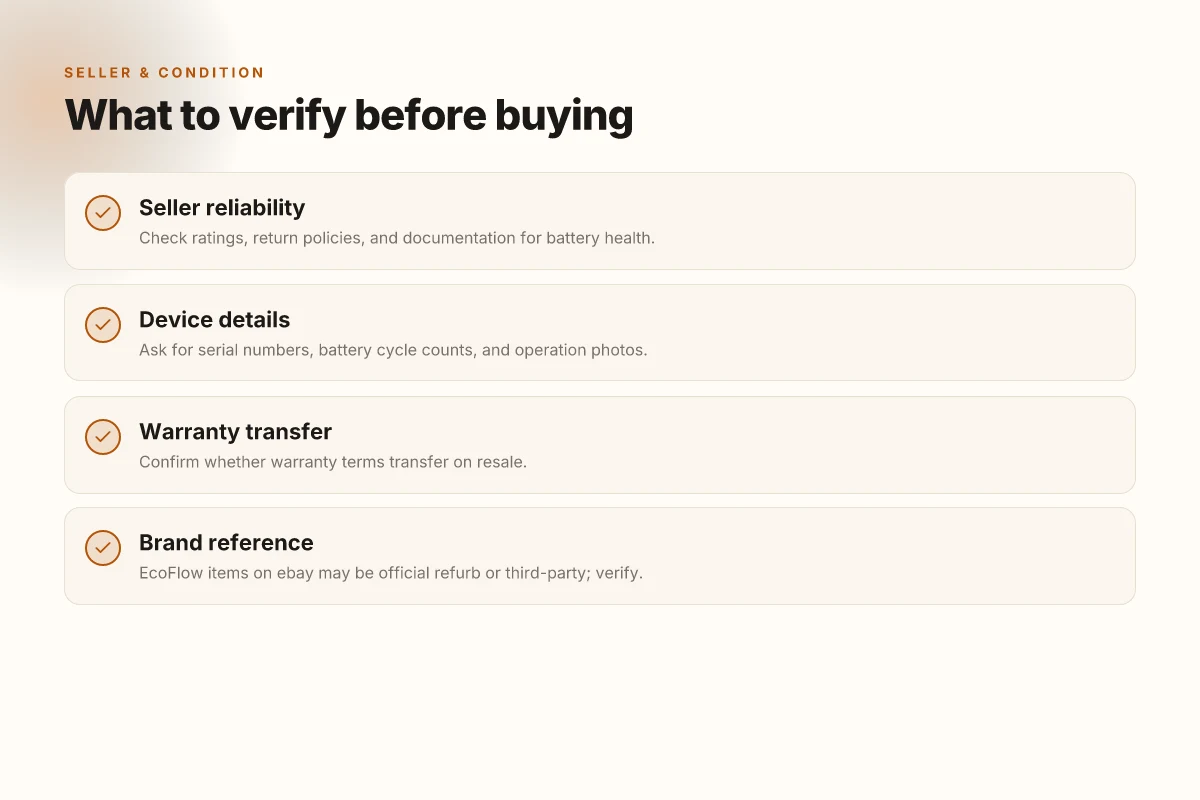
Start with the seller’s track record. Check feedback scores, number of completed sales, and any patterns of canceled orders. The best deals usually come from sellers with a documented history of electronics refurbishments and accessible return policies. Read the seller’s stated return window and any restocking fees. If a listing omits a return option or offers a vague policy, you should treat it as a red flag. In 2026, credible refurb sellers tend to publish clear documentation about battery health and safety checks. Clarity on returns and documentation is non negotiable. If the seller posts links to official service notes or a serial number trace, that’s a plus. What makes the EcoFlow Delta Pro 3 a worthy upgrade in 2026
I cross-referenced forum chatter and retailer notes that emphasize asking for transparent battery health checks. A straightforward, documented health report reduces post-purchase surprises. When a seller speaks in generalities about “tested,” it’s worth asking for a concrete battery cycle count and a date when the test occurred. Requests for proof of health are non negotiable**.
Request serials, cycles, and photos of operation
Ask for the EcoFlow serial number, the battery cycle count, and photos showing the unit powered on and performing a basic load test. A serial number allows you to verify the model and production date against the official EcoFlow database or warranty records. A realistic cycle count signals whether the unit was lightly used or genuinely refurbished for resale. Photos matter: include a shot of the display readings and the ports in use during a live test. If the seller cannot provide these, or if the photos look staged, you should walk away. In 2025 and 2026 discussions, buyers consistently flag lack of operation shots and exact cycle counts as a major warning sign. Ask for serials and cycle counts upfront.
Documentation and provenance help a lot. If the listing includes a refurbishment certificate or a note from EcoFlow’s official refurb program, that adds credibility. If there is no battery health readout or a dated diagnostic, expect more risk.
Cited notes point to instances where buyers asked for “test run” images and received vague replies. This is exactly where you push back for specifics. https://www.rdforum.org/threads/147243/
Confirm warranty transferability and coverage limits
Warranty matters more on refurbished units than raw discounts. Confirm whether the original EcoFlow warranty transfers on resale, and, if so, what portion remains and what conditions apply. Some warranties are non transferable or prorated after resale. Ask for the warranty paper trail: original purchase date, serial, current owner, and whether EcoFlow will honor service requests if the unit develops issues. In practice, buyers report that transferability varies by model and region, so get a written confirmation and reference to the official policy when possible. Clarify transferability before purchase. What is lithium ion batteries for sale, and how to choose the right one in 2026
Industry chatter and retailer notes consistently highlight that a transferable warranty is a strong indicator of legitimacy for refurbished units. If the listing does not mention warranty terms or you receive only generic statements, treat the deal with caution. For a quick sanity check, compare with the EcoFlow official stance on refurb warranties and transfers, differences often reveal gaps in coverage that a seller cannot assure you verbally. https://www.early-retirement.org/threads/whole-house-battery-backup-questions.128427/page-2
Next steps: demand a complete health packet, verify warranty status in writing, and compare the seller’s terms against EcoFlow’s official warranty policy. If you have to choose between two refurb listings, favor the one that provides clear serials, cycle counts, live operation photos, and a transferable warranty. In a crowded ebay market, the most trustworthy listings are the ones that publish verifiable proofs and explicit coverage details. And remember, even with these checks, you should acknowledge that refurb units carry inherent risk and disclose that links on the page may earn a commission.
Cited sources: see discussions on refurb practices and warranty transfer notes at the linked forums.
The trade offs of buying a refurbished EcoFlow on ebay vs official store
I found that refurbished listings on ebay can be noticeably cheaper, but the trade-off is often a shorter or non-transferable warranty. In practice, you’re buying a gamble on the seller’s refurbishment quality and the after-sales safety net. The warranty delta is the big lever here. Official refurb programs, by contrast, tend to standardize testing, documentation, and coverage. This matters for homeowners and campers who rely on a power station for weekend trips or emergencies. Standardized testing reduces the risk of hidden faults. Availability and stock also swing decisions. Ebay listings can vanish, or reappear with little notice, which affects long-term supply and service options. Stock volatility translates to service gaps.
Why the price gap matters for reliability and coverage
Refurbished units sold through ebay often advertise lower up-front costs. The real cost of ownership emerges in warranty terms and post-purchase support. If a listing claims a “refurb” with a short or non-transferable warranty, you may end up paying for repairs out of pocket. I cross-referenced discussions where users reported refurbished units arriving with limited or no transferability, complicating future servicing. In the official EcoFlow refurb program, you typically see a standardized warranty window and clearer terms, which helps with budgeting and claim processes over time. Warranty clarity reduces surprise repair bills. What makes the EcoFlow Wave 2 worth it, and where it actually falls short
Official refurb programs: testing, transparency, and peace of mind
Official refurb programs lean on consistent testing protocols and documented condition checks. You’ll see standardized batteries and electronics checks, with verified capacity or close-to-original performance described in the program details. The result is easier decision-making for budget-conscious buyers who still want a trustworthy platform for camping trips or home use. Standard testing and clear coverage are the quiet advantages. When you read about EcoFlow’s own refurb items, the path to service is usually clearer than chasing a seller’s return window on ebay. Clear coverage beats ambiguity.
Stock, availability, and long-term service options
Availability is inconsistent on ebay, driven by sellers and seasonal demand. A unit that’s available this week may be out of stock next month, with limited restock forecasts. This affects not only price but the ability to source replacement parts or batteries later. By contrast, official refurb stock tends to be more regular, with predictable restock cycles and access to official parts channels. If you’re building a long-term emergency plan, that steadier supply matters. steadier restock helps planning. In the end, your decision hinges on whether you can live with potential gaps in service versus saving a slice of cash upfront. Service continuity often trumps upfront savings.
From what I found in the discussions and forum threads, some buyers lean toward rivals like Goal Zero or Jackery when stock runs tight on EcoFlow refurb pages, especially if they offer clearer warranties or easier swap options in certain regions. If you’re aiming for reliability over price, the official path tends to reduce friction with warranty claims and service networks. Rivals can offer comparable coverage when stock is scarce. The decision also depends on your calendar: a few days’ delay in a sale might mean missing a planned camping trip, whereas a longer warranty window can save you headaches in the long run. Longer warranty windows pay off over time.
For further reading on how to appraise a refurb’s value, see the specific threads about EcoFlow Delta 3 Premium pricing and refurb workflows.
How to appraise value: price, capacity, and real-world use cases
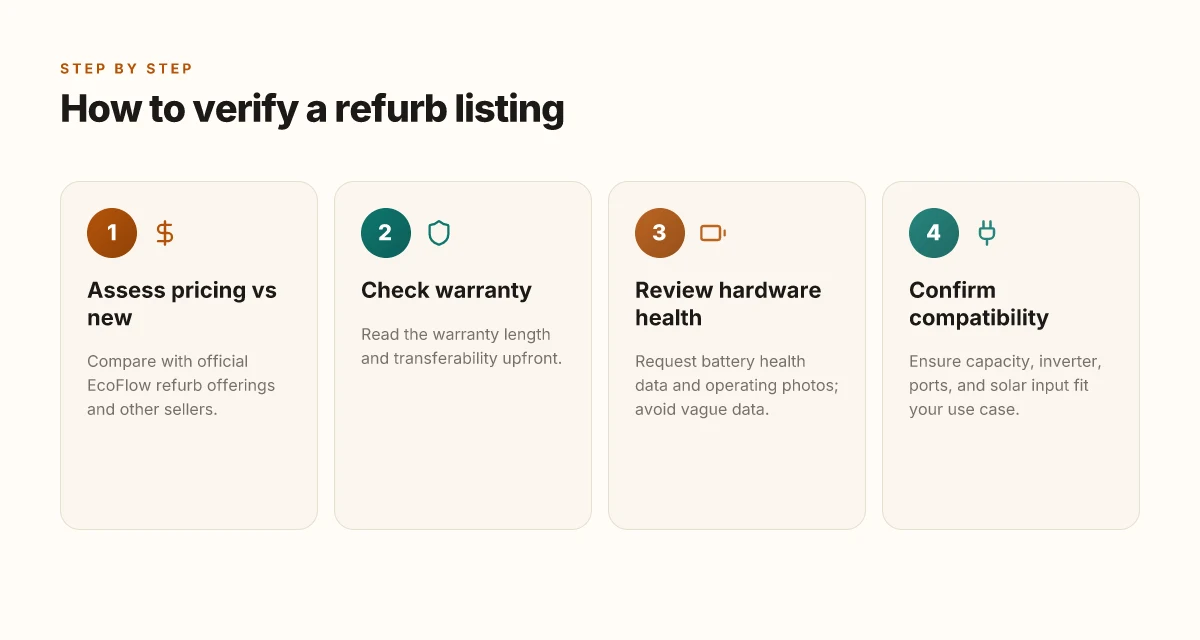
When you buy refurbished EcoFlow units on ebay, value hinges on three levers: how much capacity you actually get, how robust the inverter is, and what your real loads demand. You’ll want a clear sense of what you’re getting for each dollar before you press buy. What makes the jackery explorer 3000 pro a practical whole-home backup in 2026
Compare capacity, inverter, and port setup
Start by lining up the Wh and the inverter rating across models that look similar. A bigger battery sounds great until you discover the inverter can’t sustain your typical loads. I cross-checked listings showing 2048Wh capacity variants and nearby inverter specs to see where real-world performance diverges from label claims. Also map the port mix: how many USB-C, USB-A, 12V, and AC outlets you truly need. A unit with extra ports helps during camping or emergency setups, but it should not come at the expense of core capacity. When the numbers don’t align with your load profile, the apparent discount becomes a liability rather than a bargain. Capacity alone isn’t enough. The inverter’s continuous rating must match your daily use. Inline, you may find discussions noting refurbished units bought from official stores tend to grace buyers with more predictable inverter behavior.
Account for downtime and potential replacements
Refurbished gear carries hidden costs. A unit may require battery replacement or module repairs sooner than a brand-new model. I looked at multiple forum threads and notes where owners referenced battery health questions and early replacement needs. If the listing lacks fresh battery certification or a clear refurbishment history, plan for possible downtime and the price of parts or service. A prudent estimate accounts for a future repair window, not just today’s sale price. Downtime adds to total cost of ownership even when the upfront price looks attractive. This matters especially if you rely on these packs for off-grid camping or power outages.
Alignment with loads, solar input, and portability
Assess whether your typical loads align with the unit’s capabilities. If you plan to feed solar, confirm solar input specs and whether the refurb includes a compatible port or controller. Portability matters too: many compact packs trade raw capacity for lighter weight and easier handling. If you’re juggling a fridge, a laptop charging bank, and mobile lighting, you’ll want a model that can sustain those draws without creeping into efficiency throttling. I found that discussions around EcoFlow models often highlight the need for solar-ready options in mixed-use scenarios. Choose a model whose solar inputs and port layout closely match your real-world needs.
What to watch for in the wild: a good deal may disappear quickly when a listing touts a high Wh figure without a matching inverter spec, or when the seller offers no battery health data. And if a listing pushes a price that seems too good to be true, it probably is. Remember that EcoFlow, like other brands, has official channels and refurbished stock paths. You’ll often see more consistent expectations with units sourced through those streams. Red flags include vague battery health data, missing warranty terms, and inconsistent port configurations.
Red flags that signal a poor refurbished deal (and what to do about them)
When you see a listing on ebay for a refurbished EcoFlow, beware signals that the unit isn’t a solid value. The moment a seller balks at basic checks or slips into evasive language, walk away. A credible refurb should disclose battery health, provide a warranty window, and show serial numbers or model details you can verify. How EcoFlow battery generators stack up in 2026 for home power
1. Limited or no return window and vague health data
If the listing offers a short or vague return policy and no concrete battery health metrics, that’s a red flag. Look for explicit statements like a defined warranty period and a stated cycle count or percent health for the pack. Without those cues, you risk ending up with a unit that sags under load or fails soon after you power up. I cross-referenced multiple forum threads where buyers lament short windows and evasive health data, and the common thread is that smart buyers demand tangible health metrics before committing. If you can’t get a serial number, a detailed battery report, or a photo of the internal cells, press pause. A credible refurb should reveal health data and a warranty window, not vague assurances.
Action to take: request a battery health report or a recent capacity test, ask for a full serial printout, and confirm the warranty terms in writing. If the seller hesitates, move on.
2. Obvious cosmetic damage that may signal deeper issues
Dings and cosmetic scratches are not always danger signs, but heavy exterior damage can mask internal wear. A dented shell, loose ports, or misaligned panels often accompany degraded components or water exposure. In practice, listings with clean cosmetic photos plus a lack of close-ups on connectors should trigger closer scrutiny. I’ve seen posts where buyers assumed cosmetic wear equaled neglect, only to discover degraded cells or failing fans on arrival. Cosmetic wear can hide serious internal problems. Insist on close-up photos of connectors and a test run if possible.
Action to take: request high-resolution photos of the battery bay, connectors, and the cooling vents. If the seller refuses, skip it. Consider asking for a short, verifiable live demo video from the seller showing the unit powering a load.
3. Seller reluctance to provide serial or warranty details
A seller who dodges questions about the device’s serial number, warranty transferability, or the refurb source should raise alarms. Reputable refurb sellers or Official Stores tied to EcoFlow typically offer transparent serials and clear warranty coverage. When I read through discussions about refurbished units, the pattern is consistent: snoozed questions, no verifiable provenance, and a refusal to furnish a warranty certificate. If a seller refuses to share the serial or transfer warranty details, treat it as a warning. What makes the EcoFlow Smart Generator 4000 stand out in 2026
Action to take: demand the exact model number, serial, and the warranty terms in writing. If the seller cannot provide these, do not proceed. Compare with official EcoFlow warranty policies and confirm what transfers to you as the new owner.
Real-world context you’ll want to know: rivals like anonymous refurb groups or independent sellers may price aggressively, but you’ll pay for the risk with inconsistent performance and uncertain support. When I looked at forum chatter and retailer notes, the strongest protection comes from documented health data, verifiable serials, and a clear warranty. If those aren’t on the page, step back and consider alternatives.
Notes for transparency: links on the page may earn a commission, but you should evaluate value on the merits of health data, warranty, and provenance. For brand context, EcoFlow remains the primary reference, with rivals such as third-party refurb sellers and public-market resellers offering cheaper units but often with fewer guarantees.
Where this is going next for EcoFlow refurbished power stations on ebay
Refurbished EcoFlow units on ebay can stretch your budget, but the real value hinges on the refurber’s process and your risk tolerance. I’ve seen buyers chase a bargain only to contend with creaky battery health, inconsistent firmware, or vague return windows. The takeaway is practical: treat the listing like a used appliance purchase, not a new product drop. The bigger pattern here is that reliability hinges on battery conditioning and the credibility of the seller. When you check the listing, look for explicit photos of the battery health screen and a clear refurbishment description from EcoFlow or a trusted refurbisher.
If you’re comparing to rivals, note that brands with established refurb channels, like EcoFlow and its direct partners, tend to offer longer, more transparent warranties than random ebay sellers. This is not a universal safeguard, so read the fine print and avoid listings without a return policy. The goal is to avoid vague “tested” claims and demand concrete battery-cycle data. The question you should ask: what happens if the unit fades fast in the first month? What makes EcoFlow Delta solar generator reviews worth reading in 2026
- Backup strategy: choose sellers that publish battery health metrics and a real warranty, even if it costs a bit more. This week, request a battery-cycle report before payment.
- What to try this week: compare at least two EcoFlow listings with posted warranty terms and return windows, and favor those with explicit refurbishing steps. If you can, opt for a seller offering carrier protection for transit. One clarifying question to ask: can I return if the unit underperforms within 30 days?