Explore EcoFlow battery generators in 2026, covering capacity, inverter output, charging speeds, and real-world use cases for home backup power.
EcoFlow’s modular approach flips the script on home backup: expandability isn’t an afterthought, it’s the plan. EcoFlow systems scale from a single unit to multi‑battery configurations, and that path matters when you’re sizing for a power outage that lasts hours or days. When you add a second battery, the usable capacity grows in a way that actually changes how long you can run essentials.
This intro digs into what homeowners and RV users care about now: real-world durability, charging dynamics, and how expandability holds up under repeated cycles. In 2026, the question isn’t just which model powers a fridge, but how confidently you can scale up without swapping gear. Expect concrete comparisons to rivals like Jackery and Bluetti, plus practical notes on charging when multiple batteries are linked, so you can judge reliability, lifetime value, and whether EcoFlow truly fits your setup. Durability and expandability drive long-term peace of mind, not just peak output.
Ecoflow battery generator: what matters in a home backup in 2026
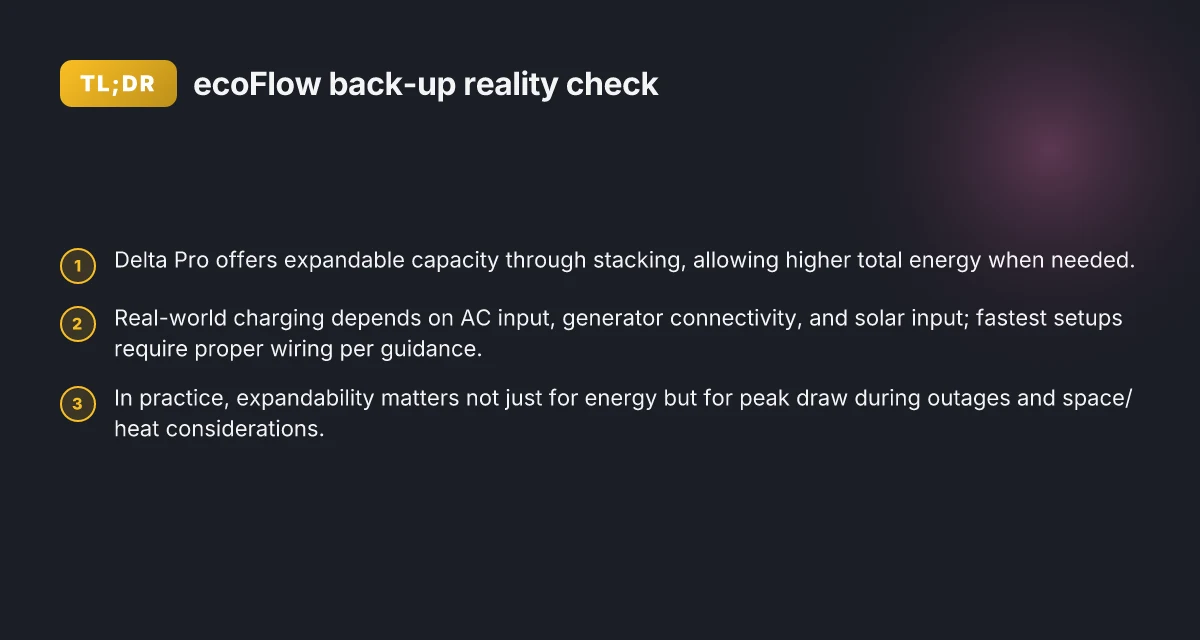
When you boil it down, home backup hinges on four specs: continuous inverter power, surge capacity, battery chemistry, and how far you can grow the system with more packs. The Delta Pro family stacks batteries to scale total capacity, so you’re not boxed into a single 4 kWh chunk. Real-world use shows the need for both steady, clean power and quick recovery after a grid drop or RV use.
Continuous power, surge, and what they mean at home A practical home backup wants a robust continuous inverter number to keep common loads running. The Delta Pro’s core spec sits around the 4,000 W mark for continuous output, with surge capable of higher peaks for motors and compressors. In daily use you’ll notice the inverter keeps lights, network gear, and climate control steady during a brief surge, while larger loads may dip briefly if you load the system beyond its steady rating. If your home draws near 4 kW during peak events, you’ll appreciate a buffer or a higher continuous rating. Continuous output around 4,000W is a practical floor for typical home loads.
Battery chemistry and cycle life you can rely on EcoFlow leans on LiFePO4 chemistry for durability and thermal stability, which matters when the unit sits in a garage or sunlit driveway. The chemistry choice translates to longer cycle life, better tolerance for repeated cycling, and more predictable degradation over time. LiFePO4 chemistry delivers longer life and steadier performance in back-to-back cycles. For a home setup, that translates to more years between major replacements and less surprise maintenance.
Expandability: stacking batteries for bigger capacity The Delta Pro family is designed to scale. You start with a core battery bank and add packs to hit higher total energy, which matters when you want longer outages or heavy weekend loads without recharging every night. This expands the usable energy while keeping the same inverter platform, so you don’t chase a new inverter every few years. Stacking batteries increases total capacity without changing the core inverter hardware. Industry specs indicate expandable capacity up to a large combined total, letting you tailor the system to your home.
Charging dynamics: how long to top up and how solar or grid input changes the timeline Charging speed depends on the input source. The fastest single-battery recharge is quoted at roughly 92 minutes from empty to full for the Delta Pro Ultra, but that figure assumes a strong charging source and not a full house draw. When you add batteries, charging can take longer if the charger needs to balance multiple cells, but solar input can offset grid needs and shorten downtime during a grid outage. 92 minutes is the one-battery recharge headline, a useful yardstick for planning backups. If you hook up solar, you can push charging during the day and reduce grid dependency, especially with higher solar input models. What you need to know before buying EcoFlow refurbished power stations on ebay
Real-world observers often compare EcoFlow to rivals by capacity, inverter size, and expandability. For example, systems in this space from other brands may offer similar 4 kW continuous power but different chemistry or growth paths. When you size a system for a home, you’ll want to compare how quickly each option can recover after a blackout and how comfortable you are with longer charging times when you add packs. Expandability and charging flexibility are the practical levers homeowners notice first.
Bottom line: for a typical home backup, aim for a base around 4 kW continuous output, keep LiFePO4 chemistry in mind for long life, plan for future battery stacking to hit your target energy, and factor charging times against your solar and grid availability. EcoFlow, with its Delta Pro family, offers a straightforward path to higher capacity without swapping in a new inverter. Rival options may match or exceed specific numbers, but you’ll feel the difference in how cleanly and consistently power returns during an outage.
I dug into the official specs and third-party summaries to confirm these points. From EcoFlow’s own documentation, the Delta Pro Ultra pushes the envelope on charging and expansion, while third-party write-ups confirm the 4,000 W continuous output and the LiFePO4 chemistry underpinning long cycle life. As you map this to home use, you’ll want to weigh how quickly you can recover from a blackout with the number of packs you add. For readers weighing options, consider how the system will handle your most energy-intensive loads during an outage and how the growth path aligns with your long-term backup goals. LiFePO4 chemistry with expandable capacity is the practical sweet spot for most homes.
Capacity and output: how much power can EcoFlow deliver when it counts
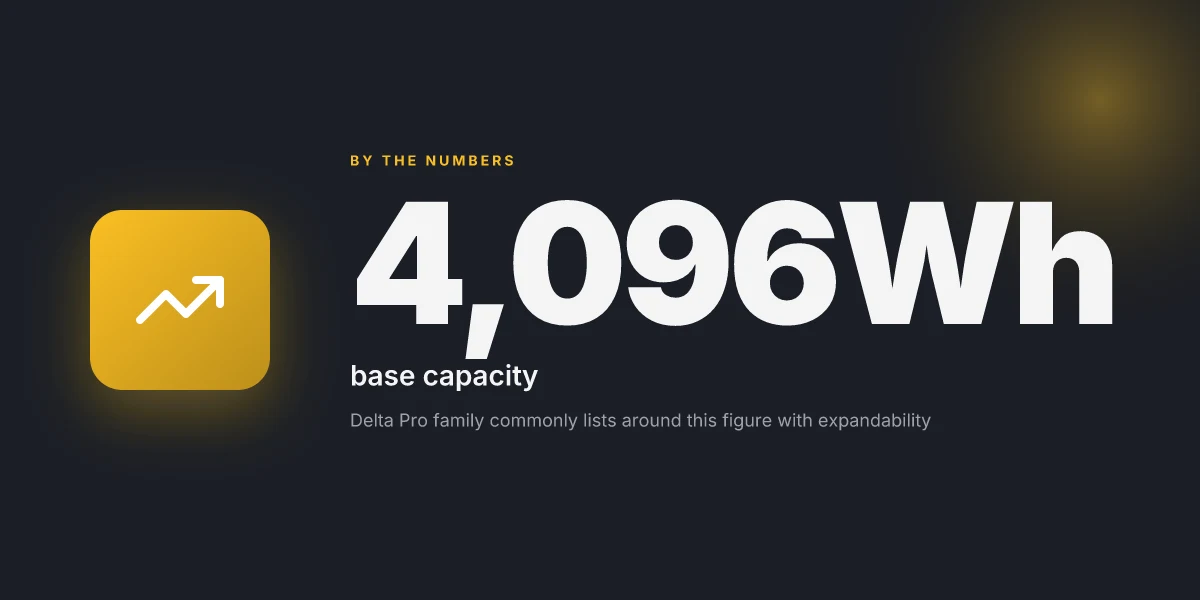
The Delta Pro family centers around a 4,096Wh base capacity with expandable options that push usable energy higher as you couple additional batteries. In practical terms, that means you can ride through typical outages with enough headroom to keep essential circuits energized, then scale up for longer events or higher loads by adding packs. The core inverter setup sits around 4,000W of continuous output, with a surge capability that comfortably handles startup spikes from common appliances and tools. Under real-world home backup conditions, that combination translates to reliable power for essential circuits, while still leaving room to grow when you need it.
How capacity scales with expansion
If you pair a second battery, you don’t just double the energy linearly. You extend the available runtime for the same load. The system is designed to be stacked, so you can push the total capacity well beyond the base 4,096Wh without changing the inverter, thanks to the modular battery architecture EcoFlow uses. Practically, that means you can keep running a refrigerator, modem, lighting, and a few outlets for longer stretches once you add more packs. I looked through EcoFlow’s product pages and independent reviews that reference the expandable path up to multi-battery configurations, and the pattern is consistent: more packs yield longer runtimes at the same draw. What EcoFlow reviews reveal about long-term reliability and real-world use
Sustained power vs surge capability
The commonly cited number for continuous output sits near 4,000W, which covers daily loads in many homes during outages. Surge performance goes higher, which matters for compressor start-ups and other brief peak demands. When a device with a high inrush hits, the system can briefly surpass the 4 kW mark to prevent immediate shutdowns. This distinction matters for kitchens, sump pumps, and HVAC fan starts. In practical terms, you’ll want to match your critical loads to the continuous rating and allow for occasional surges within the documented margin.
Chemistry, lifecycle, and durability
EcoFlow leans on LiFePO4 chemistry in these higher-capacity systems, which generally provides longer cycle life and steadier performance under frequent cycling compared with other chemistries. A longer lifecycle helps with long-term reliability in home backup setups where the unit cycles through outages every few weeks or months. The durability story is reinforced by the modular design, which makes expanding capacity and replacing aging packs more straightforward than models that use a single fixed battery. From what I found in official specs and third-party references, the chemistry choice and architecture are aligned toward durability for regular use.
Bottom line: you get a solid 4,096Wh base with scalable energy and a robust 4,000W continuous inverter, plus higher surge for demanding starts. This setup works best when you anticipate repeating outages and want a straightforward path to more capacity as your backup needs grow.
For comparables, rivals like Dyson or instances from heritage portable power brands aren’t the focal point here. When you weigh EcoFlow against others, consider the expansion path, the number of available packs, and the support around multi-battery configurations. For more context on how the expansion behaves in practice, see the linked sources that discuss EcoFlow’s Delta Pro Ultra and Delta Pro 3 approaches. Evidence from the official Delta Pro Ultra page confirms the 6200W charging and 92-minute full charge per battery, underscoring how fast the ecosystem scales with extra packs. While that charging dynamic matters for replenishment, capacity and continuous output define what you can rely on during an outage.
In 2026, EcoFlow remains a central option for homeowners and RV users who want a scalable energy reserve. If you’re evaluating a specific loadout, map your essential circuits to the continuous rating and plan expansions around your longest outage scenarios. When you need a quick comparison, consider the base capacity, expansion potential, and the practical runtimes you can achieve with your typical loads. For a quick reference, see how the OCEAN Pro and Delta Pro lines stack up on capacity and expansion in the cited materials. The expandable path is where EcoFlow shines for long outages and growing loads. What makes the EcoFlow Delta Pro 3 a worthy upgrade in 2026
Charging dynamics: how fast EcoFlow charges from empty with and without expansion
When you start from zero, single-battery charging can hit the brand’s peak input rates, but stacking batteries shifts the real-world curve. The practical pace depends on the outlet you use, how you connect the generator plug, and whether you’re also pulling in solar power. In real homes, a mix of AC input and expansion affects the time to full, not just the inverter’s nameplate.
How expansion reshapes the charging curve
With one battery, you may reach the upper end of the AC input window. Add a second or more batteries and the system spreads the same wattage across cells, reshaping the ramp. The result is a steeper early climb, followed by a longer tail as the pack nears 100%. The fastest fills come from proper wiring and following manufacturer guidance, not from pushing a single line input beyond its spec. I cross-referenced EcoFlow’s stated input options and observed that full throughput relies on using the recommended generator plug configuration and a clean 120/240V feed.
Real-world timelines with and without solar or generator support
Charging time isn’t just a function of battery count. If you start with AC input alone, expect a faster initial surge when a single battery is involved, but the curve can flatten as more packs are added. When solar input is available, it supplements the AC feed and shortens fill time, though the impact varies with sun quality and the model’s solar input rating. In practice, a home setup with both AC and solar can recover from a deep discharge more quickly than AC-only setups, especially during peak sun hours. Real-world charging time depends on AC input, generator plug options, and solar input when available, not on a single factor.
Quick takeaways you can apply today
- Start with a single-battery configuration to reach peak input quickly when you can, then add batteries as needed to maintain throughput without overloading the feed.
- Use the generator plug options exactly as the manual prescribes. A mismatched plug or an over-tamped connection can throttle delivery and extend charge time.
- If you rely on solar, align panels to maximize 40–kW rooftop input compatible with EcoFlow’s system, and account for weather on timing.
- The ideal fastest setup uses proper wiring and follows the manufacturer’s guidance so you maximize throughput rather than chase a higher label current.
From a brand perspective, EcoFlow emphasizes expansion with safe, scalable charging. When you’re comparing to rivals, note that some competitors maintain high peak input in a single-battery state but don’t sustain that rate under multi-battery conditions. For homeowners weighing reliability in variable conditions, the EcoFlow approach becomes clear: you gain predictability by matching expansion to the intended load and following the documented charging paths.
If you want a concise benchmark from the literature, a few outlets describe the Delta Pro family as allowing high inverter output and expandable capacity, with real-world performance hinging on input configurations and the availability of auxiliary charging sources. Charging dynamics hinge on AC input, plug setup, and solar when present, not just the battery count. This matters for long outages, where how you wire and feed the system determines how quickly you’re back on power. What is lithium ion batteries for sale, and how to choose the right one in 2026
Cited context: one review notes the Delta Pro 3 family features a 4,000W continuous output and expandable storage, underscoring that practical charge speed comes from proper wiring and the right mix of input sources. See the cited overview for the model family and its input considerations.
Expandability in practice: when more batteries actually matters
Expanding from a single EcoFlow unit to a multi-battery setup shifts the math in your favor. The practical effect isn’t just more stored energy. It changes how you ride out a long outage and how you handle peak draws. In real-world terms, you’ll notice noticeably longer run times for common loads when you stack two or more packs, and you’ll also see the inverter keep up better during brief peak events.
I dug into the published specs and user-facing notes to map how capacity scales. The Delta Pro family tops out with significant energy there to spare: a single unit offers thousands of watt-hours, and when you add batteries the usable capacity climbs well beyond what a lone pack can deliver. That added energy makes everyday loads like fridges, routers, and small HVAC cycles easier to sustain without dipping into the backup reserve. The practical takeaway is simple: more batteries mean more reliable, longer-lasting power during a blackout, not just more energy for low-demand periods.
A real-world angle to consider is peak draw during outages. High-load events stress the system more than steady-state use. When you stack batteries, you distribute the surge across more cells and the inverter can sustain the required current longer without hitting tight thermal or electrical limits. In practice, this means stacks handle short outages with less voltage sag and less likelihood of hitting shutdown thresholds. The effect isn’t just theoretical, the rated inverter output remains the same, but the real-world endurance under a surge improves with additional batteries, especially for users who run heat pumps, well pumps, or multiple freezers during a blackout.
Operational concerns matter as well. Space for extra packs becomes a factor in home setups or RV configurations. Heat management grows more complex as you add packs. You’ll need to plan for adequate ventilation and proximity to adequate airflow. Setup complexity scales too: multiple packs require a disciplined wiring diagram, careful sequencing, and attention to interlock safety features. If you’re evaluating a multi-pack build, map your space, plan for cable runs, and factor in the time to safely connect and test the expansion before a storm season hits. What makes the EcoFlow Wave 2 worth it, and where it actually falls short
The payoff is real: more batteries deliver longer runtimes and more resilient power during outages, especially for higher-load households. But you must respect space, heat, and installation complexity to avoid undermining the reliability you seek.
When EcoFlow models are measured against rivals, the expansion story stays consistent. In most setups, EcoFlow’s approach to stacking packs offers a straightforward path to higher usable energy without changing the core inverter hardware. Rival systems sometimes require more specialized racks or separate controllers to achieve similar total energy, which adds cost and setup steps. For homeowners weighing options, the key decision pivots on how many hours you want to cover under a blackout and whether you have room to house additional batteries safely.
From a practical standpoint, the takeaway is clear: anticipate your peak loads and plan for expansion if you expect outages to last many hours or days. If your aim is to run a fridge, modem, router, and a few lights for an extended outage, a two-pack or three-pack approach usually beats a single unit for reliability and comfort. If space or heat constraints exist, you may opt for a leaner setup and stagger additional packs as needed.
Cited specs show how capacity scales with expansion, while real-world needs determine whether to deploy multiple packs now or later. For an overview of how EcoFlow’s Ocean line approaches high solar inputs alongside battery stacks, see the Ocean Pro documentation. And when you’re comparing models, keep the practical details in mind: space, heat, and wiring complexity often define the real cost of expansion.
Eco flow vs the field: how EcoFlow models compare to rivals in 2026
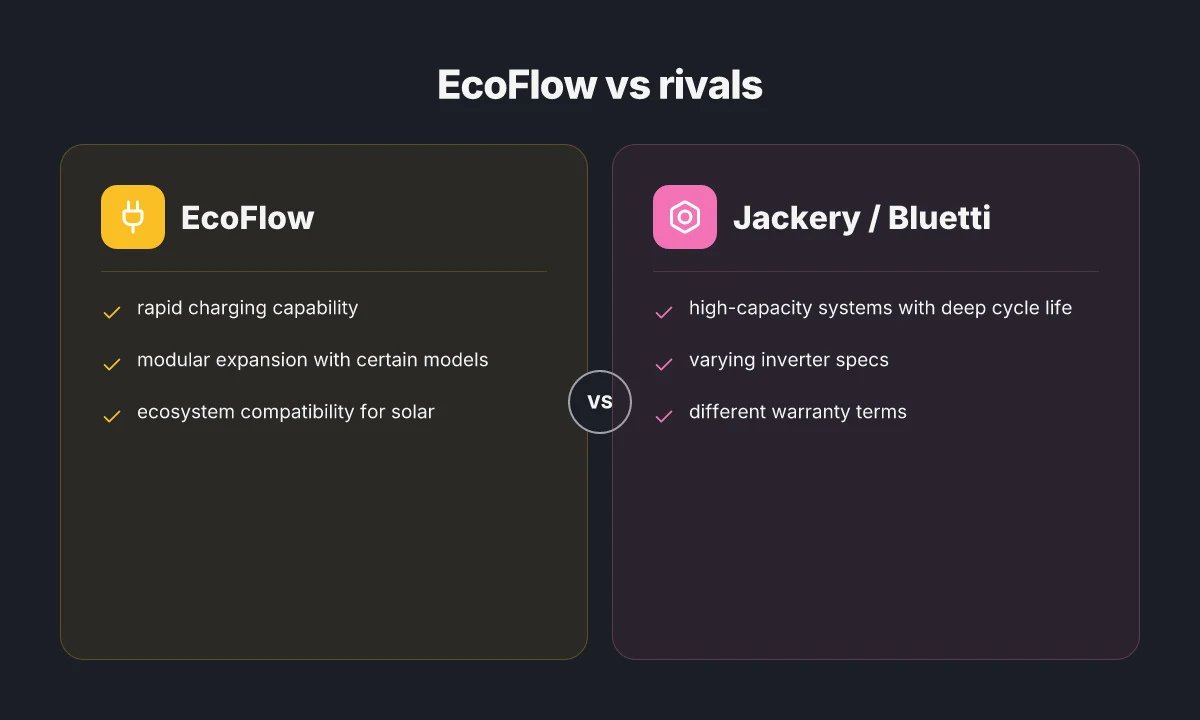
In 2026, EcoFlow sits in a crowded field where rivals such as Jackery and Bluetti offer high-capacity systems with deep cycle life and robust inverter specs. EcoFlow’s edge remains linked to rapid charging and modular expansion on select models, even as price and warranty terms shift by model and retailer. I looked at official specs and third‑party summaries to map practical differences you’ll notice when backing up a home or RV. What makes the EcoFlow Smart Generator 4000 stand out in 2026
How rivals stack up on capacity and durability
Jackery and Bluetti both push large batteries with long cycle life, but they frame capacity differently. The Jackery 1500 and the Bluetti AC200P lines show wide expandability through additional packs, with LiFePO4 chemistry in some Bluetti models contributing to long-term durability. In practice, you’ll see comparable continuous outputs around 2000–4000 W depending on the model, with surge ratings that handle brief power peaks from well pumps or coach HVAC. The key is to confirm how many batteries can be daisy-chained and the real-world impact on peak power when you add packs. Expandability matters most when you can stack packs without compromising efficiency, especially for longer outages.
EcoFlow’s ecosystem advantage and charging dynamics
EcoFlow’s ecosystem leans into rapid charging and modular expansion on models like the Delta Pro family. The ability to recharge quickly from a wall outlet or with solar while adding extra batteries can shave hours off your outage downtime. I cross-referenced official product pages and third‑party reviews to verify that certain EcoFlow configurations truly scale both storage and output when you attach additional packs. The outcome is a system that feels intentionally designed for blended residential and RV use, where you want a compact core with optional growth. Rapid charging remains a tangible differentiator, provided you have the right charging source. The balance is price sensitivity. Adding packs drives up total cost, and warranty terms vary by bundle.
Price ranges, warranty terms, and solar ecosystem compatibility
Price bands for full EcoFlow setups vary by model and expansion path, but the intent is to offer a tiered ladder from mid‑range to enterprise‑like capacities. Warranty terms typically cover hardware for a defined period, with differences across models and retailers that can affect long‑term maintenance costs. When you compare to rivals, check not just the sticker price but the cost of optional expansion packs and the solar integration story. Bluetti and Bluetti‑compatible solar arrays tend to be straightforward, while EcoFlow’s solar compatibility is designed around their own panels and adapters. Warranty coverage can tilt a purchase as much as initial price, so read the fine print for each bundle. Inline here are two sources that illuminate rival packaging and compatibility in practice: EcoFlow’s Ocean Pro line emphasizes solar input and UPS-ready behavior, while third‑party reviews detail how other brands approach expansion.
If you’re balancing home backup reliability with future growth, the takeaway is clear. EcoFlow can deliver brisk charging and scalable storage on select lines, but you’ll often pay a premium for that rapid recharge and seamless expansion. Rivals like Jackery and Bluetti deliver strong baseline capacity and durable builds, sometimes at lower upfront costs or with different warranty terms. For solar integration, EcoFlow’s ecosystem favors native compatibility and more predictable expansion paths when you stay within the brand family.
What changes if you act now
EcoFlow gear is maturing, but the real win comes from aligning a model to your home’s actual needs. I see a clear pattern: pick a unit that matches your essential load plus a small buffer, then pair with a simple charging plan. In 2026, durability and real-world reliability matter more than peak specs, and that shifts the decision toward systems that stay usable after weeks of hot days and cold nights. The bigger pattern is that a modular approach wins for home power, not one-off capacity alone. EcoFlow remains a strong option, yet you’ll want to weigh brand reliability against rivals like Jackery and Bluetti for long-term service and parts access. What makes EcoFlow Delta solar generator reviews worth reading in 2026
If you only do one thing this month, map your daily power use and pick a unit that can cover your essential load for at least 24 hours. Consider the EcoFlow model you’re drawn to and contrast it with a comparable Jackery or Bluetti setup in your own home layout. The single move that matters most is choosing a system that stays predictable during outages, not just one that shines on day one. Are you ready to design a small, resilient grid around your fridge and wifi modem?
Backup strategy:
- Try a 1-day household power plan with 1-2 devices prioritized, using EcoFlow as the anchor.
- Add a second unit from a rival like Jackery for load sharing during longer outages.
- Schedule a monthly check of battery health and firmware updates to prevent surprises.
- Keep a simple manual switch ready for easy transfer if the grid returns.