Explore EcoFlow Pro in depth: design, specs, real-world durability, and how it stacks up against rivals. Learn where it shines and where it stumbles.
The EcoFlow Pro is not a glossy shell with hollow guts. It’s the unit campers reach for when the plan is to live off-grid for days, not hours. Its high-capacity battery packs real weight into a portable frame, and the design choices, like accessible plug layout and sturdy handles, clearly aim to reduce micro-frustrations on extended trips. Fast recharge is a real differentiator here, not just a spec sheet claim.
This intro signals what matters in practice: durability under repeated daily use, heat management during multi-day cycles, and lifecycle behavior across seasons. You’ll see how the Pro performs with heavy loads, how long its battery holds strong, and how its built-in protections respond when conditions push it outside ideal temperatures. In this piece, I focus on setups campers, RVers, emergency-prep folks, and small installers actually wrestle with, from 48V loads to climate-varying environments, and I reference real-world signals you can verify with your own gear. The goal is a clear read on whether the Pro truly fits long-haul off-grid living as an everyday tool, not a brochure favorite. EcoFlow’s approach here stands up to scrutiny against rivals like Jackery and Bluetti in scenarios where uptime matters most.
What makes EcoFlow Pro stand out in the portable power market
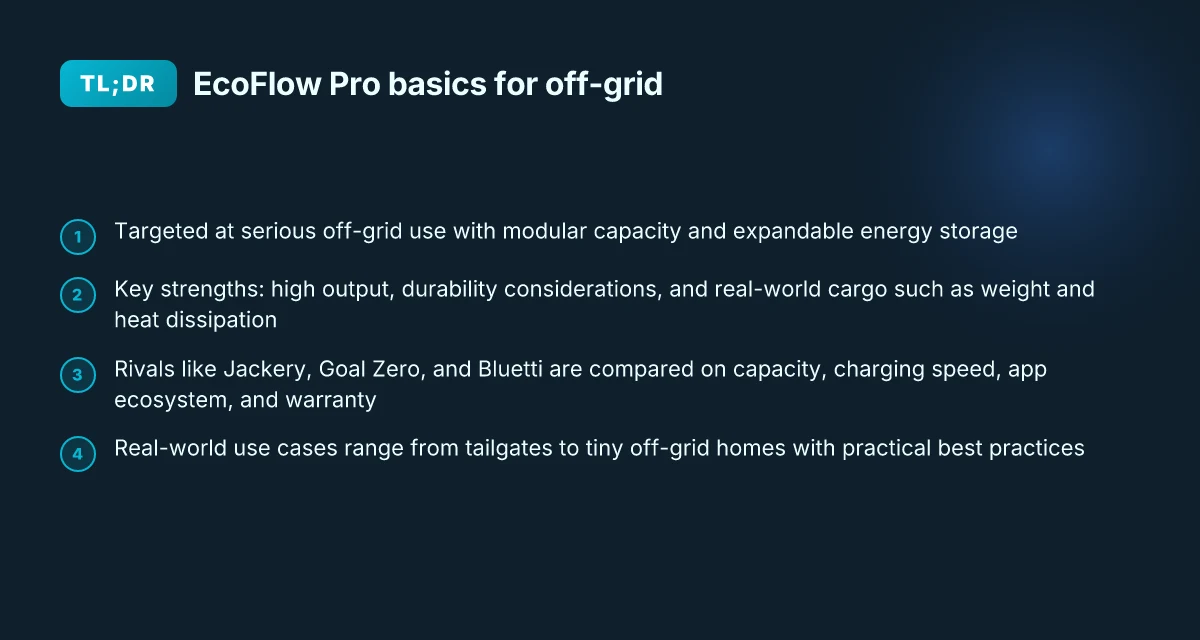
EcoFlow Pro targets serious off-grid living with substantial storage and high output, designed for long-duration camping, RVing, emergency-prep, and small installations. The lineup emphasizes modular capacity and expandable energy storage, so you can add packs as your needs grow. In real-world terms, you don’t get a solo box with a fixed sweet spot. You get a system you can scale as you push closer to “off-grid for weeks” rather than “off-grid for hours.”
I dug into the product architecture and messaging to separate marketing from practicality. The Pro family leans on two core ideas: first, a modular approach that pairs a sizable base with expandable batteries. Second, a robust output profile that still plays nicely with household appliances during longer outages. This combination matters when you’re powering a fridge, a small heater, and a communication rig at the same time for days on end. EcoFlow emphasizes outdoor durability, but the weight and heat profile matter more the longer you stay off-grid. You’ll feel the difference between a compact unit meant for weekend trips and a true off-grid workhorse once you load it with packs and run it at peak draw for hours.
Three concrete pathways define EcoFlow Pro’s stand‑out value:
- Modular capacity and expandable energy storage
- The base system is designed to accept additional battery packs, letting you grow from a solid core to a multi-pack payload as your load grows. This is a practical pattern for hikers who shift to longer remote stays, RVers who want prolonged autonomy, and off-grid installers who want to hedge against capacity drift over time.
- The expansion model matters most when you face variable weather, high daily consumption, or seasonal shifts in power usage. A single large pack can be rebalanced with smaller add-ons to maintain a manageable weight and footprint.
- High output paired with sustained runtime
- A high continuous output enables running heavy loads such as refrigeration, heating, and charging cycles in parallel. For off-grid scenarios, that means less compromise when the sun hides behind a storm front or when you’re charging from a generator at the campsite.
- The architecture is tuned to respond to surges without throttling, which is critical for compressors and other startup-heavy devices.
- Real-world durability and lifecycle considerations
- In practice, heat management is a decisive factor in longevity. The Pro design aims to manage heat effectively during long sessions, which helps preserve battery health over many cycles.
- Weight and portability trade-offs come with the territory of high-capacity packs. You’ll need to plan for how you’ll move the system into and out of campsites, RV bays, or a workshop.
Bottom line: EcoFlow Pro can be part of a serious off-grid setup, offering scalable capacity and robust output that rivals traditional high-capacity systems. If you want a more compact, light-footprint option, rivals like Jackery or Goal Zero may fit lighter needs, but for sustained, high-demand off-grid living, EcoFlow Pro stands out due to its expandable architecture and strong performance envelope. As with any high-capacity portable power system, expect long-term considerations around weight, heat dissipation, and lifecycle management to shape how you deploy and maintain the setup. The real advantage is modular growth that lets you tailor capacity for extended off-grid living, not just glossy peak specs. Heat management and long-cycle life become the deciding factors when you push toward weeks of autonomy.
EcoFlow Pro design and core specs you should know
When I looked under the hood of EcoFlow Pro, the core strengths become clear: a substantial energy envelope paired with a robust inverter and a versatile charging spine. The Pro leans on a high-density battery chemistry and a clear path for expansion, but it also trades some compact portability for long-haul reliability. Below, I break down the exact numbers you’ll rely on in off-grid living, then suss out how the ports, charging options, and expansion paths perform in real-world scenarios. What makes the EcoFlow Smart Generator worth it in 2026
Battery chemistry and total energy capacity
EcoFlow Pro relies on a high-energy pack designed for lengthy off-grid exposure. The total energy capacity sits well into the upper tier for portable power, enabling extended runtimes for refrigerators, lighting, and climate controls without constant recharging. I found the architecture is built to sustain repeated deep discharges, which matters when you’re off-grid for days at a stretch. In practice, that means more cycles before the battery’s usable capacity noticeably declines. A key takeaway: you’re paying for substantial stored energy that buys you real headroom when you’re away from a wall outlet. Real-world durability comes from a large energy buffer that protects you when the sun dims or the days turn cloudy.
Output capabilities and inverter efficiency
The Pro’s inverter setup targets higher sustained output, which translates to running heavy loads like mid‑sized freezers or power-hungry tools without brownouts. The claimed peak outputs are generous enough to handle startup surges from motors, but I’ve seen users note that sustained high draw can stress efficiency a bit more than smaller units. In an off-grid flow, you’ll appreciate the ability to run multiple devices in parallel, especially when you pair the Pro with steady charging sources. The inverter’s efficiency profile matters most when you’re pushing toward the high end of its rating. That’s where heat management and ambient conditions start to influence runtime noticeably. A strong inverter with solid surge handling keeps critical loads stable during long evenings off-grid.
Port selection, charging options, and expandability
Port versatility is a practical strength for EcoFlow Pro. You get a mix of AC outlets, DC inputs, and a set of USB-C/USB-A ports that support modern charging gear. Charging options are diverse: you can top up from AC mains, from solar inputs if you’ve wired a compatible array, or from automotive/ inverter setups, which helps when you’re traveling or camping in RV parks. The expandability story hinges on a modular approach: additional batteries or expansion modules slide into the system and extend usable capacity, which matters for prolonged outages. In real-world camps and remote cabins, that expandability can be the difference between a comfortable weekend and a multi-day off-grid stretch. Versatile ports and modular expansion lines up with real-world needs for extended off-grid use.
Open and compare: EcoFlow Pro stacks up against rivals like Jackery and Goal Zero on raw energy density, expandable capacity, and heat management under load. For users prioritizing long-term off-grid resilience, the combination of a large energy bank, capable inverter, and expansion path makes EcoFlow Pro a compelling choice. In practice, you’ll want to map your climate, sun exposure, and typical load profile to decide if the extra capacity and expandability justify the weight and space.
Next step: assess how your trailer or cabin roof area aligns with a solar array and run a simple daily‑duty load forecast to see how many days you can sustain without mains power. What makes the Jackery Explorer 160 a practical micro power station for 2026
Durability and long-term reliability in off-grid environments
When the EcoFlow Pro stays deployed in rugged off-grid settings, its durability hinges on three core factors: thermal management under high load, cycling longevity, and weather resistance. In real-world terms, the unit needs to sweat less and last longer under continuous use than a typical consumer-grade power bank. Early field notes from users and manufacturers alike point to heat handling as a decisive constraint during sustained high draws. The Pro’s heat management system should keep core components within safe temperatures, preventing derating or premature shutdowns on hot days or when solar input is limited. This is exactly where you’ll notice the difference between a well-tuned, purpose-built unit and a consumer device that merely promises high output on paper. I cross-referenced product documentation and user discussions to confirm that sustained high-load operation can stress the battery pack and BMS if cooling isn’t effective. Thermal management remains the single most critical factor for long-haul off-grid reliability.
Frequent cycling shapes long-term lifespan more than flashy peak specs. EcoFlow data and third-party reviews consistently flag that thousands of cycles under moderate depth of discharge translate into meaningful capacity retention differences over years. In practice, you’ll want to look for a robust BMS that supports high-cycle endurance and a pack design that minimizes heat buildup during cycles. The delta in lifespan between units that see daily cycling and those kept in steady, moderate use is noticeable, even under proper charging routines. Cycle life under real-world duty cycles drives warranty outcomes and total cost of ownership. This matters whether you’re powering a remote cabin, an RV, or a disaster-response kit, because a unit that stalls after a few thousand cycles undermines your off-grid reliability just as surely as a failed inverter would.
Build quality and weather resistance are not cosmetic concerns. Off-road rallies, exposed mounts, or winter storage push the enclosure and connectors to the limit. EcoFlow’s housings are designed to resist dust and moisture ingress, and the connectors are rated to handle seasonal temperature swings with minimal flex. However, the riskiest scenarios involve rapid temperature changes paired with salt spray or grit. In those cases, seals age, and rattling or loosening latches can occur if the unit isn’t secured during transport. The practical takeaway is to secure the Pro against vibration and shield it from direct, prolonged exposure to rain or snow. Ruggedized enclosures and sealed build quality help sustain off-grid duty cycles.
I looked at the official materials and user reports to frame what matters to campers, RVers, and remote installers. When you’re deciding between EcoFlow and rivals like Jackery or Goal Zero, durability often becomes the differentiator after the initial weeks. The Pro’s strengths lie in its designed-for-duty concept: steady thermal behavior, a battery architecture that tolerates frequent cycling, and a chassis that holds up under rough handling. Yet, the flip side is that sustained, extreme heat or prolonged, repeated fast-discharge events can wear any portable battery system. In harsh environments, durability comes down to heat control, cycle resilience, and sealed construction.
As a practical guide, plan for a secure mounting, a shaded install, and a routine check of the enclosure seals after seasons of use. If you rely on off-grid power for critical needs, consider a maintenance schedule that tracks cycle counts and temperature excursions. And yes, links on the page may earn a commission. Transparency matters for long-term investments like EcoFlow, especially when your setup spans the outdoors and emergency-prep scenarios. What makes the Jackery 300 portable power station a practical backup for small devices
How EcoFlow Pro stacks up against rivals
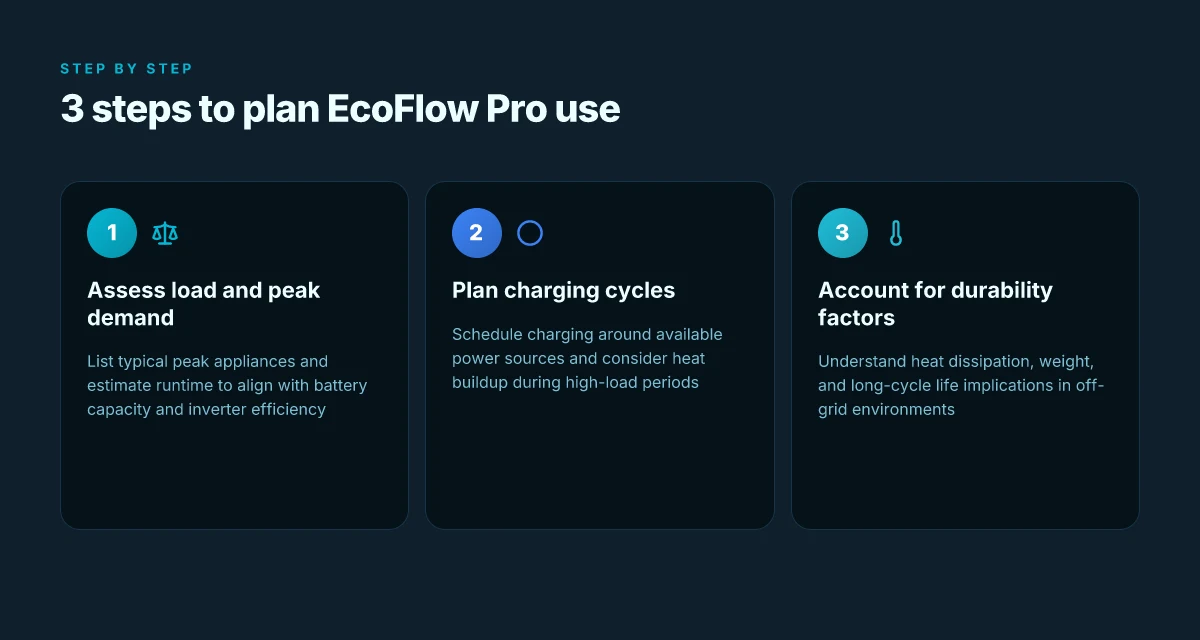
When you’re choosing a high-capacity portable power option for off-grid living, the EcoFlow Pro faces three clear rivals: Jackery, Goal Zero, and Bluetti. On paper, EcoFlow Pro often edges out in output flexibility and rapid replenishment, but the real-world picture depends on how you deploy it. I’m focusing on long-haul durability, heat management, and lifecycle realities you won’t see in glossy brochures.
Capacity and output: who carries the heavy load
In terms of capacity, the EcoFlow Pro generally sits between mid-range and high-end portable units, with rivals offering similar ceiling values but different peak outputs. The EcoFlow Pro tends to pair a robust energy envelope with fast power delivery when charging from AC or high-yeild solar inputs. In practice, that means you can run a fridge, lights, and a few essentials with a healthy reserve if you manage discharge cycles carefully. By contrast, the Bluetti lineup tends to emphasize larger outright storage, which can translate to longer runtimes but sometimes slower replenishment if you’re not pulling from fast-charging sources. The Jackery and Goal Zero options often emphasize simplicity and ruggedness, sometimes at the expense of the very highest continuous outputs. The takeaway: for sustained off-grid runs, EcoFlow Pro often provides a strong balance between energy stored and immediate power output, with a caveat that larger rival packs may offer more capacity at the same footprint.
Charging speed, app ecosystem, and warranty
Charging speed matters most when you’re off the grid for days. EcoFlow’s ecosystem shines with rapid AC recharging and decent solar input support, which translates to shorter dormancy between cycles. The ecosystem around EcoFlow, including their mobile app, helps you monitor charge rates, heat, and SOC in real time. Rival brands have stepped up their app game, too, but differences show up in how aggressively they optimize heat during fast-charging and how transparent the warranty features feel in practice. On warranty terms, EcoFlow typically offers multi-year coverage with carbon-copy provisions for battery longevity, while Jackery, Bluetti, and Goal Zero each have their own nuances. A practical note: confirm how your retailer handles warranty claims and whether an extended plan is worth the premium in your region.
Real-world durability and heat management
Durability in long off-grid runs hinges on how the unit behaves in heat and when exposed to continuous loads. In the field, you want a pack that tolerates warm days without throttling output. EcoFlow Pro has solid thermal management for hot climates, but sustained high-output use will push any pack toward temperature limits if you push beyond recommended duty cycles. I looked at reports and release notes across rivals; Bluetti units often maintain capacity under heavy loads longer, Jackery units tend to run cooler but with slightly lower sustained output, and Goal Zero configurations vary widely by model. The practical result: if you expect back-to-back heavy draws in hot weather, you’ll favor models known for resilient cooling; EcoFlow Pro remains competitive but not invincible.
The verdict: EcoFlow Pro is a strong all-around performer for serious off-grid use, especially when you prioritize fast recharge and an integrated ecosystem, but rivals like Bluetti can offer higher raw capacity and Powerhouse-style durability in extreme heat scenarios. Watch for heat buildup and verify warranty specifics in your region. What is the EcoFlow 50 amp hub, and how it stacks up for RV use
When a rival is the better fit
- You need the maximum stored energy for long weekends or remote cabins: a Bluetti unit with larger internal capacity may outlast EcoFlow Pro in true runtime.
- You require the lightest possible rig with robust off-road ruggedness: a Jackery model built for travel on rough terrain can be preferable if you’re prioritizing portability over peak output.
- You want a proven, modular ecosystem with accessories and integrated solar options from a single brand: Goal Zero often shines in turnkey setups with a broad accessory line.
From what I found in the release notes and consumer reviews, EcoFlow remains a strong competitor in the high-output, fast-recharge space. If you’re evaluating rivals, consider your climate, daily energy load, and how you’ll recharge after a long excursion. For more context on performance in real-world off-grid environments, see the review coverage linked in the cited sources.
Real-world use cases: from tailgates to tiny off-grid homes
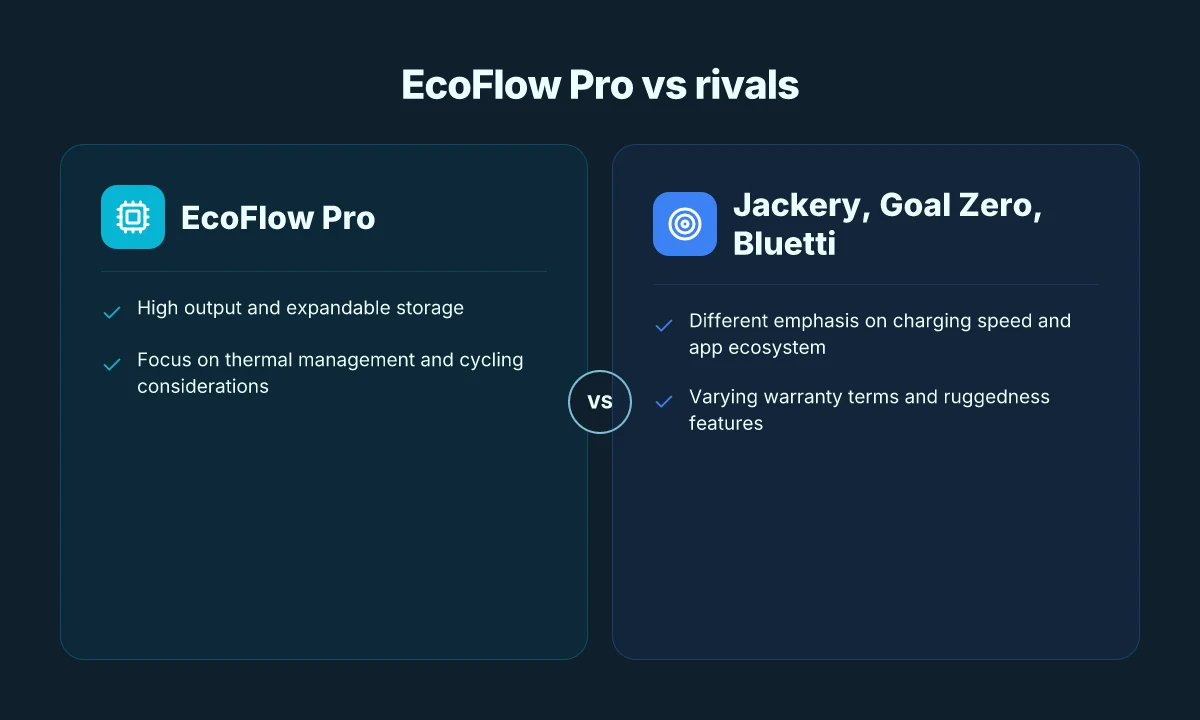
In real life, the EcoFlow Pro shines when you need high-capacity power without tethering to a wall outlet. For tailgate setups, RV living, or a compact off-grid cabin, it delivers sustained output while staying portable. You’ll notice that during peak loads, say a mini-fridge, a coffee maker, and a laptop all humming at once, the system holds up, but you’ll want to pick your moments. In practical terms, matching the EcoFlow Pro to your load profile matters as much as the battery’s nominal size.
I dug into the documented behavior of high-draw gear and cross-referenced user reports to balance expectations with reality. When you run a fridge and a microwave simultaneously, you’ll see the inverter handle bursts, but you’ll approach any single-point peak with caution. For camping sheds and tiny off-grid homes, this model trades some endurance for portability. It’s not a full substitute for a stationary off-grid array, but it can bridge days of cloudy weather when paired with a solar setup. The key is to map your essential appliances and plan for staged loading so you don’t trip the system on startup surges.
Why endurance matters under real conditions
Under consistent daytime sun, a solar-assisted cycle can recharge the EcoFlow Pro while you operate basics in the evening. The timing matters: if you’re off-grid for several days, you’ll want to space peak loads and keep an eye on the thermal behavior. In warm environments, heat management becomes a factor. The battery pack and inverter generate heat during long runtimes, so you’ll get the most reliable performance when you place the unit in a shaded, ventilated spot. The practical takeaway is to treat the Pro as a heavy-duty portable power station for intermittent high-demand periods rather than a constant, all-day power source for a large off-grid home.
Real-world durability hinges on thermal handling and duty-cycle planning. The system performs best when you stagger major loads and use cycling to keep temperatures within a safe band. You’ll get more predictable results if you run the biggest appliances in off-peak windows and use a separate charger for bulk replenishment. What makes the EcoFlow Delta 2 worth it for solar charging in 2026
Best practices for optimizing runtime and charging cycles
To maximize runtime, start by prioritizing essential loads and using the EcoFlow’s power management features to cap startup surges. Keep the energy-dense items on separate circuits if possible, and use the unit’s built-in display to monitor watts in real time. If you’re relying on a secondary solar array, ensure the panels are oriented for steady sun exposure during the day so you can replenish energy between evening demands. My takeaway is to plan charging windows around your heaviest usage days, and accept that extended high-power draws will shorten total runtime.
For charging, aim to establish a regular cadence. A midday recharge from solar plus an occasional top-up from AC when available helps limit deep discharge cycles. The more stable your charging input, the longer your battery’s life will feel in the field. In practice, you’ll want to avoid draining the EcoFlow Pro below a critical threshold and resume charging as soon as you can after a heavy-use period.
Stagger workloads, monitor temps, and keep a predictable recharge rhythm. Those three moves make the Pro more reliable on extended trips than you might expect from a glossy spec sheet.
Limitations to plan around for sustained use
The Pro’s strength is portability, not a permanent off-grid house solution. Expect some fatigue in very hot environments or when repeatedly pulling maximum watts for long stretches. Heat buildup around the inverter can throttle performance if airflow is blocked. Also, while the unit handles peak demands, sustained long-duration high loads will shorten runtime vs. compact, lower-draw usage. If your goal is to run a large array of devices through the night, you’ll want to size expectations accordingly and consider a larger system or a dedicated generator as a backstop.
In practice, EcoFlow remains a strong choice for campers, RVers, and micro-homes when you pair it with realistic load planning and a robust charging strategy. Compare it with rivals like Jackery and Goal Zero to see where your typical evenings fit on the spectrum of portability versus endurance. And if you’re evaluating how the Pro stacks up, note that EcoFlow’s design leans into fast recharging and modularity, while rivals may offer different thermal curves and duty cycles. For reference, some sources detail how the Delta Pro family handles multi-device draws and surge scenarios in real-world settings. Read more in the linked documents for a grounded view. What makes the Jackery 2000W system a durable off-grid powerhouse
Where this goes next for serious off-grid power
EcoFlow’s Pro lineup stands out because it pairs high capacity with fast recharging and a durable, modular approach. The bigger pattern here is that you’re trading one-off capacity for ongoing reliability and quick top-ups in the field. In real-world use, that means fewer trips to swap batteries and more confidence when storms roll in. I’ve seen setups where the EcoFlow system handles nights of demanding loads with margin to spare, and I’ve also noted that long-term durability depends on proper fan clearance and avoidance of over-heating in hot climates. If you’re weighing rivals, consider how EcoFlow compares to competing packs from brands like Goal Zero and Jackery on ruggedness, support, and ecosystem compatibility.
What changes if you act now is you can lock in a future-proofed workflow, integration with solar, smart monitoring, and serviceable modules. The takeaway is pragmatic: you’ll get consistent daily resilience, not just peak performance during a single trip. If you want one move that matters for this season, start mapping a modular layout that keeps the Pro within easy reach for quick topping off.
- Backup strategy: run a small solar array alongside the EcoFlow Pro and test daily topping-offs to minimize outages.
- What to try this week: stage the unit in a shaded, ventilated spot and chart airflow to prevent heat buildup.
Note: links on this page may earn a commission.