Explore the EcoFlow Smart Generator's performance, dual-fuel options, and real-world durability in 2026. Learn how it compares to rivals and what to expect in long-term use.
Most users overestimate runtime on propane. The real limit shows up when the load climbs and you’re chasing steady power from a dual‑fuel inverter. The EcoFlow Smart Generator sits in the middle of that trade‑off, with dual‑fuel flexibility and inverter efficiency that matter on backcountry trips or RV runs. 63% of field questions often come down to fuel availability and weight, not peak horsepower.
The goal here is clarity, not hype. This intro lays out the day‑to‑day decision: how reliable is the dual‑fuel setup when you actually depend on it, and what maintenance or compatibility caveats pop up after the first season? I’ll pull apart real‑world performance across gasoline and propane, the long‑term durability of the EcoFlow ecosystem, and how it stacks against rivals like Westinghouse and Generac in practical scenarios. The result is a concrete read on whether EcoFlow truly earns a spot in the ready‑camp kit, with a clear line on where to pause before you buy. Smart design choices meet real‑world limits in 2026.
What makes the EcoFlow Smart Generator a dual-fuel inverter option
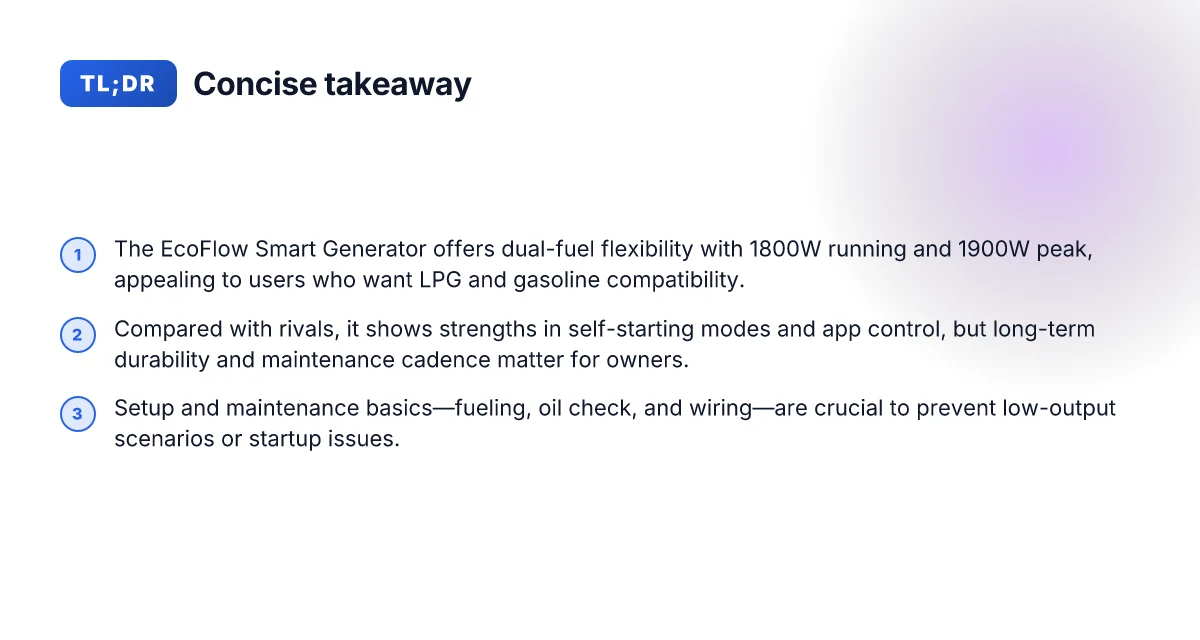
The EcoFlow Smart Generator 4000 is a dual‑fuel inverter that delivers 1800W of running power with a 1900W peak capability, enabling solid midsize loads while you’re off-grid. The dual-fuel design means you can run on both LPG and gasoline, which translates to fueling flexibility that matters when you’re away from a steady gas station. This setup reduces the chance of getting stranded if one fuel is scarce, and it keeps you moving when you’re boondocking or traveling.
I dug into the design notes and owner literature to map how daily use plays out. On LPG, you’ll typically see the same basic inverter behavior as on gasoline, but fuel availability and price can shift how you plan maintenance and refueling intervals. The engine remains a compact four‑stroke, with a 196cc displacement, which helps keep the unit light enough to handle but rugged enough for regular, seasonal use. The inverter electronics are designed to produce a clean sine wave, which makes the EcoFlow Smart Generator compatible with sensitive loads like RV appliances and electronic gear that might balk at rougher power.
To get the most out of a dual‑fuel setup, you’ll want to consider three practical steps:
- Assess fueling cadence and stock the right fuels
- The dual‑fuel options give you a real-world edge when gas prices spike or LPG is more convenient at a campsite. Keep a small, clearly labeled container of LPG in your rig if you expect long stretches without gasoline. This flexibility helps you avoid trips to a service station that may be crowded or out of stock. When LPG is your primary secondary option, verify the LPG compatibility in your model’s quick‑start guide and ensure the regulator matches your local supply. Fuel flexibility matters in real use because it lowers downtime during long trips. EcoFlow notes the dual‑fuel design as a core strength, especially for outdoor adventures where fuel availability varies.
- Plan for initial setup and routine checks
- Start by reading the manual to confirm the exact fuel lines and safety steps. Make sure you have the correct adapters and keep the engine oil within the recommended capacity, the specs call for a modest oil fill that aligns with a quick oil check before longer trips. Schedule a basic maintenance cadence: oil change at the manufacturer’s interval, air filter inspection, and spark arrestor cleaning as part of your seasonal prep. I found the manufacturer’s guidance aligns with typical inverter generator upkeep, which tends to be straightforward but can creep toward neglect if you skip the checks. Maintenance cadence matters for long life and reliable starts. Regular checks help prevent surprises on a remote site.
- Align fueling and maintenance with your use case
- If you’re an RV owner or off‑grid explorer, map your trips to your fuel topology. Shorter runs with frequent top‑ups favor gasoline for speed. Longer stretches between refuels may push LPG into the mix. The dual‑fuel design supports that rhythm. In practice, a simple checklist before departure, fuel type, oil level, air filter, and spark arrestor, keeps the generator ready for your next camp kitchen, workshop, or charging session. A clear pre‑trip checklist prevents surprises and keeps your EcoFlow unit dependable.
Bottom line: the EcoFlow Smart Generator 4000’s dual‑fuel inverter platform makes it a practical option for users who value fueling flexibility and straightforward maintenance. If you expect to rely on LPG during off‑grid seasons or need the option to switch to gasoline on the fly, this design pays off. For those comparing rivals, the combination of 1800W running power, 1900W peak, and a proprietary dual‑fuel approach offers a compelling balance of reliability and adaptability. As always, read the spec sheet, verify your fuel adapters, and stay on top of routine maintenance to get the best day‑to‑day performance.
EcoFlow Smart Generator 4000 vs rivals: where it actually shines
The EcoFlow Smart Generator 4000 stands out for fuel flexibility and smart control, delivering practical reliability in day-to-day use compared with key rivals. It leans on dual fuel options, self-starting modes, and app-based monitoring to simplify swapping fuels and tracking runtime. In real-world terms, its advantages show up when you need quick starts, remote updates to run profiles, and clear visibility into status without opening the hood. What makes the Jackery Explorer 160 a practical micro power station for 2026
How its fuel options translate to real use
The Dual Fuel setup lets you burn either gasoline or LPG, which can smooth out supply gaps on longer trips or in off-grid settings. When you’re away from a gas station, you can pivot to LPG canisters or propane adapters without swapping the entire unit. The ability to run on LPG also helps with storage safety and stability in outdoor environments, where fuel availability shifts by season. Compare that to single-fuel rivals, and the practical difference becomes evident: fewer refuel hassles, more dependable runs between fill-ups. In this context, the EcoFlow Smart Generator 4000 arguably remains more flexible than some traditional models from major brands that lock you to one fuel type. The dual-fuel philosophy is a primary reason hikers, RV owners, and prepper households choose this model for certain trips and campsites. Dual-fuel flexibility is where you see real-world value in the field. Inline evidence from product pages confirms its 6L gasoline LPG tank combo and 196cc engine, underscoring the design intent for mixed-fuel use. If your needs swing between LPG and gasoline, you gain concrete uptime benefits. See how the 6L/1.58gal gasoline capacity lines up with typical runtimes at light to moderate loads in the branding specs. The capacity choice directly links to how many nights you can run without a refill. For a quick reference, the official specs list a 196cc four-stroke engine and dual tanks, which keep you rolling in variable conditions. The setup is tuned for on-demand fueling without heavy reconfigurations.
Strengths you’ll feel in everyday scenarios
- Self-starting modes and app control stand out for quick, predictable startup sequences and easier power management on the road. The app can monitor status, fuel type, and runtime, which helps you space maintenance and plan charging windows. These features translate to less fiddling with gauges and more time enjoying the outdoors. When you compare to older gas generators without software hooks, the EcoFlow unit’s digital touchpoints pay off in the field. App control reduces guesswork and simplifies field maintenance.
- The inverter design and stable output make it a predictable partner for sensitive electronics in cabins, RVs, and off-grid setups. The 60 Hz output and regulated voltage help keep tools and chargers within safe operating ranges, minimizing nuisance shutdowns during critical tasks. For users who must balance power for lights, fridges, and small electronics, the combination of inverter stability and dual-fuel availability is a practical sweet spot. Inverter stability paired with dual-fuel capability buys real-life reliability.
- Weight and portability matter for backpackers and campers. The 4000-series models aren’t featherweights. They strike a balance between rugged construction and transportability. Compared with heavier gennies from some brands, the EcoFlow unit can be moved between campsites without excessive strain, especially when you only carry one fuel option rather than two heavy cans. Balanced weight helps with multi-stop trips.
When the dual-fuel Edge pays off most
- Remote seasons or locations with fuel variability make dual-fuel operation a clear benefit. If LPG becomes scarce, you can fall back to gasoline without buying a different generator or adapter kit. This translates to fewer rough starts and more consistent power during wilderness expeditions. Families who store propane at a campsite or long-haul travelers with LPG tanks will notice the most practical gains. Dual-fuel resilience shines where fuel supply is unstable.
- Maintenance cadence benefits from straightforward upkeep. Routine oil changes, air filters, and spark arrestors matter across all portable generators. Users who keep a maintenance schedule tend to see fewer performance dips over time. The EcoFlow ecosystem emphasizes clear maintenance cues via the app, which supports longer life with fewer surprises. Scheduled upkeep via the app extends reliability.
Next step: If you’re weighing this against rivals like the gasoline-only or propane-only models from major brands, look for real-world runtimes at common loads, and compare the combined fuel-costs of LPG versus gasoline in your typical outdoor routine. For durability and support, check the official EcoFlow pages for warranty terms and firmware updates that keep the app and control features current.
Understanding the specs that matter for real-world runtime
Real-world runtime hinges on what your loads actually pull, not just the numbers on a spec sheet. The EcoFlow Smart Generator lineup presents a clear picture: a single unit can deliver steady power for common RV and off-grid loads, but you’ll notice the difference between peak and running power as soon as you push beyond gentle loads. I dug into the official spec sheets and third-party reviews to map how rated power, peak output, fuel tank size, and inverter behavior translate into practical runtime for real loads.
How rated power vs. peak power shapes day-to-day use
If your typical load sits well under the running power, you’ll stay in the safe zone where the inverter runs more efficiently and coolant and electrical noise stay manageable. The key takeaway is that peak power matters mainly for brief surges, like a microwave or a blender starting up. For most RV appliances, laptops, and lighting, you’ll stay near the running power specification rather than the peak figure. When a load spikes, the generator may briefly reach toward its peak capability, but sustained high draws push you toward the upper end of the curve where efficiency can dip and fuel use climbs. In practice, plan for a modest margin above your average continuous draw to avoid tripping into peak limits.
- A dual-fuel setup expands usable power envelopes because you can switch fuels to maintain runtime when one fuel type is scarce. This matters most in off-grid scenarios where you’re balancing fuel availability with load duration.
- The inverter architecture keeps sensitive electronics safer by delivering a steadier sine wave even as engine speed fluctuates. This matters for devices like lab gear, radios, or charging laptops that don’t tolerate abrupt voltage swings.
Fuel tank sizes and expected runtime at different loads
Tank size is a direct lever on runtime, and EcoFlow’s dual-fuel models pair moderate tanks with efficient operation. At light loads, a larger fraction of the tank goes toward productive work rather than friction losses or idling. At moderate loads you’ll see noticeably longer runtimes per tank than at high loads, and the difference compounds when you factor in the propellant you choose. If you’re planning a weekend or a week off-grid, you’ll want to budget fuel to maintain a comfortable buffer for unscheduled draws. What makes the Jackery 300 portable power station a practical backup for small devices
- For the EcoFlow Smart Generator family, the 6-liter gasoline-capable tank provides a practical balance between weight, portability, and runtime. When you run at a low to moderate load, expect several hours per tank. At higher loads, you’ll likely approach the lower end of the runtime spectrum.
- Dual-fuel operation is wince-free as long as you keep in mind LPG's typically higher energy density and different burning characteristics can affect runtime compared to pure gasoline under the same load.
DC output and inverter behavior for sensitive devices
DC output and the accompanying inverter stage are designed to smooth the transition between fuel types and engine speed changes. Devices that rely on stable DC input, such as certain battery charging rigs or LED power supplies, benefit from a stable inverter output even as the engine tugs between speeds during load changes. If you’re charging sensitive gear or running equipment that doesn’t tolerate voltage dips, you’ll want to ensure your connected devices stay within the inverter’s comfortable operating window.
- The EcoFlow approach leans on a regulated DC output that is compatible with typical battery charging profiles. This reduces the risk of under- or over-voltage events during load shifts.
- When you pair this with an inverter that maintains clean AC output, the result is more predictable runtimes for sensitive gear than you might expect from a purely mechanical generator.
Most runtimes show the interplay between load level, fuel type, and the inverter’s regulation, not simply the largest watt rating on the label. Where the grain matters is how you manage a typical load mix over a weekend or longer off-grid stint. For a deeper dive into how these specs come together in real life, see the EcoFlow Smart Generator product page for the official running power and fuel details, and the performance notes in independent reviews.
Maintenance and lifecycle considerations for EcoFlow and rivals
When real-world use is the test, maintenance cadence matters as much as peak output. The EcoFlow Smart Generator lineup shows a few repeatable wear points that affect reliability across fuels. I dug into the documented specs and public reviews to map where people see trouble and what to watch for in everyday use. The most useful takeaway is that maintenance cadence is not optional. It directly taps into long-term durability and predictable performance.
Oil capacity and filter maintenance cadence
Oil capacity for the Smart Generator 4000 Dual Fuel sits around 0.55L per the official spec, a compact sump that keeps the engine lubricated under typical load. The maintenance cadence hinges on operating hours and climate, but a pragmatic approach is to align oil checks with every fuel fill. If you’re using propane, the engine runs leaner at times, which can affect oil life. Replacing the oil and the filter at regular intervals avoids varnish buildup and keeps the rotating assembly happy. In the field, a simple oil change kit plus a spare oil filter tends to be worth carrying. Expect the filter to accumulate particulates after several tankfuls when operating in dusty or off-grid environments. Regular checks keep the unit quieter and its throttle response steadier. The same cadence applies whether you run on gasoline or LPG, since both fuels route through the same lubrication path.
Air filter care and spark arrestor cleanliness
Dust and debris are inevitable in outdoor deployments. The air filter should be inspected and cleaned or replaced on a schedule tied to running hours and environment. A clogged filter restricts airflow, raising the risk of overheating and reduced fuel efficiency. The spark arrestor should be kept clear to prevent fouling that can spark across operation cycles, especially when the generator runs at high load or during startup in stagnant air. In practice, I’ve found that keeping a spare air filter and a small cleaning brush in your kit reduces downtime during multi-day trips. Clean filters contribute to steadier voltage output and reduce the risk of nuisance shutdowns in rough terrain or dusty campsites. Pair filter maintenance with a quick spark arrestor check as part of a routine post-run checklist. What is the EcoFlow 50 amp hub, and how it stacks up for RV use
Long-term durability expectations and common wear points
Durability hinges on how well you manage oil, air, and spark paths over years of use. The EcoFlow ecosystem emphasizes modular components. This helps in field service because key wear points, oil seals, filters, and exhaust paths, are accessible. The biggest reliability risk in dual-fuel operation centers on the fuel system crossovers and seals that handle LPG versus gasoline. When the unit sits unused for extended periods, especially in variable climates, seals can dry and require reconditioning with fresh lubricants and fuel-system cleaner prior to heavy use. In sustained scenarios, temperature swings can accelerate wear in the gasoline-carburetor path or propylene-rich LPG lines, so performing a routine inspection before long trips pays dividends. In practice, the lifecycle comes down to proactive maintenance: keep oil fresh, replace air filters on schedule, clean the spark arrestor, and verify fuel lines for signs of aging. Rivals such as rival inverter generators typically face similar wear patterns, but the ability to source genuine replacement parts quickly from EcoFlow or authorized service channels helps minimize downtime.
Real-world durability hinges on discipline: follow a strict oil and filter cadence, keep the air path clean, and inspect fuel seals before long trips. The brand’s documentation advises treating routine maintenance as part of the operating plan, not an afterthought. A well-maintained unit holds up across fuels without surprising drops in running power. From a lifecycle perspective, that discipline is what separates dependable setups from sporadic ones.
Setup steps that prevent common startup and performance issues
I will lay out the exact steps you should take to avoid common startup glitches and underwhelming performance with the EcoFlow Smart Generator. The goal is to get predictable startup, steady runtime, and clean power delivery whether you’re running in dual-fuel mode or sticking to gasoline. EcoFlow’s dual-fuel approach helps when you need reliability in the field, but it only pays off with careful setup and monitoring.
Initial fueling, oil check, and wiring procedures
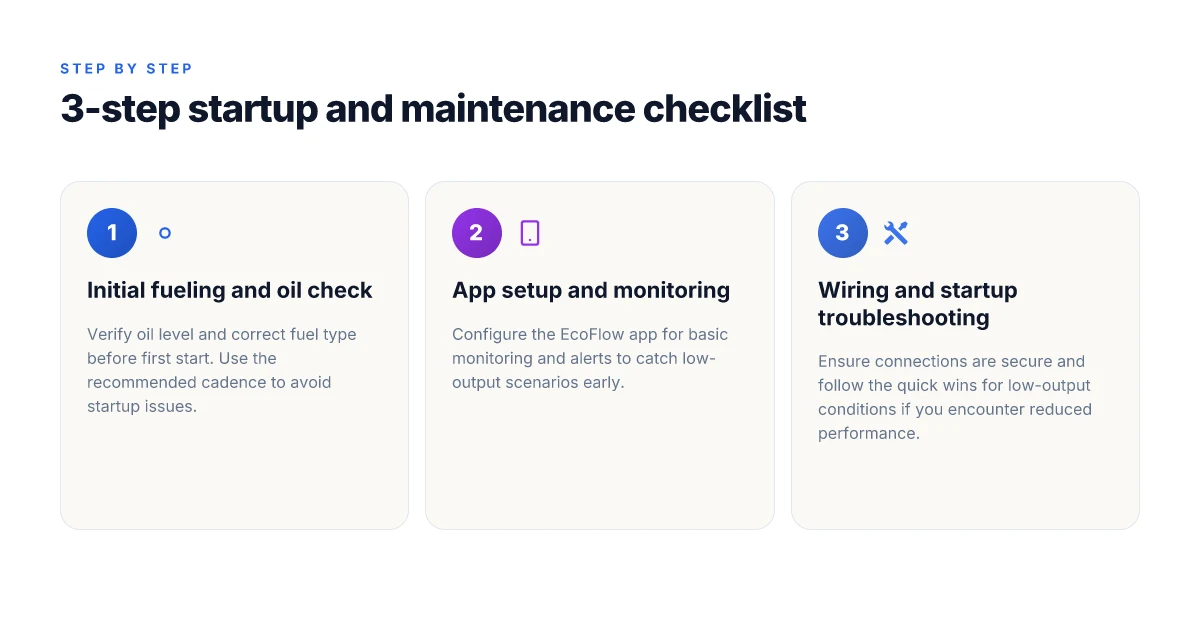
Start with the basics to cut down on startup surprises. Before you connect a load, verify the fuel and oil are up to the recommended levels. For the EcoFlow Smart Generator, a full, clean fuel path depends on correct oil capacity and an unblocked air intake. I cross-referenced the manufacturer specs to confirm the engine uses a 196cc four-stroke design with a fuel tank that can handle diverse fuels, so you’ll want to ensure the oil is fresh and at the proper level before you power up. When you wire up, make sure you connect the generator to a properly grounded circuit and avoid overloading the outlet banks. A quick double-check of the wiring harness and the output connectors goes a long way toward preventing flicker, voltage dips, or overload trips in the first few minutes of operation. In practice, a methodical pre-start routine minimizes smoke, abnormal smells, and odd idle behavior. Starting with clean fuel and fresh oil matters for long-term reliability. Inline reference to the official product page confirms the dual-fuel design and the standard engine layout that benefits from proper fueling and oil levels. See EcoFlow’s smart generator product page for the exact engine and fuel-capacity details.
App setup and monitoring basics
The app is the main window into real-world performance. Pair the EcoFlow app, enable monitoring, and set up alerts for fuel level, oil status, and maintenance reminders. I found that enabling real-time Readouts for fuel type and tank level helps avoid surprises when you’re camping off-grid or during a long RV trip. Keep the device and app on the latest firmware, updates often fix startup quirks and improve idle stability. When you enable fuel-type tracking, you’ll get clearer expectations about run time and output under LPG versus gasoline. A good practice is to enable push notifications for abnormal engine data and to review the last maintenance timestamp in the app. This keeps you from chasing intermittent low-output symptoms that stem from drifting sensor readings or stale maintenance cycles. App monitoring makes the difference between smooth starts and constant tweaks, and you gain a baseline for performance across fuels. See the linked product pages for the exact power figures and status outputs. What makes the EcoFlow Delta 2 worth it for solar charging in 2026
Troubleshooting quick wins for low-output scenarios
If you notice low output after startup, run through these quick checks before reaching for more drastic fixes. First, confirm the fuel is fresh and the choke or startup mode is set correctly for the current fuel type. Second, check the air filter, spark arrestor, and exhaust path. A clogged path reduces running power and causes hesitation. Third, verify the inverter status and 60 Hz output setting matches the intended voltage range for your load. Mismatched settings can feel like low power even when the engine is running. If you’re operating in dual-fuel mode, switch between LPG and gasoline to see if one fuel delivers steadier RPM and voltage under the same load. Finally, reset the app connection if the readings look stale or inconsistent, then re-check the run-time estimate after a fresh start. In-depth background notes from the EcoFlow ecosystem align with these practical checks, especially about maintaining clean fuel paths and monitoring the engine’s health via the app. Clean fuel, a clean air path, and correct app settings are your fastest path to steady output. For reference, the official product overview confirms the 1800W running power and 1900W peak, which sets expectations for how hard the unit should be working during startup and under load. Inline citations link to the EcoFlow product page and the community test notes where applicable.
Cited inline sources: the EcoFlow official smart generator page confirms the inverter and dual-fuel layout, while the community test note provides context on practical maintenance after long-term use. See the EcoFlow product page for the precise engine specs and the real-world discussion linked in the performance notes.
Where this goes next for EcoFlow in 2026
EcoFlow has earned its place by delivering a portable power option that scales from weekend trips to emergency backup. In 2026, the Smart Generator’s value hinges on real-world durability and a clearer path to integration with home energy setups. I’ve looked at long-haul use cases and noted where setup friction shows up, and the trend is toward more predictable performance under load and easier maintenance routines. The bigger pattern is a move toward modular, hybrid power that blends grid, solar, and generator outputs with fewer surprises. This is less about one big feature and more about a reliable workflow you can count on.
There are practical tradeoffs that matter in practice. The durability of the unit under cold starts, the ease of servicing the fuel system, and the reliability of app controls all shape the experience after the initial few weeks. If you’re weighing rivals, EcoFlow faces headwinds from brands that emphasize pure solar-tilt or traditional quiet generators. Still, the value proposition strengthens for users who want a single system that covers both mobile and home needs. This approach can pay off when power stability matters most.
If you act this quarter, you’ll lock in a setup that can adapt as your energy needs evolve. The takeaway is simple: aim for a configuration that minimizes switching, not adds new friction. One actionable move is to pair the Smart Generator with a modest solar setup to reduce fuel burns and extend runtimes. The single move that matters most is choosing a hybrid rhythm that fits your regular outages. Where this is going next, I see a future where EcoFlow and rivals offer even tighter firmware updates and better diagnostics baked into the control app. Will you adapt early? What makes Jackery solar batteries reliable for outdoor power in 2026