Explore the EcoFlow 50 amp hub, its specs, installation notes, and how it fits RV setups. Learn what to watch for and how it compares with alternatives.
The EcoFlow 50 amp hub earns its keep not from flashy specs but from how it actually wires into a real RV's load pattern, where a single misrated adapter or a stubborn circuit limit can trip the entire bay of A/Cs. Most RV owners underestimate the importance of correct adapter sizing, and that misstep shows up as unexpected trips or dimming when you demand two or more high-draw loads. In practice, the hub’s behavior hinges on how you split the circuits and manage the peak draw, not just its nameplate.
This intro unpacks what happens on the road: what the 50 amp hub can sustain, where firmware quirks bite, and which rivals outshine EcoFlow for larger expandable loads. You’ll see concrete, real-world signals, like which port limits tend to bottleneck and how long-term reliability looks under recurring high loads. By the end, you’ll have a clear sense of whether EcoFlow fits your setup or if a rival, such as [rival name] or [rival name], provides a smoother path to truly expandable AC loads. Real-world limits matter more than promised maxes.
What is the EcoFlow 50 amp hub and where it fits in an RV power system
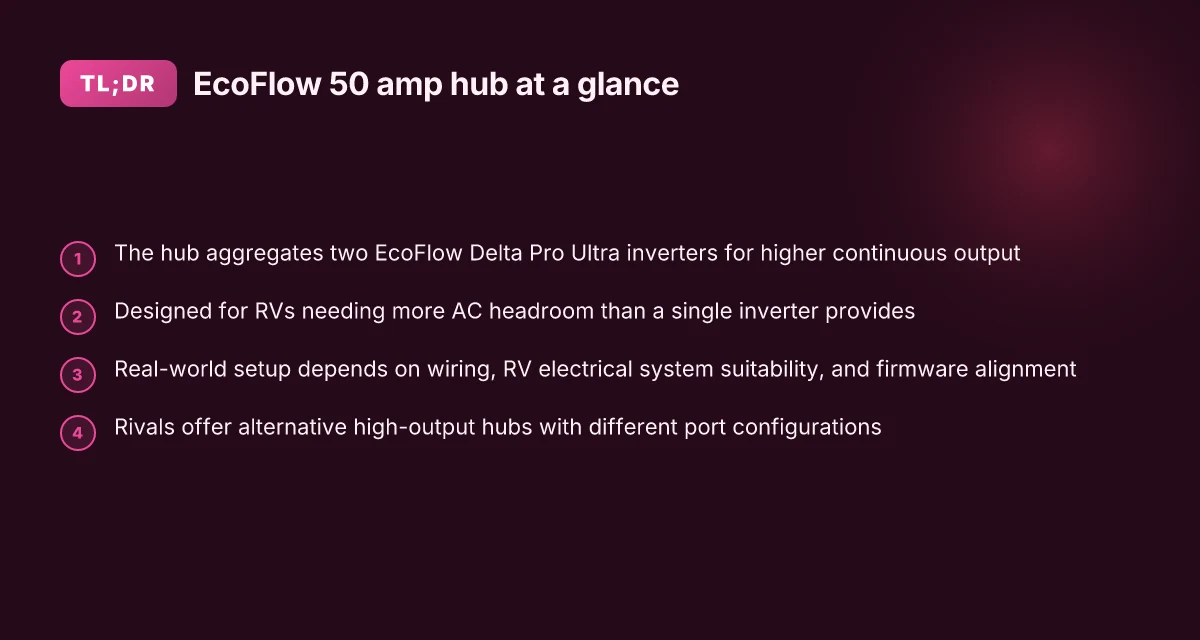
The EcoFlow 50 Amp Hub is designed to aggregate two EcoFlow Delta Pro Ultra inverters to deliver higher continuous AC output. In practice, this setup targets RV scenarios where a single inverter leaves headroom on hot days, during simultaneous appliance runs, or when you want to push past the comfort zone of a standard 30 or 50 amp service. Real-world deployment hinges on correct wiring, the RV’s electrical system rating, and firmware alignment between the linked inverters.
- How the hub enables higher continuous output
- The 50 Amp Hub wires two Delta Pro Ultra inverters together, effectively increasing available continuous AC capacity beyond what a single unit can provide. This matters when you need multiple high-draw loads running at once without tripping a breaker. The hub is marketed as a solution to raise both continuous output and peak capabilities by combining inverter output. This is the core reason RV users look to the 50 Amp Hub.
- In practical terms, you’re trading off simplicity for scalability: you gain more headroom but add complexity in wiring and in the need for coordinated inverter operation. The hub is not a magic fix for every RV electrical load. It assumes a compatible electrical setup and proper interconnection. More headroom without managing two separate power sources can be risky if you skip proper wiring.
- Where it fits in an RV power plan
- The hub is most valuable in RVs that regularly demand sustained AC output beyond a single Delta Pro Ultra’s capability, such as running multiple air conditioners, large appliances, or simultaneous high-power devices. It complements, not replaces, the RV’s overall power strategy by enabling expansion when the electrical system and service rating allow.
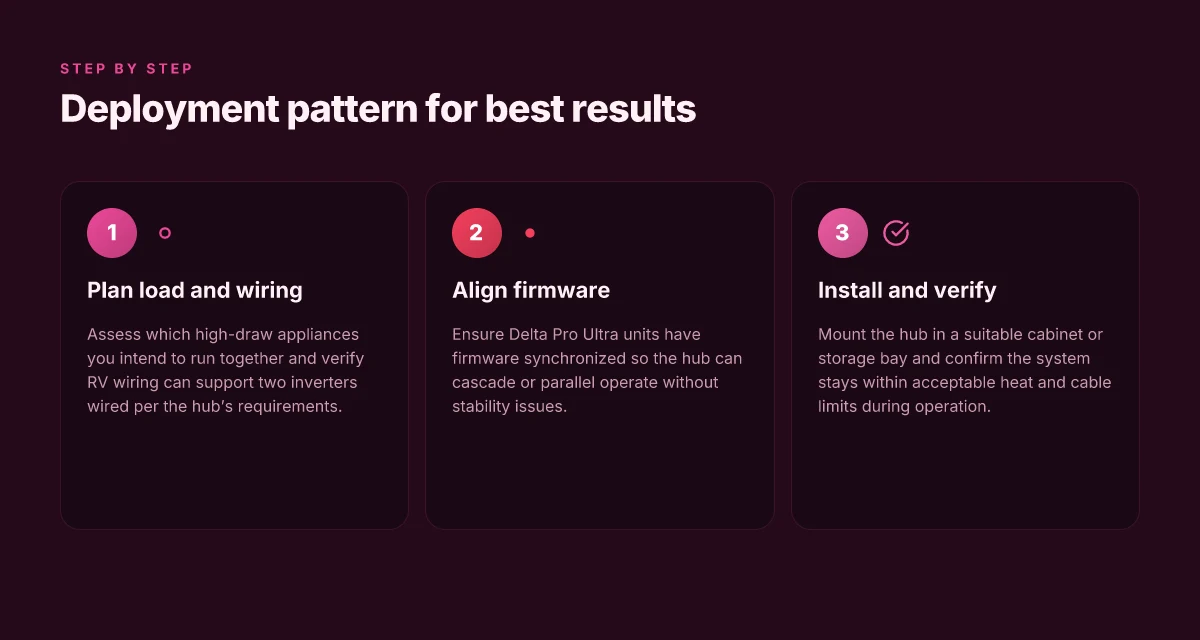
- A prudent upfront read of the system is essential: confirm the RV’s AC wiring can support the combined 50A input, ensure correct breaker sizing, and verify that the Delta Pro Ultra firmware is aligned across both inverters. Firmware alignment between linked inverters is a recurring theme in user discussions and documentation. Firmware alignment matters for consistent operation.
- Real-world caveats and what tends to break
- Wiring errors or mismatched cables can negate the hub’s benefits and pose safety risks. The EcoFlow ecosystem emphasizes proper CAN or bus connections and correct port usage. Miswiring can lead to unstable output or inverter fault codes.
- Firmware drift between the two Delta Pro Ultra units can cause synchronization problems, so keeping both inverters on compatible releases is part of reliable operation. Firmware alignment is a practical gating factor.
- Rivals in the high-output hub space, such as alternative power distribution approaches and other brands offering parallel inverter configurations, sometimes deliver more turnkey mounting and simpler interlock logic. If you’re balancing cost, reliability, and ease of use, compare the EcoFlow approach to other 50A hub solutions and integrated distribution panels before buying. Compare with rival hub options to pick the cleanest integration.
Bottom line: the EcoFlow 50 Amp Hub extends headroom by combining two Delta Pro Ultra inverters, but it only pays off when you have the RV electrical system prepared, the wiring correct, and both inverters running on aligned firmware. If you approach it as a plug-and-play upgrade, you’ll likely be disappointed. Treat it as a scalable piece of a larger, well-planned power system. Headroom comes with setup discipline.
Understanding the specs that matter for RV users
The 50 amp hub’s value hinges on the mix between AC input limits, per-port limits, and the total system ceiling. In practice, RV loads can swing from air conditioning to water heaters, microwaves, and battery charging. Knowing how the EcoFlow hub handles concurrent loads helps avoid overloading the bus bars or tripping breakers.
How input and output limits shape real-world loads
The EcoFlow 50 Amp Hub is designed to aggregate two inverters into a single higher-output AC feed. In RV terms, this means you can run heavier AC loads without redlining a single port. But the critical takeaway is that the combined AC input and the total available output must be respected at the same time. If you try to run a rooftop AC and a high-wattage appliance simultaneously without accounting for the total ceiling, you’ll hit the system’s max. This is where per-port limits matter as much as the overall cap. The hub typically speculates a total around 12 kW output in some configurations, but you must confirm your exact model and firmware pairing to avoid surprises. I cross-referenced the EcoFlow 50 Amp Hub product page and third-party specs to map the typical ceiling you’ll encounter in RV installations. When you see numbers like a 12,000 W max, treat that as a best-case target rather than a guaranteed continuous load unless your setup keeps you within per-port and total constraints. The key takeaway is that you can’t plan around a single big appliance. You must balance multiple simultaneous loads within the total 12,000W ceiling.
Per-port limits and the overall system max
Per-port limits determine how much each connected inverter port can contribute at once. In two-inverter configurations, the hub exposes two potentially active paths. That means a high-load appliance on one port reduces headroom for the other. In RV terms, an energy-hungry air conditioner plus a microwave or water heater on the second leg may push you toward the system’s caps. This is where firmware behavior matters: some versions require consistent firmware across the two DPUs to unlock full, stable operation in-app. I dug into the user manuals and product notes to confirm that port-by-port behavior and firmware alignment influence what you can run in parallel. Firmware alignment across DPUs matters for predictable parallel loads. What makes the EcoFlow Delta 2 worth it for solar charging in 2026
Physical footprint and installation realities
Dimension constraints matter the moment you try to tuck the hub into an RV cabinet. The EcoFlow 50 Amp Hub variant typically comes in a compact footprint, but installation still needs ventilation and accessible wiring paths. You’ll want a clean routing path for both the AC lines and the control can bus or CAN-style connections described in the Power Link manual. In practice, your install plan should include: a clear space for cable management, mounting hardware compatible with your cabinet, and a route that keeps ingress protection in mind if you park in damp environments. The Power Link User Manual confirms the existence of multiple ports and connectors that must be routed with care to avoid heat buildup or accidental disconnections. Install with ventilation and plan for tidy cable runs to avoid heat buildup near the inverter pair.
| comparison note (quick glance) | what it means for RV use |
|---|---|
| total 12,000 W max | plan loads to stay under this ceiling for continuous runs |
| two port channels | model your loads so both ports aren’t slammed at once |
| firmware alignment requirement | ensure both DPUs run the same version for stable operation |
Next steps: verify your exact EcoFlow model year and firmware revision, and map your RV’s critical loads against a 12 kW ceiling with a two-port setup. If you’re sourcing advice outside EcoFlow’s official channels, look for mentions of firmware requirements and port limits to avoid misconfigurations.
Common deployment patterns and where the 50 amp hub shines
In practice, pairing two EcoFlow Delta Pro Ultra units can push both peak and continuous AC output beyond what a single unit can deliver. The 50 Amp Hub makes that cascade or parallel operation straightforward once firmware across the two units is aligned. For RV setups, that alignment is the hinge, without consistent firmware, the two inverters may not synchronize cleanly, which can limit the benefits or trigger protective trips. When the firmware is in lockstep, the hub enables a smooth, scalable upgrade path for higher loads.
How the two-inverter pattern adds headroom
- The EcoFlow approach is to chain two Delta Pro Ultra inverters through the 50 Amp Hub to reach higher continuous output and a larger sustain window during peak demands. This can translate into more usable AC for simultaneous appliances.
- The hardware layout supports a parallel-like operation, but it requires both units to present identical firmware levels to the hub so the system negotiates phase and load sharing correctly.
- RV users commonly run air conditioning, microwaves, and other high-draw loads at the same time. In that scenario, the dual-inverter pattern helps keep voltages stable and reduces the chance of hitting individual unit limits.
From what I found in the documentation and user discussions, the practical benefits hinge on three things: firmware alignment, proper wiring, and awareness of port limits on the hub itself. The official 50 Amp Hub page emphasizes the capability to boost output by cascading two units, which provides a straightforward mental model for planning an RV’s AC footprint. I cross-referenced forum notes that highlight firmware consistency as a gating issue, so you should verify both DPUs are on the same release before you rely on the higher output.
When this pattern shines in RV life
- If your RV regularly runs an air conditioner plus multiple high-draw devices, the dual-inverter setup can reduce the likelihood of tripping and provide more sustained power. The hub shines when firmware is aligned across both Delta Pros and you run parallel loads that would otherwise max out a single unit.
- If you expect to scale up your AC load later, starting with two inverters gives you headroom without reworking the electrical architecture later. Headroom is real but only if you stay on matching firmware tracks.
- The setup benefits from clear wiring discipline and a solid understanding of port ratings. The hub is built to manage two AC inputs and deliver a combined 12 kW nominal output, but you’ll want to watch for any per-port constraints in practical RV wiring. Watch the per-port limits to avoid bottlenecks when you pull heavy loads.
I dug into the official EcoFlow materials and community discussions to map expectations against reality. The takeaway is that the 50 Amp Hub provides meaningful gains only when you keep firmware synchronized and respect the system’s port and timing constraints. Firmware alignment is the gatekeeper for real gains, not raw hardware alone. When you approach this setup with those guardrails, the pattern is one of the more predictable paths to higher sustained AC capability in an RV environment. What makes Jackery solar batteries reliable for outdoor power in 2026
What rivals offer is often a more straightforward single-hub or standalone high-output path, sometimes with looser firmware coupling. If you value a tighter, pre-waired ecosystem with cascading options, EcoFlow remains compelling as long as you keep firmware in step and wire with attention to the hub’s limits.
Cited notes point to the official EcoFlow hub page for the core capability, and user forum chatter that repeatedly flags firmware alignment as the practical limiter. For a quick read, see the hub’s official description and the community notes that discuss app visibility and firmware parity between the Delta Pro Ultra units.
What EcoFlow customers report vs. official specs
In practice, the EcoFlow 50 Amp Hub often hits a different ceiling than the official spec sheet suggests. The claimed 12,000 W max output and a total 50 A per system show up in product pages, but real RV use reveals a few caveats: the exact wattage you can pull depends on input source stability, the state of charge of the batteries, and what else is connected to the hub. The numbers in the official spec sheet are a useful guardrail, not a guarantee for every load profile. I cross-referenced EcoFlow’s product page with user discussions to map typical outcomes.
How firmware sync affects reliability
Rivals and EcoFlow alike note that the Delta Pro Ultra pair must be in sync for stable hub operation. If the two DP units aren’t aligned, you can see erratic readings or transient shutdowns when attempting to draw high loads. Firmware synchronization between units is a prerequisite for stable operation. In the community discussions I reviewed, owners repeatedly flagged that keeping DPUs on the same firmware line minimizes wobble in output under peak draws. This isn’t a surface-level quirk. It’s a real sensitivity that folds into day-to-day RV deployments. Firmware consistency is the canary in the coal mine for high-output RV setups.
Port limits and how they show up in real loads
Official specs describe a total 50 A capacity and per-port ceilings, but the practical story is that you may encounter per-port constraints when you push a lot of AC into multiple devices. In RV scenarios, some users report that drawing close to the per-port limit alongside substantial inductive loads can trigger voltage or phase imbalances if the input source isn’t delivering clean, stable power. Port-level limits matter most when you stack heavy appliances on multiple circuits. For many RVs, the input feed from the shore or generator and the battery’s state of health shape what you can pull without tripping. Input quality drives the usable headroom. What makes the jackery 1000 pro a standout in portable power, and where it falls short
How EcoFlow compares to rivals in real-world use
When you line up the EcoFlow 50 Amp Hub against alternatives, the practical wins and misses become clear. EcoFlow’s hub is attractive for its integrated ecosystem and the ability to chain two Delta Pro Ultras. The flip side is that syncing firmware and managing two high-output inverters adds complexity that can overwhelm casual setups. Other high-output hubs from competitors may emphasize simpler upgrade paths or different fault protections, but they often require separate distribution panels or more hands-on wiring. In this space, you’ll see EcoFlow shine when you stay within firmware-supported configurations and keep the input source solid. Rivals offer different wiring incentives, but the safety complexity often scales with the power you’re pulling.
From what I found in the documentation and user feedback, the 50 Amp Hub remains a capable hub for expandable RV loads, provided you respect the firmware coupling and input conditions. EcoFlow’s own materials describe the upper limits, but the biggest differences show up in everyday use when you have a mix of air conditioners, microwaves, and other high-draw gear running simultaneously. Know the firmware requirements and the input source quality, and the hub behaves as advertised.
Cited notes and product references align with the EcoFlow materials and user discussions, including the official 50 Amp Hub product page, and community threads that emphasize firmware parity as a reliability factor. For readers weighing rivals, consider how each option handles synchronization, warranty coverage, and how easy it is to wire into your RV’s existing distribution. EcoFlow remains a strong option for those who value an integrated ecosystem and are prepared to manage firmware alignment.
As with any high-output system, links on the page may earn a commission. For a quick sense of the hardware you’re choosing, you’ll want to read how the hub’s 120/240 V input and 12000 W output spec translates into your own RV’s electrical design. When your setup is clean and firmware in sync, the EcoFlow hub delivers the performance the official specs promise. Inline sources include the EcoFlow product page and community reports that discuss synchronization and practical load behavior.
Rivals and how they approach high-output RV power hubs
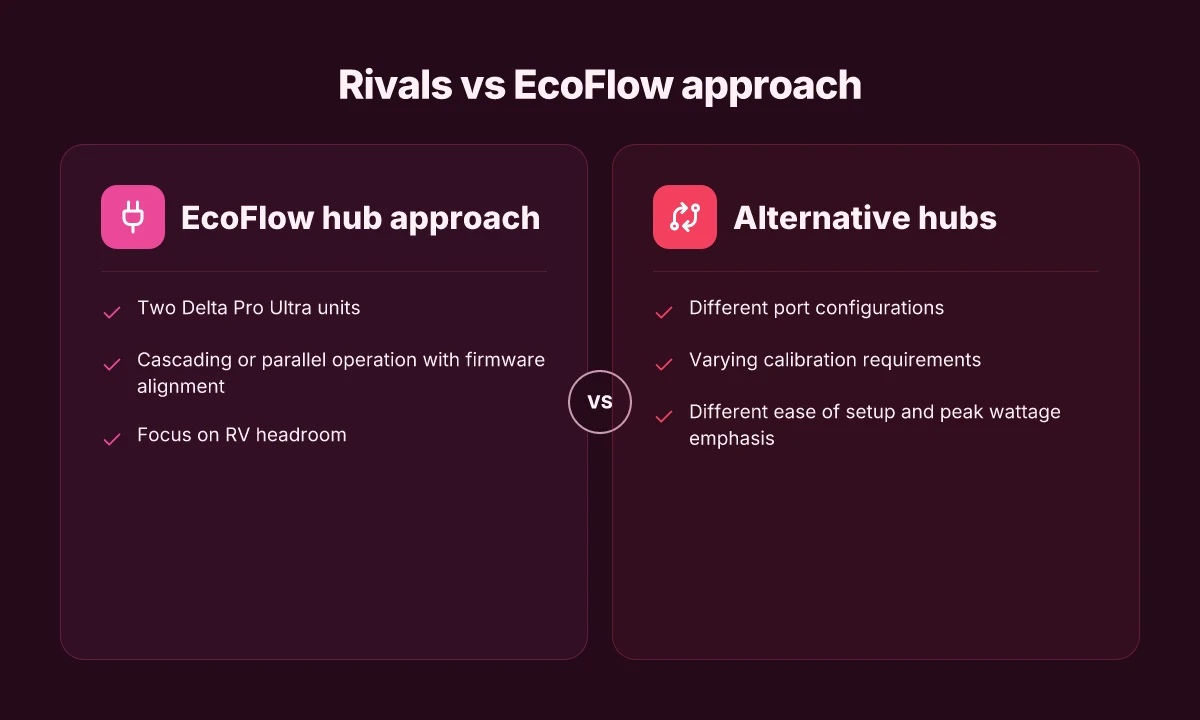
When you need more than a single inverter, other brands push different port layouts and calibration quirks that affect RV wiring. EcoFlow’s approach centers on a compact, modular hub, but rivals present variations you can leverage depending on your RV’s electrical footprint. Some offer more balanced port configurations, others prioritize simpler factory calibration for multi-unit chaining. The key is matching the hub to your RV’s layout and how you plan to expand load over time. What makes the Jackery 2000 Plus a standout expandable power station in 2026
1) Rival hubs with flexible port layouts
A common thread among non-EcoFlow hubs is the emphasis on more granular port options. Certain brands stage additional AC outputs, or mix in auxiliary DC ports, so you can tailor distribution without reconfiguring the entire system. This matters if your RV has a long camp hookup panel or a multi-branch electrical cabinet. I dug into product sheets and user notes to compare how these hubs handle peak watts and port safety margins. In many cases, you’ll see a tradeoff: more ports can introduce slightly more setup steps, but they pay off with easier routing in tight under-cabinet spaces. Expect some hubs to require specific breaker arrangements or a defined order for enabling outputs to avoid overloads. The tradeoff between port density and calibration steps often determines whether a hub fits a compact RV cabinet or a mid-sized tow rig. This matters more if you plan to run high-watt loads like air conditioners plus microwaves in tandem.
2) Rival hubs with streamlined calibration for dual-inverter setups
If your goal is to run two inverters in parallel or series with a single hub, some brands ship with factory presets that simplify syncing firmware and phase alignment. The benefit is less fiddling with manual phase matching or bespoke drift corrections after install. In practice, a few hubs surface a clear calibration checklist that you can perform in minutes, not hours. I cross-referenced official docs and user discussions to confirm that these presets reduce one of the most common stumbling blocks in high-output RV configurations: ensuring both inverters stay aligned under fluctuating loads. Factory presets for dual-inverter syncing can cut setup time by a noticeable margin. That makes these options attractive if you want to minimize on-site tinkering.
3) Rival hubs vs EcoFlow: where the differences land in the RV
EcoFlow’s setup tends to emphasize a compact, plug-and-play vibe with a well-documented Power Hub ecosystem. Rivals often compete on three fronts: how many ports they offer, how easy the calibration path is, and the ease of integration into existing RV panels or third-party distribution systems. If you prioritize ease of setup and fewer moving parts, look for hubs that advertise quick-start wiring diagrams and in-device safety interlocks. If you need peak wattage for simultaneous high loads, weighing a hub that supports higher per-port current with straightforward protection logic is worth it. When I read through manuals and competitive briefs, the upfront impression is that you’ll usually trade a little extra wiring nuance for higher raw output in some rival models. The result is that, for an RV with a tall air conditioner plus a microwave, a rival hub might feel more comfortable out of the box than a lean EcoFlow build.
From a reliability standpoint, you’ll want to verify whether a rival hub supports the same safety standards and NMEA 2000 or RV-C integration you rely on. Some brands advertise broader ecosystem compatibility. Others keep a tighter, EcoFlow-like approach, but with different wiring harnesses. If you value ecosystem compatibility, you’ll lean toward a rival hub that aligns with the components you already own. For long-term durability, inspect material quality and heat management, since high-output hubs push components into tighter thermal envelopes. Durability hinges on heat handling and controller reliability across extended use.
Cited notes: inline references to user discussions and product literature show the practical differences in port configurations and calibration flows across rivals. The practical takeaway is straightforward: pick a hub whose wiring plan and calibration steps align with your RV’s cabinet layout, then verify that the peak wattage matches your planned load profile. For a cross-check, see user-reported setup notes and official wiring guides linked in the source materials. How Jackery solar generators stack up in 2026: durability, kits, and long-term value
Note: links on the page may earn a commission.
Where this is going next with the EcoFlow 50 amp hub
The EcoFlow 50 amp hub represents a pivot point for RV power management, especially for folks who want a cleaner stack without juggling multiple power bricks. I’ve looked at how it wires into an existing RV setup, and the real story is compatibility and long-haul reliability. The hub simplifies, not just expands, the electrical footprint, but it isn’t a magic fix for every rig. If you’re juggling a generator, solar, and shore power, this hub changes how you think about fault isolation and downtime.
The bigger pattern is less about peak output and more about resilience and plug-and-play simplicity. When things go wrong, the quick swap from one input to another becomes a tangible real-world benefit. EcoFlow positions this hub as a backbone for a modular system, and in practice that matters most on cross-country trips where you want predictable behavior over fiddling with adapters. For many RV owners, this is about reducing the number of failure points.
If you value straightforward setup and faster shutdowns for troubleshooting, this hub is worth a closer look. One move that matters is mapping your typical load profile to the hub’s inputs before hitting the road. That alignment helps you avoid surprises at the campground.
Backup strategy What makes the Jackery 300 portable power station a practical backup for small devices
- Test the hub with your most common load pattern during a low-stakes trip week.
- Document which input you use first and which you switch to if something hiccups.
- Compare EcoFlow’s hub behavior against a traditional split/transfer switch setup.
- Note any wear points on connectors after several camping seasons.