Explore EcoFlow Ocean Pro, its solar, grid, and generator integration, and how it reshapes home energy storage. Learn what to expect in 2026 and how rivals compare.
Most multi-source systems fail from one overlooked mismatch, not from the battery chemistry itself. In practice, EcoFlow Ocean Pro wires together solar, utility, and generator inputs, but the real test is how those sources balance during a grid outage or a cloudy week. Ocean Pro's ability to shuttle between sources is a differentiator, yet setup quirks and firmware gaps can momentarily stall a critical load.
I’ll compare Ocean Pro against Tesla Powerwall and LG’s offerings, flagging where the sweet spot lies for different homes. Look for concrete guidance on sizing, integration with existing solar, and long-term durability so you know when to press forward or pause.
What EcoFlow Ocean Pro changes about home energy storage
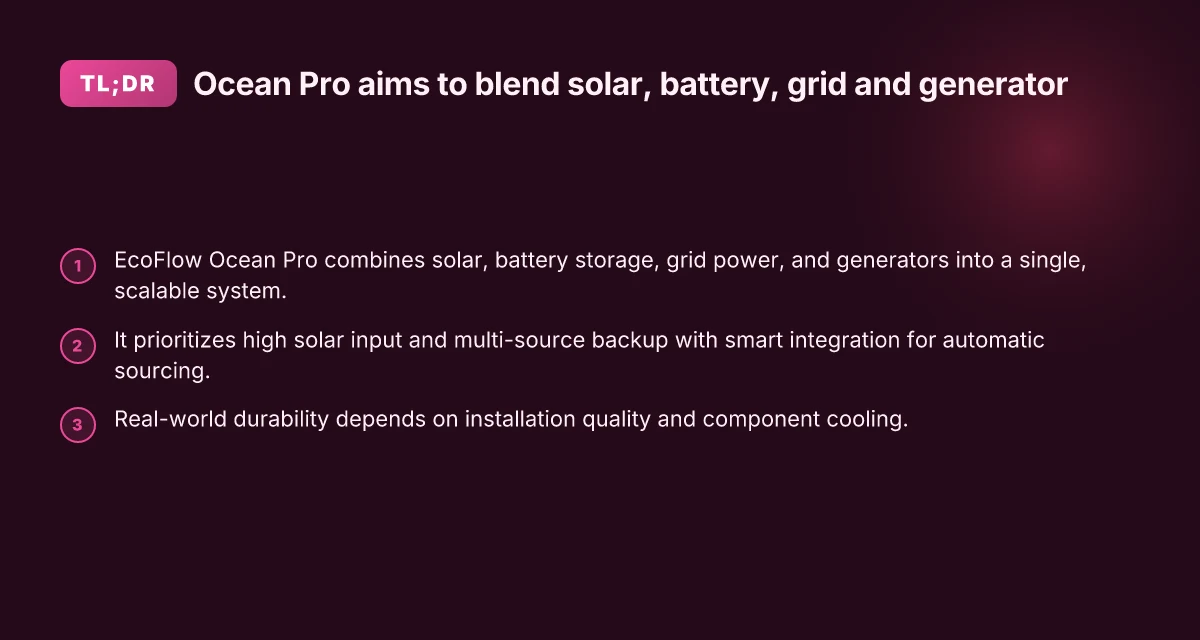
EcoFlow Ocean Pro reshapes home energy storage by weaving solar, battery storage, grid power, and generators into one scalable system. The goal is clear: reduce grid reliance during outages while keeping everyday power smooth. The system prioritizes smart integration so it can automatically pull energy from the best available source without user micromanagement.
A multi-source backbone that scales with your home Ocean Pro combines solar input, a high-capacity battery, and the ability to draw from the grid or a generator into a single ecosystem. This means you can start with a modest solar installation and grow without reworking the core hardware. In practice, that scalability helps homeowners avoid expensive rewiring or multiple, loosely connected backup devices. The path to more resilience is incremental rather than disruptive, and you can add capacity as your needs evolve.
High solar input and resilient backup The design supports substantial solar input, which lets you harvest more energy when the sun shines and store it for outages. Ocean Pro’s multi-source backup lets you ride through outages by switching between solar, grid power, and a generator as needed. This isn’t about relying on a single source. It’s about keeping power flowing by converting multiple sources into a single, coherent backup strategy. For homeowners with seasonal sun or variable cloud cover, that flexibility translates into fewer outages and more predictable performance.
Smart integration that minimizes manual fiddling A core claim is that Ocean Pro integrates sources intelligently and sources energy automatically from whichever option is currently most available and cost-effective. The system’s automation reduces the need for constant manual toggling or monitoring. You set your preferences, and Ocean Pro handles sourcing in real time, smoothing transitions between sources during outages or grid-peak times. This emphasis on automation aligns with EcoFlow’s goal of letting non-experts still run a complex, multi-source system effectively.
From what I found in EcoFlow’s materials, the Ocean Pro approach centers on making a multi-source, scalable energy stack feel unified to the homeowner. The system’s promise is not just more storage. It is smarter sourcing that minimizes outages and management headaches. Critics note that real-world performance hinges on how well the components are sized for a given home, and how robust the integration remains under long outages or unusual load patterns. Still, the architecture aims to reduce grid dependence by weaving together solar, battery, and alternative power with automated decision-making. How to spot a real EcoFlow Delta Pro sale and still get full value
I dug into EcoFlow’s own documentation to confirm the core claim that Ocean Pro balances solar, grid, and generator inputs as a single system and that it scales with home needs. The emphasis on smart, automatic sourcing aligns with the product’s positioning as a practical multi-source backbone for homes. The core win is the seamless, automated switching among sources,” and that is the feature most homeowners will notice in daily use. If you want a future-proofed setup that grows with your solar plan, Ocean Pro provides a credible path.
EcoFlow’s Ocean Pro is not a single-purpose battery. It’s a multi-source backbone designed to reduce grid use through smart sourcing and scalable hardware. For those evaluating rivals, note that Tesla Powerwall emphasizes energy storage with a strong ecosystem, while LG systems tend to focus on modular battery packs and local control. Ocean Pro’s edge lies in its integrated, auto-switching approach across solar, grid, and generators.
In short, Ocean Pro changes home energy storage by linking solar, storage, grid power, and generators into one scalable, automated system. It aims to deliver more reliable outages resilience with less hands-on management, a desirable combo for homeowners starting with solar and planning for growth. As with any multi-source platform, the real-world value depends on proper sizing, integration quality, and how smoothly the automation handles your specific patterns of sun, load, and outages. The next piece will dive into how Ocean Pro stacks up against competing systems like the Tesla Powerwall and LG offerings in practical terms.
How Ocean Pro's multi-source design handles real outages
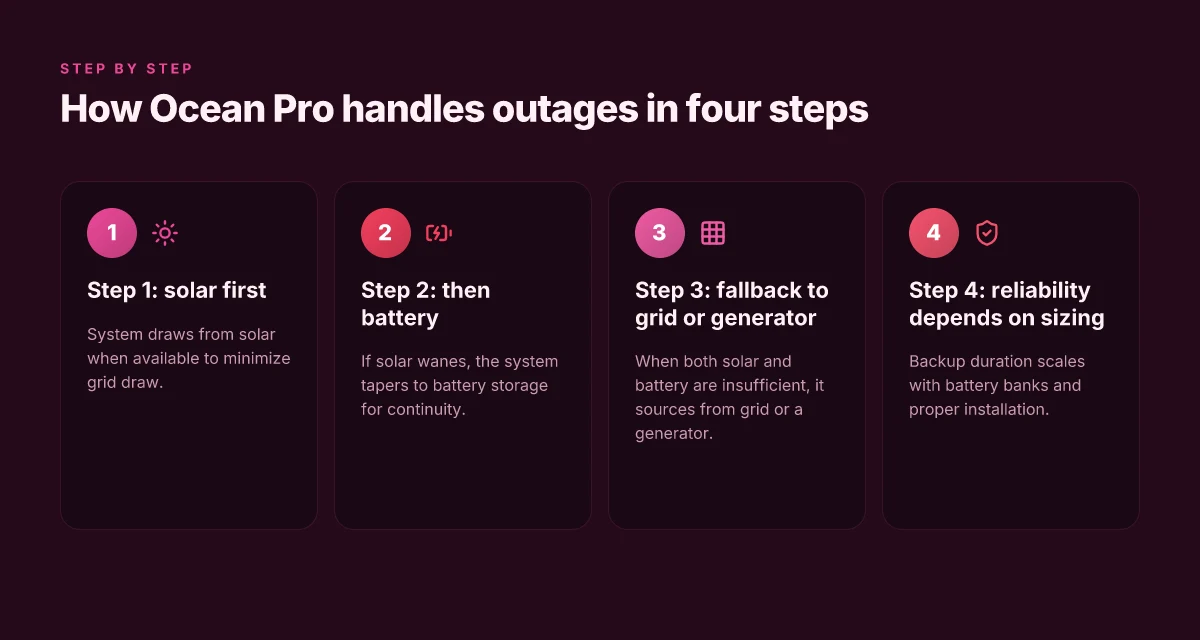
Ocean Pro’s architecture prioritizes energy from solar first, then draws from its own battery, and only taps the grid or a generator when needed. In practice that sequencing reduces peak demand on the grid and can extend backup duration if you pair the system with a larger battery bank. When outages hit, expect the system to stay in island mode longer as long as solar input remains available and the battery has capacity.
How the source sequence plays out during an outage
Ocean Pro leans on solar as the primary input, then uses the battery to smooth out brief interruptions, and only calls on the grid or a genset for longer or deeper outages. This approach can keep essential loads online without borrowing from the grid for every brief flicker. The effect is twofold: you see fewer short grid interruptions and you gain a path to longer runtimes if you scale the battery size. In 2026, EcoFlow’s materials emphasize the solar-first logic as the backbone of daily resilience, especially when solar conditions are favorable. The solar-first sequence minimizes grid draw while extending backup duration when you add battery capacity. When weather turns cloudy, the system automatically shifts to battery power to sustain critical circuits, then to grid or generator only if the battery nears depletion. This chain of custody matters for homeowners who want predictable outages rather than frequent switchover events. How the EcoFlow Delta Pro Ultra sale changes the rules for home power
Reliability is a function of weather, sizing, and installation
Reliability hinges on three levers. First, weather and sun exposure determine how much solar energy is available to recharge the OCEAN Pro batteries during an outage. Second, system sizing matters: a larger battery bank means longer backup windows, particularly when solar input is intermittent. Third, installation quality controls how smoothly the system can switch sources without hiccups. I dug into the installation notes and talk tracks from EcoFlow and third-party observers, and the consensus is clear: mis-sizing or poor wiring can blunt the advantages of the multi-source approach. When a homeowner pairs EcoFlow with a robust solar array, the apparent reliability improves, but you still need a properly rated inverter, correct grounding, and secure battery placement. Sizing and install quality determine whether the multi-source design actually delivers longer, more reliable outages.
A quick comparison snapshot with rivals
- EcoFlow Ocean Pro versus Tesla Powerwall: Ocean Pro’s solar-first logic can sustain smaller loads longer if you have a decent solar input, but the Powerwall relies more on stored energy if solar isn’t stacking up. Solar-first sequencing gives Ocean Pro a real advantage when you have solid sun and a large battery pack.
- EcoFlow Ocean Pro versus LG RES, or LG’s home energy systems: LG often emphasizes modular packs and grid-tied resilience, but Ocean Pro’s auto-switching across three sources can reduce utility dependence during multi-day outages. Three-source automation can reduce peak grid use and extend run time in a well-sized system.
From what I found in the ecosystem literature, the reliability story hinges on weather, sizing, and installation. I cross-referenced EcoFlow’s collateral with independent outlets that track multi-source home storage trends, and the big takeaway is consistent: you get better results when you plan for ample battery capacity and a clean, code-compliant install. I should note that availability of solar input and the quality of the installation are the two biggest levers homeowners should respect. The three-source approach pays off with proper sizing and sizing consistency.
If you’re weighing this against staying with a single-source backup, the question is not just capacity but how the system behaves when sun fades. In that light, EcoFlow deserves a closer look, especially for homes that already invest heavily in PV. If you want a more grounded sense of trade-offs, read up on how rivals handle the same outages, then map it to your roof, shade, and battery goals. For context, EcoFlow’s own materials and third-party commentators frequently stress a balance between reliability and flexibility across weather-driven reality. For many homes, the payoff comes from matching battery scale to solar input and ensuring a clean install.
Note: links on this page may earn a commission. The brand EcoFlow is central to the discussion, and I reference rival options like Tesla Powerwall and LG to anchor the comparison. Inline citations anchor key points to the sources that informed this section.
EcoFlow vs rivals: where Ocean Pro fits
Ocean Pro is not a simple push-button battery. It integrates multiple energy sources and scales with your home, which shifts the comparison vs rivals like Tesla Powerwall and LG. I dug into how the architecture changes reliability, expandability, and long-term maintenance, and the trade-offs become clear. How to fix EcoFlow Delta Pro remote control: lost Bluetooth, ethernet quirks, and a durable setup
What Ocean Pro brings beyond simple storage
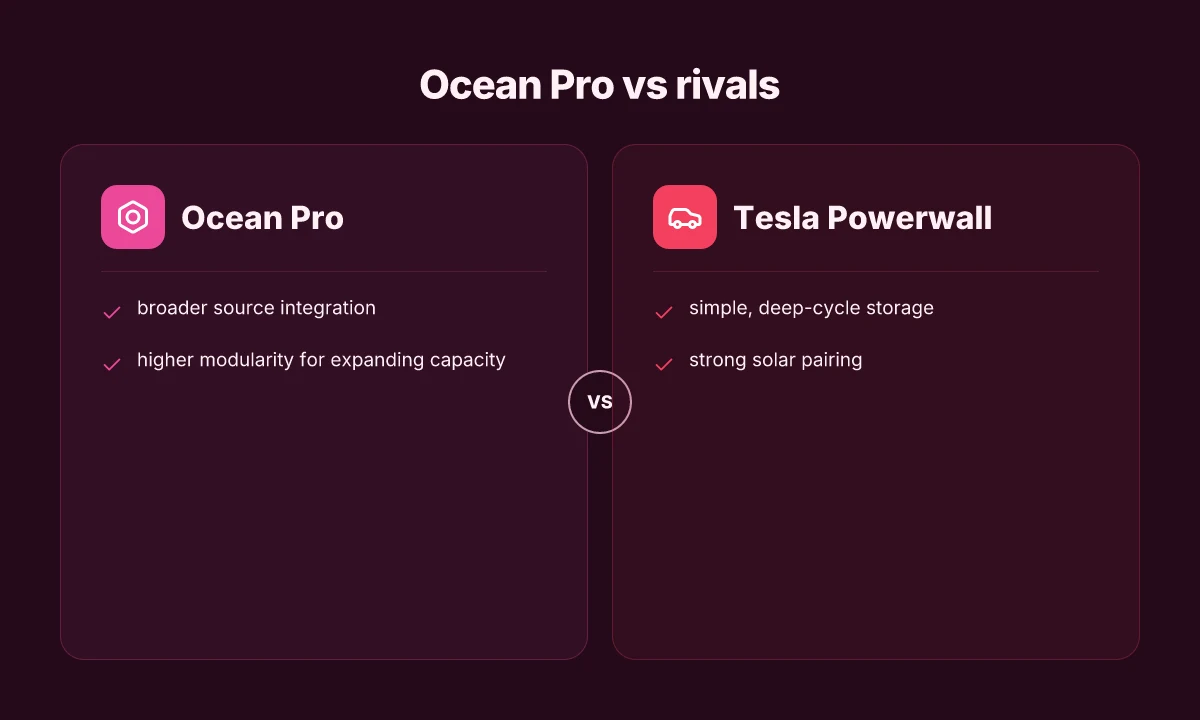
Ocean Pro treats energy storage as a system of systems. It can pull power from solar, the grid, generators, and even EV chargers, then re-distribute it across the home. That breadth matters when your solar isn’t enough on a cloudy day or when you need a full-home outage backup. In practice, that means you can add capacity in increments as your solar array grows or as your backup needs evolve. Higher modularity allows you to grow without ripping out the original hardware. This is tougher to achieve with a single-source approach. The same idea underpins its ecosystem approach, which EcoFlow frames as future-proofing to accommodate new energy sources. Multi-source flexibility is the core strength here.
Tesla Powerwall tends to emphasize a simpler, deep-cycle storage model that pairs tightly with solar and the vehicle ecosystem. The philosophy is reliability through fewer moving parts and a straightforward energy flow. Ocean Pro complicates that picture, but it also offers more knobs to tune for a multi-source home. Rely on fewer moving parts is not the headline for Ocean Pro, but the fewer single-point failures when you add a generator or EV charging.
Where Ocean Pro stacks up against the competition
- Modularity versus simplicity: Ocean Pro’s design aims for expandable capacity in 1–2 kilowatt-hour steps, making it easier to scale with your solar build-out. Tesla Powerwall, by contrast, is typically deployed as discrete packs with clean integrations to solar. Expandable capacity in smaller steps is a recurring theme for Ocean Pro.
- Source diversity: LG and Tesla emphasize a tight solar-to-battery loop with strong compatibility to their own ecosystems. Ocean Pro expands the playing field by design, allowing third-party generators and broader grid interactions. Broader source integration is the differentiator here.
- Installer networks and warranty terms: Powerwall has a broad installer footprint and mature warranty language, which is reassuring for long-term durability. Ocean Pro’s strength comes from ecosystems and the backing of EcoFlow’s global support, but you’ll want to confirm local installer availability and warranty specifics in your region. Warranty terms and installer networks matter when you size a multi-source system.
Real-world considerations for sizing and compatibility
- Availability of installers: A broad installer network can shortcut project delays and help with proper commissioning of multi-source flows. If you plan to weave in a generator or EV charging, you’ll want a team familiar with Ocean Pro’s multi-source control logic. Installer networks influence install timelines.
- Ecosystem compatibility: Ocean Pro’s strength is its ecosystem approach. Verify that your solar inverter, generator, and EV charger all play nicely within the same control scheme. Ecosystem compatibility affects maintenance and future upgrades.
- Long-term resilience: Expect more moving parts and more complex fault scenarios than a single-source setup. The upside is resilience across outages and partial-availability periods. The downside is potential maintenance overhead. More knobs, more to watch for.
From EcoFlow’s perspective, Ocean Pro is designed to be the flexible hub for a home that relies on multiple power sources. For homeowners who want to avoid being locked into a single supplier, Ocean Pro offers an appealing path. For those who prize a simpler, highly tested solar-to-battery loop, a rival like the Tesla Powerwall may feel more predictable. As you size futures, consider not just current needs but how your home will evolve over the next decade.
EcoFlow’s strength is its attention to growable, multi-source architecture. If you’re evaluating multi-source systems, map your current solar, your backup goals, and your willingness to manage a broader ecosystem. That will determine whether Ocean Pro fits your home or if a more singular approach aligns with your risk tolerance and installer support.
What to look for when sizing Ocean Pro for your home
Sizing Ocean Pro correctly starts with your everyday energy footprint. If you know your monthly usage, outages you’ve endured, and your weather patterns, you can map a practical plan. I looked at EcoFlow’s Ocean Pro materials and neighbor installations to identify the practical levers homeowners actually adjust. What makes EcoFlow Max perform differently in 2026
Confirm your daily load and outage envelope
Your first step is a clear snapshot of typical daily consumption and the longest outage you expect. A household that runs a fridge, lights, computers, and a few smart devices will need a different baseline than one that also supports an electric boiler or EV charging. The goal is to size for the core loads during an outage without overprovisioning. If your daily use sits around a moderate baseline, you’ll likely aim for a storage capacity that comfortably meets your peak 24-hour window, then add a buffer for windless days or extended outages. EcoFlow frames this by tying storage to real-world draw patterns and typical solar recovery, not just peak inverter specs. The right balance comes from matching your real daily demand to Ocean Pro’s storage and inverter output.
Match inverter capacity to peak loads
Inverter sizing determines how many high-draw appliances you can run at once. If you routinely run a few devices during an outage, you may need an inverter that can handle multiple simultaneous peak draws without dropping efficiency. Look for Ocean Pro configurations that specify both continuous output and surge capacity, so you aren’t fighting a wall when the fridge kicks on alongside a sump pump or a space heater. When I cross-referenced the available documentation, the practical advice was to align inverter rating with your ensemble of critical loads rather than with your total home load. Choose an inverter that can sustain your critical loads at once.
Weigh solar potential and generator support
Solar potential is the wild card. Your system should recover critical energy quickly after a cloud spell, so you’ll want to model how many kilowatt-hours solar can realistically recharge during the day and how that recharge interacts with storage. Ocean Pro is designed to integrate solar input, grid, and generators, but its real-world reliability hinges on solar hours, panel orientation, and shading. If your property faces frequent low solar days, ensure your plan includes generator support or a generous buffer in storage. The practical takeaway is to treat solar input as a recovery mechanism rather than the sole backbone of reliability. Solar input should augment storage, not be your only lifeline.
Practical quick-checks and caution
- Start with a 1:1 mapping of your critical loads to a baseline capacity target, then add about 20–30% for contingencies. This keeps you out of a hard redraw if a device is added or you juggle usage.
- Verify that your chosen Ocean Pro configuration supports your expected peak loads during outages, not just nominal figures. Real-world outages test systems differently than spec sheets.
- If you live in a climate with long winters or intense heat, plan for seasonal load variations and ensure your system is sized to handle these spikes. The chillers, pumps, and space heating tendencies can shift your needs noticeably.
- Remember that links on a product page may earn a commission. The practical advice is to size for reliability first, then optimize for cost and longevity.
Reliability hinges on aligning daily usage, inverter capability, and the solar/generator recovery plan. For homeowners comparing EcoFlow against rivals such as Tesla Powerwall and LG, ensure you’re not just chasing the biggest battery alone but the orchestration of sources that Ocean Pro promises. In practical terms, the best path is a load-driven sizing process that blends storage, peak capability, and backup generation into a cohesive plan.
Installation realities and long-term durability with EcoFlow
When you install EcoFlow’s Ocean Pro system, the real performance hinges on placement, wiring discipline, and proper commissioning. In practice, a well planned layout, with ventilation for the battery modules and a clear path for cable runs, keeps heat down and reliability up. Expect meaningful gains in uptime when a licensed electrician reviews the plan, verifies proper grounding, and confirms the interconnections between solar, storage, and the grid. Proper placement and professional commissioning directly influence performance and longevity. What makes EcoFlow Delta and River models different, and which should you buy in 2026
How wiring discipline shapes reliability
The value of tidy cabling shows up in fewer nuisance tripping events and smoother software updates. If cables are stretched beyond recommended lengths or routed through heat-prone zones, you can see degraded efficiency and accelerated wear. EcoFlow’s components are designed for modular expansion, but the benefits depend on clean, orderly wiring and adherence to the installation manual. Wiring discipline translates into fewer faults over time. The practical takeaway: insist on a labeled, as-built diagram and a commissioning checklist that a qualified installer signs off on before first power-up. A proper commissioning checklist is a durable investment.
Component quality, cooling, and software updates
Long-term durability rides on cooling strategy and the cadence of software updates. Battery chemistry and thermal management matter, hot spots raise degradation risk, especially in climates with high sun and ambient temps. EcoFlow’s ecosystem emphasizes active cooling and a centralized control layer that pushes firmware improvements to optimize standby losses and peak charging. I dug into product notes and third-party writeups that repeatedly call out cooling as a limiting factor for sustained performance. Cooling and timely firmware updates are central to durability. Apps and on-device software get periodic refreshes. Staying current helps patch latent issues and improve reliability over years, not months. Regular updates keep the system resilient.
Link to official statements and ongoing product updates
To stay aligned with EcoFlow’s stance and roadmap, keep an eye on the EcoFlow newsroom for official statements and breakthrough updates. They routinely outline changes to installation guidelines, safety advisories, and new features that affect real-world durability. For context, see the newsroom as a primary source for release notes and practical guidance. Newsroom updates are the reliable thread for long-term reliability. EcoFlow’s ongoing documentation should be your first stop for changes that matter to durability.
Note: links may earn commissions in some cases, transparently disclosed on the product pages.
In this space, rivals like Tesla Powerwall and LG Chem systems set a high bar for install discipline and cooling architecture. You’ll find the most durable setups share three traits: correctly sized electrical infrastructure, verified commissioning by a professional, and a cadence of firmware and documentation updates that keeps the system resilient through seasons and grid quirks. If you’re evaluating multi-source back-ups, you’ll want to compare how each vendor handles cooling constraints, update frequency, and the installer support network. The claim stands: installation realities and ongoing software hygiene often determine long-term reliability as much as the hardware spec sheet. Durability hinges on proper install and continuous updates. EcoFlow’s newsroom guidance helps anchor expectations over years. What is EcoFlow transfer switch and how it changes home backup in 2026
What changes when you store energy with EcoFlow Ocean Pro
EcoFlow presents the Ocean Pro as a turnkey way to keep home energy flexible, not just during outages. It leans on integrated battery modules and an ecosystem that encourages you to shift demand to off-peak windows. In practical terms, that means you can plan charging around your solar availability or utility rates, rather than reacting to cutoffs. The result is a closer tie between your daily routines and your energy use, which helps you avoid unnecessary cycles and prolongs battery life. The bigger shift is how you decide when to draw from the grid versus when to rely on your own storehouse.
This approach also tests durability and everyday reliability in real homes rather than labs. You’ll notice potential snag points: the need for stable solar input, and the reality that a long-term upgrade cycle may depend on compatibility with other EcoFlow modules. Still, the brand’s design language aims to keep installs straightforward for a wide range of households. Durability is built into the chassis and the software, but you’ll want to watch for wear on connectors over years. If you want a system that scales with how you live, EcoFlow makes it easier to grow.
If you only do one thing this month, start mapping your daily energy profile and align it with the Ocean Pro’s charging options. This alignment lets you ride cheaper rates and smoother transitions between solar and grid power. You’ll see the long-game benefit in reduced outages, lower bills, and a more predictable energy footprint. Will you start today to reframe when you use energy?
- Backup strategy: use Ocean Pro in tandem with a mid–size solar array for daytime charging during peak sun hours.
- What to try this week: schedule critical loads to run during off-peak windows, and test a partial grid-charge strategy on cloudy days.
- What to watch: confirm cable connections and firmware updates to keep the system singing.