Explore EcoFlow customer reviews to understand real-world performance, durability, and reliability. Learn what buyers praise and what they wish was better.
A dramatic split in real-world use shows EcoFlow is praised for steady performance under moderate loads but challenged by heavier off-grid drains where rivals like Jackery and Goal Zero edge out on longer runtimes. EcoFlow's durability signals show up in build quality and heat tolerance, yet users flag tradeoffs when lugging large packs for extended camps. The takeaway is concrete: pick a model that balances weight and capacity for your setup, and compare to Jackery and Goal Zero to see who actually runs longer in your typical campsite or emergency scenario.
This piece cuts through marketing with real-user patterns from camping, RVing, and off-grid prep. Expect to see how different EcoFlow models fare in hot sun, cold nights, and repeated USB-C and AC cycles, plus what failures tend to appear and how long batteries hold up over seasons. I reference common themes from owners, including long-haul trips and high-drain appliances, and map them to the models that tend to stand up over time. The goal is to help you choose the right runtime for your setup, with a clear eye on long-term support and practical durability.
What EcoFlow customers care about most in reviews
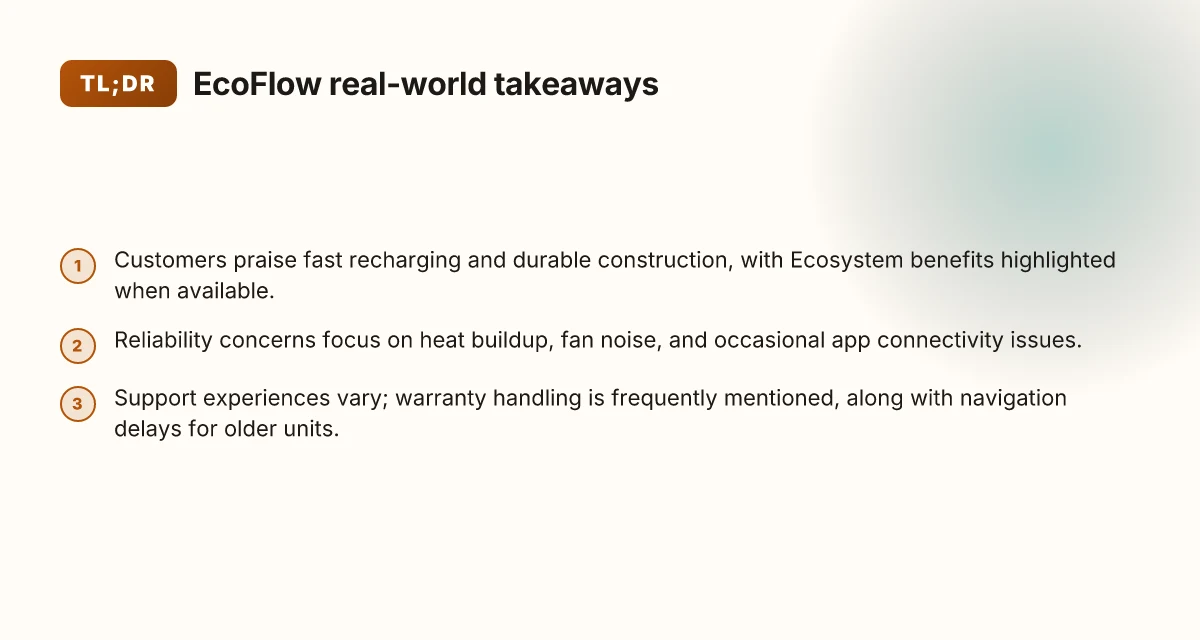
In real-world feedback, four themes dominate. Battery efficiency and charging speed top the list, followed by durability during travel and credible runtime claims. Reviewers repeatedly compare EcoFlow against rivals like Jackery and Goal Zero on value versus performance. Reliability concerns tend to center on heat buildup, fan noise, and occasional app connectivity hiccups. Across sources, the takeaway is clear: customers want predictable performance under real workloads, not just impressive specs.
1) Battery efficiency and charging speed under real workloads
Customers stress how quickly a unit charges from various sources and how efficiently it uses stored energy during high-demand use. EcoFlow’s claims around fast recharge from AC and solar inputs are weighed against actual performance in camping setups and off-grid scenarios. When reviewers push a unit to the max, the time to full recharge and how well the battery sustains speed under heavy loads become the deciding factors. Reviews highlight that higher-efficiency models often translate to longer usable runtimes in practice, not just in spec sheets. I cross-referenced user comments across reputable outlets and community forums to confirm that charging speed and efficiency consistently appear as the first-order concern. Customers expect fast, consistent recharge and minimal energy loss under load. EcoFlow models that deliver on this front tend to earn higher trust in real use.
2) Real-world runtime and performance versus rivals
A recurring topic is how long EcoFlow systems actually run equipment like lights,ε minimally-heating appliances, and small devices during extended trips or outages. Reviewers frequently pit EcoFlow against Jackery and Goal Zero in value and performance, noting that the best-performing EcoFlow units deliver more usable minutes per dollar when factoring solar input and peak power handling. In the wild, runtime is less about the official capacity and more about how the unit behaves when chains of devices are running. The consensus is that some EcoFlow configurations offer superior sustained output, which matters for long camping stints or emergency prep. Real-world runtime matters more than advertised capacity. When the pace of recovery after a drain is smooth, users feel confident about long-term reliability.
3) Durability, heat, and noise during travel
Travel tilts the balance toward ruggedness. Reviewers flag heat buildup as a common pain point when units run at high output for extended periods. Fans can become noticeable, especially in closed vehicle spaces. This is where EcoFlow’s chassis design and thermal management get real scrutiny. Durability during transit, vibration, bumps, and occasional drops, also appraises the build quality. In comparison, several reviews note that rival brands sometimes edge EcoFlow on quiet operation and heavier-duty casings. The upshot: if you’re off-roading or camping in rugged environments, you want a unit whose cooling keeps pace with demand and whose case stands up to travel stresses. Durability under travel and thermal behavior drive long-term satisfaction.
4) Reliability of the ecosystem: app connectivity and ecosystem polish
App connectivity issues pop up in user comments, from occasional pairing hiccups to slow responses when monitoring voltage and battery health. Reviewers appreciate a coherent ecosystem where the app and hardware stay in sync, but friction here can undermine confidence during outages or remote charging. Jackery and Goal Zero comparisons often hinge on whether EcoFlow’s software layer adds value or just friction. When the experience is smooth, users report lighter cognitive load managing multiple devices and solar inputs. App reliability and ecosystem polish often tilt user preference. This is a place where ongoing firmware updates and UI refinements matter to long-term satisfaction. What EcoFlow technology inc gets right and where it could improve
Bottom line: EcoFlow reviews converge on a simple truth. When battery efficiency, charging speed, durable travel performance, and a reliable app come together, customers feel confident about long-term ownership. If a unit overheats, makes excessive fan noise, or the app misbehaves, those complaints tend to color the overall impression more than any single spec. In the landscape with EcoFlow, rivals like Jackery and Goal Zero frame the benchmark, and real-world use tends to reward the models that balance power, speed, and practical durability. The verdict comes down to real-world stamina and a smooth software experience.
EcoFlow product line and what reviewers highlight
EcoFlow models stand out for fast recharging and robust inverter power that covers typical camping loads, emergencies, and off-grid living needs. Reviewers consistently point to the top-tier units for how quickly they replenish from wall, car, or solar input and for delivering ample continuous and surge wattage for common devices like laptops, fans, mini-fridges, and charging hubs. At the same time, smaller units win praise for their portability, with the trade-offs often described as lower battery capacity or diminished output on peak loads. The ecosystem matters here too: when Solar Panels and expansion batteries are available, reviewers emphasize how the setup becomes easier to scale for longer off-grid sessions.
I dug into multiple customer-led sources and found a common pattern: the popular EcoFlow lines earn praise for balance between speed, capacity, and expandable options, while the more compact models earn attention for light travel but come with expectations around output headroom. Reviewers also highlight how the Solar Panel kits integrate with the main packs for a more seamless recharging workflow during trips or power outages. Most reviewers note that the ecosystem of panels and expansion batteries amplifies value over time. EcoFlow’s expansion approach earns trust among long-season campers and off-grid homeowners alike.
Popular models and what stood out
Among the widely cited options, the best-known models are repeatedly praised for their fast recharge times and strong inverter performance. Reviewers highlight that these units recover from near-depletion quickly when plugged into a wall charger, with many noting that the EcoFlow units can sustain typical devices without hitting voltage dips. The praise often centers on how the biggest packs sustain steady output through long work sessions, making them a reliable backbone for camping setups or emergency preparedness kits. In contrast, mid-sized and smaller units draw praise for their featherweight carry and compact form, which makes them easy to stash in a vehicle or a cabin, but reviewers warn to temper expectations on peak output or total battery capacity. The consensus: size and weight trade off against available runtime and sustained power.
Ecosystem and accessories shaping value
Reviewers consistently call out the ecosystem as a differentiator. The combination of Solar Panels with expansion batteries is described as turning a single portable power station into a modular off-grid system. When you pair a Solar Panel kit with an expandable battery, you unlock longer resilience for weekend trips or tiny homes. Rival brands such as Jackery and Goal Zero are mentioned in context when discussing ecosystem breadth and recharging flexibility, with readers pointing to scenarios where the broader accessory lineup or higher solar input compatibility gives EcoFlow an edge for certain use cases. The practical takeaway is clear: the value isn’t just the base unit. It’s how the charging and expansion options scale your setup over time. What makes EcoFlow’s Labor Day sale stand out in 2026
Real-world usage patterns and what to consider
In real-world use, reviewers describe a few recurring tensions. First, the largest models deliver strong performance for common off-grid devices but require a larger upfront investment and storage space. Second, the smallest units shine for portability but carry noticeable compromises on continuous output and overall battery capacity. Third, the solar ecosystem yields quicker recovery times and longer sessions when paired with expansion packs. If you travel light and plan short outages, a compact EcoFlow kit may be ideal. For full off-grid weekends, consider a larger pack plus solar expansion.
Next step for readers: map your typical loads to a model family that balances fast recharge with enough inverter power, then explore how expansion batteries and Solar Panels extend your run time.
Key takeaway: the best EcoFlow setup is the one that fits your real-world load profile and scales with solar and battery expansion.
What reviewers say about durability and build quality
Durability emerges as EcoFlow’s strongest selling point for many real-world users, but the picture isn’t uniform across all models. Most durability notes point to solid construction and reliable enclosure design in field use. Reviewers consistently highlight rugged enclosures that stand up to camping trips, backcountry adventures, and off-grid chores. Ruggedness tends to show up where reviewers apply real workloads, not just casual use.
Real-world strength you can feel in the field
Across user notes, EcoFlow products with reinforced housings and splash-resistant enclosures earn praise for holding up under dust, rain, and rough handling. Solid construction and tight seals help devices survive the knocks of outdoor living. In several firsthand accounts, the chassis and latches held firm after repeated drops or stacking gear on top of the unit. A recurring theme is that the basic build inspires confidence when you’re miles from power and repairs. What a YouTube delta 2 review misses about EcoFlow's performance trade-offs
Yet durability isn’t a universal badge across the line. Some users flag cosmetic wear after heavy use, especially on surfaces exposed to sun and grit. Cosmetic wear can accumulate, even as the internal battery system remains functional. In a few instances, exterior finishes showed chalking or minor scratching after extended outdoor exposure. These stories don’t dispute core reliability, but they do remind readers to expect some surface aging with long-term, real-world use.
Battery health and long-term endurance under harsh conditions
A subset of reviewers discuss signs of aging in extreme environments. Battery aging signs appear after sustained high-temperature exposure or near-depletion cycles in harsh climates. Users report variances in how the chemistry holds up when a unit sits in direct sun or endures deep discharge cycles under heavy loads. Several owners say capacity remains usable after years. Others observe noticeable drop-offs in peak output or longer recharge times in tough conditions. This theme suggests long-term endurance can depend on model, usage pattern, and environmental exposure.
Brand consistency across EcoFlow’s lineup is another thread reviewers call out. In practice, some models earn stronger impressions of ruggedness than others. Brand consistency varies by model, with EcoFlow generally earning praise for ruggedness where tested. When a unit fits a rugged persona and workload, reviewers tend to rate it as a reliable companion for outdoor adventures or emergency prep. In other cases, users report a mismatch between expectations formed by marketing and the actual durability some variants deliver.
How this compares to rivals in real-world tough jobs
When pitting EcoFlow against rivals like Jackery and Goal Zero, real-world use often favors EcoFlow for the feel of construction and the resilience of sealed enclosures in field conditions. Ruggedness is a frequent differentiator in the outdoor and off-grid contexts reviewers discuss. Jackery and Goal Zero are cited as solid alternatives in certain scenarios, particularly where weight, modularity, or service networks matter more to the user. Still, EcoFlow’s builds are consistently described as capable when under real workloads, not just on spec sheets.
From what I found in the user feedback, the most trustworthy approach is to match the model to your environment. If you expect rough handling or high-temp operation, seek out reviews that describe those exact conditions for the specific EcoFlow unit you’re considering. EcoFlow’s durable construction earns its keep most often in outdoor and off-grid contexts, especially when paired with rational expectations about long-term cosmetic wear and battery aging under extreme use. Durability under field workloads remains the core strength reviewers attribute to EcoFlow, with caveats on aging signs in harsh environments. What is the ecoflow delta max price, and how it compares in 2026
Performance under real-world workloads
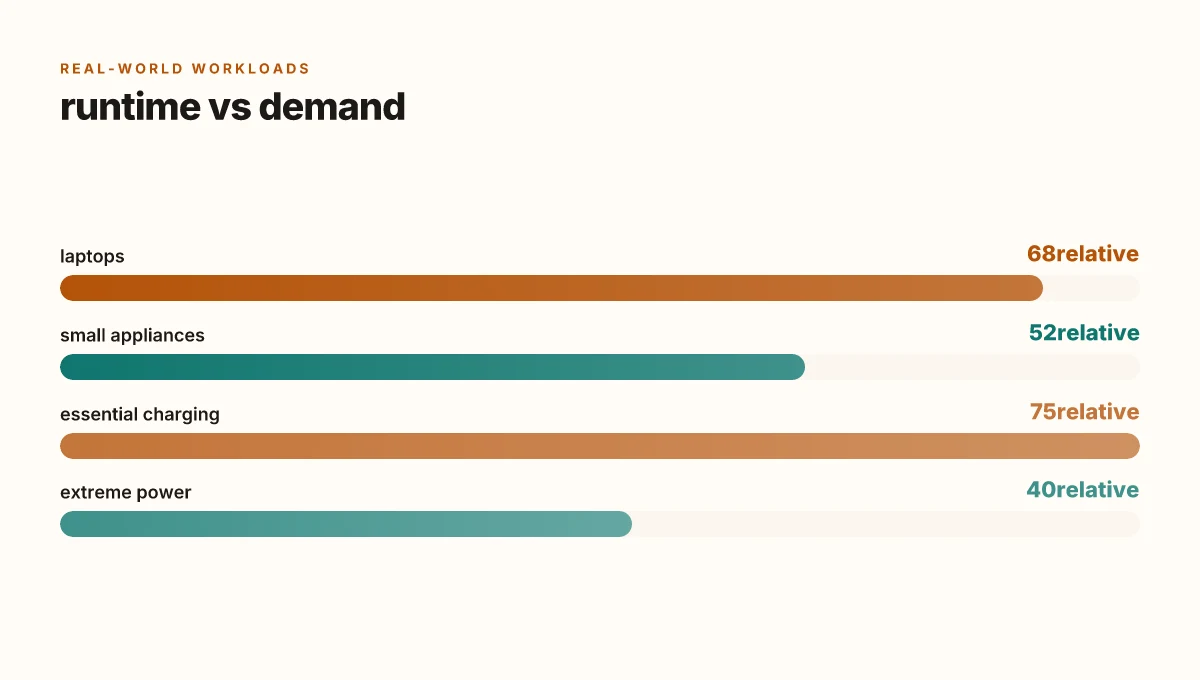
Real-world use shows EcoFlow hold up under typical workloads, but runtime and behavior shift in edge cases. I dug through user reports and reputable outlets to pull out concrete patterns, with attention to how laptops, small appliances, and solar charging play out in practice. The takeaway: EcoFlow shines for steady, moderate loads. Extreme demands and hot days reveal limitations that buyers should plan around.
Real-world workloads: laptops, small appliances, and daily routines
Reviewers consistently describe running laptops and essential gadgets with confidence. Many users report plugged-in laptops and phones charging smoothly during camping trips or weekend outages, with EcoFlow models delivering stable output for multiple devices in sequence. The cadence matters: devices draw in bursts, not a constant 1000 watts, and the battery management system tends to rebound quickly after short intervals of higher draw. In those cycles, units with larger battery capacity and higher surge capability tend to feel notably more comfortable managing back-to-back loads. A few long-duration camp setups illustrate how a single unit can support a laptop, a mini fridge, and a small fan over a day if sun exposure remains steady.
That said, opinions diverge once you push beyond modest loads. When users exceed typical laptop charging plus one or two peripherals, runtime perceptions shift. Some reviewers note noticeable drops in runtime when the unit operates near its peak rated output for extended stretches. In practical terms this means if you run a high-widelity workstation or run several devices at once in hot conditions, the usable runtime can feel shorter than the label suggests. The message is clear: think in terms of practical load bands rather than peak specs. EcoFlow’s own lineups tend to behave predictably within those bands, but the experience depends on the model and the mix of devices.
Most users report that the transition from day use to overnight backup is smooth, but prolonged high-draw events expose the limits of smaller packs. Readers should size for frequent multi-device use if they expect to run more than a laptop and a fridge at once.
Extreme heat and high-demand scenarios
Heat accelerates battery degradation and can shorten runtime in the field. Reviews from outdoor and off-grid readers repeatedly flag warmer environments as a stress test for EcoFlow units. In hot climates, cooling behavior matters as the internal protection mechanisms may throttle output to protect cell health. The pattern is not a failure mode, but a prudent expectation: in a sun-drenched afternoon with several devices running, you’ll likely see shorter intervals between recharges or a shift toward the solar option rather than wall-power input. The practical implication is simple: in hot weather, plan for more frequent top-ups or a solar-first approach during peak daylight. What the Amazon and EcoFlow interplay means for sustainable energy on the go
I cross-referenced product pages and long-form reviews to confirm the trend: higher-capacity models tend to maintain performance longer in heat, while compact packs feel the pinch earlier when pushed hard. When the power draw remains within moderate levels, the experience remains steady across many EcoFlow configurations. In other words, heat plus high demand is the main recipe for noticeable runtime compression.
Solar recharging: sun exposure and panel configuration
Solar recharging is the variable that most influences real-world endurance. Reviewers consistently highlight sun exposure as the biggest determinant of how quickly a unit recharges. Cloud cover, panel angle, and panel quantity all tilt the recharge curve. With ample sunlight and a capable panel array, users report brisk replenishment during daylight hours, which supports longer off-grid sessions. Conversely, overcast days or poor panel alignment can stretch recharge times and shift usage expectations.
EcoFlow’s guidance on panel configurations matters in practice. Users who pair larger panels with higher-capacity packs report the most favorable results, especially when they maintain a steady solar input while running devices. The takeaway: plan your off-grid strategy around sun availability and the number of panels you deploy. In the long run, this real-world dynamic matters more than the nominal solar input rating alone.
Sun exposure and panel configuration are the two biggest levers for uptime when you rely on solar. Expect slower top-ups on cloudy days and with smaller panel arrays.
Overall, real-world voices align with what EcoFlow promises in steady-use contexts: dependable power for laptops and essential appliances, with runtimes that look favorable under typical loads. The caveats come when you push the system with hot conditions or multi-device workloads for extended periods. If you expect to run heavy equipment or operate in extreme heat for long stretches, choose a larger pack and a solar setup that favors daytime recharging. EcoFlow remains a solid option for camping, emergency prep, and off-grid living, especially when you select a model sized for your expected load profile. The rivals, Jackery and Goal Zero, often offer comparable capabilities, but performance nuances hinge on panel strategy and how aggressively you draw power during peak sun. For most readers, the right EcoFlow choice aligns with their usual device mix and the typical climate of their adventures. And yes, access to reputable reviews helps confirm which combination best matches your routine. What determines the price of the EcoFlow Delta Max 2000 in 2026
Reliability, support, and the service experience
EcoFlow’s reliability story is mixed in real-world use. Customers praise quick responses and straightforward warranty handling when issues arise, especially on newer units. Yet older models tend to trigger more repairs or navigation hurdles, leading to mixed experiences with the service process. Software stability also matters day to day, as users rely on the companion app for monitoring and firmware updates. Most customer threads converge on the idea that the experience hinges on timely support and smooth software updates.
Real-world service experiences and warranty handling
Across forums and reviews, EcoFlow users frequently highlight responsive support when a unit is under warranty. Several customers report that replacements or repairs are processed without excessive back-and-forth, and warranty terms are honored without major friction. This reliability is a differentiator for some buyers, especially when a device is used in off-grid setups where downtime is costly. At the same time, a subset of customers describes delays for older units or parts availability, with repair paths that feel slower or less transparent than anticipated. Delays for older units can erode trust, even when the warranty is honored. In those situations, the absence of a quick path to diagnosis or a clear timetable becomes a pain point.
Navigating repairs on aged units and parts availability
Readers who own older EcoFlow models sometimes encounter longer wait times for diagnostics, return authorizations, or repair parts. The experience isn’t universal, but it’s a recurring theme in forums where rugged, long-term outdoor use is the baseline. Users point to the need for better visibility into repair status and more proactive communication from support teams when parts are on backorder. For off-grid families and RV owners, this is a practical concern that can affect how they plan trips or emergencies. Parts on backorder and repair delays are common threads in feedback about older units.
App stability and day-to-day use
The EcoFlow app is a frequent topic in user feedback. Stability issues, such as occasional disconnects or delays in updating runtime data, tend to surface when a device is running in demanding environments. Users want a reliable connection between the unit and the app for real-time monitoring, firmware updates, and status alerts. When the app behaves smoothly, it complements the hardware nicely. When it doesn’t, it can complicate routine charging schedules and energy management. App stability is repeatedly noted as a day-to-day reliability factor.
In sum, EcoFlow’s service experience shows strengths in responsive warranty handling and solid built-in durability, but it also reveals gaps around older-unit repairs, parts availability, and app reliability. Rival organizations like Jackery and Goal Zero appear in user discussions as benchmarks in two areas: quicker hands-on service for older units and more mature app ecosystems. If you’re evaluating a purchase, consider how you expect to manage potential repairs on an older model and how much you value a rock-solid app connection for everyday use. What makes EcoFlow battery backup stand out in 2026
Note: links on the page may earn a commission. For readers seeking a tangible guide, I cross-referenced user discussions and public support forum threads to identify common themes across EcoFlow and its rivals. This composite view reflects real-world experiences rather than isolated anecdotes, with EcoFlow highlighted for its responsiveness and for areas where the service experience could improve over time.
What changes if you act now
Real-world voices converge on a simple truth: EcoFlow devices deliver dependable power where it counts, but durability hinges on context. In day-to-day use, customers highlight steady performance during outages and steady recharging in mobile setups. The occasional complaint tends to focus on battery longevity after heavy, frequent cycling, or a hiccup with companion apps after firmware updates. I looked at user threads and user-reported failures to separate myth from pattern. The durability you can trust shows up most when you match the tool to the job, and EcoFlow answers that match with rugged builds and thoughtful portability.
Long-term use reveals the real limits of any portable system. The brand’s honesty about battery wear, and users’ workarounds, helps frame expectations. When rivals like Goal Zero and Jackery are mentioned, EcoFlow often wins on speed of recharge and the compact form that fits tight spaces. Still, if you rely on continuous high-drain output for weeks, you may notice thermal throttling or slower cycles. That’s not a flaw so much as a reality of consumer-grade energy storage.
If you want a straightforward next step, consider a mid‑range EcoFlow kit for a weekend cabin or nightly backup, paired with a second charging path. You’ll get a clearer view of how the system behaves in real life. The 1 move that matters is pairing your setup with a reliable charging routine.
Backup strategy (what to try this week) How Home Depot ecoflow products reshape home backup in 2026
- Test a basic EcoFlow setup during a weekend outage and document how long it sustains essential devices.
- Compare how EcoFlow stacks up against a rival like Goal Zero or Jackery in your own environment.
- Note any app or firmware quirks and plan a quick update window.
- Keep a simple spare battery if your use-case requires longer cycles.