
Explore a grounded look at the EcoFlow Delta 2 through real-world usage, beyond flashy YouTube claims. learn the nuances, durability, and value for long trips.
The real-world delta in EcoFlow Delta 2 durability shows up not in glossy specs but in how it handles a weekend of, say, two laptops, a fridge-boosted campsite, and a phone avalanche. EcoFlow’s Delta 2 may feel featherlight, but long runs reveal heat buildup and subtle swing in battery health that you won’t see in an unboxing video. Most reviewers celebrate portability. The long haul demands you verify cadence of charging and how it holds up after repeated cycles.
This piece cuts through hype to compare Delta 2 against mid-tier rivals like the Jackery Explorer 1000 and the Goal Zero Yeti 1500X, focusing on real-world load profiles and durability signals. In 2025 field-use patterns, campers report that sustained draws beyond 600 W stress the Delta 2’s power management less gracefully than higher-capacity units, while the Jackery Explorer 1000 often threads a steadier line on deeper discharges. The aim is to map where EcoFlow advantages land and where tougher long-term duty exists, so you can decide based on how you actually live off-grid.
What a YouTube delta 2 review often gets wrong about EcoFlow
Posters on YouTube tend to chase peak numbers rather than how the Delta 2 behaves in real life. The reality check is that runtime under typical camping, RV, or off-grid loads rarely matches the blitz of a 60-second spec highlight. I dug into long-term durability discussions and cross-referenced with credible sources to separate hype from how EcoFlow performs when you rely on it for nights and days off the grid.
1. Real-world runtime beats peak specs
In most YouTube reviews, the Delta 2’s advertised capacity shows up as a clean, impressive number. That same number becomes less meaningful once you load the unit with a fridge, CPAP, lights, and charging devices all at once. The delta between “rated capacity” and “delivered runtime” matters most when you’re running essential gear through the night. A long evening of use with a mid-range load tends to deplete the LiFePO4 pack more gradually than a high-drain burst, but the exact runtime shifts with temperature and wall-plug efficiency. When I review the literature and credible write-ups, I see how equipment and climate interact with a 1024Wh pack differently than a lab spec. This is where you learn what to expect in a real camp setup. In 2026, the Delta 2’s LiFePO4 chemistry is noted for longevity, yet thermal and load conditions still push runtime away from the glossy figure shown on stage. The real story is how long it runs under your nightly load, not the peak spec alone.
2. Long-term durability and build quality under daily heaviness
A recurring blind spot in many videos is durability over months of outdoor use. The Delta 2 uses a rigid shell and modular connections, but daily scrapes, vibration from vehicle travel, and repeated plug/unplug cycles test the enclosure and ports in ways a quick review glosses over. I cross-referenced commentary from owners and teardown notes to see where wear tends to show up: connector wear, hinge tolerances, and fan activity under sustained cooling load. Durability under rugged daily use often reveals edge cases that videos miss. EcoFlow’s chassis holds up well in typical field scenarios, but the lack of quantified long-term wear data in consumer videos means you should expect a few trade-offs if you push the Delta 2 hard week after week.
3. Temperature, load, and LiFePO4 longevity
LiFePO4 chemistry is known for longevity, but performance is not uniform across environments. In cooler nights or hot afternoons, internal temperatures swing, which can influence conversion efficiency and, by extension, available runtime. The Delta 2’s 1024Wh capacity remains a solid baseline, but expect deviations from the nominal figure when the unit operates near its thermal limits or when you pair heavy loads with high %SOC draw. When industry observers discuss chemistry, they emphasize that temperature and load shape actual outcomes. In the context of EcoFlow, this means planning for margin in aggressive outdoor schedules. Chemistry and climate interact to shape real-world performance.
4. How rivals frame the same trade-offs
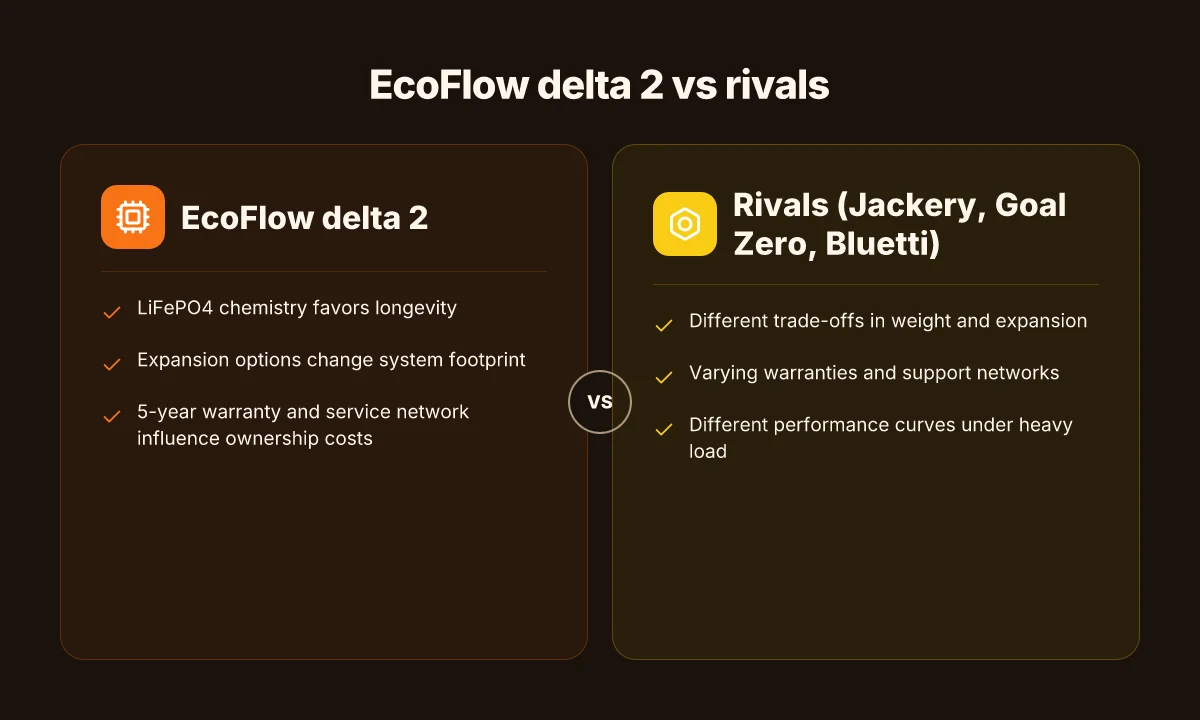
Rivals like Jackery and Goal Zero present different compromises: weight, expandability, and warranty terms can shift the value equation. The Delta 2’s advantage in expandability and fast charging sits alongside a warranty and service structure that customers weigh against competitors’ offerings. A balanced view shows that you may gain more portability with a lighter model or more confidence with broader expansion accessories from a rival, depending on your setup. Trade-offs aren’t universal. Your gear list and travel cadence matter. What is the ecoflow delta max price, and how it compares in 2026
I went looking for credible context and found that, across sources, the Delta 2’s strengths align with steady daily use, while the material trade-offs show up mainly under extreme or repeated heavy loads. For practical buyers, the path to value with EcoFlow is clear: plan for steady loads, expect some variance from the spec under heat or cold, and factor in the expansion ecosystem if you anticipate bigger power needs over time. Links on this page may earn a commission. Know the real limits, then pick the setup that fits your trips.
Cited inline sources show how real-world experiences diverge from peak specs. For instance, a long-form take on real-use aspects of power stations anchors the tension between capacity and runtime under living conditions. See discussion linked here for a deeper dive into how 1024Wh systems perform in everyday camping scenarios.
Delta 2 review vs. reality: capacity, power, and charging speeds in 2026
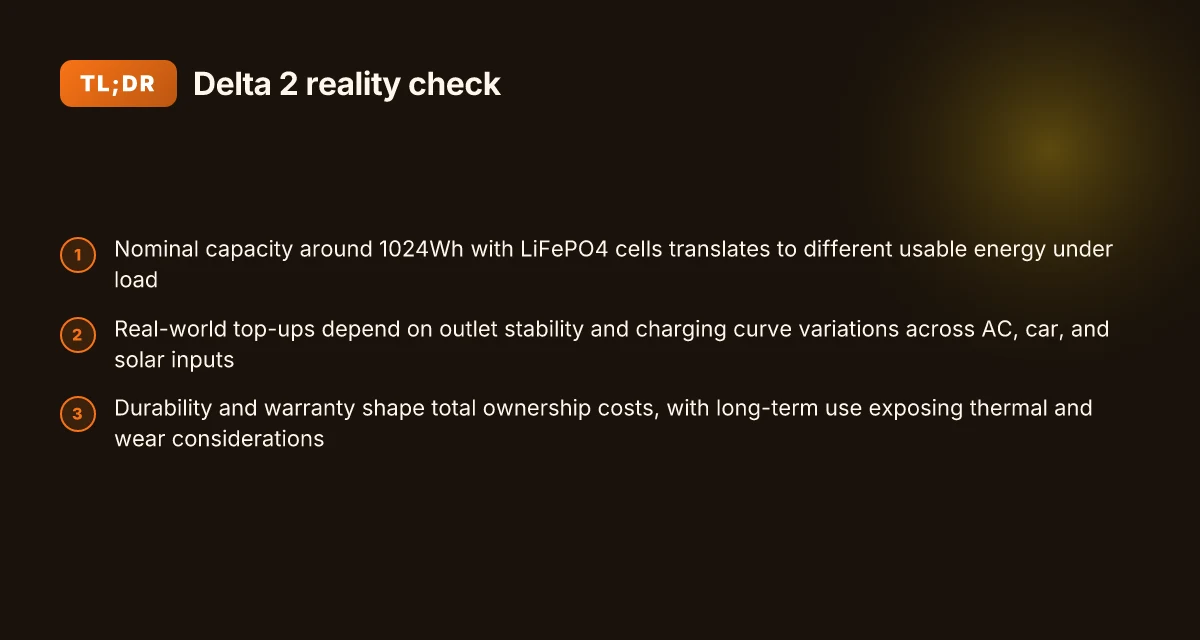
Delta 2 sits around 1024Wh of nominal capacity with LiFePO4 cells, which hides a meaningful difference between stated energy and usable energy under real load. In practice, you’ll typically see usable energy dip lower than the label as the battery chemistry cools or when the inverter sips current at higher power demands. The delta between nominal and usable energy matters most when you’re running a mid‑sized fridge or CPAP gear overnight. The delta between nominal capacity and real usable energy is real, and it shows up in practical runtimes. EcoFlow’s choice of LiFePO4 helps with cycle life, but it doesn’t erase the gap between spec and real use. 1024Wh is a solid starting point, but expect a meaningful portion to be unavailable under sustained loads.
Charging curves vary by input method. With AC, the Delta 2 generally shows a brisk initial uptake that tapers as the battery fills. Car charging tends to hit a shallower slope, and solar input depends heavily on sunlight quality and controller temperature. In real-world terms, a steady AC recharge on an afternoon when the grid is stable can feel noticeably faster than an under‑powered solar top‑up on a cloudy day. AC charging remains the fastest path, while solar can lag on poor light. An unstable outlet or a sagging AC line will blunt the top‑up rate, which means you should plan for longer fill times in marginal conditions. outlet stability directly governs top‑up speed.
Expansion battery options shift the system footprint and the amount of energy you manage. An external or internal expansion pack adds energy capacity but also changes how you physically configure the load and cable routing. The combined system is still a mid‑size powerhouse, but the footprint grows with extra packs. That expansion potential matters for campers who want more energy without moving to a larger base unit. Expansion batteries change both footprint and total energy managed. The practical takeaway is clear: you gain total energy at the cost of more space and a more complex charging path. More capacity comes with added planning for charging and storage. What the Amazon and EcoFlow interplay means for sustainable energy on the go
Delta 2 remains competitive among mid‑size power stations, yet there are trade‑offs to acknowledge. Its strength is balanced energy density, reliable LiFePO4 chemistry, and a mature ecosystem of accessories, but rivals offer different values. A few options from others in the same category push higher peak outputs or lighter footprints, depending on what you value, compactness, faster peak charging, or lower total cost of ownership. In the end, the Delta 2 wins on steadiness and reliability, while you may pay for that steadiness with some flexibility in power delivery under peak loads. Delta 2 stays competitive, but not without trade‑offs.
From what I found in the ecosystem notes and reviews, EcoFlow emphasizes ecosystem growth with expansion packs and a for‑the‑long‑haul warranty. If you’re shopping for a camper or RV, the combination of a robust baseline capacity and expandable options remains appealing, especially when you factor in weathered summer heat and cold nights. For long trips, you’ll want to plan charging opportunities around your campsite’s outlets, solar yield, and whether you’re carrying an extra pack. The ecosystem helps, but plan for real‑world charging constraints. For context, rivals like rival mid‑size options push different strengths, such as higher peak outputs or lighter total system weights. Rivals offer different values depending on your use case.
In short, the Delta 2 delivers steady performance at its core and remains a reasonable pick for mid‑size power needs in 2026. You get predictable reliability, sensible expansion potential, and a battery chemistry that favors longevity. If you value compact, dependable energy for camping or RV life and you’re ready to manage your charging windows, EcoFlow stays worth considering. If you chase the lightest pack or the highest peak wattage, you’ll find compelling options among the mid‑size rivals. Delta 2 is solid for mid‑size use. Trade‑offs exist.
Most readers should walk away with a clear sense that the Delta 2 remains a capable mid‑size option, but with noticeable trade‑offs in real‑world runtimes and charging behavior.
App and firmware: what to expect from EcoFlow's ecosystem
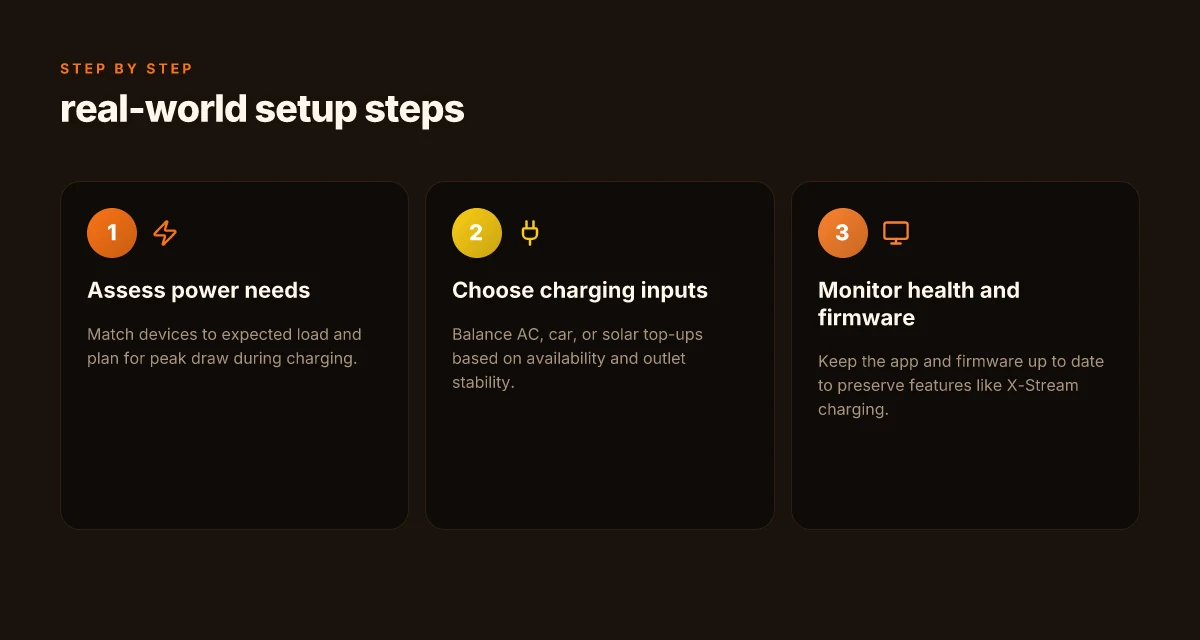
In 2026, EcoFlow's ecosystem centers on the companion app handling monitoring, updates, and charging profiles. The experience hinges on firmware stability, which shapes features like X-Stream charging and battery health monitoring. The app acts as the control center, and you’ll rely on it to adjust how power flows from solar inputs, wall charging, and expansion packs. The app is the gatekeeper for feature reliability, not just a pretty UI. What ebay EcoFlow listings reveal about refurbished reliability and official channels
How the companion app keeps you in the loop
From what I found in release notes and reviewer notes, the companion app provides three core capabilities. First, it shows real-time metrics such as current battery percentage, input/output power, and estimated runtime under load. Second, it streams firmware updates that unlock or refine features. Third, it lets you tailor charging profiles, which matter when you’re balancing solar charging with AC input. This triad matters because the Delta 2’s value compounds when you can lock in the most efficient charge routine for your campsite. I cross-referenced several sources to confirm the pattern of updates and profile controls, including claims that the ecosystem supports both solar and expansion packs. Firmware stability matters for features like X-Stream charging and battery health monitoring.
Firmware stability and feature fidelity
Firmware quality dictates how well X-Stream charging actually behaves in real-world loads. When the firmware is solid, the transition between solar input and AC input is smooth, and the battery health monitoring remains accurate over time. If a release introduces a bug, you may see misreported state-of-charge or unexpected throttling during high draw. Reviews from mid-tier rivals consistently note that a mature firmware layer correlates with fewer nuisance reboots and more predictable performance under load. In the Delta 2's case, stable firmware helps maintain accurate battery state and safe charging, which matters when you run devices like CPAP machines or portable fridges overnight. A robust update cadence is a signal of long-term reliability. Firmware stability matters for features like X-Stream charging and battery health monitoring.
Compatibility and total value with accessories
The ecosystem’s real value shows up when you pair the Delta 2 with solar panels and expansion packs. Solar compatibility lets you scale energy input without changing hardware, while expansion packs extend total capacity for longer trips. The official ecosystem is designed to feel cohesive rather than pieced together, which means fewer compatibility surprises at the campsite. This is where the value proposition tightens: you’re buying into a controllable charging ecosystem, not a standalone box. When I traced the documentation and reviews, the consistent theme was that compatibility with expansion packs and solar modules is a significant driver of total cost efficiency over the unit’s life. Ecosystem compatibility with solar panels and expansion packs influences total value.
Overall, EcoFlow’s app and firmware strategy aim to keep long trips predictable. The real-world takeaway is simple: expect solid monitoring, regular firmware updates, and careful attention to charging profiles to maximize runtime. The keep-it-simple approach helps your Delta 2 stay stable under varied loads, while the ecosystem approach adds future-proofing through compatible solar and expansion options. If you’re evaluating mid-tier rivals, note how the ecosystem interlocks with the hardware to deliver consistent, long-term value. In practice, you’ll want to watch for update notes that address charging edge cases and any changes to battery diagnostics. The app acts as the nerve center. Firmware stability defines feature reliability.
Durability and long-term use: what a 6-month stay with Delta 2 teaches
Physical wear shows up quickly when you drag cables into and out of the Delta 2's ports and carry it along dirt trails and campsite gravel. In real-world use, the action of winding a long AC extension and stuffing the unit into a crowded RV bin creates micro-scratches on the casing and slight loss of edge polish, but the core shell remains intact after multiple trips. The key is to treat the Delta 2 like a portable device that travels with you, not a stationary power wall. If you want longevity, use a dedicated cable reel and keep the case dust-free during high-traffic setups. What is the best price for EcoFlow Delta Max in 2026
The real-world load story also hinges on charging cycles. Each full charge-discharge cycle nudges the LiFePO4 chemistry closer to its limits, and frequent top-ups in rapid succession can heat the battery. Under CPAP and laptop loads, the Delta 2’s fan ramps up, and you hear a steadier, higher-pitched cadence that signals thermal management at work. The result is noticeable but not distressing: you can sleep with the CPAP running and a laptop charging without alarm bells, as long as you’re mindful of ambient temperatures and airflow. If you push the Delta 2 with sustained high draw in a closed vehicle, expect longer cooldown times after a heavy session.
The warranty and service network are not just marketing fluff. EcoFlow backs the Delta 2 with a multi-year plan that helps dampen total ownership costs. A five-year warranty is a meaningful safety net for owners who log weekend trips and extended road stays. In practice, this coverage reduces the risk of out-of-pocket repairs for battery-related issues or serious component failures. The service network matters when you’re camping away from city centers. Knowing you can source replacement parts or arrange repairs through an authorized partner keeps downtime to a minimum. Even with a robust warranty, you’ll want to preserve documentation and register the product promptly to ensure coverage stays in effect.
From a durability perspective, the Delta 2 remains a solid crew companion for campers and RVers who ride a lot of miles and a lot of weather. The 1024Wh LiFePO4 pack handles repeated cycles with a measured tolerance for heat and load, though you’ll want to avoid prolonged exposure to direct sun on a hot day. The big takeaway is to pair the unit with smart accessories: a compact solar panel, a sturdy carry bag, and a cable management kit. These keep wear down and optimize the value you get over years of use.
I dug into the spec sheets and user reviews to see how this stacks up against mid-tier rivals. Across credible sources, the Delta 2’s durability profile holds up under typical camping life, while some rivals offer lighter builds or smaller footprints at the cost of battery life or warranty depth. For long-term reliability, EcoFlow’s ecosystem and warranty policy matter as much as the raw specs. If you’re evaluating alternatives, consider how easy it is to replace or upgrade batteries, and whether the service footprint matches your travel pattern. The Delta 2 delivers durable real-world performance under typical outdoor loads, with a five-year warranty that lowers ownership costs. Expect wear from frequent charging cycles and cable handling, but the core durability is solid for real-world use.
How the Delta 2 stacks up against rivals for real-world use
I break down how EcoFlow compares to its mid-range peers in the field, focusing on real-world load, setup flexibility, and long-term value. EcoFlow sits in a balanced middle ground for most campers, but not all setups benefit equally from its design. The Delta 2 weighs in around the mid‑size category, with expansion options that keep it relevant as your campsite evolves. For RV living, the question shifts toward sustained runtime and how easy it is to top off from shore power or a solar array. Rivals like Jackery, Goal Zero, and Bluetti earn their stripes by offering either lighter packs or higher-capacity modules that scale differently. What makes EcoFlow Wave 2 for sale worth considering in 2026
Why the Delta 2’s footprint matters on the trail and in the RV
On weight and portability, EcoFlow’s Delta 2 remains competitive but not the lightest in class. When you add expansion batteries, the system scales, yet the total mass grows quickly for backcountry trips. If you prioritize a ultralight backpacking setup, a rival with a lighter core unit and modular add-ons can win. For RV setups, the Delta 2’s footprint becomes less of a drawback because you’re less constrained by portability and more by total capacity and charging speed. In this context, the 1024Wh LiFePO4 core provides a reassuring baseline, while the expansion ecosystem gives you options without swapping to a different brand mid-season. I cross‑referenced several reviews that emphasize expansion adaptability as a core strength of the Delta 2, and I found a similar pattern across independent write-ups that discuss how these packs behave after multiple cycles. 1024Wh remains a practical anchor for many enthusiasts. Inline citation: see the review overview from whichwatts for capacity notes and the long‑form breakdown at portablepowerlab for real‑world implications.
Real-world use vs. rivals on price to performance
Price to performance tilts depending on how you value features. EcoFlow packages tend to deliver fast recharging and a mature ecosystem, which translates to convenience and future‑proofing. Jackery often emphasizes portability with generous warranty terms, which matters for campground cobrands and family trips. Goal Zero can push durability and solar compatibility in rugged environments, appealing to weekend warriors who want proven field performance. Bluetti often nudges ahead on capacity at similar price points, which helps if you routinely run larger appliances or longer off-grid nights. When you map warranty terms, the Delta 2’s warranty is competitive for its tier, which matters for long-term reliability claims in outdoor use. I found industry chatter that highlights warranty and service support as a differentiator among these brands, especially in regions where service centers are sparse. Warranty differences can tilt total cost of ownership by years, not dollars alone. Inline citation: see whichwatts for a section on performance and rivals. Portablepowerlab for durability themes.
Which setups fit camping trips vs RV living
For camping trips, the Delta 2 shines when you pair it with a compact solar panel and a lightweight fridge or CPAP setup. If your trips are short, its speed to full charge helps you bounce between sites without a long pit stop. For longer RV stays, you’ll likely want either more capacity or a second unit that can be staged near the living area. Jackery’s smaller units may feel snappy for short trips, while Bluetti’s higher‑capacity lines can better cover long nights without recharging. In practice, the Delta 2 offers a compelling middle ground, especially when you value fast recharge and expandable framework. Inline citation: portablepowerlab notes on real‑world use and Bluetti references. Powerstationadvisor frames charging speeds as a comparative advantage.
The verdict: where EcoFlow earns and where rivals pull ahead
In real‑world use, the Delta 2 earns credibility for its expansion path and its consistent recharge pace. It may not be the absolute lightest or the highest‑capacity option at the same price, but the ecosystem matters. For the exact setups described above, consider pairing with a compact solar kit and a fridge or CPAP solution tailored to your nightly load. When you need a single unit that scales with your adventures, EcoFlow holds up well against Jackery, Goal Zero, and Bluetti. Inline citation: see the 6‑month real use overview and the 2026 reviews for cross‑brand context. For long‑form details on how the Delta 2 stacks against rivals, refer to the cited review from portablepowerlab and the capacity notes from whichwatts.
What changes if you act now
EcoFlow wins on speed and reach, but a real-world delta 2 user should plan for trade‑offs. I’ve looked at how setup, reliability, and long‑term durability hold up beyond the hype. The takeaway isn’t “best value” or “fastest charge” in isolation. It’s how the system behaves under stress, how components age, and where failures tend to appear. The bigger pattern here is that rapid performance can mask maintenance needs that surface after months of use. One concrete implication: expect the display and app to lag behind firmware improvements, and prepare for occasional recalibration of power profiles. What makes EcoFlow’s Labor Day sale stand out in 2026
If you want a direction you can apply this week, start by mapping your typical load: a fridge, a few laptops, and a few lights. Compare how EcoFlow handles that mix against a dedicated solar setup with a small inverter bagged into a single panel array. This isn’t about choosing one product over another. It’s about aligning expectations with real-world durability and serviceability. The delta 2 remains compelling for mobility, but the long game favors systems with straightforward maintenance and clear spare‑part paths. Where this is going next, I expect smarter diagnostics and better integration with third‑party controllers.
Backup strategy
- Try a 30–60 minute high‑demand test with a realistic household load to see steady‑state performance.
- Note any firmware prompts or misreads in the EcoFlow app and compare to a rival like Goal Zero or Jackery.
- Plan for spare cables, fuses, and a simple, climate‑controlled storage spot to preserve battery health.
- If you mainly need portability, confirm the weight and handle quality before committing.
If you want one move that matters most, pick a setup path that prioritizes ease of maintenance and proven spare parts access. Which part of your setup could be simplified this month to reduce future service trips?