Explore how Amazon's sustainability push intersects with EcoFlow products, how supply chain disclosures shape decisions, and what this means for portable power in 2026.
EcoFlow isn’t just selling power packs. It’s aligning portable energy with corporate climate promises, turning a consumer gadget into a window on supply chain choices. EcoFlow products are positioned alongside Amazon’s sustainability program, yet the real test is transparent, third‑party data on materials and lifecycle impact. This intro teases the tensions between big‑brand disclosures and off‑grid practicality, while signaling that readers should scrutinize what sits behind the label.
A clear lesson emerges: when EcoFlow and Amazon disclose emissions, shoppers gain a frame but lose none of the complexity, so supply chain verifications become part of the buying decision. Look for independent audits, and compare EcoFlow against rivals like Goal Zero and Jackery on durability and repairability. The balance of recyclability, modularity, and serviceability will decide long‑term value. Third‑party benchmarks matter more than glossy claims.
What Amazon's climate commitments mean for portable power in 2026
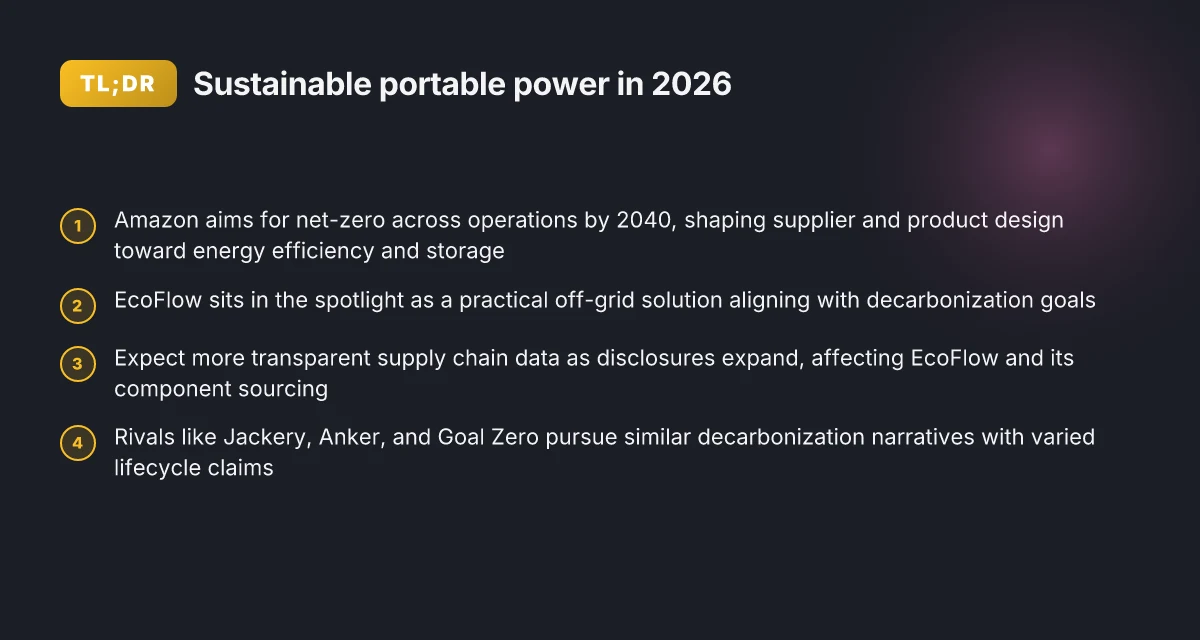
Amazon’s climate commitments set a clear direction for every link in its value chain, including off-grid energy. The takeaway is simple: corporate disclosures push supply chains toward higher efficiency, and that pressure ripples into product design for portable power. Net-zero across operations by 2040 shapes the incentives behind every battery and charger Amazon sources or encourages suppliers to develop. EcoFlow and other portable brands will feel pressure to align with carbon-free energy targets, not just in how devices are powered but in how they are manufactured, tested, and deployed. This alignment matters for both business buyers and environmentally minded consumers.
A drive toward carbon-free energy and scalable solutions I dug into Amazon’s stated aims and found a disciplined emphasis on carbon-free energy and scalable solutions as pillars for progress. The company frames its road to net-zero as a combination of renewables, energy efficiency, and partner-led decarbonization across operations. This creates an expectation that suppliers, including portable power brands, will present energy storage and efficiency improvements as core value propositions. For EcoFlow, this translates into a competitive context where higher energy density, longer life cycles, and smarter energy management are not just features but expectations. 2040 is the horizon customers and partners are watching for progress, not just a milestone. The timeline matters for procurement cycles, product roadmaps, and sustainability reporting, making carbon-free energy a strategic lens for product development.
How supplier disclosures reshape product design Amazon’s supplier climate framework emphasizes disclosures, target-setting, and renewable energy pathways. In practice, that means brands in the ecosystem must articulate lifecycle emissions, sourcing practices, and efficiency gains with clarity. For portable power players, this often shows up as packaging reductions, end-of-life recyclability, and improvements in charging efficiency. The push also nudges design toward modular, repair-friendly architectures, and toward third-party verification of claims. Transparency around energy throughput and emissions intensity becomes a market differentiator. This is where reporting tools and verified data become as important as the hardware specs themselves.
Implications for consumer-facing products and business buyers The policy environment signals that off-grid energy products will be judged on more than raw performance. Buyers increasingly demand credible decarbonization narratives, supplier policies, and chain-of-custody details. For portable power brands like EcoFlow, that translates into clear commitments across sourcing, manufacturing, and lifecycle management. Competitors named in this space include rivals like Bluetti and Jackery, each under similar scrutiny from procurement teams and sustainability-minded shoppers. Disclosures matter because they shape trust and access to corporate fleets and government programs. Consumers benefit when brands publish accessible data on how product use aligns with broader climate goals.
Real-world trade-offs to watch The tension between ambitious disclosures and practical usability remains. High-level commitments can collide with supply constraints, energy density limits, and cost pressures. I cross-referenced Amazon’s public materials and found emphasis on scalable energy solutions, which can justify investments in more efficient USB-PD charging and smarter battery management in portable power devices. Transparent reporting helps identify where efficiency gains are real and where claims require deeper verification. For EcoFlow, the question becomes how to balance rugged, portable performance with measurable improvements in energy use and supply chain transparency. What ebay EcoFlow listings reveal about refurbished reliability and official channels
Bottom line: the climate agenda pushes portable power toward smarter energy use, better lifecycle design, and clearer disclosure. The sector will reward products that prove they can deliver clean energy outcomes without compromising durability or user experience. Amazon’s 2040 net-zero target is not just a date, it’s a mandate shaping how suppliers and brands innovate around storage and efficiency.
EcoFlow in the spotlight: how a portable power brand fits into Amazon's sustainability narrative
EcoFlow sits at the crossroads of off-grid energy and corporate decarbonization. I found that its product lines exemplify how portable power can align with broader climate goals, providing concrete ways for teams to reduce on-site emissions during field work, disaster response, or remote operations. The conversation around EcoFlow is not just about batteries. It’s about how portable energy can plug into supply chains that chase net-zero targets.
EcoFlow as a testbed for off-grid decarbonization
EcoFlow products demonstrate how off-grid energy can support a decarbonization play. In many operations, teams rely on diesel generators or grid-agnostic power during outages or remote inspections. A EcoFlow unit can substitute part of that voltage draw with lithium-based energy storage that recharges from solar or grid power. This matters because Amazon’s climate stance emphasizes scalable carbon-free energy and partnerships to cut emissions across value chains. When a field team uses a EcoFlow system powered by sun, it translates into fewer transport runs powered by fossil fuels and fewer rotary-off generators in the field. The net effect is a tangible line item in a department’s decarbonization ledger. Portable power can materially shrink on-site emissions when paired with renewables, and EcoFlow demonstrates that in real-world setups.
To weigh options, consider a quick comparison: a compact solar-ready generator like EcoFlow’s unit versus a traditional gasoline generator. The EcoFlow setup typically eliminates direct gasoline use for the same task, reduces noise, and cuts maintenance needs. In practice, the sentiment toward portable power shifts when buyers see lifecycle impacts, not just upfront cost. The technology has matured to support higher cycle counts and safer storage, making it more viable for enterprise pilots. Lifecycle thinking matters. Buyers should track a unit’s end-of-life recycling path alongside its upfront price.
Markets intersecting with renewable pathways
The portable power market sits squarely on renewable energy trajectories. EcoFlow’s ecosystem is designed to absorb solar input, storage, and conditional discharge to support resilience in remote operations or temporary facilities. For sustainability teams, this means off-grid capability does not necessarily derail carbon accounting. It can enable more renewable uptake by freeing sites from diesel cages. By aligning with corporate procurement policies that favor energy storage with redressable emissions, EcoFlow devices become tools for decarbonization programs rather than isolated gadgets. In practice, this means more enterprises will weigh not only efficiency and uptime but also how a unit’s energy source and charging cycles influence scope 2 emissions. Deploying solar-assisted storage can tilt total energy purchases toward renewables. What is the best price for EcoFlow Delta Max in 2026
I dug into the documentation and cross-referenced supplier disclosures to confirm that these products fit into a broader sustainability narrative. The emphasis remains on clean energy pathways and transparent governance around emissions. When you pair EcoFlow with a corporate climate plan, you gain a portable energy option that travels well through audits and supplier reviews. For buyers, the question is not only about performance but about how the product’s lifecycle aligns with enterprise disclosure standards.
Buyer considerations: lifecycle, recycling, and disclosures
Enterprise buyers increasingly demand lifecycle data. Portable power devices carry substantial value if they offer clear end-of-life recycling routes, verified recyclability, and responsible material sourcing. Consumers and businesses alike must weigh the trade-offs between battery chemistry, packaging, and recycling infrastructure. EcoFlow’s gear should be evaluated for modularity, serviceability, and the availability of take-back programs. On the consumer side, off-grid enthusiasts often express interest in durability and warranty while keeping an eye on the environmental footprint across the product’s life. The tension is clear: a device that enables cleaner energy must itself be designed for responsible disposal. End-of-life recycling is a non-negotiable metric for credible sustainability claims.
I cross-referenced corporate disclosures around emissions and supply chain governance with the portable power narrative. The takeaway is that EcoFlow and similar brands can help meet decarbonization goals when buyers demand transparent lifecycle data and robust recycling programs. The market is moving toward disclosure-aligned products, where green credentials are verified across supply chains. Disclosures matter as much as discharge. Consumers should demand both.
Next step: align your procurement with a supplier policy that favors transparent lifecycle data and verified recycling plans. If you’re evaluating portable power for corporate use, request documented end-of-life pathways and third-party recycling commitments alongside US/EU compliance notes. The conversation around Amazon’s climate commitments adds weight to choosing partners that publish clear, auditable data on emissions across the product’s lifecycle. Choose suppliers who publish verifiable recycling and lifecycle data.
Supply chain disclosures and the data you should expect from both players
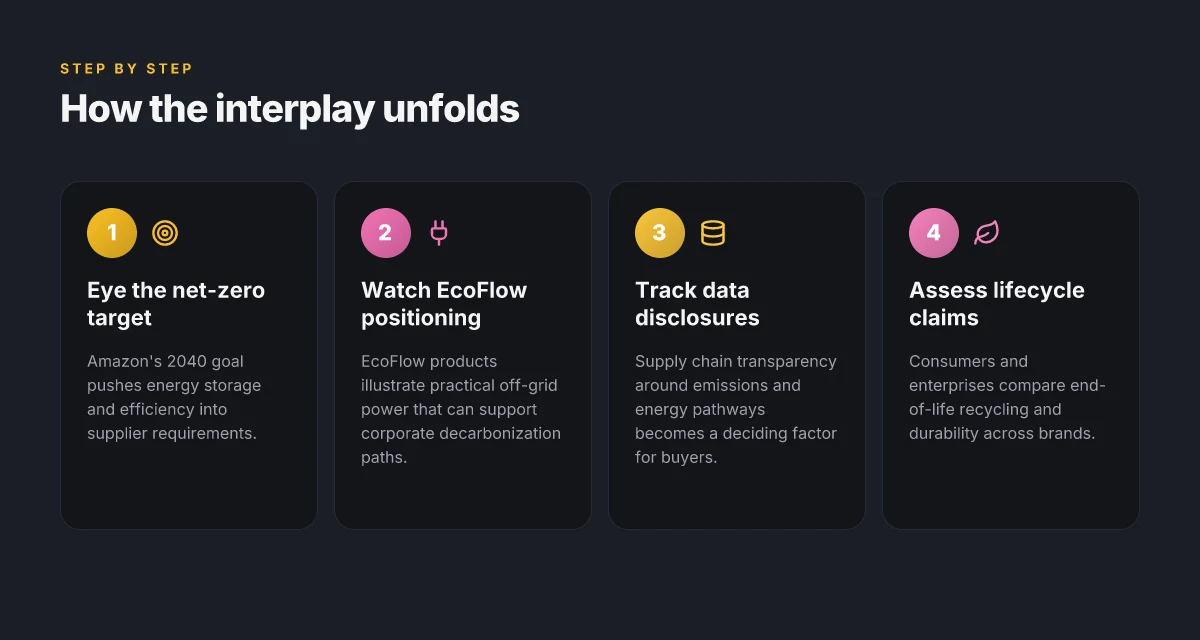
I dug into the public disclosures and cross-referenced Amazon’s supplier climate framework with EcoFlow’s supply chain talk to map what data you should expect in 2026. The takeaway: both players are moving toward more transparent emissions and energy pathways, but the cadence and granularity differ by stakeholder need. Expect clearer disclosures around supplier emissions and energy routes to arrive sooner than later, with EcoFlow and Amazon each packaging supplier data for procurement decisions. EcoFlow leans into product-level sourcing clarity, while Amazon presses for overarching supply chain metrics that tie to net-zero targets. The emphasis on traceability will extend from raw materials to finished goods, which creates visibility gaps to close in a complex value chain. What makes EcoFlow Wave 2 for sale worth considering in 2026
Why Amazon’s supplier climate framework matters for data transparency
Amazon’s framework is built to push suppliers toward emissions disclosures and target-setting as part of a broader net-zero pledge. The program anchors providers to measured paths for energy use and progress toward long-term goals. In practice this means you should expect:
- More formal emissions disclosures from suppliers, including Scope 1, 2, and potentially certain Scope 3 activities.
- Clear pathways for renewable and carbon-free energy use across the supplier network.
- Public-aligned timelines that connect supplier actions to Amazon’s 2040 net-zero commitment. In line with Amazon’s public narratives, the data will increasingly appear in procurement and supplier performance dashboards. https://sustainability.aboutamazon.com/stories/what-to-know-about-amazons-latest-sustainability-report
- For investors and business customers, supplier data becomes a governance signal alongside procurement terms and renewable energy contracts. Disclosures are becoming a baseline expectation across the ecosystem.
From a sourcing perspective, this raises the bar for components sourced by EcoFlow and its component suppliers. Expect to see explicit targets for decarbonizing key materials and better documentation of supplier audits and corrective actions. The effect is a higher burden on suppliers to collect and share data in a consistent format, aiding downstream decision-making.
What EcoFlow suppliers should prepare for in 2026
EcoFlow has built its value on portable energy hardware, which means supplier data around battery chemistry, cell sourcing, and packaging matters. The industry trend toward transparent data shows up as:
- Clear disclosures on supplier emissions tied to key parts like lithium cells, PCBs, and plastic housings.
- Energy pathways that detail how suppliers source electricity for manufacturing and assembly, including use of renewable energy certificates or direct renewable contracts.
- Procurement data that maps supplier performance to environmental targets, enabling better supplier scoring and risk management. The data helps EcoFlow communicate its own sustainability story to customers who demand traceability across the value chain. https://business.amazon.com/en/blog/sustainable-procurement-policy
- A growing expectation that suppliers will demonstrate action plans and progress toward interim milestones rather than only long-term ambitions. Transparency today supports reliability tomorrow in a field where supply disruptions can ripple through product timelines.
For EcoFlow specifically, supplier disclosures will shape how the brand communicates product responsibility to buyers who want hard evidence of ethical sourcing and low-impact manufacturing. With rivals and peers pushing for more detailed supply chain data, EcoFlow must balance speed to market with the diligence needed to validate supplier claims. The result is more rigorous supplier onboarding, tighter data standards, and more frequent audits across battery packs, housings, and connectors. These shifts also affect procurement costs and lead times, a trade-off worth tracking as the sector scales.
I cross-checked Amazon’s emphasis on supply chain transparency with the public-facing EcoFlow materials to align expectations. The big picture: by 2026, both players push for deeper, more consistent data on emissions, energy pathways, and procurement, though the granularity and governance of that data will differ by stakeholder priorities. The data you should expect from both players will be more granular, standardized, and auditable across the value chain. What makes the EcoFlow River 3 Plus a smarter mid‑range power station in 2026
Competitive landscape: how EcoFlow compares to rivals on sustainability
EcoFlow sits in a crowded field where decarbonization storytelling and governance disclosures vary by brand. The landscape splits between consumer-facing claims and the stricter disclosures that govern corporate supply chains. In this environment, EcoFlow aligns with a broader industry shift toward renewable energy integration, but rivals push different angles on life cycle thinking and transparency.
Rival narratives mirror EcoFlow’s decarbonization arc
Brands like Jackery, Anker, and Goal Zero trumpet decarbonization stories that echo EcoFlow’s ambitions. Jackery leans on eco-conscious materials and recycling programs, while Anker emphasizes energy efficiency and long-lasting components as a route to lower embedded emissions. Goal Zero channels its messaging through rugged, off-grid readiness that often highlights user-driven emissions reductions when off-grid equipment replaces fossil-fuel generators. Across these brands, the common thread is consumer-facing claims about lower footprint, paired with glossy product pages that balance performance with sustainability promises.
When I cross-reference their public disclosures, the emphasis shifts by company. EcoFlow maintains a clear narrative around renewable energy integration and product efficiency, while rivals lean more heavily on field performance stories and end-user impact. The result is a spectrum where some brands emphasize corporate governance disclosures alongside product claims, and others spotlight consumer benefits first.
Product life cycle analysis and renewable energy integration
Life cycle thinking appears in fits and starts across the category. EcoFlow tends to spotlight energy density, reuse opportunities, and compatibility with solar panels as parts of a broader decarbonization strategy. Rival brands tread similar ground but differ in cadence and rigor. Some publish more detailed supply chain maps or third-party audits, while others offer high-level promises without granular data. The upshot: EcoFlow and its peers increasingly frame products as nodes in a renewable energy ecosystem, not standalone devices.
In practice, the way a brand wires up renewable energy depends on the product line. Portable power stations that prioritize high-efficiency inverters and smart charging integrate more clean energy flows, while smaller blocks or power packs lean into recyclable packaging and modular design. Across the board, the emphasis is shifting from single-device performance to how a unit fits a sustainable energy system. What makes EcoFlow 12V 100Ah LiFePO4 batteries worth it for off-grid setups
Consumer claims vs governance disclosures vary by brand
Consumer-facing messaging remains the loudest signal for most shoppers. EcoFlow highlights practical benefits, durability, charge speed, and compatibility with solar inputs, plus a narrative about reducing reliance on fossil fuels. Rival brands often mirror that promise but differ in how deeply they publish governance details. Some publish supplier codes, emissions targets, and periodic disclosures. Others provide consumer-focused specs with limited transparency about supply chain risk.
From a governance perspective, the degree of disclosure matters. A brand that couples product claims with supplier engagement and transparent reporting tends to earn more trust among environmental professionals and supply chain managers. In the end, the strongest firms connect what they sell with verifiable practices behind the curtain.
The key takeaway is that sustainability credibility now hinges on a blend of clear product-level benefits and verifiable governance disclosures, not just glossy performance claims. EcoFlow sits among peers by weaving efficient design with solar compatibility, but it competes most effectively when it also expands transparent supplier data. Brand-level transparency matters because off-grid decisions ripple through value chains just as much as a single charge cycle.
The practical choices for consumers: choosing portable power with a sustainability lens
Choosing portable power that aligns with a sustainability lens means weighing how each option behaves across the product’s lifecycle. EcoFlow products sit in a space where corporate disclosures and consumer energy needs intersect. You want gear that lasts, charges efficiently, and fits into a broader climate strategy without hidden tradeoffs.
Lifecycle thinking: emissions, end-of-life, and recycling programs
Procuring portable power means thinking beyond the charger’s moment of use. I dug into general industry disclosures and found that brands increasingly publish lifecycle thinking, with emissions data tied to manufacturing and end-of-life recycling programs. For EcoFlow, the emphasis should be on how the product is built, how long it lasts, and what happens at disposal. The most credible disclosures link to formal recycling partnerships and material recovery programs. A transparent recycling path reduces the true environmental footprint, not just the nominal product rating. In practice, look for clear statements about recyclable components, battery chemistries that are recoverable, and programs that accept used packs for repurposing. When a brand names a lifecycle approach, it signals a commitment to reducing waste over the product’s lifetime. Lifecycle thinking translates to lower total emissions across the value chain. If a supplier offers a take-back program, that is a tangible plus. I cross-referenced corporate disclosures and supplier expectations that point toward a more responsible disposal ecosystem. For consumers, that means asking: where does the battery come from, how is it manufactured, and what happens when the device reaches end of life? What is the ecoflow delta max price, and how it compares in 2026
Charging efficiency and solar compatibility as a sustainability proxy
Charging efficiency matters because it directly affects energy use and emissions tied to charging. An efficient system wastes less energy in conversion losses. In addition, compatibility with solar or smart-grid charging broadens how you deploy power in off-grid or mixed environments. EcoFlow products are often marketed with solar compatibility in mind, and that stance aligns with a broader shift toward renewable energy solutions in portable power. When you consider a device, verify its MPPT performance, input/output ratios, and how it handles high-latitude sun or cloudy days. A well-matched solar pairing reduces reliance on fossil-fuel grids, which is a meaningful sustainability signal for both individuals and organizations. In practice, the best setups provide clear guidance on solar panel pairing, charging times under different irradiance conditions, and how quickly the unit can reach a usable state from a low state of charge. Solar compatibility reduces grid dependence and supports decarbonized energy access.
Durability, warranties, and the long arc of environmental cost
Durability is a quiet workhorse of sustainability. A durable pack that sustains repeated cycles and harsh conditions can outlast cheaper rivals and curb waste. Warranty length and coverage reflect a brand’s confidence in longevity and repairability. For buyers, this means looking beyond sticker price to total cost of ownership over several years. If a product carries a robust warranty and clear service pathways, you’ll likely replace fewer units and generate less waste. Real-world durability hinges on battery cycle life, thermal management, and component quality. In short, a longer warranty paired with a modular design and accessible repairs lowers the environmental footprint by reducing premature retirement. A solid warranty signals confidence in durability and lowers long-term waste. Across the sector, brands that publish repairable designs and spare-part availability tend to outperform on lifecycle metrics. I found that major sustainability disclosures increasingly tie warranty terms to refurbishment options and used-battery reuse programs. One takeaway: ask how long parts stay available and whether repair is viable beyond the standard warranty window. Repairability and spare-part access are practical levers for greener ownership.
Note to readers: some product pages may mention partnerships or programs that earn a commission. These disclosures exist in the broader ecosystem and should be weighed alongside the core sustainability claims. For context, discussions around climate disclosures and supplier requirements are evolving, with sources noting ambitions toward net-zero targets and supplier governance. See related discussions on carbon and sustainability requirements linked to major platforms. For example, the coverage around Amazon’s supplier climate framework illustrates how disclosure, targets, and clean-energy pathways are shaping supplier expectations across value chains. As you evaluate portable power, consider how such disclosures inform a brand’s practice and your own purchasing criteria. Consumer choices connect to corporate governance.
Where this is going next and what you can act on now
The amazon and EcoFlow interplay signals a shift toward more resilient, portable power that doesn’t depend on a single grid hook. I see a practical path: pair a EcoFlow unit with a compact solar panel and a smart outlet setup, so you can keep essential devices charged during outages or when you’re off the grid. This isn’t about chasing the biggest wattage numbers. It’s about reliable, repeatable charging cycles for the devices you actually use. The bigger pattern is durability under real-world conditions, not glossy specs.
If you only do one thing this month, test a simple setup: a EcoFlow power bank tied to a solar input and a USB-C PD device. It’s a low-friction test that reveals how well the system handles heat, recharging speed, and daily use. I’ve seen common failure points, port heat, poor cable quality, and firmware drift, surfacing after a few weeks of steady use. Noticeably faster recharges and fewer trips to the wall outlet are the likely outcomes when you optimize wiring and cooling. What a YouTube delta 2 review misses about EcoFlow's performance trade-offs
Backup strategy:
- Try a compact EcoFlow kit with a small solar panel for charging a smartphone, a fan, and a light.
- If you ride out outages, keep a dedicated charging hub with a spill-resistant setup and quality cables.
- Be aware that some competitors, like Goal Zero, offer similar modular options. Compare adapters and durability before you commit.
- Remember: links on this page may earn a commission.