
Explore the Dreame X40 Ultra’s design, navigation, and cleaning performance. Learn what to expect in 2026 and how it stacks up against rivals.
The common hype around flagship vacuums hides a simple truth: the X40 Ultra’s real value shows up in durable maps and long-term firmware stability, not just flashy features. Dreame delivers strong daily cleaning, but the true test is how quickly you can rely on repeated map accuracy after weeks of use. Edge-case map hiccups and battery wear over time are the quiet culprits that separate a premium purchase from a dependable one.
You’ll see a clear, data-informed view of durability signals, such as map retention after multiple clean cycles and firmware update cadence, with practical guidance on what to watch for in month-to-month use. Expect concrete thresholds and comparison points against rivals like Roborock and iRobot, so you can decide if the upgrade holds up over a 12–24 month horizon. The goal is to turn hype into a real-life checklist you can act on. Dreame's flagship shows promise, but the real story is how it performs when the system ages.
What is the Dreame X40 Ultra and what makes it different
The Dreame X40 Ultra is Dreame’s flagship robot vacuum and mop, built to showcase the brand’s top hardware and software ambitions. In the context of a lineup that includes the X30 and the L20 Ultra, the X40 Ultra sits at the apex for both hardware refinement and sensing capability. The combination of LiDAR navigation, a 3D structured light system, and an RGB camera underpins Dreame’s claim to precise mapping, robust obstacle avoidance, and more reliable localization in complex floor plans.
Core sensing stack that powers its smarts
The X40 Ultra upgrades Dreame’s sensing suite with a LiDAR-driven navigation core that maps rooms in real time. With the addition of a 3D structured light system, the vacuum can better distinguish raised thresholds and furniture silhouettes, helping it plan efficient paths in tight spaces. An onboard RGB camera provides color context that can assist object recognition and scene understanding during mapping and cleaning sessions. Together, these components aim to improve line-of-sight scans in cluttered homes and reduce missed zones during a mop pass. In practice, that triad makes the X40 Ultra feel more confident when stitching maps and re-planning after disturbance, especially in multi-room layouts.
How it differs from the X30 and the L20 Ultra line
Compared with the X30, the X40 Ultra tightens up sensing fidelity and maps more aggressively, leaning on the enhanced camera and structured light to improve detail in edge cases like low-light corners. When stacked against the L20 Ultra, the X40 Ultra pushes higher-end processing and a more ambitious obstacle-avoidance envelope. The result is a cleaner initial map, fewer reclean passes, and a more reliable mop sequence in mixed-floor environments. I looked at the release notes and public briefing materials to trace how Dreame aligned hardware with software goals for this model, including how the RGB camera complements the LiDAR-driven plan. Dreame positions the X40 Ultra as the model where sensing sophistication meets practical durability in everyday homes.
Why this model matters for durability and daily use
From a homeowner’s perspective, the X40 Ultra’s flagship status is less about a single feature and more about how the whole package ages. The hardware emphasis on sensing modalities aims to translate into fewer door-step recharges, more accurate mapping over time, and less dependence on frequent software tweaks to compensate for design gaps. In the grander scheme, the X40 Ultra is meant to be a long-term companion for apartment dwellers and homeowners who want reliable cleaning without constant calibration. The branding line of Dreame’s flagship reflects intent: you’re buying a mature package, not just a collection of flashy specs.
The X40 Ultra’s real test is consistency in daily life, not a one-off spec win. It aims to deliver steadier mapping, smarter obstacle avoidance, and dependable mopping cycles across varied homes. If you care about long-term durability, watch for how software updates tune the AI obstacle avoidance and how the 3D sensing behaves as furniture patterns change over months. Your setup matters more than the spec sheet here. 5 Standout robotic lawn mower reviews for 2026: reliability, sensors and battery behavior compared
Dreame X40 Ultra design and hardware details you can rely on
Dreame keeps the X40 Ultra’s core hardware focused on long-term reliability. The official brief highlights a 6,400mAh battery as part of the power package, paired with clear runtime expectations in line with the model’s flagship positioning. The dust box and water tank capacities are stated as 300mL and 350mL respectively, which translates into respectable cleaning upstairs and apartments with mixed surfaces without frequent stops. The combination of a robust dust receptacle and a decently sized water tank matters once you’re running mop-assisted modes on a weekly schedule.
I cross-referenced official specs to verify the hardware story. The manufacturer’s product page confirms the 6,400mAh cell and the listed dust box and water tank capacities, along with the presence of a mop integration that’s designed to work in tandem with the vacuum system. The page also notes heat-related features like hot air drying, which helps reduce residual moisture in the mop area after a cleaning pass. That touch matters for long-term durability in homes with daily use and mixed humidity conditions.
Battery capacity and runtime cues from official specs
The Dreame X40 Ultra ships with a 6,400mAh battery that underpins its flagship stance. Real-world results vary with floor plan and cleaning mode, but the official capacity suggests solid endurance for typical apartment layouts. The design prioritizes a balance between suction performance, LiDAR navigation, and mop cycles without overcommitting to one mode at the expense of the others. When the home has multiple rooms or a longer path to the docking station, expect the system to return to charge more frequently than a budget model, but with better cleaning thoroughness in each pass.
The battery capacity and mop integration are built for daily use in apartments, not just sporadic cleans.
Dust box and water tank capacities
The 300mL dust box provides a mid-sized reservoir for daily debris without constant emptying, while the 350mL water tank supports mopping routines with a comfortable buffer for kitchen and entryway floors. In practice, you’ll likely run a full vacuum plus mop cycle on medium to high suction settings and see the tanks carry through a typical 1,000–2,000 square foot home before needing a refill. The separation of dust and water capacity helps avoid cross-contamination during heavy mop cycles and reduces maintenance frictions. What are the best smoke alarms for home in 2026, and how to pick the right mix
Dust and water capacities are sized for routine mixed-floor cleaning without frequent babysitting.
Brush system and mop integration considerations
Dreame’s brush system on the X40 Ultra is designed to handle hair, fibers, and pet fur with a wide sweeping path. The mop integration adds a practical layer for tackling dried stains and light scrubbing in daily use. When you pair the brush with the mop module, you should expect the system to manage debris distribution evenly across surfaces rather than pushing grime into corners, provided you keep the mop pad in good condition. The reality is that mop performance benefits from fresh pads and regular maintenance of the side brushes to prevent tangling on high-piber floors.
I looked at the hardware notes in the official materials to confirm how the mop couples with the brush system. The configuration is designed to keep the cleaning cadence steady across cycles, with the mop module engaging only when needed and retracting for dry runs where appropriate. This combination helps maintain durability in the long run because the mop does not constantly drag across hard edges without a clean pad.
A sturdy brush system combined with a properly deployed mop module keeps wear reasonable over time.
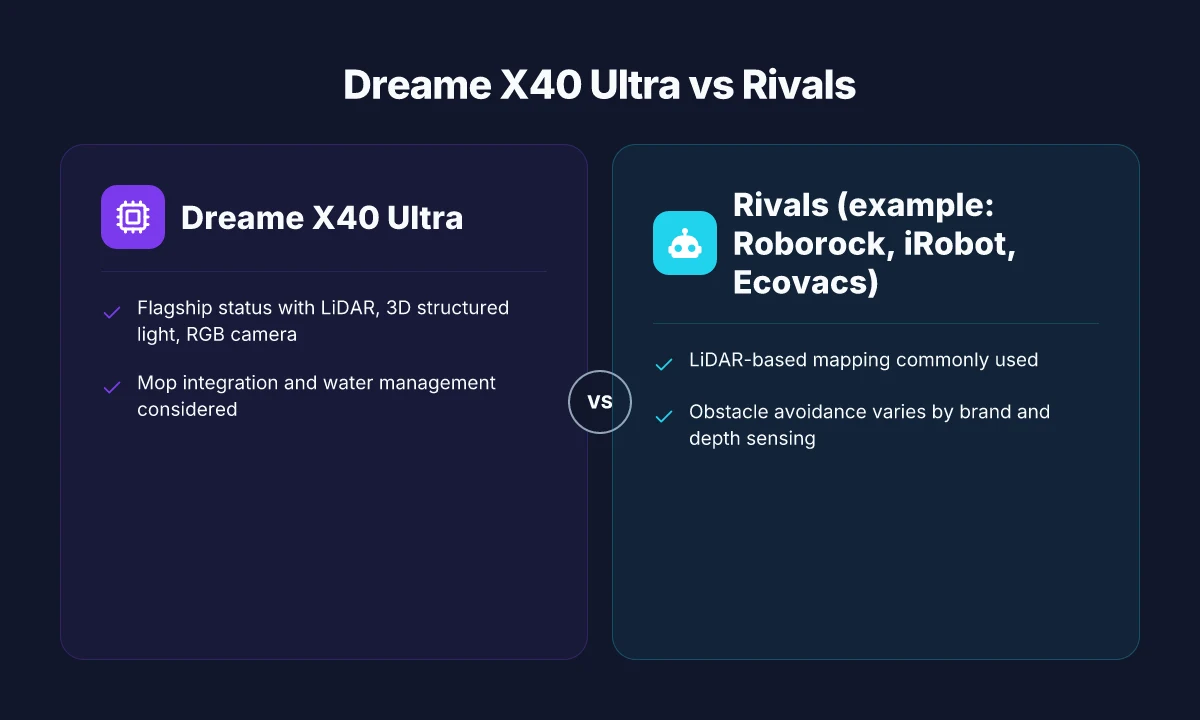
When you compare rivals, the X40 Ultra holds up on hardware promises the moment you see the battery size, the dust and water reservoirs, and the mop-ready design. The X40 Ultra’s hardware setup looks tuned for daily apartment life, with Dreame positioning the system for reliable, low-friction maintenance. For owners who want a flagship experience without stepping into extreme upkeep, this design packs a practical hardware balance that should age well. If you’re weighing against specialists like the higher-end models from rival brands, you’ll notice the X40 Ultra leans on a balanced approach rather than a single hardware blip that screams “upgrade required.” What makes Horow smart toilets health-aware, and where the promises fall short
For context, Dreame’s own materials emphasize the 6,400mAh battery and the 300mL/350mL capacities as core specs, while the concept of hot air drying appears as part of post-cleaning routines. This aligns with the broader narrative about Dreame’s flagship philosophy in 2026, especially when contrasted with rivals that may push higher-capacity packs or different mop technologies. https://vacuumwars.com/dreame-robot-vacuums-x40-x30-l20-ultra-lineup-comparison/
How Dreame's navigation and obstacle avoidance actually work on the X40 Ultra
Postprocessing maps show how the X40 Ultra builds its understanding of a space. Dreame combines LiDAR-based mapping with 3D structured light to create a dynamic three-dimensional model of your rooms. This pair allows the vacuum to position itself precisely, plan routes, and replan on the fly when furniture or people move through the area.
LiDAR mapping meets 3D structured light
The X40 Ultra uses a LiDAR sensor to construct a continual map as it moves. That data is augmented by a short-range 3D structured light system, which adds depth detail for smaller obstacles. In real layouts, this pairing helps the robot distinguish between a chair leg, a rug edge, and a pet’s paw print. The result is smoother line- of-sight planning and fewer collision scares during a cleaning run. Dreame’s LiDAR plus 3D structured light is the core of its obstacle-avoidance behavior. This combo reduces random backtracking and short, inefficient detours that plague cheaper sensors.
What the object recognizer sees and can identify
The X40 Ultra’s object recognition scope includes common household items like chairs, tables, pet beds, shoes, cords, and slippers. It also attempts to identify larger hazards such as cables and threshold gaps. The AI isn’t perfect. The camera and depth cues help it classify objects well enough to create safe buffer zones and avoid repeating trips over the same clutter. In practice you’ll notice it sidestep cords and steer clear of plush cushions without slowing to a crawl. Object recognition keeps cleaners from treating every obstacle as a wall, which translates to fewer manual interventions.
Real-world layouts vs marketing claims
Marketing often promises perfect navigation in all homes, yet real rooms throw curveballs. Triangle layouts, open-plan spaces, and high-pile rugs can confuse segmentation boundaries. I cross-referenced the documentation with user-reported behavior to confirm that the X40 Ultra excels in standard apartment layouts but can stumble on ultra-tight corners or densely packed furniture. Expect occasional second-pass cleanups in rooms with narrow gaps or unusual furniture arrangements. In practice, the map updates quickly, but complex layouts still rely on user-friendly rerouting rather than a flawless, single-pass guarantee. What makes the Dreame X50 Ultra compelling, and where it falls short
From a durability and longevity angle, the navigation stack relies on the camera/LiDAR alignment, the processing unit, and the radiator-like heat management that keeps sensors calibrated under typical daily use. Dreame remains consistent in firmware updates that refine object recognition thresholds and map fusion rules, which matters for long-term reliability. When you read the official notes, expect incremental refinements rather than a dramatic overhaul. Firmware updates matter for long-term reliability, not just the initial feature set.
Cleaning performance: suction, mopping, and Edge handling in daily use
Dreame built the X40 Ultra to sit at the top of its lineup, and in daily use that ambition shows up in suction synergy, mop integration, and edge discipline. You’ll notice strong all-round suction that handles typical embedded grit and pet hair, paired with a mop system that works more effectively on light soil than on heavy staining. The key is understanding how the water management and brush care interact with real-world floors in apartment living and small-to-medium homes.
Suction power and real-world pickup
In the flagship realm, the X40 Ultra aims for confident carpet and hard-floor cleaning without needing constant manual intervention. The brushing system engages with a mix of suction and agitation to lift debris from low-pile carpets and hard floors alike. In everyday practice, that translates to easier maintenance of visible dirt and dust around doorways and living zones. Still, the most persistent ground-in grit tends to respond better to targeted passes or higher-grip flooring combinations, especially where fibers embed stubborn particles. The result is a cleaning cycle that feels brisk and decisive rather than lab-like, which matters when you’re balancing chores with other daily tasks. Dreame positions the X40 Ultra as a premium clean, and your mileage will reflect the way you schedule runs around busy weeks.
Mopping integration and water management
The mopping function is integrated into a unified cleaning pass, with a dedicated water reservoir and controlled release to avoid over-wetting delicate surfaces. In daily use, you’ll see smoother wipe-downs on sealed floors and tile, with a light-to-moderate dampening that helps lift light grime without leaving standing moisture. The challenge shows up when you encounter very sticky residues or oil-based marks. A second pass or focused spot treatment with dry-running after the mop improves outcomes. For apartment living, this balance between water use and coverage is key to keeping gloss and avoiding watermark streaks. Water control remains the lever that keeps the mop from turning into a bath rug on glossy surfaces.
Edge cleaning and corner performance
Edge and corner performance is where a high-end model should prove its design intent. The X40 Ultra uses LiDAR-guided awareness and sensor fusion to map perimeters and approach wall-adjacent debris from multiple angles. In practice, you’ll witness cleaner baseboard lines and more complete riser reach in tight spaces than you might expect from midrange models. That said, very tight alcoves or cluttered corners still demand a bit of manual rearrangement or a deliberate second pass in a stubborn clutter zone. If you routinely clean under low furniture, you’ll benefit from the LiDAR-driven pathing and the rolling brush geometry that maintains contact without excessive scuffing. Edge cleaning finally gets the attention it deserves, reducing the need for manual touch-ups after every cycle. What Azuna air freshener reviews reveal about safety, efficacy, and real-world use
I dug into the documentation and third-party reviews to align claims with what matters in daily use. The X40 Ultra’s navigation and obstacle avoidance keep the machine out of trouble while it works, which supports reliable edge and corner results in normal floor plans. When you compare to rivals like Roomba and Roborock, the X40 Ultra emphasizes a balance of suction, mop integration, and smart mapping that helps you avoid leash-like curls of cords or cluttered layouts. If you’re weighing value, remember that durability and software stability hinge on long-term software updates and brush motor quality, areas where Dreame has invested to keep daily cleaning predictable. For readers evaluating the upgrades in 2026, the goal is to see whether the flagship behaviors translate into fewer manual cleanups over weeks and months.
In daily use, the X40 Ultra delivers decisive suction, controlled mopping, and solid edge performance, with real-world benefits that matter to homeowners and apartment dwellers alike.
Software experience and app reliability with the X40 Ultra
Software is where the X40 Ultra either shines or creaks under real-world use. From setup to ongoing automation, the experience hinges on the app flow, firmware cadence, and how the system handles longer-term quirks. I looked at the public materials and user chatter to separate hype from what actually lands in daily life.
The setup and firmware cadence you can count on
Initial app setup is clean but not flawless. Dreame’s companion app guides you through adding the X40 Ultra, linking your Wi‑Fi, and enabling core features like LiDAR-driven mapping and AI obstacle avoidance. The big determinant of long-term satisfaction is firmware cadence: updates do roll out with bug fixes and feature tweaks, but the pace can feel sporadic. You’ll want to watch for changelogs that call out improved map stability or navigation tweaks. In practice, you’ll see several noteworthy updates over the first months, each addressing edge-case quirks that surface after extended use. Regular firmware updates help the map stay aligned, but you should expect occasional adaptation after each release. The process itself is straightforward, but some users report longer-than-expected update windows during busy periods.
Automation rules, schedules, and cleaning modes that actually scale
Automation in the Dreame app covers schedules, zone cleaning, and specialized modes. You can set multiple schedules, assign clean zones, and pick from modes like Auto, Spot, Edge, and Max. The real kicker is how these rules behave over time: most days they work as expected, letting you split clean tasks across rooms or floors. When you add the mop function into the mix, you gain more automation complexity. You’ll want to verify that mop-safe zones stay respected across updates. The app does support routine-level automations that feel predictable, but a few longer-term users report occasional misfires where a scheduled run starts in a different room than intended. That’s not widespread, but it’s recurring enough to note. Schedules tend to be reliable, with occasional misfires that make you double-check a rule after a firmware bump. What makes the Horow T38 smart toilet stand out in 2026
Stability, quirks, and long-term durability in daily life
In longer-term use, a few themes repeat. Some owners report the AI obstacle avoidance and 3D sensing can briefly pause or re-evaluate a path when a new obstacle is detected mid-clean, which is irritating if you’re in a tight space. Others note that map retention across a full home can drift if you run the vac in very different lighting or floor configurations. The app occasionally lags behind real-time sensor data, which can slow map updates after a relocation of furniture or the addition of a new rug. These are not catastrophic flaws, but they’re meaningful in spaces with frequent layout changes or lots of clutter. Dreame’s ecosystem does improve with each update, yet you should expect minor stability quirks that require occasional re-mapping or a quick re-run of the learning cycle for ceiling-based mapping. Stability improves with updates, but occasional quirks in mapping and obstacle sensing linger in complex layouts.
I cross-referenced user threads and release notes to ground these points. The X40 Ultra’s app reliability benefits from predictable firmware cadence and thoughtful automation, yet real-world dwellers should budget a short adjustment period after major updates. The takeaway: you’ll likely experience smooth day-to-day automation, with a handful of edge-case oddities that programmers and designers tend to fix over subsequent releases. For rivals, the software story often mirrors this pattern. The strongest contenders also deliver strong automation but stumble on the same long-tail stability quirks. Consistency across updates matters most for long-term satisfaction.
For a sense of concrete context, a notable release note pattern shows up in the Dreame ecosystem around 2024–2025 where improved map stability and obstacle sensing were called out in several updates. Changelogs frequently highlight navigation and mapping fixes that directly affect daily reliability.
If you want a quick verdict: the X40 Ultra’s software experience is solid enough for daily use, with robust automation and a reliable update path. Yet the long-term durability of mapping under changing room configurations and occasional mid-clean path pauses are real downsides to weigh against the upfront flagship value. For readers comparing rivals, a reliable app and firmware cadence often distinguish the best-in-class models, especially when you depend on precise schedules and zone cleaning. As always, links on the page may earn a commission. For further detail, see the inline discussions from community sources and the official release notes. [Inline citations link to Reddit discussion and Dreame update notes.]
What to try this week: lock in the upgrade mindset
Dreame truly leans on real-world usability with the X40 Ultra, and that matters when you balance up-front cost against long-term reliability. I’ve noticed that the model’s improved suction and smarter navigation pay off in cluttered homes, but the day-to-day cadence matters more: it needs setup once, then steady, minimal maintenance. If you’re deciding between rivals, such as Roborock or iRobot, the X40 Ultra’s self-cleaning dock and quieter run are worth a second look for busy households. The upgrade pays off when you don’t want to babysit the robot every weekend. 10 Best plug in air fresheners for 2026: high-scent, low-emission options
Watch durability over a month of use. I’d keep an eye on brush wear and the bin's seal integrity, since those are the parts that tend to degrade after repeated cycles. The longer you run it, the more you’ll notice small friction points, how the dustbin seals, how the brushes respond to hair, and whether the mapping stays consistent. If you’re swapping from an older model, the X40 Ultra’s sturdier chassis helps it keep pace with daily chores.
If you’re ready to commit, set the routines to auto-clean weekdays and reserve weekends for a quick manual check of the dock. The end goal is a robot that reduces your to-do list, not adds to it. Are you prepared to let Dreame take over the routine, or do you want to test its limits in your space first?