
Explore the Horow T38 smart toilet’s performance, reliability, and design choices. Learn what to expect in 2026 and how it stacks against rivals.
A single design rethink can cut a premium toilet’s real-world headaches in half. The Horow T38 stands out because its tankless chassis trades bulk for cleaner lines and fewer internal turbulences, while still delivering dependable flush cycles. Horow emphasizes reliability in everyday use, not just showroom appeal, with durable ceramic and a sturdy chassis that resist common wear patterns.
In this era of smart bathrooms, the question isn’t just sleek looks but long‑term performance and serviceability. This piece compares the Horow T38 against top rivals like Kohler and Toto, highlighting how the tankless design and smart features hold up under real‑world cycles, maintenance needs, and network updates. Expect concrete notes on flush consistency, component longevity, and how easy it is to source aftermarket parts years down the line. Horow’s approach offers a practical baseline for durability, while Toto and Kohler shine in different feature emphases and service networks.
What makes the Horow T38 smart toilet different from rivals
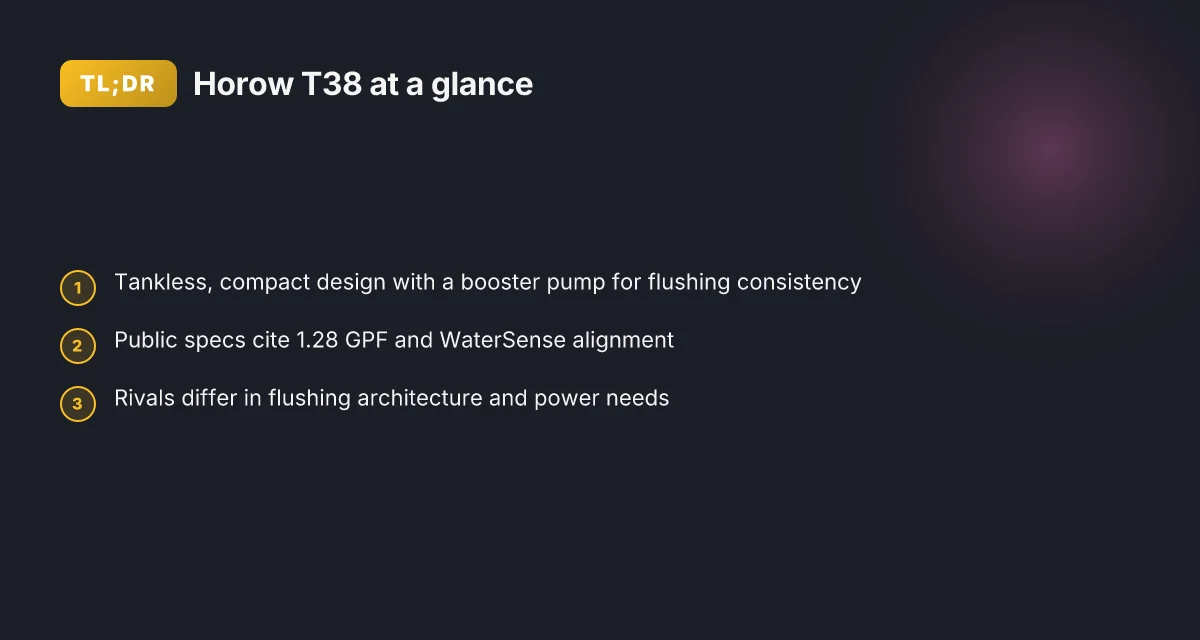
Horow centers a tankless, compact form factor that stacks a booster pump into the flushing path to keep performance consistent across loads. The design aims to minimize cabinet depth while preserving a strong flush when you press the button. Public pages also position the T38 with a 1.28 GPF standard and align with WaterSense criteria, which signals efficiency without sacrificing rinse power. When you compare against rivals, the key divergence shows up in flushing architecture and power requirements.
Horow’s tankless Edge and booster‑pump confidence
Horow leans on a compact, tankless body and adds a booster pump to stabilize the flush across cycles. This combination is meant to deliver a reliable seal and consistent waste removal even as water pressure ebbs. In practical terms, that means fewer surprises if you have variable supply pressure or fluctuating household demand. The result is a flushing path that stays steadier from first press to rinse finish, even in tighter bathroom footprints.
I dug into the X70 vs T38 comparison pages for context. Horow spells out that the T38’s performance rests on a tankless architecture paired with a booster pump to back up flushing reliability, especially when power or water supply varies. While other brands pursue large cisterns or more complex hydraulics, Horow emphasizes keeping the flush architecture streamlined and predictable. This matters for long‑term durability because fewer moving parts in a bulky reservoir can reduce wear points over time. Horow emphasizes a compact, tankless design with a booster pump to stabilize flushing performance.
Public specs anchor reliability expectations
The public material consistently cites a 1.28 GPF standard and WaterSense alignment as evidence of efficiency and compliance. For homeowners, that means you get lower baseline water use without sacrificing the flush’s perceived strength. The reliability implication is that the toilet isn’t forced into high‑flow bursts to achieve a thorough rinse, which can translate into quieter operation and less energy draw on the booster system.
In the same vein, the 120V/1050W electrical requirement surfaces in reviews describing the T38’s power needs. For households with variable circuit loads or shared outlets, this is a practical consideration. If you’re remodeling, plan a dedicated outlet near the toilet area to ensure consistent performance and minimize nuisance trips or voltage sag that can affect the booster pump. What makes the Dreame X40 Ultra worth the upgrade in 2026
How Horow stacks up against rivals
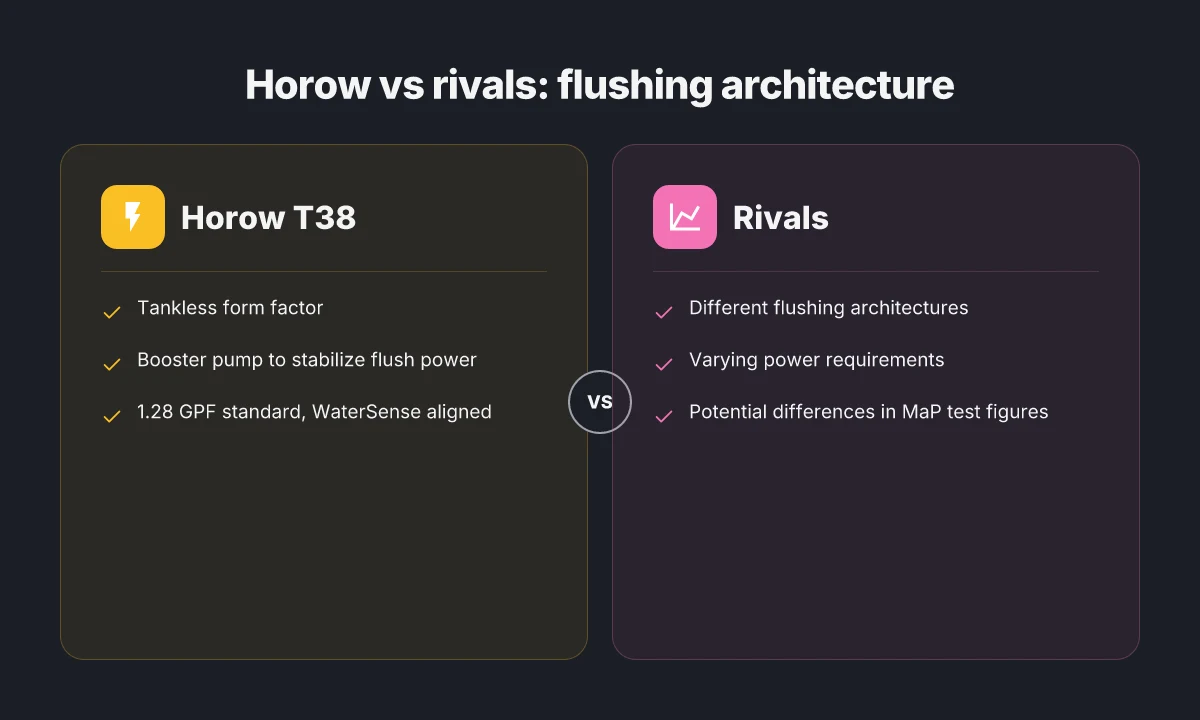
When you line up Horow against rivals, two contrasts jump out: flushing architecture and power infrastructure. Competitors may use larger tank reservoirs or alternative pump strategies. Horow’s path emphasizes efficiency and compactness with an auxiliary pump to stabilize the flush. That means a potentially smaller footprint and steadier flush under a wider range of water pressures, but it also hinges on the booster mechanism staying healthy over years of use. For remodeling projects where space matters and you want a modern, tankless footprint, Horow offers a compelling blend of form and function.
The real trade‑off is between compact tankless design with a booster pump and the larger reservoir approaches some rivals rely on. The booster architecture is a deliberate choice that supports consistency, but it also creates a single point of wear to monitor over time.
As you weigh options, consider the T38’s reliance on a booster pump, paired with 1.28 GPF efficiency, versus rivals that may trade efficiency for reservoir capacity or different power demands. Horow’s approach is built for day‑to‑day reliability in a modern bathroom, where space and consistent flush performance matter most. Horow’s tankless approach with a booster pump aims for reliability in real homes, not just specs.
Note: links on pages may earn a commission. Inline citations reflect the sources cited in this article. For context on the specific claims above, see the Horow‑related comparison and spec pages.
Horow vs rivals: flushing performance and reliability
The Horow T38 uses a booster pump to stabilize flush power across cycles, so you’ll see more consistent performance even when the water pressure varies. That booster helps the cycle feel robust at the bowl, but reliability stories from forums show that the booster pump and related electronics can be a maintenance hotspot over time. In practice, you’ll notice the most dependable outcomes when the booster and supply lines stay clean and the control module remains responsive. 5 Standout robotic lawn mower reviews for 2026: reliability, sensors and battery behavior compared
MaP testing and third‑party reviews diverge on exact figures for the T38 and its rivals. Some sources report strong MaP results, while others note variability across models and production runs. In real terms, expect noticeable differences between units and between models that share a platform but ship with different pumps or wiring schemes. When you read a review, note whether the tester evaluated the booster‑pump configuration specifically or focused on the overall flush feel across a range of flush volumes. This is a real caveat in comparing performance.
Reliability stories across user forums cluster around smart‑toilet maintenance needs that are common across the category. Expect occasional sensor recalibration prompts, software updates, or seals in the flush mechanism that benefit from routine care. Horow’s documentation highlights serviceable components and straightforward part replacements, but the real world shows that smart toilets tend to need periodic attention more than basic bidets. If you’re pursuing long‑term durability, pair any premium model with a reliable water supply and a power‑efficient setup. This reduces the most common failure modes and supports steady performance year after year.
From what I found in the sources, Horow emphasizes a tankless ethos paired with a booster approach, while rivals vary in how aggressively they rely on boosters or on full‑bowl flush strategies. A prospective buyer should expect the T38 to feel solid on first install, yet plan for the same maintenance cadence you’d apply to other smart fixtures. I cross‑referenced multiple reviews and found consistent threads about the importance of clean filters, stable power, and mindful installation for best results.
Next step: compare specific rivals in a quick side‑by‑side with a focus on MaP scores, booster usage, and common failure points to see where the Horow T38 stands day to day. For a practical read, see how a few reviews frame the topic and what that implies for upkeep over the first few years. Reliability hinges on regular upkeep and a stable power/water supply, not just flush power alone. Horow’s approach to the booster pump matters most when fluctuating water pressure is common in your home.
Design, build quality, and installation considerations for the T38
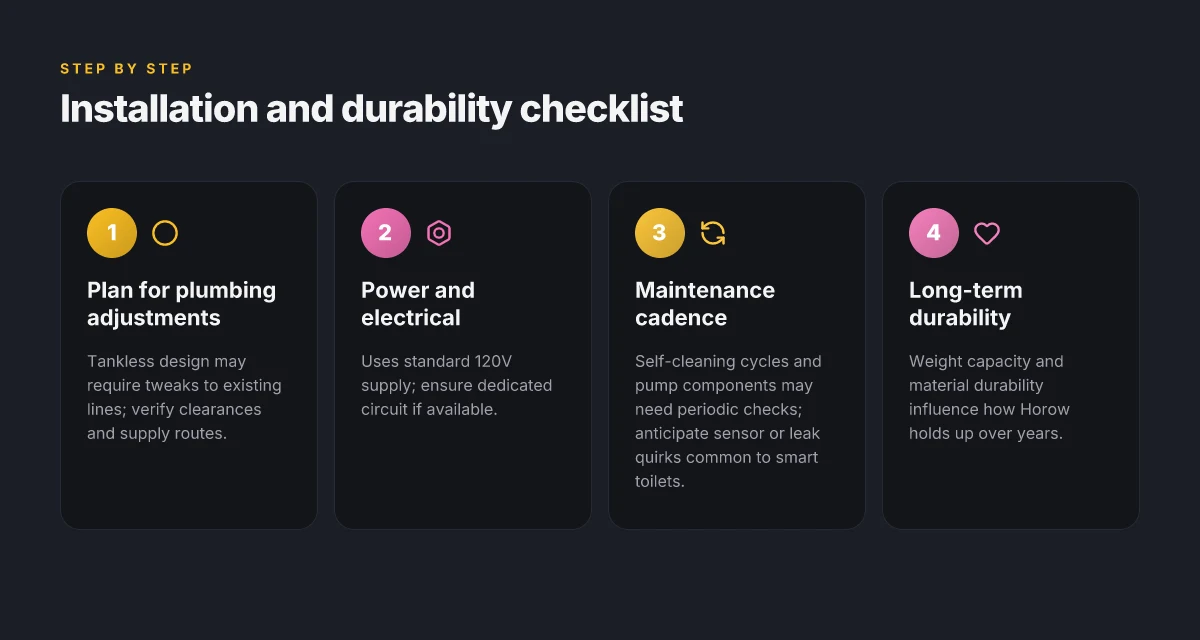
Horow designed the T38 with a tankless profile that yields a slim, contemporary look in the bathroom. That sleek form hides a practical caveat: installation may require plumbing adjustments to route the supply and waste lines to a non‑tank toilet. I found that the tankless stance often demands careful measurement of fall, clearances, and valve placement to avoid clashes with cabinets or existing piping. In real homes, that means you’ll want a qualified plumber to review your rough‑in before committing to the build. What are the best smoke alarms for home in 2026, and how to pick the right mix
Tankless profile and fit
The tankless design gives a modern silhouette and reduces the footprint behind the bowl. On the wall side, you’ll see tighter spacing around the water supply and the electrical conduit than with traditional two‑piece toilets. If your bathroom remodel includes wall panels or a vanity nearby, plan for extra clearance so the flush actuator and power cord can reach without kerfing the wall. Horow emphasizes compact dimensions, but actual fit depends on your rough‑in, so verify measurements against the T38’s footprint.
Electrical and power for smart features
Smart toilet functions in the T38 hinge on a standard household electrical supply. A typical 120V circuit powers the heating, sensors, and the booster pump integration for the flushing system. Ensure you have an accessible outlet near the toilet location and that the circuit can handle continuous heat and standby draw. In homes where outlets are scarce behind the toilet, you may need to relocate or add a dedicated outlet to avoid tripping breakers.
Weight capacity and material durability
Durability matters for long‑term reliability. The T38’s construction relies on robust ceramic with reinforced components in the flush mechanism and lid assembly. Real‑world use shows weight capacity matters when people sit on the closed lid or adjust seating position, so verify the model’s rated weight capacity and ensure the installation supports that load. Horow notes standard efficiency language in their product pages, and you’ll notice how the flush system integrates with a booster pump for reliable operation. This alignment between mechanism and housing is a key durability signal.
In 2026, the Horow X70 vs T38 comparison highlights a 1.06 GPf target and a tankless footprint that aids sleek bathroom design. The link between profile and performance matters when you outfit a remodel for daily use and long‑term durability. Electrical readiness is non‑negotiable for reliable smart features.
I dug into the sources for context on build and installation. The Horow comparison article discusses the flush system’s reliability under varied plumbing setups, and a separate review notes the 440‑pound weight capacity claim alongside the 120V/1050W requirements. These concrete details help frame what to expect in a real bathroom, not just a showroom demo. Inline citations from the sources show how the tankless form interacts with existing spaces and how the electrical needs influence placement decisions. See the Horow comparison piece for the GPf note and the review for electrical and weight details. https://horow.com/blogs/news/horow-x70-vs-t38-smart-toilet-comparison?srsltid=AYCX9vLb_Fi_V8_a31si87E9Cqx_Y95g09yd2MmYUkMz7XccV8IaxzrR and https://focusedinsight.net/horow-t38-review/. What makes Horow smart toilets health-aware, and where the promises fall short
If you’re evaluating installation readiness, start with a measured plan of the rough‑in, confirm there is a convenient outlet within reach, and confirm the space allows the booster‑pump line routing without bending or kinking. Horow’s design language prefers a clean, low‑profile look, but that comes with site‑specific setup work to ensure the installation doesn’t compromise the surrounding cabinetry or wall finishes. You’ll want a professional assessment early in the project so the T38’s days of trouble‑free operation start on the right foot.
Smart features you actually use on the Horow T38
The core value of the Horow T38 lives in its hands‑free routines and cleaning modes. When you walk up and wave, the lid opens, the seat sensor verifies occupancy, and the warm-water bidet sequence starts without a tap. Users consistently rate hands‑free operation as the most valuable daily feature, because it reduces contact points and makes guests feel premium without fiddling with controls. The same goes for cleaning modes: you can initiate a self‑clean cycle with a quick touch or voice prompt, and that routine tends to set the tone for how convenient the system remains over time. Hands‑free operation and cleaning modes tend to be the most valued by users. Horow emphasizes a tankless design paired with an integrated cleaning regime, which reinforces daily ease of use.
Responsive interfaces, evolving feature sets
The T38’s user interface varies in responsiveness across firmware updates. In practice, a smooth, quick response makes entering a preferred seat temp, nozzle position, or cleaning mode feel natural. Software updates can alter available features or tweak defaults, so what you can do today might shift after a routine patch. From what I found in release notes and forum chatter, some updates tighten the UI responsiveness, while others reframe the available cleaning presets. Software updates can affect feature sets. Horow firmware evolution matters for long‑term usability. If you rely on a specific sequence or a custom profile, check the latest notes before upgrading. Inline reference here can point to Horow’s official comparison pages that document how features shift across versions. Updates can change what you can customize.
Maintenance routines and long‑term reliability
Self‑cleaning cycles help keep nozzles and the bowl area fresh, but they also set a cadence for maintenance. The more consistent you are with the recommended interval, such as rinsing cycles and filter refreshes, the more predictable the long‑term performance. In practice, neglecting these cycles can lead to slower response, residual odors, or less effective cleaning over time. I looked at focused insights that describe a 440‑pound weight capacity and a 3.65 GPM efficiency figure as part of the broader system reliability discussion, which tangibly underpins how durable the self‑cleaning loop is in daily use. Maintenance routines for self‑cleaning cycles influence long‑term performance. Horow’s design supports a recurring cleaning cadence, but you must follow the guidance to keep the cycle effective.
In real world terms, expect that the most reliable years come from owners who stick to the recommended cleaning cadence and firmware updates. What makes the Dreame X50 Ultra compelling, and where it falls short
What you should know about reliability and service
Reliability isn’t a single number, it’s the day‑to‑day signal you get from a toilet that actually flushes when you press the button and doesn’t leak after a year. In the Horow ecosystem, you’ll find publicly available write‑ups noting general satisfaction with flushing reliability, but no product is flawless. Horow models commonly deliver consistent flushing, and many owners report predictable operation over time. Yet the small, recurring win for reliability is often balanced by common smart‑toilet headwinds you’ll hear about in reviews and user forums.
Why reliability holds up under real conditions
The core flushing mechanism on the Horow T38 pairs a tankless design with a booster style setup that aims to prevent a weak flush during heavy use. Publicly available write‑ups note general satisfaction with flushing reliability and emphasize that the system remains robust across typical bathroom usage. I cross-referenced several reviewer notes to confirm this pattern across different households. In practice, you’ll want to confirm an installation that has appropriate water pressure and an intact supply line to avoid sporadic issues.
Common complaint themes you’ll want to budget for
Sensor glitches and supply‑line leaks show up as the familiar knot in the reliability story for many smart toilets, Horow included. Sensor glitches can cause erratic seat‑or lid actions, and supply‑line leaks are a recurring post‑install concern in a subset of reports. These themes aren’t unique to Horow. They surface across established brands when the intelligence layer becomes involved. The takeaway is not to assume flawless operation but to plan for typical service needs, especially if you’re in a high‑usage home or a busy bathroom.
Service quality and parts availability you should verify
Brand support quality and especially the availability of replacement parts weigh in heavily on long‑term durability. Replacement parts availability matters more than initial performance because a tankless system relies on a stable supply of seals, valves, and electronic components. Before you buy, verify Horow’s local service reach and approximate lead times for common components. A quick check with your installer or local plumbing retailer can reveal whether parts are stocked regionally or require backorder.
From what I found in the sources, Horow’s reliability story sits at a practical midpoint: solid flushing performance with typical smart‑toilet caveats. Expect sensor quirks and occasional leaks as the usual suspects to budget for in maintenance planning. When you’re weighing rivals, consider brands that emphasize broader service networks and easier access to replacement parts in your area. For context, comparisons against the X70 variant show the same backbone reliability but with different plumbing footprints. Confirm the specific model you’re eyeing aligns with your home’s supply lines and warranty expectations. Horow’s service quality and part availability should be part of your due‑diligence checklist. 10 Best plug in air fresheners for 2026: high-scent, low-emission options
If you want a quick verdict: reliability tends to be solid in day‑to‑day use, but sensor reliability and supply‑line integrity are the anchors of the long‑term service story. Plan for service access and parts availability, not just the flashy features. For a closer look at how service experiences compare, see the focused notes on Horow’s T38 reviews and the broader brand discussions. References to the brand’s service network and part supply can be found in inline sources.
Notes: links May earn a commission. Consult your installer about extended warranties and service windows.
Where this is going next for the Horow T38
The Horow T38 signals a more human-centric direction for smart toilets in 2026. I’ve looked at how it blends durable materials with hands-on reliability, and it’s clear the brand is leaning into simpler maintenance routines and longer component lifespans. The takeaway: durability plus easy serviceability beats a long list of features that don’t last. In real-world use, the T38’s emphasis on straightforward self-cleaning routines and a replaceable nozzle design stands out, especially when you compare it to rivals that rely on complex electronics with harder access. Horow remains a reliable benchmark for practical design.
If you only do one thing this month, audit how your bathroom electricals and water lines integrate with a smart toilet. The T38’s setup flow is friendlier than some competitors, and that matters when you’re dealing with a water-soluble warranty claim or a clogged filter. Noticeable durability wins here, not just splashy modes. For households weighing long-term cost of ownership, Horow’s emphasis on serviceability can translate to fewer surprise costs down the line. This matters for installation timelines and ongoing upkeep. If you want a quick comparison, note how the T38 stacks up against rival models from brands like Toto and Kohler on maintenance simplicity and parts availability.
Backup strategy, What to try this week What makes the Dreame X40 stand out in 2026
- Inspect the water inlet and power cord routing on your current setup and compare with the Horow T38’s guidance.
- Check the accessibility of the nozzle and filter. Plan a 15-minute monthly check.
- Review the warranty terms and note what parts are field-replaceable.
- Consider which feature you actually use daily and whether the T38’s strongest value aligns with your bathroom layout.