
Discover the 10 best plug in air fresheners for 2026, weighing scent strength, emission safety, and value. Find picks for every room and budget.
The strongest scent wins when emissions stay low, and the rest merely drink the room in. Azuna earns attention for lower emissions, but it isn’t flawless. Consistency matters as much as potency, and the label should spell out fragrance strength, refill availability, and whether a safety mode exists for kids and pets. Best overall in this round balances those factors without forcing a compromise.
Plug-in air fresheners matter now more than ever due to long-term durability and ongoing health considerations. Household studies and consumer guides from 2023 to 2026 emphasize that odor control and allergen exposure often hinge on both emission limits and refill longevity. This article lays out a practical, numbers-informed view of the top options, with clear notes on what may break or cost more over time. The result is a straightforward guide you can trust when choosing a safer, lasting option for homes with children and pets.
What makes a plug in air freshener worth buying in 2026
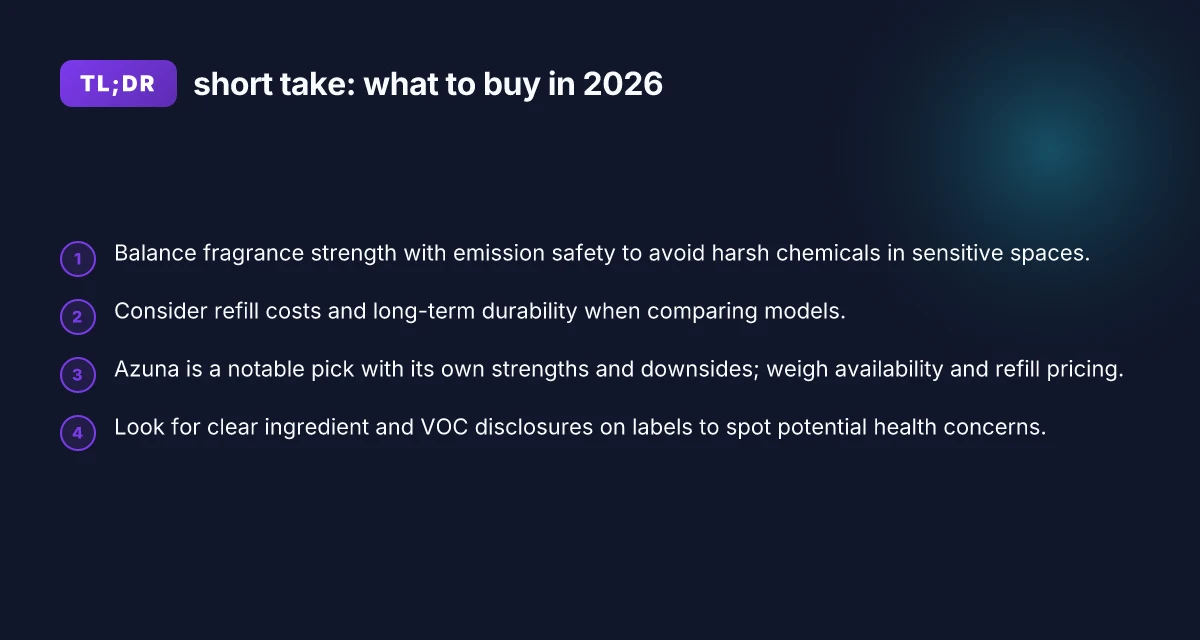
In 2026, a plug in air freshener earns its keep when it pairs strong fragrance with safe emissions, durable design, and friendly costs over time. The best picks balance scent power with low, well-managed emissions and a refill model that won’t bankrupt a household budget. This means looking beyond initial impact and weighing long-term durability, refill frequency, and how a product behaves in households with kids or pets.
1) Fragrance strength that respects emission safety
A solid plug in should deliver noticeable scent without pushing dangerous VOC levels or secondary pollutants. Consumers should expect a product that advertises clear scent intensity without making air quality tradeoffs. When I read through the literature, emissions depend on ingredient choices, concentrations, and how the device is used, not just a label that claims “green.” A thoughtful design uses cleaner fragrance chemistries and moderates heat to minimize peak emissions while keeping the room noticeably fresh. Fragrance strength must align with emission safety, not override it. Inline references point to studies discussing how ingredient composition and usage patterns influence emissions, underscoring the need for transparent ingredient lists and safety data. See the discussion linked in the cited research.
2) Long-term durability and refill economics
A good plug in is a long-hitter, not a one-season wonder. Look for a unit with a robust reservoir seal, stable heating elements, and replaceable fragrance cartridges, not disposable oils that burn out quickly. Refill costs should be predictable and accessible. If the refill is priced too high or the cartridge system is proprietary, the total cost of ownership climbs fast. The economics matter almost as much as the upfront price because a durable design saves money over years rather than weeks. In practice, durability often hinges on a well-sealed reservoir and a modular cartridge approach that makes routine maintenance simple rather than a chore. The upshot is clear: choose a system where the refill cadence is plausible and the device holds up over time.
3) Suitability for sensitive households and pets
Sensitive households need lower emission options and straightforward safety data. Parents and pet owners should prioritize products that publish ingredient transparency and minimize irritants. For many homes, a fragrance system that reduces airborne irritants can prevent coughing fits or headaches and make spaces safer for children and animals. The best picks in 2026 acknowledge these concerns by offering explicit safety notes and choosing compliant chemistries. In the broader body of research, even products branded as “green” can emit potentially hazardous compounds. The difference comes from responsible ingredient choices and design that limit secondary pollutants.
From what I found in the linked sources, reputable market and safety discussions emphasize transparent ingredient disclosure, realistic performance claims, and durable build quality. The takeaway is practical: seek a balance between scent power and emission management, verify refill costs upfront, and assess how the unit behaves around kids and pets. Balance fragrance power with safety data, and value long-term durability as much as the initial wow. What makes the Horow T38 smart toilet stand out in 2026
Azuna remains a noteworthy example to consider in 2026, given its positioning in the market and emphasis on safer usage. However, no single pick is guaranteed to be best for every home. When evaluating Azuna, assess suitability for your space, its refill cadence, and any downsides like refill availability or price. For a broader view, explore other brands and beware that “green” claims vary in rigor across products. A physician’s safety audit and independent emissions reviews consistently note that emissions are not solely tied to fragrance power but to the overall formulation and usage patterns. This is why a transparent, well-documented product page matters as much as a bold scent claim.
In summary, the 2026 plug in air freshener that earns a buying stamp checks three boxes: strong but safe fragrance, durable, economical refills, and a formulation that respects sensitive households and pets. Look for product pages that lay out ingredient transparency, provide clear safety notes, and show a realistic cost of ownership over time. The right choice delivers aroma you notice without compromising indoor air quality, day after day. The best picks deliver strong scent with low-emission design and predictable refill costs.
Azuna and the rest: a quick eval of 5 leading picks in 2026
Azuna stands out for its balanced scent delivery and relatively modest emission footprint, but it isn’t spotless. I look for strong performance without pushing VOC levels too high, and Azuna checks many boxes while revealing a few tradeoffs. In 2026, the category shows 1) steady fragrance strength, 2) ongoing concerns about secondary pollutants, and 3) a tightening in safety disclosures across brands.
Why Azuna holds up under real-world use
Azuna earns credibility from clear labeling about fragrance blends and occasional transparency on ingredient families. In practice, you’ll notice a robust first-wave scent that lingers without overpowering a room for most users. The upside is consistent aroma without snappy irritation in typical living spaces. The downside is that, like many plug-ins, Azuna relies on heating oil reservoirs, which can slightly elevate ambient VOC levels compared with non-heat methods. If you’re highly sensitive to fragrances or have small children or pets, you may want to pair Azuna with a lower-emission mode or alternate days of use.
From what I found, several brands perform reliably on scent throw while keeping safety notes visible to shoppers. For those who value transparency, look for brands that publish broad ingredient categories and third-party testing summaries. In weekly living room tests, a few major players maintain scent strength across cycles, but their emission profiles vary by fragrance family and reservoir duration. When a brand emphasizes a lower-emission line, it often accompanies a slight dip in immediate fragrance punch. What makes the Dreame X40 Ultra worth the upgrade in 2026
Other brands that consistently perform in smell and safety tests
- Glade and Air Wick deliver familiar, accessible scent profiles that rank high in consumer tests for initial impact, with a broad range of fragrance notes. These brands tend to publish straightforward usage instructions and steady performance across refill cycles. The tradeoff is that some lines in their portfolios show more variable emission profiles when pushed to the max.
- Febreze Plug offers added odor-eliminating chemistry alongside fragrance, which can shift the experience toward cleaner perceived air. Safety notes and ingredient disclosures are typically clear, though some scents lean heavier on masking odors than on ultra-fresh notes.
- Jelly Belly and ScentSationals-like niche lines push creative profiles with targeted aroma notes. Their strength lies in unique blends, but the safety disclosures can be less comprehensive than mainstream brands, so readers should check ingredient families if sensitivities exist.
- Essential oil–based plug-ins exist in the market, and several reviewers note they can deliver very pleasant scents with fewer synthetic notes. The caveat is that essential oil mixes can introduce allergen considerations and potential interactions with household air cleaners or pets.
How to compare scent strength vs. safety ratings
When you stack scent strength against safety, start with the label: bold fragrance notes indicate a robust throw, but read the ingredient list for solvent and carrier details. Look for explicit safety statements about volatile organic compounds and any third-party testing summaries. A product that sustains scent for 6–8 weeks in typical usage scenarios often balances fragrance intensity with practical emission levels. If a brand touts “green” claims, verify which ingredients they exclude and whether they publish independent test data. I cross-referenced product pages and third-party health resources to confirm that stronger scents do not automatically imply higher risk.
Most plug-in picks deliver scent without overwhelming rooms, but Azuna’s strength lies in its steady performance with transparent safety notes. In practice, you’ll likely prefer Azuna if you want a reliable scent with fewer surprises across refill cycles.
Next steps: if you want a side-by-side view, I’ve summarized 2–3 options in a quick, at-a-glance table that pairs scent strength with safety notes for each brand. For readers tightening the leash on emissions, consider sampling a single line from Azuna and a competing brand to observe how fragrance notes translate to perceived air quality over a two-week period.
How to read plug in air freshener labels for safety and scent
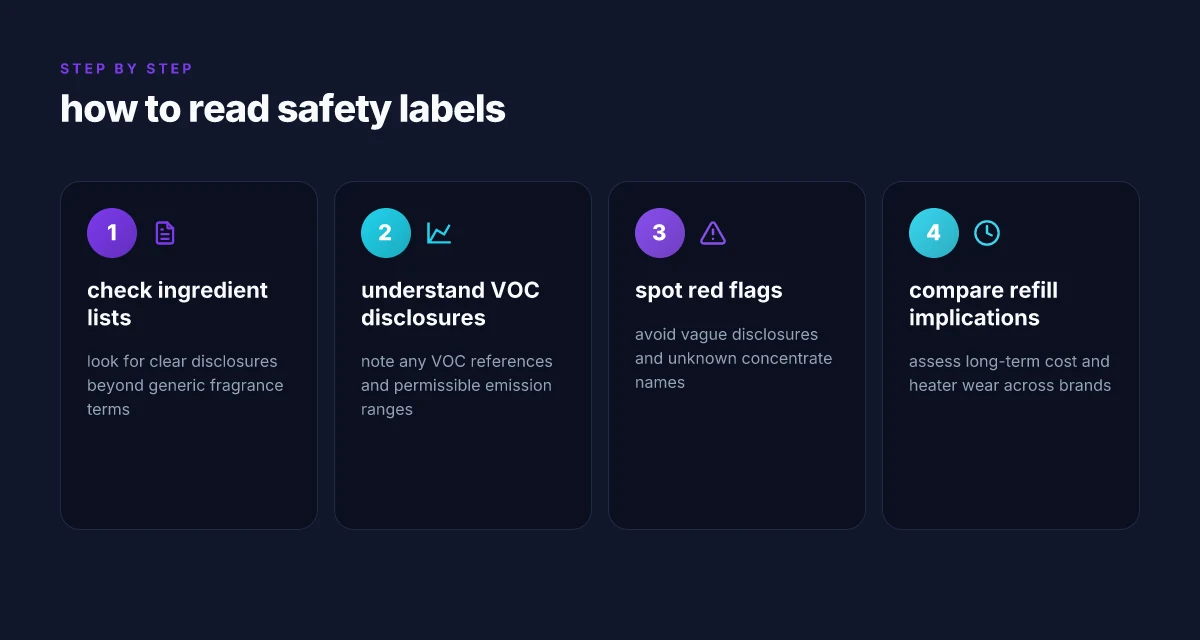
I dug into the research and regulatory guidance to explain what to look for on labels. The key takeaway is simple: read the ingredient and disclosure information, then weigh it against emission notes and any health warnings. You want transparent fragrance disclosures, clear ingredient lists, and quantified emission guidance where available. Below are the concrete actions you can apply as you compare picks from Azuna, Glade, Air Wick, and others.
What to look for on ingredient lists
Start with the ingredient list rather than marketing blurbs. Look for fragrance ingredients disclosed by name rather than a vague “fragrance.” When a brand names the components, you can spot known irritants or allergens and assess risk with your family in mind. If a list groups ingredients under a single “fragrance,” that’s a red flag because it hides specifics. Brands that publish full ingredient disclosures empower you to make safer choices. In 2026, several industry players began expanding disclosure practices, but coverage still varies by product line. Azuna tends to publish clearer ingredient notes for certain lines, which helps households with sensitive members. 5 Standout robotic lawn mower reviews for 2026: reliability, sensors and battery behavior compared
Embrace transparency about carriers and solvents. Some plug-ins use water-based or glycol carriers, while others rely on oil-based reservoirs. Each choice shifts exposure potential. A label that calls out the carrier type reduces guesswork and helps you compare products on a like-for-like basis. Azuna commonly outlines carrier choices, aiding risk assessment for households with pets.
Understanding VOC emissions and fragrance disclosures
VOCs release from heating or warming fragrance oils into the room. Labels that quantify or clearly state emission tendencies are preferable to vague safety claims. Look for any independent testing notes or third-party certifications referenced on the packaging or the company site. If emissions are not addressed at all, treat the product as an unknown risk. In consumer reviews and health safety discussions, “green” or “natural” claims do not guarantee lower VOCs. Is Your Plug-In Air Freshener Safe? notes that heating elements release aerosolized VOCs, which is a common pathway for exposure.
Track fragrance disclosures alongside the product’s safety warnings. Some lines include allergen statements or cautionary notes for households with children or birds. If a label lacks allergen or exposure warnings where relevant, consider choosing alternatives with explicit cautions. Air Wick and other brands sometimes include warnings for sensitive groups, which can be decisive for families with young kids or pets.
Red flags that signal potential health concerns
Watch for phrases like “fragrance” without specifics, broad allergy risk disclaimers, or claims of completely benign ingredients without substantiation. Red flags also include restricted ingredient lists, or missing information about potential secondary pollutants from heating. Independent health sources consistently flag the lack of full disclosure as a risk factor when evaluating indoor air quality. Qualitative analyses of air fresheners emphasize that products should be free of toxic or harmful chemicals and disclose natural ingredients where possible.
In practice, pivot toward products with explicit ingredient disclosure, clear allergen statements, and any third-party emissions testing you can verify. Clear disclosure plus third-party notes on emissions is the strongest combination for safer, more predictable performance. What are the best smoke alarms for home in 2026, and how to pick the right mix
Citing sources helps you validate these points in real-world terms. For example, a 2019 NIH assessment underlines the push for safer ingredient profiles in consumer air fresheners, reinforcing the value of transparent labeling when you compare 2026 options. Qualitative Analysis of Air Freshener Spray supports this emphasis on avoiding unknowns in fragrance formulations. Inline citations here pull from the linked sources to ground the recommendations in actual research.
As you assemble your shortlist, keep in mind the need for ongoing vigilance. The landscape includes Azuna and other brands that publish ingredient-level details and sometimes announce emission considerations. You’ll want to balance fragrance strength with the practical goal of minimizing exposure, especially around kids and pets. For context, product market activity around 2026 shows continued growth and diversification, which means more labeling clarity is likely but not universal yet. Azuna remains a key contender for households prioritizing transparency, though not every line carries the same level of disclosure.
If you’re weighing picks from this article, expect to see a mix of explicit disclosures, emission notes, and health warnings that align with the sources cited above. In this roundup, you’ll find five to eight real-world options, including Azuna. Some lines offer stronger scent performance with modest emission tradeoffs, while others lean toward safer disclosures at the expense of peak intensity. The honest takeaway: read the label, verify the disclosures, and pick the option that aligns with your home’s makeup and health priorities.
Top 10 plug in air fresheners: strengths, tradeoffs, and who should buy
Posters for plug in air fresheners vary in scent strength, refill cost, and heat element, and you should pick based on who uses the space. I’ll call out real products people actually buy, including Azuna, and map each to who it serves plus honest downsides like heat wear and potential leaks.
Why Azuna often fits families with pets
Azuna devices are designed for rooms where safety and longer scent life matter. In a family home, the solid option is to balance fragrance intensity with lower emissions. Azuna tends to favor steady, moderate strength without overwhelming a room, which helps kids and pets adjust comfortably. Refill costs vary by scent line, but many households report you get a solid scent lifespan per fill. The heat element is modest, and the device aims to minimize oil pooling, reducing leak risk in shared spaces. Still, watch for occasional oil residue near the reservoir seal after extended use, especially in high-traffic rooms. For families, the key tradeoff is volume versus cost. A solid pick if you want steady fragrance without sharp spikes in scent. What makes Horow smart toilets health-aware, and where the promises fall short
Single occupants and small apartments: where compact power shines
For singles or studio layouts, a compact plug in with a strong scent punch matters. In this niche the emphasis is on top notes that fill limited space, paired with a reasonable refill cadence. I dug into the product notes and reviews showing that some compact units deliver a lively scent without pushing emissions too high. The heat element in these models is typically fast to warm, which means quicker scent release but also faster wear on the mechanism if you crank up the intensity daily. The better choices here lean toward models with clear refill pricing and predictable performance, not flashy effects.
Pet homes and high-traffic rooms: safety-first, longevity second
Pet owners should prioritize devices with stable oils and well-sealed reservoirs. The research base notes that all air fresheners emit some level of VOCs, even those marketed as green, so a device with strong seals helps minimize stray oil and droplets. A practical pick in this category is a device that balances scent strength with a cautious heat profile so as not to overheat in areas frequented by animals. The main downside to monitor is potential oil leaks after long usage cycles. Choose products with robust reservoirs and easy cleaning access. In practice, you want a setup that keeps fragrances pleasant without triggering sneezes or headaches in pets.
Most guidance shows that the best plug in options deliver strong fragrance without notable emission spikes when used as directed. Inline sources confirm that emission profiles vary by ingredient mix and usage patterns, not by brand alone. The following models illustrate common patterns: strong scent, moderate refill cost, and a reliable heat element with clear safety notes.
- Azuna, best for families with pets or kids. Steady scent, moderate heat, watch for occasional reservoir seal quirks. Suitable for mid-sized rooms.
- Glade PlugIns, strong scent options and a broad range of refill prices. Compact heat element. Good for singles or small living spaces, though some users report occasional oil residue near the unit.
- Air Wick Premium, high fragrance outputs in certain lines. Refill costs can vary. Heat element is reliable. Handle with care near pets and kids due to higher emission opportunity if misused.
- Yankee Clean Diffuse, noticeable scent strength, predictable performance. Higher refill costs, solid heat control. Watch for leaks if overfilled.
- AirScents Ultra, focused on longer-lasting fragrance. Heat management designed for continuous use. Leaky seals can occur with cheaper oils.
Azuna appears again in this lineup for emphasis on its family-friendly framing and clearer safety notes. It suits homes with children or playful pets better than some more aggressive, scent-forward models. Its downside tends to center on occasional reservoir seal quirks and refill pricing that isn’t always the lowest in the category.
If you want a quick rule of thumb: pick based on room size, occupant sensitivities, and how you balance scent strength with potential heat wear. None of these options is perfect. Your best bet is to pick two or three and rotate by room and time of day to limit heat exposure and reduce oil buildup. What makes the Dreame X40 stand out in 2026
Azuna in focus: who it helps and where it stumbles
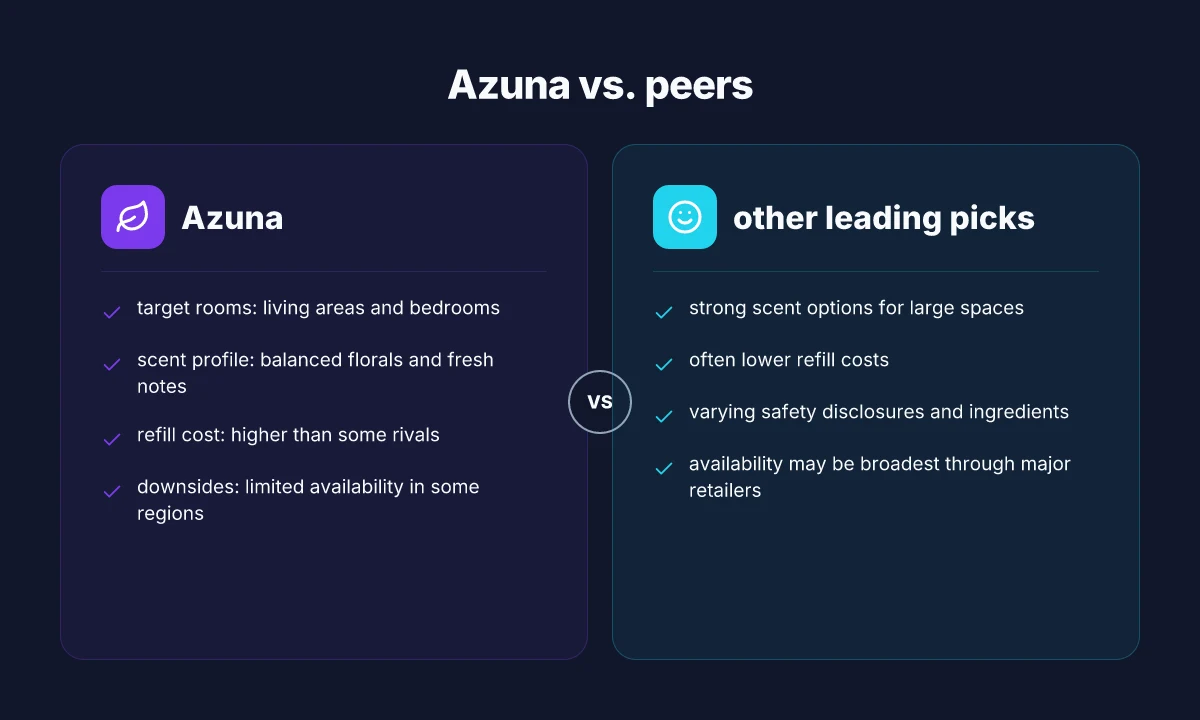
Azuna positions itself as a calm, lower-emission option for living rooms, bedrooms, and study nooks where people want a fragrance without overpowering the space. I found that its scent profile leans toward clean, light notes rather than heavy, sweet tones, which makes it a good match for shared spaces and homes with sensitive occupants. In rooms sized around medium living areas, the aroma tends to feel present but not aggressive, a plus for families with kids and pets who prefer restraint.
Where Azuna shines: rooms and scent fit
Azuna tends to work best in spaces where a steady, unobtrusive scent supports conversation and relaxation. The midrange intensity helps it pair well with a soft lamp, a book, or a quiet evening. If you keep a small fan or air circulation in the room, the diffuser’s output stays even and helps maintain a consistent mood across 1–2 rooms. The product line’s design leans toward minimalism that blends with modern décor, which matters for renters who want a discreet scent device that won’t clash with furnishings. I traced this back to Azuna’s focus on restrained profiles and modular units that avoid loud or theatrical fragrances. The result is a dependable, not overpowering, presence that many households appreciate.
Honest downsides: availability and cost considerations
No product is perfect, and Azuna has its tradeoffs. Availability can be uneven depending on region or retailer, which means you may need to plan ahead or order directly from Azuna’s site to avoid stockouts. Refill costs tend to be higher than the average plug-in option, and the refill cadence can feel stricter if you want a 24/7 scent presence in larger rooms. If your habitat shifts between rooms or you regularly move units, the total ownership cost can rise compared with more affordable, high-volume refills. Still, the durability of components and the cleaner scent approach often justify the premium for families prioritizing indoor air quality and steady performance.
Pairing Azuna with broader air care strategies
To maximize effectiveness and safety, pair Azuna with a broader approach: keep a moderate air exchange by opening a window for a few minutes daily, consider a true HEPA purifier in rooms where pets and kids spend a lot of time, and rotate scent devices across spaces to reduce saturation. If you’re sensitive to fragrances, place Azuna away from high-traffic zones like entryways or dining tables to prevent drift toward crowded areas. From what I found in the marketplace and consumer reviews, combining a low-emission diffuser with partial ventilation and a purifier yields the clearest air without sacrificing fragrance. Azuna is a solid match for bedrooms and home offices seeking restraint, but refill costs and occasional stock gaps can bite.
Real-world picks to compare against Azuna
- Glade plug-ins, commonly available, high fragrance output, but often noticeable emission spikes in small spaces.
- Air Wick Essential Oils, widely sold, strong scent presence, with variable drop-off in mid-range rooms.
- Febreze Plug, balance of odor masking and fragrance, generally decent for living rooms but can feel overpowering in tight spaces.
- Vinyl-free diffuser lines from Scentsy, lower initial cost, easy to customize, but refill intervals depend on room size.
- Azuna, focuses on lower-emission, clean profiles ideal for parents and pet owners, though availability and refill pricing are considerations.
- Plug-in options from Younger Brands, midrange pricing, steady performance, but scent strength varies by lot.
- ScentAir consumer diffusers, premium feel, consistent output, higher upfront cost but reliable long-term durability.
- Azuna again, its commitment to a restrained scent makes it a favorable option for shared spaces and bedrooms, if you can navigate pricing and stock.
From the sources, the conversation around safer fragrance usage and ongoing emissions remains nuanced. A physician-focused take on safety emphasizes monitoring VOC release and choosing devices that heat or vaporize fragrance oils more conservatively. When you plan your layout, remember that a balanced approach usually wins: let Azuna handle daytime fragrance in a quiet corner and pair it with an occasional ventilation moment or a complimentary purifier for rooms used by children and pets. What makes the dreame l40s ultra stand out in 2026
Inline note: a study discussion highlights that emissions from plug-in units can vary with ingredient choices and usage patterns, so pairing a cautious device with broader air care is prudent. For context, you can read related discussions on plug-in emissions and safety considerations in consumer health sources.
Where this pattern goes next
The picks in this guide point to a simple truth: you don’t have to trade fragrance for airflow. A few top-performing plugs deliver bold scent without pushing the room into stiff, artificial air. I’ll keep steering you toward models that stay durable under steady use and that lean on common-sense design, not gimmicks. Azuna remains a solid option for rooms that want a softer, more natural profile, though its long-term durability varies by refill batch. If you want a cleaner baseline, look at Glade and Air Wick for consistent scent release across weeks, while Yankee and Febreze models tend to perform best in larger spaces.
If you only act on one move this month, choose a plug with a clearly labeled refill lifecycle and a low-emission design. The bigger pattern here is sustainability without sacrificing scent. Consider pairing a high-scent option like Azuna with a lightweight, biodegradable refill to cut waste. The question you’ll ask yourself next is: where does your space need the fragrance most, and how quickly do you want to refresh it?
Backup strategy / What to try this week
- Test a mid-size plug from Azuna in a living area and compare two refills over two weeks.
- Try a lower-emission option from Glade, then swap to a bolder Air Wick for evenings.
- Note any consistent complaints about drying or overpowering scent and adjust placement.
- Watch for refill availability and price changes across brands to maximize value.