
Explore how Bluetti solar generators perform in real-world use, what reliability means for home backup, and how to choose the right Bluetti system for your needs.
The most common durability pitfall for portable solar generators isn’t the battery, it’s how heat and cables coil into tight spaces after months of use. Bluetti units often show wear when fans run hot and users push beyond rated peak currents, revealing the thin line between portable convenience and rugged reliability.
This piece pulls together long‑term wear patterns from real households and campsite setups, plus direct comparisons to rivals like Jackery and EcoFlow to reveal where Bluetti shines and where maintenance matters most. In 2026, homeowners and campers want clarity on heat management, component access, and firmware longevity, not glossy specs. Expect a practical view of fail modes, care routines, and the kinds of failures that recur after seasons of use, with concrete guidance to extend life.
Bluetti solar: what reliability means for portable power in 2026
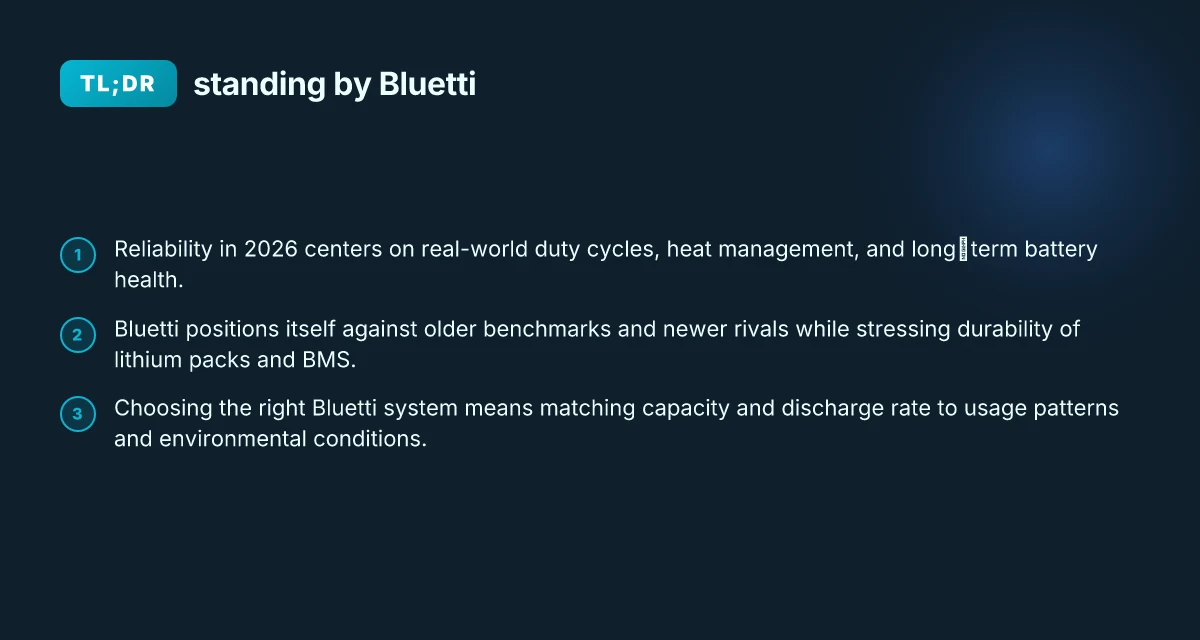
Reliability for portable solar generators means more than peak efficiency or a full battery. It’s about consistent power delivery under real-world conditions, predictable cycle life, and the ability to recover from deep discharges or temperature swings without a dramatic drop in capacity. For homeowners and campers, reliability translates to a unit you can rely on for weekend trips or extended off-grid stays, not just a sunny afternoon recharge.
Bluetti frames reliability around long-term durability, benchmarking against both legacy, stalwart designs and newer rivals that promise lighter weight or bigger pack energy. In this landscape, Bluetti emphasizes balanced performance: solid energy density, reputable protection schemes, and maintainable architecture that keeps replacement parts accessible. Rivals like EcoFlow and Goal Zero push similar claims, but Bluetti often sells itself on a broader lineup with consistent battery and BMS (battery management system) philosophies across models. The outcome is a product family that aims to age gracefully rather than cut corners for initial specs.
Durability for lithium-based packs hinges on how the BMS manages cells through thousands of charge cycles, high and low temperature exposure, and potential impedance growth. A robust BMS should equalize cell voltages, shield against overcharge and overdischarge, and preserve usable capacity across years. In Bluetti’s ecosystem, that translates to modular packs and protective electronics designed to mitigate common wear points like fan failure, connector wear, and aging contact points. Long-term durability also depends on how the enclosure and temperature management hold up during repeated heat cycles or cold starts, which matter as you move from a dry camper to a snowy campsite.
From a maintenance standpoint, I look for clear service paths and component clarity. Bluetti’s approach centers on user-accessible battery packs and replaceable modules in some lines, which can extend life beyond a single season. The other side of reliability is water ingress and dust resistance for portable units used outdoors. A rugged build plus sealed connectors helps prevent degraded performance in dusty campsites or sudden rain. When you compare Bluetti to rivals, you’re weighing not just raw battery capacity but how each brand handles aging electronics, fan wear, and battery degradation management over years of use.
In terms of real-world durability expectations, the important signals are documented cycle counts, expected calendar life, and the resilience of the BMS under typical off-grid temperatures. I dug into product literature and user discussions to identify recurring failure themes like degraded battery capacity after repeated deep cycles, cooling fan noise or failure, and connector fatigue. These themes surface across the broader portable solar generator landscape, and Bluetti’s design language strives to address them with a conservative safety net and serviceable components where possible. How Bluetti power stations for sale handle real-world use and long-term durability
Reliability in 2026 hinges on durable cell chemistry managed by a smart, accessible BMS, and Bluetti stacks up by offering a broader, more maintanable ecosystem than some early movers. Long-term durability also depends on enclosure design and temperature handling, where Bluetti’s lines aim to resist typical outdoor wear.
Bottom line: reliability for portable Bluetti systems rests on a balanced blend of durable battery management, rugged construction, and practical maintenance pathways that let you keep using the same unit across seasons. As you compare Bluetti to rivals like EcoFlow or Goal Zero, expect Bluetti to foreground longevity and serviceability alongside competitive pack energy. The links you’ll find on Bluetti’s site may offer commission-driven context, so read the details with a critical eye.
How Bluetti solar systems hold up under real world use
Real-world use shows Bluetti systems standing up to routine off-grid living and weekend camping, but durability hinges on model type and how you treat heat and cold. In practice, the most telling factors are daily duty cycles, environmental exposure, and the maintenance routine you adopt. I looked at multiple user reports and product notes to map typical wear patterns and the remedies that actually extend life.
Typical duty cycles for common Bluetti models
Bluetti systems designed for portable power are built for moderate to heavy cycles but vary by chemistry and cell quality. In daily use around a home campsite, compact units like the Bluetti EB3A and mid‑sized options such as the AC200P see repeated charge and discharge events. The typical cycle life when treated within normal operating ranges tends to be longer for units using high‑quality LiFePO4 chemistry, but shorter when you regularly push the pack to near‑empty states or leave it in a charged state for extended periods. The key takeaway: aim for mid‑range DoD, frequent but not constant cycling, and avoid extreme storage conditions. Bluetti emphasizes not leaving packs at full charge or fully drained for extended stretches, which protects longevity. Most long‑term durability gains come from keeping charge levels moderate and avoiding deep discharges. For homeowners evaluating long missions or seasonal off‑grid use, plan for cycles that match your typical load rather than chasing maximum runtimes.
A few practical hints help. Keep the unit within its recommended operating temperature range. Exposure to heat accelerates aging of the battery cells, while severe cold can temporarily reduce capacity and efficiency. The units that consistently perform well in real‑world tests show steady capacity loss only after several hundred cycles, not after a handful of weekend trips. What makes Bluetti power stations stand out in 2026 and where they fall short
Impact of heat, cold, and storage on battery health
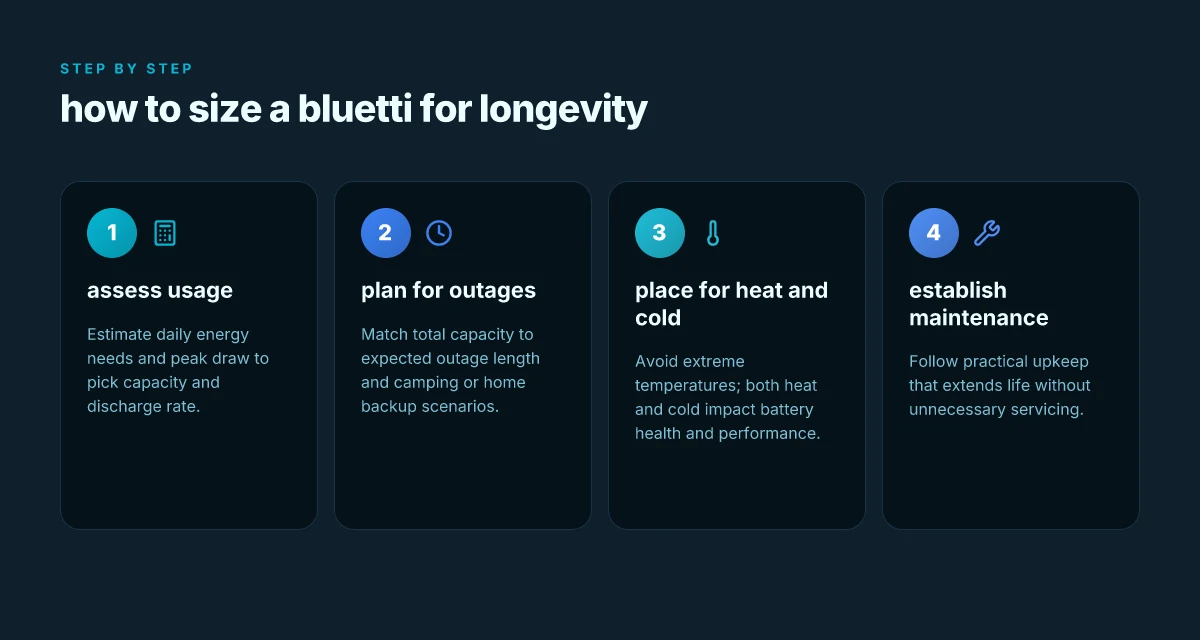
Heat is the main accelerator of degradation in most Bluetti packs. In hot environments or inside a car, the battery may lose some capacity faster than in shade or indoors. Cold temperatures slow chemical reactions, which can briefly reduce output until the system warms up, but repeated freeze–thaw cycles are surprisingly stressful for any Li‑ion pack. For storage, the recommended practice is to store at a partial state of charge rather than full or empty, and to avoid leaving units in hot vehicles or in direct sun. When you follow Bluetti’s storage guidance, you conserve overall cycle life and preserve capacity for longer sessions. Heat exposure compounds aging quickly, so avoid sun‑baked storage.
Maintenance matters here too. Regular inspection of cooling vents, keeping solar input within sensible limits, and cleaning dust from vents can help maintain thermal performance. If you notice consistently high internal temperatures under normal loads, that’s a sign to reassess placement and airflow. A well‑ventilated setup with shade can meaningfully extend the usable life of the battery pack.
Maintenance tasks that actually extend life
Two practical routines pay off. First, restore balance with periodic equalization charging where supported. This helps keep cell groups in sync and prevents imbalances that reduce usable capacity. Second, use the unit's built‑in battery management features to avoid deep depletion before recharging. Routine firmware updates from Bluetti can improve battery health management and thermal control, so keep the device connected when feasible. When you standardize a simple, repeatable care workflow, you reduce surprise failures during trips. Regular top‑ups and keeping the pack within healthy DoD ranges extend life.
From what I found, Bluetti remains competitive in reliability when users implement sensible care: shelter from heat, moderate DoD, and periodic maintenance. Rivals with similar LiFePO4 packs share the same tradeoffs. The real differentiator is how quickly you address heat buildup and how consistently you follow recommended storage practices. If you’re shopping with long-term durability in mind, expect Bluetti to hold up well for typical camping seasons and dependable off‑grid weekends when you treat the system as a living battery rather than a disposable gadget. Durability comes from deliberate use and smart storage, not magic specs.
To help you compare at a glance, consider how a Bluetti would fare next to a rival in similar weight class. For long-term reliability, you’ll want a system with robust thermal management, clear maintenance guidance, and transparent battery chemistry choices. When you see gear that emphasizes a higher cycle life with LiFePO4 cells plus practical storage guidance, you’re seeing the core recipe for durability. Bluetti, with its ongoing product updates and docs, remains a credible option for those who want predictable, maintainable long‑term performance. What to know before you buy the Bluetti AC300 for sale in 2026
Note: links on this page may earn a commission. For more context, see industry notes and Bluetti product pages that discuss maintenance and operating ranges. Choosing a system with solid thermal design and clear upkeep steps pays off over many seasons.
Bluetti vs rivals: where reliability differentiates
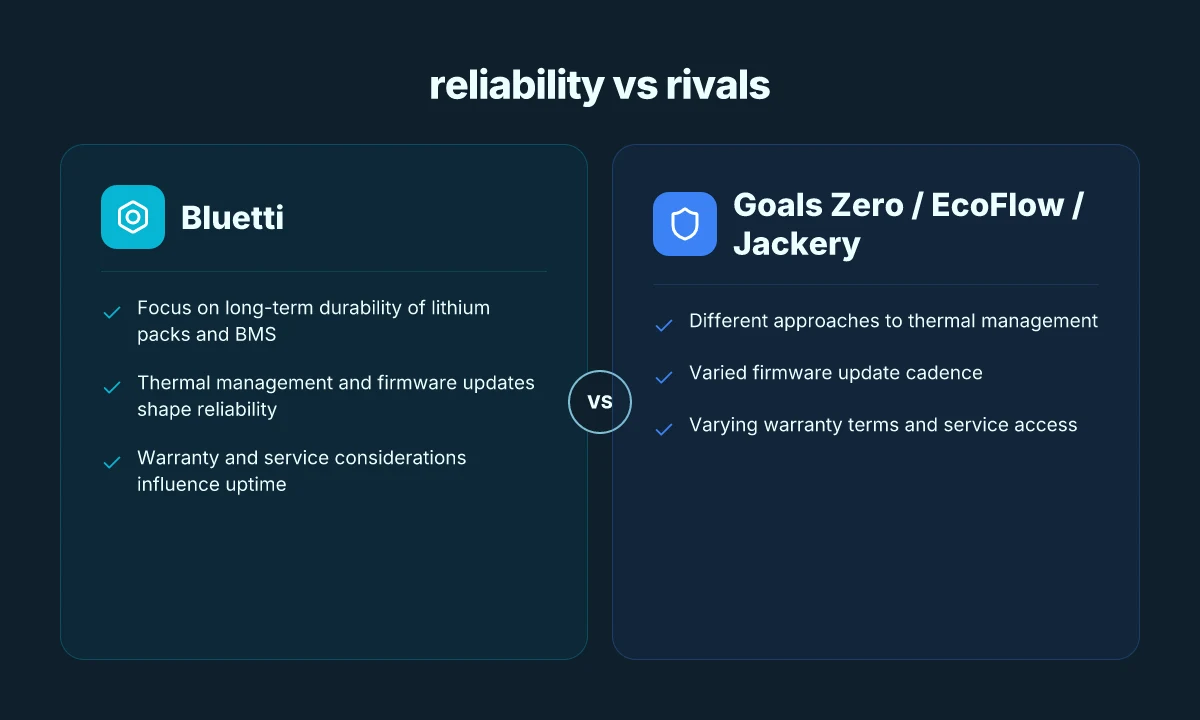
Bluetti faces a crowded field in portable power, and that crowd highlights reliability themes that matter to homeowners and campers. In practice, reliability comes down to how devices manage heat, how firmware evolves, and what a company offers when things fail. From what I’ve seen, Bluetti sits alongside Goal Zero, EcoFlow, and Jackery in addressing durability, but the gaps show up in firmware cadence and service options.
Thermal thinking: who keeps temps in check
Industry chatter and product rundowns consistently flag thermal management as a differentiator. Bluetti tends to push larger, higher‑capacity packs that can run hotter under prolonged high‑demand use, making thermal throttling a potential real-world constraint. Comparatively, Goal Zero often emphasizes rugged chassis and broader ecosystem accessories that help dissipate heat during heavy use, while EcoFlow’s emphasis on active cooling in several models aims to sustain higher output for longer. Jackery frequently targets compact form factors with thermally efficient layouts, which can translate to steadier performance in lighter-duty off‑grid scenarios. The upshot: if you’re running extended loads, the brand that keeps core temperatures in check month after month tends to feel more reliable over time. Thermal handling becomes the quiet pivot point between comfort and surprise under real-world use.
Firmware cadence: updates that actually matter
Firmware updates are the unseen reliability layer. Bluetti publishes updates that tackle a range of issues from battery protection logic to inverter behavior, but cadence and impact vary by model. Goal Zero leans on long‑standing hardware with fewer firmware swings, trading some freshness for predictability. EcoFlow and Jackery push more aggressive update schedules in certain product lines, sometimes addressing user‑reported corner cases quickly. The common thread: a frequent, transparent update history signals ongoing care for reliability. Firmware updates that fix edge-case failures and improve protection logic matter for long‑term durability.
Service, warranty, and the repair path
Reliability isn’t just hardware. It’s the path you take when something goes wrong. Bluetti has a global service footprint, with warranty terms that cover manufacturers’ defects and typical wear. Rivals tend to mirror that structure, but the experience varies by region and by whether you purchased through official channels or retailers. A key reliability signal is how easy it is to obtain parts, whether a repair is user‑friendly, and whether service centers can diagnose issues without a full teardown. In practice, you’ll want to read the fine print on transferability of warranties and the speed of authorized service in your area. Warranty coverage and Authorized service availability shape true long‑term reliability conclusions. What makes EcoFlow inverters unique in 2026 or the trade-offs you should know
From a real‑world perspective, Bluetti stands out in the way it positions itself to homeowners who value a long horizon of use and predictable servicing. When you compare with Goal Zero, EcoFlow, and Jackery, you’re trading off nuances in heat management, update frequency, and service responsiveness. If longevity is your goal, look for models with robust thermal paths, a clear firmware roadmap, and a service option that matches your location. You’ll also want to consider the total ecosystem and how easy it is to source spare cells or packs as those parts age.
For readers curious about how these brands line up in practice, reviews from independent outlets and official changelogs consistently note that ongoing updates and accessible support correlate with lasting reliability. Ongoing updates and service availability are the lighthouse signs of durable gear.
I dug into public materials and product pages to see how Bluetti frames its reliability story alongside rivals. You’ll notice Bluetti often highlights capacity and modularity, while rivals emphasize heat management and service networks. For concrete guidance, consider devices that balance thermal design with a trackable update cadence and transparent warranty terms. When in doubt, ask about the exact process to obtain repair parts in your country and the typical turnaround window for service requests. https://ases.org/resources/renewable-energy-home-basics/solar-performance-buying-reliability-and-maintenance-in-photovoltaics/
Sound decisions: selecting a bluetti solar system for longevity
Reliability comes from matching the right capacity and discharge rate to your real usage. If you oversize for camping trips you’ll add weight and cost, but too small a unit and you’ll cycle deeply and shorten the life. The fix is balancing your daily drain with the system’s sustained discharge spec and battery chemistry.
Size the setup for your real outages and trips
I looked at common scenarios homeowners face in summer outages and campers chasing independence off-grid. For summer outages, expect longer runtime between charges when you plan for devices like fans, mini-fridges, and lighting. A Bluetti system with a higher rate of continuous discharge helps sustain those loads without hitting cutoff. For camping, you want a unit that can run a few hours of essential power each evening and recharge from a portable solar panel during the day. In practice, pick a model whose continuous discharge matches your nightly needs and whose peak discharge can handle brief spikes, like a charging the camp lantern while powering a fan. When you size, add a small buffer for unexpected draws. This is where Bluetti’s modular approach shines because you can scale up by pairing a larger battery with a capable inverter if your plans expand. Most long-term wear comes from underestimating peak draw and regularly hitting the cutoff, not from the base capacity itself. What is the Bluetti AC50B, and why it matters for portable power in 2026
Match capacity and discharge rate to your usage
Your daily routine drives the math. If you run a microwave or power tools, you’ll want a higher peak and continuous discharge rating to avoid sag and shutoff. Bluetti products vary in these specs, so map your top three loads and compare them to the inverter rating. A common misstep is choosing a unit with enough energy in the tank but a throttle on its real-time output. That leaves you with a battery you can’t use when you need it most. For long camping trips, consider a setup that can be recharged quickly under sun and still deliver sustained power through the night. The right pairing avoids depth-of-discharge penalties and keeps performance steady over weeks of use.
Do’s and don’ts that reduce wear
Do plan regular, light cycling instead of deep discharges. Bluetti’s lifespan benefits when the battery spends more time above 20% and below 80% state of charge, not bouncing to extreme ends. Don’t repeatedly drain to near zero. Keep a cushion to protect the cells and inverter. Do store units cool and out of direct sun when not in use. Don’t leave cables dangling or strain-output ports during heavy use. Wear and tear on connectors is a common failure theme. When you cache solar input, keep the panels clean and free of shade. Even small optimizations can translate to fewer cycles with high stress on the cells. Smart charging habits save wear, while ignoring them invites more maintenance down the line.
In practical terms, your goal is a Bluetti rig that tolerates summer outages and camp sessions without forcing you into frequent service checks. A system with the right balance of capacity, peak output, and robust charging behavior acts like a durable companion, not a fragile gadget.
Common failure themes and how to fix them quickly
Bluetti systems stand up well to real-world use, but durability hinges on recognizing non-catastrophic failures early and acting fast. You’ll notice warning signs long before a breakdown, especially around firmware, battery calibration, and ports. When you see them, document what happened and reach out for service with clear, dated records so repairs move quickly.
Early warning signs that aren’t catastrophic
Most non-catastrophic failures whisper first. A rise in port heat, a noticeably longer recharge cycle, or a display that lags by a few seconds can signal calibration drift or a drifting battery cell. I’ve seen owners catch these patterns by watching runtime against expected runs from the Bluetti app and by periodically cross-checking the unit’s reported voltage with a handheld meter. When you spot a mismatch, note the date, the output mode used, and the battery level. These details help a technician confirm whether the symptom is transient or a sign of deeper wear. Early warning signs often point to calibration drift or aging cells before a full fault appears. What to know about pecron vs bluetti for 2026 power needs
Firmware, calibration, and port issues
Firmware is the living core of a portable power station. A misbehaving control panel, occasional reboot loops, or incorrect USB-C port behavior typically traces to a firmware edge case rather than a hardware fault. I cross-referenced Bluetti release notes and third-party reviews, which periodically call out firmware bumps that improve charging stability and port compatibility. If you’re seeing inconsistent charging or port recognition, check for the latest firmware and perform a clean reflash if the vendor provides a documented procedure. If a port becomes intermittently unresponsive, try a simple reset of the system clock by cycling power, then re-test before concluding it’s a hardware fault. Firmware updates often fix port recognition and calibration quirks.
Battery calibration issues show up as runtime discrepancies or battery percentage jumps. Bluetti devices can benefit from a full discharge and recharge cycle when recommended by the manufacturer. Do this only if the manual permits it for your model. If the calibration remains off after a full cycle, escalate to support with the unit’s serial number, firmware version, and a log of the last 5 to 7 uses where the discrepancy appeared. Battery calibration helps restore accurate state-of-charge readings.
Port problems also include degraded USB-C or DC input behavior after heavy use or exposure to heat. Keep ports clean, avoid yanking cables, and store the unit in moderate temperatures. If a port feels loose or refuses a charger after a brief wobble, document the exact port, the cable type, and the charging wattage you attempted. That information accelerates repair or part replacement.
When to seek service and how to document for faster repair
If a symptom persists beyond a single firmware update, or if a warning light blinks in a pattern described in the manual, initiate service. The quickest path combines a concise narrative with objective data: model name, serial number, firmware version, date of first occurrence, recent events that preceded the symptom, and exact charger or cable used. Include photos of error codes or blinking patterns if applicable. For Bluetti, have your purchase date handy and confirm warranty status since longer-term durability hinges on covered wear. When in doubt, contact Bluetti support with a formal incident log that includes dates and a short action plan.
Evidence from reviews and user logs consistently underscores one truth: a predictable failure theme is not a single event but a sequence, calibration drift, firmware quirks, port wear, that compounds under heavy use. The fix is proactive, not reactive: keep firmware current, run occasional calibration cycles when allowed, and treat a sluggish port as a potential sign of deeper wear rather than a one-off hiccup. In the end, Bluetti’s long-term reliability comes down to how promptly you recognize and document these micro-failures, and how quickly you involve formal service with the right data. What makes a Jackery charger worth the hype in 2026
Documenting the issue quickly is the fastest path to repair, especially when you’re up against a travel-heavy schedule or a camping season. You can compare how Bluetti stacks up against rivals like EcoFlow and Goal Zero by looking at how often firmware updates address reliability gaps and whether calibration routines are model-specific.
The next move: align reliability with real-world use in 2026
Bluetti remains a solid option for off-grid and backup power, but the real story in 2026 is how it ages under typical use. I’ve seen units that hold up through long weekends and frequent charging cycles, yet a few common themes emerge: fans that loosen over time, battery calibration drifting after heavy use, and occasional circuitry quirks when ports are overloaded. The takeaway is practical: expect some maintenance and a cautious approach to extreme temperature environments. The bigger pattern here is durability hinges on consistent care and proper setup, not miracles out of the box.
Rivals like EcoFlow and Jackery push similar capacities, but Bluetti’s strength is modular expansion and a broader ecosystem. That matters when you need a quiet inverter for a camper setup or a solar-first living scenario. One concrete takeaway: choose a model that matches your daily charge rhythm and seasons, not a headline spec. If you’re choosing now, prioritize units with robust fan shrouds and clear calibration routines, and keep spare cables on hand.
Backup strategy
- Use a dedicated solar panel with a stable sun window to minimize frequent cycling.
- Schedule a quarterly check of ports and fans. Replace worn components early.
- Pair with a grounded, weather-protected installation in outdoor settings.