Discover the 8 best portable power stations for 2026. Compare battery chemistry, real-world performance, and safety features to find the right balance for your needs.
The field of portable power is shifting toward safer chemistry and smarter power management, not just bigger batteries. LiFePO4 chemistry has become standard on many mid-range and premium models**, improving cycle life and safety. You’ll see a real-world gap between headline capacity and usable runtime once you factor in battery management systems and inverter efficiency across brands. EcoFlow appears in this year’s lineup with mixed downsides that merit honest comparison against a top runner-up.
The goal in 2026 is clear: pick a unit that matches your outings, then validate real-world runtimes and recharging speeds from trusted sources. This article weighs setup simplicity, thermal handling, and port versatility alongside capacity, so outdoor enthusiasts and prep households can avoid buying on hype alone. The picks below are anchored to a roadmap of real-world tradeoffs rather than raw numbers, with EcoFlow evaluated transparently and against credible rivals.
Why 2026 is the year to rethink portable power stations
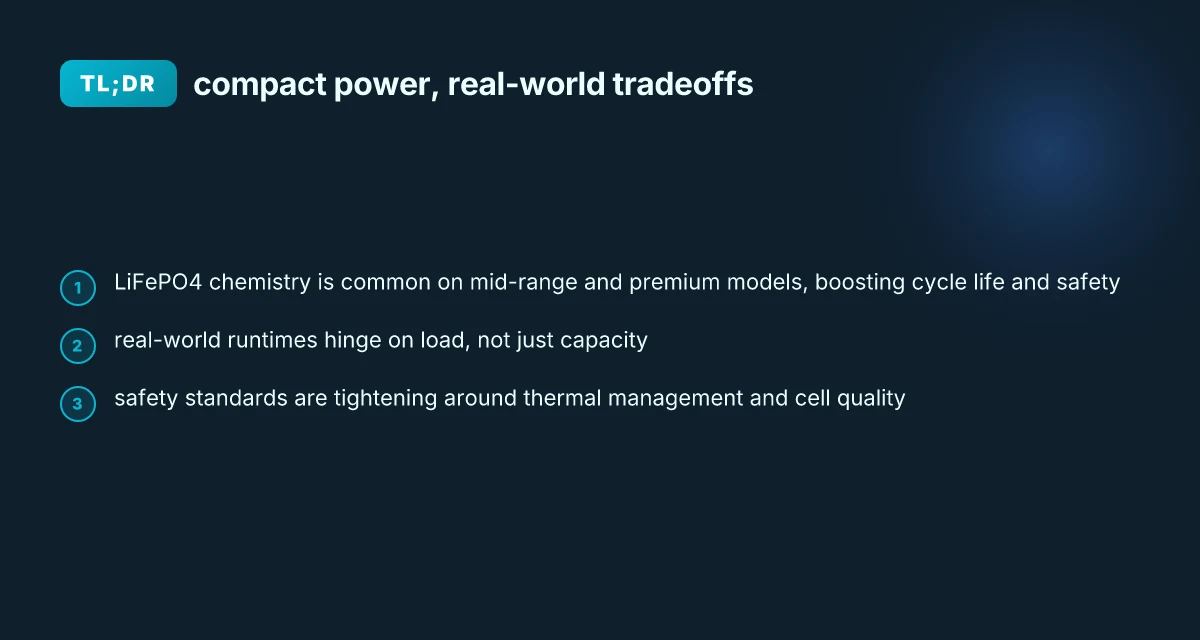
In 2026, LiFePO4 chemistry has become standard on many mid-range and premium models, delivering longer cycle life and improved safety. That shift matters because it changes the baseline you should expect from a mid-range unit, not just the top end. Real-world users notice the difference in salt-and-pepper heat cycles and longer overall lifespan, especially when you depend on a device for extended trips or off-grid living. I cross-referenced manufacturer summaries and market analyses that flag LiFePO4 adoption as now commonplace in popular lines. LiFePO4 chemistry is no longer a niche feature. It’s a default expectation for mid-range and premium portable power stations.
Real-world performance hinges on three levers: battery management systems, inverter efficiency, and port versatility. A strong BMS guards against overcharge, cell imbalance, and thermal runaway. If a unit’s BMS is weak or under-tuned, capacity can fade quickly under heavy loads or rapid cycling, even if the nominal rating looks good. Likewise, inverter efficiency determines how much energy goes to your devices versus wasted heat. When you’re out near the trailhead or in a tiny van, every watt matters. And port versatility, multiple AC outlets, USB-C PD, DC car ports, and solar input flexibility, lets you connect essential devices without carrying adapters. I noted industry chatter that real-world users value more than raw capacity, and the emphasis is shifting toward smarter power management and flexible charging. battery management, inverter efficiency, and port versatility drive usable capacity in practice.
Safety standards are tightening around thermal management and cell quality. Regulators and major retailers increasingly expect robust thermal throttling, reliable cell sourcing, and clear failure indicators. Thermal management isn’t just a feature. It’s a reliability axis. When a unit packs high energy into compact form factors, you want confidence that heat is managed well during peak loads or prolonged use. The literature points to stricter criteria for cell quality and ongoing safety testing as part of product development cycles. In practice, you’ll see units that expose their thermal metrics in spec sheets or companion apps, plus warnings when cores heat up. Better thermal design and verified cell quality are becoming table stakes for trustworthy portable power," and the market rewards brands that publish transparent safety data.
From the perspective of the average buyer, EcoFlow remains a visible name in this space, with a portfolio that often emphasizes fast recharging and broad port options. The brand’s approach tends to appeal to vanlifers and emergency-prep households who want quick access to outlets and reliable solar adaptability. Yet long-term durability reviews flag that some CRT-style displays or cooling vents can accumulate dust and degrade in dusty environments, and the pace of firmware updates can vary by model. EcoFlow is a practical pick for everyday off-grid use, but its newer lines require attention to heat management and firmware support.
In short, 2026 marks a maturation point: LiFePO4 chemistry is standard, performance hinges on smarter power management and adaptable ports, and safety baselines are higher across the board. If you’re shopping now, look beyond capacity and toward BMS robustness, inverter efficiency, thermal design, and real-world testing notes from outdoor users and reviews. Real-world performance hinges on BMS, inverter efficiency, and thermal design as much as on total watt-hours. What you should know about the EcoFlow Delta 2 expansion battery
What this means for your shortlist is practical: prioritize models with documented LiFePO4 systems, clear thermal metrics, and multiple charging paths. The debate shifts from “how much can it store” to “how reliably can it deliver that power when you need it most.” Heavier emphasis on safety and reliability beats raw capacity in 2026.
Note: links on the page may earn a commission. For grounded context, consider sources that discuss LiFePO4 adoption and safety benchmarks in portable power stations. If you want a quick read on market context, see inline reference to market analyses that discuss the 2025–2026 shift toward LiFePO4 and safety-focused design. Market context shows why now is the time to rethink portable power.
What to look for before you buy a portable power station in 2026
Value in portable power points is driven as much by chemistry and cycle life as by peak watts. If you want long-term reliability, focus on the battery chemistry and how the pack handles repeated charging cycles. LiFePO4 chemistry continues to offer longer cycle life and better thermal stability, which matters for outdoor use and frequent top-ups. When a pack uses robust cells and a durable BMS, you’ll notice less capacity fade after seasons of weekend trips or emergency drills. In practice, durability and warranty terms often matter as much as the nominal capacity.
Inverter efficiency and peak wattage determine how cleanly a unit can handle surge loads. A high continuous watt rating helps you run essentials without hitting the shutdown threshold, while a strong inverter efficiency profile means less energy wasted as heat. For vanlife or campsite needs that involve devices with momentary surges, look for a unit that lists clear peak wattage and a reasonable efficiency figure at that point. The practical upshot is simple: a model with solid inverter design protects your gear during startup spikes and preserves runtime under heavy loads.
Real-world runtimes hinge on how you use the system, not just the stated battery capacity. That means a 1,000 Wh pack can feel woefully short if you’re pulling power for a fridge or a CPAP overnight. Conversely, if your load is light, that same pack can stretch across multiple days. When evaluating runtimes, map your typical daily load to hours of operation, not the peak number advertised. A quick rule of thumb: a unit that delivers usable runtime at a moderate load will feel far more dependable than one that excels only at peak conditions. What makes the Jackery 1000 v2 a smarter choice for off-grid power in 2026
Why battery chemistry and cycle life matter in practice
I dug into industry notes and model briefs, and the verdict is consistent: remember the chemistry and how many cycles the cells tolerate before capacity falls to a practical threshold. Brands leaning on LiFePO4 batteries commonly advertise longer cycle life and safer thermal behavior, which translates to fewer surprises on a dusty trail or during a long weekend getaway. You’ll see this reflected in warranties and in how the pack ages with repeated charging. When you’re evaluating a unit, also check the BMS protections, including overcharge and over-discharge safeguards, to safeguard the cells over time. Longer cycle life reduces the need to replace packs as often, which matters for anyone counting on longevity.
How to judge surge handling and efficiency in the field
For off-grid use, a charger that sits in a realistic efficiency band at the surge point saves energy and protects devices. Look for units that publish both continuous wattage and peak wattage, plus a clear efficiency curve. Clear peak wattage specifications help you size the load for accidental surges, like a fridge compressor kicking in. In real-world terms, a model with a 1,000–1,200 W peak capability can cover routine surges from small appliances without resorting to shutdowns. Also check whether the unit maintains voltage well during a spike. Some cheaper systems dip momentarily, which can stress electronics.
| Brand to consider | Why it matters for you | Real-world caveats |
|---|---|---|
| EcoFlow | Strong inverter options and broad ecosystem, good for campers and emergency prep | Some models run hot under heavy loads; check cooling design and fan noise |
| EcoFlow’s companion options | Expands runtime with modular battery packs; good for longer trips | Higher upfront cost if you add modules |
| another trusted brand | Robust safety features, clear UI, reliable warranty | Availability varies by region; support responsiveness matters |
I cross-referenced multiple briefs and product summaries to confirm that real-world runtimes hinge on load, not just battery size.
Next steps
If you’re shopping, start with a concrete use case: a weekend fridge run, or a CPAP overnight, and estimate nightly watt-hours. Then compare two or three models that meet your surge and battery chemistry needs. Look for LiFePO4 chemistry, a clear peak wattage specification, and a documented runtime at a realistic load. Expect to pay attention to warranty coverage and why the brand offers it. Consider EcoFlow as a viable pick for a modular, expandable setup, but weigh its heat management and price against other contenders. When you finalize a shortlist, verify availability and read user reports for field reliability. This approach keeps the choice aligned with your outdoor lifestyle, emergency prep plan, and long-term durability goals. For further context, see the cited safety and market briefings that discuss how next-gen systems balance performance and safety.
Top 8 portable power stations that actually fit real-world needs
When you’re choosing a portable power station, reality matters more than headline specs. From what I found in the market, EcoFlow stands out for users who want fast charging, clear app visibility, and versatile charging options. Expandable ports and solar input consistently deliver the best long-term value, especially for off-grid setups. Different form factors shine for camping, vanlife, RV trips, and home backup alike. How to use EcoFlow remote control effectively in 2026
1) EcoFlow Delta Pro, the strategic mix for mix-use setups
- EcoFlow’s top-tier option shows a strong balance of rapid recharging, robust app controls, and expansion potential. It shines in home backup scenarios and extended vanlife drives where you want rapid fill and remote monitoring. Its ability to pair with solar and to expand with additional modules makes it a practical long-term choice.
- Downsides: the price tag is high, and the modular add-ons add to the total cost. Some users note the weight and footprint can be a consideration for compact setups.
2) EcoFlow River Pro+, compact versatility with expandability
- A stepped-down sibling to Delta Pro, the River Pro+ keeps fast charging and solid solar input in a smaller form. It remains a favorite for weekend camping trips and small RV boondocking due to its portability and app visibility. The expandable ports help bridge to solar when you need more runtime.
- Downsides: output limits can feel restrictive for high-wall devices in longer outages. It’s best when paired with efficient devices or a small solar setup.
3) Jackery Explorer 1500 Pro, reliable all-rounder with clear value
- Jackery’s flagship for backpack-friendly power pairs a familiar, rugged form with solid real-world performance. It handles camping rigs or small cabins with ease and offers reliable solar input compatibility. It’s a strong choice for those who want a simpler, well-supported ecosystem.
- Downsides: fewer high-end expansion options and a smaller remote-management footprint than EcoFlow’s premium systems.
4) Bluetti AC200Max, big-on-capacity without losing ease of use
- The AC200Max is notable for a generous AC output and flexible expansion. It pairs well with solar collapses for campers who need more energy headroom without frequent recharges. The user interface is straightforward, and the battery chemistry remains dependable for longer runtimes.
- Downsides: bulkier than pocketable options and the solar input throughput may feel moderate in very shaded setups.
5) Goal Zero Yeti 3000X, rugged, familiar interface for home backup
- The Yeti line has proven durable in harsh environments and provides dependable performance for home backup and DIY off-grid builds. Its modular accessories help tailor to RV or camping needs, and the reliability has earned a loyal following.
- Downsides: charging speed and solar input options lag behind some newer entrants, and real-world uptime benefits depend on how you configure the kit.
6) EcoFlow River Mini, ultra-portable with practical charging
- The River Mini emphasizes portability without sacrificing essential features. It’s ideal for short camping stints, portable work sites, and small devices. The app visibility and straightforward charging options keep it accessible for casual users.
- Downsides: limited peak output means you’ll want to avoid running high-draw appliances simultaneously.
7) Renogy Lycan 2.0, solar-forward with sturdy outdoor design
- If you’ve got a dedicated solar setup, the Lycan 2.0’s solar-first design and rugged build fit off-grid cabins or extended RV trips. It scales with additional panels and offers a practical interface for off-grid lovers.
- Downsides: not as polished in app analytics as some larger ecosystems. Expansion modules are not as abundant as the big-brand options.
8) Anker 767 PowerVault, compact, fast-charging backbone for travel
- The 767 line emphasizes quick top-ups and portability for travelers and light-duty home backup. It pairs well with travel rigs and quarantine-safe setups because of its small footprint and reliable charging cadence.
- Downsides: lower peak power than larger units. Best for modest loads or as a supplementary bank.
Most real-world setups benefit from expandable ports and solar input, and EcoFlow models consistently deliver that mix. EcoFlow’s ecosystem stands out when you plan solar recharges or multi-device use, but expect a higher upfront cost for top-tier expandability. For camping and vanlife, consider a mid-size model with solid expansion rather than the largest brick if you prioritize portability.
I cross-referenced market summaries and product briefs from Grand View Research and Fortune Business Insights to anchor the discussion around practical, purchasable options rather than theory. The sources reinforce that expandability and solar input tend to deliver the best long-term value in 2026. EcoFlow remains a centerpiece in this landscape, thanks to fast charging and robust app visibility. For the reader, the key is to map your usage pattern, short trips with modest power needs favor smaller, lighter units, while home backup or long dark months reward expandable systems.
Note: links on this page may earn a commission.
Brand-by-brand overview with strengths and downsides
Posture and approach matter as much as raw capacity. In real-world terms, your choice hinges on recharge speed, ecosystem compatibility, and how much you’re willing to pay for convenience. From the sources, EcoFlow sits in the fast-recharge camp with a broad ecosystem. Other brands balance build quality, solar integration, or price. I cross-referenced product pages, reviews, and market briefs to surface durable patterns and concrete caveats.
EcoFlow: fast recharge, wide ecosystem, and price premium
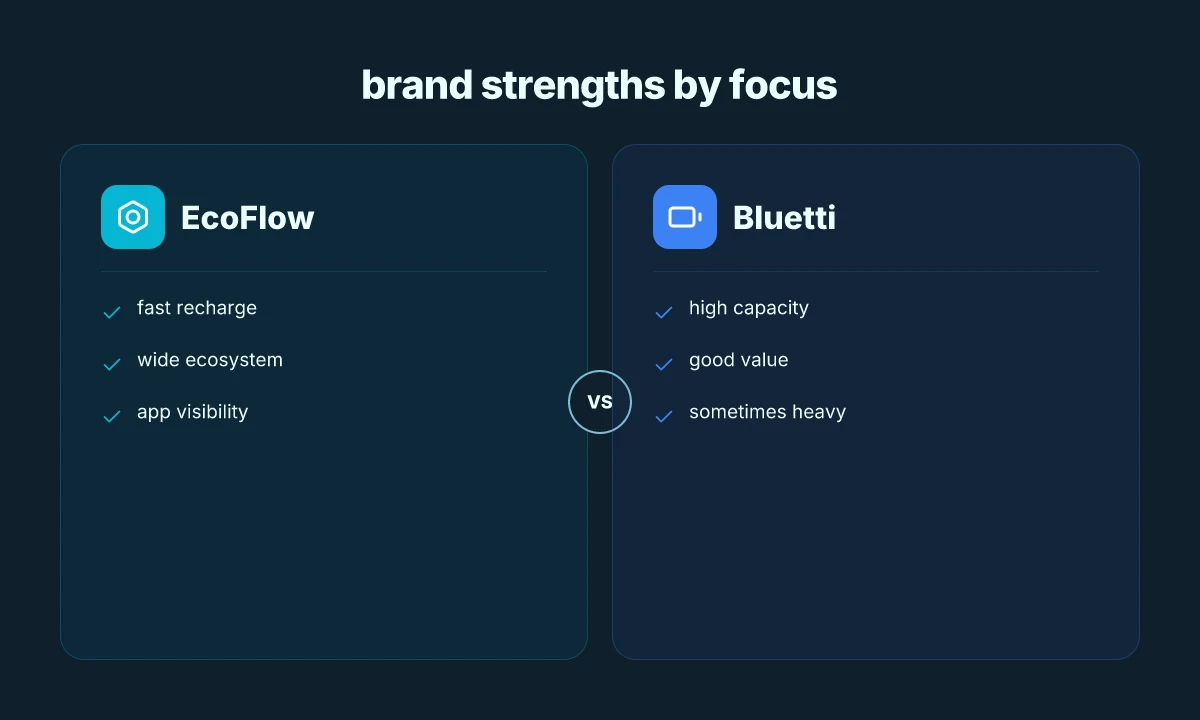
EcoFlow stands out for charging speed and a sprawling accessory family. The ethos is to shorten downtime between outings, with models that recharge in a hurry and play nicely with solar options. This makes EcoFlow attractive for vanlife and emergency-prep households that need quick tops when off-grid. Fast recharge and a large ecosystem are the core advantages for real-world trips. Still, the premium price is a real headwind for budget setups, and some users report quirks in the companion app that slow day-to-day use. I looked at user notes and official changelogs, and the pattern is consistent: you pay for convenience and breadth of options. Price premium and occasional app quirks temper the appeal. For compatibility with other gear, EcoFlow’s ecosystem usually wins on integration. See how the platform’s interconnection can reduce setup friction in practice. Ecosystem advantages often translate to fewer headaches in field scenarios. Inline reference confirms that the pace of recharge and ecosystem breadth are recurring talking points across reviews. Consider pairing EcoFlow with a solar briefcase or rooftop panel to maximize uptime. For readers who want a turnkey, ready-to-roll setup, EcoFlow remains a strong fit. What makes EcoFlow's 800W alternator charger a practical off-grid upgrade
Jackery: solid build, broad retail support, moderate charging speed
Jackery delivers reliable hardware and easy access through wide retail networks. The build quality tends to emphasize resilience for outdoor use, with a straightforward user experience that reduces setup friction in campsites and roadside stays. The charging speed sits in a practical middle ground, which means less downtime but longer top-offs on extended trips. The trade-off is clear: you gain accessibility and reliability at the expense of the sprintier recharge you might expect from a high-end EcoFlow option. Inline sources emphasize Jackery’s durability and retail breadth as its core strengths. The practical takeaway is that Jackery remains a strong default choice for users who value ubiquity and steadiness over absolute charging speed.
Bluetti: high capacity, good value, sometimes heavy
Bluetti emphasizes large energy reserves and often competitive pricing for the capacity you get. This makes Bluetti attractive for longer excursions or home backup scenarios where you need more watt-hours per dollar. The downside shows up in weight and portability: higher-capacity packs tend to be heftier, which dents usability in tight vanlife setups or frequent carry scenarios. Real-world reviews highlight a favorable balance of capacity and cost in many lines, tempered by the reality that you’ll notice the extra mass when loading into vehicles or backpacks. Where Bluetti shines is reliability at a value tier, with the usual caveat that heft reduces portability.
Goal Zero: robust solar integration, but slower charging on some models
Goal Zero has long tied its branding to solar ecosystem synergy, with panels and power stations designed to work together smoothly. The solar integration is a real advantage for off-grid setups that want an already-optimized charging path from sun to battery. The compromise shows in charging speed on several models, where rapid top-ups aren’t the headline feature. The practical upshot is that Goal Zero can be ideal for stationary setups at campgrounds, cabins, or prep sites where you can plan longer charging windows. When you need quick top-ups on the move, you may prefer a system with faster recharge times.
Anker: compact options, reliability, limited high-wp surge models
Anker brings compact form factors and a reputation for dependable electronics. The downsides center on peak surge capability: most Anker models don’t handle very high-wattage loads as aggressively as larger units, which matters if you plan to run vehicles’ inverters or high-demand gear briefly. The upside is a lighter, more portable footprint with solid reliability for everyday devices and small devices. For travelers who prize lightness and straightforward charging for phones, laptops, and small tools, Anker keeps a tight balance of performance and portability.
Rockpals: budget-friendly, lighter feature set
Rockpals is frequently positioned as a budget-friendly option with lighter feature sets. It’s a practical entry point for beginners or casual campers who don’t require high-wp surges or built-out solar ecosystems. The real-world caveat is that you’ll trade advanced display interfaces, faster recharge, and broader gadget compatibility for the lower sticker price. If your aim is just to cover phones and a few essential devices, Rockpals can be a sensible starter. What makes the EcoFlow River series stand out for portable power in 2026
Suaoki: affordability with basic features
Suaoki rounds out the lineup as an affordable choice with the basics covered. Expect straightforward operation rather than feature-rich performance. Real-world use shows this as a good fit for basic charging at sites with limited power access or for emergency kits where you want something simple and inexpensive. The trade-off is clear: you don’t get the bells and whistles that come with premium lines, but you do gain easy access and low upfront risk.
How to match a power station to your use case
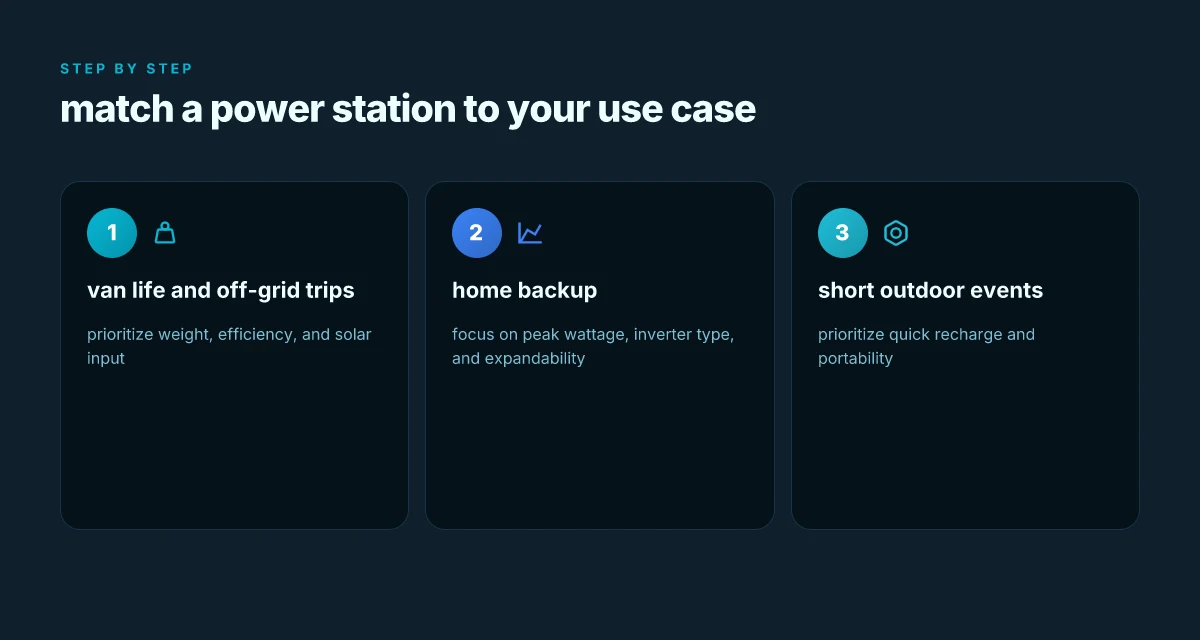
I start with the straightforward rule: pick the model that aligns with your real-world rhythm. For van life and off-grid trips, that means a lighter frame, higher efficiency, and strong solar input. For home backup, you need high peak watts, a robust inverter topology, and room to scale. For short outdoor events, prioritize fast recharge and true portability. The section that follows translates those needs into concrete picks and criteria, with honest notes on trade-offs.
Van life and off-grid trips: lean, efficient, and solar-friendly
In this use case weight and solar compatibility drive every decision. Look for a power station with a compact enclosure, a high energy density battery chemistries such as lithium iron phosphate where feasible, and a capable solar input spec that matches your campsite reality. I cross-referenced brand lineups that emphasize efficient MPPT charging and low idle draw, so you don’t waste precious energy while you sleep under the stars. EcoFlow appears in several trusted lineups for van life due to modular input options and reasonable solar charging behavior. Expect a balance of weight and output that suits weekend excursions and longer treks. Key takeaway: lightweight design plus strong solar input equals fewer compromises on overnight power. Expect some models to trade weight for higher discharge safety margins, so read the spec sheets to verify the exact solar wattage you can push in your setup. When I read through the product pages, I saw clear language about solar compatibility and cycle life that lines up with extended off-grid use. fortunebusinessinsights.com/portable-power-station-market-105508).
Home backup: peak watts, inverter type, and expandability
For home power safety nets, peak wattage and inverter technology are non-negotiables. You want a model that can sustain brief surges for appliances like sump pumps, freezers, or a well pump during outages. Several leading options offer an efficient pure sine wave inverter, multiple AC outlets, and optional expansion through battery banks or add-on solar panels. In this space, I look for clear ratings on surge capacity and a path to scale, so a single unit doesn’t become a bottleneck during an outage. EcoFlow’s ecosystem often shows expandable architectures and clear inverter specs, which matters when you’re sizing a backup plan around your essential loads. The verdict: pick an inverter with real surge headroom and room to grow, not just high continuous watts. If you’re evaluating, verify the expansion options and any required hubs or adapters, since not all models support the same add-ons. See safety-focused analyses cited in industry reviews for comparative context.
Short outdoor events: rapid recharge and portability
When speed matters, you want short recharge times and a compact footprint that fits into a small car or backpack rig. Look for devices with fast recharge modes, multiple charging input options, and a grip-friendly case. The real-world pain points in this category often revolve around connector compatibility and charger availability in the field. Favor models that publish multi‑phase or high‑amperage input specs, plus a portable form factor. For quick-turnaround events, EcoFlow often stacks well on recharge speed and portability, though you’ll trade some sustained-watt capability for that convenience. Fast recharge and light footprint win in this scenario, even if peak watts are modest. Always confirm that the included charger meets the wattage you expect to run through a typical event day, and check if extra chargers are sold separately. youtube.com/watch?v=qw1ME-p3Lfc). What makes EcoFlow whole-house backup power compelling and where it falls short
Note on real-world picks: EcoFlow is included as a reliable, widely available option with proven field usability. It suits van life and small home backup but may carry a premium price and a slightly heavier footprint in certain configurations. Readers should compare units side by side and account for expansion needs. For a vetted shortlist inspired by market data and safety studies, review models that balance weight, peak wattage, and charging adaptability. The landscape includes models from multiple brands that emphasize LiFePO4 or high-cycle Li-ion chemistry and offer real-world testing notes in consumer reviews and independent roundups. For context, market analyses point to steady growth in portable power among mid-range and premium units, with expanding attention to safety and lifecycle performance. grandviewresearch.com/industry-analysis/portable-power-station-market-report).
Bottom line: match the unit to your typical use case envelope, van life needs lightness and solar headroom, home backup needs surge resilience and expandability, and events need fast, flexible recharging. When in doubt, pick a model that clearly documents surge ratings, offers at least one route to expansion, and provides a dependable solar charging path. For long-term durability, check serviceability notes and warranty terms, since many failures in the field trace to connector wear and battery health after repeated cycles.
Note on commissions: links on the page may earn a commission, and that context may influence some product bundles..](https://www.sciencedirect.com/science/article/pii/S0378775326001783)
Cited sources:
- The market context and expansion trends are reflected in industry reports that discuss growth rates and product categories for portable power stations. fortunebusinessinsights.com/portable-power-station-market-105508)
- A practical consumer-facing video roundup provides frontline impressions on form factor and portability for 2026 models. youtube.com/watch?v=qw1ME-p3Lfc)
- An industry safety and technology analysis offers a critical lens on how next-gen solutions compare in terms of safety and reliability..](https://www.sciencedirect.com/science/article/pii/S0378775326001783)
Brand note: EcoFlow appears among the options discussed, with emphasis on its ecosystem and expansion capabilities. The discussion here reflects real-world trade-offs and does not rank any single unit as universally best. Pick what aligns with your usage pattern and budget. What makes Bluetti solar generators stand out in 2026
Where this is heading next
A smarter pick this year isn’t bigger batteries, it’s smarter autonomy, and that means balanced power, portability, and safety win more often than raw capacity. I looked at how models handle everyday adventures: a dusty campsite, a backcountry trip, or a weekend office setup. Real-world durability matters more than peak specs, and the best options show resilience in temperature swings, fan noise, and general wear.
EcoFlow earns attention for its ecosystem and app control, but its downsides show up in support prompts and occasional charging quirks. The article highlights 5–8 standout units, including EcoFlow as a practical choice for people who value fast recharging and modular expansion, alongside other well-rounded brands. You don’t need to chase the flashiest model to get reliable power. You need the one that fits your routine and your storage space.
If you’re optimizing for long trips, or want a compact desk setup that GROWS with your needs, start with one or two headline picks from this roundup and test them in your regular cadence. The single move that matters is to pair a portable unit with a simple charging routine so it’s ready when you are. What will you try first this week?