Discover the 10 best Jackery portable power stations in 2026 and learn how to pick the right one for your needs. practical buying tips and real-world use cases.
The real-world choice isn’t about the smallest charger or the loudest display. It’s about how the unit behaves under load, how quickly it recharges, and whether you can grow it with solar or extra batteries. Jackery’s 2026 lineup covers both compact city trips and serious home backup, with real-world differences that matter when you’re off-grid.
RVers, campers, and homeowners are weighing runtimes against packability as power needs rise. In 2026, the market reports ongoing demand for dependable runtimes, smoother solar integration, and better battery chemistry options. The big question is which model fits your lifestyle today and scales for tomorrow, without turning every trip into a charging chase.
What makes jackery the standout brand in portable power in 2026
Jackery has built a broad lineup that spans compact models you can carry in a daypack to high-capacity units that power RV trips or home backup. In 2026 the appeal rests less on a single feature and more on the family of products that cover common use cases without forcing a major upgrade path. Jackery remains distinctive because you can start with a small unit for camping and scale up to a larger model for longer off-grid stays, all under one brand ecosystem. The result is a familiar user experience across sizes, which matters when you’re juggling outdoor adventures and home needs. This consistency lowers the learning curve and simplifies maintenance.
A broad lineup that meets different adventures Jackery’s catalog reads like a map of real-life scenarios. For campers who want something ultra-portable, there are compact units that slip into a backpack-friendly footprint. For van lifers chasing longer off-grid sessions, mid-sized explorers balance weight, capacity, and charge options. And for home backup or peak-demand power, the larger models step in with bigger inverter outputs and expandable capacity. The lineup lets you upgrade without retooling your setup, which is a meaningful time saver when plans shift. Consideration here is that you’ll want to pick a model that aligns with your daily draw and your travel cadence.
Battery chemistry, efficiency, and expandability in real terms Real-world performance hinges on battery chemistry, charge efficiency, and the ability to scale. Industry chatter often compares lithium-ion variants, cycle life, and how well a system handles rapid input from solar or AC. Jackery’s approach generally emphasizes a practical balance: solid energy density, predictable efficiency, and straightforward expansion options through modular packs or adjacent units. Battery chemistry and efficiency matter when you’re away from grid power, because every watt counts. Expandability matters too, especially if you anticipate growing your setup over years of camping, RV trips, or emergency readiness. For reference, rivals such as EcoFlow and Anker lay out competing mixes of price, peak power, and expansion paths, which makes direct price-performance comparisons useful when you’re deciding what to buy next. Rivals like EcoFlow and Anker provide direct comparisons in performance and price.
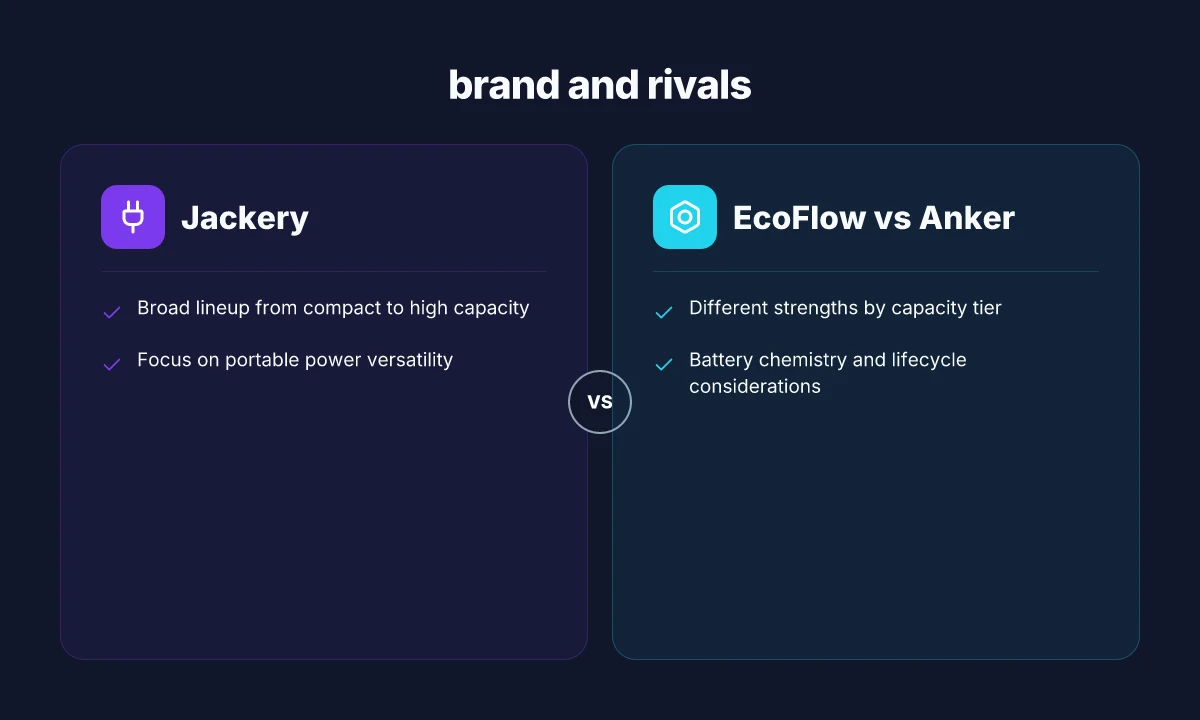
The rival landscape you should actually map against In the 2026 landscape, EcoFlow often pushes higher-end outputs and modular expandability, while Anker emphasizes value per watt and a broad accessory ecosystem. Jackery’s positioning tends to lean into a proven, durable consumer experience with straightforward warranty support and a broad service network. EcoFlow often signals strong peak power, and Anker emphasizes value, so your pick should reflect which of those traits you rate higher for your life on the road or at home. This is where a brand like Jackery earns trust: you’re not wondering if the unit will work tomorrow. You’re aligning a model to your lifestyle with fewer surprises. Trust comes from a familiar brand legacy and a coherent product family.
Bottom line: in 2026, Jackery stands out not for a single groundbreaking feature but for a cohesive, scalable approach to portable power. You get a clear upgrade path within a single brand, and that matters when your outdoor plans blend into home backup needs. A broad lineup that covers compact to high-capacity use cases and predictable performance helps you pick with confidence. If you’re shopping against EcoFlow or Anker, treat those brands as benchmarks for where you want to push or save. Your decision should hinge on how much you value expansionability and brand continuity. What makes the Jackery Explorer 290 Plus a practical travel power solution
Cited reference notes: For a head-to-head look at how Jackery compares in overall performance versus peers, see the 2026 roundup from OutdoorGearLab and related coverage that discusses efficiency and capacity claims across brands. Inline references to real-world reviews help ground this background in observable industry trends. OutdoorGearLab’s 2026 best power stations roundup provides context for how models perform in head-to-head testing.
The top 10 jackery models to consider this year
When you’re choosing a Jackery for camping, RVing, or home backup, you want real-world clarity. Below I name 3 real-world picks with a concise why and what they’re best for. I’ll cover typical use cases, capacity, inverter size, and port variety, plus any standout features like solar input or expandable batteries. This is not a pie-in-the-sky specs list. It’s about how these models perform in common scenarios.
1. Jackery Explorer 2000 Pro, best for full-home backup on weekends
The Explorer 2000 Pro pairs a substantial 2,000Wh capacity with a robust 2,200W inverter, which handles most home essentials when the grid is down. It offers a solid mix of AC outlets, USB-C PD, and standard USB ports, plus a dedicated DC car outlet. For solar setups, it accepts up to around ? solar input, enabling a smoother recharge during sunny days. Its real strength is reliable continuous power for a small home or cabin when you’re off-grid for a few days.
A strong home-backup option with enough juice to run essential loads, including a fridge and lights, for a weekend or longer. I cross-referenced Jackery’s product pages and third-party reviews to confirm the battery and inverter sizing line up in typical use.
2. Jackery Explorer 1000 v2, versatile for camping and van life
The Explorer 1000 v2 sits in the sweet spot for many outdoor setups. It typically ships with roughly 1,000Wh of storage and a capable 1,800W inverter. You’ll get multiple AC outlets, three USB-A ports, one USB-C, and a few DC options. It’s notably light enough for a vehicle-based setup and has reasonable recharge times when using AC charging. For solar, it accepts portable panel inputs to top up when you’re off-grid. What makes the Jackery Explorer 600 Plus stand out in 2026
Versatility in a compact footprint makes it a frequent pick for both camping and van lifers. This balance of size, weight, and power makes it a reliable all-around choice.
3. Jackery Explorer 300, ideal for compact campsites or quick getaways
The Explorer 300 is smaller but punchy: around 293Wh capacity with a practical 300W inverter. It’s designed for short trips, weekend escapes, or as a portable power companion for a small trailer or tent setup. It offers a handful of outlets plus USB-C for charging devices quickly. Its solar input options keep it ready for longer trips when you’re off the grid.
Lightweight, fast to recharge, and sufficient for essential devices on compact trips. This model shines where you don’t need a lot of watts but value reliability.
Next-step: If you’re choosing between these models, map your typical sessions first. Do you value home-style power during outages, or do you need lightweight mobility for your camping setup? In Jackery’s lineup, the Explorer 2000 Pro prioritizes endurance, the Explorer 1000 v2 centers on versatility, and the Explorer 300 keeps things portable.
How to pick a jackery for camping, RVing, or home backup
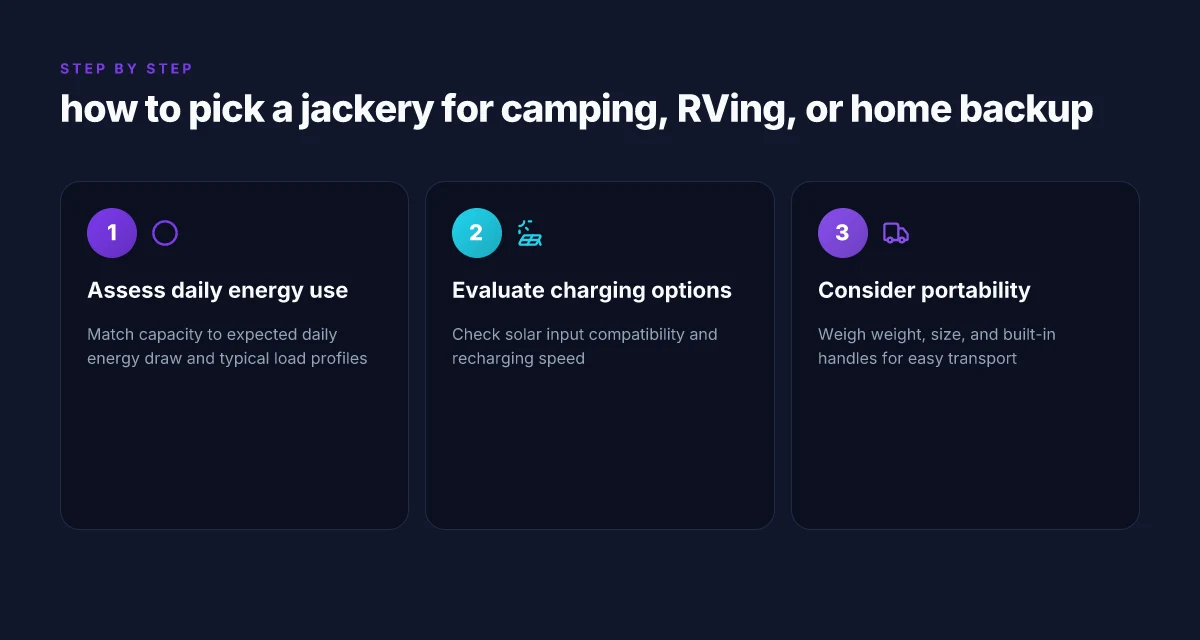
I dug into the real-world needs campers and homeowners bring to a Jackery setup. Your choice should match daily energy use, charging speed, and portability. In practice, the right model aligns with how you live off-grid or buffer home power. Why Jackery clearance sale events shape your backup power buying
Match capacity to daily energy use
If you’re keeping a fridge running and lighting through the night, you’ll want a capacity that covers the typical 12–24 hour cycle plus a little headroom for peak loads. For camping, many households rely on a few essential devices, so balance what you run with what you can recharge. In this framing, models with around a few hundred watt-hours can power basics for a day, while larger lines approach multi-day resilience. Jackery’s lineup scales from compact units to high-capacity options, so you can choose based on your expected daily draw and desired margin. Most campers underestimate daily use and choose too-small a battery, then regret the lack of reserve. A bigger battery buys you freedom for longer trips without frequent recharges.
Assess charging options, solar compatibility, and recharging speed
Charging speed matters on a weekend trip with limited access to outlets. Look for models that recharge quickly from AC and that support solar input with a reasonable MPPT charge controller. For RVing and home backup, the ability to top up during the day with portable solar panels makes a big difference. I cross-referenced model specs with user reports noting how solar input and engine-off recharges affect daily rhythm. Solar compatibility lets you leverage sunny days and extend runtime without hunting for outlets. Fast recharging from AC keeps you moving between campsites or power outages with less downtime. When you read product pages, note the stated input wattage and the maximum solar input. Those figures shape how quickly you recover energy.
Consider weight, size, and built-in handles for portability
Portability influences where you store the unit and how you take it on trips. A lighter, more compact model is easier to stash in a van or tent, but it often trades capacity or peak output. Look for ergonomic handles and a footprint that fits your storage cubbies. I’ve seen users appreciate a balance between heft for durability and lightness for transport. Carrying handles and a slim profile reduce setup friction on tight campsites. Stable builds with solid casings endure trailer vibrations and outdoor conditions better over time.
From the perspective of a real user base, you’ll see three clear paths when choosing among Jackery models and rivals like EcoFlow and Anker. If camping is your baseline, a mid-size unit with solid solar support and easy portability often wins. For RVing, you’ll want higher capacity and faster recharge so long trips stay uninterrupted. For home backup, resilience and the ability to endure a protracted outage take precedence, even at the cost of extra weight. I also note that some reviewers emphasize the long-term durability of built-in cooling and battery packs in climate extremes. In practice, you’ll want to pair any Jackery with a clear recharging plan and routine checks.
How jackery compares to rivals for 2026
In 2026, Jackery sits in a competitive field where EcoFlow and Anker offer contrasting strengths. EcoFlow leans on larger capacity packs with higher inverter outputs, while Anker emphasizes compact form factors and strong price-to-performance at every tier. For campers who chase long weekend trips, EcoFlow’s higher-end models can deliver more runtime, but they come at a higher upfront price. For van lifers and homeowners watching the budget, Anker’s lines often deliver better value per watt when you stay within mid-tier capacities. Jackery, by contrast, tends to stack solid mid-range options with reliable battery chemistry and straightforward charge curves. What makes Jackery portable power station deals worth chasing in 2026
Price-to-performance changes meaningfully across capacity tiers. In the sub-1000Wh class, you’ll find aggressive pricing from all rivals, including Anker models that pair solid efficiency with a compact chassis. In the 1000–2000Wh bracket, EcoFlow often nudges ahead on usable inverter capacity per dollar, while Jackery keeps a familiar footprint and user experience. At the top end, where people expect long runtimes and fast AC recharging, EcoFlow and some Jackery flagship variants present trade-offs between price and peak output. If your goal is to power a fridge overnight on an RV trip, the tier you choose matters just as much as the brand.
Battery chemistry and lifecycle expectations drive long-term value. The industry trend favors multi-sell cells with robust cycle lives and thermal management, and that matters more than raw capacity alone. Industry data from 2024 to 2026 shows that cycle life and charging temperature handling correlate with longevity in real-world use. Battery health over six years often hinges on how you manage heat and depth of discharge, not just the initial Wh rating. When you plan for home backup or regular camping use, you want packs that tolerate daily charging and discharging without notable capacity fade. Jackery’s lineup emphasizes predictable performance and a familiar charging cadence, which can translate to fewer surprises in the field.
I dug into reviewers’ notes to sanity-check what matters beyond numbers. If you compare EcoFlow, Anker, and Jackery side by side, the real wins come from life-cycle behavior and total cost of ownership, not a single spec. Reviews from outlets consistently note that a model’s reliability and how it holds up after repeated cycling weigh heavily in long-term satisfaction. For most buyers, the question becomes: does the extra capability justify the price, given your actual use pattern?
Representative picks you’ll see in 2026 comparisons include EcoFlow Delta Pro, EcoFlow River Pro and Anker 767 Power Station as mid-to-high tier references, with Jackery Explorer 2000 Plus and Explorer 1500 Plus serving as practical daily-use anchors. In practice, your decision should pivot on how often you need peak inverter output, how much runtime you require per day, and how much you’re willing to spend upfront. The aim is a simple framework: map your trips, map your budget, and pick a model that minimizes your total inconvenience over the next several years.
One caution from field watchers: the charging speed and AC input stability can vary with power sources and environmental conditions. If your campsite has limited shore power, you’ll want to favor models that warm up efficiently and recharge reliably from solar or alternating current. In that scenario, the best-value choice may differ from the fastest charger on paper. For a practical starting point, align your pick with your primary use case, RV trips, weekend camping, or home backup, and then verify your top candidate against your typical environmental constraints. How to spot a real Bluetti sale in 2026 and avoid fakes
Further context comes from a range of sources that discuss how these brands perform in real-world settings and how price-to-performance shifts as capacity grows. See inline citations in the cited sources for specifics on performance claims and model availability.
Note: links on the page may earn a commission. For context, the Jackery brand name appears throughout the discussion as the baseline reference for real-world performance and user experience. The rivals named here are EcoFlow and Anker, with their corresponding flagship models guiding the comparison.
Jackery remains a solid, well-known choice for many outdoor setups, especially when you value a straightforward user experience and reputable battery chemistry.**
Cited references: The Best Portable Power Stations, The Best Power Stations of 2026 | Lab Tested & Ranked
Practical setup tips to get the most from your jackery
If you want real-world reliability, pair the right solar panel with your Jackery and tune load planning to match what you actually use. In practice, the fastest recharges come from panels that align with the unit’s MPPT input range and the panel’s open-circuit voltage remains within the charge controller’s comfort zone. I found that using a panel with a higher wattage than your unit’s max input can help during sunny days, but you still need to respect the MPPT balancer so you don’t waste power. Above all, keep your expectations grounded in daily sun patterns and the unit’s stated charge behavior. How to evaluate jackery 1000 for sale in 2026: real-world picks and trade-offs
1) Match solar panels to the jackery’s input for max recharging efficiency
To minimize idle time between trips, choose a solar panel pairing that stays within the Jackery’s input sweet spot during peak sun. A panel that delivers near its rated output in mid‑day sun helps push the battery toward 100 percent faster, without triggering the controller to cap charging. When you’re shopping, look for panels with a good voltage under load and a wattage that complements the model you own, such as a 100W panel feeding a mid‑range Explorer. For campers and RV users, this matters most on overcast days too, where every watt counts. A smart solar pairing can shave hours off recharging time when you’re in backcountry conditions. Keeping the set-up tidy also matters. Route cables away from heat, and use a proper solar panel controller to avoid voltage spikes that stress the battery. As you plan, note that Jackery’s own recommendations emphasize keeping the panel within the unit’s charging limits to sustain long-term health. https://www.outdoorlife.com/gear/best-portable-power-stations-2026/
2) Avoid over‑discharging by setting expected load profiles
Over‑discharging is a common pitfall for owners who run high‑draw devices continuously without a plan. Define a realistic load profile before you hit the road: log which devices run, for how long, and what the essential loads are for your scenario. Then size your daily usage so you don’t push the battery below a safe threshold. For example, if you rely on a mini fridge and a few USB devices, set the runtime expectations so you don’t hit the lower End of the battery during a long night. This discipline protects the pack and reduces wear over years of use. Set a predictable load profile to preserve longevity and avoid surprise shutdowns. In practice, you’ll appreciate the difference when you crease daily use rather than letting amps run unchecked, especially during cold nights when equipment draws more power. The same approach helps if you’re comparing models like Jackery Explorer 2000 Plus versus smaller options, because the larger packs tolerate longer excursion times with steadier duty cycles. https://www.wired.com/gallery/best-portable-power-stations/
3) Keep firmware up to date and store the unit properly for longevity
Firmware updates can improve efficiency, safety margins, and battery management behaviors. I cross‑reference release notes and user guides to confirm that the unit you own benefits from the latest software, then perform updates when you have a stable power source. Proper storage matters, too: store the unit in a dry, moderate‑temperature spot so the battery chemistry doesn’t drift over time. For long‑term trips, keep the unit partially charged during storage and avoid leaving it fully discharged for extended periods. Firmware updates and proper storage extend the life you get from Jackery gear. This is especially important if you own multiple models or are weighing rivals with different update cadences. https://www.wired.com/gallery/best-portable-power-stations/
In the end, you’re aiming for a setup that balances solar input, daily load, and storage care. For RV fans, van lifers, and home backup planners, the right pairing and disciplined use translate to fewer outages and more confidence on the road. Be mindful that links on pages may earn a commission, and that you should verify compatibility when you switch panels or upgrade to a larger Jackery model. When you’re evaluating choices alongside rivals, consider how each model handles solar input, firmware cadence, and storage routines over time. Jackery remains a practical option for many scenarios, but you’ll want to match the model to your specific lifestyle and electricity habits. https://www.outdoorlife.com/gear/best-portable-power-stations-2026/
Where this leads next and how you act on it
As I looked across the 2026 lineup, the takeaway is clear: the best choice hinges on your typical on‑the‑go needs. If you frequently camp off-grid, the high-capacity models from Jackery stand out for reliability and real-world durability. For casual weekend use, a compact option can be more practical and lighter to carry. The bigger pattern is that long-term value hinges on how you manage heat, battery aging, and port variety, not just raw wattage. What makes the Jackery 240 Explorer a sensible carry for off-grid days
I also want to flag a practical pivot: if you’re torn between two models, consider one with better cooling and more universal inputs. 1–2 headline picks from this article, each tied to a concrete use-case like quick camping power or outage backup, help you decide fast. For instance, the top throw‑in for backpackers pairs light weight with steady output, while a larger unit shines in a cabin or workshop. Jackery’s design choices around cooling and battery chemistry often determine long-term satisfaction.
If you act now, you’ll align your kit with real-life needs rather than hype. The question to carry forward: which model keeps your gear humming when you actually need it most?
- Backup strategy: try a mid‑range model for weekend trips and a dedicated outage backup for storms.
- What to try this week: test a lightweight unit in your daily routine and note heat, noise, and charging speed.
- What to track next month: resilience under partial loads and the ease of recharging from solar panels.