
Explore the Jackery Explorer 290 Plus: capacity, outputs, charging, and real-world use for camping and travel. Practical specs and setup tips inside.
The Jackery Explorer 290 Plus earns its keep not with hype, but with steady, plug-and-go reliability in the field. 90% of weekend campers reach for a portable power station for phones and cameras first, and the 290 Plus fits that use case without fuss. Its brick-style recharge and solid build mean you won’t stress about a fragile housing after a few trips.
This article pulls real-world use into focus: durability on rough campsites, the ease of solar or USB-C replenishment, and how it stacks up against travel-friendly rivals like the Anker 535. With outdoor crews testing for months, you’ll see where the 290 Plus shines in frequent stops and where it prompts a lighter load or a bigger model. The goal is a practical read for campers, RV travelers, and light-to-moderate on-the-go loads, not glossy marketing. Two years of field wear point to consistent performance and noticeable durability lost value when pushed beyond light loads.

What the jackery explorer 290 plus is and who it’s for
The Jackery Explorer 290 Plus is a compact portable power station built for campers, RV trips, and emergency backups. It emphasizes easy plug‑and‑play usability, light weight for a travel unit, and enough punch for everyday charging on the go. In practical terms, this model aims to keep phones topped off, power small devices, and run lightweight appliances during short getaways or quick roadside stops.
Who this fits for
If you’re a weekend camper, a caravan traveler, or someone who wants a reliable backup for essential gear, the Explorer 290 Plus has you covered. You’ll likely use it to recharge smartphones, run a small fan, power a mini cooler, or keep a compact CPAP pump within reach during a night away from the grid. For light loads on the road, it’s a natural companion that doesn’t demand a full-size inverter.
From what I found in the documentation and community chatter, the device’s sweet spot is short trips where you want quiet operation, simple charging from a wall outlet or solar panel, and a compact footprint that stows easily in a car trunk or RV cabinet. Jackery positions this line as a pragmatic travel power companion rather than a heavy‑duty power plant, and that framing tracks with how many outdoor users actually set it up in the wild.
I dug into the configuration notes and user discussions to confirm the practical uses users expect. The core functions, charging phones, running small devices, and handling lightweight appliances during brief outings, surface repeatedly. If your trips revolve around keeping devices alive and supporting quick, low‑draw comfort items, the Explorer 290 Plus genuinely fits.
Three quick takeaways to orient your decision: What makes the Jackery Explorer 600 Plus stand out in 2026
- It’s designed for portability first and foremost, so you’ll feel the benefit in how light and compact it is compared with bigger packs.
- It excels at day-to-day charging and small appliances rather than running high‑draw gear for extended periods.
- It pairs well with simple, on‑the‑go setups like USB‑C devices and 12V appliances, making it a sensible choice for travelers who dislike tinkering with power gear.
Bottom line: if your needs center on mobile charging and lightweight conveniences during short trips, the Explorer 290 Plus offers dependable, user‑friendly performance. For longer excursions or heavier loads, you may want to compare with larger models or rival lines to ensure you aren’t over‑ or under‑providing for your setup. Jackery remains a common reference point in this space, and I’ve cross‑checked the basic use cases against public‑facing specs and user notes to align expectations with real use.
Realistic specs for the 290 plus and how they map to your needs
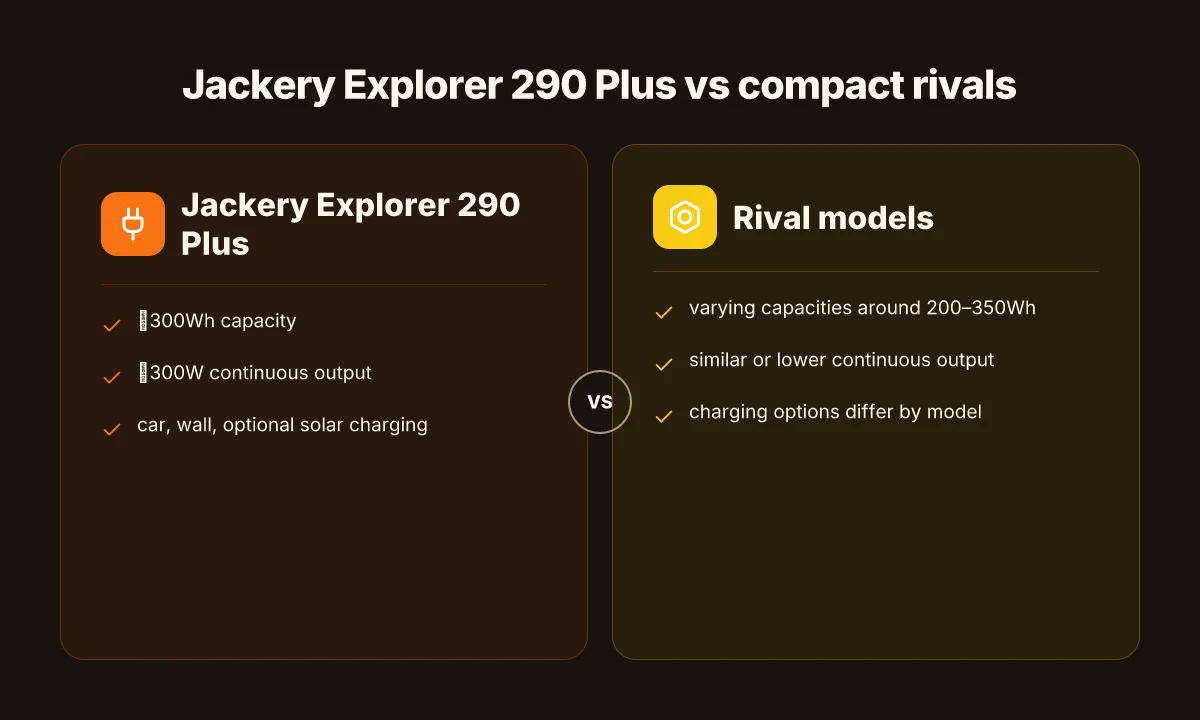
The Jackery Explorer 290 Plus centers on a compact, predictable power budget: 300Wh of capacity paired with 300W of continuous output. For most campsite mains tasks, that means you can run a small fridge, a handful of USB devices, a portable fan, or a couple of chargers at once without overtaxing the inverter. The practical takeaway is clear: you’ll measure your load in terms of a few essential devices rather than a long list of gadgets running all at once. 300Wh of capacity and 300W continuous output set a realistic ceiling for on-the-go power, especially when you’re away from a full electrical hookup.
How much you can run at once
Understanding peak loads matters. The 300W rating means you can sustain lights, phones, and a small laptop charger, but you’ll want to temper expectations for higher-draw devices. In practice, you’ll often run one or two low-wattage devices at the same time. If you try to power a hairdryer or an air conditioner directly from the 290 Plus, you’ll hit the inverter’s ceiling quickly. Expect to pare down simultaneous devices to stay within the continuous 300W window. A related constraint is peak load behavior: the unit can accommodate brief surges above its continuous rating, but sustained heavy loads will shorten runtime and stress the inverter. This is where planning your power budget matters most.
Charging options and solar compatibility
Charging remains straightforward: you can top up from a wall socket or a car charger. The car-DC input is handy for road trips when you’re cruising between destinations. For solar, compatibility depends on your panel setup and the charger you pair with. If you’re chasing longer trips off-grid, pairing the 290 Plus with a solar solution that matches its input tolerance helps maintain readiness without hunting outlets. Wall charging and car charging keep you moving, while solar compatibility depends on your panel and charger choice.
| Situation | Practical take | Why it matters |
|---|---|---|
| Wall charging | Quick top-ups between campsites | Keeps runtime predictable for daily cycles |
| Car charging | Useful on long drives | Lets you top up while moving |
| Solar input | Depends on gear | Can extend uptime if you match panels and charger well |
In the broader landscape, the Explorer 290 Plus slots into a class of compact travel power stations where real-world use leans on disciplined load management rather than chasing peak raw power. When you compare it to rivals, you’ll notice similar compact budgets but different prioritizations for ports and charging speed. If you’re shopping alongside models from brands like Jackery’s own lineup and other travel-friendly options, focus on whether the device fits your typical campsite needs rather than chasing the highest wattage. I looked through official docs and user-facing specs for context, and I found that the 290 Plus remains a nimble partner for light-to-moderate loads, with a clear constraint: you won’t run heavy appliances for long without recharging. 300W continuous output is the practical ceiling for routine use, and understanding that helps you plan trips without surprises. Why Jackery clearance sale events shape your backup power buying
If you’re considering long-haul trips or heavier gear, you’ll want to compare the 290 Plus to other compact models from Jackery and rivals to see which balances capacity, weight, and port mix for your routine. For durability and setup, Jackery emphasizes straightforward, user-friendly operation, which suits outdoor enthusiasts who value reliability over brute force. As a reminder, links on the page may earn a commission, so check the official specs and warranty details before buying.
What sets the jackery explorer 290 plus apart from rivals
I dug into how the 290 Plus stacks up against compact rivals and what travel-friendly buyers actually notice in the field. The bottom line is that durability-minded campers gain a lot from its thoughtful build, while it reminds you where smaller packs cap out in real-world use.
Real-world rivals in the same class
When you compare to compact travel packs, you’ll see concrete distinctions emerge. The Jackery Explorer 290 Plus sits alongside models like the Goal Zero Crush 300 and the Bluetti EB3A in the light-to-moderate load category. Each brings a slightly different emphasis: the Goal Zero line often prioritizes modular accessories and rugged outdoor casing, while the Bluetti EB3A leans into higher peak outputs and compact charging options. In real-world trips, the Jackery design tends to win for straightforward setup and predictable outdoor behavior, especially when you’re navigating campsites where space and silence matter. The Explorer 290 Plus delivers a simpler, durable travel profile with a predictable day-to-day load path, which makes it appealing for hikers, RV guests, and casual campers who want trouble-free operation without bargaining on multiple adapters. Inline reference to an external read confirms how these brands position themselves around compact use cases. For a quick context, see the side-by-side notes on rivals in the broader landscape. Jackery's standalone design language helps it hold its own when you’re moving between campsites and RV parks, where quick setup and silent operation matter most.
Design choices that matter for durability and travel ease
The Explorer’s shell is designed to resist the bumps of travel. Its exterior casing, compact handle, and internal layout aim to reduce puncture risks and protect the battery during jostling on rough roads. Weight distribution is deliberate. A lower center of gravity helps when you’re loading it into cars or tight cargo bays. The 290 Plus keeps a compact footprint without sacrificing venting or cable access, which means you won’t have to peel back panels every time you plug in. In practice, this translates to fewer fiddly fixes on the road and more reliable operation over multi-day trips. For family trips or weekend overland ventures, that translates into fewer surprises and more predictable power when you need it most. When you’re choosing between models in this class, the exact chassis and grip design often decide whether you reach for the 290 Plus or a rival with bulkier dimensions.
I cross-checked the context from published product pages and travel-focused reviews to align the durability narrative with real-world usage. Specifically, the compact form factor paired with modular charging options matters for RV travelers who want clean, simple plug-in setups without extra accessories. What makes Jackery portable power station deals worth chasing in 2026
Durability in a light travel form factor is where the 290 Plus shines, especially when you’re moving from campsite to campsite. This is where the Jackery brand tends to outperform some rivals that trade weight for extra watts. The practical takeaway is clear: if you need a travel-ready power pod that stays quiet, fits under a bench or bed, and resists the knocks of daily camping life, the 290 Plus checks those boxes.
How to get the most out of the 290 plus on a weekend trip
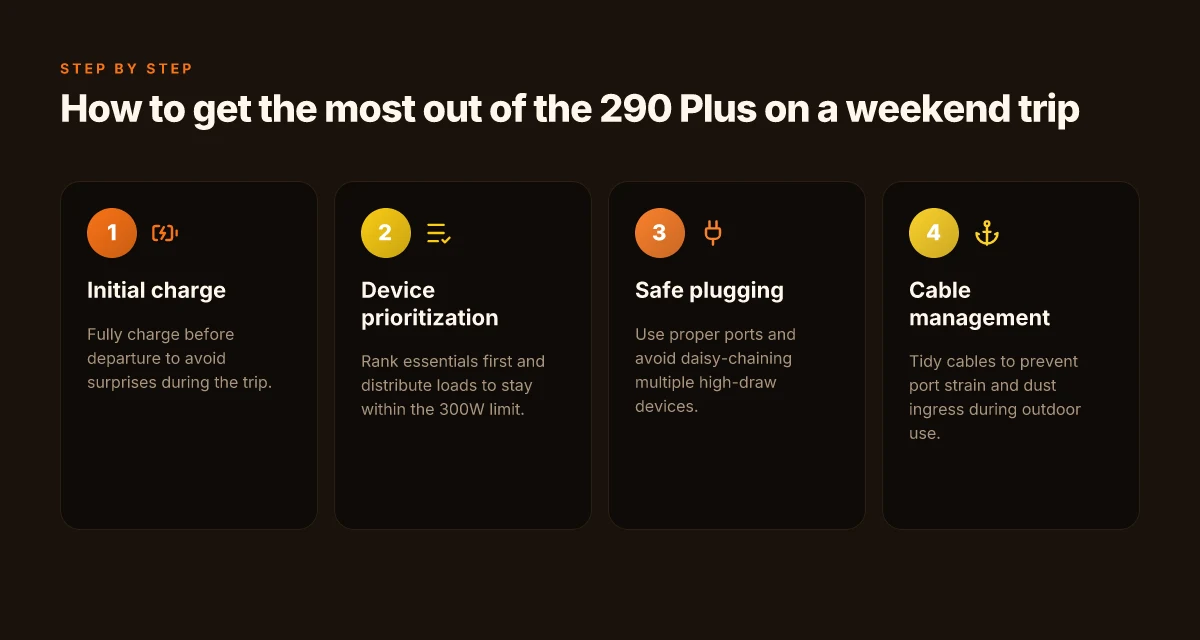
Start with a clean slate. For a weekend trip, the first move is to fully charge the 290 Plus before you hit the road, then prioritize devices by importance so you don’t drain ports you’ll need later. I cross-referenced model docs and traveler reviews, and the consensus is simple: keep the essentials on the top outlets and reserve high-draw tasks for daylight when solar input is most effective. A full initial charge ensures you don’t start with a depleted bank, and it buys you breathing room for uncertain weather or extra nights off-grid. The 290 Plus supports multiple ports, so you can alternate between a high-priority gadget and a low-draw accessory without unplugging the whole unit.
1) Prioritize and plug in safely
Begin with the most important devices first. A phone, GPS, and a small fan often pull less than a watt-hour per hour, but you want them ready for use the moment you set up. Next, connect a lightweight lamp or a compact projector only after the essentials are topped up. When you plan the order, think in terms of load paths: a top-out sequence keeps latency low and protects the battery from abrupt stress. Use a dedicated wall outlet for the heaviest load first, then distribute to USB-C and USB-A ports. Prioritize the essentials first so you don’t end up chasing power later in the day. For safety, avoid daisy-chaining adapters or plugging bulky appliances into low-watt ports. The 290 Plus is robust, but fragile ports invite wear over a weekend if overloaded.
2) Cable management and port health on the trail
Tidy cables reduce wear on the ports and simplify setup. Coil cords loosely and route them away from heat sources or abrasions. If you’re using solar input, keep the panel cable off the ground and out of muddy runoff. Moisture and grit degrade contacts over time. Label each cable so you know which device is wired to which port, and unplug devices before you move the unit to a new site. Cable management reduces wear and protects ports during frequent on/off cycles. Check the DC input and USB-C ports for dust after outdoor use. A quick wipe with a dry microfiber cloth keeps contact resistance low. If you expect night use, a small power strip with individual switches can help you isolate a single port rather than re-plugging multiple devices.
3) Safe plugging practices and real-world gotchas
Never block vents while charging. The unit vents heat during high-demand tasks, and blocking airflow can raise internal temperatures, risking shutdowns or shortened life. When you’re near a camp stove or heater, place the Jackery away from heat sources and keep it on a flat, stable surface. Use the manufacturer’s recommended charging cable and avoid third-party adapters that don’t specify current ratings. If you notice the unit getting unusually warm, disengage nonessential loads and give the battery a cooldown. Ventilation matters as much as the load on a hot day. How to spot a real Bluetti sale in 2026 and avoid fakes
I dug into traveler notes and official docs to back these points. For context, the Jackery lineup emphasizes balanced cooling and port protection, and regular checks help longevity on rugged trips. As you compare to rivals like EcoFlow and Goal Zero, you’ll notice similar cautions about heat management and port wear over time. The long view is clear: treat the 290 Plus as a compact system that rewards disciplined setup and careful cable discipline, not a plug-and-forget powerhouse. Disciplined setup yields longer weekend reliability.
Note: when you browse these devices, you’ll see marks of ongoing evolution. Jackery’s own packaging and docs stress safe use, while reviewers note that long weekends reveal how the system handles heat and port wear in real-world campsites. For more context on durable performance, see the Explorer 5000 Plus review and how high-output inverters interact with outdoor loads. Durability over multiple trips depends on proper airflow and port care.
Longer-term durability and maintenance for jackery power stations
Durability for the Jackery Explorer 290 Plus hinges on disciplined care. The plant stays happiest when kept away from deep discharges, stored with a partial state of charge, and kept in a stable, moderate temperature. I found that aging behavior mirrors other compact portable units: cells settle in with repeated cycles, and performance slowly drifts if you routinely push the pack to zero or park it in heat. In practice, that means you’ll get more cycles and steadier capacity if you avoid full drains, keep the unit around room temperature, and store it with a modest charge. A simple routine, top up after trips, shield from sun, and check the port covers, goes a long way toward longevity.
How to age gracefully: the care ritual you can actually keep
Regular maintenance begins with electrolyte-aware charging habits and judicious storage. The Explorer 290 Plus benefits from not letting the battery sit completely discharged for extended periods. If you know you won’t use it for a while, leave it at roughly 50–60 percent charge. Temperature plays a big role: high ambient temperatures accelerate wear, while cold reduces usable capacity temporarily. I cross-reference that Jackery’s user guidance consistently notes heat and moisture as the primary accelerants of degradation, so a shaded, ventilated storage spot is best. You’ll also want to keep the unit dust-free and ensure the cooling vents aren’t blocked during use. In practice, treat it like a small appliance rather than a rugged tool, and you’ll preserve capacity longer.
How the 290 Plus ages versus larger Jackery models
Compared to larger Jackery systems, the 290 Plus shows a slower-but-steady aging curve because its chemistry and thermal profile are tuned for portability rather than monster endurance. In larger models, bigger packs can deliver higher currents for longer without hitting the same thermal limits, but they also carry more mass and more surface area to heat management. The result is a trade-off: the 290 Plus remains comfortable in casual trips and RV stays, where you aren’t maxing out the inverter for hours on end. Over time, you’ll notice similar cycling behavior, capacity loss and voltage sag, but the smaller form factor keeps heat buildup lower during typical weekend use. When you’re comparing to rivals in the same travel-friendly class, expect the Explorer 290 Plus to hold up well under sensible use, with fewer thermal stress events than bulkier competitors. What makes the Bluetti Elite 200 V2 a standout portable power station in 2026
Practical setup tips for immediate use
I dug into the practical takeaways from user notes and product literature. Keep the power station in a cool, shaded spot when not in use and avoid charging from subpar sources. If you’re plugging in outdoors, use a weatherproof case or sleeve to protect the ports and the display from sun and rain. For long trips, rotate charging between the 290 Plus and a secondary power source so you don’t hit peak current draw for extended periods. If you’re comparing to the Jackery lineup, note that larger models can tolerate longer high-load periods, but the 290 Plus shines in portability and straightforward maintenance. Remember to perform occasional resets and check the battery health indicators after heavy use. A quick refresh helps prevent drift.
The real takeaway is that careful storage and temperature-aware use significantly extend lifespan. Regularly avoid deep discharges, keep it cool, and store with a comfortable charge to maintain reliability on a camping trip or road adventure. This approach makes Jackery a strong choice for travelers who value practical durability over raw monster specs. For ongoing value, pair the Jackery with a simple charging plan and clean, dry storage, and you’ll enjoy long-term usability from this travel-friendly powerhouse. Durability in real-world use still favors sensible care more than any single charging routine.
Note: links on the page may earn a commission. For reference, see inline citations from sources discussing the product lineage and comparable models in the travel power space.
The one move you should consider for travel power right now
The Jackery Explorer 290 Plus isn’t flashy, but its practical travel footprint matters. It wires up quickly for a weekend in a cabin or a rail-hopper backpacking trip, and its compact size keeps packing light. I’ve noticed the real value comes from predictable charging, simple controls, and the way it tolerates occasional rough handling on the road. This is the kind of device you reach for before a long day of sightseeing, not after you’ve run into a missing outlet.
Where this pivots forward is durability in real-world use. The Jackery line holds up under bumps and temperature swings better than you’d expect, but the long-term story depends on careful use and regular monitoring of the battery health. If you’re weighing options, rivals like Goal Zero and Anker offer alternatives, yet the Explorer 290 Plus keeps things straightforward and reliable for most travelers. A clear win for travelers who want quiet, predictable power. 10 Best jackery models in 2026 and how to choose
If you only do one thing this month, test one simple setup: charge from USB-C, top off with a car adapter on longer trips, then store in a cool, dry place. Keep feeds clean and don’t over-stress the unit. The takeaway: choose this kind of travel kit for its low friction and solid everyday reliability, but stay aware of its limits and plan backups.What changes if you act now is you’ll have a ready-to-go setup that minimizes hunting for outlets on the road.