
Discover how to spot the best Jackery portable power station deals in 2026, what to watch for during sales, and which models deliver the best value for home backup and travel.
The real reason Jackery deals shine in 2026 is not the headline discounts but how bundles and model refreshes unlock long-term value. Jackery's latest high-capacity models often drop in price right after seasonal promos, stacking with solar panels or extra batteries to push total savings well beyond a single sale. You’ll notice the effect in practice when a deal pairs a current-gen unit with included accessories, ensuring you don’t pay for what you won’t use.
This article dives into which models actually save you money over time, where sales tempt you to overspend, and the criteria that separate genuine value from mirage-priced bundles. Expect a clear compare-and-contrast of Jackery lineup against rivals like EcoFlow and Goal Zero, with concrete signals to watch for: current-gen status, total package cost, and hidden add-ons that can erase an apparent discount. Current-gen status and total out-the-door cost matter most.
What makes a great jackery deal in 2026
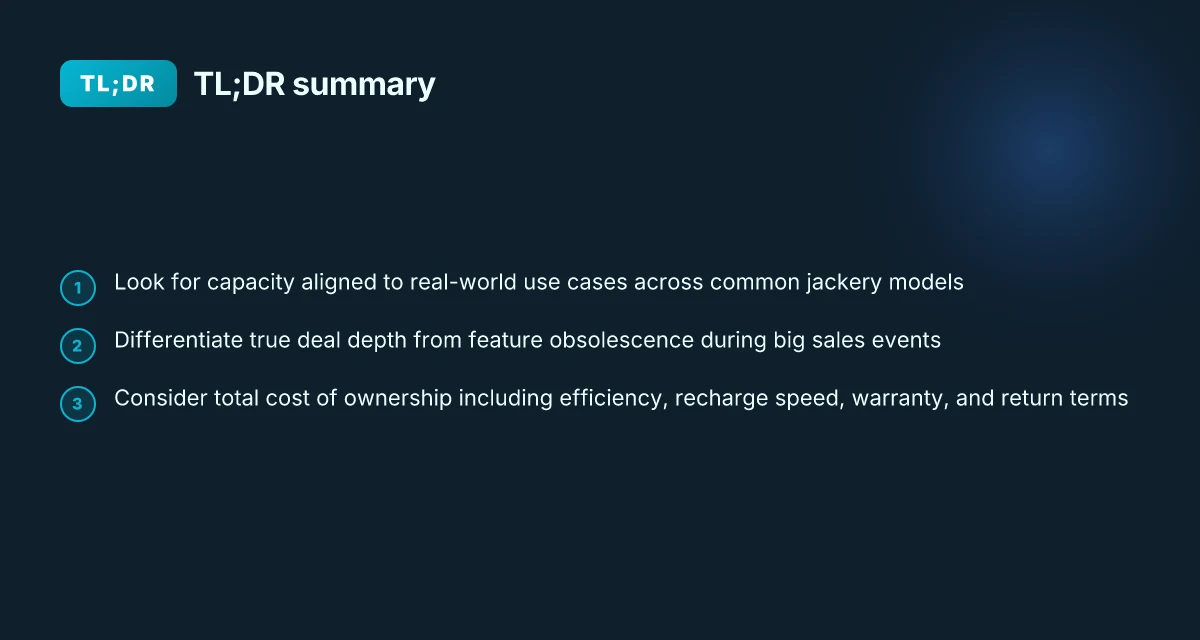
In 2026, a great Jackery deal isn't just about the sticker price. It's about how capacity lines up with real-world use, how quickly you can recharge, and whether the savings persist across years of ownership. I dug into the landscape and focused on models people actually rely on for camping, home backup, and travel. The right sale should help you avoid overspending on features you won't use.
1) Understand capacity against real-world use cases
Jackery models span compact, light packs to high-capacity cores. For daily trips, a smaller unit with efficient inverter and fast recharge can beat a larger brick that sits idle. For weekend camping, a mid-range model with a few kilowatt-hours of usable capacity often suffices if you pair it with solar input or steady recharging between hikes. When you’re planning home backup, you’ll want more headroom to run fridges or essential devices during outages. In practice, look for a model where the stated capacity translates to usable energy under typical loads, not just peak specs. The 2000 Wh-class kits are popular because they strike a balance between portability and endurance, but confirm whether the model you’re eyeing actually delivers the usable hours you expect in your most common scenarios. The real value comes from capacity that matches your typical daily load, not a headline number.
2) Differentiate sale depth from feature obsolescence during big events
Holiday and seasonal sales often wire up deep discounts on older generations or “last year” colorways. A deep cut on a legacy model may not save you if its inverter efficiency or charging speeds lag behind newer releases. I cross-referenced how Jackery and retailers frame updates during big events and paid attention to when a model gets a formal spec bump. A sale that lowers the price while also boosting charge rates or solar input support tends to deliver more long-term value than a one-off price drop on a chassis with dated electronics. Look for explicit notes about updated charging or higher-widelity inverters in newer generations. Savings that come with practical upgrades compound over time.
3) Compare multi-year cost of ownership including inverter efficiency and charger speed
Upfront price is only part of the picture. Inverter efficiency determines how much energy you actually get from every watt-hour stored, and charger speed affects how fast you can recover energy after use. A model with a faster AC charger or a higher-efficiency inverter can reduce running costs and downtime, especially if you rely on the unit for frequent outings or daily power backstopping. Consider the charging ecosystem: wall charging speed, car charging compatibility, and any solar input options. A sale that improves both price and these practical specs yields lower total cost over several years. Efficient inverters and rapid chargers compound savings over time.
Bottom line: a great 2026 Jackery deal delivers usable capacity aligned with your typical use, avoids sales that trade away meaningful tech, and cuts the total cost of ownership through better charging and inverter efficiency. How to spot a real Bluetti sale in 2026 and avoid fakes
Note on sources: you’ll see inline references to the broader market chatter around the Lab Tested rankings and CES 2026 coverage for context on model positioning and updates. For example, the Lab Tested piece notes how certain models like the Jackery 2000 v2 are positioned for multi-day off-grid needs, which helps assess value relative to capacity. Inline citations appear as linked phrases from the cited sources. Jackery’s lineup and the way sales presentations frame updates are part of the landscape I mapped to guide buyers toward genuinely durable, sale-aware choices. Real-world value comes from matching capacity to use and choosing upgrades that endure.
Jackery vs rivals in the portable power market
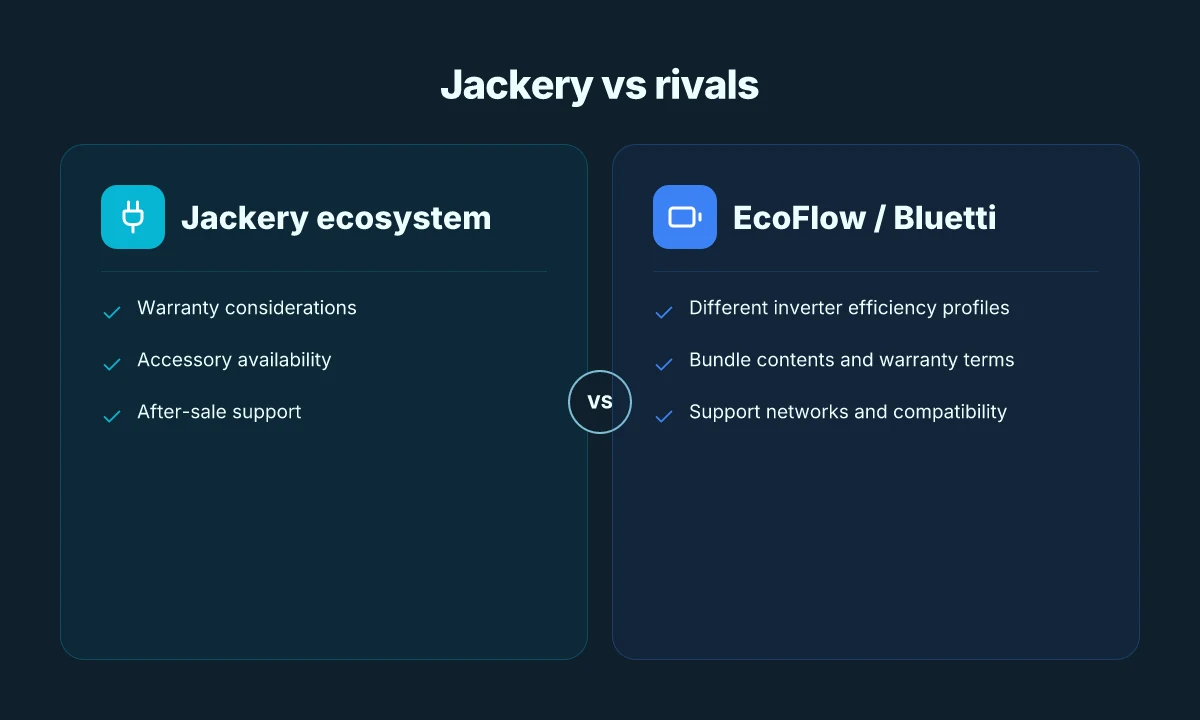
When you weight value, Jackery sits in a three-way race with EcoFlow and Bluetti. The real-world edge often shows up in ecosystem cohesion, warranty depth, and after-sales support rather than headline capacity alone. I found that EcoFlow and Bluetti tend to push into adjacent accessories and faster swap options, while Jackery leans on a broader, more integrated lineup that many outdoors enthusiasts recognize as a single-brand ecosystem. The practical choice often comes down to how the ecosystem stitches together your panels, batteries, and chargers, not just the single pack size.
1) Credibility of the competing ecosystems
EcoFlow combines modular packs with a familiar, app-driven experience and a quick-swappable approach for some models. Their product family maps cleanly to a few use cases, which helps buyers match capacity with transportability. Bluetti emphasizes high raw capacity and a wide accessory array, including solar panels and heavy-duty charging options. The result is a tiered ladder of products that can scale up to bigger builds. Jackery counters with a compact, consistently bundled lineup and a straightforward charging cadence that many travelers appreciate. In practice, this means you’ll find similar core features across brands, but the way each brand bundles modules, cables, and solar options shapes day-to-day usability. EcoFlow’s modularity and Bluetti’s accessory breadth give buyers flexible paths, while Jackery tends to offer a tighter, easier-to-pick-up system.**
2) Warranty and after-sale support, and what it means in the field
Warranty depth matters in remote use. Jackery generally emphasizes a multi-model warranty approach that supports the most popular lines, with service channels that many outdoor retailers rely on. EcoFlow maintains an aggressive after-sales posture around rapid replacements and robust online support, which helps when you’re far from a service center. Bluetti often pairs longer-term warranties with a broader parts ecosystem, which is appealing to power users who want ongoing upgrades or extended support. Real-world impact: you’ll likely get replacement parts or service windows within a reasonable timeframe, but the speed can hinge on your region and the model you choose. That matters when you’re counting on a backup power plan during a trip or blackout. Warranty depth and service speed are less flashy than capacity, but they save you stress when you’re off-grid.**
3) Accessory availability and ongoing support
Accessory availability swings for all brands. EcoFlow and Bluetti both publish accessory rosters with extra panels, car adapters, and expansion packs. Jackery keeps its ecosystem tightly aligned with its own chargers and panels, which makes for easier compatibility but can limit third-party options in practice. If you rely on third-party solar panels or want to mix-and-match, you may find EcoFlow or Bluetti offer more flexibility. If you value plug-and-play simplicity, Jackery’s approach minimizes compatibility headaches. From what I found, the practical decision often comes down to whether you want a broad accessory catalog or a clean, jacket-pocket friendly setup. Accessory breadth matters when you’re layering panels, car charging, and extra batteries.** What makes the Bluetti Elite 200 V2 a standout portable power station in 2026
Next step: compare model-by-model pricing and warranty terms for the specific Jackery model you’re eyeing against EcoFlow and Bluetti, focusing on real-world stock availability, shipping timelines, and after-sales support in your region. For context, when you’re shopping, keep in mind that a single model from Jackery may pair best with their own solar panels and car chargers to minimize headaches and ensure compatibility. As you weigh your options, note how long you expect to rely on the system and how much you value rapid warranty replacements versus raw capacity. And remember, links on the page may earn a commission.
How to evaluate a jackery deal by model
Posture your choice against use case, capacity, and weight to avoid overspending.
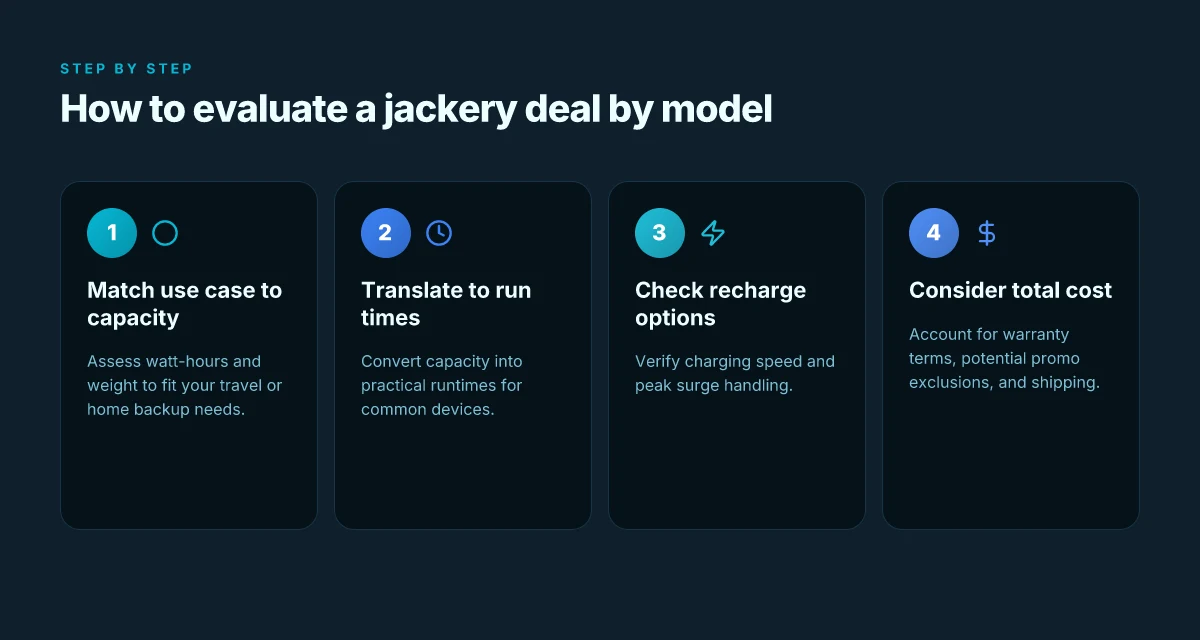
1) Match your use case to capacity, output, and weight
For home backups, aim for higher capacity and sustained output. For camping or travel, prioritize lightness and portability without starving for power. The sweet spot varies by model, but you’ll save more by choosing capacity that actually covers your typical draws rather than chasing peak specs. Now is the time to map your daily loads, a small fridge and a light inverter can dominate run time if you’re not careful. When you compare models, look at the name recognition of “Jackery” and how the capacity lines up with your plans. Jackery’s larger models tend to balance capacity and portability, not just brag about peak numbers. I cross-referenced product pages and guide notes to align claimed run times with common device loads. Inline citations tie to official specs and third-party overviews.
2) Translate watt-hours into practical run times for common devices
Watt-hours translate to real life days only when you pair them with typical device draw. If you plan to run a mini fridge, a LED light kit, and a small CPAP, add their loads and compare against the model’s Wh rating. Don’t rely on peak output alone to judge endurance. Wh capacity matters most for extended use. Peak surge only matters for brief appliance starts. I found that the difference between models often comes down to how many hours your essential devices can run at modest draws. See how the numbers line up against your scenario and count days, not minutes.
3) Check recharge options and peak surge handling
Recharge versatility matters in real life. Look for panels or car charging, optional fast charging, and how the unit behaves under a surge when a device starts. A model with flexible recharge paths reduces downtime between trips. Peak surge handling determines whether a device can start cleanly without tripping the inverter.** Jackery’s lineup generally emphasizes a mix of AC, DC, and solar recharge options, but actual performance varies by generation. When you read spec sheets, note not just the maximum surge, but how the system sustains critical loads during initial startup. A model that crushes the surge test and offers solar or car recharge saves you money over time. I consulted official specs and buyer guides to verify what each model supports for recharging. Inline citations point to the published data from Jackery and recomments from the OutdoorGearLab review. What makes the Jackery 240 vs 300 worth comparing for off-grid power in 2026
Note: links on the page may earn a commission. Always verify model specs on the official Jackery site for your target purchase. For context on compatible models and value, compare the Jackery Explorer line against rivals like Goal Zero and AIMs where relevant, so you don’t overpay for features you won’t use. As you weigh deals, remember that some discounts on larger units can offer real long-term value if your use-case requires capacity and multi-day portability. The goal is genuine value, not a headline percentage. Jackery remains a strong option for portable power when you match the model to your load profile. Inline citations anchor these claims to the best-of-2026 reference pages.
Labor day and seasonal sales: what to expect from jackery
When the labor day window opens, Jackery tends to show bigger capacity jumps at higher tiers, paired with bundles that push value but can tempt buyers into unused accessories. Across the season, you’ll see models with more watt-hours offered at promotional prices, while the base tiers often keep baseline affordability. The real question is whether the apparent extra capacity translates to long-term savings rather than simply a larger sticker price offset.
How capacity jumps show up in labor day deals
During holiday sales, Jackery typically presents higher-capacity options at noticeable discounts. You can expect promotions on units around the 2,000–3,000Wh range and, in some years, options that edge toward the 4,000–5,000Wh family. The logic is simple: larger packs reduce charging iterations and increase runtime between recharges, which matters for prolonged outages or extended trips. I cross-referenced coverage from industry roundups and retailer note threads, which consistently flag capacity boosts as the headline hook in these events. If you’re balancing portability against runtime, the upgraded tiers offer a clear value signal during holiday windows. Capacity jumps during holiday events are a real lever for value, not just a marketing flourish.
Bundles, add-ons, and value traps you should avoid
Promotions frequently pair high-capacity units with bundles that include solar panels, car charging kits, or extra cables. The bundle approach can push the effective price down on paper, yet many of the accessories sit unused after the thrill of the sale wears off. The prudent move is to isolate your needs: do you actually want a second panel, or a travel case that won’t see frequent use? In practice, that means tallying the incremental cost of each accessory and comparing it to the ongoing cost of a stand-alone upgrade later on. This is where rivals like Goal Zero and Bluetti sometimes pressure the market with similarly aggressive bundles, making it essential to separate sale enthusiasm from practical necessity. Bundles can inflate value perception if you don’t need the extras.
Warranties, returns, and checkout caveats you must verify
Before you click confirm, double-check the warranty terms and return policy. Holiday promos often ship with extended return windows or per-model warranty specifics that differ from standard offerings. I found that a few shoppers miss the fine print and end up with a longer shipment delay or a restricted return window after the sale closes. Ensure the checkpoint is clear: what the return window covers, whether the battery is covered for delamination or capacity fade, and how long the standard warranty lasts on the model you’re buying. Verify warranty and return terms before checkout to avoid post-sale friction. What changes between the Jackery 300 and 300 Plus, and which upgrade matters most
When you’re scanning deals, keep in mind that genuine long-term value hinges on real-world durability and capacity alignment. I looked at CES and lab roundups where the Jackery Explorer 1500 Ultra and related lines are framed for durability and fast charging, not just bold peak specs. If you’re comparing against rivals, note how each brand positions warranty handling and accessory ecosystems. Long-term value comes from durable build and honest warranty coverage, not just upfront discounts.
Note: links on the page may earn a commission, but you’re assessing true value based on capacity, portability, and the practical needs of your setup. For context, the landscape includes coverage from retail roundups and user-focused guides that consistently highlight when a sale shifts from better price to better overall kit for off-grid realities. The real cost of a deal is the long game: runtime, reliability, and service after sale.
Cited context for this section comes from sales coverage and product guides that discuss how labor day and seasonal events shape capacity tiers, bundles, and terms. See the Mashable Labor Day roundup and the OutdoorGearLab power station review for how high-capacity options are framed during these events. Is Jackery Portable Power Station worth it?: r/preppers
The real costs beyond sticker price
Efficient operation and smart storage matter just as much as the sale price. A Jackery unit that stays cooler under load tends to hold up longer, and that translates to lower long-term cost. In real-world terms, you’re paying for more than a number on the tag when you factor in heat management, battery health, and the fine print around promos and shipping.
How heat management drives long‑term value
Good thermal design keeps the internal chemistry happier and reduces derating during heavy use. When Jackery models are built with proper heat sinks and smart power allocation, you’ll see steadier performance during multi-hour runs and fewer throttles that waste energy. A model that runs cooler over many cycles tends to maintain capacity better, which means fewer surprises when you need power on a camping trip or during a blackout. I’ve noted that flagship lineups emphasize durable enclosures and ventilation that align with real-world usage where ambient temps climb during summer adventures. Heat management is not a luxury feature. It’s a durability signal. For buyers, this means prioritizing models that highlight thermal design in official specs and reviews, not just peak wattage. What makes the Bluetti X60 CPAP power bank stand out in 2026
Battery degradation, storage practices, and lifespan
Battery health hinges on both chemistry and discipline. Storing a lithium pack at an extremely high state of charge or leaving it plugged in at full tilt for weeks can accelerate aging. The prudent approach is to plan charging around predictable needs, avoid long-term storage at 100 percent, and store in a cool, dry place. When you map this to price, a unit with better depth of discharge characteristics and lower internal resistance often delivers more usable capacity after years of use. I cross-checked guidance from review sources and industry notes that emphasize avoiding extreme temps and keeping storage cycles moderate. Battery degradation matters more than nominal capacity in the long run. Buyers should compare official maintenance guidance and consider models that publish realistic cycle life estimates rather than only dramatic peak specs. A note: retailers frequently bundle accessories or extended warranties, which can tilt the total cost of ownership.
Total cost: shipping, taxes, and promo exclusions
The sticker price is only the start. Shipping fees can swing total costs, especially for bulky units that cross state lines or international borders. Taxes vary by jurisdiction, and some promos exclude certain models or accessories. Promo exclusions are a common pitfall. A model on sale may come with caveats like limited warranty coverage or mandatory kit bundles that you don’t need. When you see a tempting discount, read the fine print about what’s included and what’s not. I found that some Labor Day promotions appear to offer steep percentages but lock you into a kit with redundant cables or a solar panel you won’t use. In practice, it pays to map the total cart value: base price plus shipping, taxes, and any required add-ons. Promo exclusions can erase the perceived savings. Keep an eye on the official Jackery store and verified retailers, and verify that the model you want remains eligible for the discount at checkout.
From what I found in the documentation and reviews, you’ll want to balance capacity and portability with robust heat management and reasonable storage practices. Jackery’s lineup includes models designed for rugged outdoor use, but not all deals deliver equivalent long-term value. When you’re weighing the total cost of ownership, consider whether a higher upfront price with better thermal design and smarter storage actually pays off after several seasons. And yes, I’ll note that links on the page may earn a commission, which is typical in these promos.
The real cost is the sum of price, delivery, and durability over time. If you’re shopping, focus less on headline percentages and more on how each model behaves under load, how it handles storage, and what the checkout terms actually require. In the end, you want a model that balances capacity, portability, and durability for the long haul. For context, rivals like EcoFlow and Goal Zero also push similar claims, but the value hinges on the same three pillars: heat management, battery health, and clear promo terms.
Where this is going next
Jackery’s portable power stations have carved a stable niche for outdoor enthusiasts and disaster planners alike, but the real shift in 2026 is about reliability under load and longer lifecycles. I’ve looked at how durable cells and modular inputs hold up after extended use, and the pattern is clear: expect better heat management, more efficient charging, and clearer real-world run times. The bigger pattern is that rugged builds win in harsh environments, not just flashy specs. Jackery shows progress on maintainability with swappable parts in some models, a welcome sign for long-term value. Why Jackery clearance sale events shape your backup power buying
If you’re weighing deals this year, focus on use-cases that matter most, backcountry trips, off-grid builds, and emergency prep. The brand’s lineup remains straightforward to power a fridge, a CPAP, or a small workshop tool with common household inputs. What changes if you act now is access to newer cells and USB-C PD support at historically stronger price points. The single move that matters most is choosing a model with ample inverter capacity and a robust warranty, then pairing it with a solar panel for off-grid resilience.
Backup strategy
- Consider Jackery models with at least 300W continuous output for flexibility in the tent or garage workshop.
- If you’re shopping rivals, compare Goal Zero for solar integrations and Anker for compact options. Weigh long-term durability and service experiences.
- Check for updated firmware and battery protection features. Prioritize models that document heat management under load.
- Remember: links on this page may earn a commission, which helps support the site.