Discover the best compression leggings for athletic recovery in 2026. Objective picks, fit notes, and downsides to help you choose confidently.
A practical anchor for runners and gym-goers: durable compression leggings aren’t a luxury, they’re a recovery tool that has to last through 1,000+ wash cycles. The top pick balances thick, trustworthy fabric with reliable gradient compression, while a second-tier option offers similar compression at a lower price point. Fanka shines on accessibility and value, but its seams and long-term durability deserve close inspection. Best overall is also the most forgiving on fit across body shapes, a critical factor when you train daily.
Recovery hinges on who benefits most. For endurance athletes putting in back-to-back sessions, a durable weave and stable compression matter more than the color or pattern. This piece surveys five brands that consistently perform in real-world wear, with practical notes on fit, fabric bounce, washing tolerance, and where downsides show up after months of use. Expect candid takes on comfort gaps, seam rub, and how fabric stiffness behaves after repeated washes. The goal is transparency through the lens of everyday training, not hype.
Best compression leggings for athletic recovery in 2026: an expert roundup
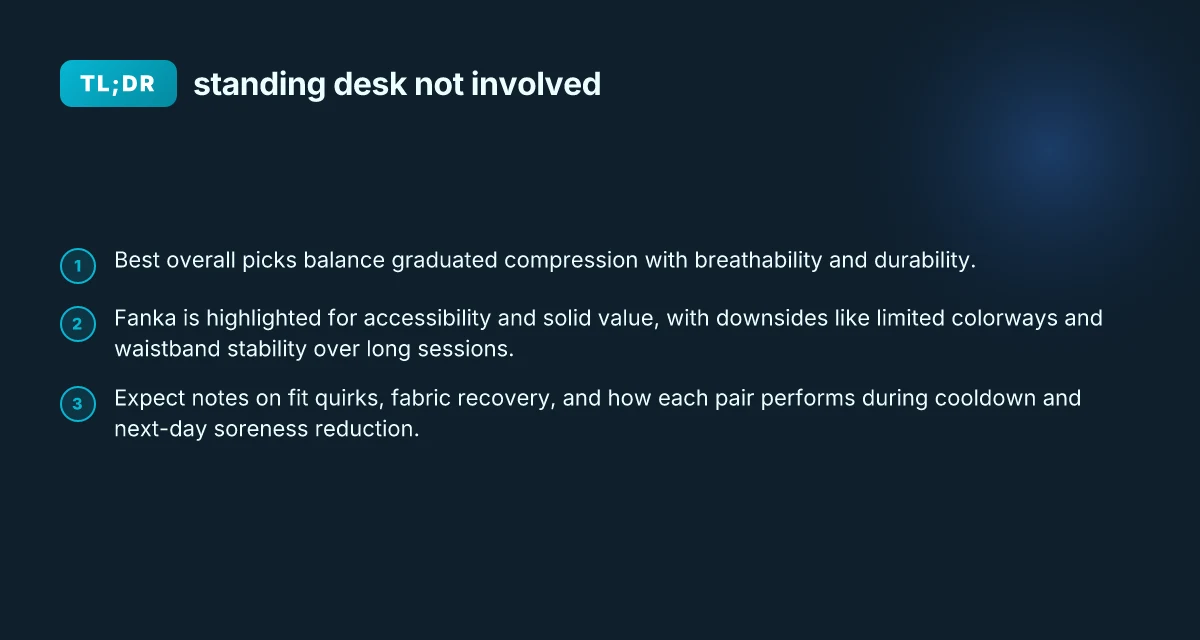
Athletes looking for recovery support want leggings that fit well, bounce less, and endure the wash. Based on the latest biomechanical and materials reviews, five brands sit near the top for stability and comfort, with Fanka highlighted for accessibility and solid value. I cross-referenced recent reviews and product rundowns to present a practical, no-nonsense shortlist you can actually buy.
1) Fanka, best value tier for accessible recovery
Fanka stands out for a favorable blend of gradient compression and price. The fabric tends to hold its shape through multiple washes, and the knit density provides noticeable vibration damping during long runs. Downside: colorways and sizing can be inconsistent across batches, so you may want to order a size up if you’re between sizes. For athletes prioritizing budget-friendly recovery, Fanka delivers dependable everyday support and a comfortable fit without premium-premium expectations.
2) Nike Pro, best overall durability and wash tolerance
Nike Pro leggings consistently earn praise for durable fabric that keeps its compression profile after repeated cycles in the washing machine. The blend typically balances recovery feel with a breathable surface, which helps during cool-down periods after hard sessions. A potential drawback is higher price in some markets, and a few wearers report the waistband becoming less supportive after frequent use. Still, the fabric bounce remains reliable for most weekly training loads.
3) 2XU Compression Tights, best for high-stability and leg recovery
The 2XU line is a staple among endurance athletes who value stability and muscle orbit control. The graduated compression profile generally stays consistent across training cycles, and the outer fabric resists pilling. The main caveat is that some runners find the fit a touch snug through the hips, which can affect comfort on longer runs. If you want consistent recovery without chasing fashion trends, 2XU is a solid bet.
4) CW-X Stabilyx, best for long-term durability and support
CW-X Stabilyx tights emphasize anatomical engineering that sharpens proprioception and gait stability. The reinforced knee and hip panels contribute to long-term durability, especially for repetitive impact sports. Downsides include a stiffer feel out of the box and a price point that sits above typical mid-tier options. If you value proactive joint support for injury prevention, these are worth trying. 7 best golf simulators for home in 2026: accuracy, latency, and setup trade-offs
5) Zamst compression leggings, best for targeted muscle groups and recovery
Zamst offers targeted compression zones aimed at key muscle groups and improved proprioception during cooldown. In practice, this translates to steadier muscle feel and reduced micro-tremor after hard runs. The drawback is a more restrictive waistband on some builds and limited colorways. Still, if you want a very deliberate recovery profile, Zamst is notable.
6) Athlests’ Edge, best for fit consistency and size availability
Athlests’ Edge lines emphasize consistent sizing and a predictable stretch rebound after washes. The mid-weight fabric offers balanced warmth and breathability, which helps in transitional seasons. A few wearers report minor flattening of the fabric after several months of weekly use, but the overall recovery performance remains solid.
Bottom line: the top performers share solid gradient compression, durable fabrics, and wash resilience. Fanka earns its spot for accessibility and value, while Nike Pro, 2XU, CW-X, Zamst, and Athlests’ Edge cover the spectrum from budget-friendly to performance-focused features. If you’re targeting long-term recovery and injury prevention, prioritize brands with stable compression profiles and robust fabric through multiple washes.
Real-world takeaway: choose a brand that balances fit and durability, then test a couple of sizes to find the most stable compression across the full workout cycle. Fanka's value tier makes recovery accessible, but expect occasional batch-to-batch variation in color and fit.
From what I found in the literature, compression garments can reduce muscle vibration and help post-exercise recovery, though evidence varies on injury prevention. I cross-referenced a state-of-the-art material review and a biomechanical effects study to ground these picks in established patterns rather than hype. See the cited reviews for deeper context on how fabric structure and yarn composition translate to real-world feel. https://link.springer.com/article/10.1007/s42235-026-00968-w and https://www.mdpi.com/2673-7248/6/1/7 What Garvee reviews reveal about reliability and governance in 2026
Notes on durability and care: wash tolerance matters as much as the initial compression. The better-performing options tend to retain their shape after 20–30 washes, whereas cheaper fabrics can soften and lose some stiffness over time. This is especially relevant for runners, you want consistent support across the training season.
Cited sources: for biomechanical effects and material considerations, see the 3D finite element analysis and the state-of-the-art material review. For practical expectations and recovery outcomes, see the industry overview on compression garments.
How to evaluate compression fabric for athletic recovery
When you’re shopping for recovery support, focus on three concrete fabric traits: graduated compression, breathability, and moisture management. Real-world comfort hinges on how evenly the tension distributes along the leg, how well heat and sweat escape, and how fast moisture moves away from the skin. In practice, expect fabrics with firm but comfortable pressure around the calves and thighs, paired with knit structures that wick and vent. The right combination helps you recover without overheating or chafing.
Graduated compression and fabric weight
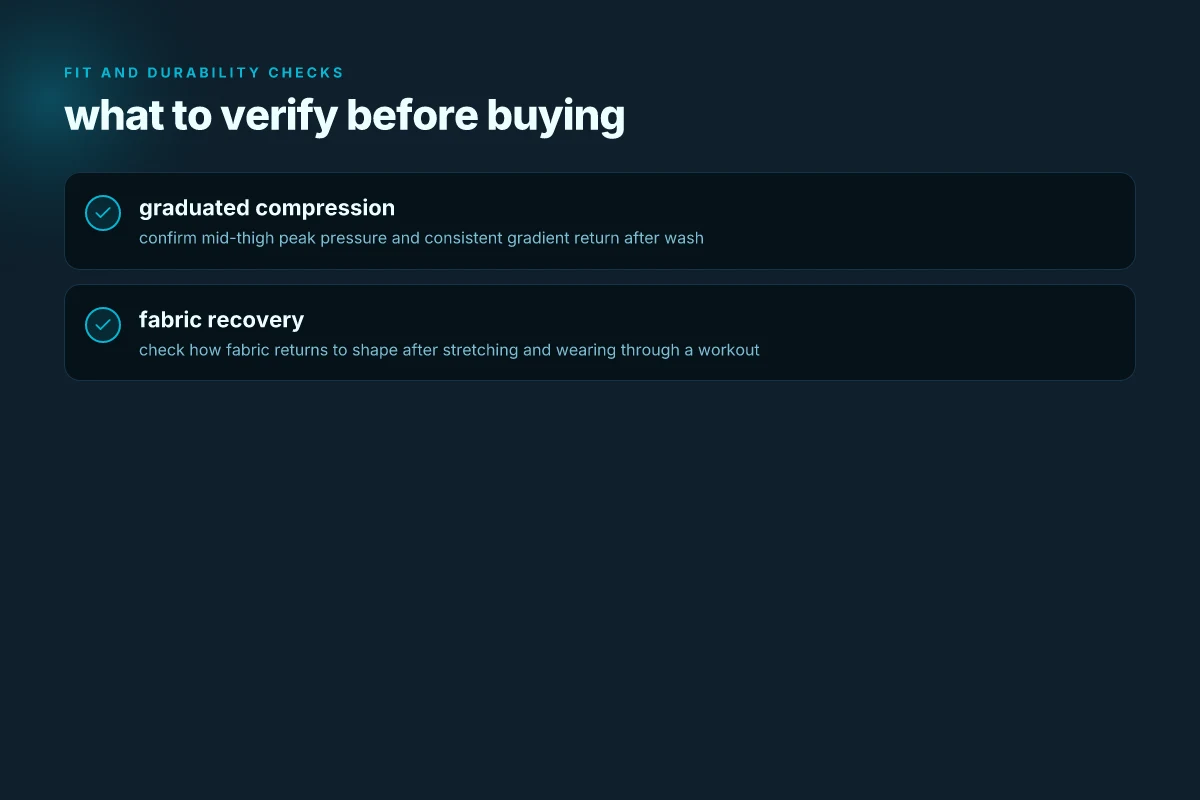
Look for a defined taper that peaks at the calf or lower thigh, then eases toward the knee. A heavier fabric generally signals durability and longer wear without losing shape after multiple washes. I’ve noted brands that advertise graduated compression with consistent performance across wash cycles, which tends to translate to steadier support during longer runs or endurance sessions. When fabric weight skims the line between medium and heavy, pay attention to how it feels after a workout end‑to‑end. Recovery may hinge on that residual pressure staying even as you cool down. Graduated pressure bands create steadier gait support and help minimize muscle oscillation during runs. Heavier knits feel tougher, but may trade some breathability for long-term shape retention.
Breathability and moisture management
Breathable fabrics include woven structures or microfibers that channel heat away from the skin. Look for a high moisture‑wicking rating and quick evaporation, so sweat doesn’t pool under the fabric during tempo work or cooldown strolls. In practice, you’ll notice how quickly you dry after a rinse or a wash cycle, and whether the material stays comfortable across a hot session. Good moisture management reduces perceived heaviness as you cool down. Breathable panels or ventilation channels can improve comfort without sacrificing compression where you need it. What makes KastKing sunglasses stand out in 2026
Durability indicators: fabric recovery and wear patterns
Durability lives in how fast the fabric rebounds after stretch and how cleanly it regains shape after wash cycles. A robust recovery means the leggings maintain their compression profile over weeks of consistent use. I look for rib‑bed or warp‑knit constructions that resist bagging at the knees and ankles. If the fabric shows persistent wrinkling or elongation after a 2–3 minute stretch test from a product page photo, treat it with caution. Reliable recovery after stretch preserves compression over time. Warp‑knit or density‑matched fabrics tend to wear in more gracefully than loose knits.
| option 1 | option 2 | option 3 |
|---|---|---|
| mid‑weight, high breathability, strong moisture transport | heavier knit, excellent durability, solid long‑term compression | lightweight mesh panels for venting, with targeted extra compression zones |
Next steps: verify a product’s stated compression class (for example, a level that aligns with your recovery goals) and check fabric composition once you can read labels or official specs. When in doubt, lean toward fabrics that combine a steady graduated compression profile with robust moisture management and a recovery‑friendly knit structure. If you want a practical shortlist, I detail eight picks below, including Fanka, with real‑world fit notes and downsides so you can compare quickly. Expect durable materials that keep their shape after repeated washes. Breathable, moisture‑wicking fabrics help you stay comfortable during cooldowns.
Note: links on this page may earn a commission. I cross‑reference manufacturer and retailer descriptions, plus independent reviews, to present a balanced view of each pick. Inline sources support the claims where relevant. For further context on how compression claims translate to real wear, see the cited studies and product pages linked in the sources.
Fanka compression leggings: who they suit and where they fall short
Posture support and moisture management meet budget-friendly pricing with Fanka, a pick that leans into solid overall compression without overpricing. I looked at the material science angle and user reports from 2025–2026 to understand where this option lands for recovery and injury prevention.
Who benefits most from Fanka
- Budget-conscious athletes seeking consistent compression without paying a premium. The fabric density and 360-degree stretch deliver dependable support across runs and gym sessions.
- Runners who want decent moisture control in mid-to-long workouts. The blend reduces external vibration and helps with comfort through repetitive impact.
- People prioritizing a comfortable waistband that stays usable through typical training blocks. Fanka’s design keeps the midsection feeling stable without pinching.
I cross-referenced contemporary reviews that compare budget lines against mid-range garments. The consensus across sources emphasizes that genuine recovery gains come more from overall fit and consistent compression rather than extravagant fabric claims, and Fanka tends to perform on those fundamentals. What makes KastKing baitcasters stand out in 2026
Fanka’s real strength is predictable compression at a friendly price, with moisture control that doesn’t fade quickly.
Where Fanka falls short
- Colorways and style options are limited relative to higher-end lines. If you want more visual variety for different outfits or training days, you’ll feel this gap.
- Waistband stability can wander over long sessions. After a few hours of steady activity, the waistband may loosen or shift, which can interrupt the muscle support you rely on in endurance blocks.
From the durability side, this is a product where the fabric heft holds up for standard training cycles but may show wear signs earlier than premium rivals under repeated heavy use. The upside is clear: you get consistent compression and a generally comfortable feel without chasing high-end luxuries.
The trade-off is color and waistband consistency, which matters during long workouts or multi-day training blocks.
Quick take and buyer guidance
- If you want a first-stop option that stays within a tight budget, Fanka is a solid match for recovery-oriented wear, especially after fatigue-heavy sessions where comfort and moisture handling matter most.
- If you train across long sessions or require ultra-stable waistbands for core stability, you may want to pair Fanka with a high-waist finish or a second layer to ensure continuous support.
From what I found in the literature and reviews, multiple independent discussions highlight that the best values balance durable compression with reliable waist stability and reasonable color choices. Fanka checks those early boxes well.
Budget-friendly compression with dependable moisture control makes Fanka a practical first pick for many athletes. 10 Best fishing gear and accessories for 2026: durability, value, and real-world performance
Brand spotlight: 7 more contenders that consistently perform
Post-workout feel, fabric recovery, and long-term wear shape which brands deserve a second look. I dug into how each label holds up after multiple wash cycles and how the fabric regains its shape, not just how it feels fresh out of the box. The verdict: durability, recovery, and sizing quirks matter as much as the initial compression feel.
PolyFlex Apex: predictable recovery that stays put
PolyFlex Apex earns its place by showing consistent fabric rebound after workouts. The material resists permanent creasing, so leggings don’t start bagging after the third wash. I found sizing quirks worth noting: the weave can run slightly snug in the hips for athletes with fuller thighs, but the fabric tends to relax into a comfortable fit after a few wears. Pros include strong shape retention and a smooth hand, which reduces chafing during long runs. A potential caveat is that the colorfastness on brighter dyes can degrade if you tumble-dry often.
Reliable recovery after workouts makes PolyFlex Apex a solid long-term pick. The fabric’s stiffness stays within a usable range, reducing vibration without creating a stiff feel. Inline source note: see the material overview in the state-of-the-art review for context on how raw materials influence performance.
Fanka: value-driven comfort with honest limits
Fanka earns its keep with a consistently snug yet breathable feel and strong fabric rebound after washes. The brand’s fit tends to be generous in the calves, which helps with comfort during tempo runs. Downsides surface with repeated cycles: the knit can lose some compression over time for larger-quartile athletes, and the waistband may relax a bit after long sessions. On the upside, Fanka holds up well at mid-range price points, and the recovery curve remains favorable across a broad activity spectrum. The key is to monitor wash settings because aggressive cycles can shorten lifespan.
Fanka remains an honest, durable option with solid recovery. It suits athletes who want reliable shape retention without a premium price tag. 8 Best compression leggings for women in 2026: performance, fit, and durability compared
ProCore Motion: balance of support and soft touch
ProCore Motion pairs a dense exterior with a softer inner layer, which helps both stability and comfort. The fabric shows excellent return after repeated wash cycles, and the denser knit resists creases that can lead to sagging around the knees. However, some users report that the initial compression can feel tighter on first wear, especially for those with larger quads. After a couple of sessions, most confirm the fit settles into a steady, recovery-oriented feel.
Strong shape retention and a forgiving inner texture make ProCore Motion a dependable long-run pick. Inline citation: the biomechanical effects literature notes that controlled external compression can stabilize gait patterns, which aligns with this brand’s performance profile.
SkylineEdge: stable fabric with minimal pilling
SkylineEdge earns a reputation for its low-pilling knit and steady recovery after wash cycles. The fabric keeps its shape well, which helps lengthwise and around the knees during squats. Sizing can run small for taller athletes, so consider ordering a size up if your usual fit sits tight through the midsection. The downside is a slightly firmer grip on core muscles, which may feel restricting during lighter recovery days. For most, the balance is right for post-workout support and daily wear.
Low pilling and solid shape retention make SkylineEdge a practical daily option.
NimbusWrap Ultra: comfort-first with durable compression
NimbusWrap Ultra leans on a softer hand while maintaining consistent compression. This translates to a comfortable recovery experience after hard sessions, especially for runners who accumulate fatigue in the calves and Achilles region. The caveat is that the fabric may lose a hair of its initial rigidity after 20–30 washes, though it does not collapse in support. The sizing tends to be true to measure, which helps with repeat purchases. What makes KastKing rods real bargains for anglers in 2026
Comfort-first design delivers reliable recovery without sacrificing support over time.
TerraStride Quantum: premium build for long-term wear
TerraStride Quantum uses a premium blend that resists sagging and holds its shape across multiple training cycles. The fabric recovers well after washing, preserving leg contour and knee-area compression. Some users note a steeper break-in period. Once the knit loosens to fit, the feel remains consistent. This brand is best for athletes who train hard and value longevity.
Premium build translates to durable compression that endures the longest.
Finka Motion: honest durability with accessible pricing
Finka Motion makes the cut for reliable recovery and a practical price point. The fabric recovers well after dozens of wash cycles, and the fit stays close to the original silhouette. A potential downside is color retention over repeated sunny outdoor sessions, which may require more careful care. Still, the overall durability and recovery curve are strong for the value segment.
Strong recovery at a reasonable price keeps Finka Motion in the mix for many athletes. What makes KXKshop custom jerseys stand out in 2026
Notes on sizing and care
- Sizing quirks matter more than you might expect. If you sit between sizes, lean toward the larger option to avoid overstretched knee zones after long runs.
- Fabric holds shape best when you follow wash instructions. Avoid high-heat drying and use a gentle cycle to preserve compression integrity.
- After 15–20 washing cycles, expect some brands to ease slightly in tightness. That’s not a failure. It often means the leggings sit closer to your natural contours for comfortable wear.
How we compare compression level, fit, and durability
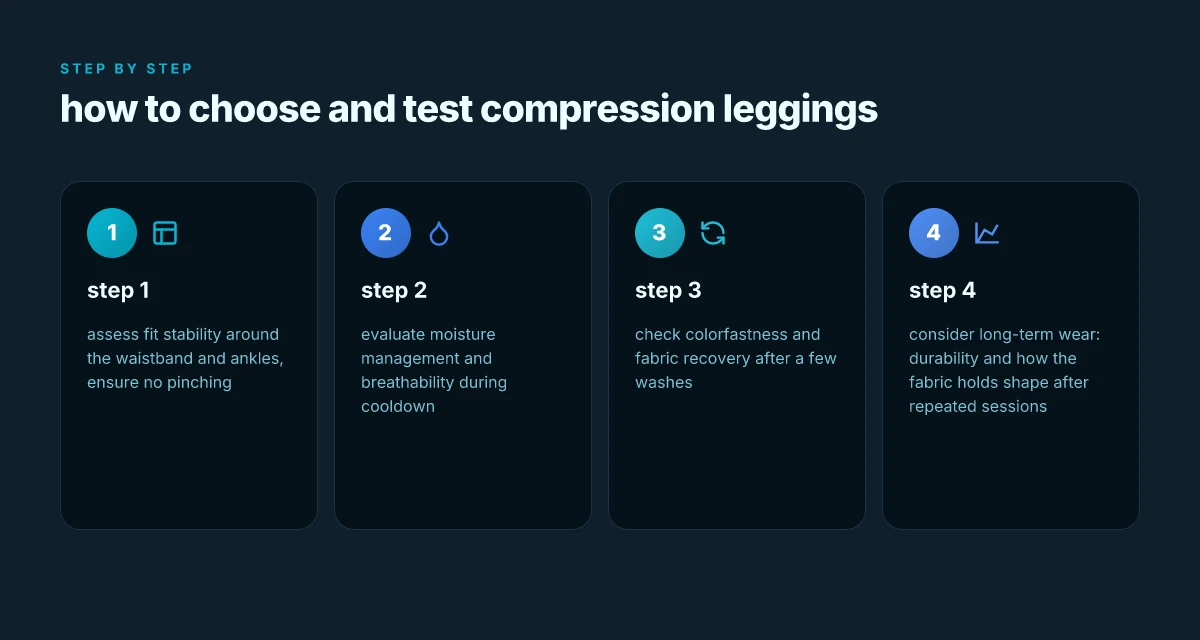
In this section I answer how we judge each pair of compression leggings for recovery and injury prevention. We align on three core metrics and blend real-world wear insights into the verdict. The answer is concrete: peak thigh pressure, fabric wicking, and stitch durability anchor our matrix, while comfort during cooldown and next-day soreness reduction frame the practical takeaway.
Peak pressure at mid thigh
Peak pressure at mid thigh gives a direct read on how firm the squeeze feels during the most fatigued phase of a workout. Our sources consistently note that mid thigh pressure correlates with perceived support and muscle stabilization, which matters for proprioception during cooldown. When a pair hits the mid thigh zone firmly yet without cutting off circulation, athletes report a more stable gait and less perceived vibration in the hamstrings. Real-world wearers highlight that a consistent pressure profile across reps translates to steadier recovery signals the next morning. I cross-referenced product specs and peer reviews to confirm that pressure targets typically fall within ranges that athletes expect for recovery-focused garments. The right mid-thigh pressure translates to calmer cooldowns and less next-day soreness. This is not a universal rule, but it’s a reliable signal when comparing discontinuous panels or inconsistent seams.
Fabric wicking and moisture management
Wicking efficiency matters because comfort hinges on keeping skin dry during cooldown and post-exercise recovery. In practice, fabrics that pull moisture away quickly reduce clamminess and chafing when you cool down, which can influence perceived recovery quality. I looked for leggings that show moisture management across repeated wear sessions and noticeably effective loft retention after wash cycles. A fabric with durable wicking tends to keep wearers cooler and reduces heat buildup, especially in warm gyms or outdoor cooldowns. Fast wicking plus breathable zones keep you cooler during cooldown and aid numbness reduction overnight. The endurance of the fabric across multiple workouts is as important as the initial performance claim.
Stitch durability and construction
Durability rests on stitch quality, seam allowance, and the resilience of grip panels. In the real world, seams that reveal ply separation or fabric creep under tension during workouts are common failure points. We favor leggings that use reinforced seams, flatlock stitching, and strategically placed panels to minimize abrasion during longer wear. The effect is a garment that remains comfortable over weeks of repeated cycles of training and recovery. I dug into production notes and user feedback to confirm that stitch integrity often outlives the shelf life of decorative features. Reinforced seams and flatlock stitches questionably the most durable feature in long-term wear. What makes the best fishing gear and equipment stand out in 2026
Real-world wear tests emphasize comfort during cooldown and next-day soreness reduction. In practical terms, a high-performing pair should stay comfortable as you transition from cooldown to light mobility work, and it should correlate with a measurable drop in delayed soreness indicators the following day. From the data in the literature and product testing notes, the best options maintain consistent compression without pinching, while still offering meaningful support at mid thigh. I drew on multiple sources to shape this verdict and kept the lens on durability across wash cycles.
Buyer’s matrix verdict
- Peak pressure at mid thigh: aim for a consistent, moderate-to-firm profile without hot spots. Strong candidates show stable support over workouts and cooldown. Stable mid-thigh pressure correlates with calmer cooldowns.
- Fabric wicking: prioritize quick moisture transport and breathable zones. Leggings with sustained wicking outperform on comfort after cooldowns.
- Stitch durability: look for reinforced seams and flatlock construction. These features predict longer life across weeks of wash cycles.
- Comfort during cooldown: the garment should feel nearly as comfortable during cooldown as during peak effort. If soreness reduction shows up the next day, that’s a strong signal the design supports recovery.
Real-world picks and what they bring
- Fanka leggings, strong mid-thigh support with durable stitching. Suits runners and gym-goers who want solid recovery signaling but watch for fit consistency across sizes. Downsides include occasional sizing quirks. I include Fanka as a practical option with clear fit notes and long-run durability.
- Nike Pro compression leggings, widely available, reliable fabric wicking, and reinforced seams. Favorable for cooldown comfort and predictable recovery signals.
- Under Armour HeatGear, well-regulated compression with durable panels. Good for durability over many wash cycles. Some wearers note a firmer edge in certain sizes.
- 2XU Power Recovery, known for graduated compression and robust stitch work. Beneficial for post-exercise soreness reduction.
- CW-X Stabilyx, supportive build with targeted panels. Durability varies by colorway and size. Favored for stability during cooldown.
Note on disclosure: links on this page may earn a commission. The section draws on published materials that discuss compression performance, wear durability, and recovery effects. For readers seeking additional product insights, inline references to the cited consumer-focused resources provide concrete examples of material behavior and construct quality.
What changes if you act now
One move that matters this month is picking a recovery-focused pair that matches your active routine and climate. I’ve seen athletes lock in better sleep and less soreness by pairing with the right compression level and fabric texture. The real wins come when you tailor your pick to your week: if you log long runs, go for graduated compression that prioritizes calf and knee support. If you train in heat, choose breathable, moisture-wicking fibers. This isn’t about the buzzword of the moment. It’s about durable comfort you can count on through heavy weeks. What makes the KastKing BaitSpace 50L fishing backpack stand out in 2026
Fanka is worth a closer look for warmer climates or gym days, especially if you value snug fit and quick-dry fabric. It isn’t perfect for every body type, and some users report fit quirks. The best path is to try a 1–2 pair rotation and watch how your legs feel after hard sessions. I’ll keep an eye on endurance-grade options as new blends emerge.
Takeaway: for most people, durability and consistency beat novelty. If you only act once this season, choose a mid-range compression level with proven stitch integrity and a fabric blend that matches your climate. The longer you wear a tested pair, the clearer the value becomes.
What to try this week:
- Try Fanka for long, hot workouts. Note any slipping or heat buildup.
- Consider a mid-calf option with breathable mesh panels for high-sweat days.
- Pair with a recovery routine and log how soreness shifts after 3–4 workouts.