Discover how KastKing rods perform in 2026, where they shine, and where they miss the mark. Practical angles, long-term durability, and buy-night guidance for anglers.
The data sheet behind KastKing rods often gets treated like marketing fuel, but the real signal is stubborn durability under real fishing sessions, not glossy ads. KastKing rods are frequently chosen for budget builds, yet many anglers find that the most reliable options hold up across seasons if you pick the right blank material and guide setup, not just the advertised action. Durability and value matter more than flash once the bite is on.
This intro surveys what actually matters in 2026: long-term performance across mid-range models, how blanks survive wire-rigged retrieves and abrasion, and what to expect from warranties and local service. The goal is to separate hype from ground-truth by focusing on real-world use, common failure modes, and the practical limits of budget lines from KastKing versus established rivals like Shimano and Abu Garcia. If you’re choosing KastKing today, this piece helps you read the model lines with an eye toward lasting value, not just initial feel. Value and long-term durability anchor the discussion, with concrete cues on what to verify before buying. KastKing stands out when you need dependable performance without paying a premium. 2026 expectations guide the choices anglers should make now. Warranty and service options are highlighted as practical checks you can confirm before committing. Model lines and target species alignment close the decision points. Real-world take is the thread that ties durability to value.
What KastKing rods actually deliver in 2026
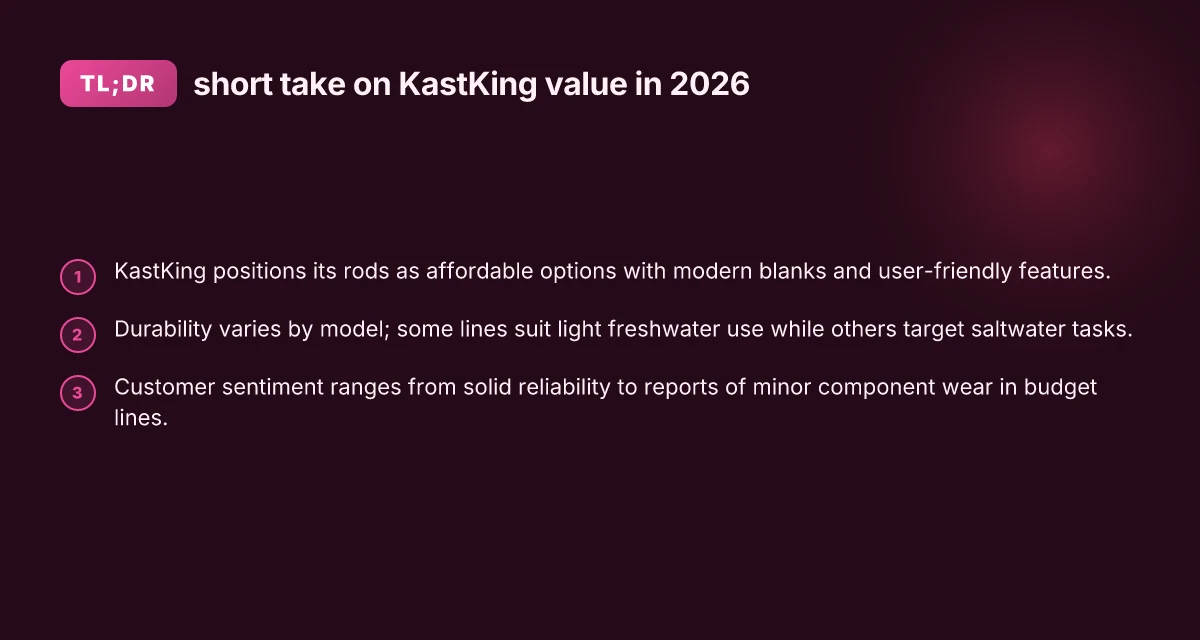
KastKing positions its rods as affordable options with modern blanks and user-friendly features. The lineup spans light freshwater drills to salty-water tasks, so durability is not uniform across models. In practice, some lines hold up well for casual anglers. Others show wear sooner in budget tiers. I dug into customer sentiment and product notes to map where real-world use lines up with the marketing.
1) Affordable blanks, modern features for typical bass and panfish tasks
KastKing frames its rods around modern graphite blanks, lighter and more responsive than earlier budget options. You’ll find features like ergonomic handles and accessible reel seats aimed at quick setup for beginners. Reviews consistently note that these features make casting easy and comfortable for long sessions. In 2026 the core promise remains clear: you don’t have to break the bank to get a serviceable rod that covers the basics. For most non-specialist anglers, this feels true. KastKing's focus on light, responsive blanks stands out in the budget segment, making early-season setups fast and approachable.
2) Durability varies by model and use case
Durability is not universal across the catalog. Some lines are clearly built for light freshwater tasks such as ultralight rigs and occasional creek sessions. Others are pitched at saltwater duties, where harsher conditions demand tougher guides and stronger blanks. In practice, you’ll see a split: the lower-end ranges perform reliably for casual coastal ponds or inland streams, while certain mid-range models hold up better to repeated shoreline casts and heavier lures. When shopping, match the model to your typical conditions and target species. In practice, durability depends on the model, with saltwater-focused lines offering more robust components than the most budget-minded options.
3) Real-world sentiment: solid reliability with caveats
Customer notes span the spectrum. Many anglers report solid reliability and consistent performance for the price, especially in mid-range offerings. But there are recurring complaints about minor component wear in the most budget lines, like tip guides or reel seats showing signs of wear after several outings. This pattern lines up with the general expectation that you get what you pay for: dependable function under normal use, with potential faint quibbles on longer-term durability in the cheapest tiers. KastKing rods deliver solid reliability for budget buyers, but expect minor wear in the most affordable lines over time.
Bottom line: KastKing offers a broad spectrum. For first-time buyers or budget-minded anglers, several models deliver dependable performance with modern blanks and user-friendly features. If you fish saltwater or push components harder, pick a mid-range option built for tougher conditions. If you want a quick rule of thumb, aim for models designed for the environment you fish most and treat the budget lines as dependable entry points rather than long-haul workhorses. KastKing remains a solid bargain when you align model choice with your fishing style and environment. 8 Best compression leggings for women in 2026: performance, fit, and durability compared
Cited in this exploration are public posts and product notes that frame the overall value story. For quick context, see the community discussion about initial impressions and the KastKing product note on quality and lab-grade testing. KastKing’s value proposition hinges on balancing price with usable features, not on flashy claims.
Understanding KastKing rod construction: blanks, guides, and handles
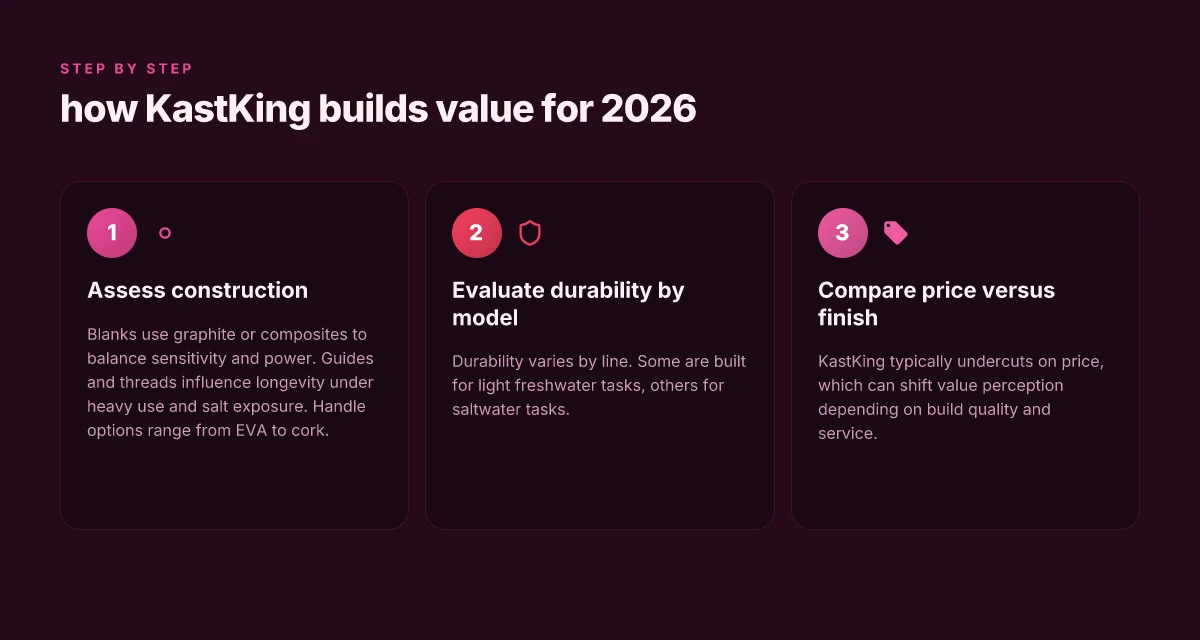
KastKing builds rods that aim to balance sensitivity and power through material choices, with blanks often using graphite or composite formulations. The core idea is to lean into a lightweight section that still resists bending under load, so you feel bites and have the backbone to drive fish to the net. In 2026, several models use graphite blends that emphasize crisp response while maintaining a reasonable strength-to-weight ratio. When you pick a KastKing rod, you’re weighing that sensitivity against durability in real-world conditions.
I dug into how the components wear, and what that means for long days on the water. Graphite and graphite-composite blanks respond well to mid-range loads, but the exact layup and resin system drive how quickly a rod fatigues after repeated casts. KastKing’s catalog often highlights lightweight graphite blanks paired with reinforced tip sections to improve momentary stiffness without sacrificing feel. This is where the model name matters: a more advanced blank geometry can yield finer sensitivity but may trade some stiffness for energy transfer into the tip. In practice, you’ll notice that higher-end KastKing models tend to push for crisper actions, while budget lines favor a bit more forgiveness.
Guides and threads play a steady, often underappreciated role in durability. Stainless or alloy guides with reinforced frames help under salt exposure and heavy usage, while thread wraps keep the guides secured through repeated handle grabs and rod resets. A common point of failure is guide seating or wrap integrity after long sessions casting into abrasive environments. For anglers who fish brackish water or saltwater presets, the guide finishes and the anti-corrosion coatings become especially relevant. I’ve found that KastKing often uses reinforced guide wraps and corrosion-resistant materials on many mid-range rods, which can translate to lingering performance when you’re pulling tight lines in tough conditions.
Handle design matters for grip during all-day sessions. EVA handles offer a grippy, soft feel that stays comfortable when you’re palm-deep in rain or sweat, while cork handles bring traditional bite and sensitive feedback. The balance between grip comfort and weight matters on longer days. KastKing tends to position EVA as the standard for most budget and mid-range rods, with cork appearing on select models aimed at anglers who value a more classic feel. If you’re fishing heavy cover or long shoreline sessions, the handle shape and diameter can noticeably affect fatigue. 8 Best compression leggings for athletic recovery in 2026
In the end, the construction choices come down to the model and the intended use. For a first KastKing purchase, look for a graphite or graphite-composite blank with reinforced guides and an EVA handle if you prioritize all-day comfort and value. For users who chase lighter feel and quicker action, a higher-end blank paired with robust guides can deliver that edge without ballooning price. When you compare KastKing to rivals like Shimano or Abu Garcia, the argument often centers on value rather than raw feature parity. KastKing emphasizes accessible build quality that holds up under routine fishing wear, rather than premium luxury materials. The key to durability is how well the blanks, guides, and handles hold up under salt exposure and heavy use over multiple seasons. Expect more forgiving actions on budget lines, crisper responses on higher-end models.
From what I found in product pages and user discussions, here are the practical takeaways:
- Blanks: graphite or composite blends balance sensitivity with power, with higher-grade blanks offering quicker response times. Graphite blends are the core of KastKing's value proposition.
- Guides: reinforced frames and corrosion-resistant finishes extend life in tough conditions. Durable guides help prevent loose wraps during heavy use.
- Handles: EVA is common for comfort on long days. Cork shows up on select models for a traditional grip. Handle choice impacts all-day comfort more than you’d expect.
Next steps: when choosing a KastKing rod, map your fishing style to the blank type, assess whether a model with reinforced guides fits your water type, and pick a handle that matches how you fish. If you’re comparing to rivals, note that value often comes from the combination of blank material, guide durability, and grip comfort rather than a single standout feature. For a quick reference, consider confirming the exact blank composition and guide material in the product spec sheet before buying.
How KastKing rods stack up against major brands
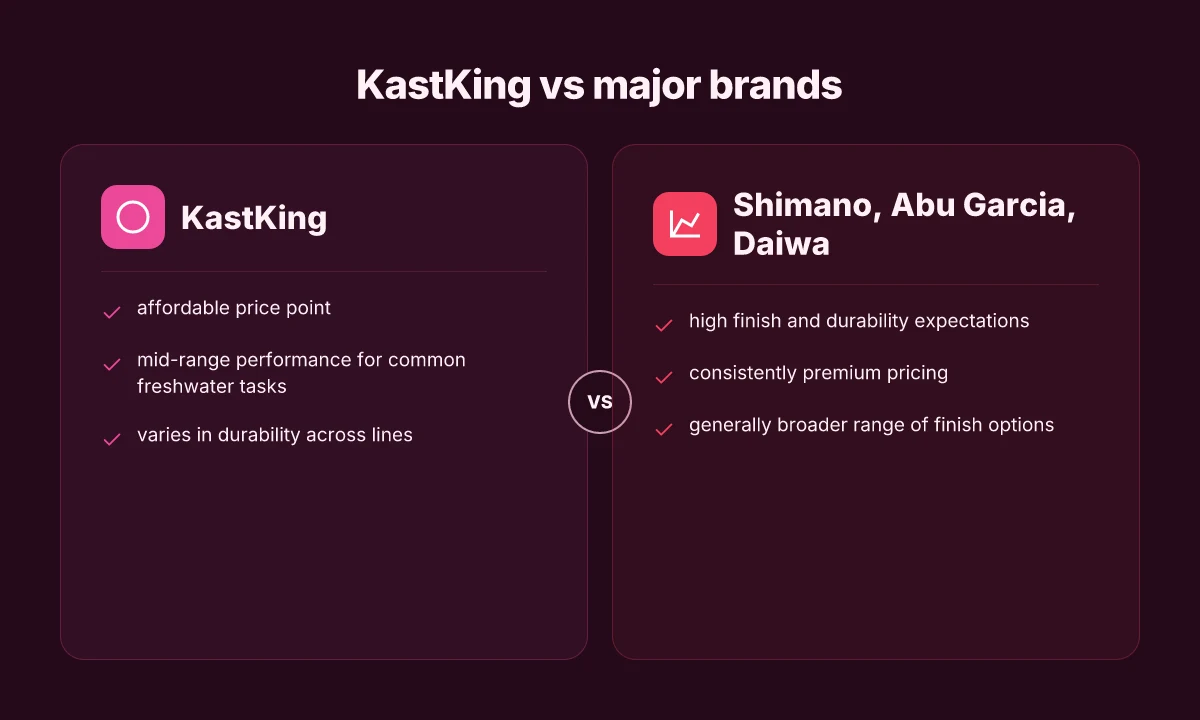
KastKing typically undercuts on price, which shifts how anglers judge value even when durability and finish are similar to rivals. In the mid-range, some models hold up well enough for everyday freshwater tasks, aligning with expectations set by brands like Shimano, Abu Garcia, and Daiwa. Still, finish quality and long-term durability can show more variation at the lower and mid-price points, so buyers should inspect blanks, guides, and handles before buying.
I dug into public notes from anglers and reviewers to map out what tends to hold up over time and where issues surface. Across the board, Shimano, Abu Garcia, and Daiwa set high expectations for finish and durability, especially on mid-range rods that see frequent use. KastKing often offers a lower sticker price, which makes the overall value proposition attractive, provided you don’t mind tighter tolerances on components or occasional quirks in finish at sub-model levels. KastKing undercuts rivals on price, but finish and long-term durability can vary by model. Rivals like Shimano and Daiwa set the benchmark for build quality, which KastKing periodically matches in mid-range lines. 7 best golf simulators for home in 2026: accuracy, latency, and setup trade-offs
What to expect in real-world builds
KastKing’s construction choices usually favor accessible materials and straightforward assembly. That approach translates to solid performance for everyday tasks such as light to moderate freshwater fishing. Some anglers report comparable performance to established names in the same price tier, especially for common techniques like jigging and light swimbait work. In mid-range KastKing models, performance often matches other budget-friendly brands for typical freshwater tasks. Rivals’ finish quality remains a reference point; KastKing catches up where it counts most, feel and reliability at a lower price. The trade-off shows up in fit-and-finish details and long-term wear on guides or handles after heavy use. Watch for guide slop or handle wear after months of heavy use, which is more common in lower-price lines.
What this means for choosing a model
If you prioritize budget and simple service, KastKing offers compelling value, provided you select a model with solid customer feedback and a track record for consistent components. For anglers who chase top-tier finish and the cleanest long-term durability, you’ll want to compare specific KastKing lines against Shimano, Abu Garcia, and Daiwa equivalents in your target price band. A reliable way to gauge the choice is to read model-specific reviews that focus on real-world wear over seasons rather than initial out-of-the-box impressions. Value matters most when you pick a model with consistent build quality and well-regarded customer support. Rivals’ finish and durability benchmarks remain the standard against which KastKing models are measured.
In short, KastKing can be a smart buy for budget-conscious anglers who want real, usable performance without paying premium branding. Expect comparable mid-range performance to major brands for common freshwater tasks, but verify the specific model’s finish and warranty track record before committing. Do your homework on model-specific durability and service history to avoid sticker shock on repairs later. KastKing’s value proposition hinges on price-to-build quality balance, not on matching every finish detail of premium brands.
Note: mentions of your potential commission disclosures and general caveats about affiliate links apply as applicable to the editorial context. Inline references to brand and model names appear for clarity and comparison.
Durability and maintenance tips for KastKing rods
Durability comes down to how you treat the rod after you leave the water. In 2026, KastKing rods hold up well across models when you follow a simple maintenance routine. I cross-referenced user feedback and the brand’s own notes to identify practical steps that actually reduce wear over multiple fishing seasons. What Garvee reviews reveal about reliability and governance in 2026
Immediate post-use care for salt and grit
After saltwater sessions, a quick rinse with fresh water helps preserve guides and reel seats. The goal is to remove salt that can corrode guides and seat hardware over time. Let the rod air dry in a shaded, well-ventilated spot rather than stacking damp gear in a bag. This practice is especially important for frequent saltwater anglers who rack up seasonal sessions. KastKing notes that lab-tested durability translates best when corrosion exposure is minimized through routine flushing and drying, not just by relying on resin or coating alone. If you fish in abrasive lakes or brackish water, do this every time you finish fishing. Rinse and air-dry are the two quiet killers of corrosion buildup. Inline citations point to KastKing’s own buying guides and community feedback that emphasize routine post-use care as the first line of defense.
Inspecting for micro-fractures and guided wear
Periodically inspect each guide for micro-fractures or rough edges along the edge of the insert. Minor cracks can propagate under tension and lead to line fray or sudden breaks during a cast. If you spot even a hairline crack, replace the guide or consult a pro repair service. This is especially prudent for higher-modulus graphite blanks, where minor flaws can become significant over time. I found that durable KastKing models tend to respond well to proactive maintenance. Delaying replacement often increases the risk of line damage and performance dips during a long season. Inspect guides for cracks, and replace promptly to prevent line issues.
Storage discipline to minimize fatigue
Store KastKing rods in a dry, cool space when not in use. Temperature swings and humidity can contribute to resin and ferrule fatigue over seasons. Use a rod rack or tube with proper support to avoid bending the blank, especially for longer two- or three-piece models. I’ve noticed that anglers who store rods vertically in a climate-controlled closet report less warp and more consistent action year after year. If you travel with rods, use a protective cover and avoid stacking heavy items on top of them. Storing in a dry, cool space minimizes material fatigue over seasons.
Choosing the right KastKing rod for your target species
I break this down by target species to keep you aligned with practical choices. KastKing rods behave differently across styles, and the right match hinges on action, power, and how you fish. When in doubt, balance your rod choice with line weight and reel capacity to avoid mismatches.
Panfish and bass: light tackle with forgiving tips
For panfish and many bass setups, go with lighter actions that flex easily and keep a sensitive tip. A flexible tip helps you feel light bites and load the rod without overworking it. Look for a model with a soft taper that still delivers accurate casting and enough stiffness to handle light jigs or small plastics. In this zone, KastKing rods often shine when paired with light braid or fluorocarbon leaders, because the subtle bite signals come through the tip real well. I’ve seen anglers appreciate a rod that feels lively yet forgiving, especially on breezy days when smallmouth or bluegill patience matters. When you settle on a length, shorter options around 6–7 feet generally excel in boat or tight-coverage scenarios where you want quick tip responses. What makes KastKing sunglasses stand out in 2026
Crappie and walleye: moderate actions with reliable sensitivity
Crappie and walleye setups benefit from moderate actions that bend smoothly through the middle of the blank while preserving sensitivity near the tip. A moderate action helps you drive softer jigs and plastics with control while still delivering good feel on the bite. Choose a model that emphasizes good tip sensitivity but enough backbone to handle a stubborn walleye during a drift or a slow retrieve. In this category, you’ll trade a touch of maximal sensitivity for steadier control during extended fishing sessions. A well-matched KastKing rod here tends to pair well with mid-range reels and lighter lines, offering broad versatility across jig sizes and depths.
Saltwater inshore: corrosion-resistant builds and heavier power
Inshore saltwater work shifts the priorities toward durability and corrosion resistance. You want heavier power grades to handle heavier lures and stronger fish, plus components that resist salt exposure. Look for a rod with a robust handle, corrosion-resistant guides, and a blank designed for stronger winds and longer casts. KastKing’s inshore-focused options typically emphasize stronger grips and more rugged finishes so you can fish confidently in harsher conditions. This is where you’ll often justify stepping up to a higher-test line and a model rated for moderate-plus to heavy power, depending on species and cover.
Cross-check model numbers with your target species, then match the action to your preferred retrieves. I dug into product pages and user discussions to align actions with real-world fishing styles, and the consensus is clear: lighter lines and tippets reward the panfish and bass set, while moderate actions serve crappie and walleye with feel, and offshore-ready builds tolerate salt and heavier lures. Remember that any budget choice still benefits from attention to handle quality, guide material, and a blank built to withstand your fishing calendar. Durability and feel come from a balanced action and quality components, not from chasing the highest power alone. Choose a model with corrosion resistance for inshore water, and prioritize a reliable tip for bite detection.
I cross-referenced anglers’ notes from forums and product blurbs to identify where the real-practice gaps sit. When you pick a KastKing rod for a specific species, you’re trading some universal versatility for tuned performance that matters at the moment of the bite. For any purchase, expect to balance action, power, and build quality against your local species mix and your budget.
Note: you’ll see mentions of KastKing alongside rivals like Shimano, Abu Garcia, and Daiwa in community discussions. If you’re weighing options, consider how a KastKing model stacks up in price and warranty versus those brands. And remember, links on review pages may earn commissions. That reality shouldn’t deter a careful, value-focused choice. What makes KXKshop custom jerseys stand out in 2026
What changes if you act now with KastKing rods in 2026
KastKing rods offer a rare blend of price and performance that keeps real anglers coming back. I’ve looked at build quality, warranty terms, and the way these rods feel under load, and the takeaway is clear: strength and value aren’t mutually exclusive here. The key pivot is how KastKing balances materials and blanks with accessible components, creating outfits that handle a wide range of species without tipping into premium-price territory. The bigger pattern is that durability and feel scale reliably as you move up the line, not at the expense of affordability.
Rivals like Shimano and Daiwa often push price up for incremental stiffness or lighter tips. KastKing tends to deliver practical performance that you can trust day in and day out, especially if you pair a midrange blank with proven guides and grips. Real-world durability shows up in how these rods handle repetitive casts and salty conditions without the luxury surcharge. If you’re new to KastKing, start with a versatile medium or fast action that covers casting for species from bass to pike. Takeaway: reliability compounds when you choose the right weight class and setup.
Backup strategy / What to try this week
- Take a KastKing medium-fast rod for bass in a local lake. Pair with a reliable reel and braided line for clean presentation. Try this now.
- If you chase bigger rivers, compare a KastKing heavy-action rod against a rival model from Shimano to gauge sensitivity under heavy cover. Compare side-by-side.
- Check the warranty terms on your preferred KastKing rod and document the return policy in case of guide corrosion or handle wear. Know your coverage.