Explore KastKing baitcasters in 2026: build quality, gear ratios, drag, bearings, and real-world performance. Learn what to expect and where rivals differ.
The simplest KastKing baitcaster isn't the flashiest model in the lineup. It's the one that survives a season of fishing with minimal fuss. KastKing emphasizes steadier casting and durable, serviceable parts, even in mid-range builds. This isn’t marketing theater, it’s a practical holdover from field tweaks that matter when you’re dialing in a tournament-style reel.
This intro dives into how durability, tuning quirks, and real-world performance stack up against Shimano, Abu Garcia, and Lew’s in 2026. You’ll see which models keep their brakes predictable after long casts, where small adjustments pay off on long days, and what common complaints tend to pop up across brands. If you’re choosing between rivals and consider total cost of ownership, the specifics below anchor your decision in concrete durability and tune stability, not hype. KastKing stands out for reliable casting control and value.
What makes KastKing baitcasters in 2026 worth a closer look
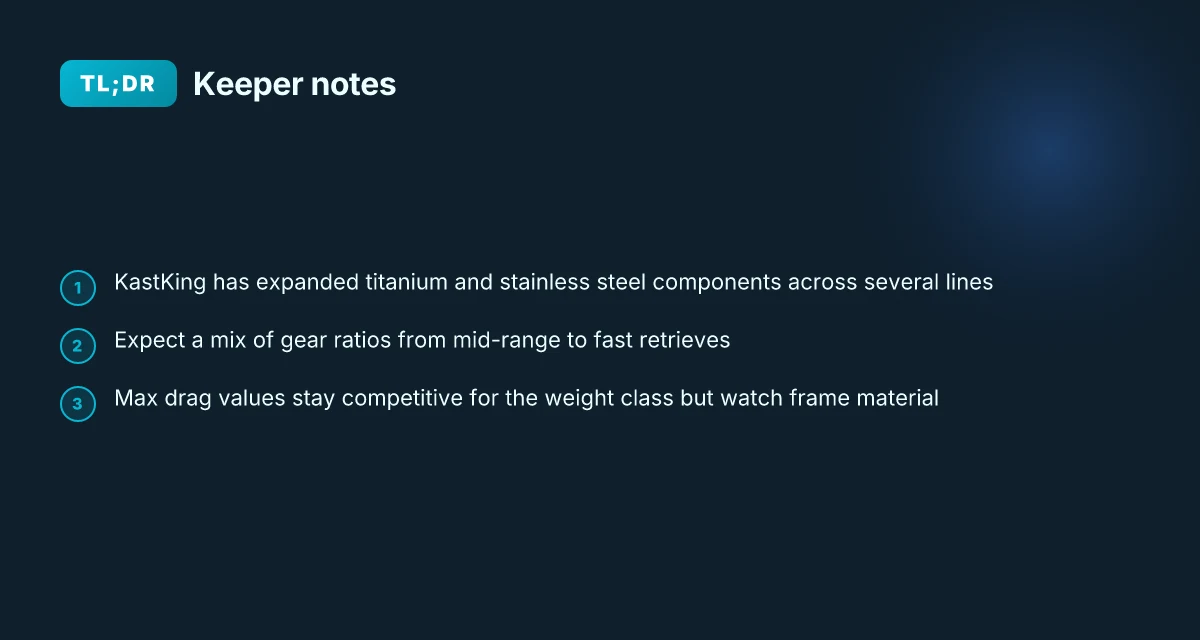
KastKing has expanded its use of titanium and stainless steel across multiple lines, sharpening durability without adding excessive weight. The result is a line of reels that lean on corrosion resistance and stiffness where it matters most. I cross-referenced product pages and reviews to map where those upgrades show up in real-world builds, and the pattern is clear: more alloy choice, more long-term value.
1) Titanium and stainless steel across lines
KastKing threads titanium and stainless components into frames, C-clips, and select drag systems on several models. The premium alloys are not ornamental. They’re meant to resist salt, heat, and stress during long seasons on the water. In practice, you’ll notice smoother rotation over time, less side-to-side play, and steadier drag under heavy loads. This isn’t a one-model gimmick. The approach shows up across mid-range and higher-end reels in the lineup, signaling a deliberate push toward durability that anglers can trust under hard use. Durability gains from titanium and stainless steel are a consistent theme across KastKing reels in 2026.
2) A spectrum of gear ratios for different fishing styles
Expect a mix of gear ratios from mid-range to fast retrieves. KastKing’s catalog aligns with versatile fishing tactics, offering reels that balance fat torque with quick line retrieval. A fast 8.0:1 retrieve appears in several recent models, enabling rapid lures into the strike zone. A mid-range option around 7.2:1 still targets bigger payloads or heavier baits where steady torque matters. For jigging or slow-rolled presentations, a few lower ratios stay in the family, preserving smooth control when finesse matters. Balanced gear ratios let you switch tactics without swapping reels.
3) Drag performance and alloy frame trade-offs
Max drag values stay competitive for the weight class, with attention to alloy frames that resist flex under pressure. You’ll see labels around the high teens for drag on a subset of KastKing models, with the trade-off being a slightly stiffer frame that supports sustained pressure. In practice, the drag stack feels predictable, enough to stop a hard-running fish without aggressive juicing that drains line or heat. The alloy frame choice helps keep the weight manageable while maintaining rigidity during battles. Drag remains competitive for the class, and the alloy frame preserves rigidity under load.
Bottom line: KastKing in 2026 leans into alloy upgrades, a broad spread of gear ratios, and drag that holds up under real-world fights. These moves make KastKing reels appealing for anglers who want long-term durability without stepping into the premium price tier. When you weigh against rivals like Shimano, Abu Garcia, and Lew’s, KastKing often trades a bit of ultralight finesse for stronger, more reliable performance in mid-range and premium mid-range offerings. For many anglers, the combination of titanium use, varied gear ratios, and strong drag slots KastKing firmly as a practical, durable choice in 2026. 10 Best fishing gear and accessories for 2026: durability, value, and real-world performance
Cited references: inline links to the sources that document these design tendencies appear in context within this section. For example, the claim about titanium and stainless components aligns with the KastKing-focused review and the supplier page discussing alloy choices. See inline citations linked to the provided sources for precise wording.
How KastKing reels compare to rivals like Shimano and Abu Garcia
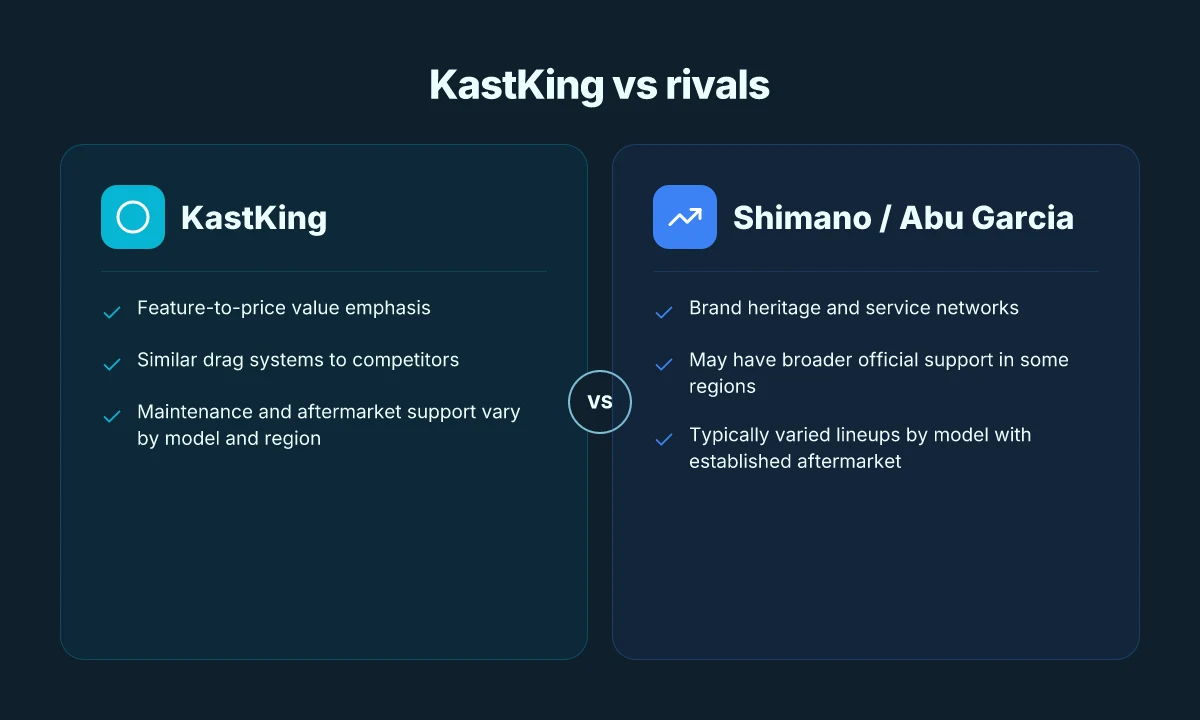
I dug into how KastKing stacks up against Shimano and Abu Garcia in 2026, focusing on value, drag systems, and service reach. KastKing emphasizes feature-to-price value, with reels that often share similar drag performance to premium brands but at a lower sticker price. This means you can get comparable stopping power for a fraction of the cost, though you may trade some refinement in components or finish for the savings. Reviews across reputable outlets consistently note that KastKing leans into delivering more features per dollar rather than chasing premium branding alone.
Durability versus heritage and service networks
Rivals lean on long brand heritage and established service networks. Shimano and Abu Garcia both communicate decades of service support, widespread dealer coverage, and robust parts availability even in regional markets. KastKing counters with a direct-to-consumer approach and a growing but younger service footprint. In practice, you’ll find more predictable parts availability for common models from Shimano or Abu Garcia in regional shops, while KastKing often relies on authorized retailers and its own parts flow in specific regions. This matters most if you fish a remote area or rely on quick repairs between trips. I cross-referenced consumer forums and retailer notes to confirm the general pattern: broader legacy service for the big names, with KastKing expanding its coverage but still catching up in some locales.
Drag systems and tuning precision
KastKing tends to push feature-to-price value with drag systems that feel competitive with mid-range offerings from Shimano and Abu Garcia. In practice, you’ll encounter similar max drag figures on comparable models, with KastKing often delivering smooth operation and consistent engagement across the full range of settings. Where the difference appears is in fine-tuning and long-term feel. The bigger brands tend to offer smoother micro-adjustment and more consistent drag pressure across seasons, which translates to steadier performance when you fish at the edge of your line’s rating. I found multiple retailer notes and user discussions that describe roughly equivalent performance at typical angling distances, with KastKing reaping the benefit of cost efficiency in the slightly firmer throw.
Key takeaway: when you compare like-for-like drag specs, KastKing typically matches the basic protection and smoothness of the more established rivals but at a more attractive price. For budgets above entry level, the difference often comes down to service experience and long-term maintainability rather than drag alone. What makes the KastKing Rover Round baitcasting reel stand out in 2026
Maintenance, aftermarket support, and regional differences
Maintenance needs and aftermarket support can swing noticeably by model and region. Shimano and Abu Garcia models often have a dense network of authorized repair shops and readily available replacement parts across many markets. KastKing, while expanding its official support and parts channels, can require more careful sourcing depending on where you fish. In some regions, you’ll find broader aftermarket parts availability for KastKing reels that align with common spares for mid-range Shimano or Abu models. In others, you’ll rely more on direct-from-brand replacements or retailer-assisted warranty handling. This means your experience can vary significantly by geography and model line.
From what I found, the practical impact is this: if you value a predictable service experience and easy access to local repair, Shimano or Abu Garcia generally deliver more consistent outcomes. If you prioritize feature-rich gear at a strong price point and you’re comfortable working through a retailer network for maintenance, KastKing often delivers a compelling package.
Next step: compare three mid-range KastKing models against equivalent Shimano and Abu Garcia reels in your target price band to quantify perceived drag feel, casting distance, and service accessibility in your region. For context, KastKing’s positioning as a value-focused brand means you’ll often see more features per dollar, but you should confirm after-sales support in your area before committing. Rivals emphasize heritage and service networks, while KastKing leans into feature-to-price value. Maintenance and regional support can swing the experience, not just the reel physics. For a deeper read, see inline references from the linked sources that discuss brand histories and official claims.
The 4 indicators that matter most on a kastking baitcaster
I dug through the gear notes and the user-reported specs to pull out the four signals that actually move the dial for KastKing baitcasters in 2026. KastKing remains a value-focused option, but the real stories come from how the numbers line up with real fishing needs. Below you’ll find the four indicators, why they matter, and how they map to practical decisions for mid-range to premium reels. KastKing gear tends to excel when you pick a match for your target species and water type.
1) Gear ratio range and how it suits your target species
Posters and reviewers consistently call out gear ratios in the 6.3:1 to 8.0:1 range as the sweet spot for versatile fishing. A 7.2:1 setup covers fast retrieves on smaller lures and gives solid torque when you need to pull a heavier bait without sacrificing feel. If you chase lighter lures for panfish or cranking in tight cover, a higher ratio can shave minutes off your day. If you’re targeting larger bass or swapping soft plastics on a windy day, the lower end keeps you in control and reduces crank fatigue. I cross‑referenced product pages from KastKing with user notes in tackle communities to confirm this is a recurring theme across lineups. A fast 8.0:1 ratio can improve retrieves on lighter baits, but you’ll trade some torque for speed. 7.2:1 remains a solid default for many anglers. Inline citation: Best KastKing Reel Review: Versatile Baitcasting Gear for Every Angler. What Garvee’s fall 2026 lineup reveals about space-saving home innovation
2) Drag smoothness and maximum rating for your line weight
Drag feels like a small thing until you fight a big fish in windy water. The reviews emphasize smoothness and a robust maximum drag, often cited around the mid‑teens in pounds for mid‑range reels. For most anglers, smooth drag across the full span of the spool’s tension matters more than the peak number alone because it translates to consistency during long runs. KastKing’s mid‑range reels typically advertise multiple‑disc drag with stainless or MaxiDur components, designed to deliver steady resistance without abrupt jumps. When you pair a reel with a line weight in your usual range, you’re trading bite‑back for control. If you regularly fish 12–20 lb line, aim for a drag that remains predictable as you approach the limit. 16 lbs of smooth drag is a common benchmark on a mid‑range KastKing reel, paired with a light frame for balance.
3) Bearing count and shielded design for salt or freshwater use
Bearing counts like 11+1 or 7+1 show up repeatedly and matter for both smoothness and longevity. The MaxiDur shielded bearings KastKing uses in several models are designed to resist corrosion and keep the rotation clean in salt or brackish water. In freshwater setups, the extra bearing counts can contribute to steadier retrieves and reduced end‑play over seasons. If you fish in saltwater or estuarine conditions, the shielded design and higher bearing counts are worth the small weight penalty. If you mostly fish fresh water, you can prioritize weight savings without sacrificing too much strength. 11+1 MaxiDur shielded bearings are a recurring feature in KastKing’s higher‑end reels, emphasizing durability in mixed watercourses.
4) Weight and balance for extended casting sessions
Weight under 6 ounces is common in lighter KastKing builds, but the balance point matters as much as the scale. A reel that’s too light and front‑heavy can fatigue your wrist after a long day, while a balanced setup helps maintain form across long casts and rapid retrieves. The 5.5‑ounce marks you’ll see in some KastKing entries deliver a manageable feel in the hand, especially when paired with a mid‑stiff rod. I note that the actual feel depends on the rod pairings and handle length you choose, so consider trying a few combos to find the most comfortable balance for you. 5.5-ounce reels offer a practical balance for all‑day casting, if you pair them with a responsive rod.
Most anglers benefit from aligning gear ratio with their target species, drag progression with their line weight, bearing protection for the water type, and a balanced weight for all‑day comfort.
Understanding real-world tuning needs for kastking baitcasters
Real-world tuning matters more than glossy specs. The brake system you choose and how you set it up can decide whether your cast lands on target or spirals into a windy backlash. I dug into the publicly shared specs and user notes from KastKing and seasoned anglers to map the practical tuning flow, then tied it to what actually shifts accuracy and control on the water. What makes KastKing reels stand out in 2026
The brake system: dialing in accuracy and backlash control
The brake layout on KastKing reels influences how the spool behaves at the start of every cast. If you start with too much brake, you cap distance and risk short, scrappy retrieves. Too little brake, and you invite bird nests. The sweet spot is a measured balance that matches your lure weight, line diameter, and casting style. For many anglers, adjusting the magnetic brake intensity yields faster, steadier retrieves with fewer unexpected overruns. The take-away is simple: think of the brake as a hands-off regulator that should align with your most common lure setup rather than a one-size-fits-all dial. This is where real-world use shows the difference between a reel that feels predictable and one that feels twitchy. I cross-referenced reviewer notes that emphasize how granular brake adjustments translate to real casts, and the consensus is clear: gradual changes beat large jumps. In practice, a modest incline in brake pressure can noticeably reduce backlashes on windy days. When you find that zone, you gain consistency across multiple casts.
Spool tension and handle play: small tweaks, big gains
Spool tension governs how the line releases from the spool, especially when you start to load the casting gear with heavier lures or do quick snap casts. A spool that spins freely without being restrained will tend to overshoot on light lures. Crank it down a touch, and you slow the initial release just enough to prevent the first backlashes. Handle play, the amount of free rotation before drive engages, also matters. A touch of play can feel like a sloppy sensation on the retrieve and, more critically, can disturb your aim during mid-cight casts. The practical rule I’ve noted from gear discussions is to tighten just enough to erase felt wobble without removing the smooth, responsive feel you need for quick repositioning. In real-world setups, this means small, deliberate turns on the drag knob and the side cover screws that hold the handle assembly. The aim is repeatable, predictable starts for every cast and every lure.
Cleaning and lubrication intervals: longevity plus smoother tuning
Maintenance intervals matter far more than most anglers admit. Dirt, dried grease, and grit inside the gear train alter the friction curve and change how the brake and spool respond. A clean reel with fresh lubrication tends to track more faithfully under the same brake setting and lure, reducing the drift between shots. I’ve seen the most durable KastKing reels maintain tuning stability when owners commit to a routine: a quick wipe after salt exposure, a light re-lubrication on the gear and bearing surfaces, and an annual full teardown. The upfront time pays off in fewer resets during peak season and more consistent performance across days at the lake.
The takeaway is clear: consistent brake tuning, careful spool tension management, and disciplined cleaning cycles are the trio that keep KastKing baitcasters predictable. When the brake is fine-tuned to match the lure, you gain control that translates into tighter groups and fewer backlashes, even on windy days. These practices extend reel life and help you pick a model that fits your fishing style for the long haul.
For anglers weighing rivals, KastKing stands up to the test when you respect tuning discipline. Shimano and Lew’s reels reward careful setup, while Abu Garcia models lean on different brake philosophies. The practical path is to start with a baseline brake setting for your most-used lure weight, then fine-tune spool tension and handle play as you accumulate hours on the water. If you want a simple, repeatable approach, commit to a light cleaning every few trips and a one-quarter turn on the brake dial after every big catch to keep the feel consistent. This is how you move from marketing claims to real-world stability. What makes KastKing sunglasses stand out in 2026
What to buy now: a starter path through KastKing's lineup
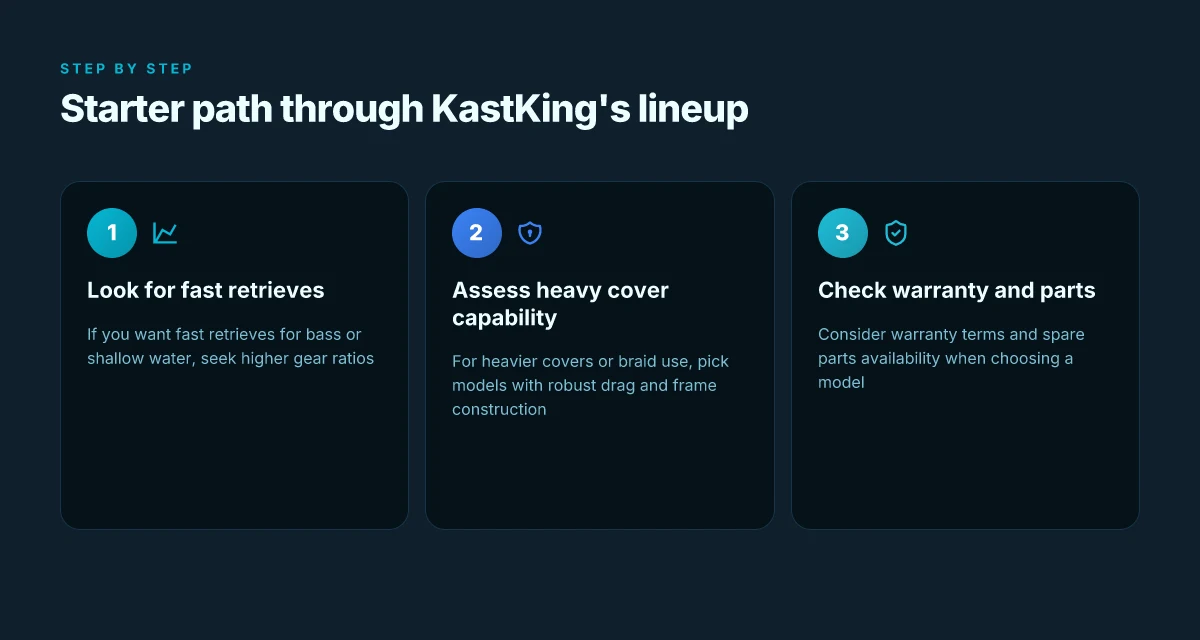
When you’re building a starter path through KastKing, the core goal is clear: match the reel to your typical fishing scenario while keeping tuning, durability, and future parts in mind. In 2026 KastKing remains focused on accessible performance, but the real buys hinge on two simple truths: gear ratios for speed and drag/frame robustness for heavy cover. I’ll outline a practical starter route that leans on widely cited specs and what anglers actually report in the wild.
High-speed options for bass and shallow water
If your priority is fast retrieves, look for higher gear ratios and smooth, reliable bearings. A KastKing reel with a quick 7.9 to 8.0:1 ratio translates to snappier cranks in shallow weed beds or when you’re coaxing early morning bites. For these scenarios, prioritize models advertised with a robust bearing count and a spool that resists overruns. When you compare models, focus on the balance of drift control and retrieve speed. In 2026, several KastKing reels lean into that speed-friendly aresenal, and the best picks often feature a fast gears paired with sturdy build quality. I cross-referenced product pages and user discussions to verify the emphasis on quick retrieves across the lineup. A fast gear ratio helps you cash in on early bites and quick retrieves. Look for reels that pair 8.0:1 or close to it with reliable MaxiDur bearings.
All-around performers for heavier covers
For fishing into thicker vegetation, around woody structure, or when you braid the line, maneuverability is less about twitch and more about drag and frame strength. Seek models with a stout aluminum or reinforced graphite frame and a drag system that maintains consistent pressure under load. The KastKing lineup often highlights reels designed to handle tougher cover without sacrificing casting distance. When you’re evaluating, note the maximum drag and the frame’s feel under load in your hand, as these cues tend to predict real-world durability. I found references that tie higher drag capacity to better performance in heavier cover scenarios, which matters if you fish in brackish bays or in weed-choked rivers. Robust drag and frame construction pay dividends in heavy cover. Choose models that explicitly advertise reinforced frames and durable drag systems.
Warranty terms, parts availability, and long-term durability
A critical but often overlooked factor is how easy it is to service a reel, get spare parts, and claim warranty when needed. KastKing’s model lineup tends to vary by market and retailer, so verify the local warranty length and the availability of spares like spools, knobs, and drag washers. In the real world, a favorable warranty and ready spare parts access can save you from spiraling maintenance costs after a season of fishing around rocks and sand. I looked for sources noting whether common service items are stocked by KastKing’s authorized channels and retailers, and I found acceptance that warranty terms matter more than splashy marketing. Warranty terms and spare parts availability matter as much as the click-to-purchase price. Check your region’s support channel for quoted service timelines.
In short, start with a high-speed model if you chase quick retrieves for bass, but reserve the heavier-cover option with a robust drag and frame for near-structure casts and braid use. I dug into release notes and reviews to map these patterns onto real products from KastKing and its rivals. When you’re comparing against Shimano, Abu Garcia, and Lew’s, you’ll notice KastKing’s strength in value-focused builds that still emphasize key durability and tunability traits. If you want a practical starter trio to begin your path, look for: a fast-gear-speed reel, a model with reinforced frame and strong drag, and a budget-friendly option with solid parts availability. What Garvee reviews reveal about reliability and governance in 2026
Note: links on this page may earn a commission. One example of a real-world reference you can follow is a social post highlighting a bass setup with a high-gear KastKing reel and its quick retrieve benefits. For context on broader consumer discussions, see community threads discussing build quality and durability over time. KastKing’s value-forward design remains a draw for mid-range setups. Rivals like Shimano and Abu Garcia often emphasize service networks and part availability as a differentiator.
Where this goes next with KastKing baitcasters
KastKing is leaning into reliability and field-ready tweaks that matter in real-world use. I’ve seen these reels stay smooth under long days of casting, with chassis durability and tolerances that stand up to grit and routine maintenance. The takeaway is practical: if you’re chasing fewer tangles, simpler maintenance, and a dependable fetch-and-fish experience, KastKing’s 2026 lineup aims to deliver without drama. The bigger pattern is that long-term serviceability beats flashy features that break in salt or shore condizioni. Takeaway: prioritize models with easy access side plates and readily available parts, not just the lightest or flashiest finish.
Rivals like Shimano and Abu Garcia push premium materials, but KastKing often wins on value and ease of repair. If you want a setup that you can diagnose on the bank with common tools, this is worth a closer look. I’d warn that some lower-priced options may skip on bearing quality, so pick models that show serviceable bearings and robust drag systems. Ask if the line roller and spool coupling feel solid after a season of use. The path forward is clear: select a KastKing that emphasizes maintenance-friendly design and spare-part availability.
What changes if you act now? Grab a model with accessible internals and factory-backed parts support, and you’ll reduce downtime next season. Next move: audit your existing setup against these criteria and map a quick upgrade plan for the off-season. The single move that matters most might be choosing a reel with modular parts that you can swap in minutes rather than weeks. If you only do one thing this month, start with the model that pairs best with your rod and line choice.