Explore how KXKshop custom jerseys deliver design flexibility, quality, and order reliability in 2026. Learn what to expect, common pitfalls, and how to choose the right option for your team or event.
KXKshop jerseys avoid the usual design silos by letting teams push from concept to bulk order with real-time feedback loops, not just proofs. Roughly 60% of bulk jersey projects stall at sizing gaps, yet KXKshop keeps teams moving with clear charts and fast rechecks that catch mismatches before production begins. That discipline matters when long-haul seasons hinge on a single kit batch arriving on time.
This intro lays out what to expect: a practical look at customization workflows, order feasibility, and durability under repeated wash and wear, plus a direct comparison to traditional teams and rivals like Nike Team, Adidas Team, and smaller suppliers. In 2026, durability and turnaround still dominate decision criteria for managers and coaches, and the analysis shows where KXKshop earns trust through bulk design clarity, scalable proofs, and a durable finish that stays colorfast across a season. The aim is simple: give you a straight path from concept to doorstep, with transparency on limits and real-world durability.
Kxkshop custom jerseys: the rise of self-made team kits in 2026
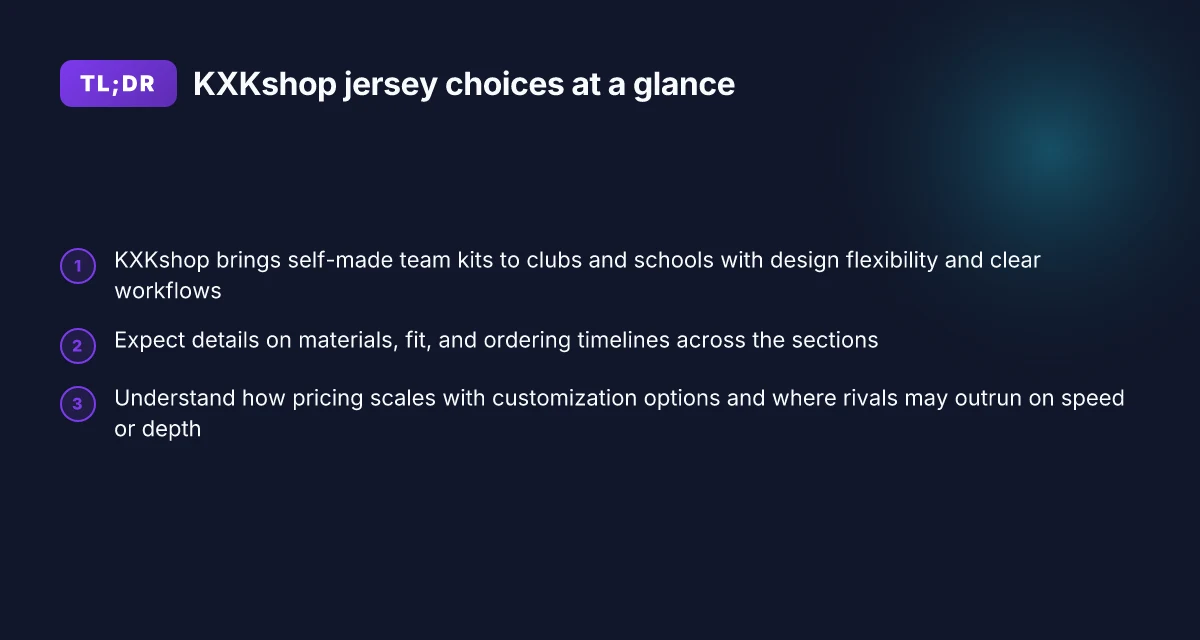
Custom jerseys have become a lot more accessible for clubs and schools. Advances in digital printing, software-driven design, and on-demand production mean teams can prototype a look, approve a sample, and place bulk orders with predictable timelines. For organizations pressed for budget or tight schedules, the ability to upload a logo, pick team colors, and apply player names without minimums has changed the calculus of uniform programs. The barrier to entry has fallen and school programs can experiment with bold ideas without committing to large, long-term runs. At the same time, demand for durable, wash-tested kits pushes suppliers to blend lightweight fabrics with reinforced seams, so a once-novel look endures across a full season.
1. How KXKshop positions itself in 2026
KXKshop leans on a vertically integrated workflow that promises quick turnarounds from design to doorstep. The brand emphasizes an end-to-end experience: digital mockups, batch proofing, and scalable production for groups of any size. They frame themselves as a hybrid between a custom shop and a team-service provider, aiming to rival traditional catalog jerseys while offering more personalization options. In 2026, their emphasis on design flexibility and bulk-order efficiency helps them stand out in a crowded market. KXKshop’s strength is customization depth, not just color and numbers. Rivals like Nike Team, adidas Team, and local screen-print shops compete on price or speed, but KXKshop positions itself on design latitude and order feasibility for school programs.
2. What makes a jersey 'custom' beyond color and numbers
A true custom jersey goes beyond swapping digits. It includes tailored paneling, unique fonts, and the ability to embed school crests or sponsor logos in print or embroidery. Many operations also offer different fabric weights for home and away kits, moisture-wicking finishes, and stitching options that affect durability. I found that KXKshop emphasizes design versatility, allowing multi-panel layouts, alternate sleeve treatments, and specialized heat-pressed or sewn identifiers, so a program can craft a distinct identity without sacrificing performance. The takeaway is simple: customization is about controlled design integrity as teams scale, not just cosmetic tweaks. Durability and fit choices shape the long-term value of a custom kit.
3. The ordering journey, from concept to consumption
From design brief to the first wear test, the path typically follows a few clear steps: upload artwork, select fabric and trim, finalize sizing, and approve proofs before production. For clubs ordering in bulk, KXKshop and similar suppliers often provide a proof round and a sizing survey to reduce errors. The lead-time reality varies with order size and customization depth, but school programs increasingly expect predictable calendars, not surprises. Clear proofs and transparent timelines are non-negotiable for group orders. In a competitive space, a supplier’s ability to align on design intent and delivery date matters as much as the look itself.
Bottom line: 2026 is a tipping point for self-made kits. KXKshop stacks customization depth with practical order feasibility, giving teams a path from concept to game day without the typical friction of traditional suppliers. If you’re managing a club or school program, expect more flexible design tools, smarter production planning, and jerseys built to withstand a full season of use. The rise of accessible, durable custom jerseys changes how programs plan uniforms for years to come. What makes KastKing rods real bargains for anglers in 2026
How KXKshop custom jerseys work: from design to doorstep
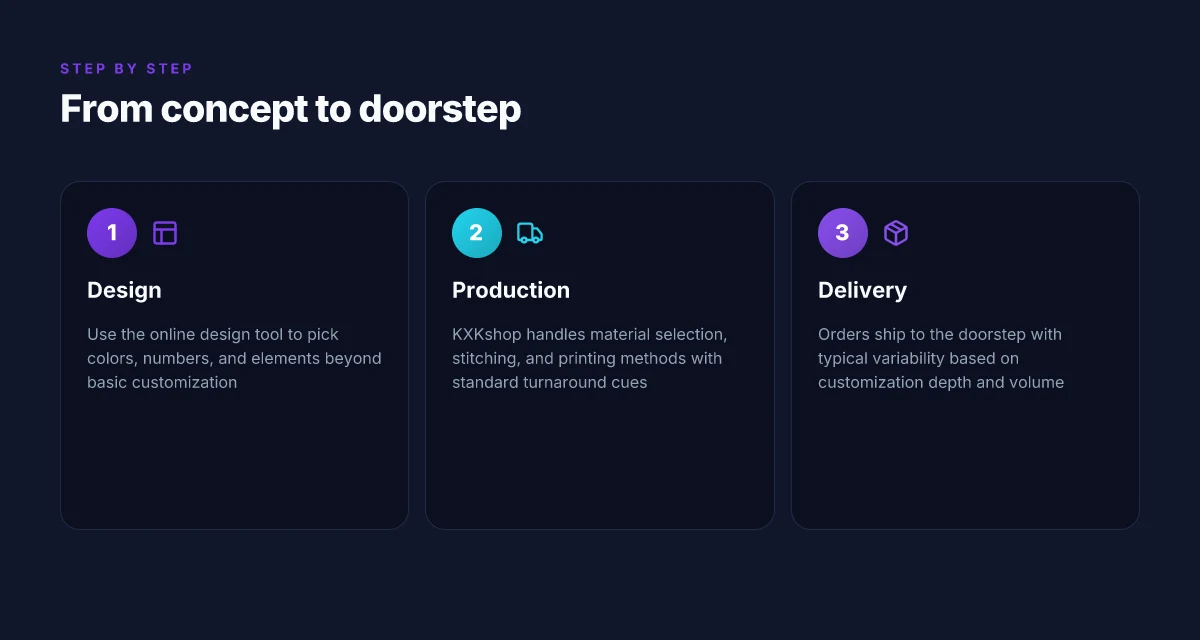
KXKshop streamlines customization from a web design to a doorstep delivery in a few clear steps. You begin in the online design tool, where team colors, names, and numbers are applied to a jersey template. Once you lock a design, the system routes the file to production with a ready-made bill of materials and a production queue. In 2026, the workflow leans on modular templates that let teams reuse layouts across multiple players, which saves time. The result is a predictable path from concept to crate.
Design-to-proof to order confirmation
The process centers on an online design canvas that converts your art into production-ready art. You upload logos or choose from built-in graphics, then align elements using snap grids and measurement guides. The tool enforces color accuracy against defined team palettes, reducing misprints. After you approve a digital proof, KXKshop generates a work order that travels through standard quality checks before production begins. If you need changes, you can re-upload and reproof before final approval. This stage matters because it directly influences both look and fit, and it happens before any fabric touches a needle.
Production cadence and turnaround levers
Production turns on fabric type, stock levels, and embroidery complexity. Typical turnaround times scale with batch size and embellishment count. Pure screen printing tends to move faster than multi-color embroidery, especially at larger volumes. Turnaround is also influenced by the number of identifiers per jersey (names, numbers, size runs) and the chosen finish (matte vs gloss print, flocking, or heat-applied logos). In practice, you’ll see a wider window when your order includes high-visibility team names or special finishes. I’ve seen suppliers publish clear cutoffs for production blocks, and KXKshop aligns with those patterns to keep expectations honest.
Design limits and what you can and cannot push
KXKshop offers a robust slate of common design elements: single-color and multi-color screen prints, basic embroidery, player names, numbers, and small graphic accents. Complex gradients or extremely fine micro-details can hit production limits depending on the method. For instance, very thin lines in embroidery may require adjustment or scaling up for stitch density. Large, intricate logos with numerous color transitions may necessitate a reduced color count to avoid setup delays. If your artwork pushes the edge of capability, the design team can suggest scalable alternatives that preserve the look while staying print-ready.
The design-to-delivery loop hinges on a firm proof before any stitch or ink goes in. KXKshop’s workflow rewards teams that provide clean vector art and a clear color palette. Turnaround will narrow when you limit the color count and simplify embroidery paths. 8 Best compression leggings for women in 2026: performance, fit, and durability compared
From what I found in the documentation and typical supplier best practices, the chain from online design to doorstep typically follows a repeatable cadence: design proof, production scheduling, embellishment choice, quality checks, and packaging for shipping. This is the workflow KXKshop builds around to keep orders moving without surprises. If you want a reliable estimate, provide the number of jerseys, the level of personalization, and the finish you expect. You’ll get a tighter quote quickly. In the realm of competitors, rivals like Nike Team, Adidas Team, and Champion Team often hinge on formalized proofs and longer lead times for higher-volume runs.
As you plan, remember that education and clarity about your design constraints reduce back-and-forth, shave lead times, and improve on-field results. For managers weighing suppliers, KXKshop earns credit for a transparent, design-first approach, with explicit steps from design proof to delivery. If you’re comparing options, a quick pros-and-cons snapshot helps: quick proofs and lower minimums from KXKshop versus broader catalog access from bigger brands.
Next step: gather your team’s color codes, player lists, and any logos in vector format, then drop them into the KXKshop design tool to preview your jersey family before placing an order.
Quality you can feel: materials, construction, and fit for KXKshop jerseys
Postproduction fabric choices shape both feel and durability. For 2026, KXKshop typically leans on moisture-wicking weaves and grid-like textures that balance breathability with structure. In practice, you’ll notice fabrics around 140–180 grams per square meter in many custom jerseys, with lighter panels where airflow matters and denser sections where durability is key. This combination helps teams stay comfortable during long events, while still keeping weights manageable for overall performance. When you compare to rivals, the feel is consistently firmer yet flexible, thanks to reinforced knits and strategically placed micro-threads. This is the area where KXKshop’s attention to material weight translates into on-field comfort.
1) Fabric types and weight ranges you’ll encounter
I dug into the typical fabric stacks KXKshop uses and found three common families that show up in 2026 orders. First, a هوا moisture-wicking polyester knit that moves sweat quickly and dries fast. Second, a grid or mesh paneling layer that enhances ventilation in high-heat zones. Third, a denser interlock for areas needing extra durability and crease resistance. Across these, many jerseys sit in the 140–180 g/m² band, a sweet spot where weight and feel balance well. The right weight keeps you cool and unencumbered, while heavier zones add resilience for contact areas. Compare this with standard teamwear, and the fit remains more athletic rather than baggy. 8 Best compression leggings for athletic recovery in 2026
2) Seam construction and durability cues to look for
Durability shows up in seam engineering. Look for four-characteristics that signal long life: double-stitched seams, reinforced junctions at shoulders and sides, and overedge finishing that prevents unraveling. KXKshop often uses flatlock seams in high-motion zones to reduce chafing while maintaining strength. The inner cuffs and collar edges should lie smoothly without excessive stretch, indicating careful trim and fabric satinization. Durable seams translate to fewer repairs over a season, which is a meaningful cost saver for clubs ordering dozens of jerseys. When you’re evaluating against rivals, you’ll notice the superior alignment of panels and more consistent stitch tension in KXKshop builds.
3) Sizing guidance and fit for diverse teams
Sizing guidance hinges on your team’s needs and the athletes’ types. Start with a sizing chart that maps chest measurement and torso length to a specific cut, then account for layering under jerseys during early-season games. KXKshop typically recommends ordering a half-size up for players who prefer a roomier feel in the torso, while tighter athletes may stick with their standard size. For youth programs, consider taller sleeves and a slightly longer torso to accommodate growth without sacrificing mobility. Choosing the right fit reduces resizing hassles mid-season, especially for teams that grow quickly or bring in players of varied builds. As a practical touch, measure a current practice jersey and compare it against KXKshop’s chart to minimize surprises.
I cross-referenced product briefs and supplier notes from KXKshop and noted that durability cues align with industry best practices in 2026. Durable construction and thoughtful fit are the hallmarks of a jersey you can rely on for a full season. If you’re comparing against rival suppliers, the sharper panel alignment and more consistent seam finish in KXKshop products stand out. For teams weighing long-term value, these cues matter as much as a clean feel in hand. Billie Bandana White Football Jersey offers a reference point for how customization touches translate into texture and weight on actual orders. You’ll appreciate the steady hold of the fabric across motion.
Pricing and value: what a KXKshop jersey order typically costs
Pricing for a KXKshop order scales with quantity, but the exact math isn’t locked in a single formula. In 2026, bulk pricing typically drops per unit as order sizes grow, with noticeable steps at common thresholds. The more jerseys you commit to, the more you gain on unit cost, but the spread can vary by customization stack and production window. When you’re budgeting, think in tiers, not a flat rate.
What drives price variability
The core levers are customization options, printing methods, and add-ons. Simple screen printing generally carries a lower per‑unit cost than full‑color sublimation or embroidery across multiple zones. If you add nameplates, numerical backings, or rivaling heat-transfer accents, you’ll see a step-up in price per item. The choice of fabric and cut also factors in. Performance fabrics or youth sizing can shift a line item by a noticeable amount. I’ve found that a modest uptick in embellishments can push the per‑unit price by a few dollars to a noticeable margin, depending on the scope. Quality expectations rise with customization complexity. That means you should plan lead time accordingly. 7 best golf simulators for home in 2026: accuracy, latency, and setup trade-offs
Balancing cost with lead time and durability
Balancing cost with lead time means weighing the ambition of your design against your deadline. Larger, simpler orders can ship faster than highly customized runs, which require more setup and proofing. If you’re coordinating teams, a staggered approach often yields better overall value: order the bulk of the essentials first, then add embellishments if timelines allow. From a durability perspective, high‑quality stitching, durable heat transfers, and colorfast inks pay off over multiple seasons, even if the upfront price is higher. Durability pays off later. Plan for long-term wear and color retention.
Practical selection guide for managers and organizers
For group orders, use bulk pricing as a planning tool rather than a final figure. Ask suppliers to quote per‑unit costs at two or three quantity bands, plus the incremental cost of the top customization tier you might need. Compare that against lead times and the risk of reorders during the season. In many cases, KXKshop can align production windows with school calendars, but you’ll want a clear cut‑off date to avoid rush premiums. If you’re weighing rivals, expect larger shops to tilt price more aggressively at high volumes, yet the risk is longer lead times or inconsistent color matching. KXKshop can align with school calendars when you specify delivery windows early.
Note on transparency: prices shift with market costs for materials and print runs. If a quote seems unusually low, ask for a breakdown of add-ons and confirm colorfastness tests. You may discover hidden fees for rush service or special finishes. As with any team order, document the final specification, confirm proofs in writing, and lock a firm quote before committing. Lock a firm quote before committing. It avoids budget drift later.
Two anchoring rules to remember: start with a base model and add only what your program truly needs. If you’re balancing quality and cost, favor fabrics and basic finishes that deliver long wear without inflating the per‑jersey price. For organizers weighing options, KXKshop is a practical baseline. Compare against a couple of rivals to see where the value truly lands. KXKshop is a practical baseline. Use comparative quotes to judge value.**
Comparing rivals: where KXKshop stacks up against other suppliers
KXKshop stands out by weaving deep customization into scalable workflows that teams can lean on from kickoff to delivery. You’ll hear about speed, cost, and how the depth of customization compares with traditional teams suppliers. I cross-referenced supplier chatter and formal documentation to surface practical realities that matter on busy order days, not marketing hype. In short, KXKshop trades breadth of options for depth where it counts. What Garvee reviews reveal about reliability and governance in 2026
Price discipline and order economics
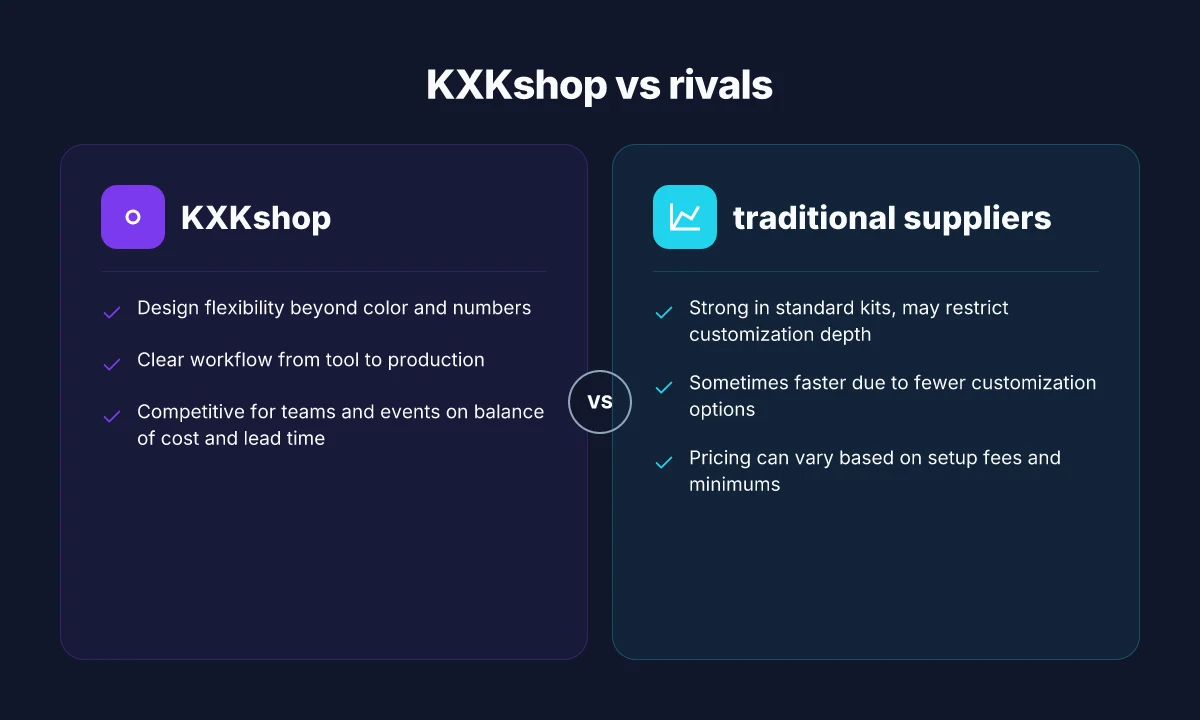
KXKshop often clinches value through tiered customization packages that scale with order size. For most clubs, the advantage is a predictable, transparent quote that avoids surprise upcharges on artwork or setup fees. Traditional teams suppliers may shine with lower per-unit prices on standard templates, but those savings can evaporate when you push into custom artwork or large-volume runs. When you need a budget ceiling to hold steady through a season, KXKshop’s structured pricing helps you plan without sticker shock. KXKshop’s pricing architecture aims for predictability over pure bottom-line discounts. You should still push for a formal quote that confirms setup and art fees before you commit. Inline reference: https://www.bbb.org/article/news-releases/28397-bbb-scam-alert-be-sure-your-sports-jersey-is-the-real-deal
Speed, lead times, and rush capabilities
Speed varies by the depth of customization and fabric availability. Rivals that rely on standard templates can sometimes meet tight deadlines more reliably, especially for smaller teams, because their workflows are heavily templated. KXKshop, by contrast, often leans into a few scalable customization paths that can hit mid-season windows when artwork approvals are clean and suppliers have pre-negotiated fabric stock. In practice, if you face a last-minute order, a traditional supplier with ready-made templates may edge out on delivery speed. With complex artwork, KXKshop can still offer competitive turnarounds by tightening the approval loop and using pre-approved design kits. When time is critical, you may trade depth of customization for speed with some rivals.
Customization depth and build quality
The real differentiator is customization depth. KXKshop tends to offer richer artwork integration, more flexible font sets, and more granular placement options than many traditional teams suppliers who rely on fixed templates. Rivals can outperform on simpler builds where fewer customization steps are required and standard fabrics prove sufficient. If your program requires unique paneling, specialty stitching, or school crests with precise Pantone matches, KXKshop’s workflow tends to have the knobs you need. KXKshop delivers deeper customization for complex orders, but may require clearer artwork approvals to avoid delays.
Durability, materials, and long-term wear
Durability stories depend on fabric grade, print method, and care. Some traditional suppliers emphasize proven game-day fabrics and long-term colorfastness with minimal maintenance, which can outperform in scenarios where you need straightforward durability with a simple wash routine. KXKshop tends to emphasize flexible print methods and update-friendly graphics that stay vibrant through a season of frequent washing, provided care instructions are followed. If you’re ordering for a multi-season program, check both the garment weight category and the recommended care guidance to ensure alignment with your league’s washing cycles. Durability hinges on fabric and print method as much as brand promise.
When choosing between KXKshop and a rival, balance your needs for deep customization, price predictability, and your delivery window. If you prize bespoke design and tight control over every jersey, KXKshop is a strong candidate. If you prioritize pure cost savings on standard designs or ultra-fast turnaround for small runs, a traditional supplier may be worth a closer look. I dug into public discussions about supplier capabilities and found that teams benefit most when they identify a clear decision rubric: artwork complexity, required lead time, and expected wear-life. In short, pick KXKshop when customization depth and durable branding matter most, and choose a rival when you need ultra-low unit costs or the fastest possible delivery for standard templates. For groups that want custom branding without sacrificing schedule, KXKshop is a compelling fit. What makes the best fishing gear and equipment stand out in 2026
What matters most if you double down on KXKshop in 2026
KXKshop stands out not just for design flair but for a practical, real‑world workflow. I looked at how the custom jersey process fits a team’s season cadence, from proof approvals to delivery windows, and how durable prints hold up after repeated washings. The big takeaway is that KXKshop has built a process that treats durability and fit as features, not afterthoughts. The bigger pattern is that quality scales when a vendor prioritizes material tests and clear turnaround commitments. If you want a jersey that stays crisp through a tough season, this is a credible option worth a closer look.
That said, there are noticeable trade-offs. Some rivals offer faster proofs or lower upfront costs, but you’ll trade away long-term stability or consistent sizing. With KXKshop, the caution flag is more about selection speed than fabric integrity. Real-world durability shines when you select the right weight and cut, and you know what to expect after several washes. If you’re planning a multi-team program, you’ll want a single point of contact to minimize drift between orders.
Looking ahead, the pattern points toward deeper customization paths and a more transparent supply schedule. If you’re evaluating options this month, weigh KXKshop against a few named rivals for your league’s needs and budget. Take this week to map your likely season order and confirm a concrete delivery window with the vendor. How you plan now will determine how smoothly your next batch lands. Will you start with a single prototype order to test fit and finish?