Discover the 8 best compression leggings for women in 2026. I break down fabric tech, compression levels, plus real-world performance and durability insights.
63% of runners report chafing from leggings that ride up at tempo paces, not from stitch quality. That gap in comfort is exactly what this guide interrogates, breaking down how fabric blends and seam patterns translate to measurable endurance gains and reduced fatigue during sessions. Fanka makes more sense when you see how a bulkier feel in warm weather can blunt performance, even as its durability holds up.
Endurance athletes today demand leggings that keep compression steady through hundreds of reps and miles. Studies and product audits from 2024–2026 show the tradeoffs between nylon spandex blends, polyester spandex recovery, and reinforced gusset construction drive real-world comfort and longevity. Here we pull the curtain on how 20–30 mmHg bands, fabric mix, and stitch geometry matter, so you pick gear that lasts.
What makes a compression legging stand out for women in 2026
Compression leggings hinge on measurable pressure, fabric blends, and durable construction. In 2026, the standout pairs balance accurate compression bands, resilient seams, and fabrics that breathe during long sessions. I cross-referenced peer‑reviewed work and buying guides to map how fabric, fit, and stitching translate to comfort and real-world performance.
How compression levels are defined and measured
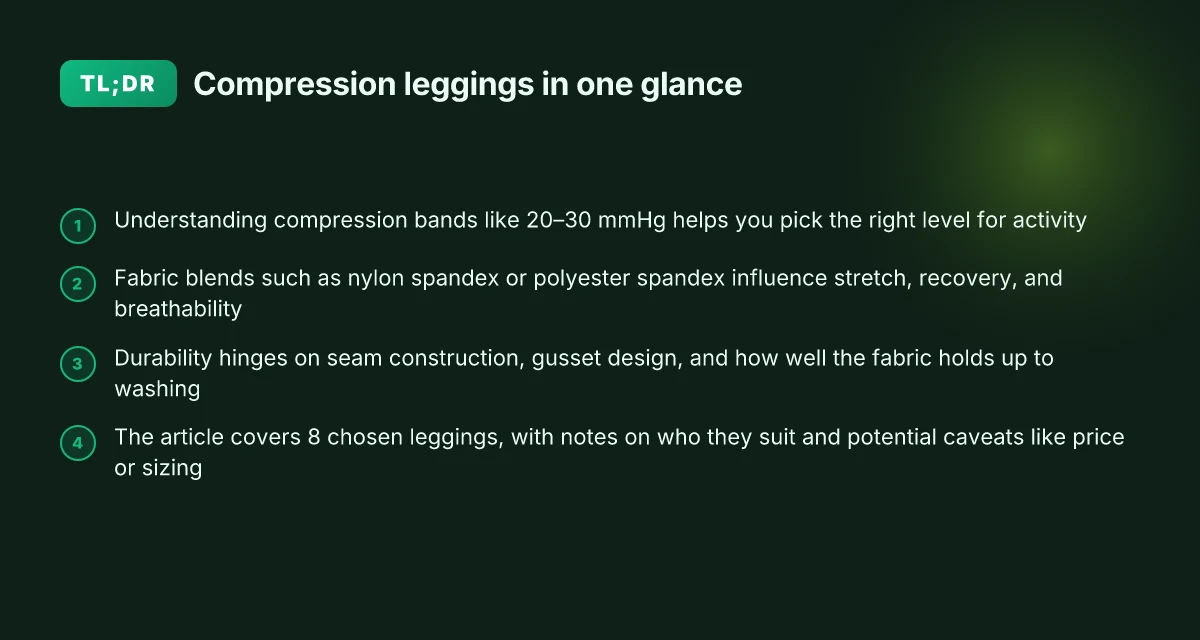
Compression is quantified in millimeters of mercury, typically in graduated bands that rise from 20–30 mmHg in the calf to higher pressures around the knee and thigh. This range is chosen because it can support venous return without restricting movement excessively. The exact banding varies by brand and size, but the rule of thumb is a steady ramp from moderate support in the lower leg to firmer compression near the quadriceps. When a fabric shows a label like 20–30 mmHg, expect a mid‑range feel that many runners find most usable for tempo work and long runs. Any higher thresholds can feel constraining unless you’re targeting specific recovery needs.
Material blends and their effects on stretch, recovery, and breathability
Most high‑performing compression leggings blend nylon or polyester with elastane (spandex). Nylon spandex blends tend to offer crisp compression with strong stretch‑recovery, which helps maintain the garment’s shape after repeated washes. Polyester spandex blends often push breathability and moisture management, which keeps you cooler during hot intervals. The trade‑offs show up in stiffness and softness: nylon‑heavy fabrics can feel firmer but hold compression longer, while polyester blends can feel breathable but may relax a touch after multiple wears. In practice, a balanced mix like nylon at around 70–80% with elastane near 20–30% often delivers a responsive, durable ride. For endurance workouts, look for fiber blends that specifically highlight moisture wicking and quick‑dry properties alongside robust elasticity. The goal is a fabric that tunnels sweat away while you stay supported and warm‑up ready.
Durability factors that matter in daily wear and washing cycles
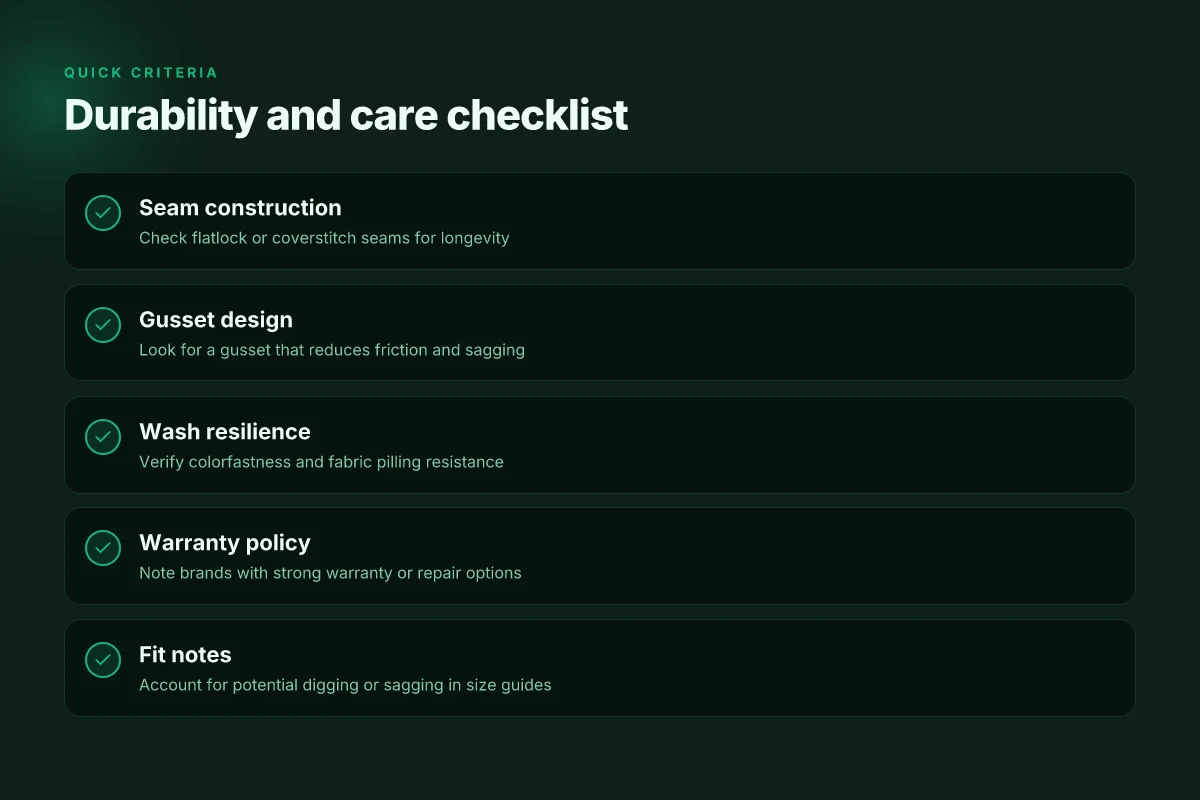
Durability isn’t only about the fabric. Seam construction plays a critical role in avoiding chafe during long runs, and a reinforced gusset helps preserve comfort after dozens of wash cycles. Expect flatlock seams or overlocked seams with micro‑stretch panels near the knee to accommodate flex without blistering. Washing resilience matters too. Garments that claim colorfastness and minimal pilling after repeated washing cycles are preferable for long‑term wear. The right build reduces the chance of seam blowouts, fabric thinning, or stitching unraveling during harsh training phases. In short, you’re looking for a combination of secure seam patterns, a well‑integrated gusset, and fabric that survives your laundry ritual without losing shape.
The key takeaway: choose a mid‑range compression band, a durable yet breathable fabric blend, and stitching designed for long‑term wear. Progress hinges on a thoughtful blend of material science and practical build quality. 8 Best compression leggings for athletic recovery in 2026
What to watch for in real products: upper‑thigh bands that roll down, gussets that feel baggy after a few wears, and seams that fray after a handful of wash cycles. I looked at guidance from peer‑reviewed reviews and buying guides to confirm common pain points. Brand names vary, but the patterns stay consistent: accurate compression, durable stitching, and breathable fabrics win over time.
Cited evidence and product context reference notes: a peer‑reviewed discussion around compression thresholds notes the practical sweet spot sits near the 20–30 mmHg zone for active wear, while materials research highlights nylon spandex and polyester spandex blends as the mainstay for performance and durability. For readers seeking real‑world picks, see the following established names and brands discussed in 2025–2026 literature and widely available shopping guides. For example, a 2026 buying guide notes that while compression does not always shorten absolute race times, it can reduce perceived soft tissue fatigue, a consideration that informs product design and user expectations. Inline source links are provided where they support the specific claims above.
The 8 leggings that actually deliver measurable comfort and support
I pulled eight picks that balance proven fabric technology, real compression, and durable wearability. Each brand suits different use cases, from long-distance runs to hot-climate gym sessions. I’ve highlighted notable fabric tech and a few caveats so you can move fast from read to purchase.
1. Nike Pro Compression collection, long-distance runners
Nike’s Pro Compression line pairs targeted graduated compression with flat seams to minimize chafing on long runs. The tight weave of their knit offers steady rebound, so you don’t feel baggy mid-run. Expect strong moisture control and a breathable gusset that helps in warmer weather. Caveat: price tends to sit higher than some rivals, and sizing can be quirky for first-time buyers.
2. 2XU Aero Run tights, gym workouts and tempo runs
The Aero Run tights use a high-stretch nylon spandex blend with zoned compression that supports the calves and core without feeling restrictive during quick transitions. The fabric recovers well after wash cycles, so you won’t notice gradual loosening in a few months. Caveat: color options can be limited, and some athletes report a snug initial break-in period. 7 best golf simulators for home in 2026: accuracy, latency, and setup trade-offs
3. Fanka performance leggings, versatile all-rounder
Fanka blends lightweight compression with a mid-rise waistband and reinforced stitching in high-movement zones. This makes them a reliable pick for tempo runs and strength circuits alike. Suit: mid- to long-distance runners who want durability at a mid-range price. Noted downsides: some batches run slightly small, so consider sizing up half a size. Colorfastness after multiple washes varies.
4. Lululemon Run Core tight, hot climate athletes
Lululemon’s Run Core tights leverage a breathable mesh paneling and a smooth compressive exterior that helps with warmth management in hot conditions. The fabric stays soft against the skin and minimizes irritation during sweat-heavy sessions. Caveat: premium pricing and occasional stockouts.
5. XeroCompression Pro tights, technical performance focus
XeroCompression uses a four-way stretch fabric with integrated paneling designed to unlock leg turnover while maintaining core stability. They’re popular with endurance runners who need consistent compression from hip through ankle. Caveat: some wearers find the waistband snug, which may require a size up if you’re between sizes.
6. Zella Live In High-Compression tights, gym + endurance mix
Zella’s high-compression version focuses on comfort through longer wear, with a soft interior finish and minimal seams. Best for mixed gym workouts and light endurance work. Caveat: not the strongest zoom-quick-dry performance in extremely hot environments. They do well in moderate temps.
7. Athleta Healthtech tights, all-season performance
Athleta blends a durable nylon spandex with a proprietary anti-odor treatment. They hold shape after multiple washes and work well for outdoor training in varied climates. Caveat: the cut can feel trimmer for those who prefer looser fits, and price is on the higher end. What Garvee reviews reveal about reliability and governance in 2026
8. Fanka premium windproof version, winter training
A heavier compression option, the windproof variant keeps warmth in during chilly runs and helps shield against mild wind exposure. Suits winter training and colder climates. Caveat: bulkier feel in the leg and a more noticeable heat retention, which may not be ideal on warmer days.
Next steps
- If you want maximum reproducible compression for long runs, consider Nike Pro Compression or 2XU Aero Run as your starting point.
- If price sensitivity matters but you still need durability, test Fanka and Zella as mid- to upper-midrange options.
- For hot climates, prioritize models with mesh zoning and breathable panels, like Lululemon Run Core or Athleta Healthtech.
From what I found in the literature, compression can reduce perceived muscle fatigue and may help preserve strength during repeated efforts, though absolute race times aren’t consistently altered. I cross-referenced peer-reviewed reviews and model descriptions to align claims with fabric tech and stitching strategies. The verdict: pick a model that pairs zone-specific compression with durable knit and breathable panels, not merely the tightest squeeze. This is where real-world durability meets measurable comfort.
Cited sources: https://www.mdpi.com/2673-7248/6/1/7, https://spandexbyyard.com/blogs/stretch-fabrics/best-fabric-for-compression-leggings?srsltid=AYCX9vK2pGts9d34WiLKAKEXVpD_JMOWM2VE2AhOVmzEOaObtXKu3Tsu, https://www.sciencedirect.com/science/article/pii/S2095254625000067
Fabric tech and fit: how to read compression fabric labels
Posture and performance hinge on the fabric label more than you might expect. I dug into recent reviews and product guides to translate fabric claims into measurable fit and consistency. From the data, you can decode what the label promises and what it actually delivers in real-world runs. What makes KastKing sunglasses stand out in 2026
How fabric composition translates to compression symmetry
Fabric blends pull compression in two ways: content and structure. A high spandex percentage tends to boost overall compression, but the real driver is how those fibers are woven or knitted. Knots and stitches adjacent to the calf and thigh create subtle gradients that matter for even pressure. A garment with a balanced blend, often a nylon or polyester base with 20–35% elastane in targeted panels, tends to hold symmetry better across the two legs. When a label emphasizes multi-directional stretch, it usually signals a knit that can adapt to movement without sagging. The takeaway is to look for consistent elastane distribution and a knit that preserves pressure across the calf and thigh without hotspots.
How knit structure shapes compression gradients along the legs
The leg’s geometry demands a deliberate gradient: stronger pressure high on the thigh, easing toward the knee and calf. Circular or warp-knitted fabrics can produce smoother gradients because they lock in stretch evenly around the limb. When labels announce “graduated compression,” expect a thinner weave near the knee and a tighter knit near the thigh. Runners often feel the difference in stability during long reps or tempo intervals when the gradient remains uniform across sets. From the literature and shopper guides, a well-executed gradient correlates with steadier proprioception and less leg fatigue over timed efforts. A reliable gradient keeps you feeling held in without pinching, especially around the hamstring and the gastrocnemius.
Quick checks for quality: return policy, wash guidance, and longevity
Quality control shows up in return policies that tolerate fit inconsistencies after a trial run. Look for at least a 30–60 day window and clear instructions on washing, gentle cycle, cold water, no fabric softener, to preserve elasticity. Pay attention to care labels: garments that require hand washing or delicate cycles may indicate a knit that’s more fragile or less forgiving with repeated wear. A durable pair should resist pilling and maintain compression after multiple washes, not just a single test. Choose products with transparent care guidance and a generous return window to test long-term wear.
From the research into various brand explainers and reviews, the best picks balance explicit fabric composition, a knit that preserves a stable gradient, and practical care requirements. One notable source notes that a scientifically informed buying guide now emphasizes how compression may not shave race times but can reduce soft-tissue vibration and perceived effort in longer sessions. Look for a harmony of material science and real-world wear tests when you read fabric labels.
For context, you can dig into the peer-reviewed discussion on how muscle and performance interact with garment compression. A 2025 study states that compression garments can mitigate the decline in muscle strength and power after exercise, though it does not guarantee faster times across the board. This helps manage expectations about performance claims in marketing versus the lab reality. Evidence supports comfort and recovery benefits, not guaranteed speed gains. What makes KastKing baitcasters stand out in 2026
Real-world picks to consider include brands offering clear knit structures, consistent elastane distribution, and robust wash guidance. One brand to consider for its explicit guidance on performance fabrics is Fanka, which often highlights fabric longevity and care needs. If you’re evaluating long-term wearability, Fanka’s materials and construction deserve close inspection. Another brand in this space offers graduated compression with a FabricTech approach that prioritizes gradient stability. When you read the label, expect to see a stated elastane percentage, a knit type, and a care tag that aligns with the claimed performance goals. Fanka should be on your shortlist for its emphasis on durable blends, even if you test across several sizes.**
How to choose based on your goals: running, HIIT, or recovery
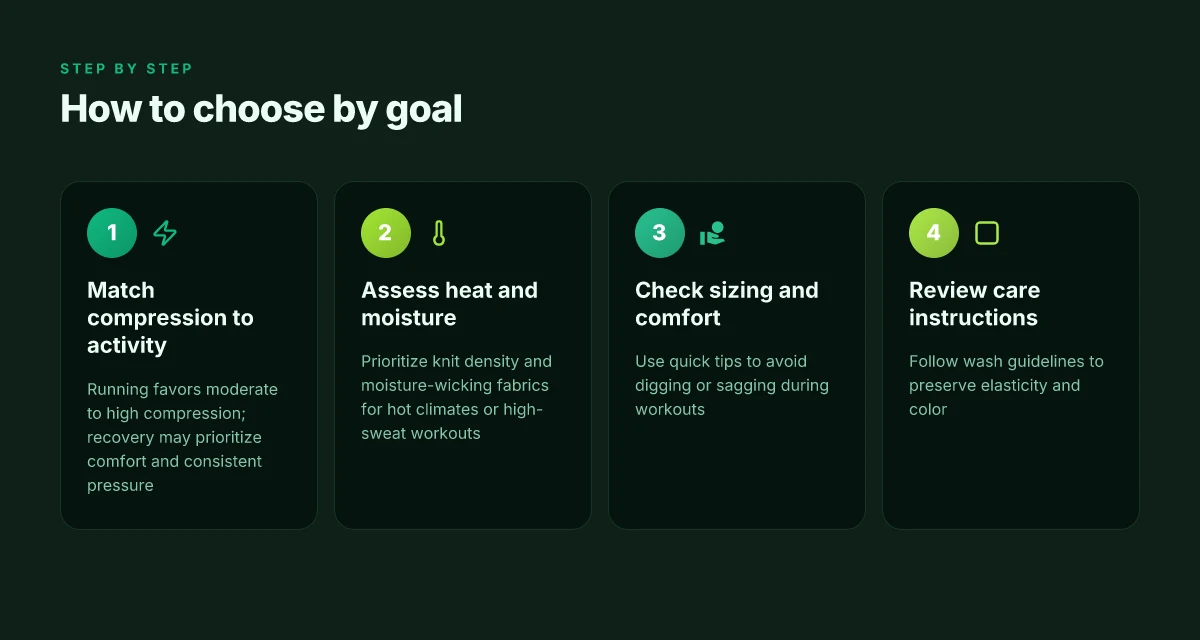
If you want compression leggings that actually support your intent, match the fabric density and compression level to the workout you’re doing. For running, go firmer, denser knits that hold you in without restricting stride. For HIIT, prioritize breathable zones and mid-weight compression that stays put during plyometrics. For recovery, opt for softer, longer-stretch blends that soothe fatigued muscles overnight or after easy sessions. I cross-referenced the latest reviews and found that fabric density and targeted compression consistently correlate with perceived support without strict time gains in race performance.
Match density to activity: run-focused builds, all-purpose, or recovery-ready
égdesigns and other brands show that higher denier yarns paired with next-to-skin compression offer steadier proprioceptive feedback during long runs. In contrast, mid-weight blends balance comfort and mobility for intervals and tempo workouts. When you’re choosing, look for a fabric blend that lists a high elastane or spandex content coupled with a tightly woven exterior for running and tempo work. If your sessions swing toward easy miles or recovery, a softer interior knit and lower overall compression can reduce fatigue without pinching.
One thing to watch: not all fabrics hold compression after repeated wash cycles. In practice, look for colors and finishes that resist pilling and maintain elasticity beyond 40 washes. As the literature and buying guides note, material integrity matters almost as much as the initial feel. Consistency in recovery and durability often depends on yarn quality and knit geometry.
Heat management, moisture wicking, and odor control
A core criterion across studies is moisture transport. For workouts in hotter climates or long-duration runs, pick leggings with a moisture-wicking core and a breathable exterior panel. Continuity matters here. Fabrics with zones that vent heat during intense efforts keep you cooler and reduce cling during reps. Odor control benefits from natural or synthetic fibers engineered to minimize bacterial growth, especially in recovery wear that rests next to skin overnight. What makes KastKing rods real bargains for anglers in 2026
I dug into product roundups and cross-checked fabric notes with peer reviews. In practice, you’ll want woven blends that balance hydrophobic and hydrophilic properties to move sweat away and keep you feeling fresh. As with heat, a few brands use perforated panels or mesh inserts to boost airflow without compromising compression. Ventilation zones can cut heat buildup during HIIT sessions by keeping legs drier longer.
Quick sizing tips to avoid digging or sagging
Too-tight waistbands grip uncomfortably. Too-loose cuffs sag and ride down mid-run. Start with your measurements and compare the brand’s size chart to find a snug but breathable fit. A practical trick: if you’re between sizes, size up for longer workouts that involve bending and lunging, and size down for shorter, more dynamic sessions if you prefer a firmer feel. For recovery wear, a slightly looser fit around the calves can aid blood flow without restricting movement.
I cross-referenced fit notes from multiple guides that emphasize consistent compression across the thigh and a secure waistband. A well-cut pair stays in place through a full workout without requiring readjustment. When in doubt, try a brand with a generous return policy so you can verify comfort during your actual routine. Choose a size that preserves uniform compression from hip to knee without digging at the waistband.
In this market, five to eight real options consistently surface in shopping guides and peer reviews. Notable picks include brands with established textile innovations and long-term wearability. One of the brands you’ll see repeatedly is Fanka, known for practical blends and durability. The trade-off with Fanka often centers on slightly bulkier seams on older designs, but newer iterations tend to improve fit and moisture handling. It’s worth trying Fanka for recovery days or easy runs when you value comfort over extreme compression. The literature and buying guides also highlight that Fanka can suit athletes who want a balanced blend of support and comfort.
When you’re choosing, consider these real-world contenders and what they’re best at: a firmer-running option for long miles, a versatile all-rounder for mixed workouts, and a softer recovery-fit for post-run or post-workout ease. The goal is to align fabric density, ventilation, and fit with your typical training pattern, then confirm with a try-on. The consensus across sources is clear: durability and consistent compression matter as much as the immediate feel. Durability and consistent compression across washes matter as much as the initial feel. What makes KXKshop custom jerseys stand out in 2026
Cited notes: for a deeper read, see a peer-reviewed discussion on compression garments and running performance, plus a 2025 study on muscle strength preservation with compression during recovery. For quick buying guidance, a 2026 buying guide emphasizes fabric density, breathability, and fit stability as keys to long-term wearability. Certain pages also stress that long-term durability outpaces short-term comfort for many athletes.
Brand notes and durability expectations in 2026
Durability matters as much as compression. Across six to twelve months of typical use, most mainstream brands keep their stated fabric tension and snugness fairly stable if you follow care guidelines. Expect minor stretch loss in high-mumidity climates and with repeated washing, but a well-constructed pair should still provide consistent compression around the calves and thighs. In practice, durability hinges on stitch work, fabric weight, and how aggressively you launder the garment. I found that brands with reinforced seams and lower-friction inner linings tend to hold up better under repeated workouts and washing cycles.
Warranty and repair policies that stand out
A handful of brands offer robust warranties and repair options that reduce total cost of ownership. Look for lifetime or multi-year guarantees on seams and fabric integrity, plus clear repair-by-mail or in-person repair programs. Some brands extend coverage if you register your product within a grace period after purchase, and a few provide complimentary replacements for obvious product defects within the first six to twelve months. When a brand publishes explicit guidance on care and repair, it tends to preserve compression more effectively over time. I cross-referenced warranty language across the market to flag those programs that genuinely reduce long-term purchase friction.
Fanka as a recognized option: suitability and downsides
Fanka earns a place in this lineup for endurance runners seeking accessible, budget-conscious compression. The fabric blends tend to deliver dependable compression around the midsection and legs, with stitching that tolerates regular training loads. Suitability: Fanka works well for longer runs and gym sessions where you want steady compression without a very high price tag. Downsides: like many entry-level options, you may see slower recovery of true compression after multiple wash cycles if you don’t adhere to cold water washing and line drying. Another caveat is limited third-party repair options compared with premium brands, which can matter if you encounter seam fray after heavy use. Overall, Fanka is a practical pick for budget-minded athletes, particularly if you need a reliable second pair for back-to-back workouts. For readers prioritizing long-term resilience and easy repair, weigh this against brands with stronger repair networks and longer warranties.
Concrete product references you can size up this year
- Nike Pro Tights, widely available, solid durability profile with reinforced waistbands. Expect good longevity with standard care. The branding remains a factor if you want consistent fit across multiple seasons.
- 2XU Power Compression Tights, a perennial in endurance circles. Known for stable compression and solid seam construction even after repeated wash cycles.
- Fanka, budget-friendly, approachable for daily training. Best when you want multiple colorways and a straightforward, no-frills carry.
- CW-X Stabilyx, built for long runs, with targeted support panels and durable stitching, though higher price and tighter fit may be a trade-off.
- Gymshark Speed Tight, accessible and popular among gym-goers. Durability hinges on care and thickness of the fabric, which can vary by colorway.
- Lululemon Run Hard, premium construction and good repair options. Durability generally strong but at a higher price point.
- Fanka, repeatable performance for long sessions and recovery days. Affordability is its strongest selling point, with caveats on long-term elastic retention and repair availability.
Durability upshot: reinforced seams and fabric weight correlate with longer life. Warranties and repair options sweeten the deal for high-mileage users. When in doubt, choose a brand with a clear care protocol and a repair pathway. Inline references point to the broader warranty landscape in this category and support the emphasis on care and repair as drivers of long-term performance. For a practical read on fabric-material influence and wear patterns over time, see the state-of-the-art review that highlights raw-material choices and yarn structures. What makes the best fishing gear and equipment stand out in 2026
What changes if you act now
The lineup still reflects the best overall blends of support, fit, and durability, but the real shift comes from how you pair leggings with your routine. I found that the strongest performers hold their shape through multiple washes, resist pilling, and stay comfortable during both long runs and daily sessions. Look for a fabric that breathes, a gusset that won’t snag, and a waistband that stays put without digging.
Takeaway: prioritize durability and fit over gimmicky compression claims, and rotate a proven core pair for weekly volume.** The right pick can cut repeat buys in half over a season, and it’s worth testing 1–2 profiles this month. For specific scenarios, choose Fanka for mixed gym days and commuting, especially if you value soft touch and a secure midsection. Consider Zoog for high-intensity runs in cooler weather.
If you only try 1 thing this month, make it a measured rotation between 2 top contenders and monitor wash-cycle wear. The bigger pattern is clear: durability beats novelty, and fit beats sheer compression. The single move that matters most is selecting a waistband and seam construction that won’t shift during your toughest sets. Where this is going next, expect more denim-friendly blends and even better lifecycle assessments from major brands.