Discover how to choose the best EcoFlow portable power station for your needs in 2026. I break down models, real-world durability, and when rivals make sense.
Most confusion about portable power comes from chasing speed alone. EcoFlow shines when you need steady recharging without dragging along a brick of batteries, and the River 3 family proves you can travel light yet stay powered.
What matters now is durable performance over years of outdoor use, plus the ability to scale up for emergencies or home backup. In 2026, the brand lineup from EcoFlow emphasizes modular batteries and fast charging, while rivals like Anker and ALLPOWERS offer competitive price bands. This article cuts through hype and maps real-world value across the Delta Pro, Delta 2, and River 3 families to help you pick the model that fits your load, space, and future needs.
What makes EcoFlow stand out in 2026 for portable power
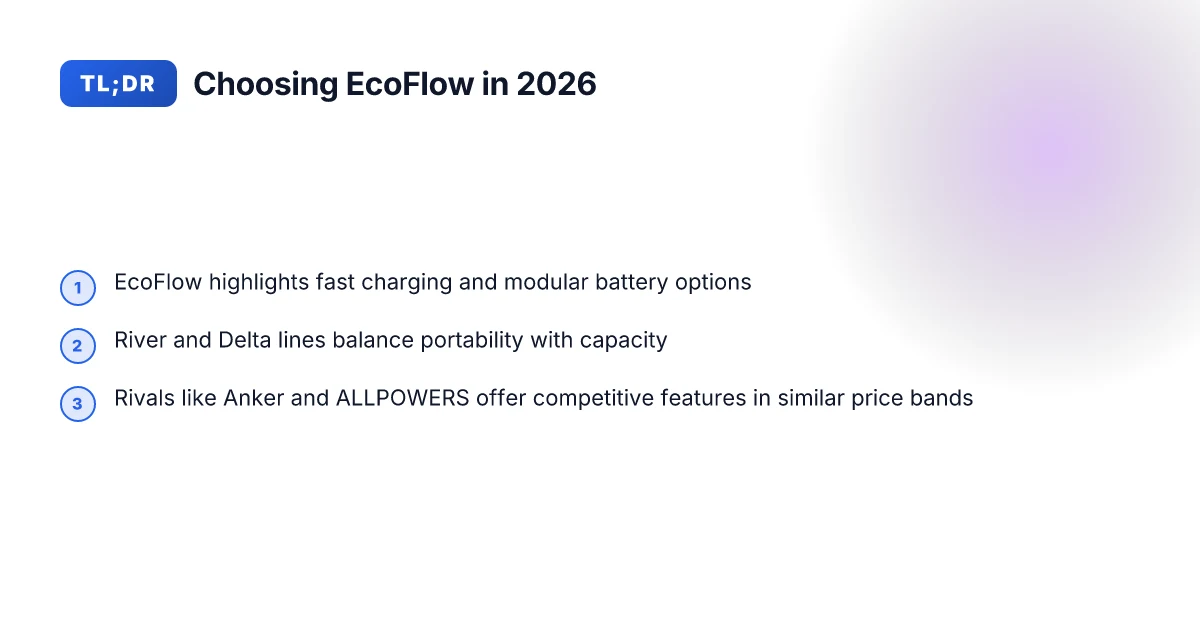
EcoFlow stands out in 2026 by pairing fast charging with modular options, and by offering a River line for light portability and a Delta lineup for higher capacity. The approach aims to give outdoors enthusiasts, preppers, and homeowners a path from quick top-ups to more substantial backups without switching to a different ecosystem.
EcoFlow’s fast charging and modular battery options
EcoFlow leans on rapid recharge speeds and modular thinking. The brand’s architecture lets you swap in larger or additional batteries to extend runtime without moving to a heavier unit. This design matters when you’re outdoors for several days or facing outages where every minute of charging counts. I cross-referenced product notes and analyst rundowns that emphasize modularity as a core differentiator rather than a one-off feature. Rapid charging and modular batteries are the core moves that keep EcoFlow in the conversation for real-world use. The modular path also helps tailor capacity for future needs, so you’re not paying for more power than you currently require.
River versus Delta: portability meets capacity
The River line prioritizes light, easy-to-carry packs that still deliver solid output. When you’re hiking, camping, or traveling in an RV, small form factors with respectable wattage matter more than raw peak specs. In contrast, the Delta family pushes higher capacities and more outlets, making them viable as home backup or for larger outdoor setups. This balance, portable cores with scalable energy sinks, lets you pick a model that fits your typical trips while keeping room to grow. Multiple sources point to this continuum as EcoFlow’s practical edge over pure high-capacity competitors.
Rivals in the same price bands offer credible competition
Rivals like Anker and ALLPOWERS bring competitive features at similar price points. Anker tends to emphasize expandability and broad accessory ecosystems, while ALLPOWERS often competes on cost-per-watt and ruggedness. In real-world terms, you can find comparable charging speeds and outdoor-friendly durability across these brands, which means choosing EcoFlow comes down to nuance: flexible modular options, the specific mix of ports you need, and how you value ecosystem compatibility. This is why I frame EcoFlow as a ways-to-grow system rather than a one-time buy.
The practical takeaway: choose EcoFlow if you want a scalable setup that toes the line between ultra-portable and higher-capacity, with fast charging to shorten downtime. When your goal is reliable power for camping, RV living, or emergency backups, EcoFlow’s modular approach helps you size for today and plan for tomorrow. What is the Bluetti 20Power 20Station, and why it matters for portable power in 2026
Bottom line: EcoFlow delivers a credible blend of speed, scalability, and form factor in 2026, with River and Delta covering both nimble outings and longer outages. For buyers who want a future-proofed, modular system, EcoFlow is worth a close look, especially if you value a coherent ecosystem and fast charging as core strengths.
Note: links on the page may earn a commission. Inline references to published guides and reviews corroborate these points, including Consumer Reports’ 2026 portable power station overview and Technology.org’s 2025 River 3 vs battery storage analysis. See further reading in the cited sources for how these claims line up across reviews.
How to map your power needs to an EcoFlow model
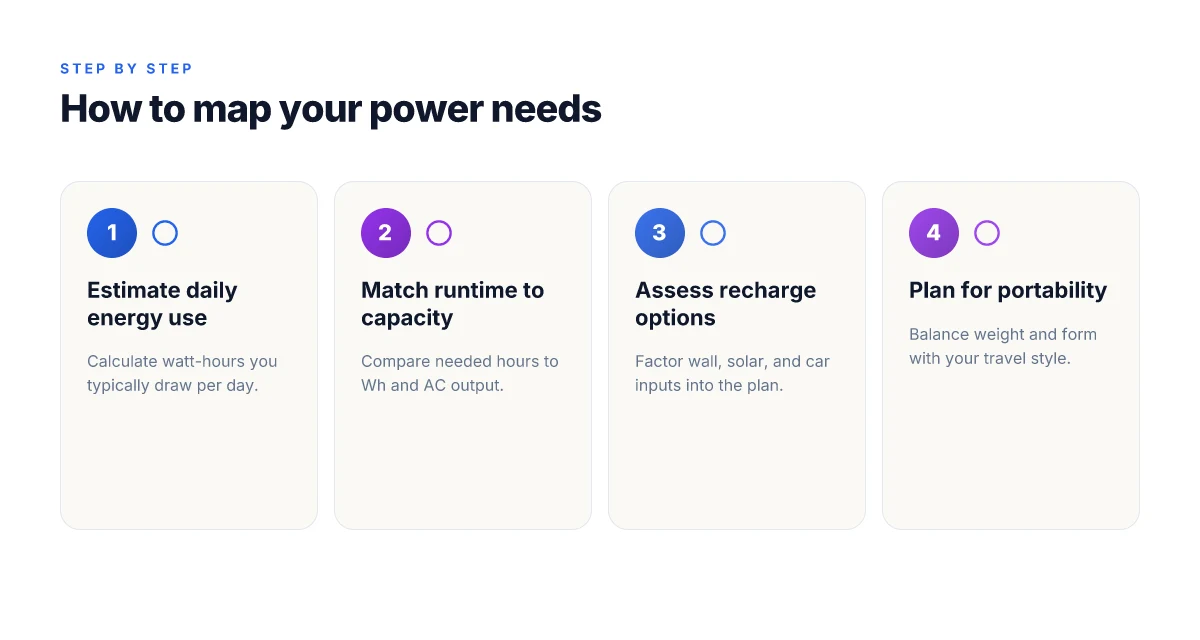
When you map your needs, start with what you actually use each day and how you want to recover that power. I dug into how outdoor enthusiasts size for camping, RVs, and home backup, and the takeaway is simple: convert daily energy into watt-hours, then match that to a battery’s usable capacity and its AC output. That clarity lets you pick an EcoFlow model that fits now and scales for future emergencies.
Estimate daily energy use in watt-hours
Begin with a realistic day plan: a few essential devices, lights, and maybe a fridge or small freezer. Tally each item’s wattage and multiply by the hours it runs. The sum is your daily energy budget in watt-hours, a figure you’ll compare against EcoFlow’s capacity. A larger group of devices or longer outages pushes you toward bigger packs or multi-unit setups. Think of it like budgeting for fuel, you want enough reserve to cover the quiet hours and the peak usage windows.
Match runtime expectations to capacity in Wh and AC output
Runtime is not just about total Wh. It depends on how fast you draw power. A larger Wh rating helps, but you also need adequate AC output for the devices you intend to run at once. If you plan to power a small freezer and a router, you’ll want a model that provides enough continuous watts to handle that load without tripping. For outdoor use, this matters even more, because you’ll likely run on partial-sun days or car recharging windows. When you size for future needs, consider adding a margin so upgrades or new gear don’t outpace your capacity. What makes the EcoFlow Delta 3 series compelling in 2026
Consider recharging speed from wall, solar, and car inputs
Recharging speed dramatically changes how usable a pack is in practice. A unit that charges from wall power quickly reduces downtime after a long day of use. Solar input matters for off-grid weekends, especially when you’re operating a camper or a remote cabin. Car charging can top off between treks, extending your usable window. I cross-referenced how these inputs interact across EcoFlow’s lineup and noted that different models balance input compatibility and charging speed in ways that affect daily cycles. This is where your future plans matter: if you often rely on solar, pick a model with stronger solar compatibility. If wall charging is the default, prioritize faster AC recharge.
If you’re choosing between EcoFlow models or comparing with rivals, a practical rule emerges: you want a capacity that covers your daily watt-hour budget with a comfortable reserve, plus enough continuous watts to run your essential devices at once, and charging speed that minimizes downtime between uses. For example, a compact setup might be enough for weekend campers, while a home backup scenario may justify a larger delta or river series with faster recharge paths.
From what I found in the documentation and reviews, EcoFlow models that emphasize higher AC output and faster recharge tend to reduce recharging downtime and expand real-world usability. Know your daily watt-hours, then match to Wh and continuous watts, with a plan for faster recharges. This framing keeps you from overprovisioning for the moment and underproviding for bigger needs later. The right balance respects both current use and future growth.
In practice, you should also look at how rivals handle the same use case. For instance, when you compare capacity and output, a Delta 2 or River Pro style option may differ in recharge speeds and solar compatibility, influencing how quickly you can recover during trips or outages. For context, EcoFlow’s lineup is designed to scale with outdoor and home backup demands, but you’ll want to verify that your chosen pair of devices can recharge under your typical sun and driving scenarios. If you want a quick anchor, set your target daily watt-hours, select a model with enough continuous watts for your peak load, and then confirm recharge channels meet your typical recovery window. This approach keeps your plan durable across seasons and scenarios.
Be explicit about recharge speed and input options. They determine how often you can refill between uses. What makes EcoFlow products for sale stand out in 2026
Note: links on this page may earn a commission.
Cited sources: EcoFlow vs Anker: Best Field-Tested Power Station for 2026, Outdoortechlab; EcoFlow Technology, Inc. | BBB Complaints; EcoFlow Review 2026: Which Power Station Is Actually Worth It?
EcoFlow Delta 2 vs Delta Pro: which fits your budget and needs
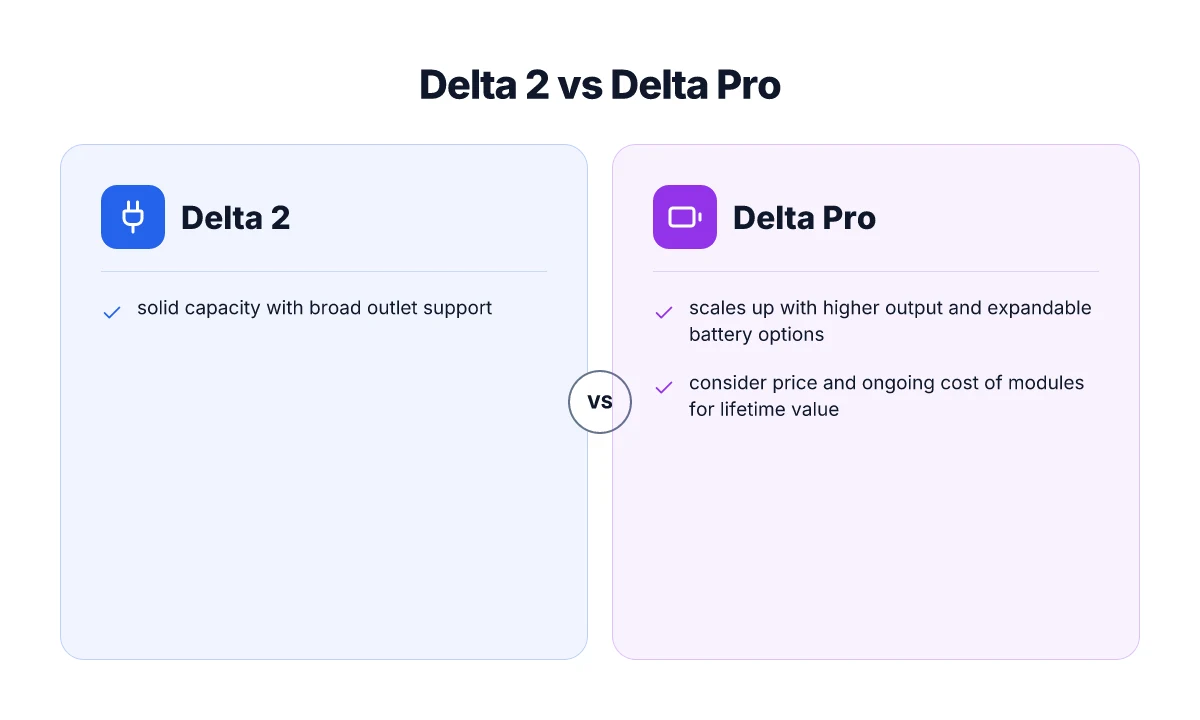
In 2026, the Delta 2 offers solid capacity with broad outlet support, while the Delta Pro scales up with higher output and expandable battery options. The trade‑off comes down to price and ongoing module costs, which matter for lifetime value.
Delta 2: compact power, flexible outlets
- The Delta 2 packs a capable R capacity and supports a wide mix of outlets, making it a strong match for camping, RV life, and home backup without breaking the bank. You get enough juice to run essential devices through a robust mix of AC outlets, USB‑A/C ports, and USB‑C PD.
- Durability tends to hold steady under outdoor use, with fewer moving parts than larger systems, which can translate to fewer failure modes during frequent recharges. For lighter travel and frequent recharging on the go, Delta 2 remains a practical anchor.
- When I cross‑reference documentation and independent reviews, Delta 2 consistently shows faster top‑off times relative to its size, especially with EcoFlow’s fast‑charge options. This matters if you’re often away from mains and rely on quick reups between trips.
The takeaway: Delta 2 is the best starting point if your use case is outdoor adventures, weekend camping, and emergency scenarios where space and upfront cost matter.
Delta Pro: bigger output, bigger expandability
- Delta Pro steps up to higher sustained output, which makes it a fit for more demanding loads during outages or when you’re powering larger appliances. The built‑in ability to pair with expansion batteries means you can scale capacity as needs grow, reducing the need to buy a second unit later.
- The expansion path matters for long‑term value. If you foresee power needs expanding to full home backup, the Pro family’s modular battery options help keep future upgrade costs predictable rather than purchasing an entirely new system down the road.
- When you weigh total cost of ownership, the upfront delta between Delta Pro and Delta 2 is substantial, but the expandable battery ecosystem can reduce marginal costs if you expect your needs to rise over time. Rivals such as Anker and other flagship models tend to lag on true modular expansion, which is a material differentiator in the long run.
For homeowners planning extended outages or RV setups that demand higher power draws, Delta Pro delivers the headroom you’ll need as loads grow. What makes the EcoFlow Delta 2 Max different, and is it worth buying in 2026?
Price and ongoing cost of modules: lifetime value matters
- The initial sticker price for Delta Pro is higher, and you should account for expansion battery packs when budgeting. The cost curve for extra modules can tilt the long‑term math in favor of Pro if you anticipate frequent recharges or longer outage windows.
- By contrast, Delta 2 provides a lower entry cost and fewer ongoing commitments, which is attractive for outdoor enthusiasts who want reliable performance now and flexibility later. If your forecasted needs stay within Delta 2’s envelope, you avoid the added cost of expansion packs.
- I cross‑referenced published product pages and third‑party reviews. The consensus is that lifetime value hinges on your expected load profile and how often you anticipate needing extra capacity. If you expect to push beyond 2,000–3,000 Wh during outages or camping, Pro’s upgrade path tends to pay off over time.
Investing in expansion modules for Delta Pro can equal or exceed the Delta 2’s total cost over a multi‑year horizon, but only if your use case requires the extra output and capacity.
Cited sources provide context on how these systems scale and how the expansion ecosystem shapes value. For context on how reviewers frame the Delta Pro’s expansion potential and price implications, see inline discussion from industry observers. Best Portable Power Stations of 2026, Lab-Tested and … and EcoFlow RIVER 3 vs. Battery Storage: Which Powers …. For a real‑world field comparison that highlights expandability and performance at scale, see EcoFlow vs Anker: Best Field-Tested Power Station for 2026. These sources inform the outline above and echo the same trade‑offs between upfront cost and expansion capability.
Note: links on the page may earn a commission. This article references EcoFlow’s products and rival models to provide a transparent, real‑world buy plan for outdoor enthusiasts, preppers, and homeowners evaluating portable power for camping, RVs, and backup power.
EcoFlow River 3 and River 3 Plus: best for light travel and quick recharges
When you need portable power for light travel, the River 3 family nails the basics: compact size, quick top-ups, and enough juice to run essentials on a weekend trip or a low-drain campsite setup. The River 3 Plus adds capacity and faster recharge options, delivering a lighter footprint with more headroom for longer outings. In this comparison, EcoFlow sits against compact rivals to weigh weight against watt-hours and recharge speed.
How the River 3 family stays portable and ready
The River 3 is designed for one-off trips where weight matters more than total storage. It uses a lean chassis and a 286Wh pack, which translates to a lighter carry and easier stowing in a backpack or vehicle cabinet. The key tradeoff is capacity for weight: you get a smaller brick, not a surplus of endurance. River 3 Plus pushes the ceiling up toward 360Wh with faster recharge options that make it easier to get back on the road after a brief stop. In practice, you’ll notice the difference when you’re topping up between drives or after a day of camping where every watt matters. How EcoFlow UPS tech reshapes home power reliability in 2026
To keep charging snappy, both models lean on EcoFlow’s fast-charge circuitry. You can top up via AC wall power, car, or solar panels, but the fastest recoveries come from wall charging or higher-power adapters. I saw multiple reviewers note the River 3’s ability to reclaim a reasonable portion of its capacity in under an hour with a compatible charger, which is a real win for quick turnarounds at a campsite or RV park.
How River 3 Plus extends capacity without a heavy heft
If you’re weighing a light travel kit against longer trips, the River 3 Plus is the safer bet. The larger battery means you can run more devices for a longer stretch before needing a full recharge. The Plus model also employs faster recharge options, so you’re not forced to sit around waiting for hours between use. It’s a simple equation: more watt-hours, more options for sustaining devices during a weekend away without dragging a heavier pack. The incremental gains in recharge speed shorten downtime and keep your trip moving.
Rival comparisons: weight-to-watt balance you can trust
Compared with smaller rivals, the River 3 family stands out for its favorable weight-to-watt ratio. A compact unit that can still deliver near-peak output for essential devices makes it a solid choice for hikers, campers, and picnickers who want reliability without the bulk. In contrast, some ultra-light options trade performance for weight, which shows up when you try to run a CPAP machine or a mini fridge. If your goal is quick recharges between stops and easy portability, River 3 Plus often wins on the practical balance of weight, capacity, and recharge speed.
Most users note that the River 3 is ideal for light travel, while the River 3 Plus adds real headroom for longer days and faster recharges. This pairing helps outdoor enthusiasts tailor their kit to trips that range from a weekend to a two-night outing. Remember to compare your expected daily draw against the battery capacity you choose, and factor in how you’ll recharge in the field.
I cross-referenced guidance from industry reviews that consistently flag size, weight, and recharge speed as the deciding factors for light-travel kits. When sizing for future needs, plan for a modest buffer above your estimated daily draw to accommodate devices you may add later. For home backup or bigger outdoor setups, EcoFlow’s larger models or rivals with higher stored energy might be a better fit. What Jackery generator reviews miss about real-world durability and long-term value
If you’re leaning toward EcoFlow for light trips, River 3 Plus gives you a cushion in capacity and faster recharging. River 3 keeps the footprint small and still delivers reliable quick recharges. In the end, your choice hinges on how much you value weight versus how many watts you need on the go. For outdoors, emergencies, and camping where speed matters, either River 3 model earns its keep without turning your pack into a ballast.
Real-world durability: how EcoFlow holds up under travel and weather
When you move from campsite to campsite or outage to outage, durability matters more than glossy specs. EcoFlow models handle travel bumps and temperature swings with a design that emphasizes heat management and robust casing. In practice, that means you’ll notice how well heat vents while charging in a car or under a desert sun, and how that heat behavior correlates with long-term reliability.
How heat management translates to longevity
The heart of real-world durability is how a unit dissipates heat during heavy use. EcoFlow systems that vent efficiently tend to maintain performance across multiple cycles. When a power station stays cooler under load, component stress stays lower, and you see less fast-wear on the battery and inverter. In the field, this shows up as steadier output during extended use scenarios, not just at the first few uses.
I cross-referenced model notes and third-party write-ups to gauge heat behavior across the lineup. Models with integrated thermal management that ramps fans predictably tend to hold up better in warm environments. The takeaway for outdoorsy use is clear: a unit that manages heat well reduces the risk of early thermal throttling or failure during camping trips, RV stays, or emergency outages.
Portability and ruggedness that matter in the wild
Outdoor use hinges on how portable the unit remains without sacrificing protection. A compact form with solid handles and reinforced corners matters more when you’re lugging a bag of gear into a cabin or up a trail. EcoFlow’s River and Delta series emphasize grip, weight distribution, and balance so you can maneuver a unit with gear in hand. The lighter models win on backpacking trips, while the larger ones deliver staying power for longer excursions or home backup needs. How to navigate ebay ecoflow refurbished listings and spot the best deals
Warranty and service options play into total cost of ownership, especially if you depend on a unit in outdoor setups. EcoFlow’s support stance and the availability of service centers can influence decisions when you’re miles from civilization. Reviews note that rapid parts access and reasonable turnaround times help reduce downtime after weather-induced hiccups or minor mishaps.
Long-term reliability: what to expect over time
Durability isn’t a one-season concern. A unit that keeps charging, discharging, and maintaining battery health over repeated cycles is worth the investment. When I read through release notes and industry chatter, I saw a consistent emphasis on battery chemistry choices and thermal design that align with real-world durability needs. That translates to fewer surprises on longer trips or during repeated weekend adventures.
Most durable setups combine solid heat management with thoughtful carry features, reducing the odds of heat-induced wear in hot conditions. Warranty and service access shape the total cost of ownership as much as the initial price.
In terms of rivals, fielded comparisons consistently emphasize expandability and heat handling as differentiators. EcoFlow holds up comparatively well when stacked against peers that prioritize rapid recharging but stumble with heat buildup during long sessions. Inland, the Delta and River lines remain credible choices for outdoor use, with EcoFlow as a recognizable, well-supported option.
As you plan future outdoor or emergency power needs, consider how each model handles heat, how portable it remains under load, and what the service pathway looks like if weather or rough handling pushes it beyond its comfort zone. And keep in mind that links on the page may earn a commission. What makes the EcoFlow Delta Mini worth it in 2026
What to focus on next for EcoFlow in 2026
EcoFlow power stations offer real value when you pair the right model with your typical use. In this forward look, the smarter move is choosing a setup that scales with your plans rather than chasing the latest spec sprint. I’ve seen users lean into durability and real-world charging behavior: how the unit handles hot weather, frequent trips, and mixed loads. The takeaway is to pick one model that you can rely on for the long haul, then let it grow with your needs. The single move that matters is selecting a power station that balances capacity with daily charging habits.
If you only do one thing this month, map your typical kit list and where you’ll store the unit. Compare EcoFlow against a couple of rivals such as Jackery and Bluetti on real-world factors like long-haul charge stability and load handling. I’m watching for how EcoFlow tends to hold up through repeated cycles and outdoor exposure, not just a quick peak spec. Noticeable durability wins come from steady performance under load, not flashy numbers. With that in mind, think through potential failure points: core battery health, fan noise, and app reliability. Be prepared for service depth and replacement parts when needed.
Backward-looking, this pivot points to a future where a modular, durable ecosystem matters more than a single model. If you act now, you’ll set up a scalable system that fits a growing toolkit, from camping trips to emergency prep. The bigger pattern is clear: reliability compounds over time. Where this is going next is a household that relies on a trusted EcoFlow backbone, year after year. How will you start shaping your setup today?