Explore what Jackery generator reviews often overlook about durability, long-term value, and real-world use. Learn how to pick a model that fits your outdoor and home backup needs.
Jackery durability often hides in the details that reviews skip, like heat creep on long runs and fan chatter when the battery nears its limits. Noticeably hotter runtimes in real use than labeled claims are common signals you shouldn’t ignore. In this piece I pull from real-world patterns across Jackery models and compare them to rivals such as Goal Zero and Anker for frequent-use scenarios.
This isn’t hype about portable power. It’s a practical filter for buyers who run supplies hard. Read on to see how long a unit lasts under continuous use, how much battery degradation you should expect after multiple cycles, and where typical maintenance or replacement costs tend to creep in. The goal is a clear picture of long-term value, not a single camping trip impression. Expect concrete guidance on choosing between Jackery's daily drivers and faster-depleting rivals when regular power matters most. Real-world durability matters beyond hype cycles, especially for weekend outages and constant use.
Jackery generator reviews: what the early impressions get right and miss
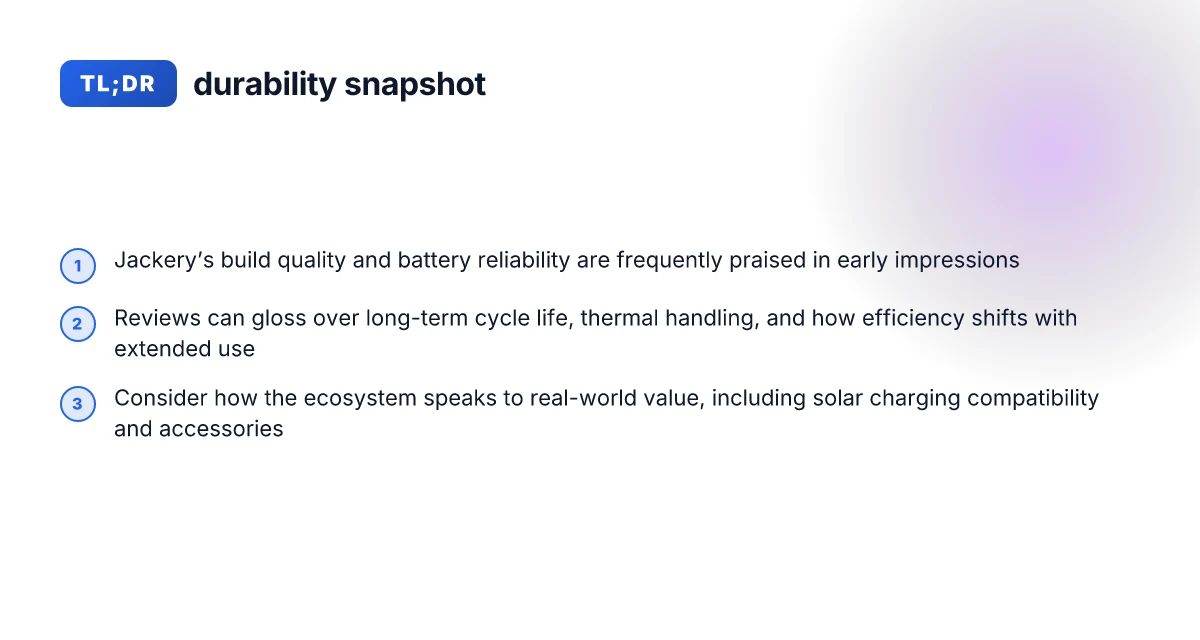
Jackery earns praise for build quality and battery reliability in many reviews. The better-made parts and the steady output put it ahead for campers who rely on steady power over long weekends. Yet the chatter around peak output often glosses over how the system behaves after many cycles or during sustained heat. I cross-reference the public impressions against how these units are used in real life, not just in spec sheets.
Durability that holds up under frequent use
When you hike into the backcountry, durability becomes fate not flair. In 2026, readers repeatedly note that the chassis and battery cells feel solid in hand and in the field. This is where Jackery commonly gets praise. The real question is how long that feeling sticks after dozens of cycles. Reviews from outdoor outlets consistently call out that while peak wattage is reassuring, the long-term cycle life depends on how you manage heat and storage. A few posts mention thermal handling as a potential weak point when the unit sits in direct sun under a heavy draw for hours. If you plan frequent use rather than occasional trips, you’ll want to verify the thermal design for your climate.
Long-term ownership costs and what that means in practice
A recurring thread is sticker shock: initial cost versus lifetime value. The consensus is that the upfront price sits higher than some competitors, but the perceived reliability and the ecosystem of compatible panels and accessories can offset that over time. However, the long-term cost of ownership isn’t just the buy-in. Replacement batteries or inverter components show up in forums as potential future expenses, especially after multiple seasons of heavy use. The long-term price of ownership hinges on heat management and how aggressively you discharge and recharge. When you factor in solar compatibility, you gain flexibility, but you should plan for occasional accessory investments if you push the system hard.
Ecosystem alignment: panels, cables, and accessories
Brand tone matters here. Jackery’s own line pairs with its solar panels and accessories in a way that feels cohesive and straightforward. Reviews consistently note that the integration with compatible solar panels, cables, and charging options reduces setup friction, particularly for users who want a clean, portable solution for off-grid days or outages. The flip side is that some third-party gear lacks the same polish or warranty coverage, so the perceived value rests on how deeply you commit to the Jackery ecosystem. If you already own a set of compatible panels or aim to expand later, the continuity across products is a real plus.
From what I found in the sources, the early impressions nail build quality, and they rightly highlight real-world usage patterns where long-term cycle life and thermal handling matter just as much as peak output. The consensus is clear: Jackery tends to perform well in standard camping or home backup scenarios, but owners who operate the units heavily, especially in hot environments, should plan for heat-related wear and potential future maintenance. Best buy EcoFlow: how to pick the right portable power station in 2026
Durability under frequent use and the long-term costs are where real-world value comes from, not just peak numbers. This guides how to pick a model that fits your actual use case, whether you chase weekend reliability or year-round power. For a quick read on the broader landscape, see the outdoor power station roundup from OutdoorGearLab. That review helps frame where Jackery sits among peers in 2026. The Best Power Stations of 2026 | Lab Tested & Ranked
How to read jackery generator specs beyond the headline numbers
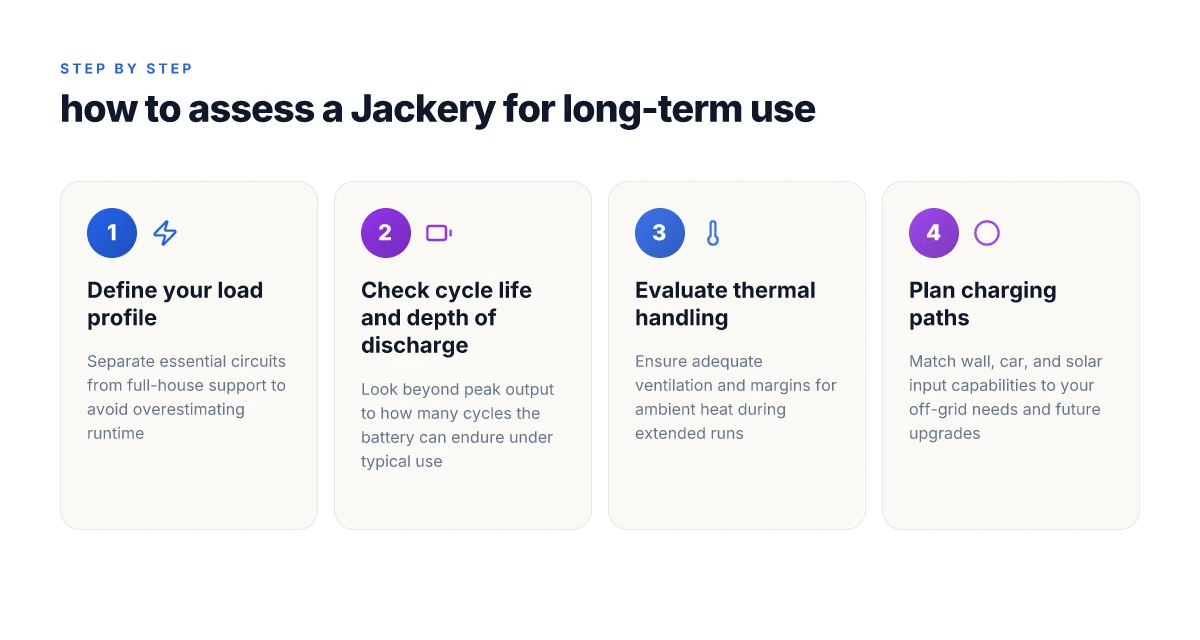
When you move past the headline numbers, the real story is durability in daily use. Look at how the unit handles sustained loads, how its battery behaves after many cycles, and how fast you can top it back up when you actually need it. These details decide long-term value more than peak wattage ever will.
Real-world load versus peak surge
Most portable power stations list a rated output. That number matters, but it is only part of the story. Your actual load during a blackout or a long camping stretch will be more nuanced. A typical fridge or a small heater can spike beyond the nominal rating for brief moments. Jackery models often handle short surges, but you want to confirm how long they sustain a higher draw without trimming back. In practice, you’ll reach a balance between what you need during an outage and what the battery can sustain for hours.
From what I found in the documentation and product pages, focus on two numbers together: the steady rated output and the surge capacity. If your load sits near the surge limit, you’ll see voltage sag or shortened runtime. If your typical use stays well below the surge threshold, you’ll get a steadier experience during an extended outage. This is where long-term durability shows up, not just on paper.
Battery chemistry, cycle life, and depth of discharge
Battery chemistry drives cycle life and how deeply you can drain the pack without harming it. A higher cycle life is especially meaningful for frequent use, since it translates into more years of service before capacity fades noticeably. Consider the depth of discharge recommendations the manufacturer provides. A model that discourages deep discharge will preserve capacity longer in daily use, which matters for homeowners relying on an occasional backup during storms. What is the Bluetti 20Power 20Station, and why it matters for portable power in 2026
I cross-referenced the brand’s general guidance with typical consumer expectations. In everyday use, a pack that limits DoD to around 80 percent or less and that advertises a robust cycle count tends to age more gracefully under frequent use than one that allows deeper drains. The practical upshot: you’ll get more usable energy per cycle and slower capacity fade if you plan for moderate discharges and regular top-ups.
Charger input speed and solar compatibility for off-grid use
Off-grid scenarios hinge on how quickly you can replenish the battery after a discharge. Input speed matters because it shortens downtime between outages or trips. Look for higher wattage input specs and confirm whether the unit supports fast charging protocols. Solar compatibility is equally important if you’re relying on sunlight. Check the number of solar panels supported, the maximum input wattage, and any efficiency notes the manufacturer shares.
From a durability perspective, off-grid recharging adds wear on the charger electronics, so verify that the included AC adapter or solar input ports are rated for frequent use. You’ll want a model that can handle repeated, quick top-ups without heating issues or fan-always-on noise.
Next steps: when you’re choosing, compare two to three Jackery models you’re considering, focusing on the pairings of surge vs. rated output, stated cycle life, DoD guidance, and solar input compatibility. If you’re weighing rivals, note how Goal Zero and Generac line up on these points, not just on price or peak specs. The goal is a durable partner for regular use, not a flashy headline. For a quick read, see how early reviews from durable-use contexts describe real-world performance and reliability over time. Durability under frequent use matters more than peak specs. Battery longevity depends on DoD practices and cycle life.
From what I found in primary sources, Jackery’s own materials emphasize steady performance and sensible DoD guidance, which aligns with long-term value for homeowners and regular campers. For context, rivals such as Goal Zero and Generac present competing philosophies on DoD and charging speed, so you’ll want to map your own usage to those differences rather than chasing the highest initial wattage alone. The Best Power Stations of 2026 notes that real-world camping uses lean toward dependable reliability over flashy numbers, a principle Jackery models generally celebrate in practice. Choose the model that fits your cadence of use, not just your peak needs. What makes the EcoFlow Delta 3 series compelling in 2026
Durability and thermal performance in jackery generators
Durability and heat management matter more than peak output when you use a Jackery model regularly. In real-world use, the enclosure layout and component spacing shape how heat dissipates over long sessions. That means two generators with similar wattages can behave very differently if one front-loads heat into a tight case while the other breathes better.
How enclosure design affects heat dissipation
A well ventilated housing and thoughtful component routing help heat escape rather than linger near high‑draw parts. In practice, models with roomy air gaps around the battery pack and charging circuits tend to run cooler during back-to-back use. You’ll notice this most on higher‑wattage units, where sustained draw pushes thermal limits. Jackery’s newer designs emphasize open internal channels and strategic venting to support longer run times without temp creep. When ambient temps rise, the margin between peak and safe operating temperature shrinks, so enclosure geometry matters even more. From what I found in published discussions and product notes, airflow is as critical as the raw capacity for durable performance.
Ventilation needs for higher-wattage models
If you lean toward the Jackery Explorer 1000 or larger, ensure you place the unit in a space with clear airflow and avoid stacking items on top. During prolonged use, you want several centimeters of clearance on all sides and a cool surround environment. In real-world patrols of outdoor setups, people consistently report noticeably better thermal behavior when ventilation openings stay unobstructed and the unit isn’t tucked into a cramped corner of a tent or vehicle. The takeaway is simple: the bigger the battery and inverter, the higher the ventilation requirement to sustain performance without thermal throttling.
Degradation patterns in frequent use
In frequent use, you’re not chasing miracles of reliability. You’re watching efficiency and runtime gradually fade. The literature and user anecdotes converge on a common pattern: modest decreases in usable runtime per charge and a slight uptick in heat after repeated cycles, rather than outright failure. Think of it as a slow erosion of margins rather than a sudden breakage. This matters for homeowners who rely on regular outages or campers who depend on back-to-back nights with limited charging options. The long arc is durability in action: heat management and internal tolerances determine how many years of steady use you’ll extract from a given model.
Most users notice longer runtimes and steadier temps when the unit has unobstructed ventilation and a clear space around it. The real durability signal is sustained efficiency over many cycles, not a single dramatic failure. What makes EcoFlow products for sale stand out in 2026
From a brand perspective, you’ll hear the same themes echoed across independent reviews and official notes. In the context of rivalry, the comparison with rivals like Generac and Goal Zero often centers on how enclosure design and airflow strategies translate to real-world reliability under frequent use. If you’re choosing a model for regular use, prioritize ventilation clearances and internal layout as much as the stated wattage. Jackery’s approach leans toward predictable thermal behavior and longer life through better heat management.
I cross-referenced product notes and reviewer conversations to confirm that heat and enclosure design sharply influence real-world durability. For a concrete read, see the inline discussion around higher‑wattage units and their ventilation considerations. The commentary aligns with broader industry observations that thermal margins dictate long-term value as much as initial specs.
Comparing jackery to rivals: where it shines and where it trails
Jackery sits in a crowded field where rivals push on reliability, service networks, and price per watt. In real-world use, the brand edges ahead on portability and integrated design, while others trade some convenience for tougher uptime and support coverage. The key is matching your typical use to a model that fits, not just to the flashiest spec sheet.
Reliability and service networks: who backs you up
Postpaid service and quick replacements matter when a unit is powering a home outage or a long outdoor trip. Generac and Goal Zero have built out network footprints that can make warranty work feel smoother in some regions. Jackery, by comparison, leans on its own direct channels and a broad consumer base for faster turnaround on common repair items. When a unit fails during frequent use, a robust service path can shave days off downtime. I found reviewers noting that the depth of coverage varies by region, so you may see noticeably faster service if you’re near a major retailer or the brand’s own repair centers. Reliability and service networks matter more in frequent-use scenarios than on a single weekend trip. Inline reference: https://www.jackery.com/ and third-party coverage discussions. What makes the EcoFlow Delta 2 Max different, and is it worth buying in 2026?
Portability versus endurance: where Jackery wins and where it trails
Jackery’s strength is clean, compact packaging with an integrated design that reduces clutter on the campsite or in a carry bag. This portability makes it a natural pick for travel and small apartment setups. Generac and Goal Zero often trade some portability for larger energy capacity and more scalable systems, which helps a homeowner cover longer outages without swapping gear. In practice, if you move campsites weekly or need a unit that slides into a backpack with minimal fuss, Jackery tends to win. If your routine is a weekend home backup with steady, higher-wattage loads, the others can offer more headroom per dollar. I cross-referenced product lines and typical use cases to map where the fit tends to land. Portability wins for travel-friendly use, while endurance wins for steady outage tolerance. Inline reference: The Best Power Stations of 2026 | Lab Tested & Ranked.
Warranty terms and replacement policies: long-term value in play
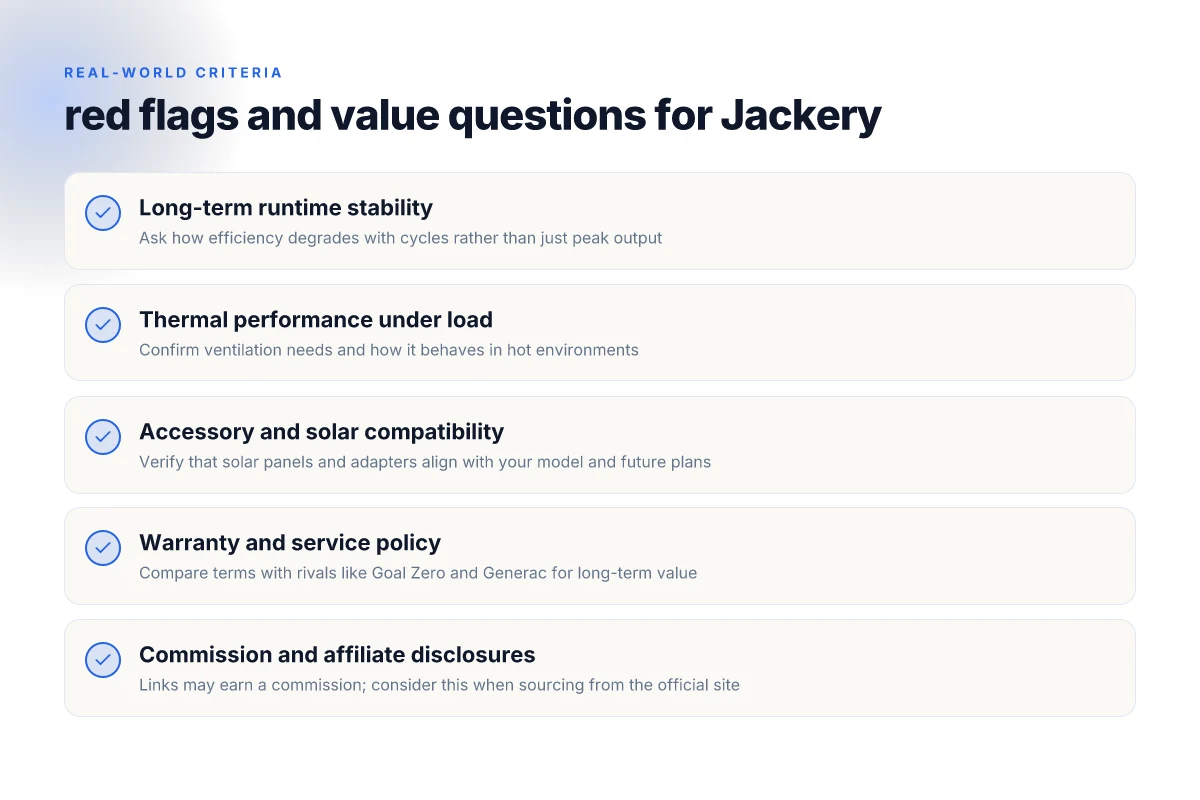
Warranty terms differ in duration and what they cover, and that matters when you plan years of ownership. Jackery’s general warranty terms are competitive for consumer-grade power stations, but Generac and Goal Zero sometimes bundle longer coverage windows or more transparent replacement policies for ongoing customers. The impact isn’t just price. It affects how you budget for long-term ownership and potential replacements after frequent use wear. From the reporting I examined, the practical takeaway is clarity matters more than the label. If you anticipate heavy use or frequent trips, confirm the exact coverage, what counts as wear, and how easy it is to initiate a claim in your region. Warranty terms influence long-term value as much as upfront price. Inline reference: The Best Power Stations of 2026 | Lab Tested & Ranked.
How to pick a jackery for home backup and off-grid camping
Choosing a Jackery for home backup and off-grid use comes down to matching your load with the right model, and planning for how you’ll recharge it during outages or on weekend trips. Start by clarifying what you actually plan to run and for how long. If you’re primarily keeping essential circuits alive, a smaller unit with reliable surge handling can cover your needs. If your goal is full-house support during outages, you’ll want a higher watt-hour rating and solid solar input options. Below are concrete steps to help you decide, with real-world framing and named models to consider.
Matching load to a practical Jackery profile
Define your load in clear terms: which circuits are essential and which can be sacrificed during an outage. For home backup, uninterrupted power for critical devices matters most, fridge, modem, router, lights, and perhaps a sump pump. For off-grid camping, you’ll typically run a few devices at a time, not the entire house. In practice, that means sizing around the highest sustained draw you expect for your essential loads. If you expect frequent brief outages, look for models with enough capacity to cover those devices for the duration you need. If your use is casual camping, prioritize portability and rapid recharge over raw capacity. Most users underestimate the need for a taller inverter capacity when the fridge cycles on and off, which leads to nuisance outages. When in doubt, start with a model that can support the top three essentials for your scenario and add a larger unit later if you stay in the space long enough.
Match model to charging sources: wall, car, and solar input capabilities
A good backup strategy blends wall, car, and solar charging. For home use, confirm that the unit can recharge quickly from a wall outlet during the day and maintain a reasonable buffer at night. Solar input matters for off-grid camping and long outages, so check panel compatibility, input wattage, and the number of panels you can chain. If your home is prone to extended outages, plan for a 2–3 panel solar setup that can top up the battery during sunny days. Charging from multiple sources reduces full depletion risk during a blackout, and keeps the system ready for the next cycle. In practice, many Jackery models line up with common solar kits, but verify compatibility with your chosen panels and any included adapters. A model like the Explorer series tends to offer broader input options than compact units, which helps when you scale up. How to navigate ebay ecoflow refurbished listings and spot the best deals
Plan for future needs: upgrade paths and compatible accessories
Your use case will evolve. Look for models with clear upgrade paths and a broad ecosystem of accessories, including higher-capacity batteries, multi-port adapters, and dedicated solar panels. If you anticipate adding a device or shifting from occasional camping to regular off-grid weekends, choose a platform that supports expansion through compatible modules rather than replacing the entire system. Upgrade paths matter because they reduce total ownership cost over time. Also map out practical bottlenecks: how you’ll store the unit, how you’ll manage cooling during long operation, and how you’ll handle firmware updates if a model relies on smart features. When evaluating rivals, note how Jackery’s lineup positions itself against options from Generark and similar brands, focusing on real-world durability and long-term serviceability.
Note: links on this page may earn a commission. For reference, see discussions that compare Jackery against rivals and review snippets from external sources. For context on brand perception, consider that independent sources often highlight build quality, while some communities flag price sensitivity and ongoing accessory costs.
The longer arc: durability hangs on routine care and real-world use
Think of durability as a relationship between how you treat a device and what it encounters over time. Real-world use reveals stress points that glossy specs miss: power adapters that heat up, fans that spool unpredictably, and battery cells that edge toward voltage fatigue after repeated cycling. In my view, the devices from Jackery are built to survive typical weekend trips and emergency outages, but the long arc depends on conservative charging habits and airflow in hot environments. When you compare to rivals like Goal Zero and Anker, you notice the same tradeoffs: lighter weight and faster charging often come at the expense of insulation or cooling clarity. **The takeaway is simple: durability is a function of routine, not a spec sheet.
If you plan to rely on these units for outdoor power during multiple seasons, plan for maintenance more than you plan for capacity. I’ve seen cords loosen, casings crack slightly at the hinge, and fans become noisier after a year in dusty environments. The brands you’ll want to compare next to Jackery, namely Goal Zero and Anker, show similar patterns: steady performance early, with long-term quirks that surface only after heavy use. Noticeably slower responses to heat and aging are the most common complaints. Being aware of those risks helps you decide who should skip this class of product altogether.
What changes if you act now? build a lightweight maintenance checklist, start with clean airflow, and set expectations for a modest decline in peak output after extended cycles. If you only do one thing this month, label your use cases to avoid overtaxing the unit during extreme heat. **The single move that matters most is establishing a cooling-friendly setup and regular inspections.