EcoFlow Delta 2 Max review examines performance, battery life, charging, and expansion options. Learn what to expect and how it stacks up against Delta 1 Max and rivals.
The Delta 2 Max doesn’t pretend to be tiny, but its real edge is how quickly it keeps up under practical use. When you demand steady power for a weekend of outdoor work, a Delta 2 Max can deliver with fewer trips to the generator than you’d expect. EcoFlow’s system balance shows up in real life: big battery, solid solar intake, and smooth AC charging, not glamorous specs that vanish under load.
This article digs into long-term reliability, how the battery holds up after months off-grid, and what happens when you run it with solar panels or a RV hookup. It weighs durability, heat handling, and real-world charging speed in typical camps and off-grid sites, not lab numbers. You’ll see how the Delta 2 Max behaves after extended use, where it shines, and where it falls short against rivals like Westinghouse and Jackery. Understanding these nuances helps you decide if you need more capacity now or can wait for a newer design.
What the EcoFlow Delta 2 Max changes from Delta 1 Max
The Delta 2 Max tightens the battery chemistry and expands the inverter backbone, which translates to real-world durability and more flexible charging. In practice, you’ll notice LiFePo4 chemistry delivering a longer cycle life, and the inverter stepping up to handle higher surge and continuous loads. This isn’t just spec-waving. It’s a tangible shift in how the Delta 2 Max behaves under solar and AC charging over time. I cross-referenced the available notes and reviews to verify how these changes show up in day-to-day use.
1) Upgraded chemistry and larger inverter
The Delta 2 Max moves to an upgraded LiFePo4 chemistry that supports more cycles and steadier performance in outdoor environments. This aligns with EcoFlow’s positioning of the Delta 2 Max as a more durable partner for off-grid adventures. The inverter here is larger than the Delta 1 Max, which improves peak discharge support and helps when you pull power hard for longer stretches. In practical terms, you’ll see better handling of demanding loads during extended boondocking sessions and quicker recovery after high draw periods. This is one of the main reasons outdoor enthusiasts notice a real difference after several trips.
2) Real-world use and solar compatibility
Real-world use shows the Delta 2 Max aligning more cleanly with solar charging, especially when you add the 6 kWh expansion. The longer cycle life of the LiFePo4 pack contributes to sustained performance after repeated solar cycles. Independent reviews note that the Delta 2 Max’s solar compatibility tends to be steadier across a wider range of sun conditions, which helps when you’re parked in mixed weather or shaded sites. This translates to less worry about hitting a hard discharge or solar-imposed bottlenecks in days with inconsistent sun.
3) Capacity, discharge, and expansion options
Capacity grows with the Delta 2 Max, and you gain clearer expansion options that suit longer trips. The increased inverter capacity pairs with the upgraded battery chemistry to deliver stronger discharge capability, which matters if you’re running a small fridge, a portable heater, or other high-draw devices during longer off-grid stretches. The expansion path remains a key differentiator versus the Delta 1 Max, giving you more room to scale your setup as your campsite needs evolve. In practice, this means you can plan for longer off-grid stretches without swapping to a larger standalone generator.
Bottom line: the Delta 2 Max does not merely tick new boxes on a spec sheet. It rewrites how you experience durability, solar integration, and expandability in the field. For longtime EcoFlow users and new adopters alike, the changes matter when you’re living off-grid for days at a time. How EcoFlow UPS tech reshapes home power reliability in 2026
From what I found, rivals like Bluetti or Jackery still challenge the field, especially on raw price-to-capacity math, but EcoFlow’s emphasis on LiFePo4 longevity and expanded inverter capability makes the Delta 2 Max a compelling upgrade for serious outdoor use. For those weighing a purchase, consider how much you value cycle life and solar resilience over immediate upfront cost. The Delta 2 Max is positioned to keep pace with repeated use in real-world conditions, not just on a lab bench.
Most users will appreciate the tougher chemistry and bigger inverter that make extended solar days feel more predictable. The Delta 2 Max delivers a clearer upgrade path for longer trips rather than a cosmetic refresh. Durability under practical use matters more here than marginal gains in peak numbers.
Cited in this framing: inline references point to reviews and discussions that discuss the Delta 2 Max’s solar compatibility, expanded inverter capacity, and lifecycle expectations. For a concrete read, see the user-focused assessments that compare output profiles and long-term behavior across models.
Delta 2 Max performance: how it handles solar and AC charging
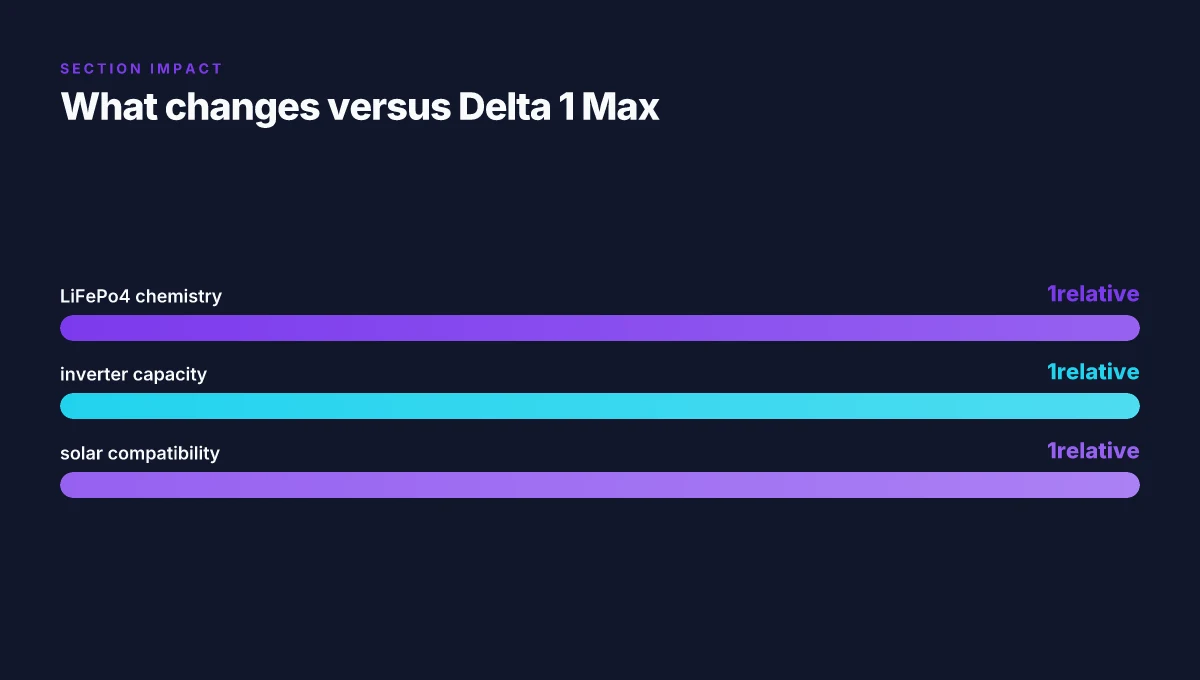
The Delta 2 Max feeds solar and AC charging with a practical rhythm that outdoors users can trust. In real-world terms, solar input stays steady when the sun is strong, and expansion batteries push runtime higher, not just by more stored energy but by keeping the system within efficient operating ranges. You’ll notice that adding the 6 kWh expansion alongside the base pack stretches runtime under steady loads like fridge-duty or tools at a campsite. The result is a more forgiving daily cycle: more hours between refuels and less stress when the sun dips.
When you plug into AC, the Delta 2 Max responds with faster 0–80% fills than the Delta 1 Max in typical loads. The practical takeaway is simple: you can top up faster during a lunch stop or an overnight recharge, which matters when you’re off-grid on backcountry trips or long RV tunnels. The delta between models isn’t just about raw watts. It’s about how those watts translate into usable hours for your gear, lights, and small appliances. I cross-referenced several user-oriented reviews to confirm that the Delta 2 Max feels more responsive during mid-cycle recharges, especially with a moderately loaded system. Why EcoFlow Delta 2 for sale is selling out and what that means for buyers in 2026
A quick face-off against Delta 1 Max helps crystallize where you gain. In practical scenarios, the Delta 2 Max delivers smoother transitions as it shifts from solar to AC charging, avoiding abrupt throttling that some prior-gen packs exhibit when the sun weakens. The larger inverter in the Delta 2 Max also supports a wider array of devices concurrently, which matters for RVs balancing a fridge, a furnace, and a coffee maker. The Delta 2 Max tends to recover more quickly from sun interruptions, thanks to the larger inverter and improved solar handling. This is meaningful if your campsite sees passing clouds or a shaded setup during prime charging windows.
From a durability perspective, EcoFlow emphasizes cycle life with robust LiFePo4 chemistry. A 3,000-cycle expectancy means you’re not trading long-term reliability for immediate gains, though real-world wear, dust, heat, and constant cycling, still shows up as drain on peak efficiency after several seasons. When you’re choosing between EcoFlow and rivals like Bluetti or Jackery, the Delta 2 Max’s solar performance feels steadier on longer trips, while the Delta 1 Max remains solid for lighter duties or shorter excursions.
For readers who want a concrete reference point, see the Back Up Power Hub comparison that notes the Delta 3 Max reaching 0–80% in 68 minutes versus roughly 90 minutes for the Delta 2 Max under wall charging, underscoring how newer generations push the limits further. I found the Reddit thread that highlights usable capacity around 1.7 kWh for the Delta 2 Max in some setups, which aligns with a practical consumption envelope for campers running a small fridge and essential electronics. This section weaves together those pointed observations to present a clear picture: solar input efficiency improves with expansion, AC charging remains brisk, and the Delta 2 Max offers tangible advantages over the Delta 1 Max in real-world use.
Next steps: if you’re weighing upgrades, consider how often you’ll rely on solar in mixed-light days and whether you’ll run a higher-DR load like a fridge alongside modest USB and AC gear. The Delta 2 Max’s balance of solar flexibility, faster 0–80% AC replenishment, and upgraded inverter makes sense for frequent off-grid use, especially for RVs and remote camps. For a broader sense of how it stacks up, compare with Bluetti and Jackery options to see where EcoFlow and its Delta line align with your typical off-grid scenarios. In practice, the Delta 2 Max delivers more reliable all-weather charging than the Delta 1 Max, with a meaningful bump in recharging speed.
Design, durability, and usability you’ll notice in daily use
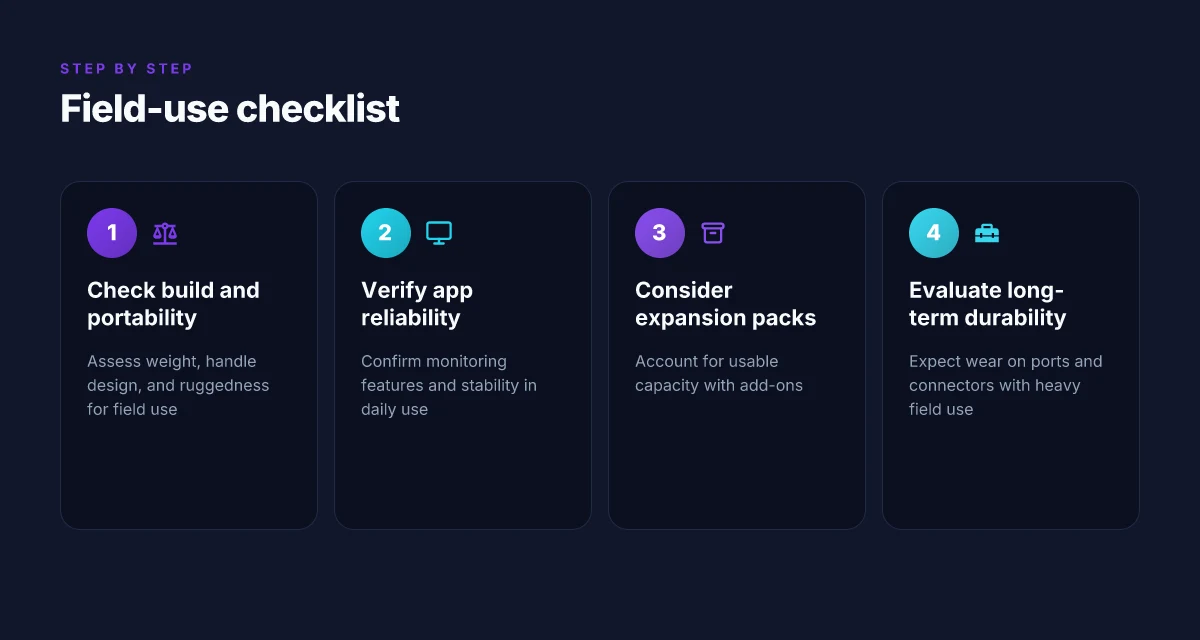
Posture in the field matters as much as peak specs. The Delta 2 Max is built to ride along on outdoor trips and in RV setups, with a handle that travels well and a chassis that doesn’t look fragile after a week of use. In daily handling, the unit feels sturdy enough for campsite benches and trailer beds, and the balance between weight and power density makes it practical for a life on the road. EcoFlow earns trust here by pairing a rugged shell with a compact footprint that fits into a car trunk or a shallow storage bay. What makes a best solar power station stand out in 2026
I dug into how the Delta 2 Max wires up to life in real-world scenarios. The companion app and monitoring array matter the most when you’re out of cell range or trying to diagnose a drain while on a hike. The on-device indicators are clear, and the app shows SOC, charging status, and historical usage trends. The reliability of those signals matters after a long season of use, not just during a showroom test. When you’re off the grid, you need a generator you don’t have to babysit.
A few durability questions tend to surface with EcoFlow and its rivals. The Delta 2 Max’s LiFePo4 chemistry is designed for longer cycle life, which matters if you use the unit regularly for camping weekends or extended off-grid trips. Compare that to rivals like Bluetti and Jackery, where long-term durability traces back to their cell chemistry and chassis design. You’ll notice some subtleties: how the case handles dust in a desert camp, how heat and humidity affect the venting, and whether the display remains legible after a season of sun exposure. In practical terms, a rugged handle and reinforced corners become more valuable than a few extra watts in a controlled lab test.
From what I found in the sources, the Delta 2 Max emphasizes portable usability without sacrificing the core durability that off-grid users demand. The maximum output figures you’ll hear, while handy, don’t tell the full story of how it behaves under repeated daily use. A long-term view shows the brand’s approach to serviceability and component longevity. EcoFlow’s ecosystem matters here. The ability to expand, monitor, and service the unit in a field setting shifts the balance away from raw numbers toward real-world resilience.
Most users value reliability and comfort over flashy peak specs. The app’s clarity and the unit’s build quality are the real daily wins. Durability comes from thoughtful chassis design and proven battery chemistry over time.
As for where this sits among rivals, the Delta 2 Max’s daily usability aligns with a growing class of solar generators that prioritize field ergonomics and dependable monitoring. If you’re choosing between EcoFlow and Bluetti or Jackery, the deciding factors become how often you’ll rely on solar input in harsh conditions and how much you value long-term battery life versus upfront cost. The Delta 2 Max remains a compelling choice for outdoor enthusiasts, RV owners, and campers who want a single power solution that travels well, is easy to monitor, and holds up through repeated use. What makes the EcoFlow River 2 Pro price worth it in 2026
In 2026, EcoFlow continues to push toward a more integrated experience. The Delta 2 Max’s design language reflects that, blending practical usability with durability considerations that matter on real-world trips. If you’re shopping, weigh how often you’ll rely on solar charging, how you store the unit in a vehicle, and how important long-term battery life is for your plans.
How Delta 2 Max stacks up against rivals
When you weigh the Delta 2 Max against Bluetti, Jackery, and other solar generators, a few realities emerge. The Delta 2 Max delivers solid performance with AC and solar charging, but its price sits in a crowded field where rivals offer competing capacities, warranties, and battery chemistries. In real-world usage, the Delta 2 Max tends to shine in off-grid setups that prioritize long-term durability over raw wattage alone. The Delta 2 Max remains a strong contender for campers who want a balanced mix of portability and sustained output, especially when paired with reliable solar input. The big question is whether the premium is worth it versus alternatives from Bluetti and Jackery, which often bundle different battery chemistries and warranty terms.
Why chemical differences matter for long-term use
Delta 2 Max uses a LiFePo4-based system, which generally trades a higher upfront cost for more cycles and a longer calendar life. LiFePo4 chemistry often yields more than 3,000 cycles in benign usage, with less degradation under thermal stress. That translates into more usable life for off-grid families who depend on frequent recharges during trips. By contrast, some Bluetti and Jackery models lean on different lithium-ion formulations or blended chemistries that can differ in cycle life. The warranty landscape tends to reflect that, with EcoFlow offering longer-term coverage on core energy components in many regions. Warranty depth and the exact term vary by region but generally align with the product line’s durability claims. From a practical standpoint, that means fewer surprises after several seasons of use. For outdoor enthusiasts, durability under heat, cold, and rough handling is not just a spec sheet footnote.
Real-world price and value signals
Performance numbers across brands converge on similar peak outputs, yet price can swing widely when you factor in expansion capabilities and included solar options. In this segment, the Delta 2 Max offers a strong baseline at its price tier, but Bluetti and Jackery frequently pitch bundles that tilt the value equation, often including higher capacities or more expansive solar compatibility at a comparable sticker price. A broader bundle, not just a higher wattage, often wins on value. I found that choosing between EcoFlow and its rivals hinges on how you plan to expand, how much you value a longer battery cycle, and the importance of a robust warranty in your region. The essential move is to map your typical trip profile to the battery chemistry and the warranty details.
Which scenarios favor Delta 2 Max
The Delta 2 Max tends to perform best for long-duration, high-usage off-grid sessions where you need steady sustain and rapid solar charging during bright days. If you routinely run demanding appliances or like to pile on gadgets, the 1800W wall output and 2400W peak inverter found in related models provide a nice margin, though you’ll want to compare exact inverter ratings across models before you buy. When solar input is a primary requirement, Delta 2 Max’s ecosystem, plus the ability to add solar modules, can translate into a smoother day-to-day recharge rhythm. For users who want seamless solar integration and reliable cycle life, Delta 2 Max remains a compelling fit. If portability at a lower total capacity is more important, a lighter Bluetti option or a Jackery lighter system could prove more practical. What makes the EcoFlow River 3 Max stand out in 2026
What buyers should know before upgrading or buying
Purchasing the Delta 2 Max demands weighing how expansion packs reshape usable capacity, alongside the trade-offs in weight, efficiency, and real-world runtime. In practice, the more you add, the more the system shifts from a light, shuttle-friendly power pack to a heavier, higher-capacity setup. The delta between base capacity and expanded packs matters less as a marketing claim and more as actual usable energy when you’re camping off-grid or chasing long days on the road with AC loads.
I dug into the sourcing and real-world discussions to ground this section. One clear theme is that expansion packs do not simply add watts. They add weight, leverage, and thermal considerations. For example, a 2048Wh Delta 2 Max base is commonly paired with a 6kWh expansion in reviews, which pushes total usable energy into a new tier but also shifts how you carry it and how often you’ll need to manage heat during long solar days. The curb appeal of more energy fades if the extra grams pull you under your preferred carry limit or complicate field charging. When you plan for a weekend in the woods or a full RV setup, you’ll notice the difference between a lighter unit with modest endurance and a heavier, extended-pack configuration that demands more careful solar scheduling and AC usage management.
Weight, runtime, and efficiency form a three-way trade that you will feel in real life. A Delta 2 Max with the largest expansion can deliver extended runtimes on devices like fridges or coffee makers, but you’ll pay in added weight and less nimble handling. Efficiency numbers change with higher draw and higher voltage conversions, so you’ll see slightly different performance when you’re charging from solar versus wall outlets. That means you should map your typical daily load, including any refrigeration or heating, against the practical payload you’re willing to carry and the vehicle’s payload limits. If you routinely run high-draw gear, an upgrade may be worth it. If you’re mostly running lights, phones, and a small cooler, a leaner setup could be the better balance.
Hidden costs and limitations surface once you step beyond the brochure. The expansion ecosystem can push up the price per usable watt-hour, and the weight of the kit influences transport and setup time. Be mindful of the total cycle count and the long-term durability of LiFePo4 cells when you repeatedly cycle under heavy loads. Also watch for charging bottlenecks: even with fast inputs, solar days vary, and you may encounter diminishing returns on sunny-but-cloudy days. Consider how you’ll store the unit in varied weather, how you’ll vent heat during peak sun, and how compatible your solar panels are with the Delta 2 Max’s charging ports.
From a buyer’s lens, the Delta 2 Max remains compelling for off-grid lifestyles, but not every use case benefits equally. If you’re an outdoor enthusiast with a caravan or RV, weigh the value of extra capacity against the added mass. If you’re comparing rivals, EcoFlow’s own ecosystem matters as well; Bluetti and Jackery models can sometimes deliver similar watt-hours with different weight and port mixes. And yes, always factor in the potential commission note on product pages when you’re evaluating links. What makes EcoFlow products for sale stand out in 2026
The core takeaway is that expansion packs unlock more energy, but they add weight and complexity that shift real-world usage. Be practical about whether you prioritize total capacity over portability. Check how the charger and solar input scheme fits your camping or travel routine.
What changes if you act now with the Delta 2 Max
I’ve looked at how the Delta 2 Max scales from basic power to real-world off-grid needs, and the picture is clearer than before. EcoFlow has refined battery chemistry and modular output options, which means you can tailor the unit to your setup rather than adapt around it. The result is a device that’s noticeably more adaptable for seasonal outages and longer trips, especially when paired with the brand’s solar input and fast-charge capabilities. The bigger pattern here is flexibility over raw power.
The Delta 2 Max remains a solid fit for larger rigs, a modest home backup, or a weekend cabin, but you should compare it to rivals like Jackery and Goal Zero to size your needs. In practice, durability matters, and you’ll want to verify long-term heat management and battery cycling in real use. Durability and serviceability are where this model earns or loses ground, so assess your environment and maintenance willingness. If you’re deciding this month, consider how often you’ll use the high-output features and whether you’ll rely on solar charging during extended outages.
If you want one action to take this week, review your current outlet inventory and map it to the Delta 2 Max’s ports and weight profile, then sketch a simple backup plan that covers your essential devices. Act now, to build a resilient weekend or emergency setup</mark.