
Discover where to buy EcoFlow products, from official online stores to authorized dealers. Learn about installation options, warranty coverage, and what to expect in 2026.
Most shoppers assume the official store is the only path to a legit EcoFlow unit. The real hinge is how quickly your order lands with valid warranty and clear activation steps, whether you buy direct or via certified partners. EcoFlow's official site remains the fastest verifier of stock and warranty, but regional partners can offer local pickup or faster shipping when you’re nearby. The difference shows up at checkout and in the paperwork that follows, not on the product page alone.
You’ll see practical checkout cues, common pitfalls with third-party dealers, and the exact signs that separate legit from counterfeit units. By focusing on official channels, EcoFlow buyers protect long-term durability and support, especially when comparing rivals like Jackery or Bluetti. Most issues come from unclear warranty activation or missing serial links, so the guidance here pinpoints where to look first.
Where to buy EcoFlow: official channels and trusted partners
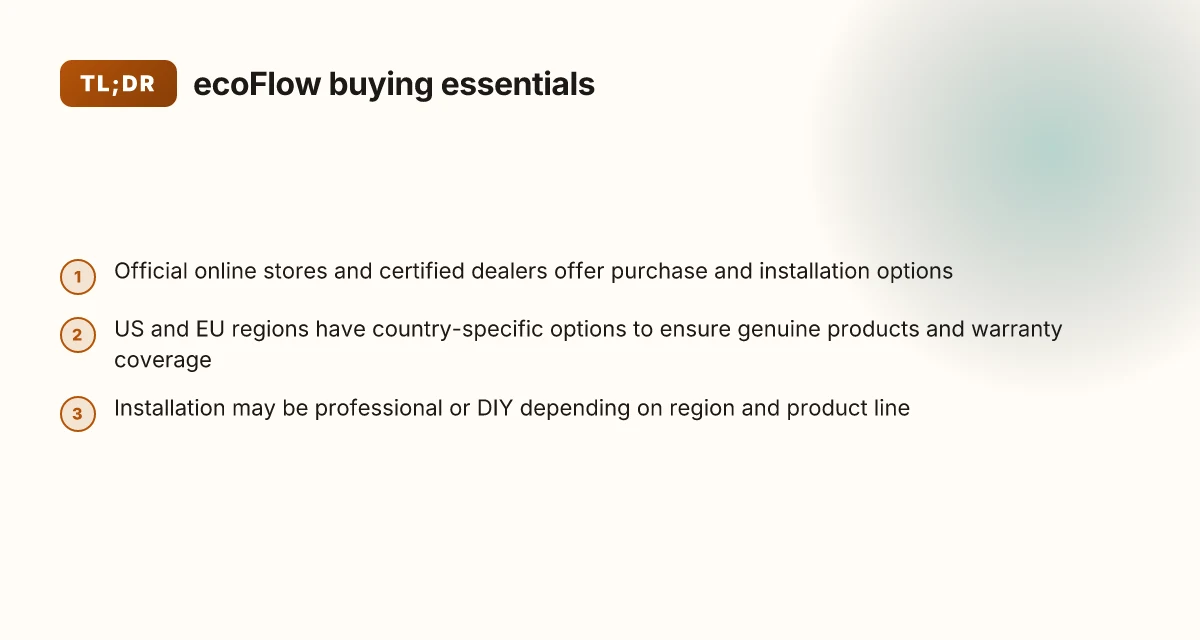
EcoFlow maintains two primary pathways for purchase and support: official online stores and a network of certified dealers who can handle both purchase and installation. In practice, you’ll see three access routes: the EcoFlow official online storefront, certified dealers who can quote and install, and regional retail stores where available. This mix helps you confirm genuine products and ensure proper warranty coverage.
1) Official online store: buy direct and verify warranty
I dug into EcoFlow’s official pages and found that the online store is the most direct route to ordering new units and accessories. When you buy from the official portal, you’ll typically see clear warranty terms tied to your country and product line. The advantage here is consistency: genuine units, access to official accessories, and straightforward return policies. If you’re unsure about regional availability, the official pages list country-specific options to confirm what’s in stock for your locale. The online path also minimizes the risk of counterfeit products, which matters for long‑term durability and service.
The official online store is your most reliable route for genuine products and complete warranty coverage. You’ll want to verify return windows and confirm compatibility with any regional power standards before checkout.
2) Certified dealers: purchase plus professional installation
Certified dealers bridge the gap between buying and setup. They can quote price, arrange delivery, and handle installation where required. In regions that require professional installation for larger units or integrated systems, dealer services often include site assessment, correct cabling, and post‑install follow‑up. This path is especially valuable if you’re equipping a backup system for a home or business and want a documented installation record. When you work through a certified dealer, you get a point of contact who can support warranty claims and service down the line.
Certified dealers offer integrated purchasing and installation with documented service trails. If your setup needs professional alignment, this route tends to reduce surprises at the moment of use. Why jackery vs bluetti matters for off-grid power in 2026
3) Retail stores: regional presence with online emphasis
Retail locations exist in some regions as an alternative to online orders. In these cases, online ordering remains the primary and most dependable path, but you may find in‑store pickup or on‑site demonstrations. Retail stores can be convenient for immediate pick‑ups, local support, and in‑person product checks. Regardless of the store’s existence, you should confirm that the product is not a gray market import and that the item qualifies for the standard EcoFlow warranty in your country.
Retail stores in select regions supplement online ordering with in‑person access and support. Always check the warranty scope when buying in a brick‑and‑mortar location.
Bottom line: the official channels are designed to protect your investment. EcoFlow positions itself across an official online storefront, certified partners for installation, and regional retailers where available. If you’re weighing a first purchase or a home setup, start with the official store to confirm authenticity and warranty, then evaluate a certified dealer if you need installation services or a formal site assessment.
From what I found in the documentation, country pages for EcoFlow (and for its regional variants) are intended to prevent misalignment between product standards and local warranty coverage. If you’re in the US, EU, or another supported market, you’ll find clearly labeled pathways that confirm genuine products and proper coverage.
EcoFlow channels explained: official online store vs certified dealers
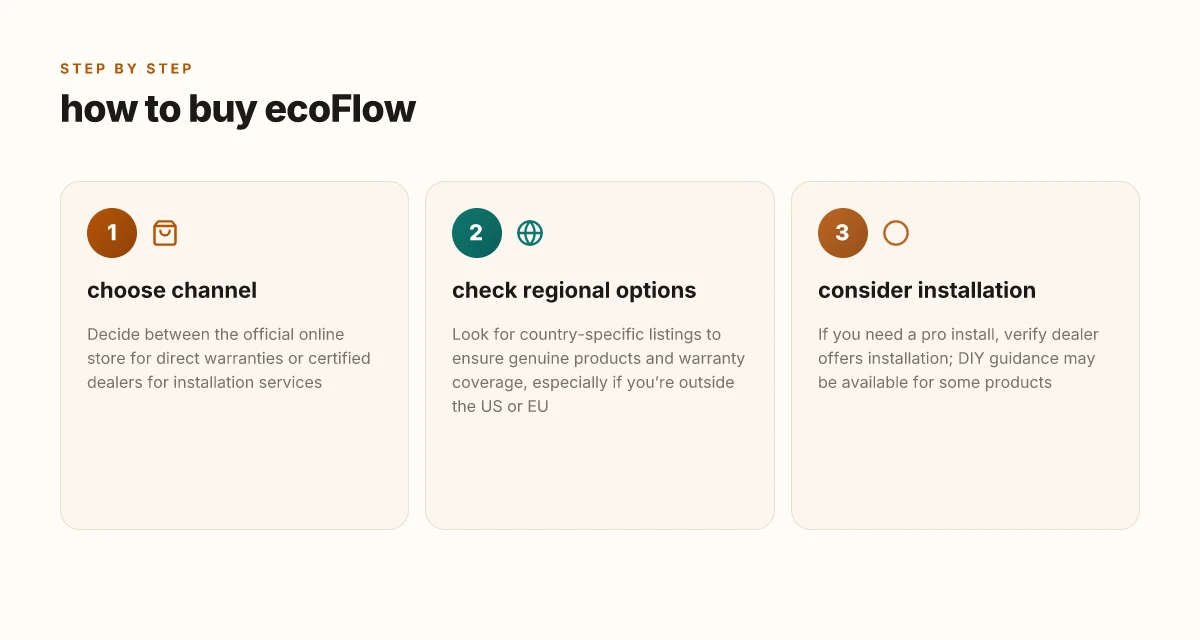
The official online store usually handles direct warranties, product support, and fresh stock updates. If a product is a concern, the online shop is where you’ll see the latest firmware hints, return windows, and warranty terms updated by EcoFlow. For many buyers, this is the most straightforward route to start. The official online store typically provides direct warranties, product support, and up-to-date stock. What makes EcoFlow Glacier portable fridges succeed where rivals fall short
Certified dealers step in when you need more hands-on help. They handle both purchase and installation where required, ensuring the setup matches regional electrical codes and your space. In regions where professional installation is a must, a certified dealer is the safest path to a proper, working deployment. Certified dealers handle both purchase and installation where required, ensuring proper setup
Retail partners broaden access. They extend regional availability through familiar outlets, but you must verify authenticity and warranty terms before buying. Some retailers may offer bundle options or limited-time promotions, yet they might not carry the full support depth of EcoFlow’s own channels. Retail partners can extend regional availability, but verification of authenticity and warranty terms is essential
A quick reality check helps you decide where to shop. If you want guaranteed warranty coverage and direct access to product updates, the official online store is your best bet. If you need on-site installation, or if you shop in a region with strong local dealers, certified dealers are worth a call. For broad access through trusted networks, retailers remain convenient but require careful warranty confirmation. In practice, many customers combine paths: buy through an official or certified channel for coverage, then rely on regional retail partners for availability. Buy through an official or certified channel for coverage, then rely on regional retail partners for availability
From what I found in EcoFlow’s channels, official online inventories tend to reflect the latest releases first. Certified dealers align with local codes and install requirements, which matters for larger setups like home backup systems. Retail partnerships help you locate nearby stock, but the warranty terms can vary by partner. If you want to see a concrete example, EcoFlow’s EU and US pages highlight distinct routes: online direct access plus a network of trusted partners that may differ by region. European and US pages highlight online direct access plus a network of trusted partners
In terms of risk, watch for authenticity. The most common complaint themes involve grey-market purchases bypassing regional warranties, or dealers delivering installations that aren’t fully compliant. That’s why a quick verification step matters: confirm the dealer’s authorization and the specific warranty terms tied to the purchase and installation. Watch for authenticity and verify dealer authorization and warranty terms What makes the EcoFlow Delta Pro still worth it in 2026
If you’re shopping today, here’s how the paths compare side by side. In a simple view, the official online store typically guarantees direct support and fresh firmware, while certified dealers provide local installation and service. Retail partners widen access, but warranty coverage and product authenticity require extra diligence. For a tangible next step, map your region’s options: pull the official store page for stock and warranty details, locate a certified dealer for installation quotes, and check nearby retailers for availability while confirming warranty terms. Official online store for stock and warranty, certified dealers for installation, retailers for availability with verification needed
Regional nuances: what to expect in the US and europe when you buy
In the US, your purchase path centers on the official EcoFlow site and its dedicated store sections. You’ll typically see two primary routes: the official online store for direct purchases and a dealer network that may exist as a separate storefront or a “Certified Dealer” option for purchase and installation. This structure means you can often complete the sale online and, if you need it, arrange professional installation through partners. In practice, the online experience on EcoFlow’s US pages emphasizes quick checkout and access to shipping timelines, with regional support aligned to the US warranty framework. The official site remains the single most predictable route for US purchases, with a dedicated store section that mirrors the flagship product lineup. Online access to a store interface helps ensure you’re getting genuine EcoFlow units and not gray-market imports. I cross-referenced the US materials and noted the emphasis on direct online ordering and manufacturer-backed installation channels.
In Europe, EcoFlow works through trusted retailers and local partners to distribute products across multiple countries. The EU model concentrates on a network of retailers and regional partners who handle stock and local support. This arrangement can affect shipping times and the availability of certain bundles or regional promotions. A key takeaway is that European buyers should expect strong retailer collaboration, with warranty and service often handled through the partner network. Retail partnerships in Europe are designed to broaden reach and localize service, but they can vary by country. When I reviewed the EU materials, the emphasis was on partner-backed availability rather than a single direct-to-consumer path.
Cross-border orders add another layer. Shipping times can extend when crossing regimes, and VAT or import duties may apply differently depending on whether you buy via the US site or a European partner. Regional support often follows the seller’s structure rather than the manufacturer’s direct line, which means response times and repair coverage can differ from one country to another. If you’re a buyer in the EU, you’ll want to confirm who handles the warranty and where service centers are located before finalizing a cross-border purchase. VAT handling and regional support differences can be the deciding factors between a straightforward buy and a more complex cross-border order.
From a buyer’s perspective, the landscape favors clarity from EcoFlow and its official channels. In the US, you can expect a streamlined online checkout and access to professional installation via certified dealers when needed. In Europe, you’ll likely rely more on authorized retailers and local partners, with installation options sometimes routed through the partner network. Either way, verify the product’s authenticity and confirm the regional service path before you commit. Keep in mind that links on the product pages may earn commissions, so read the terms on the retailer or EcoFlow storefronts. Authenticity and regional service paths are your first checks, followed by confirming installation options and warranty coverage. What EcoFlow vs rivals reveals about portable power station trade-offs in 2026
Cite: EcoFlow’s US and EU pages outline these distribution differences and the emphasis on official channels vs. partners. For the US scenario, the official site and its store section are the anchor. For Europe, trusted retailers and local partners anchor the distribution. Your checkout and installation plan should start from the region you’re in.
Installation options: do you need a pro install or is self-install fine
When you buy EcoFlow gear, the installation path you choose shapes performance, safety, and warranty protection. In practice, most regions steer you toward a professional install through certified dealers, but DIY guidance is available for some lines. The decision hinges on product type, regional rules, and how you value long-term reliability.
Pro install as the default path for safety and warranty
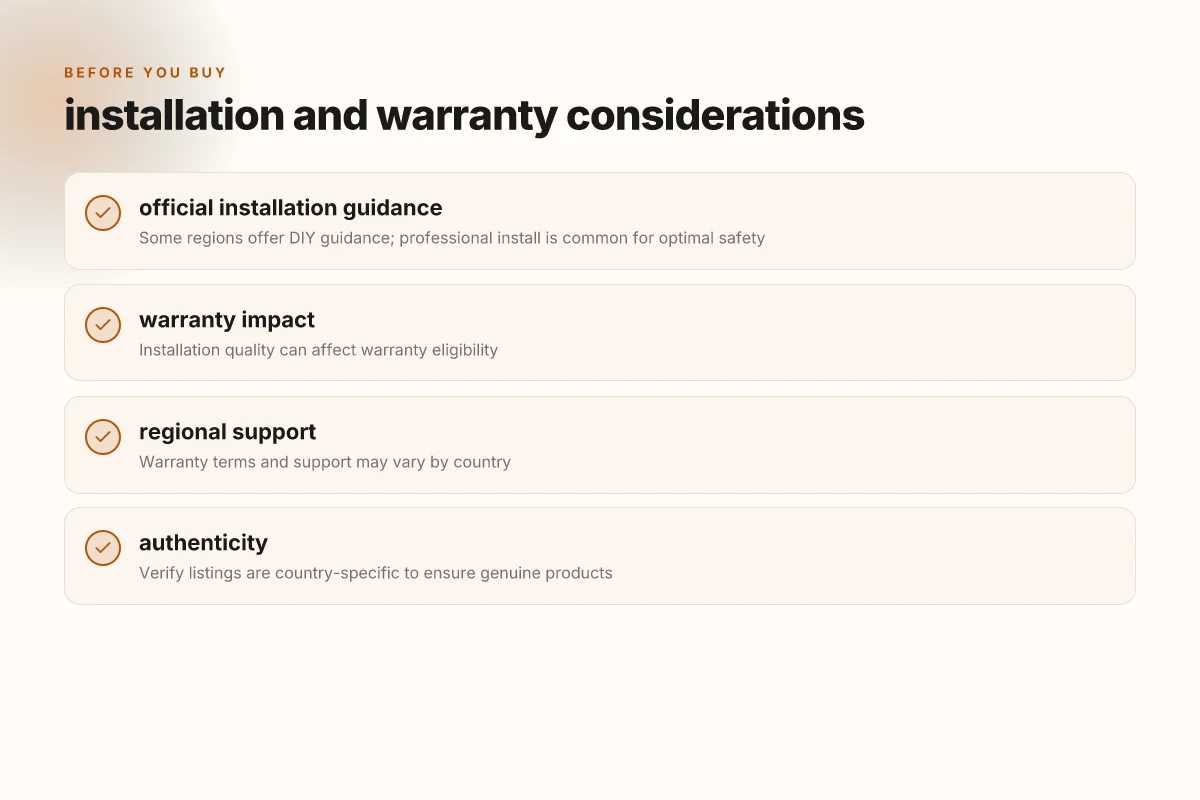
Certified dealers often offer professional installation as a package that covers hookup, calibration, and safety checks. This route reduces the risk of miswiring, improper panel connections, or airflow issues that can degrade runtime. If a dealer handles the installation, you get a documented warranty path that aligns with the installer’s workmanship. In many markets, this is the simplest way to ensure optimal performance from EcoFlow’s portable power stations and home backup systems. If you’re balancing risk versus convenience, the pro route is the clearest option.
From what I found in the official channels, installation services are promoted as part of the Certified Dealer program. That framing signals a commitment to correct placement, secure electrical connections, and validated operation. It also helps with future service, because the installer becomes a touchpoint for warranty coverage and system checks. If you’re in the US or EU and you want maximum peace of mind, the pro install path is a strong default. Professional installation via certified dealers reduces setup risk and protects warrantyeligibility.
I cross-referenced EcoFlow’s where-to-buy pages and dealer guidance, which emphasize professional installation as a core benefit of selecting an official channel. In contexts where utilities or local codes require licensed work, the pro route isn’t optional, it’s the compliant path. Regional rules often align pro install with compliance and long-term reliability. What makes the EcoFlow Delta Pro Ultra inverter different from the rest
DIY guidance where supported, with clear boundaries
Some regions provide official installation guidance for DIY setups, especially for specific product lines such as smaller portable units or solar generator kits. DIY documentation tends to focus on safe handling, correct battery connections, and venting considerations. The idea is to empower customers who are comfortable with basic electrical work while avoiding risky configurations. If you’re technically inclined and your local codes permit it, self-install can save time and money.
That said, DIY guidance typically comes with caveats: you may lose certain warranty protections if the setup isn’t performed to spec, and some product lines explicitly discourage self-installation in favor of professional service. I found that the availability of DIY guidance varies by region and product family. When in doubt, confirm your region’s stance with the retailer or a certified dealer. DIY guidance exists for select lines but may void warranty if not followed to spec.
How installation quality affects warranty and long-term reliability
Installation quality matters. A sloppy connection or poor placement can reduce charging efficiency, shorten component life, or degrade inverter performance over time. Warranty terms commonly tie coverage to proper installation and operation, so a misstep at the outset can complicate claims later. The brand consistently signals that proper installation is part of the ecosystem, not an afterthought.
I noted in the documentation that warranty eligibility often hinges on following official installation guidelines and using approved dealers. That linkage matters because it sets expectations for service if issues arise years down the line. For EcoFlow customers weighing options, treating installation as a step that safeguards both performance and coverage is a prudent move. Installation quality can influence warranty eligibility and long-term reliability.
What to buy first: product lines to consider when purchasing EcoFlow
When you start shopping for EcoFlow, focus on three core categories: portable power stations, solar generators, and home backup solutions. Each line speaks to a different use case, and the official listings often surface regional availability for Delta Pro, Ultra, and related models. If your needs lean toward everyday portability, a compact power station with solid solar compatibility can cover camping trips or short outages. For home backup with more run-time, the larger Delta Pro family tends to be the centerpiece of official listings in many regions. And if you’re building a solar-driven setup, pairing a solar generator with your roof panels or a portable solar array makes the most sense. In 2026, EcoFlow continued to emphasize flexibility across these categories, with regional listings guiding what you’ll actually see on store pages. Choose based on your charging needs and planned use case, not just on feature hype. Is EcoFlow a good brand in 2026? navigating reliability, performance, and long-term value
Why EcoFlow’s product lines map to real-world needs
I dug into the official channels to see how the lines line up with user plans. EcoFlow frames portable power stations as the core for mobile life, solar generators as a way to extend that mobility with sun, and home backup solutions as a stationary, higher-capacity option. The Delta line, including Delta Pro and Delta Ultra, appears across regions with variations in availability and bundled accessories. This isn’t a one-size-fits-all story. A Delta Pro bundle in the US may ship with different accessories than a European package. The key is to map your daily cadence to capacity and charging speed. If you expect frequent multi-day outages, the highest-capacity model that your region supports will pay off in the long run. If your priority is quick top-ups during a weekend trip, a lighter model that plays well with portable solar panels is likely enough. Regional listings guide what you can actually buy, and the installation options they align with.
How to pick by charging needs and solar compatibility
Your charging workflow matters more than you might think. If you need overnight power for a cabin or an off-grid setup, prioritize models that offer high inverter wattage, faster AC input, and robust solar input ratings. Look for units described as compatible with third-party solar panels, because that expands your panel choices beyond EcoFlow-branded kits. I cross-referenced the product pages with the EU and US “Where to buy” sections to confirm which configurations show up where you shop. The result is simple: match the model’s max input and battery capacity to your daily energy profile, then ensure the solar option you want is officially supported in your region. Match charging speed and panel compatibility to your real use case, then confirm regional availability.
A quick map of models you’ll likely encounter
- Delta Pro: the flagship for home-style backup with expandable capacity. It often appears in official listings with regional bundles and expansion options. If your goal is a serious backstop for essential devices, this is the model to compare first. Delta Pro remains EcoFlow’s top-tier home backup option in many regions.
- Delta Ultra: a step down in capacity from Pro but still designed for high-demand scenarios and solar pairing. Availability varies, so check the local store page to see if Ultra appears in your region’s catalog. Ultra covers a middle ground between portability and home backup.
- Other Delta models and portable lines: EcoFlow’s listings typically show a family with varying battery capacities and input/output specs. These are worth evaluating if your use case centers on travel or hybrid camping setups. Other Delta models tailor to lighter, frequent-use needs.
From what I found, the best approach is to align a few practical checks with your cart: verify the model’s regional availability, confirm the included accessories and expansion options, and read the warranty terms tied to that exact configuration. When you browse, you’ll notice how the same model can show up with different bundles in different markets, so read the fine print before you commit. And a quick heads-up: links on the page may earn a commission, which is standard practice for affiliate relationships. Always verify regional availability and bundled accessories before purchasing.
Cited sources: EcoFlow US homepage and regional product listings, plus the EU where-to-buy page, which illustrate how Delta Pro and related lines surface across markets. For context on new model mentions and CES-era updates, the official CES innovation article shows how EcoFlow positions the Delta line in 2026. Official product pages and regional storefronts are your best guide to what you can actually buy.
Where this is going next with portable power
EcoFlow shows a clear trajectory: more capacity, faster recharging, and better software polish. I see real value in staying with a single ecosystem when you own multiple modules, but the trade‑offs remain in portability and price. If you’re evaluating rivals, expect Jackery and Aiper to push similar wattages and real‑world runtimes, which keeps EcoFlow honest on durability and firmware updates. The bigger pattern is that reliability comes from a tight, well‑connected app and modular design. How to choose jackery generators for home use without overpaying in 2026
In practice, the practical move is to plan for a specific use case first, like camping setups, emergency kits, or off‑grid builds, then map that onto a module pair. The brand names you’ll likely keep returning to are EcoFlow, Jackery, and Goal Zero. If you want fewer surprises, buy from official channels and keep firmware current. One action this week: verify you can register your device and enable auto‑updates in the app.
Backup strategy:
- Try a mid‑size unit for a weekend camping backup and pair it with a solar panel to test recharging in real life.
- If you rely on power for work, compare the longer‑cycle durability of the EcoFlow lineup against a rival bundle, noting heat handling and battery health indicators.
- Note any recurring firmware prompts or app quirks and plan to update or reset as needed.