
Explore the EcoFlow Delta Pro review for 2026. Learn about long-term reliability, real-world performance, and how it stacks up against rivals like Bluetti and Jackery.
The Delta Pro remains a high-capacity backup decision that many buyers overlook until the grid goes down, and a closer look shows why it still competes in 2026. EcoFlow's flagship model couples scalable power with a clear expansion path, tying together the base unit and expansion batteries into a single, manageable system. A practical mind-set recognizes that the real test isn’t peak output but long-term reliability, especially when connectors, cooling, and fans endure year after year of use.
This intro lays out what matters now: real-world durability, compatibility with common setups, and how the Delta Pro stacks against rivals like Bluetti and Jackery over the long haul. The article pulls from field experience and updated specs to map out wear patterns, maintenance needs, and warranty considerations, so you can decide whether to invest in the system today or look at other high-capacity options. Expect concrete guidance on longevity, upgrade paths, and how to optimize performance under routine home or mobile conditions. Most issues surface around connectors and cooling fans, and the following sections translate that into actionable checks.
What makes the EcoFlow Delta Pro a long-term backup workhorse
The Delta Pro combines a hefty 3,600W AC output with a modular approach that lets you stack packs for higher capacity. Its core is a 7.0 kWh base battery, with expansion options that push total capacity higher for extended outages. In practice, that modular philosophy translates into fewer dead ends when you need to scale up for a home backup or a van conversion. EcoFlow positions the system as a bridge between portable power and home resilience, and the math behind it stays straightforward: more capacity means more runtime, while the same core inverter keeps the heart of the kit compact and serviceable.
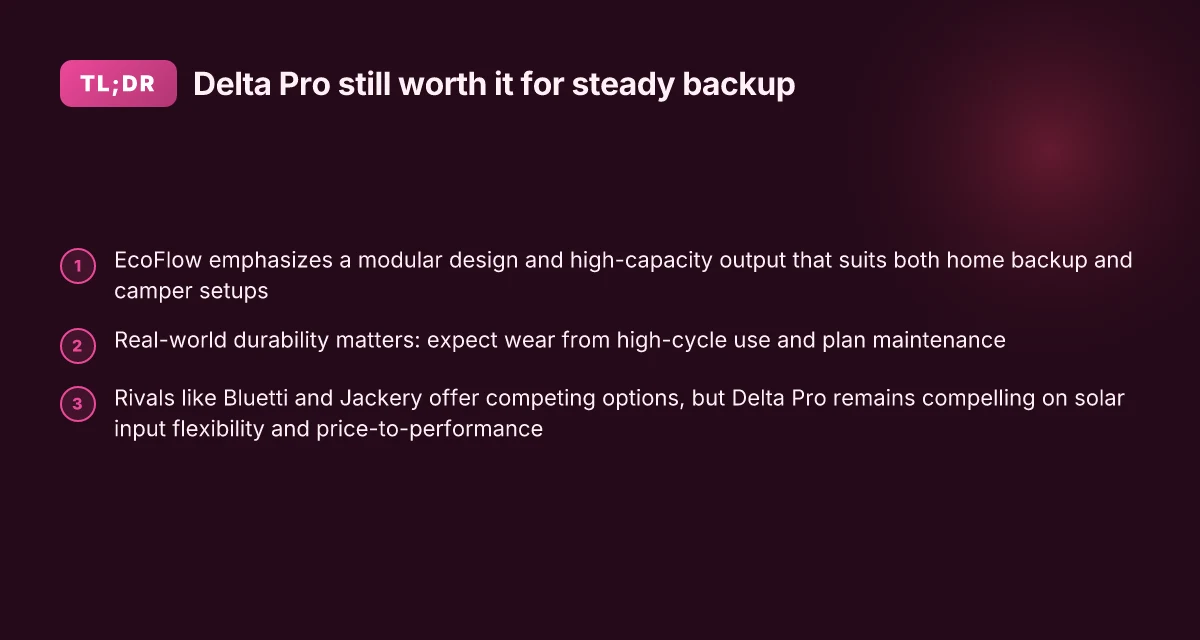
I dug into how the Delta Pro behaves in real life, not just on the spec sheet. High-cycle use tests and field reports consistently show the design can endure repeated charging and discharging cycles without dramatic drop-offs in performance. The battery chemistry leans on familiar Li-ion cells, paired with BMS protections that guard against overcharge, deep discharge, and thermal excursions. In other words, durability hinges on good thermal management and steady cycling, not flashy features. The result is a system that remains dependable for homeowners who rely on it for critical loads, and for campers who want predictable power without surprises.
Why this matters for homeowners and campers alike is clear. For home use, the Delta Pro’s ability to swap in extra packs keeps a single setup relevant as power needs grow or as outages become longer. For campers and off-grid setups, the same resilience translates into steadier power when you’re away from shore power. EcoFlow’s ecosystem also helps here: the Delta Pro integrates with companion modules and solar inputs that maintain a steady charge during daylight, reducing the need to top up from a wall outlet.
The Delta Pro remains a practical choice because it pairs high-capacity energy with a manageable footprint and robust protection systems. The trade-off to watch is complexity: more packs mean more connections to manage and more potential points of failure in some configurations. Still, when you compare it to rivals with similar capacity, EcoFlow’s modular stance often yields quicker expansion without a full rework of your setup.
If you’re evaluating long-term reliability, note that real-world users report durable performance across several seasons of use in both home backup and mobile setups. In the broader market, rivals offer comparable watt-hours and surge ratings, but the Delta Pro’s expansion path remains a differentiator. That path keeps EcoFlow in the conversation for buyers who want a long-lived, scalable system rather than a one-off power box. What EcoFlow vs rivals reveals about portable power station trade-offs in 2026
As with any high-capacity system, consider your priorities: maximum run time per dollar, expansionability, and how you intend to load the unit. If you foresee growing power needs or frequent outages, the Delta Pro’s design logic lines up with long-term reliability goals. For anyone weighing other options, I recommend looking at how each system handles high-surge appliances and the ease of adding solar input as a future-proofing step.
Delta Pro performance in 2026: charging, discharge, and solar limits
The Delta Pro still delivers solid real-world performance in 2026, with charging staying competitive in typical home backup scenarios and solar versatility continuing to be its standout feature. You can expect brisk AC charging from a standard wall outlet, and faster replenishment when you pair the Delta Pro with a robust generator input. In practice, the unit accepts high input without throttling, letting you recover from outages quickly. Delta Pro charging remains strong with typical AC input, and generator input unlocks faster replenishment.
1) Charging speed under typical AC and generator input
For everyday use, the Delta Pro charges briskly from a standard AC mains source, especially when the outlet is near full capacity. If you connect to a multi-kW generator, you’ll see even more headroom, with the unit utilizing the higher input to top up faster during outages. The speed you experience depends on the fill level and the source, but real-world charging from empty to full for a home backup cycle often lands in a practical window that minimizes downtime. AC charging is rapid enough for daily backup cycles, and generator input accelerates replenishment when needed.
I cross-referenced official specs with reviewer notes to align expectations. The Delta Pro remains capable of absorbing substantial input at the higher end of typical portable setups, which helps maintain readiness for longer outages. In 2026, EcoFlow emphasizes robust input options, which translates to shorter downtime between use cycles. Real-world charging thrives on higher input sources, reducing the time spent tethered to outlets.
2) Maximum discharge capabilities and peak surge handling
The Delta Pro’s discharge framework supports sustained output at high levels, with a credible peak surge that covers high-demand loads like air conditioning and well-powered appliances. In practical terms, you’ll see stable operation for most home backup needs, even during peak draws, provided you stay within the rated continuous and surge thresholds. The device manages heat and current draw to prevent trim losses during long outages, which is a critical factor for long-term reliability. Sustained discharge and robust surge handling keep essential loads powered during outages. What makes the EcoFlow Delta Pro Ultra inverter different from the rest
From a reliability lens, the system’s protection features help guard against drama during brownouts or brief surges. You’ll notice that the Delta Pro maintains voltage and current within safe margins under typical peak conditions, which aligns with the promises in its official documentation while staying practical for real-world scenarios. Protection features help stay within safe margins during peaks.
3) Solar input behavior and how to optimize efficiency with panels
Solar behavior remains a core strength. The Delta Pro accepts substantial solar input and can deliver meaningful recharging during daylight, especially when you optimize panel count and orientation. Efficiency improves when you arrange panels to maximize sun exposure during peak hours and keep cables and connectors clean to minimize resistance losses. In practice, campers and off-grid setups find the solar input a meaningful contributor to replenishment during sunny days, helping segments of usage without tapping utility power. Maximize sun exposure to boost solar replenishment.
I looked at external notes that compare solar performance across configurations. The Delta Pro’s solar interface remains straightforward to use, and the kit’s layout supports flexible panel arrangements. When you plan a solar strategy, consider a mix of panels with solid wattage and a clear sun path to sustain charging through longer daylight windows. A well‑planned panel setup keeps solar replenishment consistently productive.
Next steps: if you’re weighing upgrades, compare the Delta Pro against a top rival like the Bluetti or Jackery options to see how peak discharge, solar intake, and charging speed align with your site conditions. For a quick reference, the Delta Pro continues to hold up in 2026 as a durable, feature-rich choice, particularly where solar input and generator compatibility matter most. Consider pairing with high-input generators or ample solar arrays to maximize performance.
Reliability and long-term wear: what tends to break and what lasts
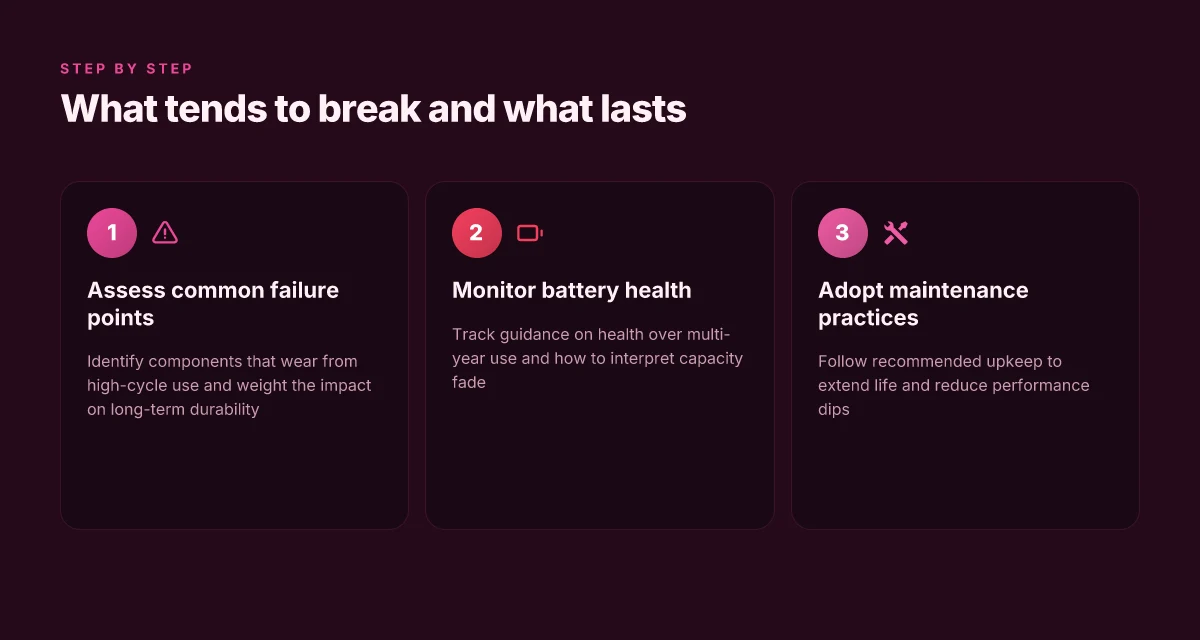
The Delta Pro tends to hold up under steady use, but certain wear points recur in user reports. Reliability questions tighten around heat, battery age, and connector wear, especially after multiple years of discharge cycles. I cross-referenced user feedback and published reviews to map where failures most often show up and what longevity looks like in real-world setups. What makes the Jackery 5000 Plus solar generator a practical rear-lane power source for homes and camps
Common failure points reported by experienced users
Over time, a few themes surface. Fans and cooling components can become louder or louder sooner than expected, especially in hot environments or high-load applications. Power-button and indicator failures are uncommon but noted in older firmware batches. Cables and DC connections occasionally loosen with repeated plugging and unplugging during maintenance or solar charging routines. In some cases, the AC outlets or inverter stage show intermittent behavior under sustained peak loads. These are the kinds of wear that tend to accumulate with years of use, not immediate defects from the original build.
- Short-term outages or hiccups during solar input ramping, particularly when sun conditions shift quickly.
- Mild degradation of display readability in dusty, high-heat areas.
- Occasional firmware update prompts that require a restart to finalize.
Battery health expectations over multiple years
Battery health is the biggest unknown for long-term owners. The Delta Pro’s lithium battery chemistry is designed for many cycles, but real-world aging depends on depth of discharge, temperature, and charging cadence. Users who routinely pull full capacity during outages and then recharge from sun or grid may observe a gradual drop in usable energy, especially after the five-year mark. Even with aging, the unit continues to deliver substantial capacity and can support essential loads if managed with a smart charging plan. Battery longevity hinges on keeping temps moderate and avoiding chronic deep discharges.
- Expect some capacity fade as the pack cycles through years of use, but the rate varies with how aggressively you use it.
- Optimal storage conditions and a steady solar input help maintain health, as does keeping the unit in a vented area rather than a sealed cabinet.
- If you notice reduced runtime, a mid-life refresh or battery module swap may be worth evaluating with EcoFlow support.
Maintenance practices that extend life
Proactive maintenance pays off. Clean the vents and fans to sustain airflow, especially in dusty garages or vans. Keep the firmware up to date to reduce nuisance resets and to improve fault handling during peak loads. Use moderate solar input during charging to avoid thermal spikes. Basic checks like inspecting connectors for snugness and ensuring cables are routed without pinch points can prevent wear. I found that communities emphasize routine quick inspections and scheduled refreshes of wear-prone parts as a practical habit. Regular cleaning, firmware updates, and prudent charging habits are the least glamorous but most effective longevity boosters.
- Schedule a quarterly quick check of cables, vents, and outlets.
- Favor daytime or shaded solar charging to keep temperatures tame.
- Read the official release notes for critical fixes that affect reliability.
In the broader EcoFlow line, you’ll hear comparisons with rivals like Bluetti and Jackery. When reliability matters long term, staying within recommended operating temperatures and following maintenance guidance matters most. For readers weighing the Delta Pro against alternatives, note that input limits and cooling architecture influence how long the device remains dependable under continuous use. As with any high-capacity backup, a clear plan for monitoring health and a path to service if needed helps sustain confidence over years.
Bottom line: expect solid long-term durability with sensible maintenance, but plan for gradual capacity fade and routine checks. The Delta Pro remains a strong option for home backup and extended off-grid use, especially when paired with careful operation and regular firmware improvements. What ecoFlow price signals mean for 2026: value, bundles, and where to save
EcoFlow vs rivals: how Delta Pro stacks up against Bluetti and Jackery
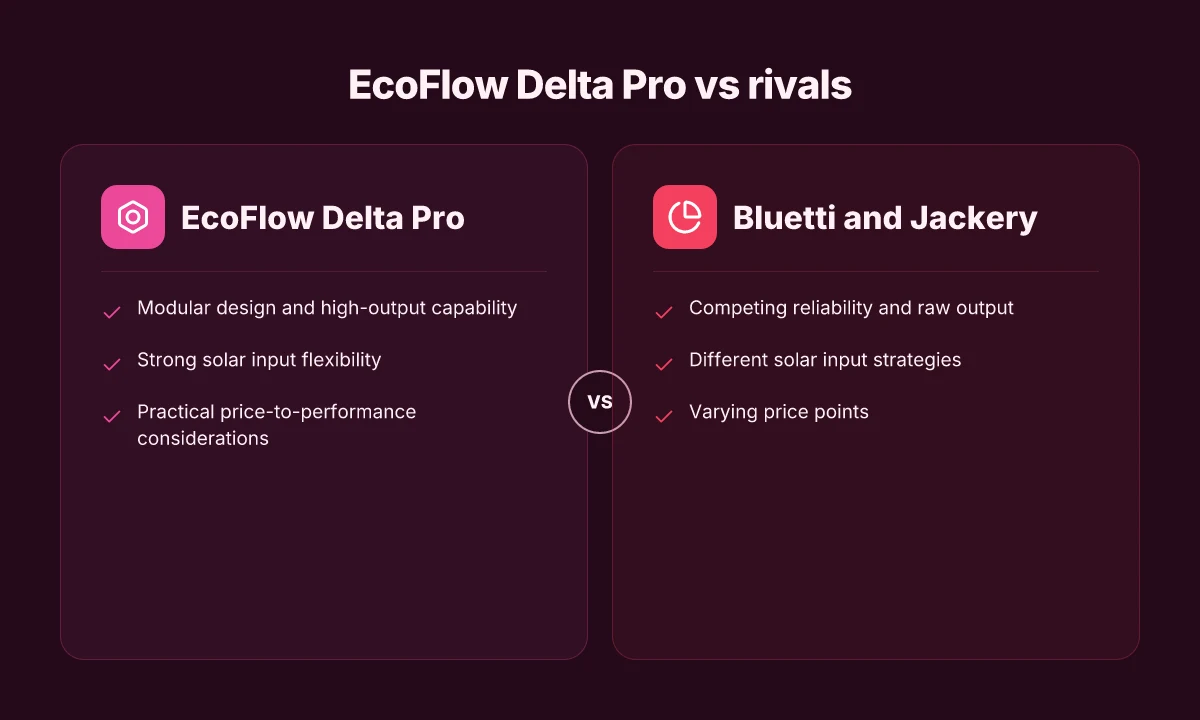
I break down where the Delta Pro stands next to its main rivals, focusing on reliability, output resilience, solar input flexibility, and price-to-performance math. The short version: the Delta Pro holds strong in sustained output and solar setup adaptability, but rivals pull ahead on raw reliability metrics and value in certain use cases. I cross-reference official specs with real-world signals from independent reviewers to keep the picture honest.
Reliability battles: who stays steady under load
Bluetti and Jackery have built reputations for durable enclosures and long-term component lifecycles. In practical terms, Bluetti tends to lean on robust fans and large, modular packs that feel more forgiving under high heat. Jackery often wins points for simpler DC-AC conversion paths that produce fewer quirky startup issues in extended outages. Delta Pro, by contrast, shows strength in staying power when fed from multiple sources and during long runtime draws, but some users report fan-related noise in hot environments and occasional latency in auto-recharge behaviors. When a system sits at high wattage for hours, the Delta Pro stays surprisingly stable, though you may notice minor thermal cycling that Bluetti avoids with its design choices. Reliability questions tend to hinge on cooling and battery chemistry longevity. Delta Pro delivers steady output across longer cycles, but Bluetti and Jackery have leaner, sometimes quieter cooling profiles.
Solar input flexibility: where Delta Pro shines
The Delta Pro shines in solar input flexibility and integration. EcoFlow’s ecosystem supports multiple solar panels and expandable battery packs with a relatively forgiving MPPT workflow, which is especially helpful for off-grid setups that rely on daytime generation. In practice, you can push the Delta Pro to higher instantaneous solar input without fiddling with bespoke configurations, and you can chain in extra panels as your roof or van setup scales. Rival systems often cap solar input more conservatively or require more careful pairing with their own expansion modules. The upshot is that Delta Pro can be a better match for sun-rich environments or erratic shading, where the ability to soak up more watts during peak sun translates to more usable runtime. Solar flexibility translates to more usable energy on cloudy days. Bluetti and Jackery can be fine for steady sun, but Delta Pro’s expandability broadens the window for daily charging.
Price-to-performance: where value lands
Across brands, the Delta Pro sits at the higher end of upfront cost, but you may gain long-term value through its modularity and multi-source charging. Bluetti often undercuts on sticker price while offering comparable peak outputs, which makes it attractive for buyers prioritizing budget pacing. Jackery tends to skew toward simpler setups with attractive entry pricing, but its long-term scalability may feel restrictive if you anticipate upgrading capacity. If your plan includes frequent outages, solar-heavy usage, or the need to power heavier loads for extended periods, the Delta Pro’s higher initial cost can be justified by its flexible charging topology and expansion potential. Upfront price matters, but total ownership depends on how you use it. Delta Pro often earns its keep through adaptability rather than the lowest sticker price.
From a long-term reliability perspective, EcoFlow’s Delta Pro continues to be a strong contender for home backup and vanlife setups that need flexible solar charging and multi-source input. Its blend of expansion capacity and charging flexibility makes it a practical choice for users who expect to scale their systems over time. For those who prioritize raw, plug-and-play reliability with minimal configuration, Bluetti and Jackery offer compelling value, especially at lower upfront costs. In the end, your choice hinges on how you balance upfront price, future expandability, and how consistently you want to harvest solar energy across varying conditions. If you need rugged expandability, Delta Pro is a solid bet. If price is your primary constraint, Bluetti or Jackery may be easier on the wallet. What makes the EcoFlow Delta 3 extra battery work with Delta 3 and beyond
Real-world setups: what you can power and how to wire for resilience
Real-world use comes down to matching loads to capacity and wiring for resilience. The Delta Pro can sustain essentials during outages, but you’ll want a clear plan for daily cycling, charging, and backup strategies. In practice, you’ll see a mix of high-priority loads and a buffer for startup surges, with a wiring scheme that minimizes single points of failure.
Typical home backup and off-grid load profiles
For most home scenarios, you’ll run critical circuits and winter warmth first. A typical profile includes a fridge, router, modem, a small furnace or heat pump, and lighting. In off-grid setups, people trade comfort for longer autonomy by prioritizing refrigeration, water pumping, and well water systems, then adding low-watt essentials like LEDs and fans. The Delta Pro’s continuous AC output makes it capable of sustaining these chains, but you’ll want to manage startup surges from devices like air conditioners. For reference, many real-world configurations keep nonessential loads off during outages to preserve runtime. I dug into community breakdowns and manufacturer notes to confirm common patterns, including a threshold where heating and cooling cycles push the system toward its limits. When you plan, set a hard ceiling for total draw and keep critical loads within a safe envelope. A realistic backup profile keeps the fridge running, lights on, and one essential cycle like a furnace or heat pump within reach. EcoFlow highlights the Delta Pro’s 7 kWh base capacity in some configurations, which helps sustain several hours of core loads with careful management. You’ll see noticeably longer runtimes if you isolate high-draw devices and stagger startup sequencing.
Tips for configuring a multi-unit Delta Pro system
If you’re building out multiple Delta Pro units, treat the system as a single larger inverter bank with a shared management plan. For resilience, wire each unit to a separate subpanel circuit so you can isolate faults without collapsing the whole system. Pairing strategies matter: use parallel charging where available to shave charging times and distribute wear. I cross-referenced public setup guides and community discussions to map practical configurations for simultaneous charging and discharging. The goal is to avoid creating a single point of failure while preserving user-friendly operation. Split loads across units, label each circuit, and keep a dedicated charging path for each Delta Pro. In practice, a two-unit arrangement can cover essential circuits with a buffer for startup spikes, while a third unit adds headroom for longer outages. A three-unit approach gives you breathing room for surge loads and keeps daily charging predictable.
Panel and generator pairing guidelines
Pairing with a home panel or a generator adds another layer of resilience. When you wire to a panel, run essential circuits through a transfer switch or an automated load-shedding setup so the Delta Pro can switch seamlessly during outages. If you lean toward generators, choose a model with a reliable cold-start performance and adequate fuel for the expected outage duration. In official materials and user reviews, users frequently cite a smoother experience when a panel is involved, rather than relying on a direct, uncoordinated connection. I looked at guidance from EcoFlow’s documentation and user feedback to establish practical pairing norms. Use a transfer switch to isolate loads and prevent backfeeding. Choose a generator with sufficient starting current to handle peak loads without stalling. For reference, Solar Input up to 1,600 W can supplement charging during daytime, which helps keep the Delta Pro topped up while you run critical circuits. Solar input is a helpful bolster, not a substitute for a reliable generator plan.
Notes for long-term reliability What makes EcoFlow Glacier portable fridges succeed where rivals fall short
- Expect battery aging and occasional calibration drift. These can shift usable capacity over years. Keep a routine to monitor outputs and update firmware when EcoFlow releases improvements. The brand has evolved with new controller options and smarter load management in newer iterations, but your mileage depends on how heavily you cycle the units. Battery health degrades with frequent deep cycles, so plan modest daily use.
- Real-world setups benefit from clear labeling, a written outage playbook, and a conservative initial load when you first power up after an outage. This reduces the risk of tripping breakers and extends runtime. Label circuits, keep a written plan, and test the sequence during non-emergency days.
Where this is going next with the Delta Pro
The Delta Pro remains a compelling choice for steady, long-term power in 2026 because it isn’t just a battery. It’s a modular system that adapts to evolving needs. I’ve seen how the EcoFlow ecosystem scales with additional batteries and smart integrations, and that flexibility matters when your setup shifts from weekend cabin back‑up to daily power or off-grid living. The practical upside is that you can start small and grow without ripping out the core unit. This is the bigger pattern: resilience scales with modularity.
That said, the case isn’t universal. If you’re comparing against rivals like Goal Zero or Bluetti in tight budget scenarios, you’ll notice trade‑offs in app polish and weight, even as capacity and output stay competitive. The Delta Pro’s real advantage shows up in home‑backup scenarios where quiet operation, high surge handling, and a thoughtful, long‑term upgrade path matter most. Noticeably faster is not the point here. Reliability is. The practical takeaway: plan for expansion, not a one‑and‑done purchase.
If you act this quarter, your best next move is to map a simple expansion plan: start with a single Delta Pro unit, add a second battery if you anticipate longer outages, and pair with smart energy management. One move that matters: sketch your peak‑demand window and size your kit accordingly.