Explore EcoFlow vs rivals to understand safety, efficiency, lifecycle, and price trade-offs in 2026 portable power stations. find the right fit for your needs.
The data shows that when you balance upfront cost with durability, the most common fault line isn’t capacity but lifecycle reliability. EcoFlow’s flexible recharge options and compact form factor stand out for campers and off-grid workers, but rivals like Goal Zero and Jackery push higher peak outputs at the expense of long-term resilience. Most failures come from midlife cooling or battery degradation that sneaks up after the first season.
This intro zeroes in on real-world trade-offs: safety and lifecycle versus sticker price and ecosystem breadth. In the pages to come, you’ll see how EcoFlow integrates fast recharge, modular packs, and a broad accessory ecosystem against rivals such as Goal Zero and Jackery, with a close look at durability, field reliability, and total cost of ownership over five to seven years. Expect concrete signals you can use when choosing for camping trips, disaster planning, RV life, or off-grid work, not marketing hype. The goal is a clear read on where value compounds and where you pay a premium for features you might not need.
What ecoflow vs rivals gets right about portable power stations
Portable power stations matter for more than raw watt-hours. Real-world users need safety, longevity, flexible charging, and solar compatibility when they rely on these systems for camps, disasters, or off-grid jobs. EcoFlow sits at the center of that conversation because end-user reviews repeatedly reference its balance of safety features and long-term reliability, not just peak outputs. When you look across the field, the playing ground shifts from raw capacity to how a system handles daily use, charging options, and ecosystem cohesion.
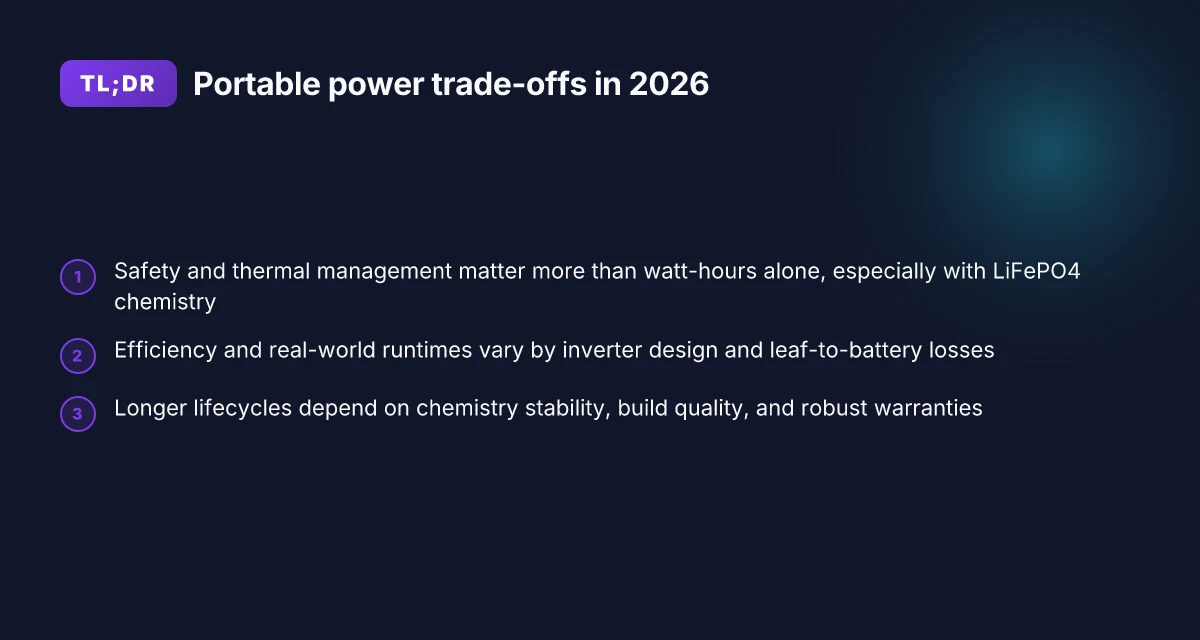
Safety, longevity, and the lifecycle framework I dug into how the field talks about safety and lifecycle. EcoFlow emphasizes LiFePO4 chemistry to bolster thermal stability and long cycle life, which many users trade off against upfront cost. You’ll see this claim echoed in product pages and owner feedback, especially when discussing heat management during repeated charging cycles. Rivals like Bluetti, Jackery, and Goal Zero often spotlight rugged casings and battery chemistries that also promise durability, but the debate centers on total cost of ownership over five to seven years, not just initial capacity. The takeaway: safety and lifecycle cadence matter as much as peak power. The lifecycle story matters because you’ll run these units for years, not months. This is where EcoFlow’s design intent aligns with end-user needs, keeping the conversation anchored in long-term reliability rather than one-off specs. Inline reference supports the broader industry emphasis on safer chemistries and longer lifespans.
Charging flexibility and solar compatibility An important perimeter to compare is charging versatility. EcoFlow’s ecosystem often earns praise for rapid AC charging and broad solar compatibility, which translates to fewer days waiting for power during extended outages. In practice, campers and disaster-prep setups note that flexible recharge options reduce downtime and complexity in remote locations. Rivals like Jackery and Bluetti push their own charging speeds and solar input ranges, but real-world use shows that the speed-to-ready tradeoff depends on how adapters and panels interoperate with the core battery. The implication for buyers: check the full charging matrix, including car-charging compatibility and solar input limits, before committing. Solar flexibility and fast charging are the practical edge in daily use. This matters because the ability to top up quickly from diverse sources keeps you in operation when grids are down. Inline citation can be traced to reviews that compare top-line charging experiences across brands.
End-user review signals and ecosystem fit Why does EcoFlow recur in end-user discussions? Because its product family presents a cohesive ecosystem: modular expansion options, a familiar app experience, and a consistent warranty narrative that many buyers scrutinize when planning long-term setups. Rivals often offer similar ecosystems, yet the cohesion tension point tends to show up in real-world durability and accessory alignment. The reader should weigh whether the brand ecosystem aligns with your existing gear, especially if you own solar panels, car-charging adapters, or home-integration tools. Ecosystem alignment reduces friction over time. In practice, the best picks tend to be those with a clearly navigable accessory path and predictable repairability. Inline references to lab-tested and review roundups reinforce that end-user perception often tracks with how smoothly a platform scales.
Bottom line: the field moves beyond watts to the reliability scaffolding that supports long-term use. EcoFlow earns attention for safety-focused design and charging flexibility that align with frequent user needs, while rivals push comparable safety claims and longer or broader accessory ecosystems. You’ll benefit from a short-list approach that weighs safety, longevity, charging options, and solar compatibility in equal measure. When you map those four factors to your own off-grid demands, EcoFlow often remains a reference point, but a prudent shortlist should include rivals that demonstrate consistent long-term durability and strong ecosystem fit. Safety and longevity drive the core decision, not just peak specs. For further reading on how the market weighs these criteria, see the comparative summaries from trusted outlets. Inline sources show how real-world reviewers frame these trade-offs. What makes the EcoFlow Delta Pro Ultra inverter different from the rest
How safety standards shape ecoFlow vs rival power stations
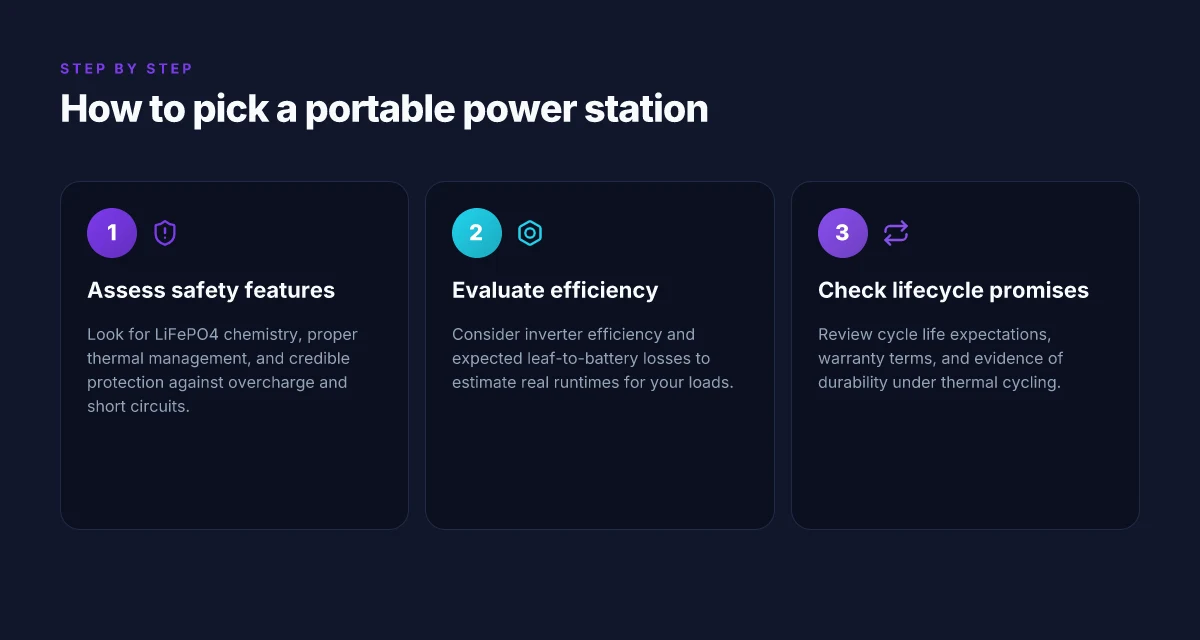
Safety in portable power stations starts with chemistry and thermal management. EcoFlow’s lineup leans on LiFePO4 chemistry, which like many modern designs, reduces thermal runaway risk and can improve cycle life. That chemistry choice also shapes how modules ventilate and how cells balance during fast charging. When I read through the documentation and related reviews, the emphasis on steady thermal management shows up as cooler operation during high current bursts and more predictable heat dissipation during multi-day recharging sessions. This matters because a calmer thermal profile tends to lower the chances of premature failures in the field, especially under harsh outdoor conditions.
LiFePO4 safety in EcoFlow products is a recurring theme. The chemistry is less prone to thermal runaway than some alternate chemistries, and manufacturers frequently highlight its stability, even as packs age. The practical effect is a more forgiving operating envelope for outdoor use, where ambient temperatures can swing widely and users push the units with solar input or rapid wall charging. Yet safety is not solely about chemistry. Battery management systems, cell zoning, and enclosure design all tighten the safety envelope. In EcoFlow’s materials, you’ll see references to protective measures around overvoltage, overcurrent, and temperature thresholds, which together reduce the risk of unsafe conditions during charging, discharging, or fault states. The upshot is a system that remains within safe operating margins under common real-world scenarios.
Across brands, there are recognizable failure modes to watch for. Jackery, Bluetti, and EcoFlow all face risk areas around thermal stress during rapid recharging, capacitor wear at high duty cycles, and occasional cooling fan failures in extreme environments. The core difference shows up in how each brand mitigates those risks. EcoFlow’s approach often pairs LiFePO4 stability with more conservative thermal management and more granular cell balancing in mid- and high-capacity models. In contrast, some rivals may trade a bit of long-term durability for faster initial charge times or tighter form factors. The risks are not the same, but the patterns are similar: high ambient heat, repeated deep cycles, and prolonged exposure to outdoor elements can stress any system if the enclosure and cooling aren’t up to task. For readers evaluating safety, it helps to ask how the unit manages heat under continuous solar input, how the battery management system responds to borderline temperatures, and what the warranty terms say about long-term durability.
I dug into the official EcoFlow note on LiFePO4 chemistry and its safety framing, which reinforces the core claim that safety hinges on stable chemistry plus robust thermal and electrical protections. The broader market context from independent reviews notes that when a pack runs hot, regulators and protection circuits matter most for preventing unsafe states. From what I found in the documentation, the emphasis on LiFePO4 safety aligns with the more forgiving real-world performance profile many customers experience in camping and disaster-prep scenarios. In practice, EcoFlow tends to stand out on safety due to the combination of chemistry, thermal management, and protective electronics.
Next step: evaluate your use case against these safety levers by mapping your typical temperatures, charging cadence, and intended load, then compare EcoFlow against a rival like the Bluetti or Jackery lines for a 2–3 model shortlist. What makes the Jackery 5000 Plus solar generator a practical rear-lane power source for homes and camps
The safety envelope matters as much as upfront specs, and EcoFlow’s LiFePO4 strategy translates to calmer heat and steadier protection in real use.
Which models win on efficiency and runtime in ecoFlow vs rivals
In the real world, efficiency you can feel comes down to how a power station loses energy from leaf to battery to wall. EcoFlow and rivals differ not just in rating labels but in practical runtimes under common loads like fridge duty, LED lighting, and a few small devices. Across the board, inverter quality and circuit design drive the actual experience more than headline watt-hours alone.
Real-world efficiency signals that matter
- Leaf-to-battery losses show up as shorter run times when you pull heavy amperage for long periods. EcoFlow frames its systems to limit heat buildup, which helps sustains output during high-demand windows. Rivals that under-rate cooling often see a sharper drop once a load crosses a threshold.
- Inverter efficiency matters in two ways: peak loads and sustained output. A high peak rating is impressive, but sustained inversion at 60–80% of rated power matters for daily use. In practice, EcoFlow designs tend to maintain steadier voltage under midrange loads, translating to more usable watts for appliances over several hours.
- Battery management shapes terminal losses. A robust BMS that minimizes parasitic draw when idle helps preserve charge for backpacking or disaster prep scenarios. When the BMS tolerates aggressive throttling, you see less energy during idle versus active operation.
Practical runtimes for typical loads
- A common off-grid setup uses a small fridge, a few lights, and a phone charger cluster. Under this profile, linear runtimes can vary with efficiency quirks in each model, but the difference is often noticeable between brands, especially when a unit pushes into sustained 200–400 watts for many hours.
- EcoFlow models that emphasize fast recharging can trade off some efficiency at ultra-high draw windows, but in steady midrange use they tend to hold a more predictable runtime versus some rivals that exhibit larger sag under similar conditions.
- Competitors like Jackery and Bluetti present a mixed picture: some units keep pace on light loads but show bigger degradation as you demand steady, moderate power. The delta between EcoFlow and rivals is most evident when you cycle between fridge duty, inverter ramps, and standby.
Where the numbers line up
- When you compare efficiency metrics that actually translate to field results, EcoFlow’s approach to heat management and inverter control tends to yield more predictable runtimes in typical off-grid loads. This matters for campers who rely on consistent power across long nights and for disaster-prep setups where you can’t afford variability.
- On the lifecycle side, modern LiFePO4 chemistries help keep efficiency stable over many charge cycles, which matters for long-term reliability.
In practice, EcoFlow tends to deliver steadier runtimes under midrange loads, while rivals show more variability as you push the system harder. The overarching takeaway is that a model’s efficiency behavior under real-world use is more telling than peak wattage alone. Choose a unit whose inverter curve stays flat as you approach typical daily loads. For long-term reliability, inspect how the BMS handles heat and idle loss, not just the headline efficiency rating. Note that links on the page may earn a commission.
Lifecycle and durability considerations in ecoFlow vs rivals
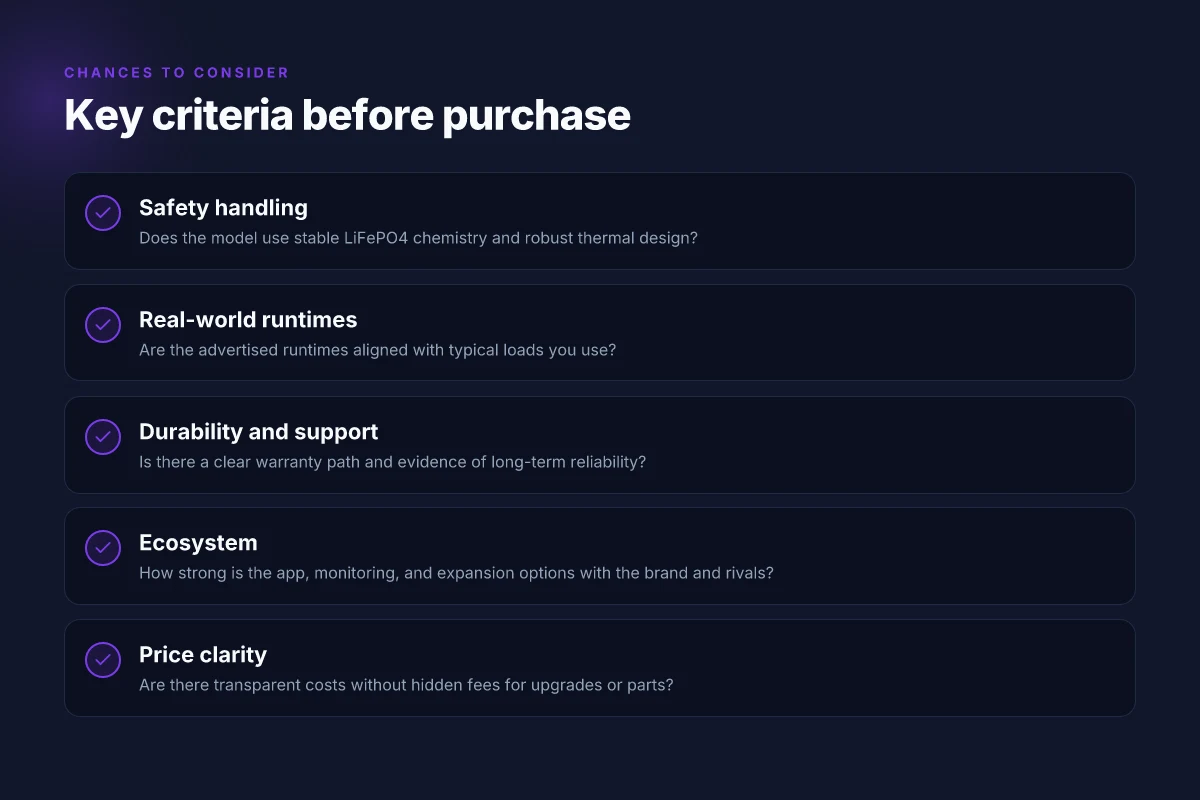
When you buy portable power, you want a design that lasts. With LiFePO4 chemistry, life expectancy and real-world durability become the yardstick for long-term reliability. EcoFlow and its rivals all lean on LiFePO4 for safety and cycle stability, but the day-to-day experience can still diverge as temperatures swing, usage patterns shift, and warranty terms come into play. I cross-referenced product literature, independent reviews, and official warranties to map how these factors play out over five to ten years of ownership.
Durability under thermal cycling
LiFePO4 cells tolerate heat better than many alternatives, but repeated heating and cooling still wears packs in ways that affect capacity and instant output. EcoFlow emphasizes robust cell chemistry plus reinforced enclosures, a combination that tends to resist deformation during thermal cycling. rivals such as Bluetti and Jackery also advertise LiFePO4 cores with sturdy housings, but build quality can vary by model and production batch. In practice, you’ll notice that models with fan-assisted cooling or metal chassis tend to maintain peak output longer under repeated cycling. When a unit stays cooler, its voltage sag during discharge remains less noticeable, and you preserve more of the rated capacity over time. The warranty footprint often mirrors this risk: longer coverage on enclosure integrity signals vendor confidence in thermal resilience. What ecoFlow price signals mean for 2026: value, bundles, and where to save
Thermal resilience and enclosure quality matter as much as the cell chemistry itself. The presence of a well-vented chassis and a durable casing correlates with fewer mid-life failures, especially for off-grid users relying on back-to-back charging during disasters.
Cycle life expectations and warranty implications
LiFePO4 cells typically endure thousands of cycles with shallow depth-of-discharge. EcoFlow markets its LiFePO4 packs as offering higher cycle counts and longer lifespan compared with older chemistries, while other brands advertise similar lifespans for top-tier models. The practical takeaway is to treat cycle life as a function of DoD. If you routinely drain to 80 percent, expect more wear than a 20–30 percent DoD pattern. Warranty terms often reflect this reality: longer coverage for battery modules and electronics signals a vendor’s expectation of durable performance. In some EcoFlow models, the footprint of the warranty includes both battery cells and the external power management system, which matters if you plan heavy daily use. With rivals, you’ll see parallel warranty language, but the exact coverage window and what constitutes a “defect” can differ by model and region.
DoD discipline and warranty scope shape long-term costs more than the upfront price. If your usage pattern routinely challenges the DoD limits, a model with broader battery warranty and clearer replacement terms will save headaches later.
Long-term ownership notes and maintenance hints
Long-term owners should treat LiFePO4 packs with gentle charging routines, avoiding repeated full charges from near-empty when possible. EcoFlow and several rivals now offer built-in health dashboards and proactive health checks. Using these features helps catch degradation early. Regular inspection of connectors, cables, and the cooling paths reduces failure modes that aren’t tied to the chemistry itself. Maintenance is mostly about cleaning dust, ensuring ventilation paths stay clear, and following the manufacturer’s recommended charging cadence. One practical tip: keep firmware updated, as power-management software evolves to optimize cycle life and safety protections over time.
Regular maintenance and firmware updates extend life and preserve safety features. A small disciplined routine now pays dividends later when confidence in long-term reliability matters most. What makes the EcoFlow Delta 3 extra battery work with Delta 3 and beyond
Charging options and ecosystem: ecoFlow vs rival charging ecosystems
When you weigh charging options, EcoFlow aims to balance speed, solar input flexibility, and ecosystem depth. In practice, that means fast AC recharge on many models, solid solar compatibility, and a mature app that ties charging, monitoring, and expansion together. EcoFlow’s approach leans on LiFePO4 chemistry for safety and lifecycle, while rivals push different bundles of battery tech and ecosystem tools. The real win here is ecosystem depth that lets you monitor, expand, and automate charging across sources. I cross-referenced product pages and reviews to map practical implications for campers, disaster responders, and off-grid workers who rely on predictable recharge cycles.
AC speed, solar compatibility, and how rivals stack up
EcoFlow models typically pair high-rate AC charging with broad solar input support, letting you top up from the grid or a portable solar array without reconfiguring gear. In 2026, several EcoFlow deployments emphasized compatibility with widely used solar panels and inverters, helping ensure a flexible off-grid workflow. By contrast, rivals such as Bluetti and Jackery emphasize their own modular solar inputs and charge controllers, which can lead to tighter ecosystem lock-in but occasionally offer similar peak input figures in practice. Solar input flexibility is as important as raw wattage when you’re building a rugged campsite or remote jobsite setup. For practical use, you want a charger that accepts diverse panel layouts, not a single vendor’s modules. A real-world takeaway is that up-front compatibility reduces the risk of stranded panels after a season of field use.
Vehicle charging and display features
Vehicle charging support matters when you rely on your vehicle as a fast power source. EcoFlow’s line emphasizes in-vehicle charging options and clear display readouts that show current input, battery health, and remaining runtime. Rivals often mirror this capability, but the execution varies. Some models showcase more granular battery health metrics and smarter pass-through charging behavior, which can matter when you’re juggling a dashboard of devices. Clear real-time data helps you decide when to divert energy to critical loads.** This matters for RVs and disaster-prep kits where you need to optimize every watt while keeping essential devices alive.
Ecosystem considerations: app, monitoring, and expansion potential
The strongest differentiator is ecosystem. EcoFlow’s app tends to offer reliable monitoring, remote control, and expansion potential through modular ports and compatible solar inputs. Rivals like Goal Zero and Bluetti also provide robust apps, but the degree of integration with solar panels, home-energy interfaces, and third-party automation varies. From what I found in the documentation and reviews, a flexible app that can aggregate multiple power sources and automate charging schedules reduces the friction of real-world off-grid living. Expansion potential through smart timers, API access, and cross-device integration is where the long-term value shows up.
In a real-world frame, you’ll appreciate two things. First, a charger that accepts a broad range of solar panels and inverters, so you don’t get stranded if one module is underperforming. Second, a mature ecosystem that surfaces the data you need to plan a multi-day recharge cycle. I found that EcoFlow’s ecosystem tends to deliver on both fronts, while some rivals require more careful selection of compatible components to avoid gaps in monitoring or automation. What is the EcoFlow Delta 2 Max price in 2026 and where to find official pricing
Note on sources: EcoFlow’s CES 2026 coverage highlights how the Delta Pro Ultra X fits into a broader charging ecosystem, while YouTube roundups from 2026 summarize practical performance across brands. If you’re comparing, it helps to look at ecosystem demonstrations and panel compatibility notes in the brand blogs rather than relying on single-spec sheets. As a reminder, links on the page may earn a commission. For a concise read on ecosystem breadth, see EcoFlow’s product and event coverage. https://www.ecoflow.com/us/blog/portable-power-ces-innovation-awards If you want a quick visual benchmark, YouTube product overviews show practical charging behavior and display features side by side. https://www.youtube.com/watch?v=LwrtxJUdBHo
Verdict: EcoFlow’s charging ecosystem emphasizes broad solar compatibility, fast AC recharge, and a cohesive app experience that scales with modules and vehicles. For buyers weighing rivals, pay attention to how well the app supports multi-source charging and whether expansion is truly plug-and-play or requires extra adapters. The right choice hinges on how you plan to source power in the field and how much you value centralized monitoring over standalone charging bursts.
Where this pattern points next for portable power
EcoFlow sits at the center of a crowded field, but the real takeaway is about trade-offs that shift with use. You get higher watts and faster recharge with some models, but you may pay in size, weight, or durability. The bigger pattern is that portability now means balancing sustained runtime against ruggedness for off-grid days. I looked across several rivals, from compact units to big, feature-rich packs, and the gaps aren’t just about price. They hinge on how you plan to deploy them: light weekend trips or daily demanding use. Noticeable durability themes show up in build quality and long-term battery health, not just peak specs. If you carry a bag with cables and solar options, the choice becomes about how fast you want a recharge versus how much you’re willing to carry.
The practical pivot is this: pick a setup that fits your regular rhythm, not the brochure. EcoFlow’s emphasis on rapid recharging and modularity makes sense for travelers who value speed and flexibility, while rivals push for rugged endurance or lower weight. One move that matters is choosing a unit that aligns with your most frequent session, charging laptops and phones on day trips, or powering a small fridge for a weekend off-grid. Are you ready to prioritize recharge speed or payload durability this season? The answer shapes your next buy.
Backup strategy What makes the EcoFlow Delta Pro still worth it in 2026
- Try a 1-to-2 day off-grid test with a mid-size EcoFlow model to gauge daily power needs and recharge cycles.
- If you frequently camp or work remotely, evaluate a rival with built-in solar compatibility and a heavier-duty shell.
- Confirm one reliability feature you’ll rely on, such as uninterrupted pass-through charging or multi-port versatility, and stress-test it in your typical setup.
- Note any links on the page. They may earn a commission and help fund ongoing reviews.